
Franklin D. Roosevelt was elected president four times, led the country through most of the Great Depression and World War II, transformed the federal government, communicated by radio from the White House, and did all of it while carefully managing public knowledge of a disability that had changed his life in his 30s.
FDR came from a wealthy New York family
- Franklin Delano Roosevelt was born January 30, 1882.
- He was born in Hyde Park, New York.
- His family was wealthy and prominent.
- His father was James Roosevelt.
- His mother was Sara Delano Roosevelt.
- Franklin was their only child together.
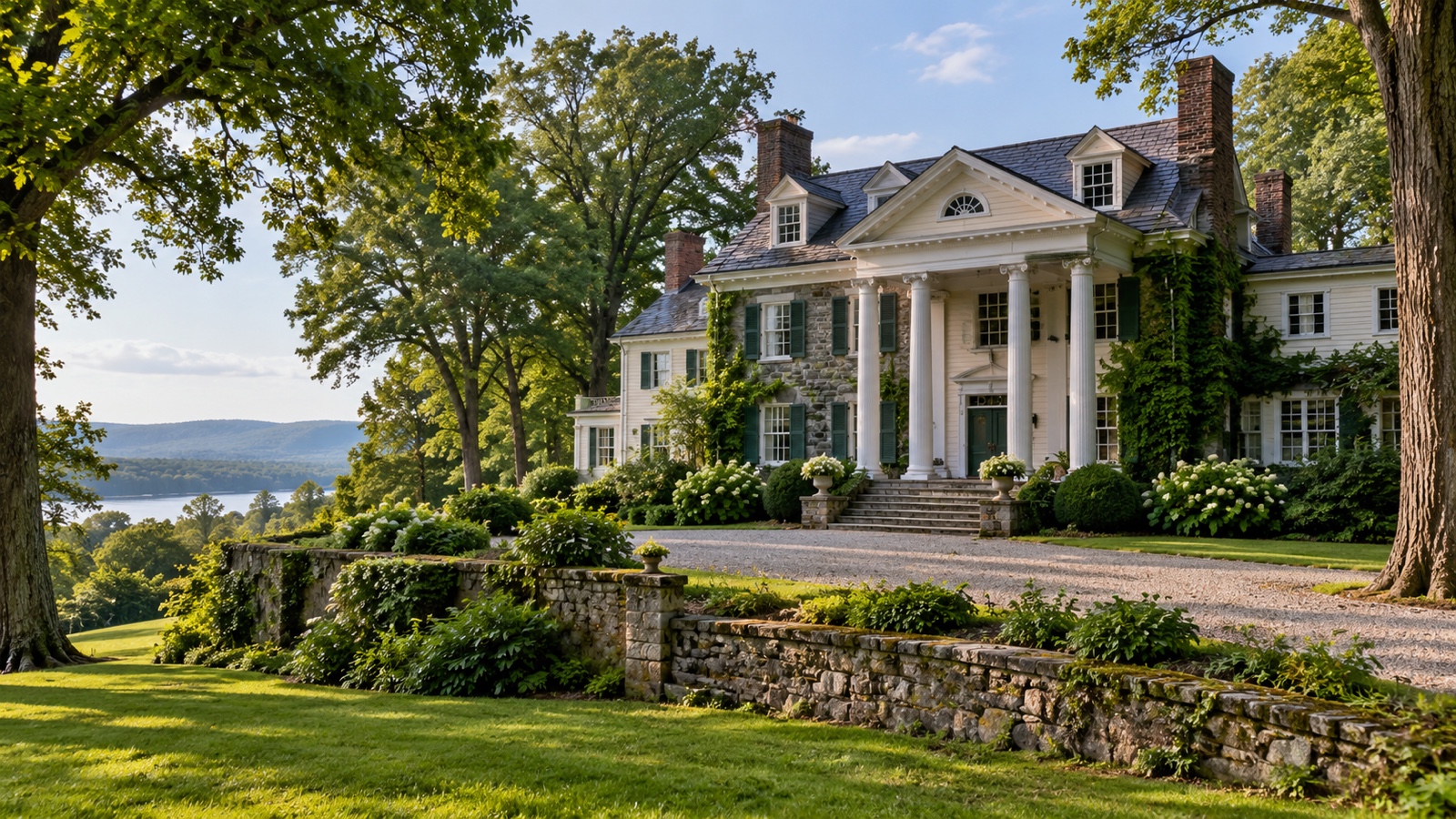
- He grew up at the family estate overlooking the Hudson River.
- Roosevelt was educated largely by tutors as a child.
- He later attended Groton School.
- Groton emphasized public service and character.
- He entered Harvard College in 1900.
- Roosevelt became involved with the Harvard Crimson newspaper.
- He graduated from Harvard in 1903.
- He later attended Columbia Law School.
- He left Columbia before completing a degree.
- Roosevelt passed the New York bar exam.
- He worked at a Wall Street law firm.
- He was a distant cousin of Theodore Roosevelt.
- Franklin admired Theodore’s energetic political career.
- Being related to one famous Roosevelt would normally be enough family pressure, but Franklin eventually made the surname a second presidential brand.
He married Eleanor Roosevelt in 1905
- Franklin married Anna Eleanor Roosevelt in 1905.
- Eleanor was Theodore Roosevelt’s niece.
- Theodore Roosevelt gave the bride away at the wedding.
- Franklin and Eleanor were distant cousins.
- The couple had six children.
- Five survived infancy.
- Eleanor became deeply involved in public life.
- The marriage experienced serious strain.
- Eleanor discovered Franklin’s relationship with Lucy Mercer in 1918.
- Divorce was discussed but did not occur.
- Franklin and Eleanor maintained a political partnership afterward.
- Eleanor developed an independent career as an activist and writer.
- She later transformed expectations for first ladies.
- Franklin entered New York state politics in 1910.
- He won election to the New York State Senate.
- He became known for challenging party bosses.
- President Woodrow Wilson appointed him assistant secretary of the Navy.
- Roosevelt served in that job from 1913 to 1920.
- The role had once been held by Theodore Roosevelt.
- FDR’s early résumé repeatedly looked like someone had copied pieces of Theodore Roosevelt’s career and then changed the dates.
Polio changed his body but not his political ambition
- Roosevelt became seriously ill in 1921.
- He was 39 years old.
- He was diagnosed with poliomyelitis at the time.
- The illness left his legs permanently paralyzed.
- Modern researchers have debated whether another neurological illness was possible.
- Roosevelt worked intensely at rehabilitation.
- He used heavy leg braces.
- He learned to appear standing with assistance.
- He often held an aide’s arm while using his upper body to swing forward.
- He used a wheelchair privately.
- Most news photographers respected requests not to photograph him in the wheelchair.
- Public awareness of his disability was greater than some later myths suggest.
- Still, the extent of his mobility limitations was carefully managed.
- Roosevelt discovered warm mineral waters at Warm Springs, Georgia.
- He believed swimming there helped rehabilitation.
- He purchased the Warm Springs property.
- He helped establish a rehabilitation center for people with polio.
- The March of Dimes later became closely associated with polio research.
- Roosevelt’s image appeared on the U.S. dime after his death.
- FDR spent much of his presidency projecting effortless confidence while every public entrance required an enormous amount of planning and physical effort.
The Great Depression carried him to the White House
- Roosevelt returned to electoral politics after rehabilitation.
- He became governor of New York in 1929.
- He took office just before the stock-market crash.
- New York’s unemployment crisis shaped his response.
- Roosevelt created state relief programs.
- He won reelection as governor.
- Democrats nominated him for president in 1932.
- Herbert Hoover was the incumbent Republican president.
- The Great Depression dominated the campaign.
- Roosevelt promised a “new deal” for the American people.
- He won the 1932 election decisively.
- He became the 32nd U.S. president.
- Roosevelt took office March 4, 1933.
- Thousands of banks had failed or closed.
- Unemployment was near 25 percent.
- Roosevelt declared a national bank holiday.
- Congress passed emergency banking legislation.
- Public confidence in banks began to recover.
- The first hundred days produced an extraordinary wave of legislation.
- Most presidents hope for a honeymoon period. Roosevelt used his to redesign large portions of the federal government before spring was over.
The New Deal permanently expanded the federal government
- The New Deal was not one program.
- It was a broad collection of relief, recovery, and reform policies.
- The Civilian Conservation Corps employed young men on public projects.
- The CCC planted trees and improved parks.
- The Works Progress Administration employed millions.
- WPA projects built roads, schools, bridges, and public buildings.
- Artists and writers also received WPA work.
- The Tennessee Valley Authority built dams and electrical infrastructure.
- The Agricultural Adjustment Administration sought to raise farm prices.
- Some early New Deal programs were struck down by the Supreme Court.
- Roosevelt later proposed expanding the Supreme Court.
- Critics called the plan court packing.
- The proposal failed politically.
- Social Security was created in 1935.
- The program established old-age benefits.
- It also included unemployment insurance structures.
- The National Labor Relations Act strengthened workers’ organizing rights.
- Federal financial regulation expanded.
- The Securities and Exchange Commission was created.
- The New Deal did not end the Depression by itself, but it changed what Americans expected the federal government to do during economic disaster.
Fireside chats made radio a presidential tool
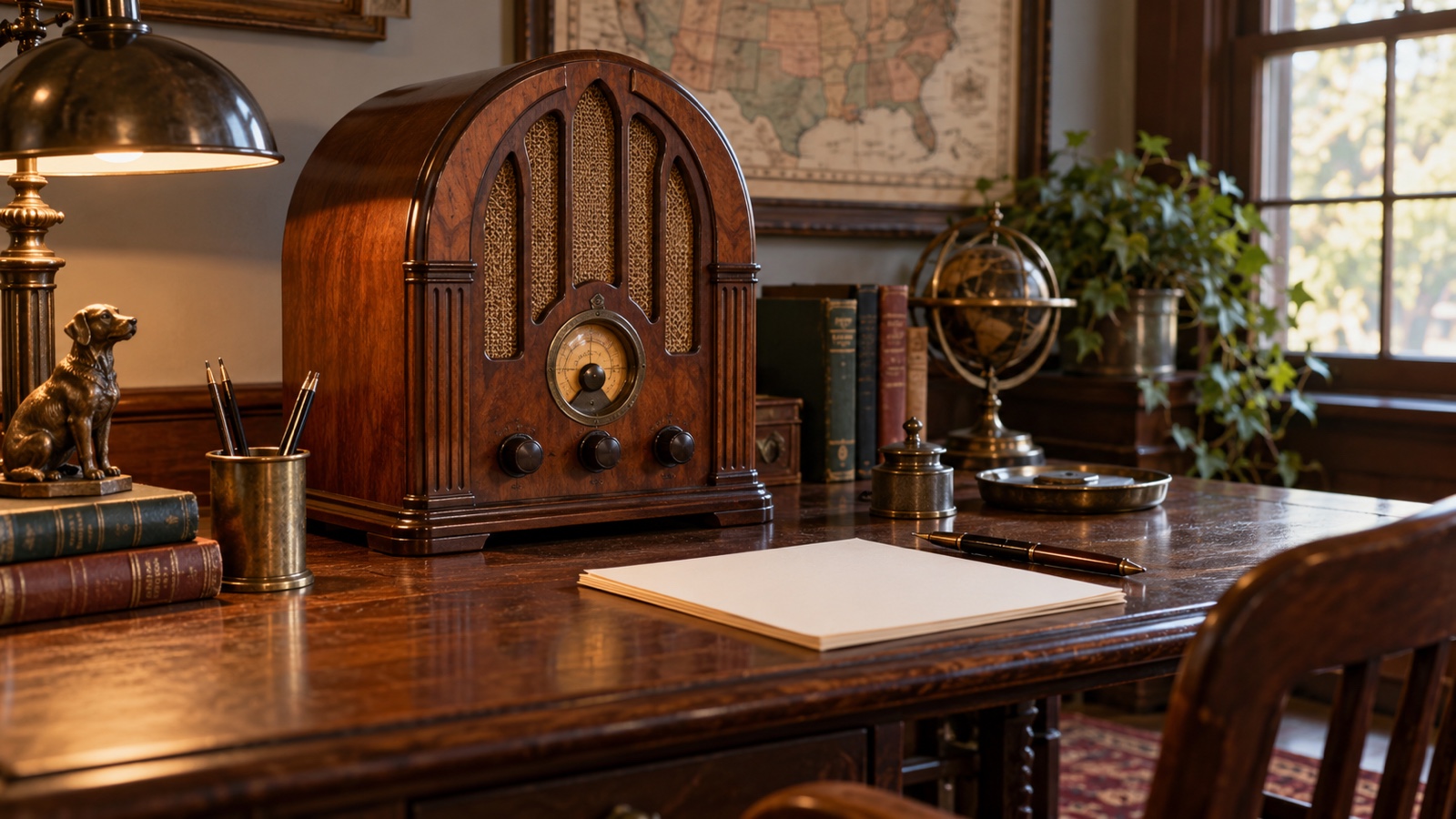
- Roosevelt became famous for radio addresses called fireside chats.
- The term was coined by a broadcaster.
- The talks sounded conversational rather than ceremonial.
- Roosevelt explained complicated policies in plain language.
- His first fireside chat focused on the banking crisis.
- Millions listened at home.
- Families often gathered around radios for the broadcasts.
- Roosevelt used radio to bypass hostile newspapers.
- He cultivated a direct relationship with listeners.
- Citizens sent huge volumes of mail to the White House.
- Roosevelt’s voice became one of his strongest political tools.
- He pronounced some words in a distinctive upper-class New York accent.
- His administration became highly skilled at managing news.
- He held frequent press conferences.
- Reporters generally could not quote him directly without permission under early rules.
- He used humor to disarm difficult questions.
- Roosevelt was a confident storyteller.
- He understood the emotional importance of reassurance.
- His first inaugural address included the line about fearing fear itself.
- The fireside chat was basically the presidential podcast of the 1930s, except everyone had one radio and no skip button.
Four elections, World War II and 25 final FDR facts
- Roosevelt won reelection in 1936 by a landslide.
- He won a third term in 1940.
- No previous president had served more than two elected terms.
- George Washington’s two-term example had become a powerful tradition.
- Roosevelt argued international crisis justified continuity.
- He won a fourth term in 1944.
- The Twenty-Second Amendment later limited presidents to two elected terms.
- Roosevelt initially sought to keep the United States out of direct European war.
- He still supported countries fighting Nazi Germany.
- Lend-Lease supplied weapons and materials to Allied nations.
- Japan attacked Pearl Harbor on December 7, 1941.
- Roosevelt called it “a date which will live in infamy.”
- Congress declared war on Japan the next day.
- Germany and Italy then declared war on the United States.
- Roosevelt worked closely with Winston Churchill.
- He also met repeatedly with Joseph Stalin.
- The Allied leaders coordinated strategy against the Axis powers.
- Roosevelt supported creation of the United Nations.
- He did not live to see the war end.
- Roosevelt died April 12, 1945, at Warm Springs, Georgia.
- He suffered a cerebral hemorrhage.
- Harry S. Truman became president.
- Roosevelt served 12 years, one month, and eight days as president.
- His presidential library at Hyde Park was the first built under the modern presidential-library model.
- After 145 facts, Franklin Roosevelt feels less like a four-term anomaly and more like the president whose disability, Depression policies, radio voice, wartime leadership, and enormous expansion of federal responsibility permanently changed the scale of the office.

Ellie is the owner and sole author of Fun Facts, combining her mechanical engineering background with years of research-driven writing to deliver facts you can trust. Every article is thoroughly fact-checked and routinely updated as new science and sources emerge to keep information accurate and current. Her mission is to make learning delightful while upholding high standards of reliability and transparency.