
Human cells are microscopic, but together they build skin, muscle, blood, bone, nerves, glands, and every organ you use. They divide, communicate, burn fuel, recycle parts, move cargo, sense signals, repair damage, and specialize so dramatically that two cells with nearly the same DNA can look unrelated.
Cells are the basic living units of the human body
- Every human body begins as a single fertilized cell.
- That first cell divides repeatedly during development.
- Adult humans contain tens of trillions of cells.
- Exact cell counts vary with body size, age, sex, and estimation method.
- Human cells differ enormously in shape and function.
- Most human cells are microscopic.
- Some neurons can extend very long distances through the body.
- Muscle fibers can also become unusually long cells.
- Red blood cells are smaller than many typical body cells.
- Human cells are eukaryotic cells.
- Eukaryotic cells contain membrane-bound internal compartments.
- Most human cells have a nucleus.
- Mature red blood cells are a famous exception because they lose their nuclei.
- Platelets are cell fragments rather than complete cells.
- Cell size is limited partly by the need to exchange materials efficiently.
- Cells require nutrients and oxygen or other energy sources depending on type.
- They must also remove waste products.
- Cells maintain internal conditions different from their surroundings.
- Cell membranes make that selective separation possible.
- A human body is not one giant organism with tiny parts inside. It is a cooperative society of trillions of living units with different jobs.
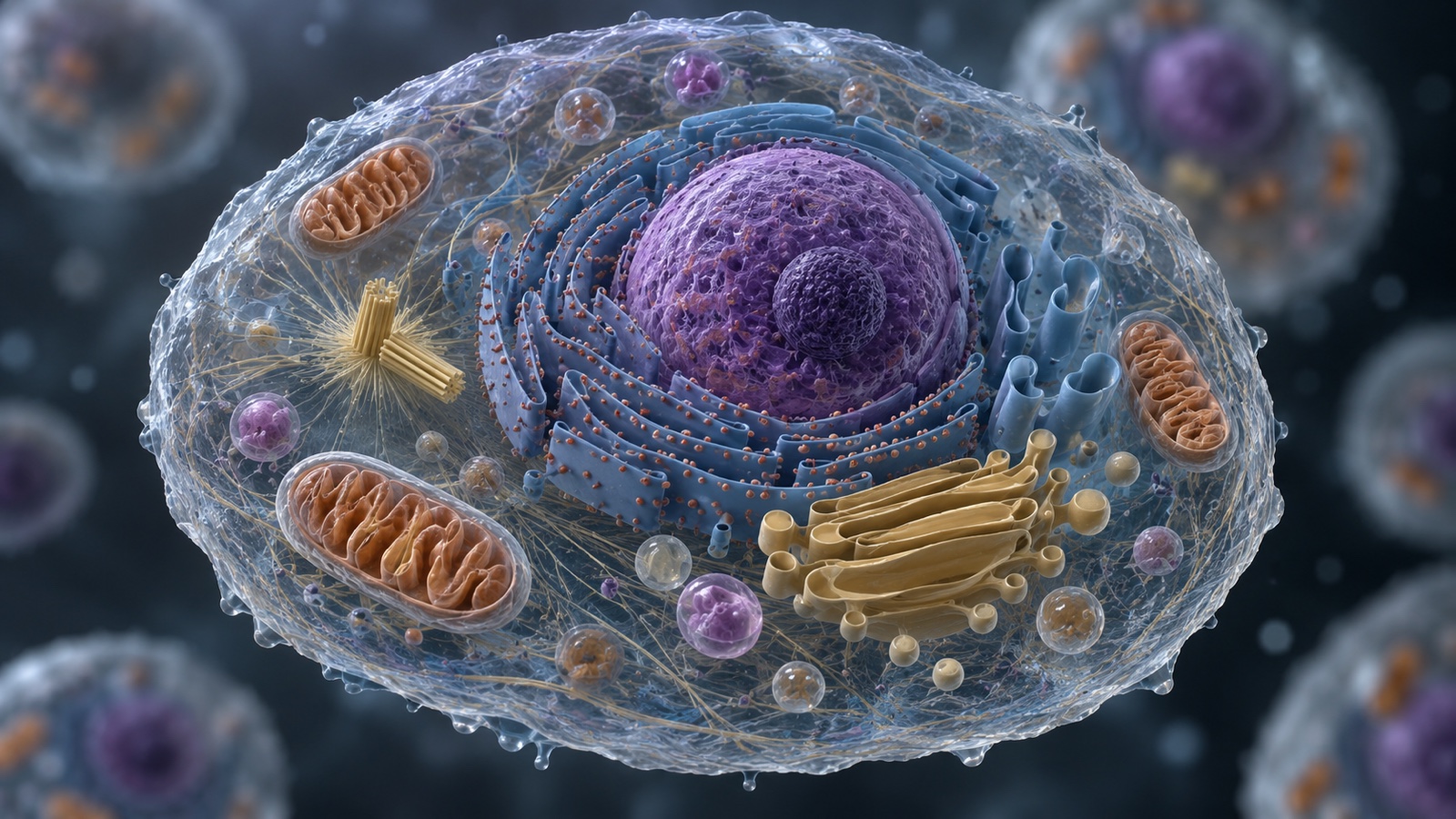
The cell membrane controls traffic in and out
- The plasma membrane surrounds human cells.
- It is built mainly from a phospholipid bilayer.
- Phospholipids have water-attracting heads and water-repelling tails.
- This chemical structure makes membranes self-assemble in watery environments.
- Cholesterol is an important component of human cell membranes.
- Membrane cholesterol helps regulate fluidity and stability.
- Proteins embedded in membranes perform transport, signaling, adhesion, and other jobs.
- Some molecules diffuse directly through the lipid bilayer.
- Small nonpolar molecules cross more easily than charged molecules.
- Ion channels allow selected charged particles to move across membranes.
- Carrier proteins transport many nutrients and metabolites.
- Pumps use energy to move substances against concentration gradients.
- The sodium-potassium pump is one important example.
- It moves sodium out of cells and potassium into cells.
- This gradient supports nerve impulses and many transport processes.
- Cells can engulf large material by endocytosis.
- They can release material through exocytosis.
- Membrane receptors detect hormones, neurotransmitters, and growth factors.
- Changes at the membrane can trigger large internal responses.
- The cell membrane is less a wall than a heavily guarded border with gates, sensors, pumps, docks, and identification systems.
The nucleus stores most of the cell's DNA
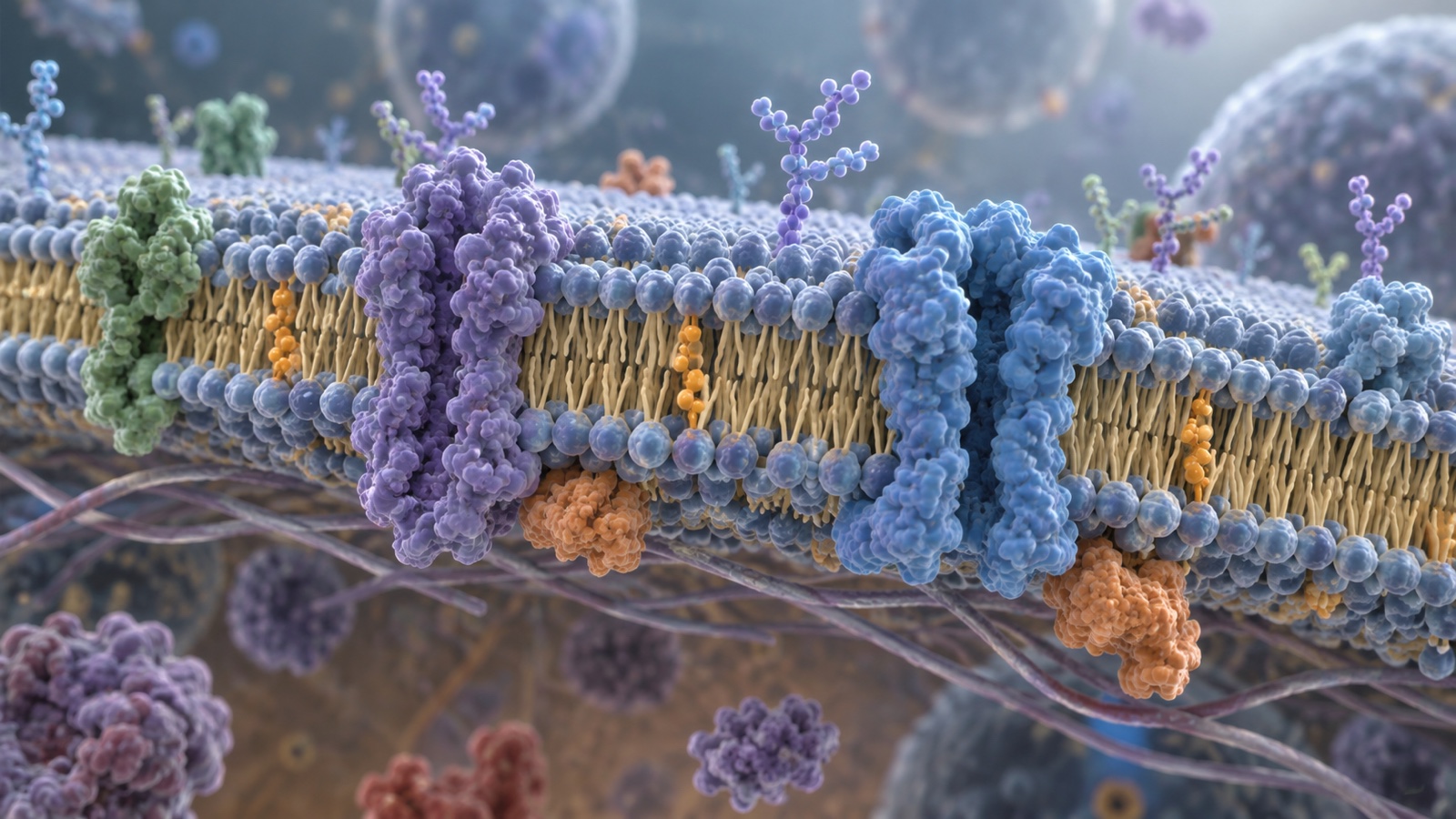
- The nucleus is surrounded by a double membrane called the nuclear envelope.
- Nuclear pores regulate traffic between nucleus and cytoplasm.
- Most human DNA is packaged inside the nucleus.
- DNA is organized into chromosomes.
- Chromosomes are made from DNA and proteins.
- Histones help package DNA compactly.
- Chromatin can become more or less accessible depending on gene activity.
- The nucleolus is a dense region inside the nucleus.
- The nucleolus helps build ribosomal components.
- Messenger RNA is transcribed from DNA in the nucleus.
- RNA molecules are processed before many leave the nucleus.
- The nucleus helps coordinate gene expression.
- Not every gene is active in every cell.
- Cell identity depends heavily on which genes are switched on or off.
- Liver cells and neurons contain nearly the same nuclear DNA.
- Their different appearance comes from different patterns of gene use.
- Some mature cells contain multiple nuclei.
- Skeletal muscle fibers commonly have many nuclei.
- Some cells intentionally lose their nucleus during maturation.
- The nucleus is not the brain of the cell in a literal sense, but it is the main archive and control center for genetic information.
Mitochondria turn food molecules into usable cellular energy
- Mitochondria are membrane-bound organelles.
- They are major sites of aerobic energy metabolism.
- Cells use mitochondria to produce large amounts of ATP.
- ATP is a molecule used to power many cellular processes.
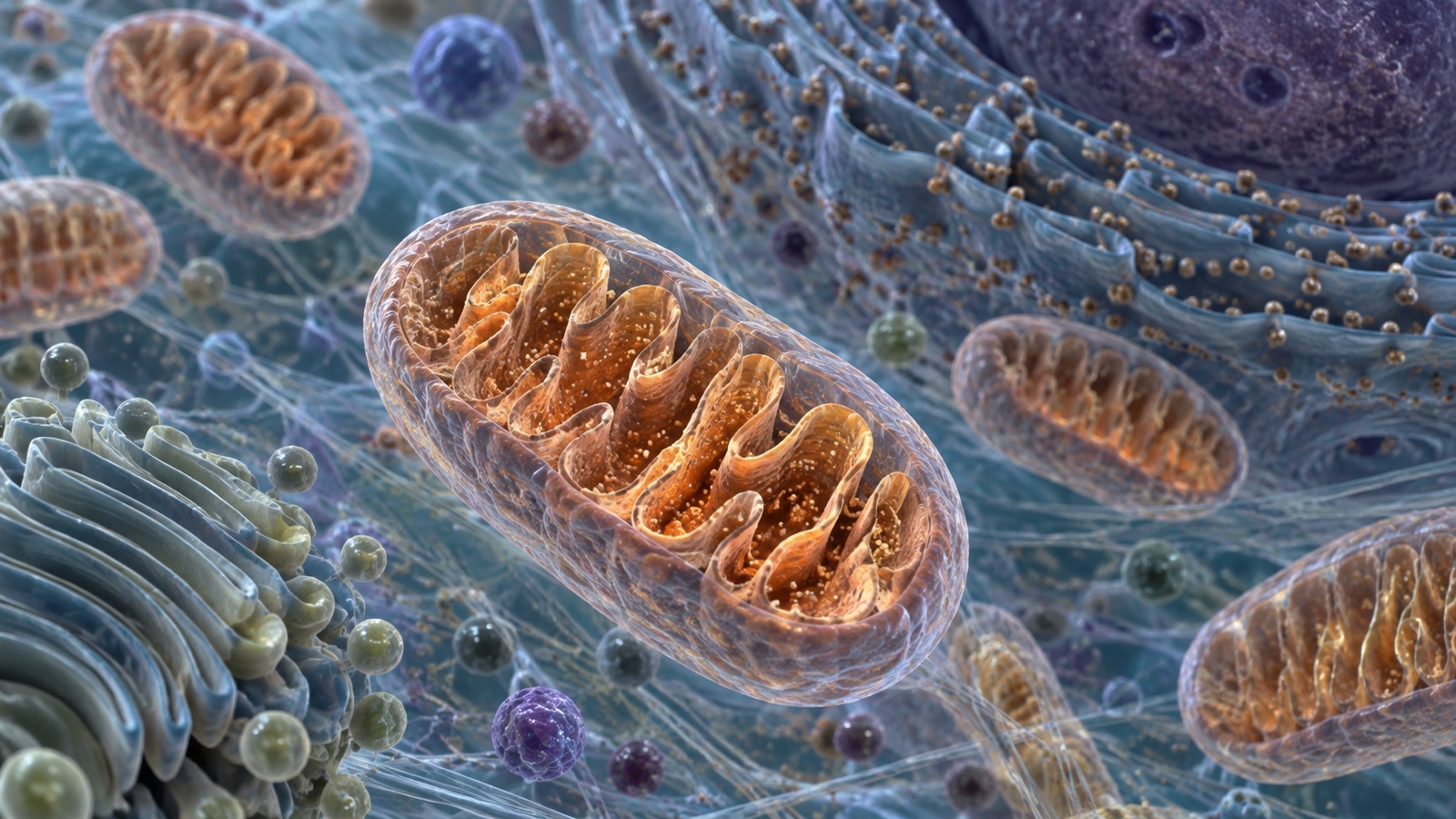
- Mitochondria have outer and inner membranes.
- The inner membrane folds into structures called cristae.
- Cristae increase surface area for energy-producing reactions.
- Mitochondria contain their own small DNA molecules.
- Mitochondrial DNA is separate from nuclear DNA.
- Mitochondria also contain their own ribosomes.
- These features support the endosymbiotic theory of mitochondrial origin.
- The theory proposes that ancestral mitochondria evolved from bacteria living inside other cells.
- Mitochondria can fuse and divide.
- Cells adjust mitochondrial number according to energy needs.
- Heart muscle cells contain many mitochondria.
- Skeletal muscle mitochondrial content can increase with endurance training.
- Mitochondria also participate in programmed cell death.
- They help regulate calcium signals.
- Mitochondrial dysfunction can affect high-energy organs especially strongly.
- Mitochondria are famous as the powerhouse of the cell, but they are more like power plants that also manage signaling, calcium, metabolism, and self-destruct decisions.
Ribosomes, the ER and Golgi build and ship proteins
- Ribosomes build proteins from amino acids.
- They read instructions carried by messenger RNA.
- Free ribosomes make many proteins used inside the cell.
- Ribosomes attached to rough endoplasmic reticulum make many secreted and membrane proteins.
- The rough endoplasmic reticulum is studded with ribosomes.
- The smooth endoplasmic reticulum lacks attached ribosomes.
- Smooth ER helps synthesize lipids.
- It also participates in detoxification in some cells.
- Muscle-cell smooth ER stores calcium and is called sarcoplasmic reticulum.
- New proteins enter the endoplasmic reticulum for folding and processing.
- Misfolded proteins can trigger cellular stress responses.
- Transport vesicles carry proteins toward the Golgi apparatus.
- The Golgi modifies, sorts, and packages proteins and lipids.
- Golgi stacks have distinct entry and exit sides.
- Vesicles deliver cargo to membranes, lysosomes, or outside the cell.
- Secretory cells often have extensive rough ER and Golgi.
- Antibody-producing plasma cells are a good example.
- Pancreatic cells that secrete digestive enzymes also have abundant protein-production machinery.
- Cellular cargo is labeled and routed rather than simply floating randomly toward its destination.
- Inside a secretory cell, protein production looks surprisingly like a factory with assembly lines, quality control, packaging stations, address labels, and delivery trucks.
Cells recycle damaged material constantly
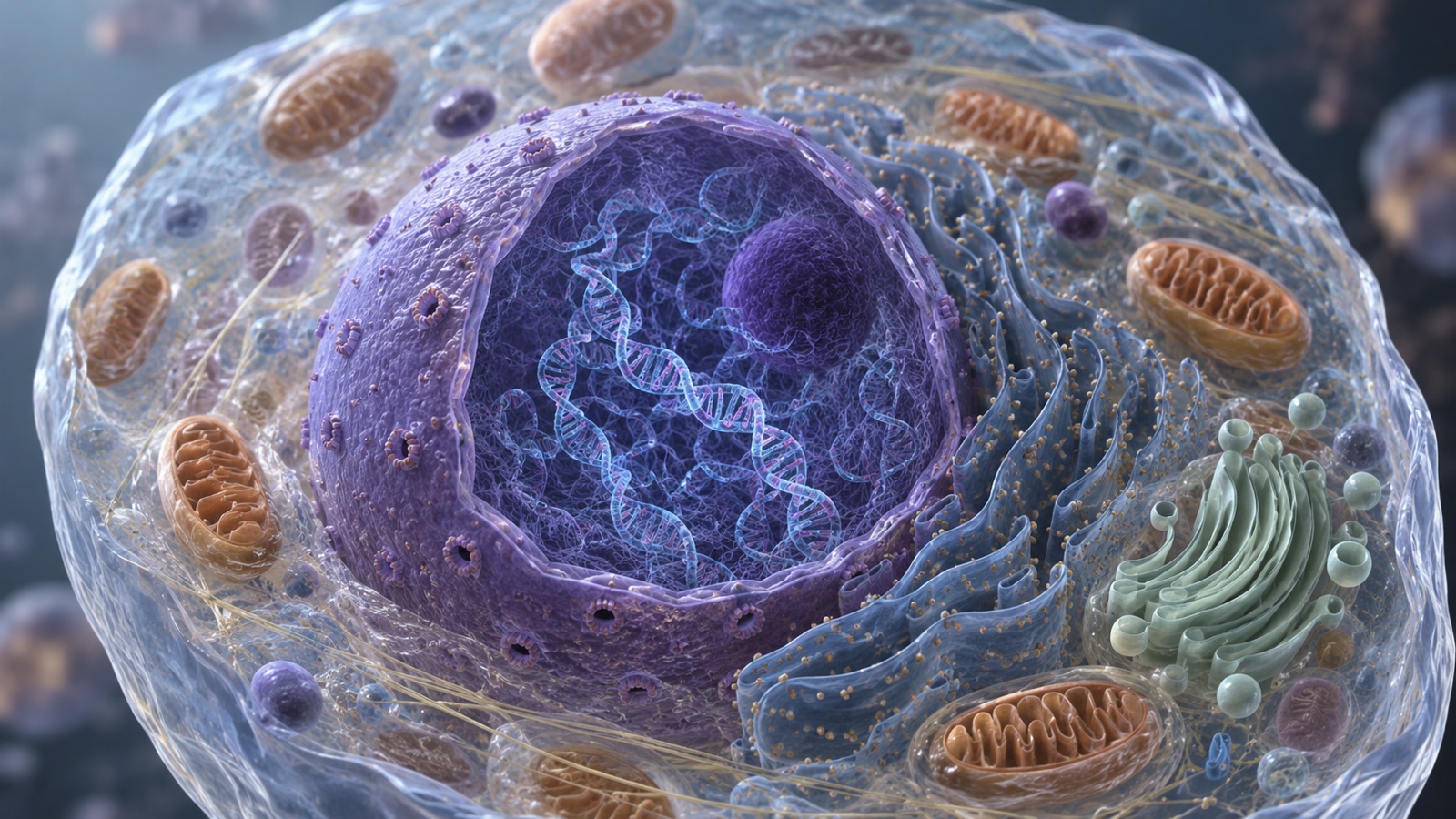
- Lysosomes are acidic organelles filled with digestive enzymes.
- They break down worn-out cell components and engulfed material.
- Lysosomes recycle useful molecular building blocks.
- Autophagy is a process cells use to deliver internal material for degradation.
- Autophagy can remove damaged organelles.
- It can also help cells adapt during nutrient scarcity.
- Peroxisomes perform oxidation reactions.
- They help break down certain fatty acids.
- Peroxisomes also help control hydrogen peroxide.
- Catalase converts hydrogen peroxide into water and oxygen.
- Cells continuously replace damaged proteins.
- Proteasomes break down many proteins tagged for destruction.
- Ubiquitin can act as a molecular tag marking proteins for degradation.
- Protein quality control is essential because damaged proteins can become toxic.
- Cells also repair membranes after small injuries.
- Damaged mitochondria can be selectively removed through mitophagy.
- Recycling saves energy compared with rebuilding everything from raw materials.
- Failure of waste-clearance systems contributes to some diseases.
- Cell survival depends as much on disposal and recycling as on making new material.
- A healthy cell is constantly throwing things away, but almost nothing goes straight to the trash without first being inspected for reusable parts.
Cell division requires checkpoints and precise chromosome handling
- The cell cycle includes growth, DNA replication, and division phases.
- Many human cells spend long periods outside active division.
- Some neurons remain nondividing for decades.
- Skin and gut cells divide much more frequently.
- DNA is copied before mitosis.
- Mitosis separates duplicated chromosomes into two nuclei.
- The mitotic spindle is built from microtubules.
- Spindle fibers attach to chromosome structures called kinetochores.
- Chromosomes align before being separated.
- Cell-cycle checkpoints monitor DNA damage and chromosome attachment.
- Cytokinesis divides the cell's cytoplasm.
- Most normal cell divisions produce two genetically similar daughter cells.
- Stem cells can self-renew while also generating specialized descendants.
- Adult stem cells help maintain tissues such as blood, skin, and intestine.
- Cancer develops when cells acquire changes that disrupt normal growth controls.
- Not every mutation causes cancer.
- Multiple changes usually accumulate before a normal cell becomes malignant.
- Programmed cell death helps remove damaged or unnecessary cells.
- Apoptosis is one major form of programmed cell death.
- Cell division is not just splitting in half. It is a checkpoint-heavy logistical operation that must duplicate billions of DNA bases and distribute chromosomes correctly.
Specialization, replacement and 5 final cell facts
- Human cells can specialize into hundreds of distinct functional types depending on how cell types are classified.
- Different tissues replace cells at very different rates, so the claim that the whole body replaces every cell every seven years is false.
- Some cells live only days, while certain neurons may survive for most of a person's lifetime.
- Cells communicate through hormones, neurotransmitters, direct contacts, electrical signals, and local chemical messengers.
- After 145 facts, a human cell looks less like a tiny bag of fluid and more like a compartmentalized city that generates energy, reads DNA, builds cargo, senses messages, repairs damage, recycles waste, and decides when to divide or die.
Quick FAQ
Q: Do all human cells have a nucleus?
A: No. Mature red blood cells lose their nuclei, and platelets are cell fragments rather than complete nucleated cells.
Q: Do all cells have the same DNA?
A: Most nucleated body cells begin with nearly the same genome, but they use different genes and can accumulate different mutations over time.
Q: Are mitochondria only for energy?
A: No. They also participate in signaling, calcium regulation, metabolism, and programmed cell death.
Q: Does every cell get replaced every seven years?
A: No. Cell lifespans vary enormously, from days to decades.
Q: What is the largest organelle?
A: In many human cells, the nucleus is one of the largest organelles, although organelle size varies substantially by cell type.

Ellie is the owner and sole author of Fun Facts, combining her mechanical engineering background with years of research-driven writing to deliver facts you can trust. Every article is thoroughly fact-checked and routinely updated as new science and sources emerge to keep information accurate and current. Her mission is to make learning delightful while upholding high standards of reliability and transparency.