
Egypt is a land of mysteries, marvels, and milestones.
From its ancient wonders to its vibrant modern culture, Egypt boasts a treasure trove of surprises.
Whether you’re a history buff or just curious, these facts will uncover Egypt’s enchanting past and its captivating present.
Ancient Egypt: The Land of Pharaohs and Pyramids
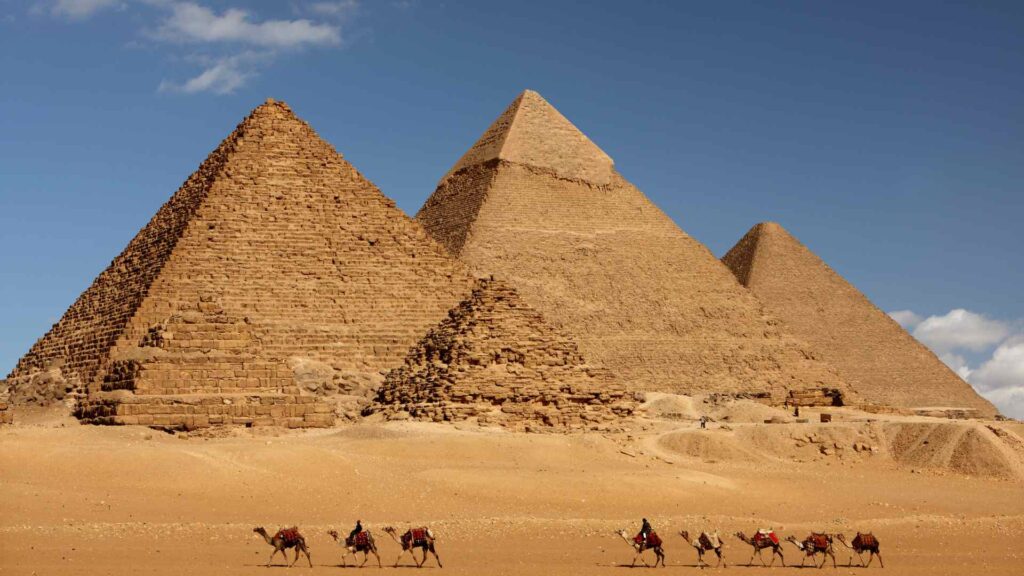
- The Great Pyramid of Giza is the last standing wonder of the ancient world.
- Pharaohs were considered divine and often depicted as half-human, half-god.
- Mummification preserved the dead for thousands of years, offering insights into their lives.
- Ancient Egyptians invented one of the earliest forms of writing: hieroglyphics.
- Cleopatra VII was the last active ruler of the Ptolemaic Kingdom of Egypt.
- The Nile River, vital for survival, inspired their calendar and economy.
- Cats were sacred animals and believed to bring good luck to households.
- The Rosetta Stone unlocked the secrets of Egyptian hieroglyphs.
- Pyramids were initially constructed as step structures before evolving into smooth-sided marvels.
- Ancient Egyptians worshiped over 2,000 deities, each with specific roles.
- They developed early medical practices and were skilled surgeons.
- The Sphinx of Giza is believed to represent Pharaoh Khafre and has stood for over 4,500 years.
- Papyrus, made from the papyrus plant, was the world's first paper-like material.
- The ancient Egyptians believed the heart, not the brain, was the seat of intelligence.
- Many ancient temples were aligned with celestial events like solstices and equinoxes.
Natural Wonders of Egypt
- The Nile is the longest river in the world, stretching over 4,135 miles.
- Egypt’s White Desert features surreal chalk formations shaped by wind erosion.
- Mount Sinai is revered in multiple religions and offers breathtaking views.
- The Red Sea is home to some of the world's most vibrant coral reefs.
- Siwa Oasis is known for its unique salt lakes and olive groves.
- Lake Nasser is one of the largest man-made lakes globally, created by the Aswan High Dam.
- Egypt has only two seasons: a mild winter and a hot summer.
- The Western Desert covers about 700,000 square kilometers of Egypt's territory.
- The Aswan granite quarries supplied the material for many ancient monuments.
- Wadi Al-Hitan, or Valley of the Whales, is a UNESCO World Heritage Site featuring ancient whale fossils.
- The Sahara Desert, the largest hot desert in the world, dominates much of Egypt’s landscape.
- Ras Mohammed National Park is a diver’s paradise with stunning marine biodiversity.
- Egypt’s Sinai Peninsula is the only part of the country in Asia.
- The fertile Nile Delta is shaped like a fan and has supported civilizations for millennia.
- Fayoum Oasis hosts an array of wildlife and is one of the oldest continuously inhabited areas.
Cultural and Religious Richness of Egypt
- Egypt is predominantly Muslim, with Islam shaping much of its cultural practices.
- Coptic Christianity has deep roots in Egypt, with the Coptic Church being one of the oldest Christian denominations.
- Ramadan, a holy month for Muslims, is widely observed in Egypt with unique traditions.
- Nubian culture in southern Egypt has distinct languages, music, and traditions.
- Belly dancing, or “raqs sharqi,” is believed to have originated in Egypt.
- Friday is considered the holy day in Islam, marked by congregational prayers.
- Egyptians celebrate “Sham El-Nessim,” an ancient spring festival.
- The azan, or call to prayer, echoes throughout the country five times daily.
- Egypt has a long tradition of oral storytelling and poetry.
- Traditional Egyptian weddings often feature elaborate processions and dances.
- Coptic Christmas is celebrated on January 7th, following the Julian calendar.
- Mosques in Cairo, like Al-Azhar and Sultan Hassan, are architectural masterpieces.
- The Egyptian Museum houses one of the largest collections of ancient artifacts.
- Egyptians celebrate the harvest season with festivals like “Wafaa El-Nil.”
- The Hanging Church in Cairo is one of the oldest churches in Africa.
Modern Egypt: A Blend of Old and New
- Cairo, the capital, is the largest city in Africa and the Arab world.
- The Grand Egyptian Museum is the largest archaeological museum in the world.
- Egypt is home to the Arab world's first film industry, often called “Hollywood of the Middle East.”
- Egypt’s national dish, koshari, is a mix of rice, lentils, pasta, and spicy tomato sauce.
- The Cairo Metro is Africa’s oldest underground metro system.
- Football (soccer) is the most popular sport in Egypt.
- Alexandria's Bibliotheca Alexandrina is a modern tribute to the ancient library of Alexandria.
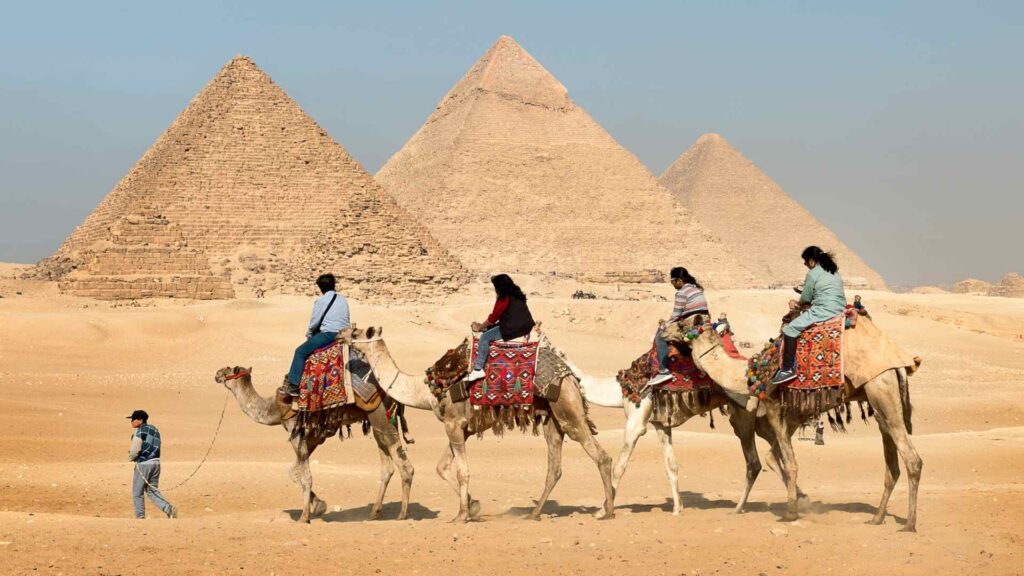
- Camel racing is a traditional sport enjoyed in rural areas.
- Egypt's textile industry is renowned for high-quality cotton products.
- Many Egyptian homes feature mashrabiya, intricate wooden latticework for ventilation.
- Luxor is known as the “world’s greatest open-air museum.”
- The Aswan High Dam revolutionized irrigation and electricity in Egypt.
- “Feluccas” are traditional sailboats still used on the Nile River.
- Cairo is famous for its bustling bazaars, such as Khan el-Khalili.
- The 2011 revolution marked a significant turning point in Egypt’s modern history.
Even More Fun Facts About Egypt
- Ancient Egyptians believed in an afterlife and filled tombs with treasures for the deceased.
- The scarab beetle was a symbol of rebirth and immortality.
- Egypt’s national flag features the Eagle of Saladin.
- The Lotus flower symbolized purity and rebirth in ancient times.
- Pharaohs often married within their families to preserve royal lineage.
- King Tutankhamun's tomb contained over 5,000 artifacts.
- Ancient Egyptians played board games like Senet.
- Arabic is Egypt’s official language, but various dialects exist.
- Bread and beer were staples in the ancient Egyptian diet.
- Many Hollywood films have used Egypt’s iconic landscapes as a backdrop.
- The Alexandria Lighthouse was one of the Seven Wonders of the Ancient World.
- Some ancient Egyptian temples were dismantled and rebuilt to save them from flooding.
- The Cairo Opera House is a hub for arts and culture in Egypt.
- EgyptAir is the national airline and one of the oldest in the world.
- Tourists flock to Luxor and Aswan for their timeless temples and ruins.
- Cairo Tower offers a panoramic view of the city.
- Pyramids were sometimes looted shortly after being sealed.
- Ancient Egyptians used cosmetics, with eyeliner being a popular choice.
- Many of Egypt’s ruins still hold undiscovered secrets beneath the sand.
- Egypt’s population is over 100 million, making it the most populous Arab country.
- The ancient Egyptian calendar had 12 months of 30 days, with 5 extra days added to honor the gods.
- The ancient Egyptians built the first known dams to control the flooding of the Nile.
- The Temple of Abu Simbel was carefully relocated in the 1960s to save it from rising waters.
- Ancient Egyptians used honey as both a sweetener and a natural antiseptic.
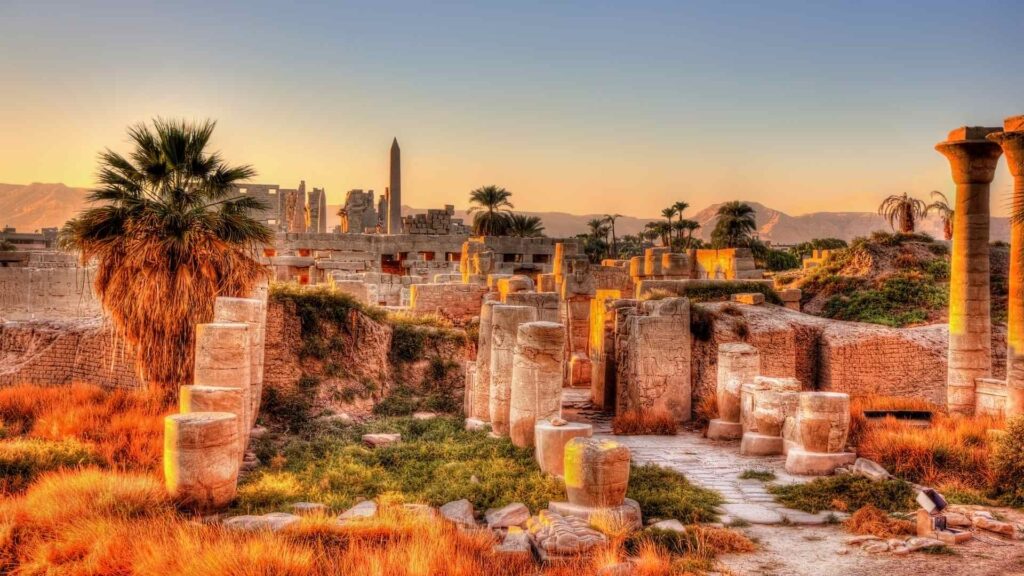
- Luxor Temple and Karnak Temple were connected by the Avenue of Sphinxes, recently restored.
- Egypt’s unique sandboarding tradition attracts adventure-seekers to its dunes.
- Ancient Egyptians were among the first to use geometry, aiding in construction and land division.
- The ankh, a symbol of life, was a prominent motif in Egyptian art and religion.
- The colors used in ancient Egyptian art had specific meanings: green for fertility, blue for divinity, etc.
- Alexandria was founded by Alexander the Great in 331 BCE.
- Ancient Egyptians used reed boats to navigate the Nile and its tributaries.
- The famed bust of Nefertiti, wife of Akhenaten, is one of the most iconic artifacts of ancient Egypt.
- The Great Pyramid of Giza aligns precisely with the cardinal points of the compass.
- In the 13th century, Cairo became one of the largest cities in the medieval world.
- Hathor, the goddess of music and love, was often depicted as a cow or with cow’s ears.
- Ancient Egyptians were skilled brewers, and beer was part of workers’ daily rations.
- The ancient city of Thebes is now the modern city of Luxor.
- The ancient Egyptian Book of the Dead served as a guide for the deceased in the afterlife.
- Karnak Temple is the largest religious building ever constructed.
- Egyptian alabaster was widely used for making statues, vessels, and other artifacts.
- The Dendera Zodiac, an ancient star map, reflects the Egyptians’ astronomical knowledge.
- Lake Qarun in Fayoum is home to a rich array of fossilized species from millions of years ago.
- Egypt's Sinai Peninsula is a vital migratory route for birds traveling between Africa and Eurasia.
- The ancient Egyptians were among the first civilizations to develop a centralized government.
- The ancient temple of Philae was another structure rescued from flooding by UNESCO.
- Ancient Egyptians believed in a protective god of childbirth, Taweret, depicted as part-hippopotamus.
- The ancient city of Memphis was a prominent cultural and political center for centuries.
- Sekhmet, the lion-headed goddess, was a symbol of war and healing.
- Egypt’s golden treasures, such as Tutankhamun's mask, are legendary for their craftsmanship.
- Egypt has the oldest dress in the world, dated to over 5,000 years ago.
- The Great Library of Alexandria was an ancient hub of knowledge but was tragically destroyed.
- The ancient Egyptian game of Mehen used a spiral board and counters.
- Egyptians are credited with the invention of eye makeup, initially for sun protection.
- The Obelisk of Hatshepsut, located at Karnak, is the tallest surviving ancient obelisk.
- Egypt’s coastline along the Mediterranean was a critical trade route for ancient empires.
- The Saqqara Step Pyramid is considered the oldest stone pyramid in Egypt.
- The Tomb of Seti I in the Valley of the Kings is famous for its intricate paintings.
- Hatshepsut, a female pharaoh, reigned for over 20 years during the 18th Dynasty.
- Ancient Egyptian obelisks are now found in cities worldwide, including Paris, London, and New York.
- Ancient Egyptians domesticated animals such as cows, goats, and sheep for agriculture.
- Ramses II is often regarded as one of the most powerful pharaohs in Egypt’s history.
- Egypt’s Red Sea offers some of the best diving spots in the world, with shipwrecks and coral reefs.
- The Abu Simbel temples are aligned so the sun illuminates the inner sanctum twice a year.
- The Bent Pyramid, with its unique shape, reflects early attempts at pyramid construction.
- The treasures of Tanis, discovered in 1939, rival those of Tutankhamun.
- Egypt’s “Blue Hole” in Dahab is a popular site for divers and freedivers.
- The Cairo Citadel, built by Saladin in the 12th century, was a strategic fortress for centuries.
Conclusion
Egypt is a land of endless intrigue, offering something for everyone.
Whether captivated by its ancient history, natural beauty, or modern charm, you’ll find countless reasons to be amazed by Egypt.

Ellie is the owner and sole author of Fun Facts, combining her mechanical engineering background with years of research-driven writing to deliver facts you can trust. Every article is thoroughly fact-checked and routinely updated as new science and sources emerge to keep information accurate and current. Her mission is to make learning delightful while upholding high standards of reliability and transparency.