
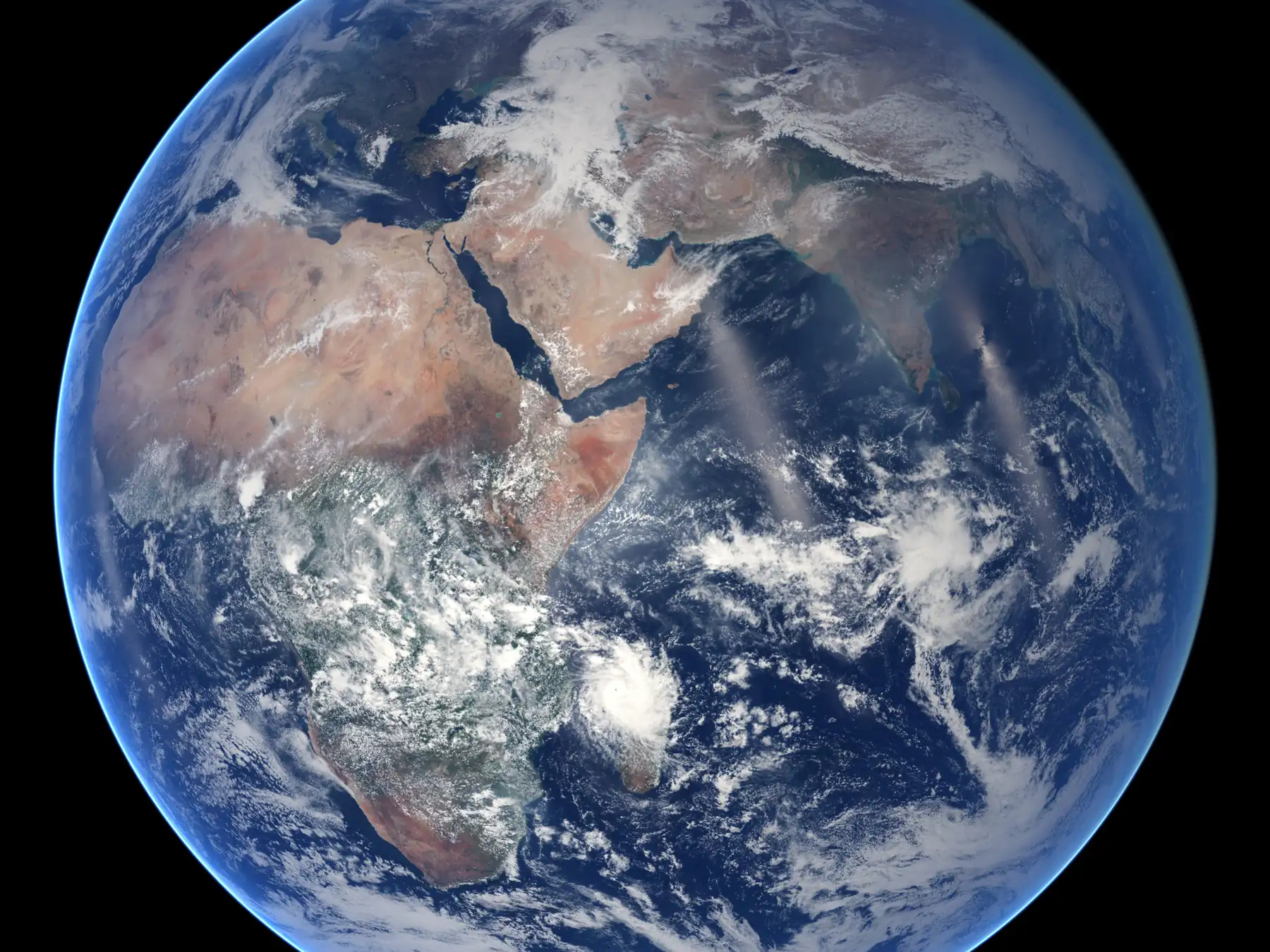
Earth is the only home humanity has ever known, yet it is anything but ordinary. Our planet spins, wobbles, recycles rock, moves oceans, builds mountains, carries a protective atmosphere, and hosts millions of species. These 145 Earth facts zoom from the planet’s iron core to the edge of its atmosphere, with plenty of surprising numbers along the way.
Earth basics and big numbers
- Earth is the third planet from the Sun.
- Earth is the largest of the four rocky, or terrestrial, planets in our solar system.
- It is the fifth-largest planet in the solar system overall.
- Earth’s equatorial diameter is about 12,756 kilometers, or 7,926 miles.
- Its shape is an oblate spheroid, meaning it bulges slightly around the equator.
- Earth has a mass of about 5.97 × 10²⁴ kilograms.
- The average distance between Earth and the Sun is about 150 million kilometers, or 93 million miles.
- That average Sun-Earth distance defines one astronomical unit, commonly abbreviated AU.
- Earth is about 4.54 billion years old.
- Earth formed from material in the young solar system.
- Gravity pulled early Earth into a roughly spherical shape.
- Earth is dense enough that heavy materials such as iron concentrated toward its center.
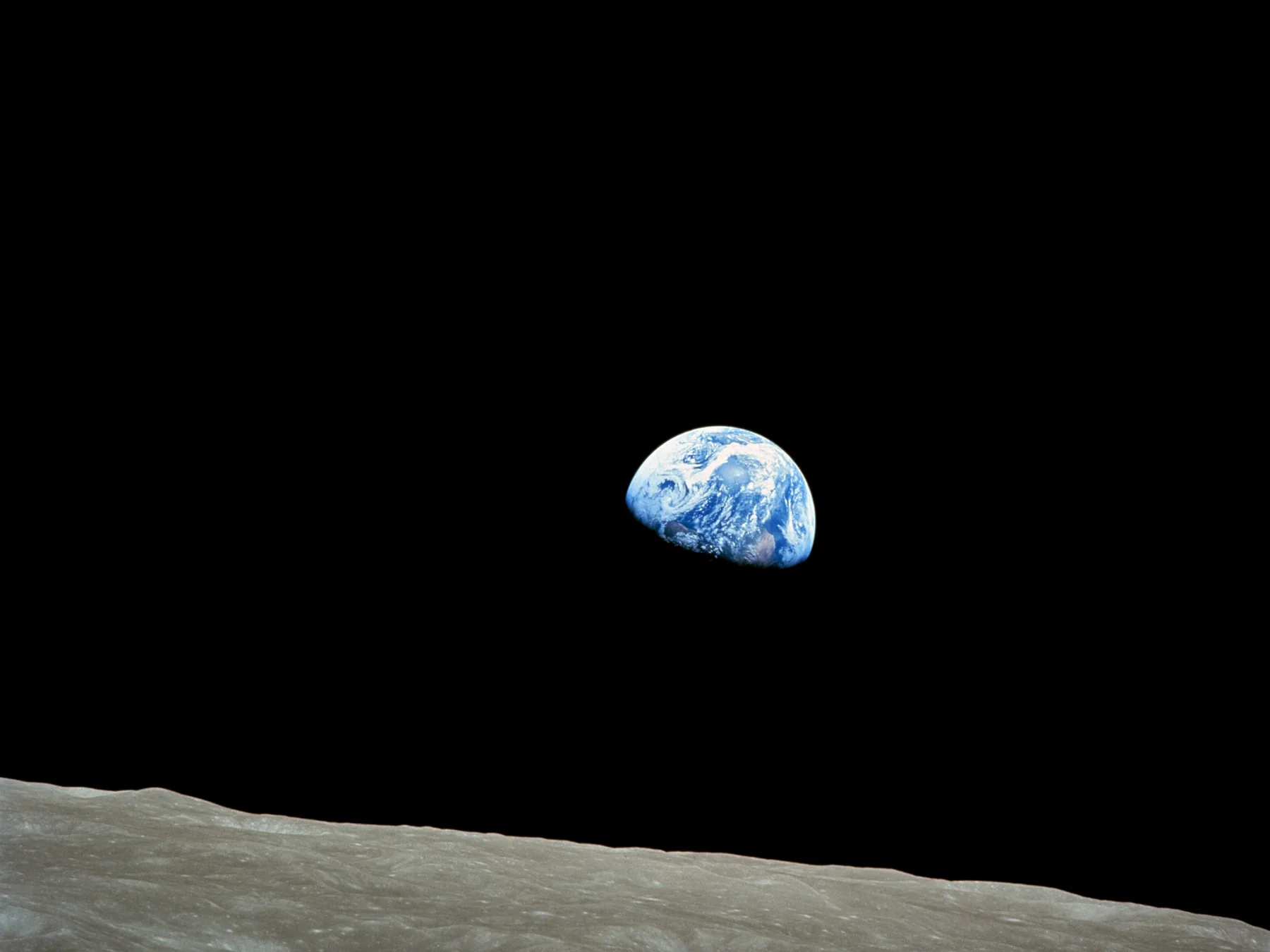
- The planet has one natural satellite, the Moon.
- Earth is the only planet currently known to support life.
- NASA calls Earth an ocean world because water dominates its visible surface.
Earth’s orbit, rotation, and seasons
- Earth completes one orbit around the Sun in about 365.25 days.
- Leap years help keep calendars aligned with Earth’s orbital period.
- Earth rotates once relative to the Sun in about 24 hours.
- A sidereal day, measured relative to distant stars, lasts about 23 hours and 56 minutes.
- Earth rotates from west to east.
- That rotation makes the Sun appear to rise in the east and set in the west.
- Earth’s axis is tilted about 23.4 degrees relative to its orbital plane.
- That axial tilt is the main reason Earth experiences seasons.
- Summer does not happen because a hemisphere is dramatically closer to the Sun.
- When the Northern Hemisphere tilts toward the Sun, the Southern Hemisphere tilts away.
- Earth’s orbit is slightly elliptical rather than a perfect circle.
- Earth is actually closest to the Sun during Northern Hemisphere winter, usually in early January.
- The point where Earth is closest to the Sun is called perihelion.
- The point where Earth is farthest from the Sun is called aphelion.
- Earth’s axis slowly changes direction over thousands of years in a motion called precession.
Oceans and Earth’s water
- Earth’s global ocean covers about 71% of the planet’s surface, according to NASA.
- About 97% of Earth’s water is in the ocean.
- The U.S. Geological Survey estimates Earth contains about 1.386 billion cubic kilometers of water.
- More than 96% of Earth’s surface water is saline.
- Only a small fraction of Earth’s total water is readily accessible freshwater.
- Much of Earth’s freshwater is frozen in glaciers and ice caps or stored underground.
- The Pacific Ocean is Earth’s largest and deepest ocean basin.
- The Mariana Trench contains the deepest known point in Earth’s ocean.
- Challenger Deep in the Mariana Trench lies nearly 11 kilometers below sea level.
- The average depth of Earth’s global ocean is about 3.6 kilometers, or 2.3 miles.
- Water constantly moves between ocean, atmosphere, land, ice, and living things.
- Solar energy and gravity are major drivers of Earth’s water cycle.
- Evaporation changes liquid water into water vapor.
- Condensation changes water vapor into liquid droplets, helping form clouds.
- USGS explains Earth’s water distribution in detail through its Water Science School.
Inside planet Earth
- Earth is commonly described as having a crust, mantle, outer core, and inner core.
- The crust is Earth’s thin outermost solid layer.
- Oceanic crust is generally thinner and denser than continental crust.
- The mantle extends far deeper than the crust and makes up most of Earth’s volume.
- Most of the mantle is solid rock that can deform and flow extremely slowly over geologic time.
- Earth’s outer core is liquid.
- The inner core is solid despite its enormous temperature because pressure is so intense.
- Iron is a major component of Earth’s core.
- Scientists cannot drill anywhere close to Earth’s core.
- Much of what scientists know about Earth’s interior comes from studying seismic waves.
- Different seismic waves move through materials in different ways.
- Some seismic waves cannot pass through liquids, helping reveal the liquid outer core.
- Temperature generally rises with depth inside Earth.
- Heat inside Earth comes partly from radioactive decay and partly from heat left from the planet’s formation.
- USGS describes Earth’s interior as a key driver of large-scale geologic activity.
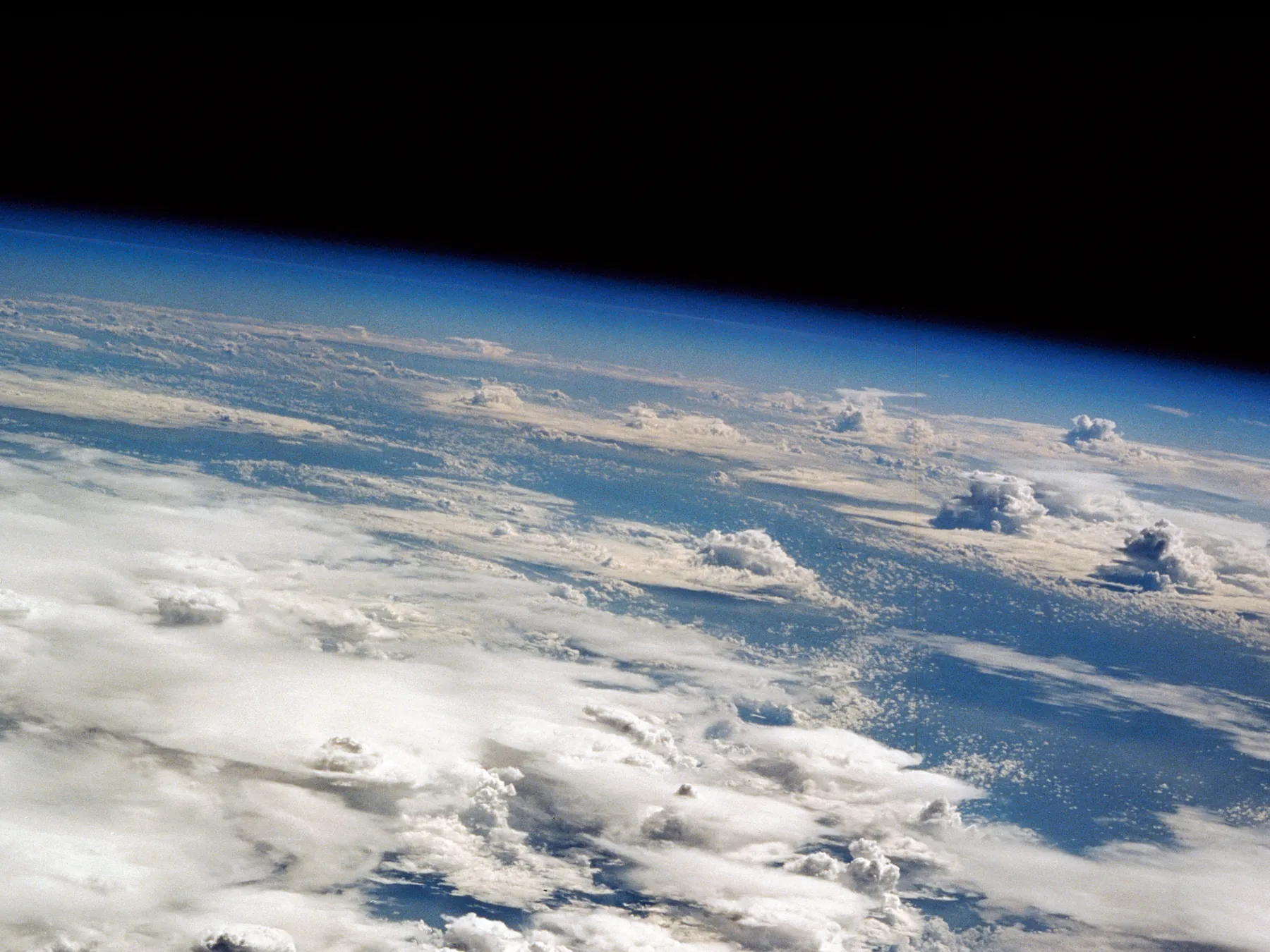
Plate tectonics, mountains, and earthquakes
- Earth’s rigid outer shell is broken into moving tectonic plates.
- Plate motion is usually measured in centimeters per year.
- That speed is comparable to how quickly fingernails grow, although rates vary by plate.
- At divergent boundaries, tectonic plates move apart.
- Mid-ocean ridges are major places where new oceanic crust forms.
- At convergent boundaries, plates move toward one another.
- Subduction happens when one tectonic plate sinks beneath another.
- Transform boundaries occur where plates slide horizontally past each other.
- Many earthquakes happen near plate boundaries.
- Earthquakes release stored elastic energy when rocks suddenly slip along faults.
- The Himalayas formed through the collision of the Indian and Eurasian tectonic plates.
- Mount Everest is the highest point above sea level on Earth.
- Mauna Kea is taller than Everest if measured from its underwater base to summit.
- Earth’s seafloor is constantly created, moved, and recycled through plate tectonics.
- Unlike Earth, some rocky worlds do not show the same style of active global plate tectonics.
Volcanoes and the rock cycle
- Magma is molten or partly molten rock beneath Earth’s surface.
- Once molten rock reaches the surface, it is called lava.
- Volcanoes can form at subduction zones, divergent boundaries, and volcanic hot spots.
- Hawaii formed above a long-lived volcanic hot spot as the Pacific Plate moved over it.
- Most volcanic activity on Earth occurs beneath the ocean.
- Igneous rocks form when molten material cools and solidifies.
- Sedimentary rocks form from accumulated sediments or chemical and biological processes.
- Metamorphic rocks form when existing rocks are altered by heat, pressure, or fluids without fully melting.
- The rock cycle describes how rocks can transform from one type into another.
- Weathering breaks rock down at or near Earth’s surface.
- Erosion transports weathered material using water, wind, ice, or gravity.
- Sediment can eventually be compacted and cemented into sedimentary rock.
- Fossils are most commonly preserved in sedimentary rocks.
- Earth’s surface has been dramatically reshaped many times over billions of years.
- Continents that look permanent on a human timescale are slowly moving.
Earth’s atmosphere and weather
- Dry air near Earth’s surface is about 78% nitrogen and 21% oxygen.
- Argon makes up most of the remaining percentage of dry air.
- Carbon dioxide is present in a much smaller concentration but strongly affects Earth’s climate.
- Water vapor varies greatly by location and is an important greenhouse gas.
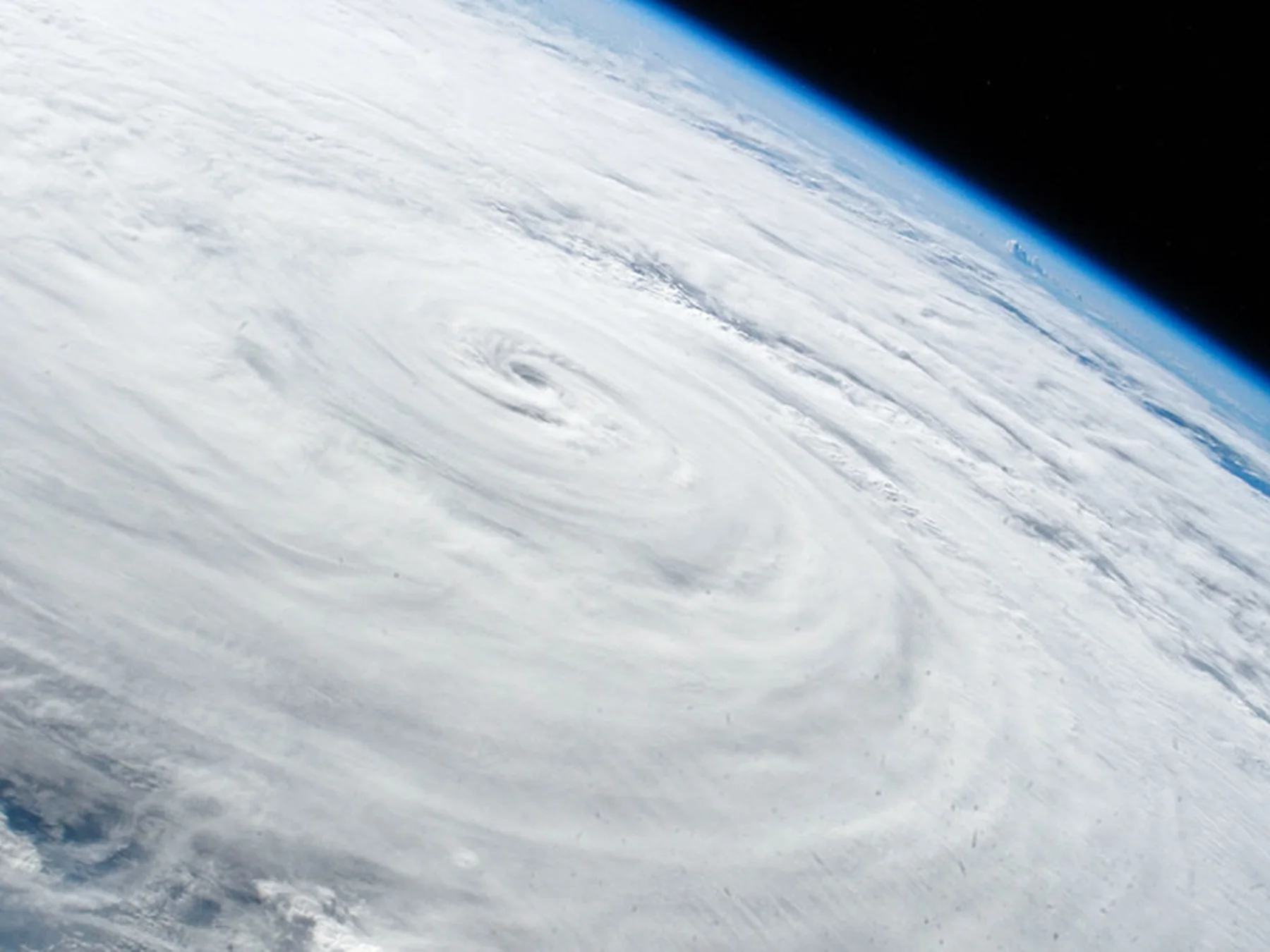
- The troposphere is the lowest major atmospheric layer and contains most of Earth’s weather.
- The stratosphere lies above the troposphere.
- Much of Earth’s ozone layer is located in the stratosphere.
- Stratospheric ozone absorbs much of the Sun’s harmful ultraviolet radiation.
- The mesosphere lies above the stratosphere.
- Many meteors burn up or fragment while traveling through Earth’s upper atmosphere.
- The thermosphere can reach very high temperatures while still containing extremely thin air.
- The atmosphere has no perfectly sharp edge where it suddenly stops and space begins.
- Air pressure decreases as altitude increases.
- Weather describes short-term atmospheric conditions, while climate describes longer-term patterns.
- Earth’s atmosphere helps moderate temperature and shields the surface from many small incoming space rocks.
Earth’s magnetic field and space shield
- Earth has a global magnetic field generated mainly by motion in its liquid outer core.
- The region dominated by Earth’s magnetic field is called the magnetosphere.
- The magnetosphere helps deflect many charged particles from the solar wind.
- Earth’s magnetic poles are not located exactly at the geographic poles.
- Magnetic north changes position over time.
- Earth’s magnetic field has reversed polarity many times in geologic history.
- Evidence of past magnetic reversals is preserved in some rocks.
- Magnetic stripes on the seafloor helped confirm the theory of plate tectonics.
- Auroras occur when energetic charged particles interact with gases in Earth’s upper atmosphere.
- The aurora borealis is commonly seen in high northern latitudes.
- The aurora australis is the southern counterpart.
- Different atmospheric gases and altitudes can contribute different auroral colors.
- Green is one of the most familiar auroral colors and is strongly associated with excited oxygen.
- Solar storms can disturb Earth’s magnetosphere and affect satellites, communications, and power systems.
- Earth’s magnetic environment is one reason space weather matters to modern technology.
Life and Earth’s biosphere
- The biosphere includes the parts of Earth where life exists.
- Life has been present on Earth for billions of years.
- Microorganisms dominated Earth’s biological history long before plants and animals appeared.
- Photosynthetic organisms helped transform Earth’s atmosphere by releasing oxygen.
- Earth’s liquid water, energy sources, chemistry, and long-term environmental stability all help make life possible.
- Life exists from deep ocean environments to high mountains and extreme deserts.
- Some microorganisms survive conditions that would be lethal to humans.
- Scientists call organisms adapted to extreme environments extremophiles.
- Earth’s ecosystems exchange carbon, water, nutrients, and energy.
- Plants remove carbon dioxide from the atmosphere during photosynthesis.
- Oceans absorb and release enormous quantities of carbon dioxide and heat.
- Tiny ocean phytoplankton perform a substantial share of global photosynthesis.
- Biodiversity is not distributed evenly across the planet.
- Tropical regions generally contain more species than polar regions.
- Earth is a coupled system, meaning changes in its air, water, land, ice, and life can influence one another.
Ten surprising Earth facts
- If Earth were a perfect smooth sphere, its oceans would spread very differently than they do across today’s continents and basins.
- The deepest ocean trench is deeper below sea level than Mount Everest rises above it.
- Earth’s continents have repeatedly joined into and broken apart from supercontinents.
- Pangaea was only the latest well-known supercontinent, not the first one in Earth’s history.
- Most of Earth’s volume is hidden beneath our feet and can never be directly visited.
- Earth’s ocean contains mountains, valleys, plains, volcanoes, and canyons just like land does.
- The planet’s surface is constantly changing even when it looks motionless.
- Earth’s day length changes by tiny amounts because rotation is influenced by the Moon, atmosphere, oceans, and mass movements.
- The Moon is slowly moving away from Earth by a few centimeters per year.
- NASA’s Earth facts page summarizes our planet as a dynamic system of atmosphere, ocean, ice, and solid ground.
Quick Earth FAQ
How old is Earth?
Scientists estimate Earth is about 4.54 billion years old, based on radiometric dating of meteorites and ancient Earth materials.
How much of Earth is covered by water?
NASA estimates that the global ocean covers about 71% of Earth’s surface.
What is Earth made of?
Earth has a rocky crust and mantle surrounding a metallic core. The outer core is liquid, while the inner core is solid.
Why does Earth have seasons?
Earth’s rotational axis is tilted about 23.4 degrees. As Earth travels around the Sun, each hemisphere receives changing angles and lengths of sunlight.
Is Earth perfectly round?
No. Earth is slightly flattened at the poles and wider around the equator, making it an oblate spheroid.

Ellie is the owner and sole author of Fun Facts, combining her mechanical engineering background with years of research-driven writing to deliver facts you can trust. Every article is thoroughly fact-checked and routinely updated as new science and sources emerge to keep information accurate and current. Her mission is to make learning delightful while upholding high standards of reliability and transparency.