
China is one of the world’s oldest civilizations, filled with captivating stories, unique traditions, and awe-inspiring landscapes.
Here’s an ultimate guide to 145 intriguing fun facts about China that spans its culture, history, innovations, and more. Whether you're curious or planning a trip, these fun facts will surely amaze you!
Geography and Nature of China
- China is home to the tallest mountain on Earth, Mount Everest, shared with Nepal, standing at 29,032 feet.
- The Yangtze River is Asia’s longest river, flowing over 3,900 miles and serving as a crucial waterway.
- China has 14 neighboring countries, the most of any country worldwide.
- Over 40% of China is covered by mountains, making it one of the most mountainous countries.
- China's deserts cover more land area than several European countries combined, with the Gobi and Taklamakan being the largest.
- China is home to the Giant Panda, an endangered species protected in natural reserves and zoos.
- The Karst Mountains in Guilin inspired landscapes in the movie "Avatar" with their unique, otherworldly shapes.
- The country boasts the world’s largest artificial forest in Inner Mongolia, known as the Three-North Shelterbelt Project.
- China has the third-largest number of UNESCO World Heritage Sites, preserving natural and cultural wonders.
- The country’s Huangguoshu Waterfall is one of the largest in Asia, attracting thousands of visitors yearly.
- The Yarlung Zangbo Grand Canyon in Tibet is the world’s deepest canyon, deeper than the Grand Canyon.
- China’s Rainbow Mountains in Zhangye Danxia are famous for their multicolored striped rock formations.
- The Jiuzhaigou Valley, a UNESCO site, is famed for its clear blue lakes and waterfalls.
- The Li River in Guilin is often regarded as one of the most picturesque river landscapes in the world.
- China has over 30,000 plant species, many unique to the region, contributing to its rich biodiversity.
Cultural Traditions and Customs
- The Chinese New Year, also called the Spring Festival, is the world’s largest annual migration as families reunite.
- Red is considered a lucky color in China, symbolizing happiness, prosperity, and good fortune.
- The Mid-Autumn Festival celebrates the harvest with mooncakes, a traditional pastry.
- The Dragon Boat Festival commemorates the poet Qu Yuan and features thrilling boat races.
- Chinese weddings are rich in tradition, with brides often wearing red to symbolize joy.
- Tea drinking is an essential cultural practice, dating back over 3,000 years.
- Feng Shui, an ancient Chinese practice, aims to harmonize individuals with their environment.
- Chinese calligraphy is a respected art form, often considered one of the highest visual arts in Chinese culture.
- The number 8 is extremely lucky in Chinese culture due to its phonetic similarity to "prosperity."
- Dumplings symbolize wealth, as they resemble ancient Chinese currency ingots.
- Tomb Sweeping Day, or Qingming Festival, is a time to honor ancestors by tending to their graves.
- Chinese opera, one of the oldest dramatic art forms, combines singing, acting, and acrobatics.
- Kung Fu, a martial art, has deep cultural roots and is practiced for self-defense and discipline.
- Foot binding, once a symbol of beauty and status, was a Chinese practice for nearly a thousand years.
- The Chinese Zodiac assigns animals to each year, affecting personality traits and compatibility.
Historical Facts about China
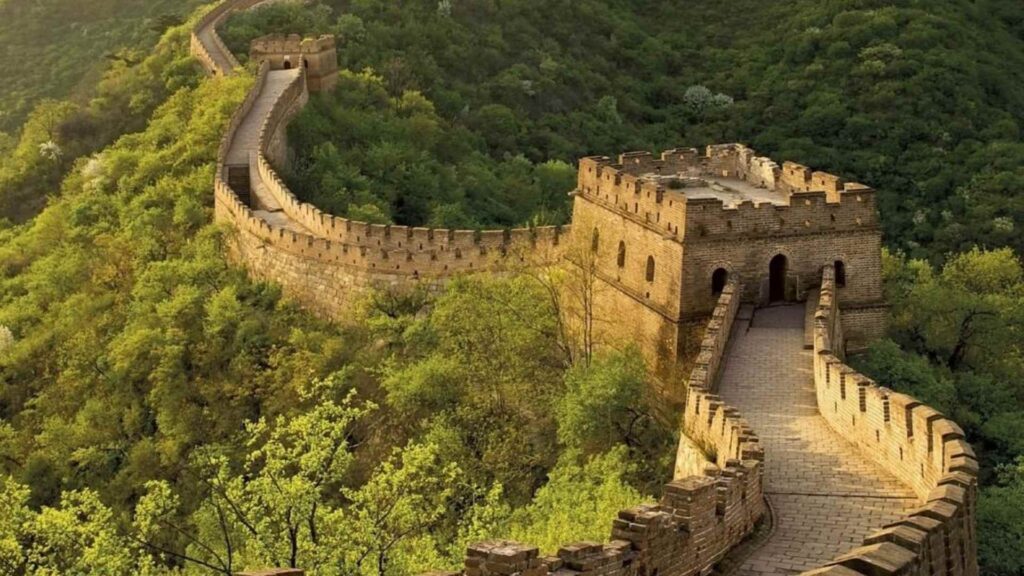
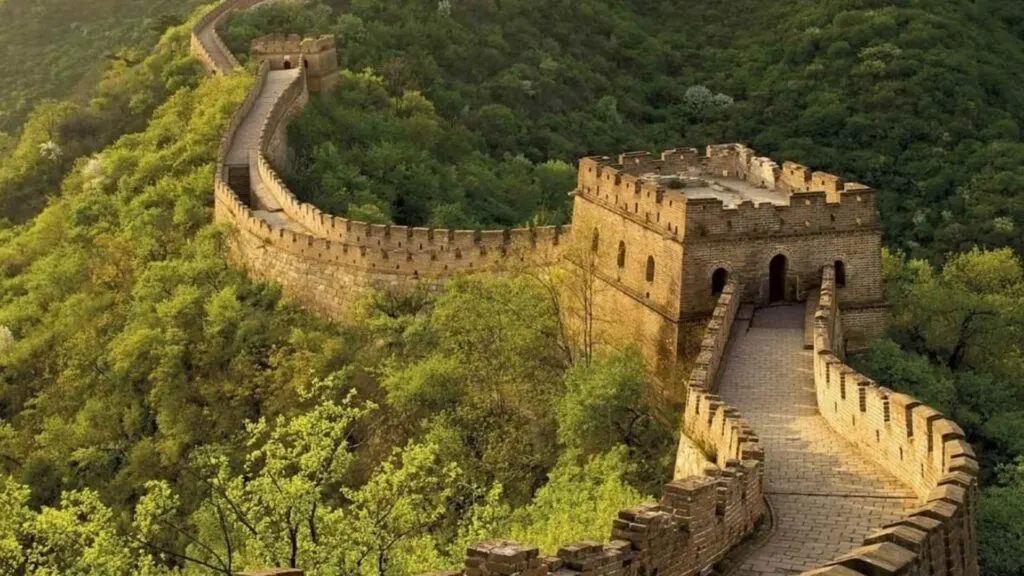
- The Great Wall of China, stretching over 13,000 miles, was built over several dynasties.
- Ancient China invented paper around 105 AD, revolutionizing record-keeping and literacy.
- The Terracotta Army, discovered in 1974, includes over 8,000 life-sized soldiers guarding Emperor Qin's tomb.
- Confucius, an influential philosopher, emphasized morality and societal roles, impacting Chinese values.
- The Han Dynasty (206 BC – 220 AD) was a golden age, advancing science, technology, and trade.
- China invented gunpowder, which drastically changed global warfare and military tactics.
- Silk Road trade connected China with Europe, exchanging goods, ideas, and culture for centuries.
- The Forbidden City in Beijing was an imperial palace for over 500 years, symbolizing power.
- The Yuan Dynasty (1271–1368), established by the Mongols, marked the first time non-Chinese ruled China.
- China was the first country to develop paper money, which revolutionized trade and currency systems.
- Empress Wu Zetian was the only official female emperor in Chinese history, ruling during the Tang Dynasty.
- The invention of printing in ancient China paved the way for the spread of knowledge.
- The Ming Dynasty (1368–1644) is known for its grand architecture and expansion of the Great Wall.
- The Opium Wars in the 19th century forced China to open ports to foreign influence and trade.
- Buddhism reached China from India along the Silk Road, shaping Chinese religious practices.
Modern China Innovations and Economy
- China is the world’s largest manufacturer, producing electronics, textiles, and machinery.
- The high-speed rail network in China is the world’s largest, connecting cities at record speeds.
- Alipay and WeChat Pay dominate China’s cashless society, with digital payments commonplace.
- China has the world’s largest internet user population, with over 900 million users.
- China’s space agency landed a rover on Mars in 2021, showcasing its growing space capabilities.
- The nation leads in renewable energy, especially solar and wind power.
- "Taobao" and "Tmall" are major e-commerce platforms, part of China’s booming online retail sector.
- China builds a skyscraper approximately every five days on average due to urbanization.
- Huawei, a tech giant, is known for pioneering 5G technology and telecommunications.
- The Belt and Road Initiative aims to revive Silk Road trade routes globally through infrastructure.
- China’s movie industry is one of the largest in the world, with Hollywood competing for access.
- Electric vehicle production is booming in China, with companies like BYD and NIO leading.
- Didi Chuxing, China’s rideshare company, rivals global brands like Uber in size and usage.
- China’s education system is highly competitive, especially with its “Gaokao” college entrance exam.
- The world’s largest artificial intelligence companies are emerging in China, revolutionizing tech.
Chinese Cuisine and Food Culture
- China is the birthplace of tea, consumed by billions worldwide, with varieties like green, black, and oolong.
- Chinese cuisine includes eight major culinary traditions, each with unique flavors and techniques.
- Noodles have a history dating back over 4,000 years, often symbolizing longevity.
- Hot pot is a popular communal dining experience, with regions offering various styles.
- Dim sum originated in Southern China and is enjoyed globally as small plates with tea.
- Peking duck, known for its crispy skin, is a famous dish originating from Beijing.
- The use of chopsticks dates back over 3,000 years and is integral to Chinese dining etiquette.
- Tofu, a protein-rich food, was invented in China over 2,000 years ago.
- Mooncakes, eaten during the Mid-Autumn Festival, have intricate designs and fillings.
- Szechuan cuisine is known for its spicy flavors, especially the mouth-numbing Sichuan pepper.
- The “Four Great Inventions of Ancient China” include paper, gunpowder, printing, and the compass.
- Dumplings are traditionally eaten during the Chinese New Year, symbolizing wealth.
- “Eight Treasures Tea” is a blend of herbs and fruits with health-boosting properties.
- Rice is the staple food in Southern China, while Northern China favors wheat-based dishes.
- Street food culture in cities like Beijing and Xi'an showcases regional specialties.
Unique Quirks and Fun Facts
- "China" as a name derives from the Qin (Chin) Dynasty, one of its first unified empires.
- There are more English speakers in China than in the United States due to education emphasis.
- Basketball is hugely popular in China, with millions of fans following the NBA.
- China’s education system is highly intense, with students often studying for 12+ hours daily.
- The Chinese government regulates internet content, creating the "Great Firewall."
- The giant Leshan Buddha statue is the world’s largest ancient Buddha, carved in 713 AD.
- “Mandarin” refers both to China’s official language and a type of Chinese citrus fruit.
- China has an island, Hainan, that’s famous for its tropical beaches and palm trees.
- Fortune cookies were invented in the U.S., not China, and are mostly unknown there.
- China has an official national animal—the dragon, representing strength and authority.
- Ping pong, or table tennis, is the country’s national sport and a huge cultural passion.
- Chinese martial arts were popularized in Western culture through Bruce Lee’s movies.
- Hair salons in China offer head massages as part of their regular services.
- China’s birth rate is declining, despite the previous one-child policy being lifted.
- Unlike most countries, China uses the lunar calendar for festivals like the Chinese New Year.
- “China Rose” or hibiscus is a popular ornamental flower symbolizing gentleness.
Bonus Facts about China
- Each Chinese province has unique dialects, some unintelligible to speakers of other dialects.
- China’s writing system is one of the oldest, with characters representing concepts.
- The Lunar New Year’s Eve television gala is watched by over 1 billion people.
- China has over 5,000 airports, connecting even remote cities.
- Fireworks were invented in ancient China and remain popular for celebrations.
- Over 3,000 years ago, early Chinese astronomers discovered supernovae.
- Dragon dances and lion dances are traditional performances at festivals.
- Traditional Chinese medicine is over 2,000 years old, emphasizing herbal remedies.
- Over 70 million Chinese citizens practice Buddhism, making it the largest religion in China.
- The world’s oldest surviving paper map dates back to the Han Dynasty in China.
- Chinese "face" culture emphasizes respect, reputation, and social standing.
- Xi’an, an ancient capital, was the start of the Silk Road for centuries.
- Chinese horoscopes are based on the lunar calendar, differing from Western astrology.
- Ancient Chinese scholars documented solar eclipses and comets.
- Mahjong is a popular game played with tiles, known for its strategic gameplay.
- Calligraphy brushes were historically made from animal hair.
- Red envelopes filled with money are given during the Lunar New Year as gifts.
- Shaolin monks are renowned for their martial arts and disciplined lifestyle.
- "Guanxi" is a cultural term signifying networks of personal relationships.

Ellie is the owner and sole author of Fun Facts, combining her mechanical engineering background with years of research-driven writing to deliver facts you can trust. Every article is thoroughly fact-checked and routinely updated as new science and sources emerge to keep information accurate and current. Her mission is to make learning delightful while upholding high standards of reliability and transparency.