
Benjamin Franklin was a printer, writer, scientist, inventor, diplomat, postmaster, political organizer, and one of early America’s most relentless self-improvers. He studied lightning, helped negotiate the alliance with France, launched a famous almanac, organized libraries and fire companies, and never actually “discovered electricity” with a kite. These 145 facts explore Franklin’s Boston childhood, printing career, experiments, inventions, civic projects, diplomacy, Revolution, Constitution, slavery, humor, and the real science behind his most famous thunderstorm story.
Benjamin Franklin basics
- Benjamin Franklin was born in Boston on January 17, 1706, under the modern Gregorian dating convention.
- His father was Josiah Franklin.
- Josiah worked as a candle and soap maker.
- Benjamin was one of 17 children born to his father across two marriages.
- He received only a few years of formal schooling.
- Franklin became an avid self-educated reader.
- He trained as a printer.
- Franklin later became a writer, scientist, inventor, diplomat, and statesman.
- He never served as president of the United States.
- Franklin appears on the U.S. $100 bill.
- That makes him one of the best-known Americans on currency who was never president.
- He helped draft and sign major founding documents.
- Franklin lived to age 84.
- He died in Philadelphia in 1790.
- The Library of Congress preserves major Franklin papers and historical collections.
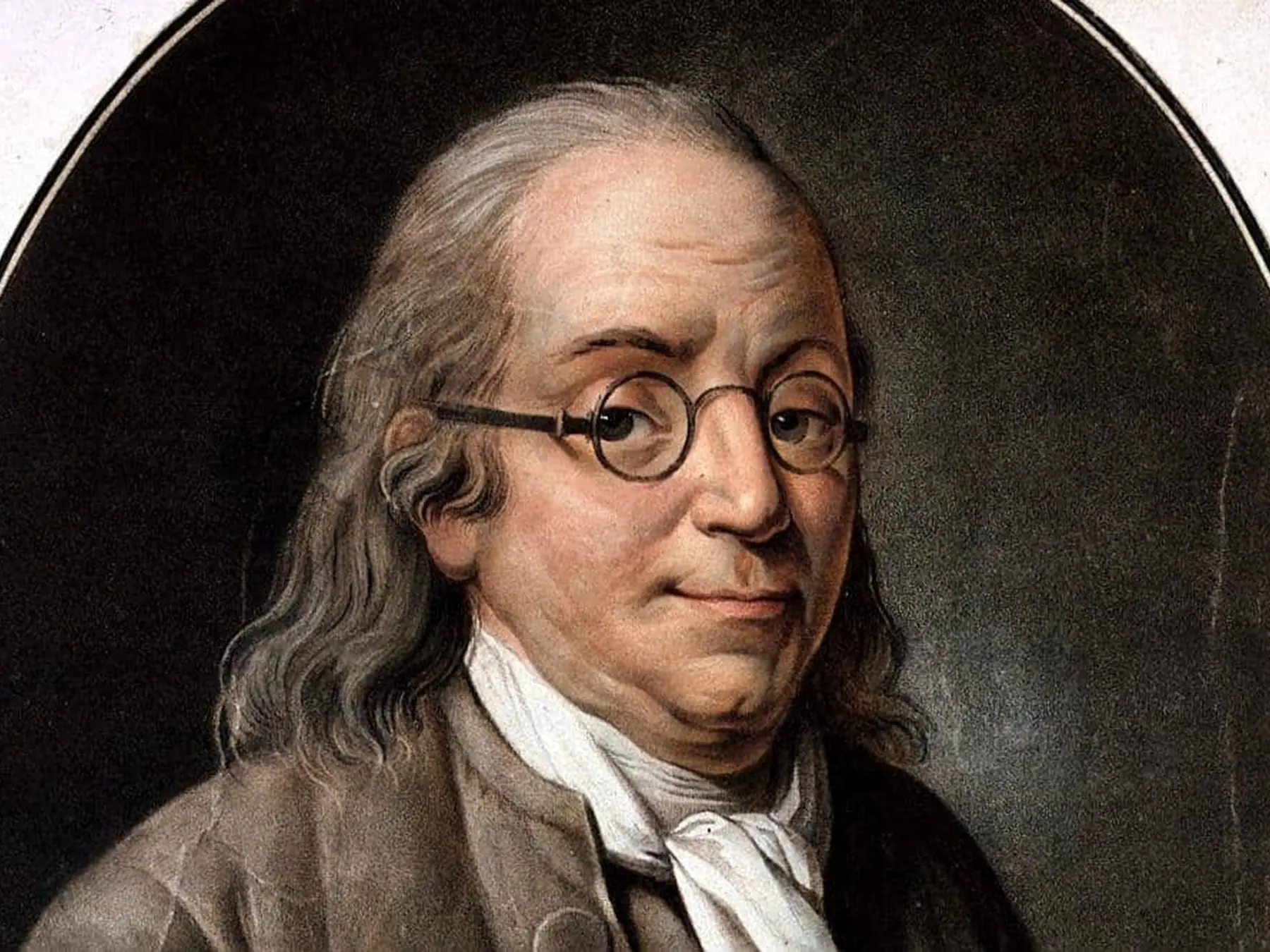
Franklin runs away from Boston
- Franklin became apprenticed to his older brother James.
- James operated a newspaper called the New-England Courant.
- Young Benjamin wanted to publish his own writing.
- He secretly submitted humorous essays under the name Silence Dogood.
- Silence Dogood was presented as a witty middle-aged widow.
- The letters mocked social customs and public life.
- James published them without initially knowing his younger brother wrote them.
- Franklin eventually revealed the prank.
- The brothers’ relationship became increasingly hostile.
- Benjamin left the apprenticeship without permission.
- He fled Boston at age 17.
- Franklin first traveled to New York.
- He then continued to Philadelphia.
- His arrival in Philadelphia later became part of his self-made-man mythology.
- Franklin’s future political home began with an illegal break from his apprenticeship contract.
Printer and publisher
- Franklin established himself as a printer in Philadelphia.
- He became publisher of the Pennsylvania Gazette.
- The newspaper became influential and profitable.
- Printing included advertisements, public notices, political essays, and news.
- Franklin understood that information could be both a business and a form of influence.
- He printed paper currency for colonial governments.
- Franklin experimented with anti-counterfeiting methods.
- Some colonial notes used leaf impressions that were difficult to reproduce exactly.
- He built a network of printing partnerships across the colonies.
- Those partnerships expanded his income and information network.
- Franklin eventually retired from daily printing work relatively young.
- Business success gave him time for science and public service.
- He continued writing throughout his life.
- Franklin frequently used pseudonyms.
- His printing career taught him how powerfully public opinion could be shaped by words.
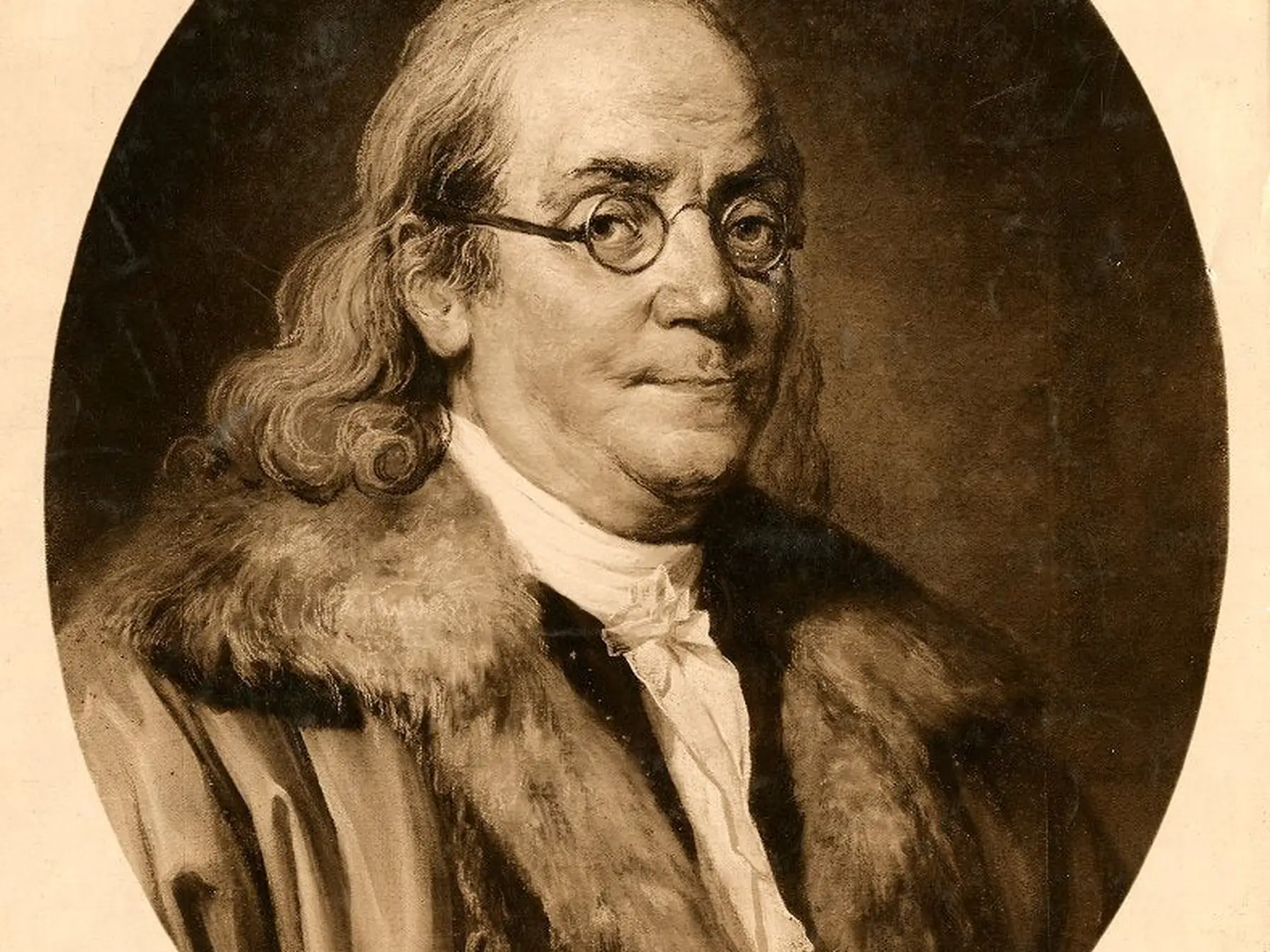
Poor Richard’s Almanack
- Franklin began publishing Poor Richard’s Almanack in 1732.
- He used the fictional persona Richard Saunders.
- Almanacs were extremely popular practical books.
- They included calendars, weather predictions, astronomy, household information, and entertainment.
- Franklin filled his almanac with jokes and memorable sayings.
- Many proverbs associated with Franklin had older origins.
- He excelled at adapting and popularizing them.
- “Early to bed and early to rise” is strongly associated with the almanac tradition.
- “A penny saved is twopence dear” is closer to Franklin’s original wording than the modern “penny earned” version.
- Franklin’s sayings emphasized thrift, work, planning, and self-discipline.
- The almanac became financially successful.
- It ran annually for about 25 years.
- Franklin later gathered many proverbs into “The Way to Wealth.”
- The piece became one of his most widely reprinted works.
- Poor Richard helped create Franklin’s lasting public image as a practical, witty adviser.
Franklin builds civic institutions
- Franklin organized a discussion club called the Junto.
- The group met to debate ideas and improve community life.
- Junto discussions inspired several civic projects.
- Franklin helped establish the Library Company of Philadelphia.
- It became one of America’s earliest successful subscription libraries.
- Members pooled money to buy books no single person could easily afford.
- Franklin helped organize Philadelphia’s Union Fire Company.
- Volunteer fire companies were important in dense wooden colonial cities.
- He promoted street paving and cleaning.
- Franklin supported improvements to city lighting.
- He helped create an academy that developed into the University of Pennsylvania.
- Franklin also supported Pennsylvania Hospital.
- His civic style often involved organizing private citizens before asking government to solve every problem.
- He wrote persuasive proposals explaining practical benefits.
- Many modern Philadelphia institutions trace part of their history to Franklin’s organizing energy.
The real kite experiment
- Franklin did not discover electricity.
- Scientists had studied electrical phenomena long before his experiments.
- Franklin investigated whether lightning was electrical in nature.
- He proposed experiments involving elevated conductors.
- French experimenters successfully tested related ideas before Franklin’s famous kite report.
- Franklin later described a kite experiment using a silk kite, metal wire, twine, and a key.
- The kite was intended to collect electrical charge from storm clouds.
- The experiment did not require a lightning bolt to strike the kite directly.
- A direct lightning strike could easily have killed Franklin.
- Charge accumulated on the wet string and metal components.
- Franklin reported drawing sparks from the key.
- The result supported the electrical nature of thunderstorms.
- Modern safety guidance says never fly kites near thunderstorms.
- People have died attempting to recreate lightning experiments.
- Franklin’s real contribution was experimental reasoning about electricity, not a reckless lightning strike to the head or key.
Lightning rods and electrical language
- Franklin developed and promoted the lightning rod.
- A lightning rod gives electrical charge a controlled conductive path toward ground.
- It can reduce the risk of destructive building fires from lightning.
- Church steeples and tall buildings were particularly vulnerable before modern protection.
- Lightning rods spread quickly after Franklin’s work.
- Franklin also developed a one-fluid model of electricity.
- He used positive and negative terminology for electrical charge.
- Those labels remain in use today.
- The chosen sign convention was somewhat arbitrary.
- Electrons were discovered much later.
- Electron flow in metal therefore moves opposite conventional current direction.
- This does not make conventional-current calculations wrong.
- Franklin corresponded with scientists internationally.
- His electrical experiments made him famous in Europe before the American Revolution.
- Scientific celebrity later strengthened his effectiveness as a diplomat.
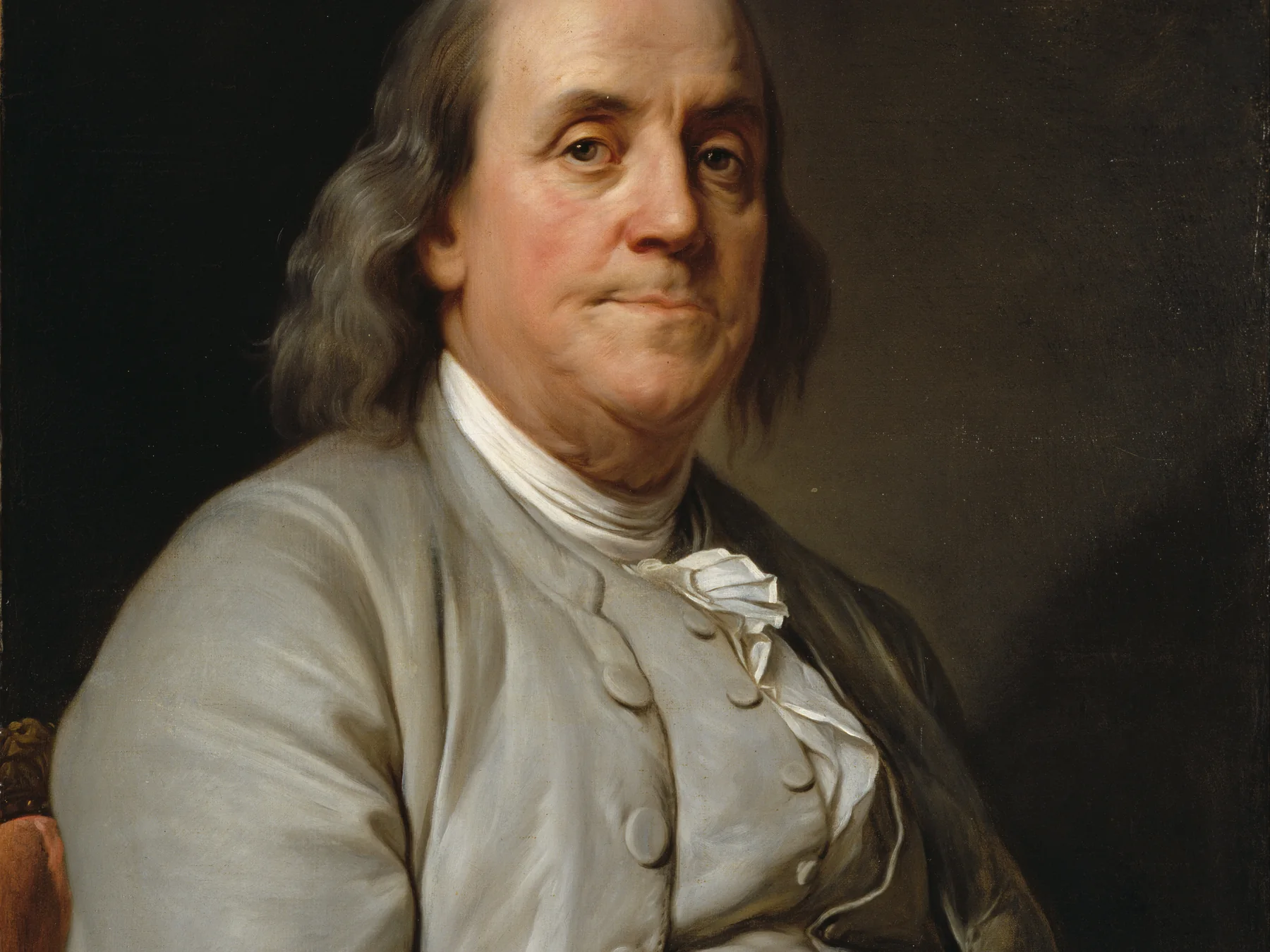
Franklin’s inventions
- Franklin designed a more efficient stove commonly called the Franklin stove.
- Its purpose was to improve room heating and fuel use.
- Franklin designed bifocal eyeglasses.
- Bifocals combine two optical powers in one pair of lenses.
- He used them because he needed different correction for near and far vision.
- Franklin experimented with glass armonica musical instruments.
- His glass armonica used rotating glass bowls played with wet fingers.
- Composers including Mozart wrote music for glass-harmonica-type instruments.
- Franklin developed flexible urinary catheters in collaboration with medical needs in his family.
- He studied ship design and water resistance.
- Franklin mapped and wrote about the Gulf Stream.
- He conducted experiments on cooling by evaporation.
- Franklin generally did not patent his inventions.
- He believed useful inventions should be shared widely.
- His practical curiosity ranged from household heat to ocean currents.
Diplomat and founder
- Franklin served for years as a colonial representative in London.
- He initially hoped disputes between Britain and the colonies could be resolved.
- His political position shifted toward independence as tensions worsened.
- Franklin served in the Second Continental Congress.
- He helped edit and approve the Declaration of Independence.
- Franklin signed the Declaration in 1776.
- He traveled to France as an American diplomat.
- His international scientific fame made him enormously popular there.
- Franklin helped secure the crucial French alliance with the United States.
- French military and financial assistance became essential to American victory.
- He later helped negotiate the Treaty of Paris ending the Revolutionary War.
- Franklin signed the U.S. Constitution in 1787.
- At 81, he was the Constitutional Convention’s oldest delegate.
- Near the end of his life, Franklin became president of a Pennsylvania abolition society.
- His final public petitions included an appeal against slavery.
Ten surprising Benjamin Franklin facts
- Franklin wrote newspaper satire as a fictional widow while still a teenager.
- He ran away from a legally binding apprenticeship.
- He never discovered electricity, despite the popular shorthand.
- His kite was not supposed to be struck directly by lightning.
- He helped give electricity the positive and negative terminology still used today.
- Franklin became an international scientific celebrity before becoming an American revolutionary diplomat.
- He helped establish libraries, fire companies, a hospital, and a school that became a university.
- He played a major role in mapping the Gulf Stream.
- Franklin signed the Declaration of Independence, Treaty of Paris, and U.S. Constitution.
- For more founding-era trivia, explore our George Washington facts and History facts.
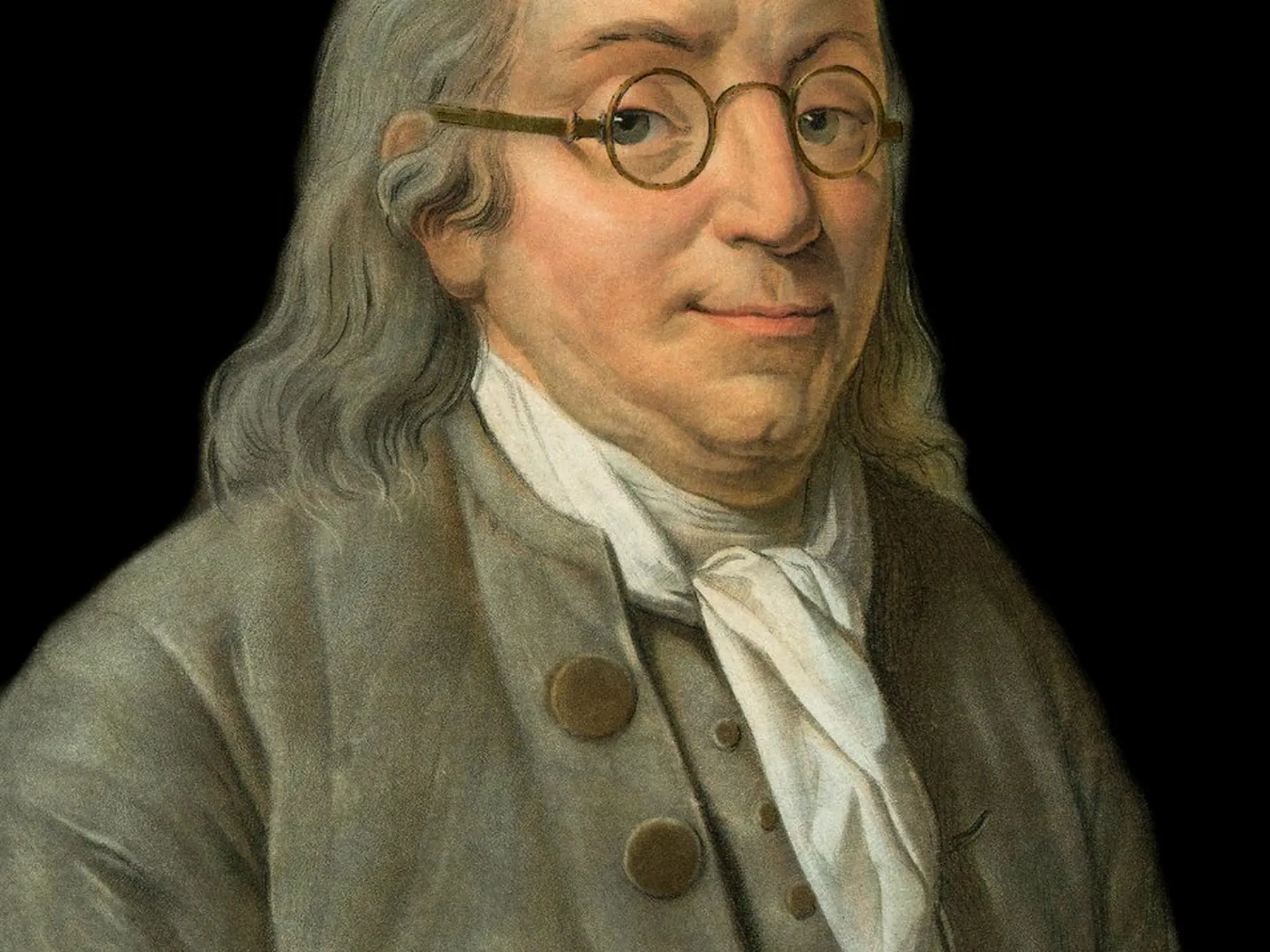
Quick Benjamin Franklin FAQ
Did Benjamin Franklin discover electricity?
No. Electricity was studied long before Franklin. His experiments helped demonstrate the electrical nature of lightning and advanced electrical theory.
Did lightning strike Franklin’s kite?
Not according to the experiment as he described it. The kite gathered charge from a storm cloud. A direct strike could have been fatal.
Was Benjamin Franklin a president?
No. He was a founding statesman, diplomat, delegate, scientist, and public official but never U.S. president.
What did Franklin invent?
Important designs associated with him include the lightning rod, bifocals, improved stove, glass armonica, and other practical devices.
Why is Franklin on the $100 bill?
His contributions to American independence, diplomacy, science, civic life, and national founding made him one of the country’s most celebrated historical figures.

Ellie is the owner and sole author of Fun Facts, combining her mechanical engineering background with years of research-driven writing to deliver facts you can trust. Every article is thoroughly fact-checked and routinely updated as new science and sources emerge to keep information accurate and current. Her mission is to make learning delightful while upholding high standards of reliability and transparency.