
Burgers are simple enough to eat one-handed but complicated enough to inspire century-old arguments over who invented them. Ground beef, buns, grills, diners, drive-ins, cheese, pickles, fast-food assembly lines, smash techniques, and regional toppings all changed the sandwich over time. These 145 burger facts explore the disputed origin story, hamburger steaks, bun history, cooking science, cheeseburgers, fast food, famous styles, food safety, plant-based versions, and why a crusty brown patty tastes so different from boiled beef.
Burger basics
- A hamburger is usually a cooked ground-beef patty served in a sliced bun.
- The word burger later became a broader term for many patty sandwiches.
- Cheeseburgers add cheese to the patty.
- Burgers can be grilled, griddled, broiled, pan-fried, or cooked by other methods.
- Common toppings include onions, pickles, lettuce, tomato, ketchup, mustard, and mayonnaise.
- Toppings vary enormously by region and restaurant.
- A hamburger does not contain ham simply because of its name.
- The name connects historically with Hamburg, Germany.
- Hamburg steak was a seasoned minced or ground-beef dish known before the sandwich burger.
- German immigrants helped popularize Hamburg-style beef in the United States.
- Putting a beef patty between bread made it portable.
- Portability helped burgers fit fairs, lunch counters, factories, diners, and roadside restaurants.
- The bun eventually became almost as important as the patty.
- Modern burgers range from tiny sliders to enormous multi-patty creations.
- No single topping combination defines every legitimate hamburger.
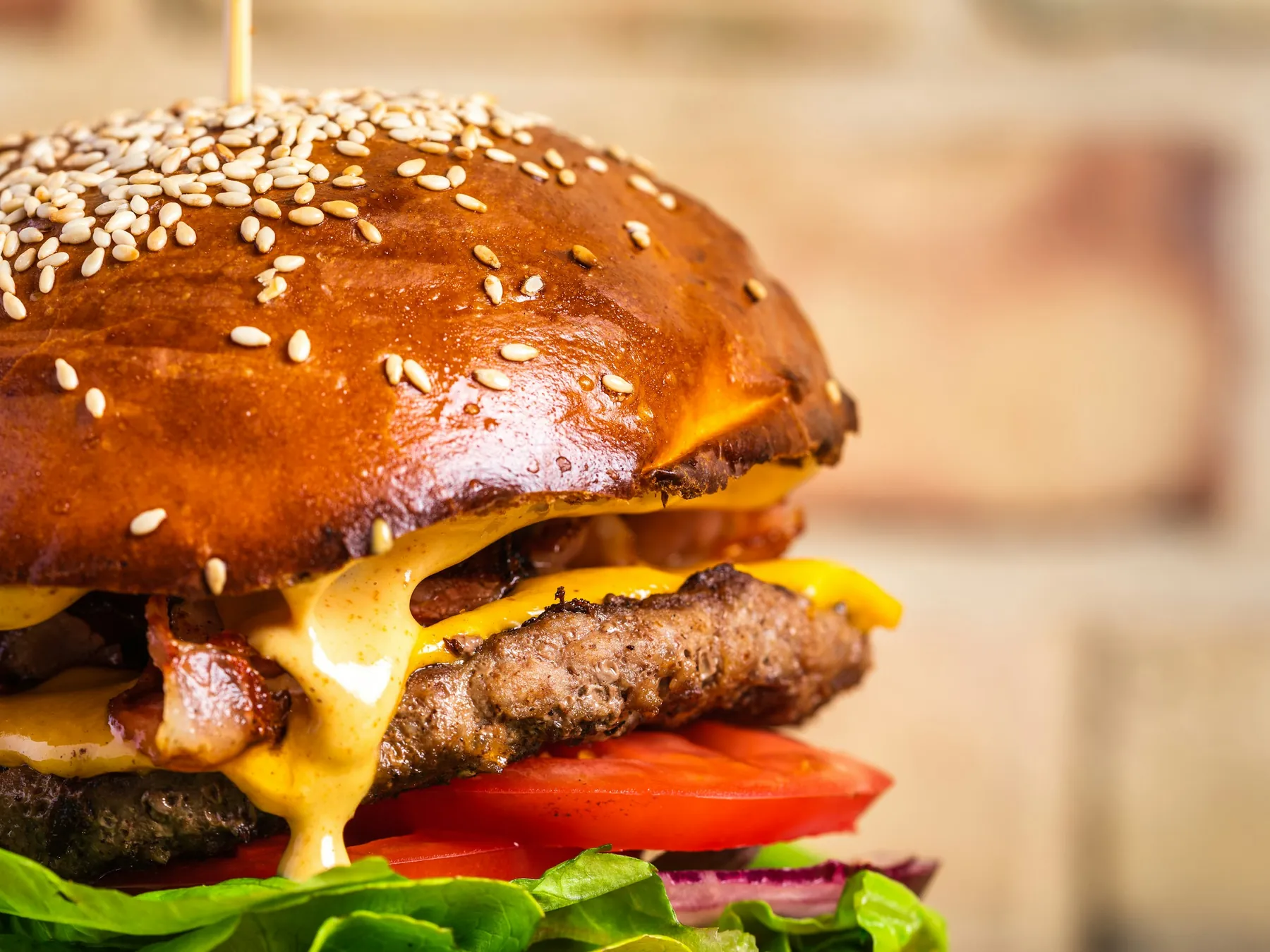
The hamburger’s inventor is disputed
- Several American towns and families claim to have invented the hamburger sandwich.
- No single origin claim has enough evidence to end the debate completely.
- Louis Lassen of New Haven, Connecticut, is one famous claimant.
- Louis’ Lunch says Lassen served a ground-beef sandwich around 1900.
- The restaurant still operates in New Haven.
- Another claim centers on the Menches brothers at an Ohio fair in 1885.
- Wisconsin histories credit Charlie Nagreen with selling flattened meatball sandwiches at the Seymour fair in 1885.
- Texas accounts have credited Fletcher Davis with an early hamburger sandwich.
- Some stories connect Davis with the 1904 St. Louis World’s Fair.
- Documentation for several claims was written long after the supposed invention.
- Ground meat and bread were both common enough that multiple people could have combined them independently.
- The hamburger likely emerged gradually from broader minced-beef and sandwich traditions.
- Food histories often become simplified when cities compete for tourism claims.
- The Smithsonian notes that multiple origin stories surround the hamburger.
- The safest answer is that the modern American hamburger evolved through several late-19th- and early-20th-century food traditions.
Before the burger came Hamburg steak
- Hamburg was a major German port city.
- Minced beef dishes became associated internationally with the Hamburg name.
- American menus listed Hamburg steak during the 19th century.
- Hamburg steak could be served without a bun.
- Recipes varied in seasoning and preparation.
- Some combined chopped beef with onions.
- Others used egg or seasonings to bind the meat.
- Meat grinders made minced beef easier to produce consistently.
- Grinding allowed tougher cuts and trimmings to be used differently.
- Ground beef cooks faster than a whole thick roast.
- Industrial meatpacking increased the supply of beef to American cities.
- Urban lunch culture favored quick inexpensive foods.
- The sandwich format made Hamburg steak much easier to eat without a knife and fork.
- That transition helped create a genuinely different food experience.
- The burger is therefore both a meat dish and a transportation technology for lunch.
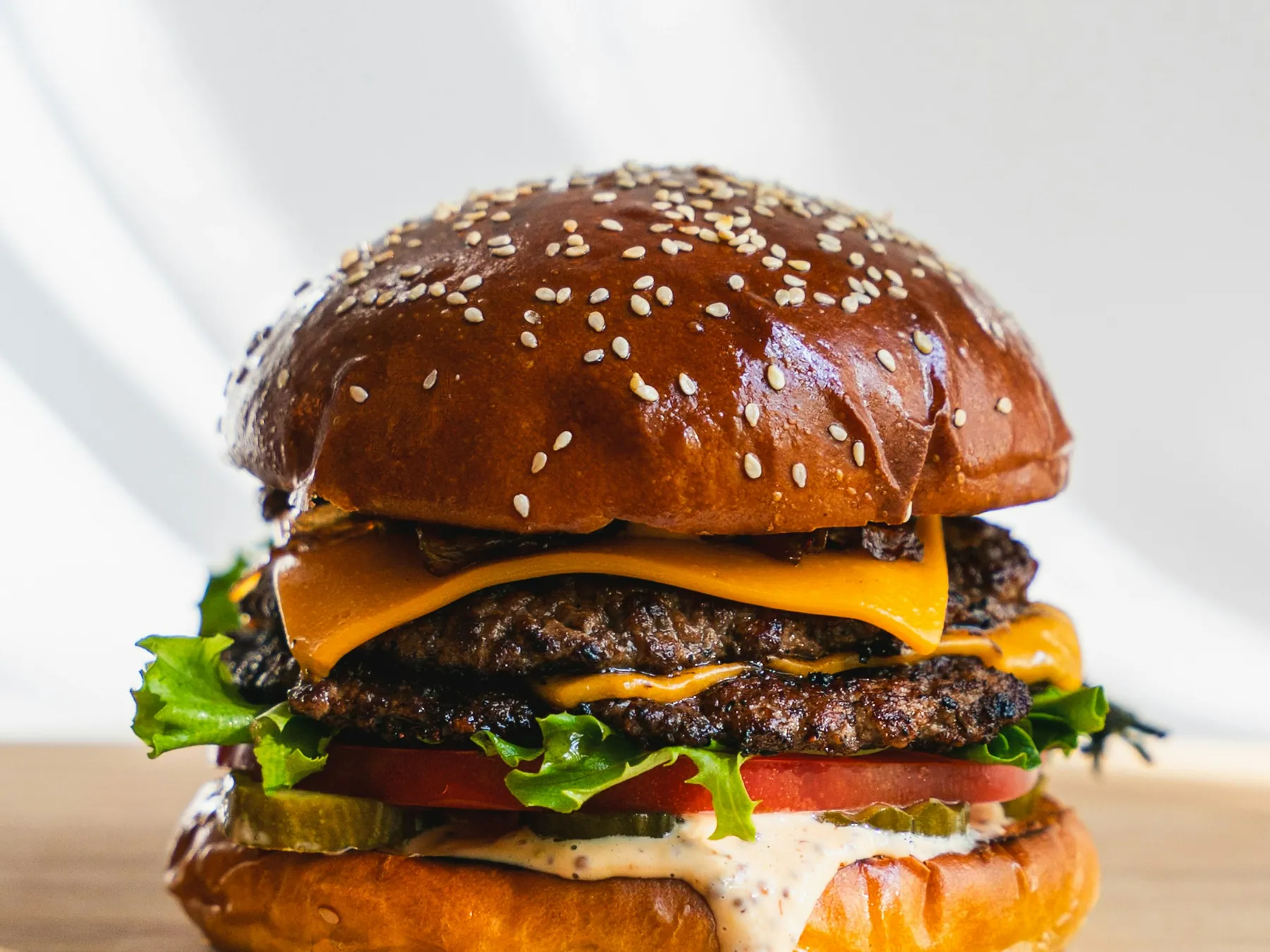
Why burger patties brown
- High heat creates a browned crust on the outside of a burger.
- The Maillard reaction is a major source of that browning.
- It involves reactions between amino compounds and reducing sugars.
- Hundreds of aroma and flavor compounds can form.
- A wet patty surface browns more slowly because water must evaporate first.
- A very crowded pan can trap steam and reduce crust formation.
- Cast iron and steel griddles store substantial heat.
- Hot cooking surfaces help maintain browning temperature after cold meat is added.
- Flipping does not “seal in juices” through an impermeable crust.
- Moisture can still leave the meat throughout cooking.
- Frequent flipping can actually cook some burgers more evenly.
- Fat melts as temperature rises.
- Rendered fat contributes richness and transfers flavor compounds.
- Very lean ground beef can become dry more easily when overcooked.
- Good burger cooking balances safety, browning, fat, moisture, thickness, and desired texture.
The smash burger is a contact problem
- Smash burgers begin with balls or loose portions of ground meat.
- The meat is pressed firmly onto a very hot griddle.
- Pressing increases contact between meat and metal.
- Greater contact creates more browned surface.
- The patty becomes thin and cooks quickly.
- Crispy irregular edges are a prized feature.
- Smashing is most effective at the beginning of cooking.
- Pressing an already cooked thick burger later can squeeze out juices.
- A metal spatula or press helps flatten the raw meat evenly.
- Small gaps and lace-like edges increase surface area.
- Thin patties also allow cheese to melt quickly.
- Double smash burgers stack multiple patties for more crust relative to meat volume.
- The technique differs from thick steakhouse burgers.
- Neither style is objectively superior because they emphasize different textures.
- A smash burger demonstrates how geometry can change flavor without changing the ingredients.
Who invented the cheeseburger?
- Cheeseburger origin claims are also disputed.
- Lionel Sternberger is one frequently cited early innovator.
- He reportedly added cheese to a hamburger at his father’s Pasadena restaurant during the 1920s.
- The restaurant was called the Rite Spot.
- Other restaurants later advertised hamburgers with cheese.
- The term cheeseburger appeared on menus and in print during the 1930s.
- Louis Ballast of Denver trademarked the name cheeseburger in 1935.
- A trademark does not prove he was the first person ever to put cheese on a hamburger.
- American cheese became especially popular because it melts smoothly.
- Cheddar is another common burger cheese.
- Swiss, blue cheese, pepper jack, provolone, and many others are used too.
- Cheese melts best when its proteins, moisture, fat, and acidity allow smooth flow.
- A covered pan can trap steam and speed cheese melting.
- Putting cheese on the patty near the end of cooking prevents unnecessary overheating.
- The cheeseburger became so common that many menus treat it as a basic category rather than a variation.
Fast food transforms the burger
- White Castle was founded in 1921.
- It helped standardize small inexpensive hamburgers.
- Its bright clean restaurants also tried to overcome public suspicion of ground meat.
- Uniform patties made cooking predictable.
- Small square burgers became known as sliders in later popular usage.
- The McDonald brothers opened their California restaurant before developing the Speedee Service System.
- They redesigned operations around a limited menu and assembly-line efficiency.
- Ray Kroc later expanded McDonald’s through franchising.
- Fast-food kitchens divide work into repeatable stations.
- Standard bun sizes, patty weights, sauces, and cooking times reduce variation.
- Drive-through windows changed how burgers were purchased.
- Frozen distribution made large-scale consistency easier.
- Global chains adapted menus to local tastes and religious dietary rules.
- Fast food turned the American hamburger into an international symbol.
- Independent burger restaurants simultaneously continued regional and chef-driven traditions.
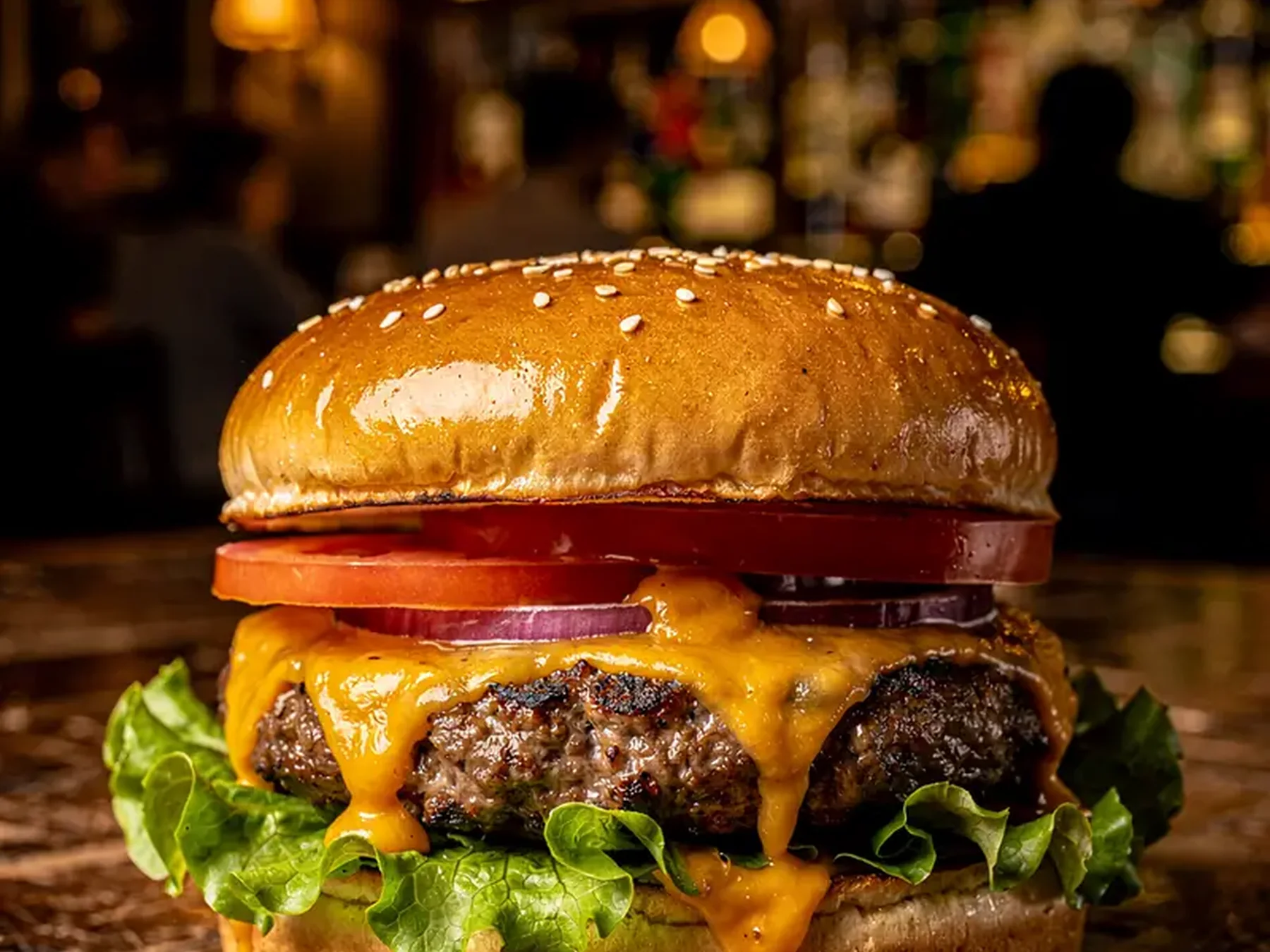
Regional burger styles
- Oklahoma onion burgers cook thin beef with a large quantity of sliced onions.
- The style became associated with Depression-era affordability.
- Steamed cheeseburgers are a distinctive central Connecticut tradition.
- Juicy Lucy burgers place cheese inside the meat rather than on top.
- Minneapolis restaurants dispute which one created the Juicy Lucy.
- Butter burgers are associated especially with Wisconsin.
- Some versions add butter directly to the bun or patty.
- Green-chile cheeseburgers are a New Mexico favorite.
- Hatch and other New Mexico chiles add heat and roasted flavor.
- Pimento-cheese burgers appear in parts of the American South.
- Hawaiian-influenced burgers may combine pineapple with savory sauces.
- Teriyaki burgers became popular in Japan.
- Australian burgers may include beetroot and fried egg.
- Regional burgers turn a standardized sandwich into a map of local ingredients.
- One bun-and-patty format can absorb nearly unlimited culinary identities.
Burger food safety
- Ground meat requires different safety thinking from an intact steak.
- Bacteria on the surface of a whole cut can be mixed throughout during grinding.
- That means the center of a burger can contain microbes originally present on outside surfaces.
- USDA recommends cooking ground beef to an internal temperature of 160°F, or 71.1°C.
- Color alone is not a reliable indicator of doneness.
- A burger can turn brown before reaching a safe internal temperature.
- Another burger can remain somewhat pink after reaching it.
- A food thermometer is more reliable.
- Raw ground beef should be kept cold.
- Hands, cutting boards, and utensils can transfer raw-meat contamination.
- Cooked burgers should not return to plates that held raw patties unless cleaned.
- Plant-based burger patties have their own cooking and storage instructions.
- Some plant-based products are designed to mimic the color and browning of beef.
- Safe cooking guidance depends on the actual product rather than its appearance.
- The USDA’s food-safety guidance treats ground beef as a specific high-priority cooking category.
Ten surprising burger facts
- No single hamburger inventor claim has enough evidence to silence every rival hometown.
- Hamburg steak existed before the hamburger sandwich.
- The word hamburger does not mean the meat contains ham.
- Smash burgers taste different partly because flattening creates much more direct griddle contact.
- Louis Ballast trademarked “cheeseburger,” but that does not make him the uncontested inventor.
- White Castle helped make ground beef feel safer and more standardized to early 20th-century customers.
- The Juicy Lucy has its own Minneapolis origin feud.
- A browned burger crust does not literally seal all the juices inside.
- Ground beef can be unsafe even when it looks brown.
- For more comfort-food trivia, explore our french-fries facts and Food facts.
Quick burger FAQ
Who invented the hamburger?
There is no uncontested inventor. Several American cooks and towns have plausible late-19th- and early-20th-century claims, and the sandwich likely evolved from existing Hamburg-steak and bread traditions.
Why is it called a hamburger?
The name traces to Hamburg-style minced or ground beef associated with Hamburg, Germany, not to ham.
What makes a smash burger different?
The raw meat is pressed hard against a very hot griddle, maximizing surface contact and creating a thin patty with extensive browned crust.
What temperature should ground-beef burgers reach?
USDA recommends 160°F, or 71.1°C, measured with a food thermometer.
Who invented the cheeseburger?
Several people and restaurants have claims. Lionel Sternberger is an important early candidate, while Louis Ballast later trademarked the word cheeseburger.

Ellie is the owner and sole author of Fun Facts, combining her mechanical engineering background with years of research-driven writing to deliver facts you can trust. Every article is thoroughly fact-checked and routinely updated as new science and sources emerge to keep information accurate and current. Her mission is to make learning delightful while upholding high standards of reliability and transparency.