
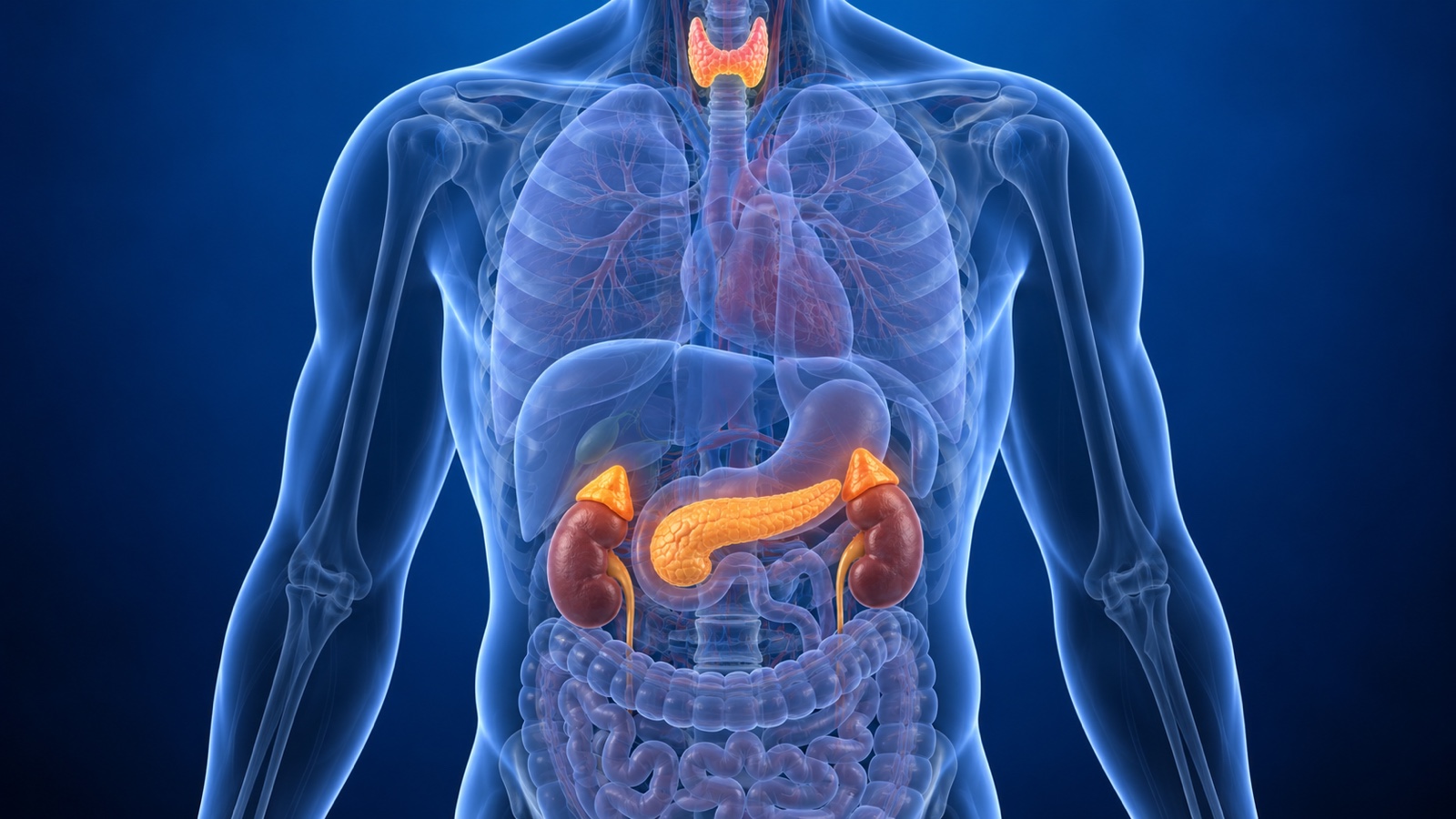
The endocrine system is a chemical messaging network. Tiny amounts of hormones released from glands and other tissues can change growth, metabolism, sleep, stress, reproduction, blood pressure, appetite, and more, often by traveling through the bloodstream to cells far from where they were made.
Hormones are chemical messengers
- Hormones are chemical signals made by specialized cells.
- Many hormones travel through the bloodstream to distant targets.
- Other signaling molecules act mainly on nearby cells.
- A hormone affects only cells that have the right receptor.
- Hormone receptors can sit on cell membranes.
- Other receptors are located inside cells.
- Steroid hormones can cross cell membranes because they are lipid soluble.
- Peptide hormones usually bind receptors on the cell surface.
- Hormones can change enzyme activity within seconds or minutes.
- Some hormones change gene expression over hours or days.
- Endocrine signaling often works at extremely low chemical concentrations.
- Hormone levels can change throughout the day.
- Some hormones are released in pulses rather than continuously.
- Stress can change multiple hormone levels at once.
- Meals alter hormones related to glucose, appetite, and digestion.
- Exercise also changes endocrine signaling.
- Sleep affects growth hormone, cortisol, insulin sensitivity, and other systems.
- Hormones often interact instead of working independently.
- One hormone can increase or reduce the effect of another.
- The endocrine system is basically group chat for organs, except the messages are molecules and nobody can mute the conversation.
The hypothalamus links the brain and endocrine system
- The hypothalamus is a small brain region with major endocrine influence.
- It helps control the pituitary gland.
- The hypothalamus receives information about temperature, stress, sleep, nutrients, and other conditions.
- It releases hormones that regulate the anterior pituitary.
- Thyrotropin-releasing hormone helps stimulate thyroid-stimulating hormone release.
- Corticotropin-releasing hormone helps stimulate ACTH release.
- Gonadotropin-releasing hormone controls LH and FSH secretion.
- Growth hormone-releasing hormone promotes growth hormone release.
- Somatostatin inhibits growth hormone release.
- Dopamine from the hypothalamus normally suppresses prolactin secretion.
- The hypothalamus also makes oxytocin.
- It also makes antidiuretic hormone.
- Oxytocin and antidiuretic hormone are transported to the posterior pituitary.
- The posterior pituitary stores and releases those hormones.
- The hypothalamus helps coordinate thirst.
- It also participates in appetite regulation.
- It contributes to circadian rhythms.
- It helps coordinate autonomic nervous-system responses.
- Brain signals can therefore trigger body-wide hormonal changes.
- A structure smaller than a grape can influence thirst, stress, reproduction, temperature, sleep, appetite, and pituitary output at the same time.
The pituitary is influential, but it is not truly the boss of everything
- The pituitary gland sits at the base of the brain.
- It rests in a bony pocket called the sella turcica.
- The pituitary has anterior and posterior portions.
- The anterior pituitary produces several major hormones.
- Growth hormone supports growth and metabolism.
- Prolactin helps stimulate milk production after childbirth.
- ACTH stimulates the adrenal cortex.
- TSH stimulates the thyroid gland.
- LH and FSH regulate reproductive functions.
- The posterior pituitary releases oxytocin.
- Oxytocin helps cause uterine contractions during labor.
- Oxytocin also helps trigger milk ejection during breastfeeding.
- The posterior pituitary releases antidiuretic hormone, also called vasopressin.
- Vasopressin helps the kidneys conserve water.
- Pituitary hormones often act on other endocrine glands.
- This is why the pituitary is sometimes called the master gland.
- The nickname is incomplete because the hypothalamus heavily controls the pituitary.
- Other organs such as the pancreas and parathyroids also respond directly to blood chemistry.
- Pituitary tumors can cause hormone excess, hormone deficiency, or pressure symptoms.
- The pituitary has enormous influence, but calling it the master gland is a bit like calling a manager the entire company while ignoring headquarters and every independent department.
The thyroid sets the pace for metabolism
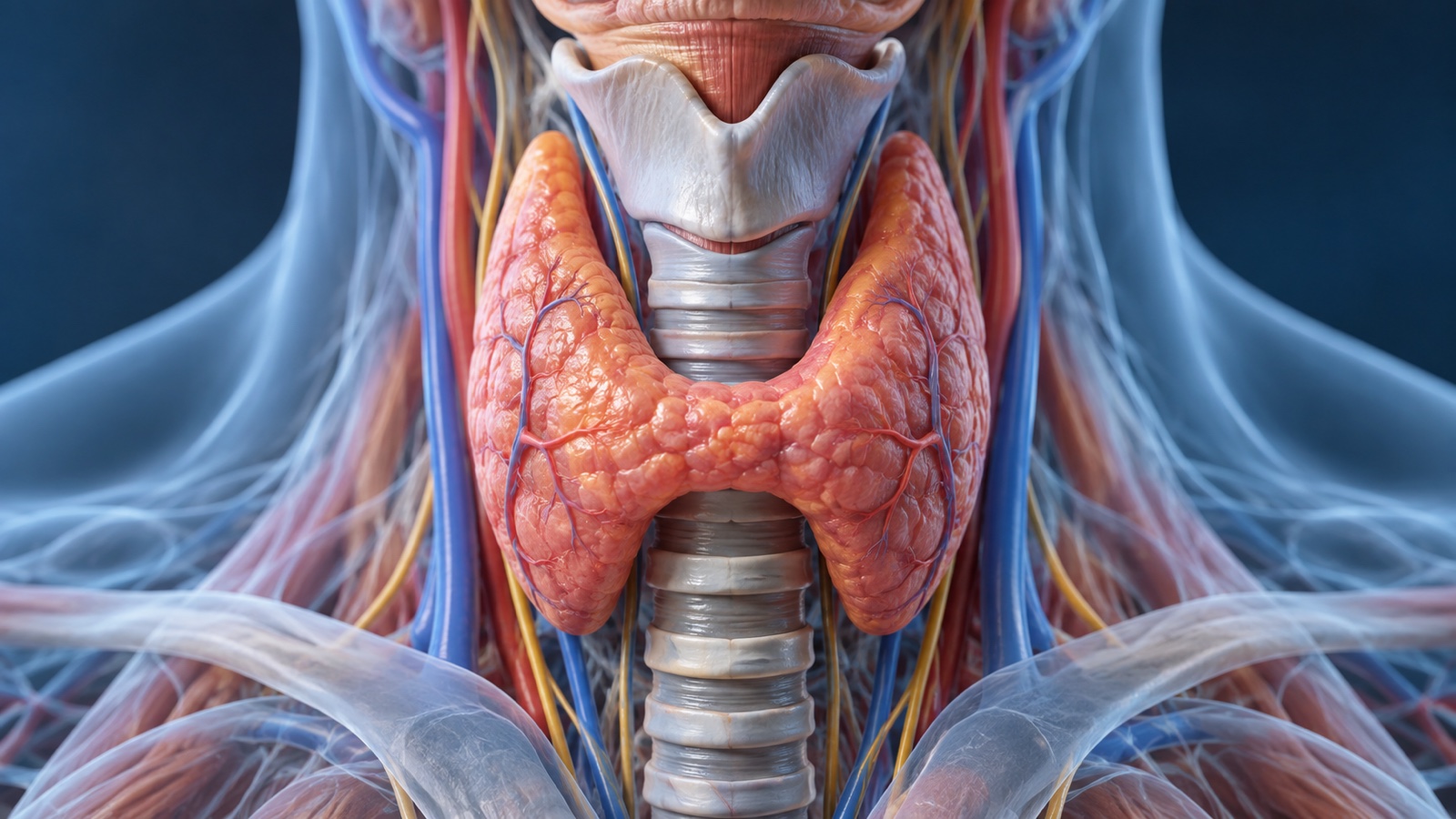
- The thyroid gland sits low in the front of the neck.
- It has two lobes connected by an isthmus.
- Its shape is often compared with a butterfly.
- The thyroid makes thyroxine, commonly called T4.
- It also makes triiodothyronine, called T3.
- T3 is more biologically active than T4 at many tissues.
- Much circulating T3 is produced by conversion from T4 outside the thyroid.
- Thyroid hormones influence metabolic rate.
- They also affect heart rate.
- They are important for normal brain development in early life.
- Iodine is required to make thyroid hormones.
- The thyroid actively concentrates iodide from blood.
- Too little iodine can cause thyroid enlargement called goiter.
- Too much iodine can also disrupt thyroid function in susceptible people.
- TSH from the pituitary stimulates thyroid hormone production.
- Thyroid hormones normally feed back to reduce TSH release.
- Hypothyroidism means thyroid hormone effect is insufficient.
- Hyperthyroidism means thyroid hormone effect is excessive.
- Thyroid disease can affect weight, temperature tolerance, energy, heart rhythm, and mood.
- A butterfly-shaped gland in the neck quietly influences how fast cells throughout the body spend energy.
Tiny parathyroid glands regulate calcium
- Most people have four parathyroid glands.
- They usually sit behind the thyroid.
- Parathyroids are much smaller than the thyroid.
- They make parathyroid hormone, or PTH.
- PTH helps regulate calcium levels in blood.
- Calcium is essential for muscle contraction.
- It is also important for nerve signaling.
- Calcium participates in blood clotting.
- PTH increases calcium release from bone when needed.
- It increases calcium reabsorption by the kidneys.
- PTH also promotes activation of vitamin D in the kidneys.
- Active vitamin D increases intestinal calcium absorption.
- High blood calcium normally suppresses PTH secretion.
- Low blood calcium stimulates PTH secretion.
- Parathyroid disease can cause kidney stones, bone problems, weakness, or abnormal calcium levels.
- The parathyroids are separate glands despite their name and location near the thyroid.
- Thyroid hormone and parathyroid hormone perform very different jobs.
- Surgeons try to preserve parathyroid glands during thyroid surgery.
- Accidental loss of parathyroid function can cause dangerously low calcium.
- Four glands that can be smaller than grains of rice help keep enough calcium available for every heartbeat and nerve impulse.
The adrenal glands help control stress, salt and blood pressure
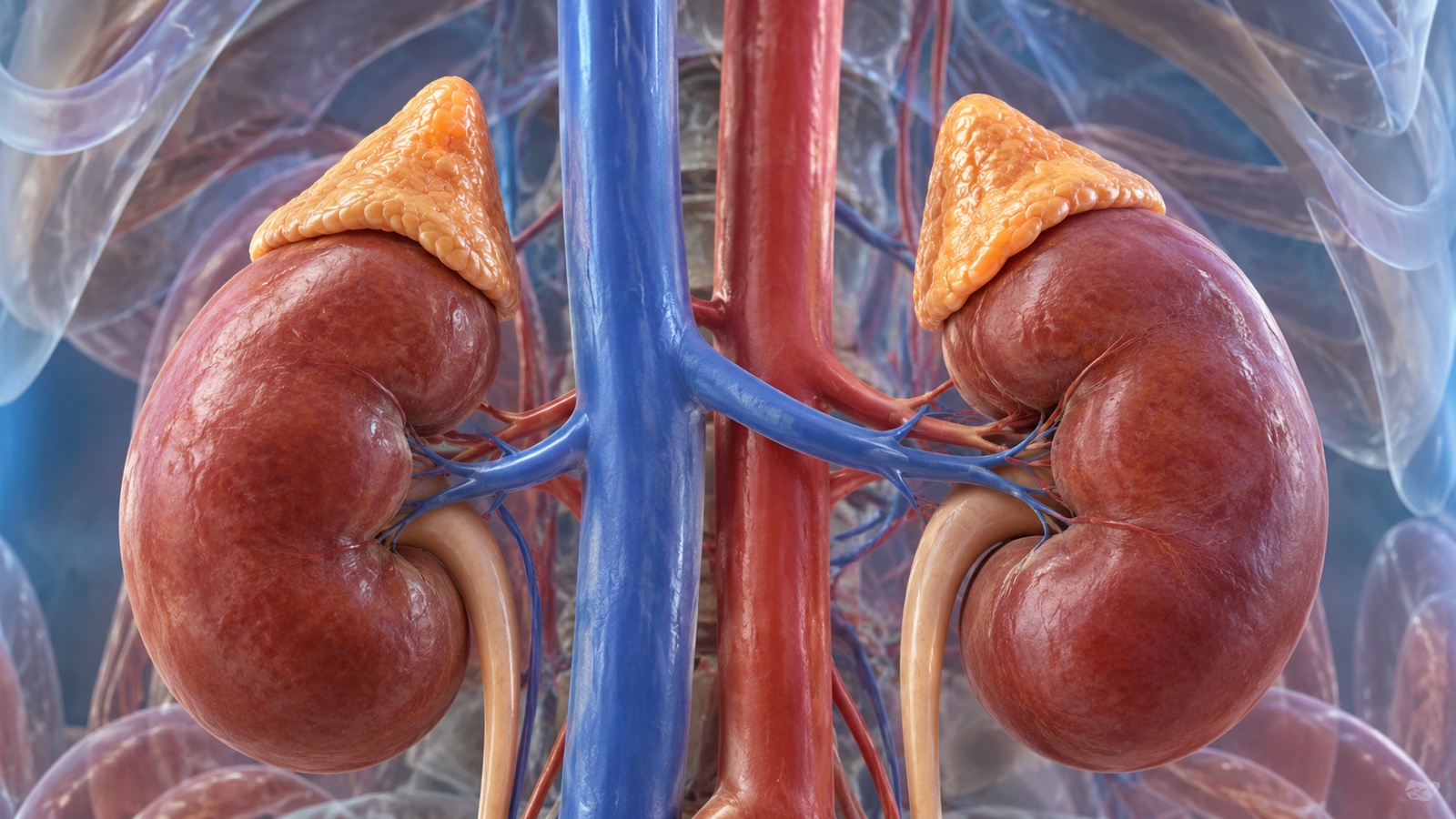
- Adrenal glands sit on top of the kidneys.
- Each adrenal gland has a cortex and medulla.
- The adrenal cortex produces steroid hormones.
- Cortisol is one major adrenal-cortex hormone.
- Cortisol helps regulate metabolism and the stress response.
- Cortisol also affects immune and inflammatory activity.
- Aldosterone is another adrenal-cortex hormone.
- Aldosterone promotes sodium retention and potassium excretion by the kidneys.
- This helps influence blood volume and pressure.
- The adrenal cortex also produces androgen precursors.
- The adrenal medulla produces epinephrine and norepinephrine.
- These catecholamines support rapid fight-or-flight responses.
- Epinephrine can increase heart rate and redirect blood flow.
- It also helps mobilize stored energy.
- Cortisol normally follows a daily rhythm.
- Levels are often highest around the morning waking period.
- Long-term steroid medication can suppress the body's own cortisol production.
- Stopping high-dose long-term steroids suddenly can be dangerous.
- Addison disease causes adrenal hormone deficiency.
- The adrenal glands are small, but they can change blood pressure, heart rate, salt balance, glucose availability, and immune activity within minutes to hours.
The pancreas keeps blood glucose within a narrow range
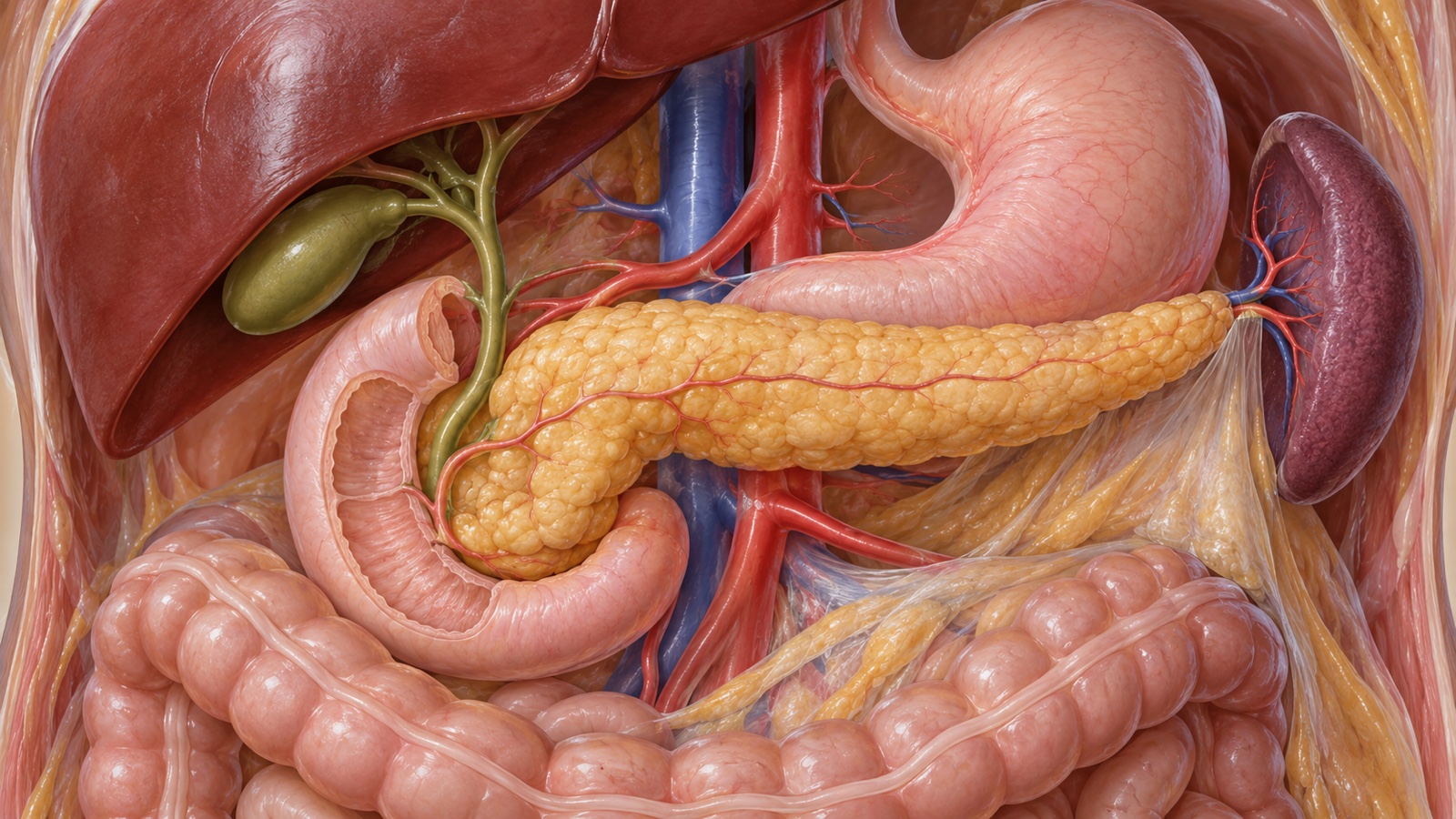
- The pancreas is both an endocrine and digestive organ.
- Its endocrine cells are grouped into pancreatic islets.
- Beta cells make insulin.
- Alpha cells make glucagon.
- Insulin generally lowers blood glucose by promoting uptake and storage.
- Insulin encourages glucose storage as glycogen in liver and muscle.
- It also supports fat storage and protein synthesis.
- Glucagon generally raises blood glucose during fasting.
- Glucagon stimulates liver glycogen breakdown.
- It also promotes gluconeogenesis.
- Type 1 diabetes results from autoimmune destruction of pancreatic beta cells.
- People with type 1 diabetes need replacement insulin.
- Type 2 diabetes involves insulin resistance and progressive beta-cell dysfunction.
- Insulin is a peptide hormone.
- Because insulin is a protein, swallowed insulin would be digested rather than reliably absorbed intact.
- Continuous glucose monitors measure glucose in interstitial fluid rather than directly in blood.
- Blood glucose changes after meals, exercise, stress, sleep, and medication.
- The endocrine pancreas adjusts continuously rather than waiting for glucose to become dramatically abnormal.
- Glucose regulation is one of the clearest examples of negative feedback in human physiology.
- Every ordinary meal triggers a carefully timed hormonal negotiation between storage, use, and release of fuel.
Reproduction, sleep and 5 final endocrine facts
- Ovaries produce hormones including estrogen and progesterone, while testes produce large amounts of testosterone.
- The pineal gland produces melatonin, which helps signal biological night and circadian timing.
- Hormone disorders are often diagnosed by interpreting patterns across several hormones rather than one isolated number.
- Endocrine feedback loops mean a hormone level can be abnormal because of a problem in the target gland, pituitary, hypothalamus, medication exposure, or another illness.
- After 145 facts, the endocrine system looks less like a list of glands and more like a body-wide messaging network that coordinates metabolism, stress, growth, reproduction, sleep, salt, calcium, glucose, and development through microscopic chemical signals.
Quick FAQ
Q: What is the endocrine system?
A: It is a network of glands and hormone-producing tissues that release chemical signals controlling functions throughout the body.
Q: Is the pituitary really the master gland?
A: It controls several other glands, but the hypothalamus controls much of the pituitary, and some endocrine organs regulate themselves directly.
Q: What hormone lowers blood sugar?
A: Insulin is the major hormone that lowers blood glucose after meals by promoting uptake and storage.
Q: What does cortisol do?
A: Cortisol affects metabolism, stress responses, blood pressure support, and immune activity.
Q: Why do doctors sometimes test several hormones together?
A: Hormones operate in feedback loops, so patterns such as TSH plus thyroid hormone can help locate where regulation has gone wrong.

Ellie is the owner and sole author of Fun Facts, combining her mechanical engineering background with years of research-driven writing to deliver facts you can trust. Every article is thoroughly fact-checked and routinely updated as new science and sources emerge to keep information accurate and current. Her mission is to make learning delightful while upholding high standards of reliability and transparency.