
Turkeys are much stranger than the Thanksgiving centerpiece suggests. Wild birds sleep in trees, sprint across fields, fly in explosive bursts, change head color with excitement, grow chest “beards,” communicate with a vocabulary far bigger than gobble, and survived a near-collapse in the United States only to become one of wildlife restoration's biggest comeback stories.
Wild turkeys are native North American birds
- The wild turkey's scientific name is Meleagris gallopavo.
- Wild turkeys are native to North America.
- Their natural range extends from parts of Canada through the United States and Mexico.
- Several regional subspecies are recognized.
- The eastern wild turkey is widespread across eastern North America.
- Rio Grande turkeys are associated with parts of the central and southern United States.
- Merriam's turkeys live in many western mountain and forest regions.
- Gould's turkeys occur mainly in northern Mexico and a small part of the U.S. Southwest.
- Osceola turkeys are native only to Florida.
- Male turkeys are commonly called toms or gobblers.
- Adult females are called hens.
- Young turkeys are called poults.
- Juvenile males are sometimes called jakes.
- Juvenile females are sometimes called jennies.
- Wild males are much larger than females.
- A mature tom can weigh more than 20 pounds.
- Wild hens are usually considerably lighter.
- Domestic breeds can grow much heavier than wild birds.
- Turkeys belong to the pheasant family Phasianidae.
- The family resemblance becomes clearer once the dramatic tail fan and absurdly confident walk begin.
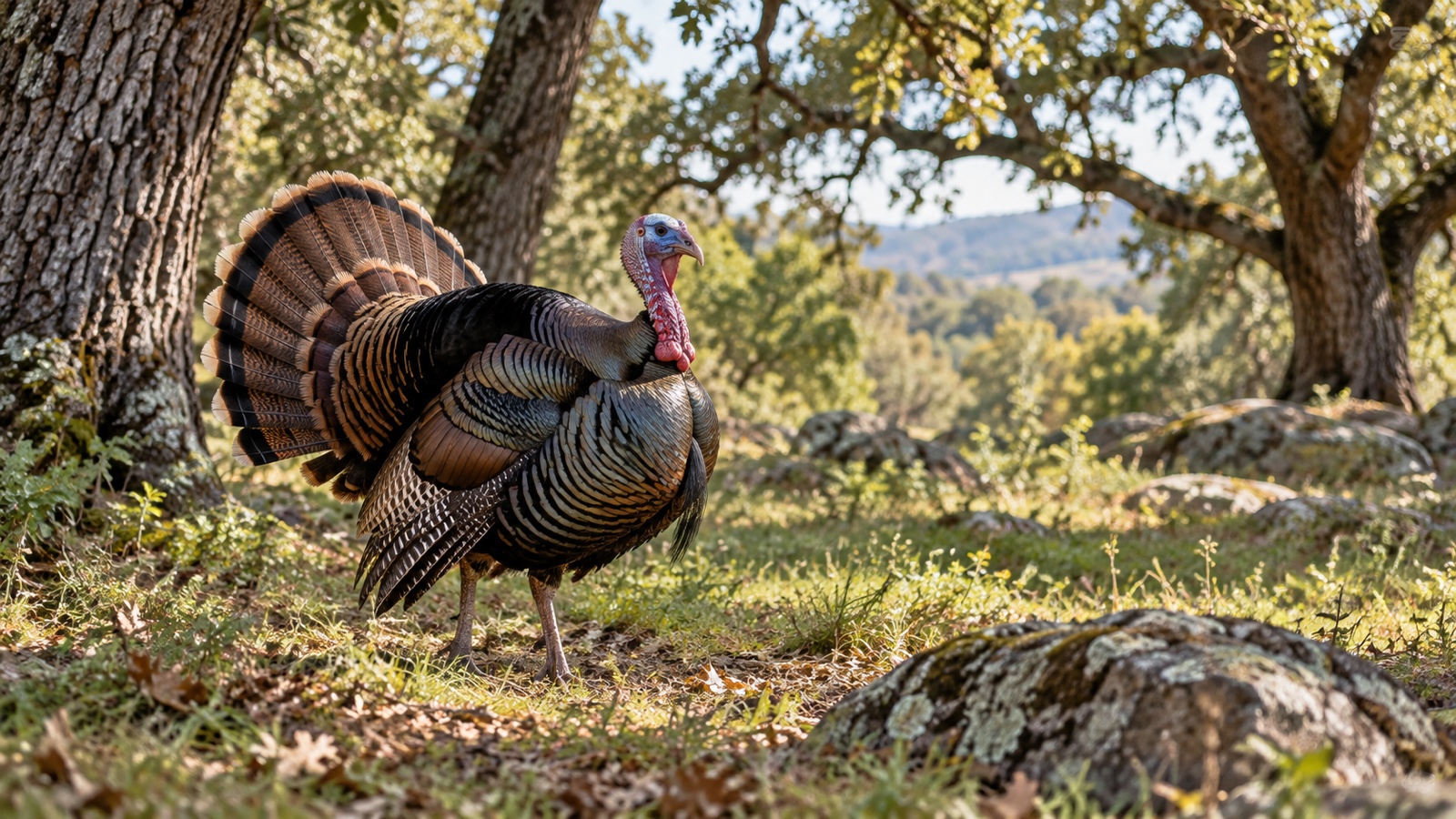
Toms come with snoods, wattles, caruncles and beards
- The fleshy appendage hanging over a turkey's bill is called a snood.
- A wattle hangs beneath the throat.
- Caruncles are fleshy bumps on the bare head and neck.
- These structures are especially developed in adult males.
- Blood flow can change their size and color quickly.
- A male's bare skin may shift among red, white, and bluish tones.
- Color changes reflect arousal, stress, courtship, and social state.
- Longer snoods can influence female mate choice.
- Male-male competition also affects display behavior.
- Many toms grow a “beard” from the upper chest.
- A turkey beard is made from specialized bristle-like feathers.
- Beards can grow several inches long.
- Some hens also grow beards.
- Male turkeys usually develop spurs on the backs of their legs.
- Spurs are used during fights.
- Older males often have longer spurs.
- Tail feathers spread into a fan during courtship.
- Wing feathers can drag along the ground during strutting.
- Body feathers puff outward to make a tom look larger.
- A displaying turkey is wearing a mood ring on its face while carrying a feather beard and two leg daggers, which is a lot of accessories for one bird.
Wild turkeys can fly, and they are surprisingly fast
- Wild turkeys can fly.
- They usually fly only short distances.
- Powerful breast muscles support explosive takeoffs.
- Wild turkeys can reach roughly 50 miles per hour in flight for brief periods.
- They can also run around 20 miles per hour.
- Most daily movement happens on foot.
- Flight is especially useful for escaping danger and reaching roosts.
- Wild turkeys normally roost in trees at night.
- They choose branches large enough to support their weight.
- Roosting above ground reduces exposure to many predators.
- Birds often fly up near dusk.
- They fly down around dawn.
- Turkeys may use the same general roost areas repeatedly.
- Broad-breasted domestic turkeys are much heavier than wild birds.
- Many commercial domestic turkeys cannot fly effectively.
- Heritage domestic breeds can be more mobile.
- Wild turkeys can cross rivers by flying.
- Young poults begin making short flights after their wing feathers develop.
- Before poults can roost in trees, hens brood them on the ground.
- Watching a 20-pound bird launch vertically into a tree is a useful cure for assuming “turkey” means slow.
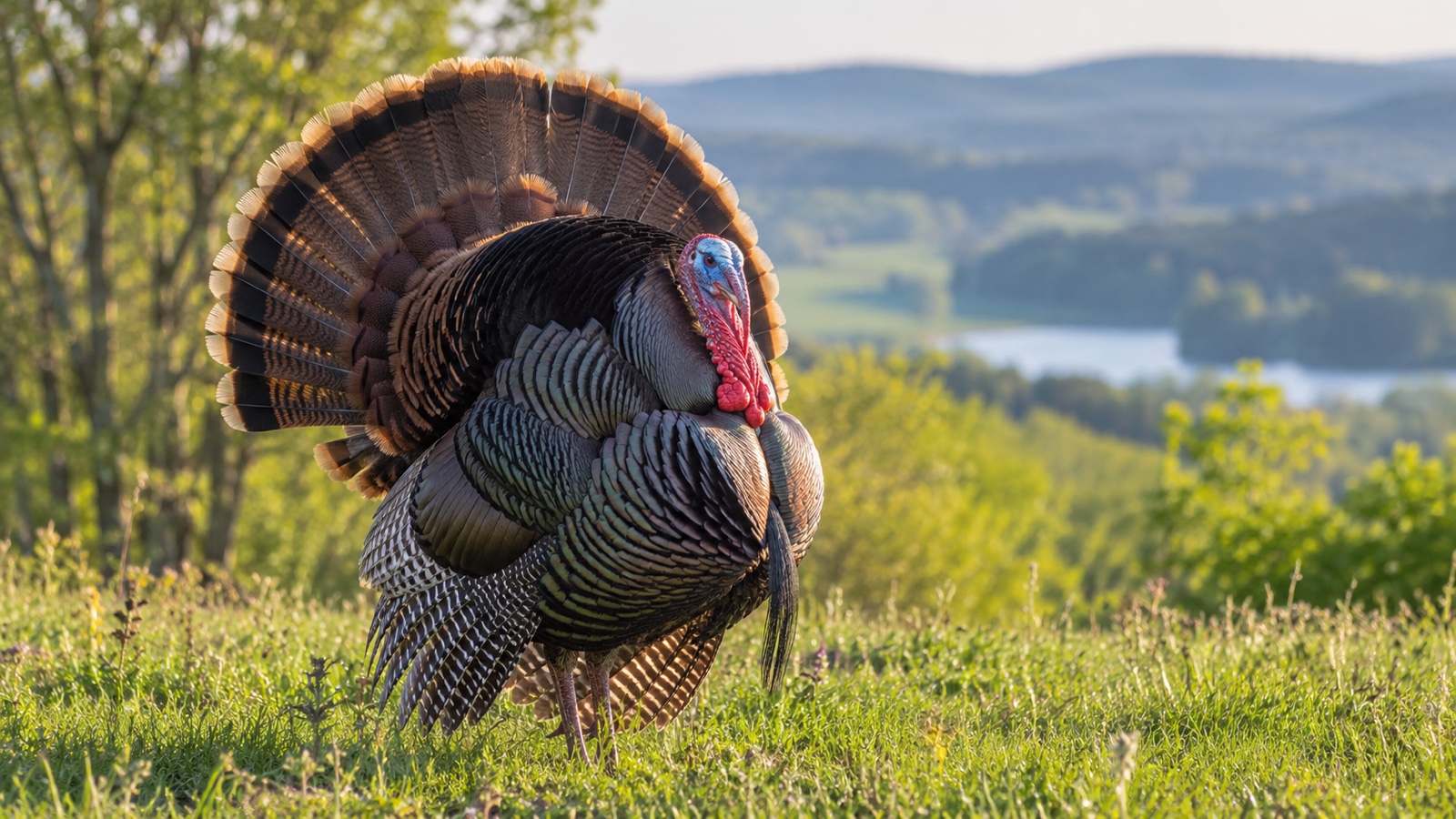
Gobbling is only one part of turkey conversation
Gobbling gets all the publicity, but a turkey flock uses clucks, purrs, yelps, whistles, putts, kee-kees, and other sounds in different situations. A person who hears only one “turkey noise” is basically listening to an entire conversation through one ringtone.
- Adult males are best known for gobbling.
- Gobbling helps advertise a male to hens.
- It can also announce presence to rival males.
- Spring breeding season produces especially frequent gobbling.
- Turkeys can gobble at dawn from a roost.
- Sudden loud sounds sometimes trigger a reflexive gobble.
- Hens use yelps to communicate with other turkeys.
- Soft clucks can maintain contact.
- Purrs can occur during calm feeding and close interaction.
- A sharp putt can signal alarm.
- Young poults use high-pitched calls to remain in contact with the hen.
- Lost young can produce loud distress calls.
- Turkeys recognize differences among calls.
- Body posture adds information to vocal signals.
- Wing beats can create nonvocal sounds.
- Strutting males make low-frequency drumming or booming sounds.
- They also produce a sharp spit-like sound during display.
- Turkeys have excellent hearing.
- They lack visible external ear flaps but have ear openings hidden by feathers.
- The famous gobble is less “the turkey's voice” and more “one extremely loud sentence used by adult males during dating season.”
Their eyesight makes sneaking up on one difficult
- Turkey eyes sit on the sides of the head.
- This creates a very wide field of view.
- Turkeys can monitor much of the surrounding landscape without turning fully around.
- They are highly sensitive to movement.
- Color vision is excellent.
- Bird retinas contain multiple types of color-sensitive cone cells.
- Turkeys can perceive ultraviolet wavelengths that humans cannot see.
- UV reflectance may play roles in feathers and visual communication.
- Turkeys have a third eyelid called a nictitating membrane.
- The membrane helps protect and moisten the eye.
- They can move their heads to improve depth perception.
- Hearing and vision together make turkeys alert prey animals.
- Smell is generally less dominant than sight and hearing in turkey behavior.
- Turkeys notice silhouette changes against the skyline.
- They often become wary of unfamiliar moving objects.
- Wild turkeys learn where regular human activity occurs.
- Suburban birds may become habituated to people.
- Habituation does not make a territorial male harmless.
- Direct feeding can encourage aggressive behavior around homes.
- A turkey can see colors we cannot and monitor nearly all directions, so “I will just sneak closer for a photo” is rarely the tactical advantage humans imagine.
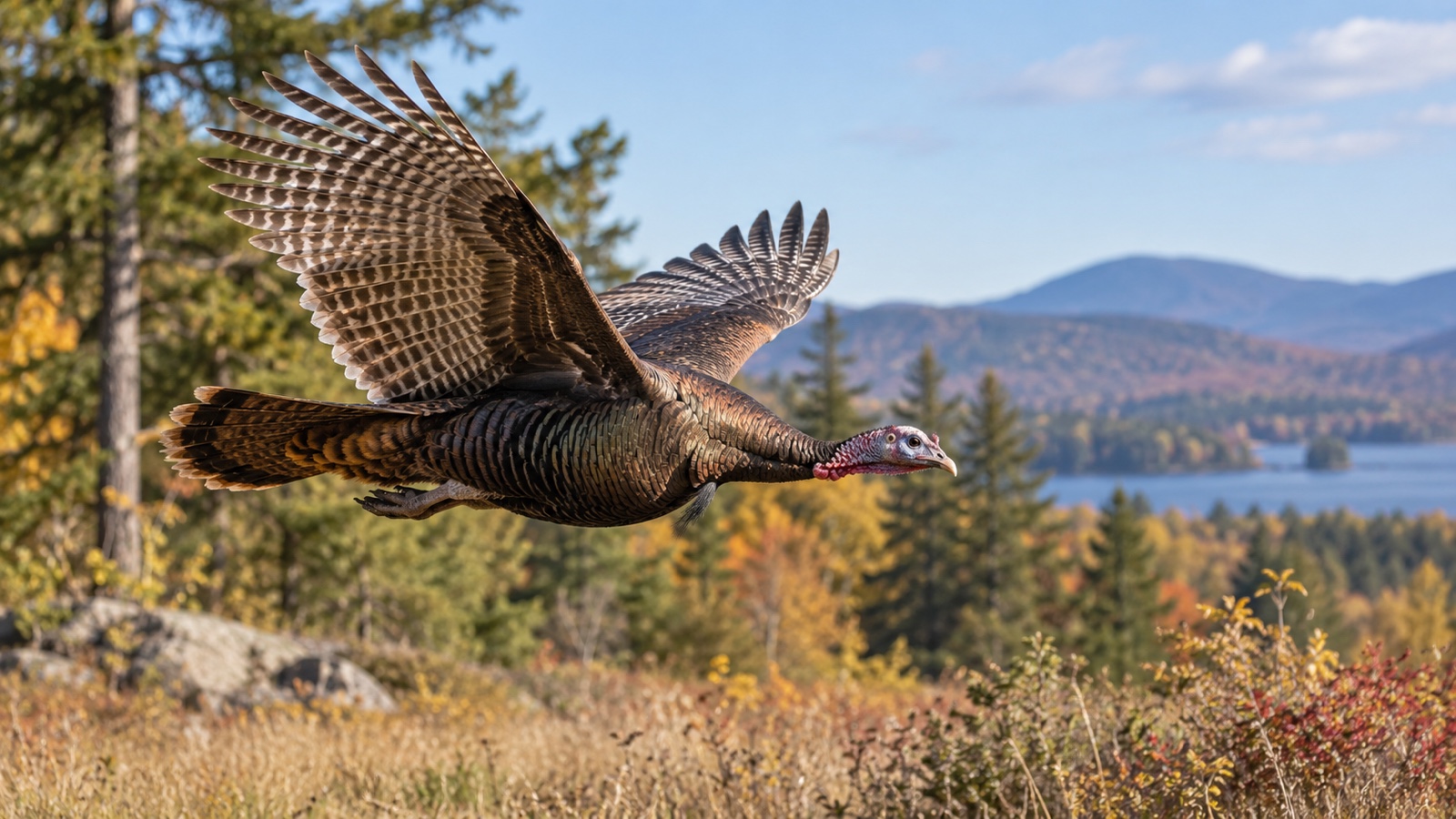
Hens raise poults without help from toms
Turkey parenting is mostly a hen's job. She chooses a concealed ground nest, lays a surprisingly large clutch, incubates for about four weeks, then leads mobile poults through fields and woods while teaching them where to feed, hide, roost, and respond to danger.
- Wild turkey nests are built on the ground.
- A hen chooses a concealed depression among vegetation or debris.
- She may lay roughly 8 to 15 eggs.
- Clutch size varies with age, condition, and environment.
- The hen lays about one egg per day before full incubation begins.
- Incubation lasts around 28 days.
- The hen performs nearly all incubation.
- Toms do not normally help raise poults.
- Turkey chicks are precocial.
- They hatch covered in down and can leave the nest quickly.
- Poults begin pecking at food soon after hatching.
- Insects are especially important protein-rich food for young poults.
- The hen broods poults to keep them warm.
- She gives alarm calls when danger appears.
- Poults freeze, crouch, or scatter in response.
- Young cannot fly well during their earliest days.
- Ground predators are a major threat during that period.
- Once flight feathers develop, poults begin roosting in trees with the hen.
- Family groups may join other hens and young later in the season.
- A turkey hen spends spring running a mobile daycare where every child is capable of scattering into waist-high vegetation on command.
Comeback history, Thanksgiving and 25 final turkey facts
- Wild turkeys once occupied a huge portion of North America.
- Unregulated hunting and forest clearing caused severe declines by the early 20th century.
- Wild turkeys disappeared from many states.
- Early attempts to release pen-raised domestic or game-farm turkeys often failed.
- Wild-caught birds adapted much better.
- Wildlife agencies trapped turkeys from surviving populations and released them into restored habitat.
- Forest regrowth also improved habitat across many regions.
- Wild turkey numbers rebounded dramatically.
- They now live in every U.S. state except Alaska.
- Some urban and suburban populations have become locally abundant.
- Wild turkeys eat acorns, seeds, nuts, berries, insects, leaves, and other foods.
- They scratch leaf litter with their feet while foraging.
- Acorn crops can strongly affect winter food supply.
- Domesticated turkeys descend from wild turkeys domesticated by Indigenous peoples in Mesoamerica.
- Spanish colonizers carried domesticated turkeys to Europe.
- European turkey breeds were later brought back to North America.
- The English name “turkey” likely arose from confused Old World trade associations, but its exact etymological path is debated.
- Benjamin Franklin did not formally propose the turkey as the U.S. national bird.
- In a private 1784 letter to his daughter, Franklin criticized the bald eagle's character and called the turkey a more respectable bird.
- The bald eagle was already on the Great Seal of the United States.
- Turkey was not clearly documented as the centerpiece of the 1621 Plymouth harvest gathering often called the First Thanksgiving.
- Wildfowl were recorded, but the surviving account does not specify that turkey was served.
- Turkey became strongly associated with U.S. Thanksgiving dinners later.
- The presidential turkey “pardon” developed gradually from 20th-century White House customs rather than one single ancient tradition.
- After 145 facts, turkeys look less like holiday props and more like fast-flying, ultraviolet-seeing, tree-roosting forest birds with remarkable recovery history and one spectacularly overdesigned face.
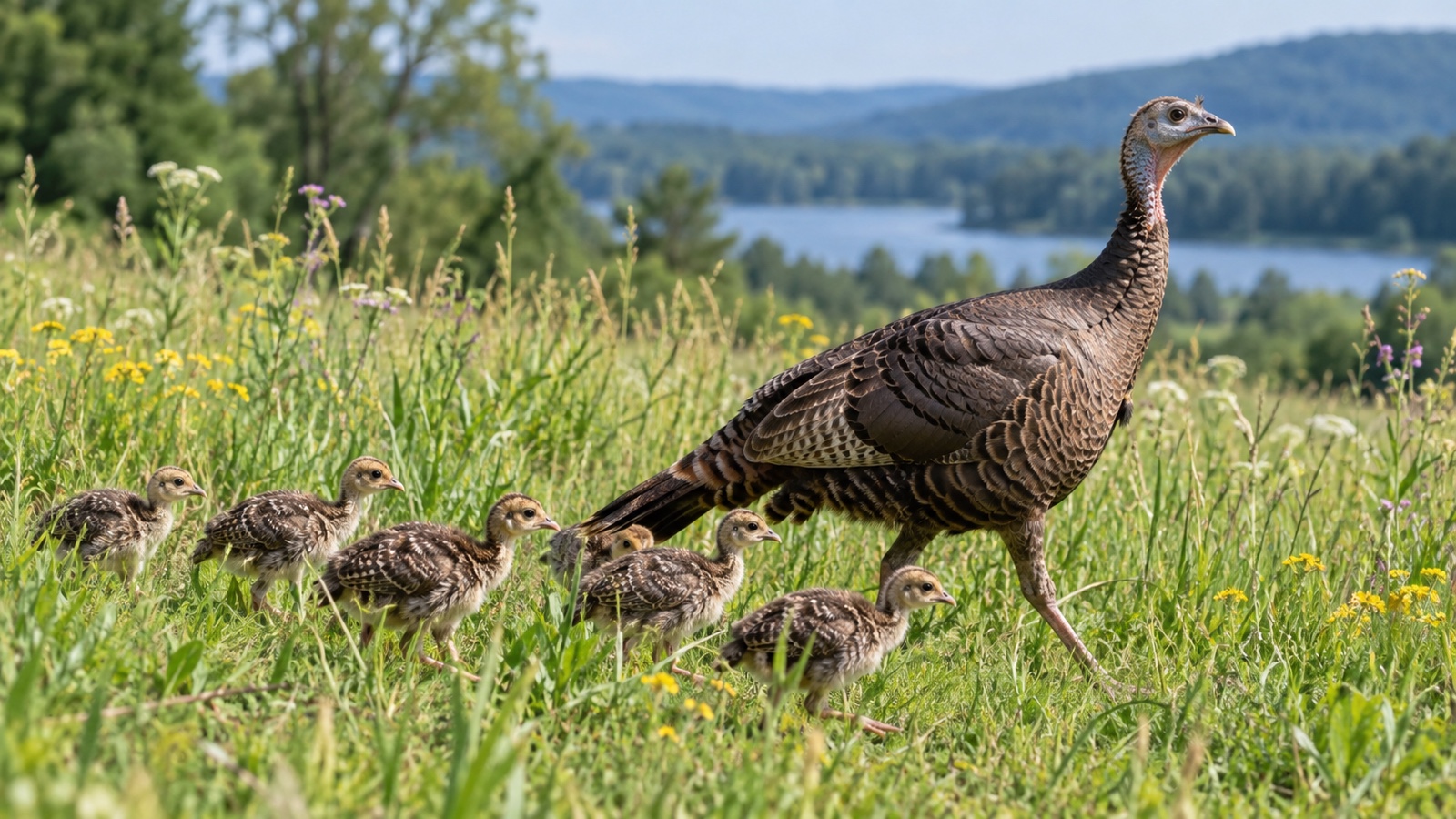
Quick FAQ
Q: Can turkeys fly?
A: Wild turkeys can fly fast for short distances and normally fly into trees to roost. Heavy commercial domestic breeds generally fly poorly.
Q: What is the flap over a turkey's beak called?
A: The fleshy appendage is called a snood.
Q: Did Benjamin Franklin want the turkey to be the national bird?
A: Not formally. He joked in a private letter that the turkey was more respectable than the bald eagle, but he did not submit an official turkey proposal.
Q: What is a baby turkey called?
A: A baby turkey is called a poult.
Q: Do female turkeys gobble?
A: Hens can make many calls and may occasionally produce gobble-like sounds, but the classic loud gobble is primarily associated with males.

Ellie is the owner and sole author of Fun Facts, combining her mechanical engineering background with years of research-driven writing to deliver facts you can trust. Every article is thoroughly fact-checked and routinely updated as new science and sources emerge to keep information accurate and current. Her mission is to make learning delightful while upholding high standards of reliability and transparency.