
Mississippi gave the world blues music, Elvis Presley, major civil-rights landmarks, Delta tamales, literary giants, rocket-engine tests, Gulf Coast beaches, and a river so famous the state practically shares its name with an entire geography lesson. The Magnolia State deserves much more than spelling-test fame.
Mississippi basics beyond the spelling song
- Mississippi became the 20th U.S. state on December 10, 1817.
- Jackson is the state capital.
- Jackson is also Mississippi’s largest city.
- Mississippi has 82 counties.
- The official nickname is the Magnolia State.
- Mississippi is also called the Hospitality State.
- The postal abbreviation is MS.
- The state motto is “Virtute et armis,” meaning “By valor and arms.”
- Mississippi borders Tennessee, Alabama, Louisiana, and Arkansas.
- The Gulf of Mexico forms its southern coast.
- The Mississippi River forms much of the western boundary.
- River-channel changes have created unusual boundary bends and isolated parcels over time.
- Mississippi lies entirely within the Central Time Zone.
- The state contains 82 counties despite having fewer people than many large metropolitan areas.
- The word Mississippi comes through French from an Indigenous name for the great river.
- It is commonly interpreted as “great river” or “great water.”
- The state adopted a new magnolia-centered flag after retiring its former flag in 2020.
- Voters approved the new design in November 2020.
- The legislature formally adopted it in 2021.
- Mississippi managed to turn a six-syllable name into one of America’s most memorable childhood spelling exercises.
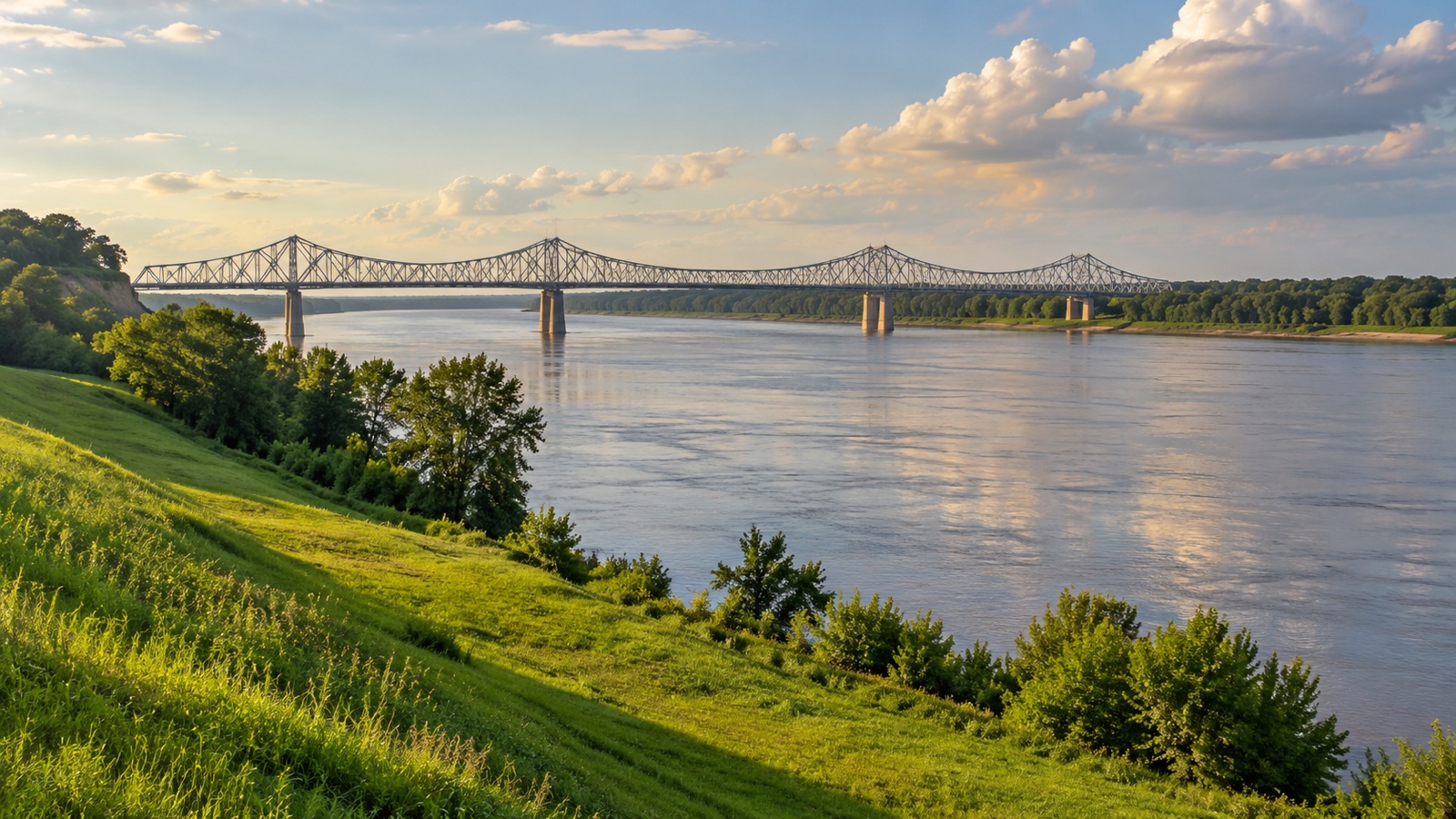
The Delta is not actually the river’s modern delta
- The Mississippi Delta is a cultural and geographic region in northwestern Mississippi.
- It is not the present-day mouth of the Mississippi River.
- The region lies between the Mississippi and Yazoo rivers.
- Its fertile soils formed from river deposits.
- The Delta became one of America’s major cotton-growing regions.
- Plantation agriculture depended heavily on enslaved Black labor before the Civil War.
- Sharecropping and tenant farming shaped the region after emancipation.
- Economic hardship and racial violence pushed many Black Mississippians to leave during the Great Migration.
- Those migrants carried Delta music and culture to cities including Chicago and Detroit.
- The Natchez Trace crosses parts of Mississippi.
- The historic route connected the Mississippi River region with what became Tennessee.
- Today, the Natchez Trace Parkway preserves a scenic route of more than 400 miles.
- Woodall Mountain is Mississippi’s highest natural point.
- It reaches about 807 feet above sea level.
- Much of the state consists of low hills, coastal plain, river bottoms, and pine forests.
- The Mississippi Gulf Coast includes beaches, bays, marshes, and barrier islands.
- Ship Island is part of Gulf Islands National Seashore.
- The Pascagoula River is one of the largest relatively unimpeded river systems in the contiguous United States.
- Mississippi has extensive wetlands that support fish, birds, reptiles, and flood storage.
- The state’s famous “Delta” is hundreds of miles from the river’s actual modern delta in Louisiana, which feels like geography setting a trivia trap.
The blues changed world music from Mississippi
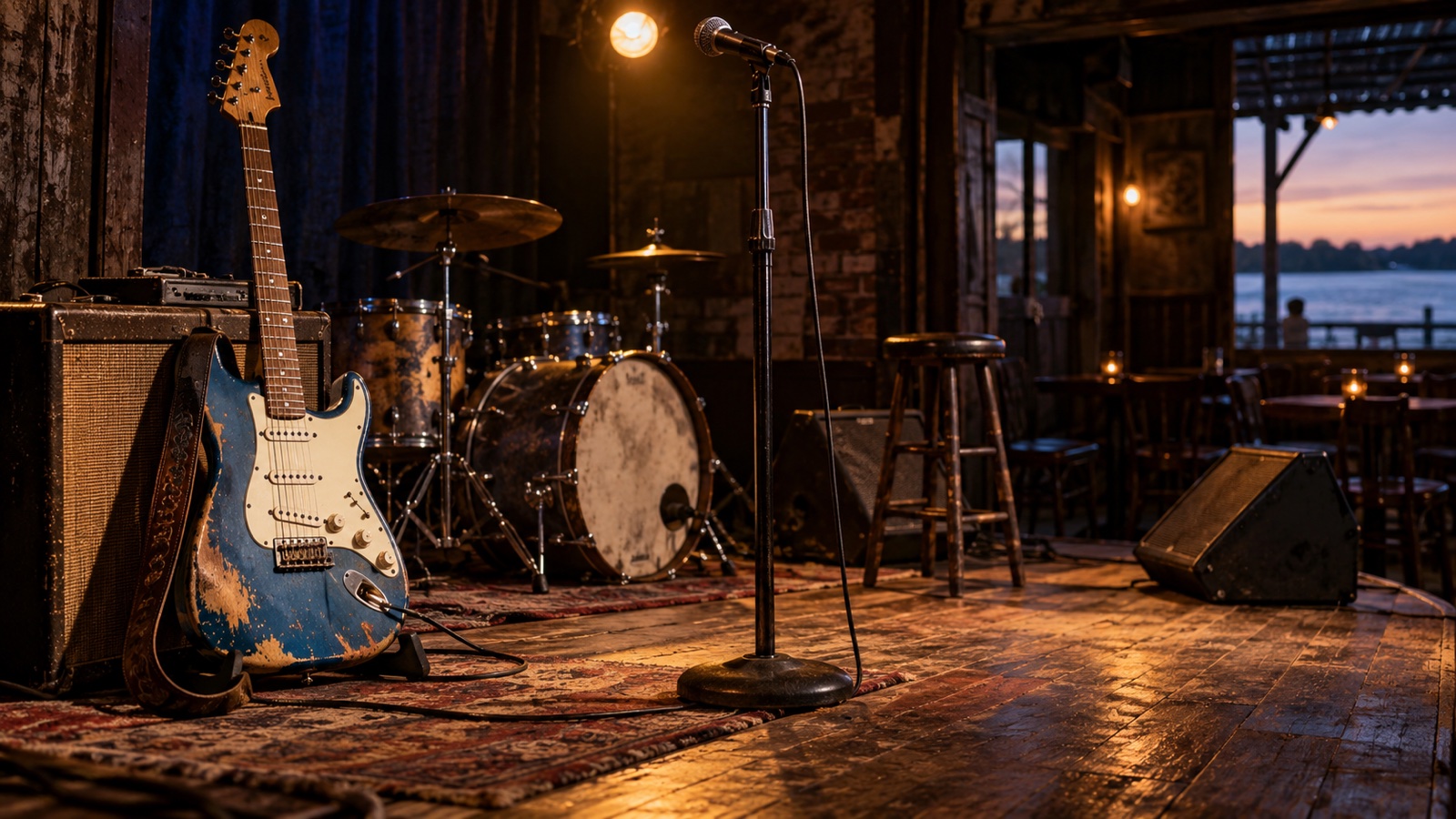
- Mississippi is often called the birthplace of the blues.
- Blues developed from Black musical traditions in the American South.
- Work songs, spirituals, field hollers, ballads, and African American musical practices all contributed.
- The Mississippi Delta became especially important to Delta blues.
- Charley Patton was one of the most influential early Delta blues musicians.
- Robert Johnson became a legendary blues guitarist and songwriter.
- Stories claiming Johnson literally sold his soul at a crossroads are folklore, not documented biography.
- B.B. King was born near Berclair, Mississippi.
- King later spent formative years in the Mississippi Delta.
- The B.B. King Museum and Delta Interpretive Center is in Indianola.
- Muddy Waters was born in Mississippi before becoming a major Chicago blues figure.
- Howlin’ Wolf was also born in Mississippi.
- John Lee Hooker was born near Clarksdale.
- Mississippi blues musicians helped influence rock, R&B, soul, and popular music worldwide.
- The Mississippi Blues Trail marks sites tied to musicians, clubs, communities, and recording history.
- Clarksdale remains an important blues-tourism destination.
- The crossroads of U.S. Highways 61 and 49 in Clarksdale is popularly linked with Robert Johnson legends.
- Highway 61 is sometimes called the Blues Highway.
- Juke joints were informal Black music venues important to blues culture.
- Mississippi music history is the reason a tiny Delta town can matter to guitar players on another continent.
Mississippi was central to the civil-rights struggle
This part of Mississippi history is essential, not optional background. Black Mississippians and their allies confronted segregation, voter suppression, intimidation, and racial terrorism through organizing that changed federal law and American democracy at enormous personal risk.
- Mississippi enforced racial segregation through Jim Crow laws after Reconstruction.
- State and local systems also suppressed Black voting through discriminatory rules and violence.
- Medgar Evers served as a major NAACP leader in Mississippi.
- Evers investigated racial violence and organized for voting rights and desegregation.
- He was assassinated outside his Jackson home in 1963.
- His home is now part of a national monument honoring his life and work.
- Emmett Till was a 14-year-old Black teenager murdered in Mississippi in 1955.
- His mother, Mamie Till-Mobley, insisted the world confront what had been done to her son.
- Public outrage over Till’s murder helped energize the civil-rights movement.
- James Meredith became the first Black student to enroll at the University of Mississippi in 1962.
- Federal intervention was required after violent resistance to his enrollment.
- The University of Mississippi is commonly called Ole Miss.
- Freedom Summer took place in Mississippi in 1964.
- Volunteers and local activists worked to expand Black voter registration and political participation.
- Civil-rights workers James Chaney, Andrew Goodman, and Michael Schwerner were murdered during Freedom Summer.
- Their killings drew national attention to white-supremacist violence.
- Fannie Lou Hamer became one of Mississippi’s most powerful voting-rights voices.
- Hamer helped found the Mississippi Freedom Democratic Party.
- The Mississippi Civil Rights Museum opened in Jackson in 2017.
- The state’s civil-rights story belongs centrally to the people who challenged injustice, not only to the officials who resisted them.
Writers, Elvis & Mississippi creativity
- Elvis Presley was born in Tupelo, Mississippi, in 1935.
- His small childhood home is preserved there.
- Elvis grew up hearing gospel, country, and Black rhythm-and-blues traditions in Mississippi.
- Those influences helped shape the music he later performed.
- William Faulkner spent most of his life in Oxford, Mississippi.
- Faulkner won the Nobel Prize in Literature.
- His home, Rowan Oak, is preserved by the University of Mississippi.
- Faulkner created the fictional Yoknapatawpha County based partly on northern Mississippi.
- Eudora Welty was born and lived in Jackson.
- Welty won the Pulitzer Prize for Fiction.
- Her Jackson home is preserved as a museum and literary site.
- Tennessee Williams was born in Columbus, Mississippi.
- He later became one of America’s most famous playwrights.
- Richard Wright was born near Natchez.
- Wright wrote influential works including “Native Son” and “Black Boy.”
- Oprah Winfrey was born in Kosciusko, Mississippi.
- Country singer Faith Hill was born in Ridgeland and raised in Star.
- Jim Henson, creator of the Muppets, was born in Greenville.
- Mississippi’s creative legacy spans blues, rock, literature, television, theater, country, and puppets.
- That is a suspicious amount of cultural influence for a state many people first met through a spelling rhyme.
Vicksburg, Natchez, the Gulf Coast & space-age Mississippi
Mississippi can move from antebellum architecture to rocket engines very quickly. The state contains major Civil War sites, historic river cities, Gulf Coast casinos and beaches, and the country’s largest rocket-engine test facility, which is not the combination most tourism slogans lead with.
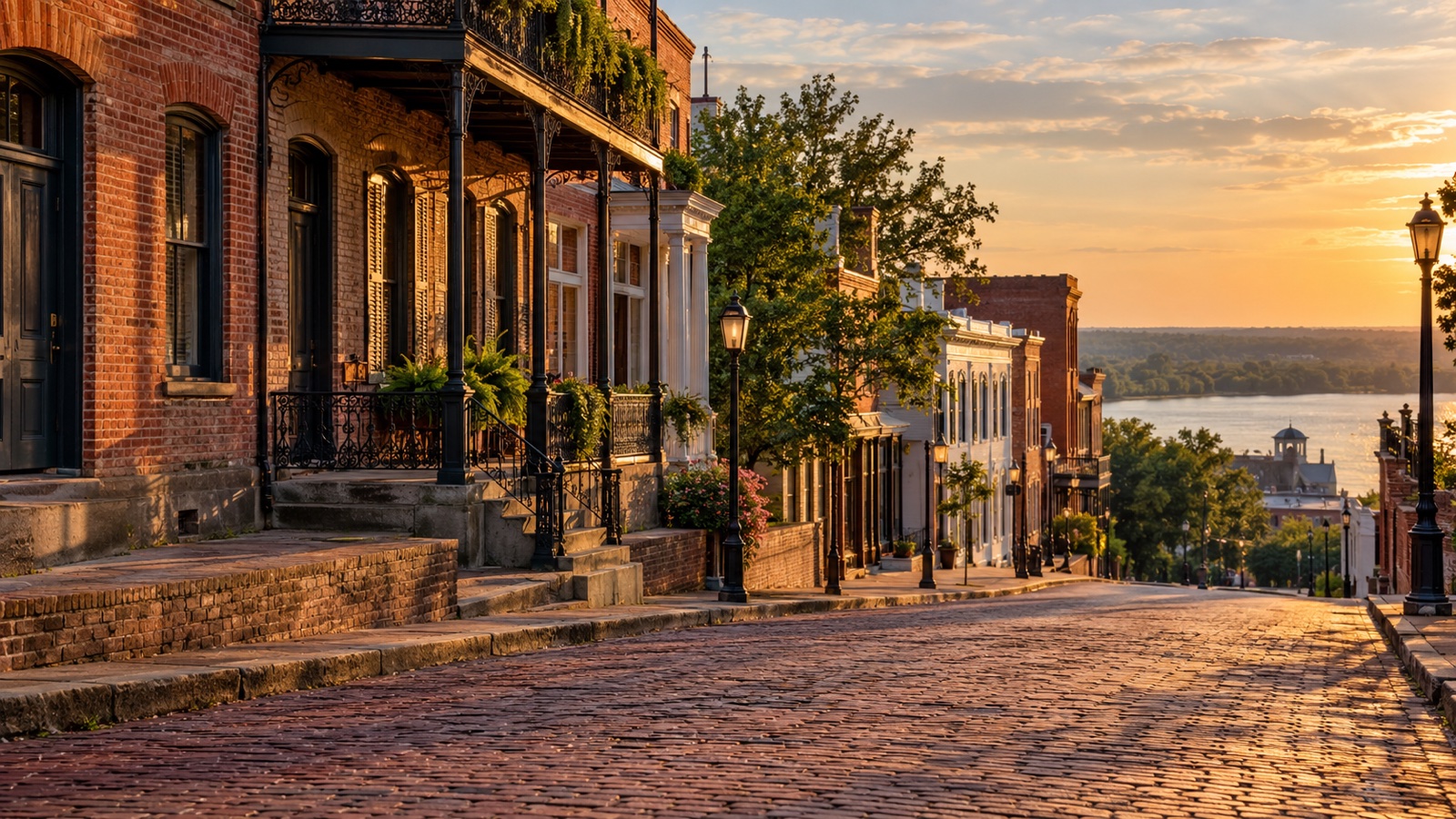
- Vicksburg sits on high bluffs above the Mississippi River.
- The Siege of Vicksburg ended with a Union victory on July 4, 1863.
- That victory gave the Union control of the Mississippi River.
- Vicksburg National Military Park preserves major battlefield areas and monuments.
- The ironclad USS Cairo is displayed at the park.
- Natchez is one of Mississippi’s oldest European-founded settlements.
- The city contains many surviving 19th-century buildings.
- Those grand houses were built within an economy deeply dependent on slavery.
- The Natchez Trace begins near the city and extends northeast toward Tennessee.
- Biloxi and Gulfport are major Mississippi Gulf Coast cities.
- Biloxi has deep seafood and maritime traditions.
- The Biloxi Lighthouse has stood since the 19th century.
- Casinos became a major Gulf Coast industry beginning in the 1990s.
- Hurricane Katrina devastated the Mississippi Gulf Coast in 2005.
- Storm surge destroyed buildings and reshaped coastal communities.
- Stennis Space Center sits near Mississippi’s Gulf Coast.
- It is NASA’s largest rocket-propulsion test site.
- Engines and propulsion systems for major U.S. space programs have been tested there.
- Powerful rocket tests can be heard and felt across the surrounding area.
- Mississippi can honestly claim both front-porch blues and rocket-engine thunder on its soundscape.
Catfish, tamales, agriculture & 25 final Mississippi facts
- Farm-raised catfish became one of Mississippi’s signature agricultural products.
- Catfish ponds are especially associated with the Delta.
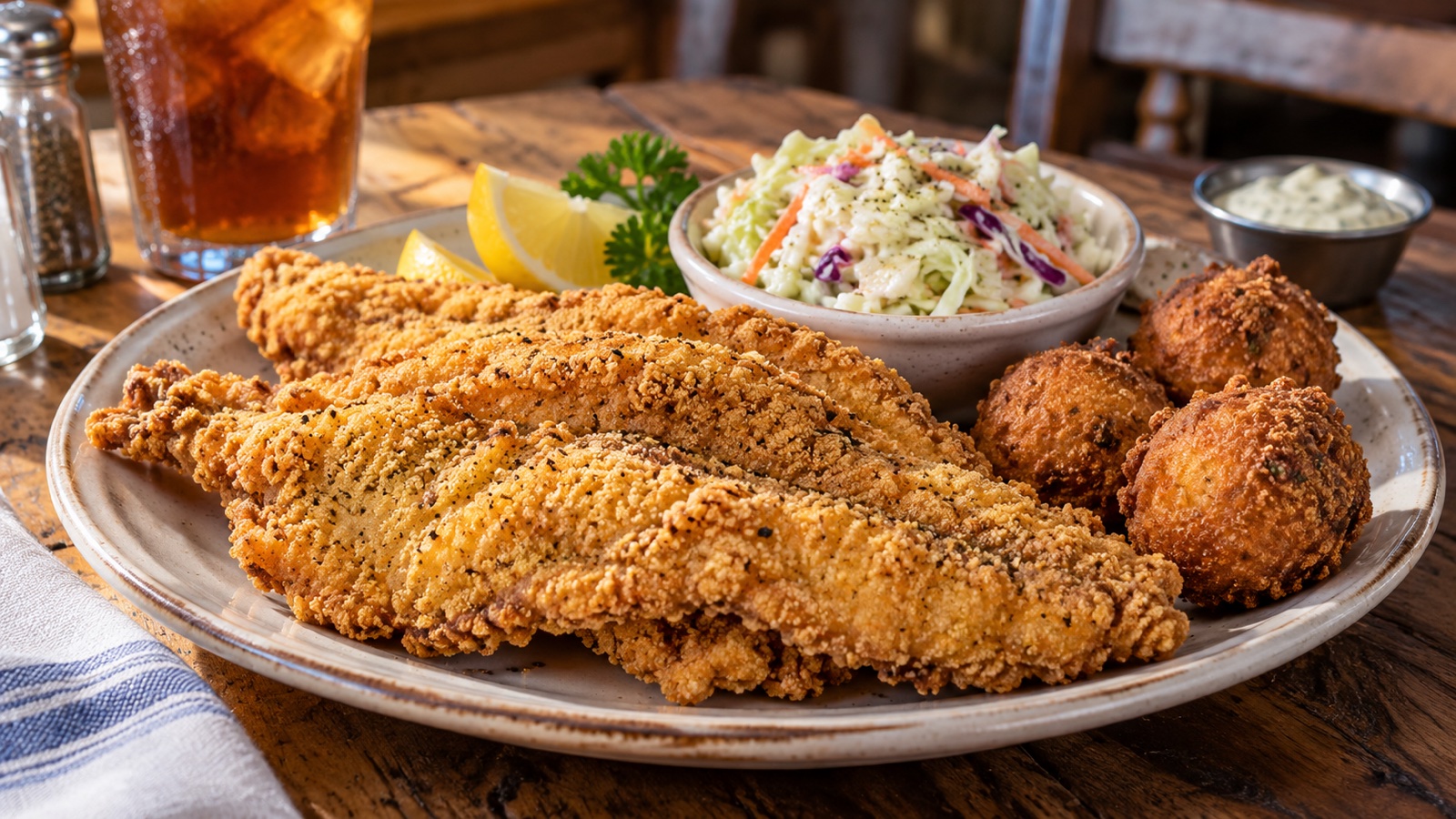
- Fried catfish is a classic Mississippi meal.
- Delta hot tamales are a distinctive regional food tradition.
- Mississippi tamales are usually smaller and softer than many Mexican tamales.
- They often use cornmeal dough wrapped around seasoned meat.
- The exact origins of Delta tamales are debated.
- They likely reflect cultural exchange among Mexican laborers, Black cooks, and Southern food traditions.
- Comeback sauce is a creamy, tangy Mississippi condiment associated especially with Jackson.
- It is commonly served with fried foods, seafood, sandwiches, or salads.
- Sweet potatoes are an important Mississippi crop.
- Cotton remains culturally important even though the modern agricultural economy is more diverse.
- Poultry, soybeans, corn, and forestry are also major industries.
- Pine forests support a large timber and paper-products sector.
- The state flower is the magnolia.
- The state tree is also the southern magnolia.
- The state bird is the northern mockingbird.
- The state land mammal includes the white-tailed deer and red fox under separate designations.
- The American alligator is Mississippi’s state reptile.
- Mississippi’s new state flag features a magnolia blossom encircled by stars.
- The flag includes the words “In God We Trust.”
- The design replaced the last U.S. state flag that still incorporated the Confederate battle emblem.
- Mississippi State University is in Starkville.
- The University of Southern Mississippi is based in Hattiesburg.
- After 145 facts, Mississippi feels less like one state story and more like several American histories stacked along a river.
Quick FAQ
Q: What is Mississippi famous for?
A: Blues music, the Mississippi Delta, major civil-rights history, Elvis Presley, William Faulkner, catfish, Gulf Coast towns, the Mississippi River, and NASA’s Stennis Space Center.
Q: Is the Mississippi Delta the river’s actual delta?
A: No. The Mississippi Delta is a northwestern Mississippi region between the Mississippi and Yazoo rivers. The river’s modern delta is farther south in Louisiana.
Q: What is the capital of Mississippi?
A: Jackson is both the capital and largest city.
Q: Why is Mississippi called the birthplace of the blues?
A: The Delta and other Mississippi communities produced many foundational blues musicians and traditions that later shaped jazz, rock, R&B, and popular music worldwide.
Q: What does Mississippi’s current flag look like?
A: It features a magnolia blossom, stars, red, gold, and blue fields, and the words “In God We Trust.” Voters approved the design in 2020.

Ellie is the owner and sole author of Fun Facts, combining her mechanical engineering background with years of research-driven writing to deliver facts you can trust. Every article is thoroughly fact-checked and routinely updated as new science and sources emerge to keep information accurate and current. Her mission is to make learning delightful while upholding high standards of reliability and transparency.