
Reindeer deserve better than being seasonal employees in Santa's transportation department. They migrate across Arctic landscapes, see ultraviolet light, grow extraordinary antlers, click when they walk, dig through snow for food, survive bitter cold with heat-saving noses and hooves, and include females that regularly carry antlers, which makes the Christmas illustrations unexpectedly interesting.
Reindeer and caribou are the same species
- The reindeer's scientific name is Rangifer tarandus.
- Reindeer belong to the deer family Cervidae.
- Reindeer and caribou are the same species.
- “Caribou” is the usual North American name for many wild populations.
- “Reindeer” is widely used in Eurasia and for domesticated or semi-domesticated animals.
- Biologists recognize several populations and subspecies across the Arctic and subarctic.
- Reindeer naturally occur in northern Europe, Russia, Alaska, Canada, and Greenland.
- Humans have introduced reindeer to some islands and regions outside their original range.
- Body size varies dramatically by population.
- Woodland caribou can be much larger than some Arctic island reindeer.
- Both males and females can grow antlers.
- That is unusual among deer.
- Adult males are generally larger than females.
- The coat can range from dark brown to pale gray or nearly white.
- Winter fur is especially thick.
- The muzzle is fully covered in hair.
- Hair on the face helps reduce heat loss in severe cold.
- Reindeer have broad cloven hooves.
- The hooves change function with season.
- The same species gets two common names and an annual global branding campaign, which feels like excellent public relations.
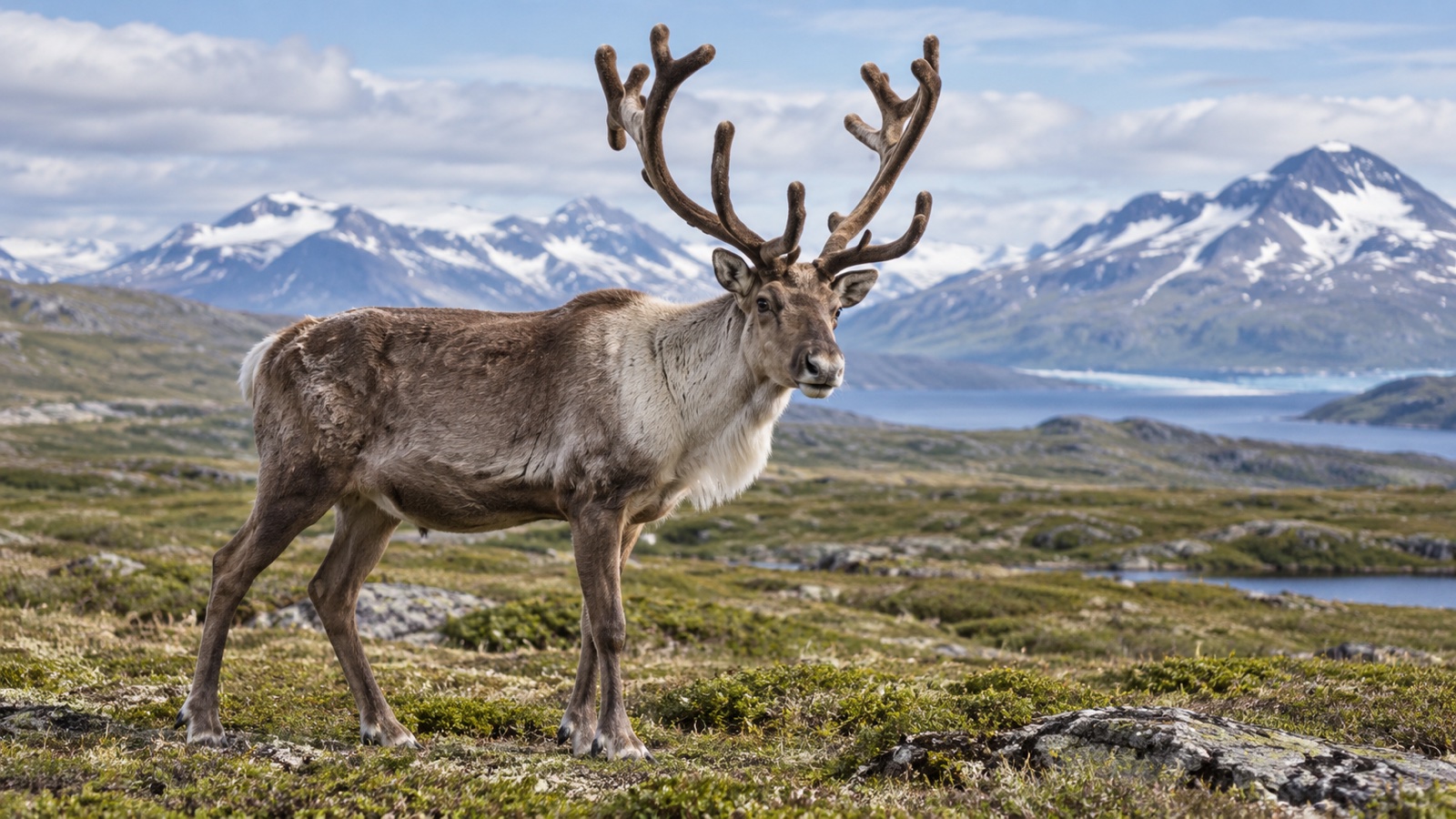
Females grow antlers too
- Female reindeer regularly grow antlers.
- Female antlers are usually smaller than those of mature males.
- Male antlers can become enormous relative to body size.
- Antlers are living bone while growing.
- Soft velvet covers new antlers.
- Velvet supplies blood and nutrients to rapidly growing tissue.
- Antlers harden before the breeding season.
- Mature bulls use them in displays and competition.
- Adult males usually shed antlers after the autumn rut.
- Pregnant females often keep antlers through winter.
- Females commonly shed antlers around or after spring calving.
- Keeping antlers can help females defend feeding craters in winter.
- They may displace antlerless males from access to food.
- Antler timing is controlled partly by hormones and day length.
- Castrated males can retain antlers on a different schedule from intact bulls.
- Young animals may also shed later than mature bulls.
- Christmas reindeer are traditionally shown with antlers in late December.
- Adult intact males in many populations would normally have shed theirs by then.
- That means Santa's antlered team could plausibly be female, young, or castrated reindeer rather than mature intact bulls.
- Science has not proven Santa's herd demographics, but it has absolutely complicated the casting department.
Their hooves transform between summer and winter
- Reindeer hooves are broad and divided into two main toes.
- The toes spread on soft ground.
- Wide hooves help support body weight on snow, tundra, and wetlands.
- In summer, the footpads become relatively soft and spongy.
- Soft pads provide traction on wet ground and vegetation.
- During winter, the pads shrink and tighten.
- This exposes more of the hard hoof rim.
- The sharper rim grips ice and crusted snow.
- Reindeer use hooves to dig through snow for food.
- This digging behavior is called cratering.
- They can break through hard snow crust.
- Deep ice layers can still prevent access to forage.
- Rain-on-snow events can create dangerous ice crusts.
- Climate change is increasing some icing risks in Arctic regions.
- Hooves also work as paddles while swimming.
- Reindeer are strong swimmers.
- Migrating herds can cross broad rivers.
- Some populations swim between islands or across coastal channels.
- Hoof clicks can be audible when animals walk.
- Reindeer feet somehow cover snowshoe, shovel, ice cleat, and swim-fin responsibilities without a gear closet.
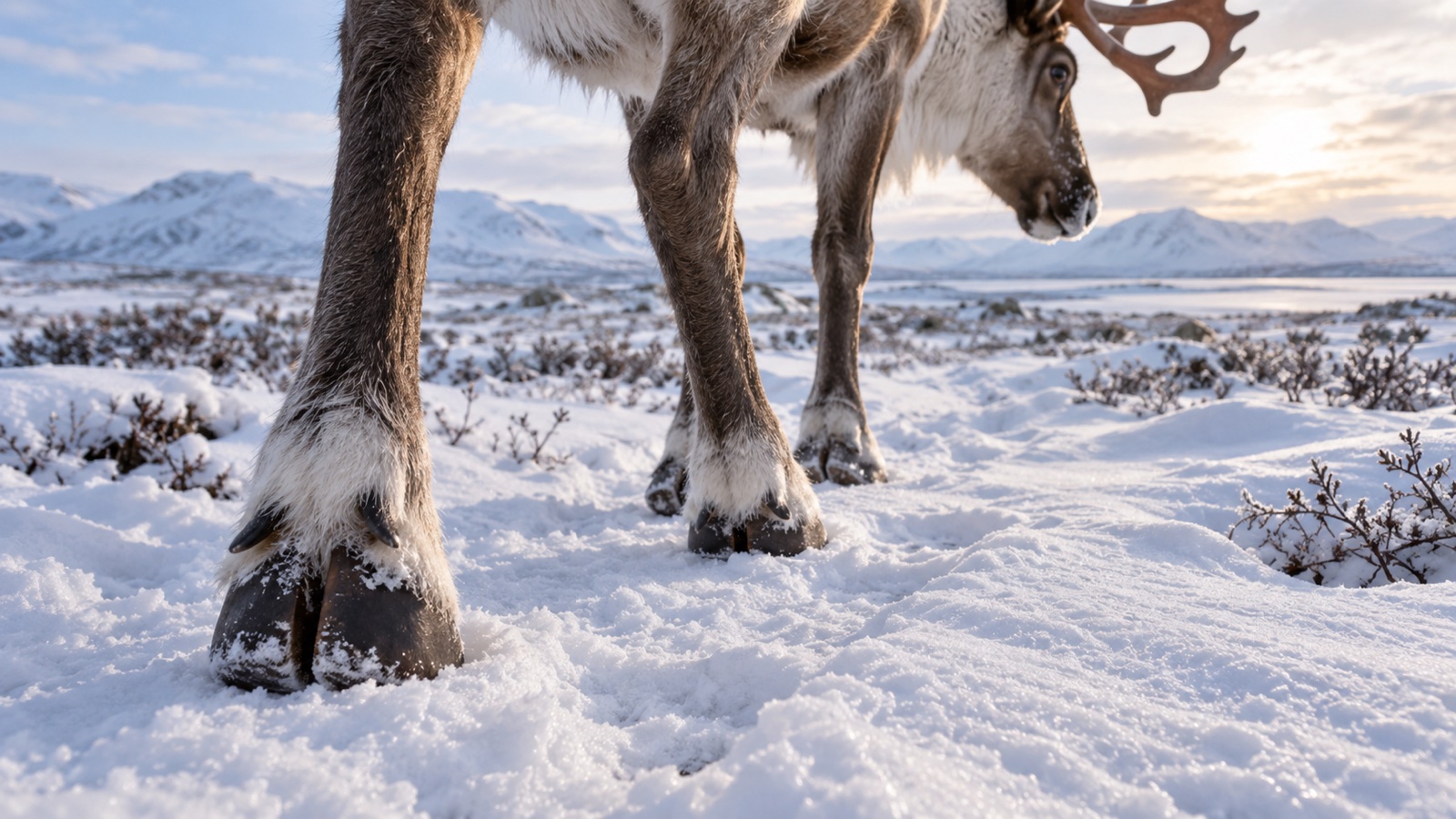
A tendon makes a clicking sound with every step
Reindeer can produce a regular clicking noise as they walk because a tendon moves over a bone in the foot or ankle area. The sound may help animals stay aware of one another in poor visibility, although its exact social function is still being studied.
- The clicking sound is mechanical rather than vocal.
- It occurs as a tendon snaps over part of the leg or foot anatomy.
- Clicks can become more noticeable in older or larger animals.
- Herd members may hear one another when fog, snow, or darkness reduces visibility.
- The sound could therefore aid group cohesion.
- Researchers continue investigating how reindeer use clicking socially.
- Reindeer also communicate through vocal sounds.
- Calves bleat to mothers.
- Females use calls with calves during early life.
- Males produce hoarse or rattling breeding vocalizations during the rut.
- A specialized air sac in the throat helps amplify male rut calls.
- Scent is also important in communication.
- Glands near the feet leave chemical information.
- Urine and body odor become especially important during breeding season.
- Antler displays communicate size and status visually.
- Body posture can reduce the need for physical fights.
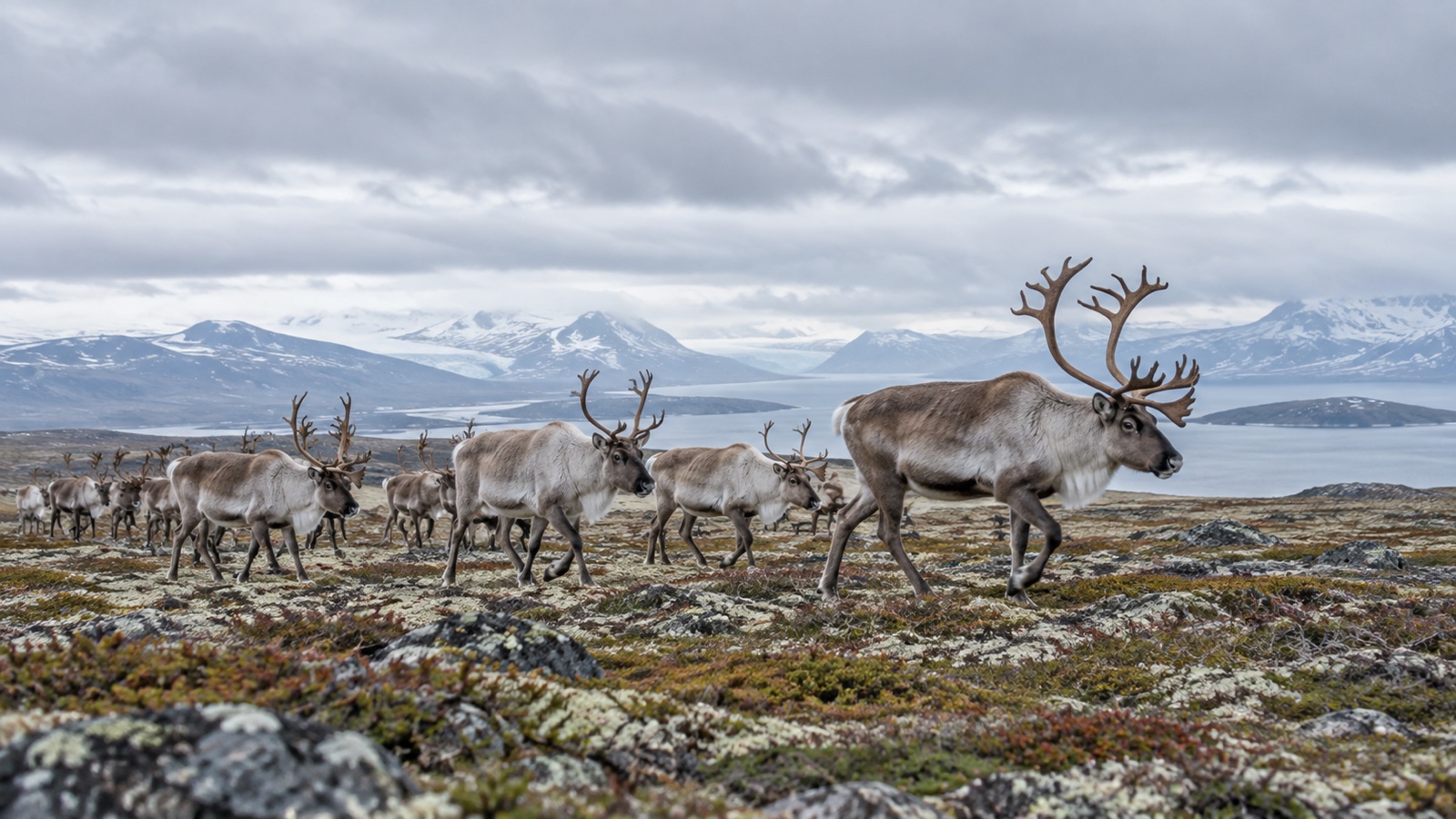
- Reindeer are social and often form herds.
- Herd size changes with season and habitat.
- Migratory aggregations can contain tens of thousands of animals.
- A whole herd clicking through snow sounds suspiciously like nature decided sleigh bells needed a biological prototype.
Reindeer see ultraviolet light
- Reindeer can detect ultraviolet wavelengths invisible to humans.
- Snow reflects a large amount of ultraviolet light.
- Some important objects absorb ultraviolet instead.
- Lichens can appear much darker against UV-reflective snow.
- Wolf fur and urine can also create ultraviolet contrast.
- UV sensitivity may therefore improve detection of food and predators.
- The reindeer eye changes seasonally.
- A reflective layer behind the retina is called the tapetum lucidum.
- In summer, the tapetum appears more golden.
- During Arctic winter, it shifts toward a deep blue color.
- The seasonal change is associated with altered eye pressure and tissue structure.
- A blue tapetum scatters more light within the eye.
- That can improve sensitivity in extremely dim winter conditions.
- The tradeoff may be reduced visual sharpness.
- Arctic winter can bring weeks without direct sunlight.
- Snow, twilight, moonlight, and aurora still provide some illumination.
- Reindeer vision is therefore tuned to a light environment humans rarely experience.
- They also have a wide field of view as prey animals.
- Smell and hearing remain important when visibility is poor.
- Human eyes see a white snowfield; a reindeer gets an ultraviolet version with extra contrast settings turned on.
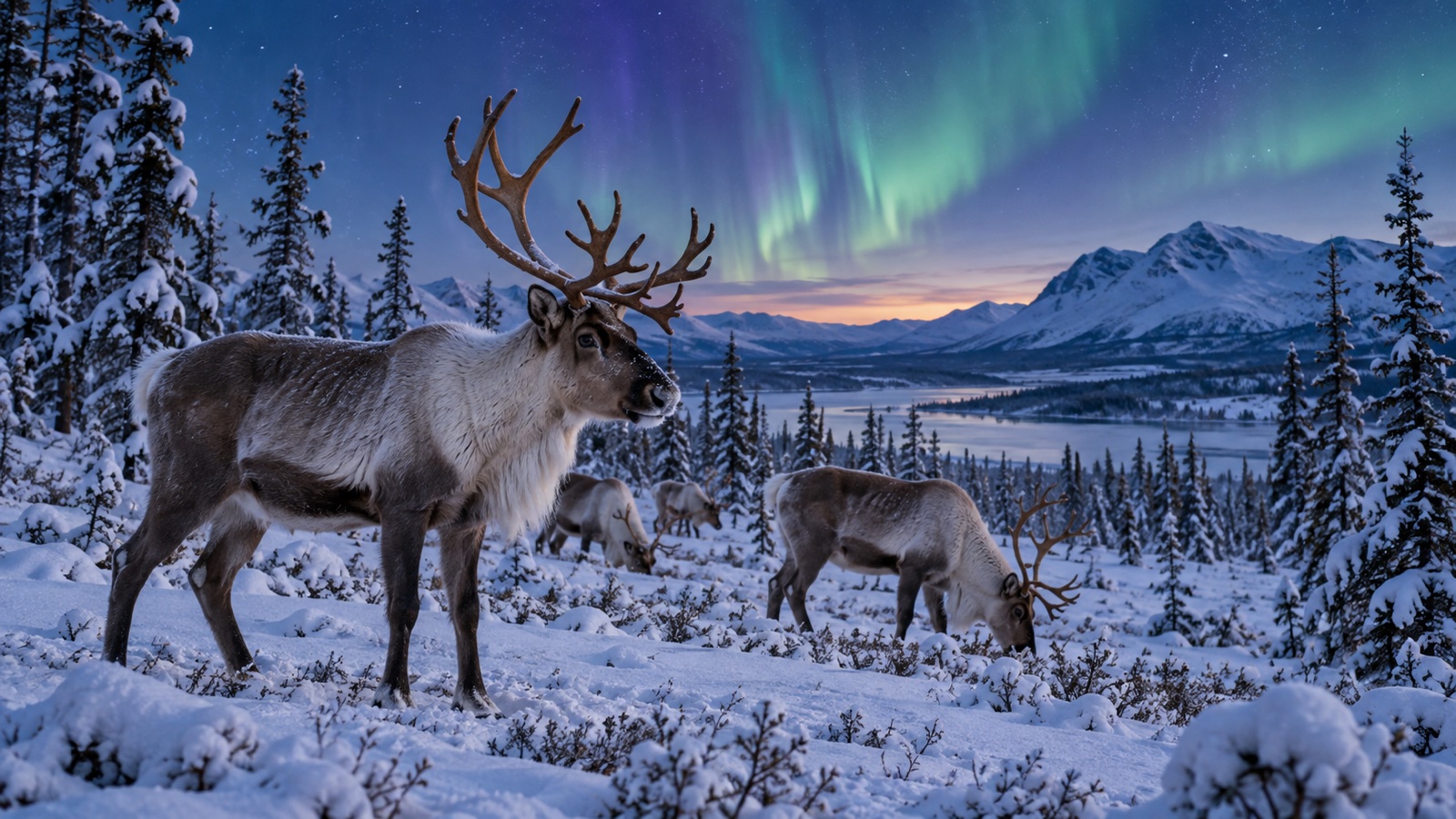
Their noses warm air before it reaches the lungs
A reindeer's nose is not just cute red-nose material. Complex nasal passages and a rich blood supply help warm and humidify bitterly cold incoming air while reclaiming some heat and moisture from exhaled breath.
- Reindeer nasal passages contain complex folded structures.
- Those structures create a large internal surface area.
- Warm blood heats cold incoming air.
- The nose also adds moisture before air reaches the lungs.
- Exhaled air transfers some heat back to nasal tissues.
- This reduces heat loss with every breath.
- Heat exchange is especially valuable at temperatures far below 0°F.
- The winter coat also provides exceptional insulation.
- Reindeer hair is hollow or air-filled in much of the shaft.
- Trapped air reduces heat transfer.
- Dense underfur adds another insulating layer.
- Reindeer can lower peripheral blood flow to conserve core warmth.
- Legs remain much cooler than the body core.
- Heat-exchange systems in the limbs reduce energy loss.
- Large bodies help northern populations conserve heat.
- Reindeer still experience cold stress during storms or poor nutrition.
- Wind increases heat loss dramatically.
- Young calves are especially vulnerable shortly after birth.
- Spring timing matters because calves need food-rich mothers and improving weather.
- Rudolph's nose may be fictional, but the real reindeer nose already has enough engineering to deserve its own song.
Migration, Indigenous herding and 25 final reindeer facts
- Some caribou populations make extraordinary seasonal migrations.
- Porcupine caribou move between Alaska, Yukon, and Northwest Territories.
- Individual annual journeys can total well over 1,000 miles.
- Not every reindeer or caribou population migrates long distances.
- Woodland caribou may live in relatively dispersed forest ranges.
- Pregnant migratory females often travel toward traditional calving grounds.
- Calves can stand and walk within hours of birth.
- They must quickly keep up with moving mothers.
- Reindeer milk is unusually rich in fat and protein.
- Lichens are important winter food for many populations.
- Reindeer also eat grasses, sedges, leaves, mushrooms, shrubs, and other plants.
- They use smell to locate food beneath snow.
- Sámi communities across northern Scandinavia and Russia have long relationships with reindeer herding.
- Reindeer herding is also practiced by several Indigenous peoples across northern Russia.
- Herding systems vary by region, law, culture, season, and community.
- Reindeer provide meat, hides, antler, transportation, income, and cultural continuity.
- Modern herders use snowmobiles, GPS, helicopters, phones, and other technology alongside traditional knowledge.
- Roads, mines, wind facilities, tourism, forestry, and climate change can fragment migration and grazing landscapes.
- Wild caribou populations have declined in many regions.
- Woodland caribou are threatened in parts of Canada by habitat alteration and associated predator dynamics.
- Wolves are major natural predators.
- Bears can prey heavily on newborn calves.
- Golden eagles and other predators can take young animals in some regions.
- Reindeer domestication did not erase wild populations; wild and herded forms coexist across the species' range.
- After 145 facts, reindeer look much more impressive without flying: they already migrate enormous distances, see ultraviolet, rebuild antlers, transform their feet seasonally, warm Arctic air inside the nose, and click their way through snow.
Quick FAQ
Q: Are reindeer and caribou the same animal?
A: Yes. Both names refer to Rangifer tarandus, with “caribou” used especially for many wild North American populations.
Q: Do female reindeer have antlers?
A: Yes. Female reindeer commonly grow antlers and often keep them later into winter than mature males.
Q: Can reindeer see ultraviolet light?
A: Yes. Their UV sensitivity can increase contrast between snow and things such as lichens, urine, or fur.
Q: Why do reindeer feet click?
A: A tendon moves over structures in the foot or ankle as they walk, producing an audible click that may help animals keep track of one another.
Q: Do real reindeer fly?
A: No. They are strong runners and swimmers, but powered flight remains firmly in the Christmas-story department.

Ellie is the owner and sole author of Fun Facts, combining her mechanical engineering background with years of research-driven writing to deliver facts you can trust. Every article is thoroughly fact-checked and routinely updated as new science and sources emerge to keep information accurate and current. Her mission is to make learning delightful while upholding high standards of reliability and transparency.