
Poland has Baltic beaches, alpine peaks, primeval forest, enormous castles, salt chambers, medieval squares, pierogi, world-changing scientists, and cities repeatedly rebuilt after war. I expected history; I did not expect Europe’s heaviest wild land animal wandering through ancient woodland or an underground chapel carved almost entirely from salt.
Poland sits between the Baltic and Central European highlands
- Poland is located in Central Europe.
- Warsaw is the national capital and largest city.
- Poland borders Germany, Czechia, Slovakia, Ukraine, Belarus, Lithuania, and Russia’s Kaliningrad region.
- The Baltic Sea forms Poland’s northern coast.
- Poland is divided into 16 voivodeships, or provinces.
- The national currency is the Polish złoty.
- Poland is a member of the European Union but does not use the euro as its currency.
- Polish is the official language.
- Polish uses the Latin alphabet with additional letters and diacritical marks.
- The Polish flag is white over red.
- White and red are national colors with medieval heraldic roots.
- Poland’s coat of arms features a crowned white eagle.
- The country uses Central European Time in winter.
- It observes summer-time clock changes under European rules.
- Most of Poland consists of lowlands.
- Mountains rise along the southern border.
- The Vistula is Poland’s longest river.
- The Oder is another major river and forms part of the German border.
- Poland is larger than New Mexico but smaller than Montana.
- Polish geography is basically a north-to-south gradient from beaches and lakes to foothills and serious mountains.
Mountains, lakes and one primeval forest break the flat-country stereotype
- The Tatra Mountains rise along Poland’s border with Slovakia.
- They are the highest part of the Carpathian Mountains.
- Rysy is the highest point in Poland.
- Its highest summit lies in Slovakia, while the Polish-border summit reaches about 8,199 feet.
- Zakopane is a major mountain resort below the Tatras.
- The region is known for distinctive wooden architecture and highland traditions.
- Morskie Oko is a famous glacial lake in the Polish Tatras.
- The name means “Eye of the Sea.”
- The Masurian Lake District in northeastern Poland contains thousands of lakes.
- Glaciers shaped much of northern Poland’s lake landscape.
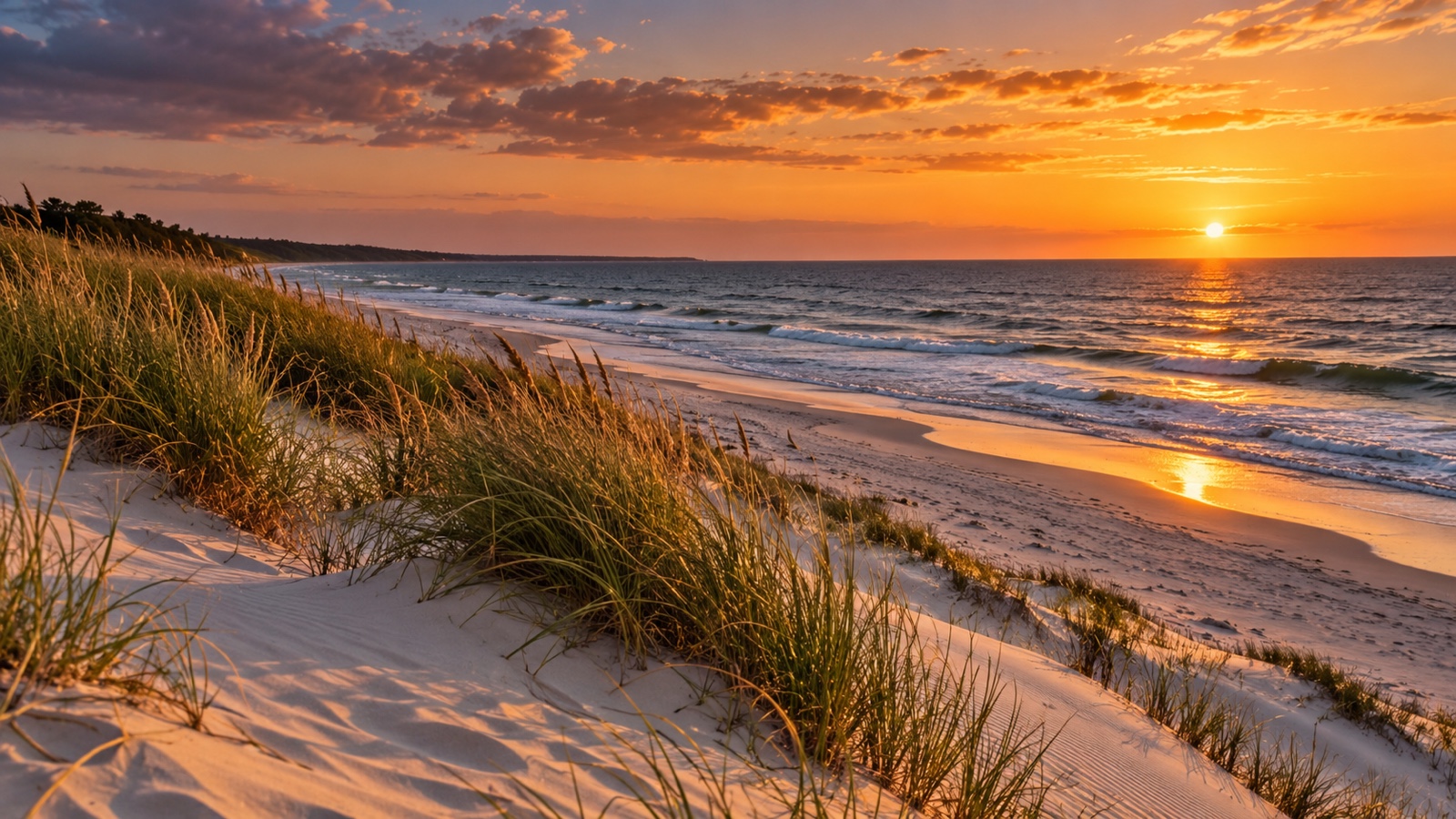
- The Baltic coast includes sandy beaches and long dune systems.
- Słowiński National Park is famous for moving coastal dunes.
- Wind can shift the dunes gradually across the landscape.
- Białowieża Forest straddles the Poland-Belarus border.
- It preserves one of Europe’s most important remnants of lowland primeval forest.
- European bison live in Białowieża.
- European bison are the heaviest wild land mammals in Europe.
- The species became extinct in the wild after World War I.
- Captive breeding and reintroduction restored free-ranging populations.
- Poland has the wonderfully specific flex of rebuilding a giant wild bison population after humanity had nearly deleted it.
The Polish state dates back more than a thousand years
- The Piast dynasty played a central role in forming the early Polish state.
- Duke Mieszko I adopted Christianity in 966.
- That baptism is commonly treated as a symbolic beginning of Polish statehood.
- Bolesław I the Brave became Poland’s first crowned king in 1025.
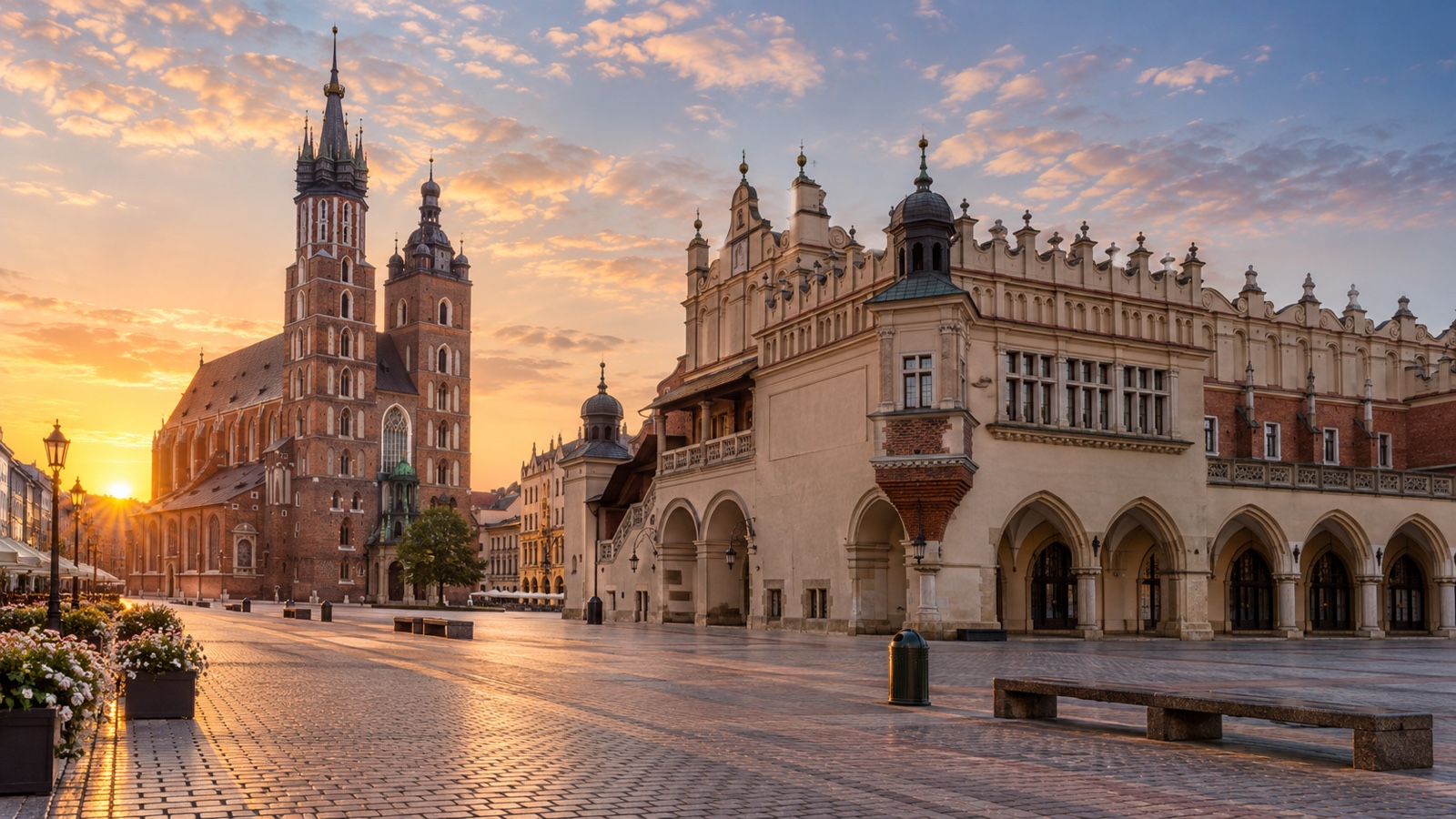
- Kraków served as a royal capital for centuries.
- Wawel Castle became a major center of Polish monarchy.
- Poland entered a dynastic union with Lithuania during the late 14th century.
- The Polish-Lithuanian Commonwealth was formally established in 1569.
- The Commonwealth became one of Europe’s largest states.
- Its parliament was called the Sejm.
- The nobility elected kings rather than relying only on automatic hereditary succession.
- The Commonwealth’s political system gave unusually broad privileges to its nobility but excluded most of the population from power.
- Warsaw increasingly became the political center during the Commonwealth era.
- The Commonwealth included Poles, Lithuanians, Ruthenians, Jews, Germans, Armenians, Tatars, and other communities.
- Religious diversity was substantial by early-modern European standards.
- The Warsaw Confederation of 1573 guaranteed significant religious protections for nobles.
- The Commonwealth weakened through internal political problems and pressure from neighboring powers.
- Russia, Prussia, and Austria partitioned Poland in three stages.
- After the third partition in 1795, an independent Polish state disappeared from the map for 123 years.
- Polish identity survived a century without a sovereign Poland, which is a fairly stubborn response to cartography.
World War II devastated Poland on an extraordinary scale
Poland’s World War II history needs precise language. Nazi Germany invaded and occupied Poland, the Soviet Union invaded from the east, millions of Polish citizens were murdered, and German Nazi authorities built extermination camps on occupied Polish soil; calling those camps “Polish” is historically wrong.
- Poland regained independence in 1918 after World War I.
- Nazi Germany invaded Poland on September 1, 1939.
- The invasion is commonly treated as the beginning of World War II in Europe.
- The Soviet Union invaded eastern Poland on September 17, 1939.
- Germany and the Soviet Union divided occupied Polish territory under secret arrangements tied to the Molotov-Ribbentrop Pact.
- Both occupying powers carried out mass repression.
- Nazi Germany targeted Polish elites, resistance members, Jews, Roma, and many other civilians.
- The Soviet NKVD murdered thousands of Polish officers and intellectuals in the Katyn massacre and related killings.
- Before the war, Poland had one of the world’s largest Jewish populations.
- Nazi occupation authorities forced Jews into ghettos.
- German Nazi authorities built major extermination camps in occupied Poland.
- Auschwitz-Birkenau was a German Nazi concentration and extermination camp complex in occupied Poland.
- Treblinka, Sobibór, Bełżec, and Chełmno were other major killing centers established by Nazi Germany.
- Roughly six million Jews were murdered in the Holocaust across Europe.
- About three million Polish Jews were murdered.
- Millions of non-Jewish Polish citizens also died during the war.
- The Warsaw Ghetto Uprising began in 1943.
- Jewish fighters resisted German deportation and destruction of the ghetto.
- The Warsaw Uprising of 1944 was a separate Polish resistance revolt against German occupation.
- Warsaw was left overwhelmingly destroyed by the end of the war.
Warsaw and Gdańsk became symbols of rebuilding and resistance
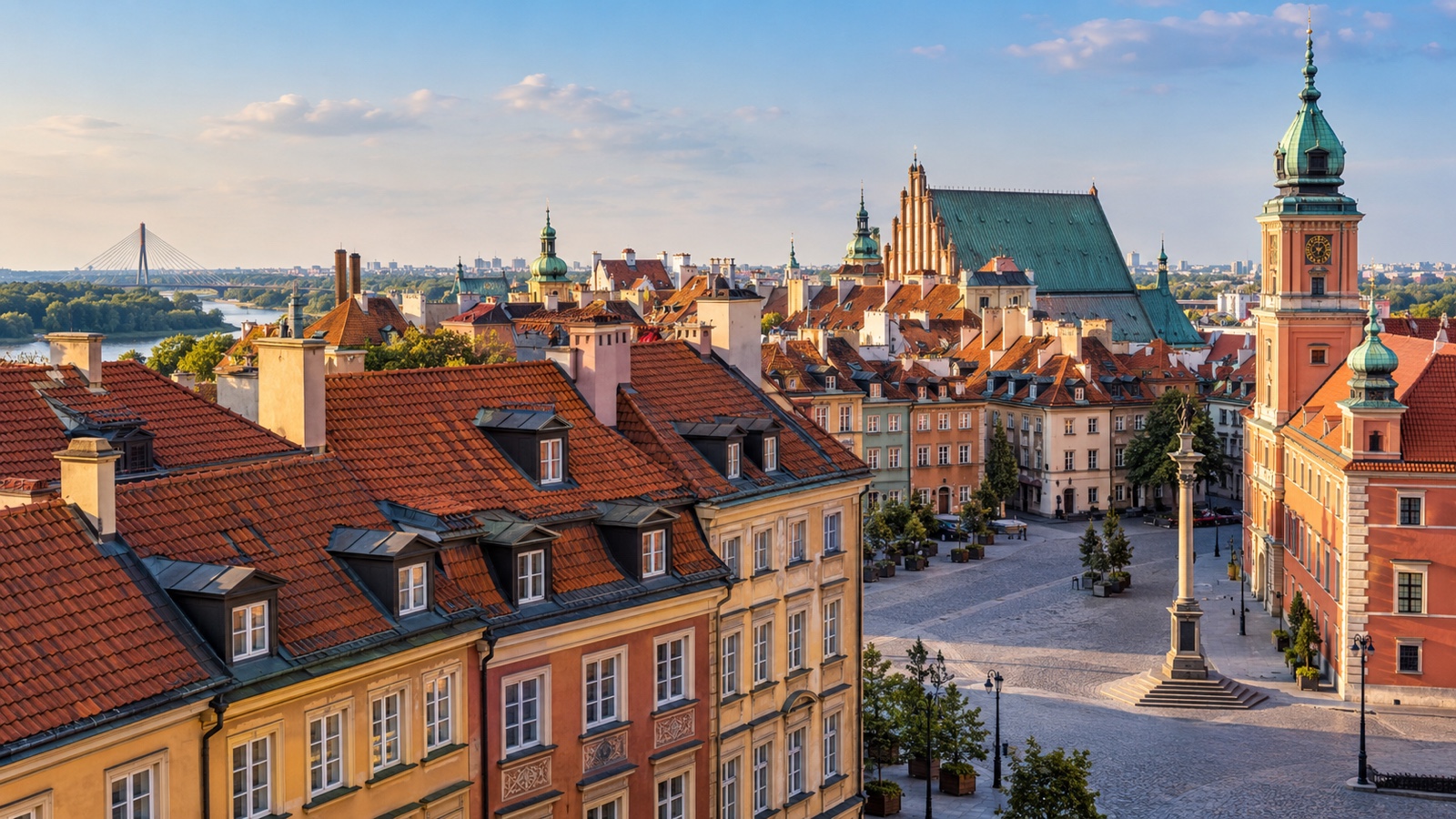
- Warsaw’s Old Town was reconstructed after World War II.
- Rebuilders used historical paintings, plans, photographs, and surviving fragments.
- The reconstructed historic center is a UNESCO World Heritage Site.
- The UNESCO listing recognizes the rebuilding itself as an extraordinary conservation achievement.
- Warsaw’s Royal Castle was also rebuilt after wartime destruction.
- The Palace of Culture and Science was completed during the communist era.
- It was a Soviet gift and remains politically and aesthetically controversial.
- After World War II, Poland came under a Soviet-backed communist government.
- Political opposition was restricted for decades.
- Workers at the Gdańsk Shipyard organized major strikes in 1980.
- The Solidarity trade-union movement emerged from those strikes.
- Lech Wałęsa became Solidarity’s most famous leader.
- Solidarity grew into a huge social and political movement.
- The communist government imposed martial law in 1981.
- Solidarity was outlawed temporarily but continued underground.
- Round Table talks in 1989 opened the way for partially free elections.
- Solidarity-backed candidates won overwhelmingly where they were permitted to compete.
- Those events helped end communist rule in Poland.
- Poland joined NATO in 1999 and the European Union in 2004.
- Gdańsk went from medieval port to shipyard revolution center without ever losing its habit of being strategically important.
Copernicus, Curie and Chopin gave Poland serious cultural bragging rights
Poland has the unusual talent of producing people who end up in entirely different school textbooks. Astronomy gets Copernicus, chemistry and physics get Marie Curie, piano students get Chopin, literature gets Nobel laureates, and mathematics gets a codebreaking team that helped crack Enigma.
- Nicolaus Copernicus was born in Toruń in 1473.
- Copernicus developed a heliocentric model placing the Sun near the center of planetary motions.
- His work helped transform European astronomy.
- Marie Skłodowska Curie was born in Warsaw in 1867.
- She later conducted most of her famous scientific career in France.
- Curie became the first woman to win a Nobel Prize.
- She remains the only person to win Nobel Prizes in two different natural-science categories.
- Frédéric Chopin was born near Warsaw in 1810.
- Chopin became one of the most influential composers for piano.
- He spent much of his adult life in Paris.
- His music remained strongly connected with Polish dance forms and national identity.
- Joseph Conrad was born Józef Teodor Konrad Korzeniowski in what is now Ukraine to a Polish family.
- He later became a major English-language novelist.
- Polish mathematicians Marian Rejewski, Jerzy Różycki, and Henryk Zygalski made crucial breakthroughs against the German Enigma cipher before World War II.
- They shared their methods with British and French allies in 1939.
- Wisława Szymborska won the Nobel Prize in Literature in 1996.
- Olga Tokarczuk received the 2018 Nobel Prize in Literature, awarded in 2019.
- Andrzej Wajda became one of Poland’s most internationally respected film directors.
- Krzysztof Kieślowski directed acclaimed films including the “Three Colors” trilogy.
- Poland has contributed an unreasonable number of names that teachers eventually ask students to spell correctly under pressure.
Pierogi, amber, salt and 25 final Poland facts
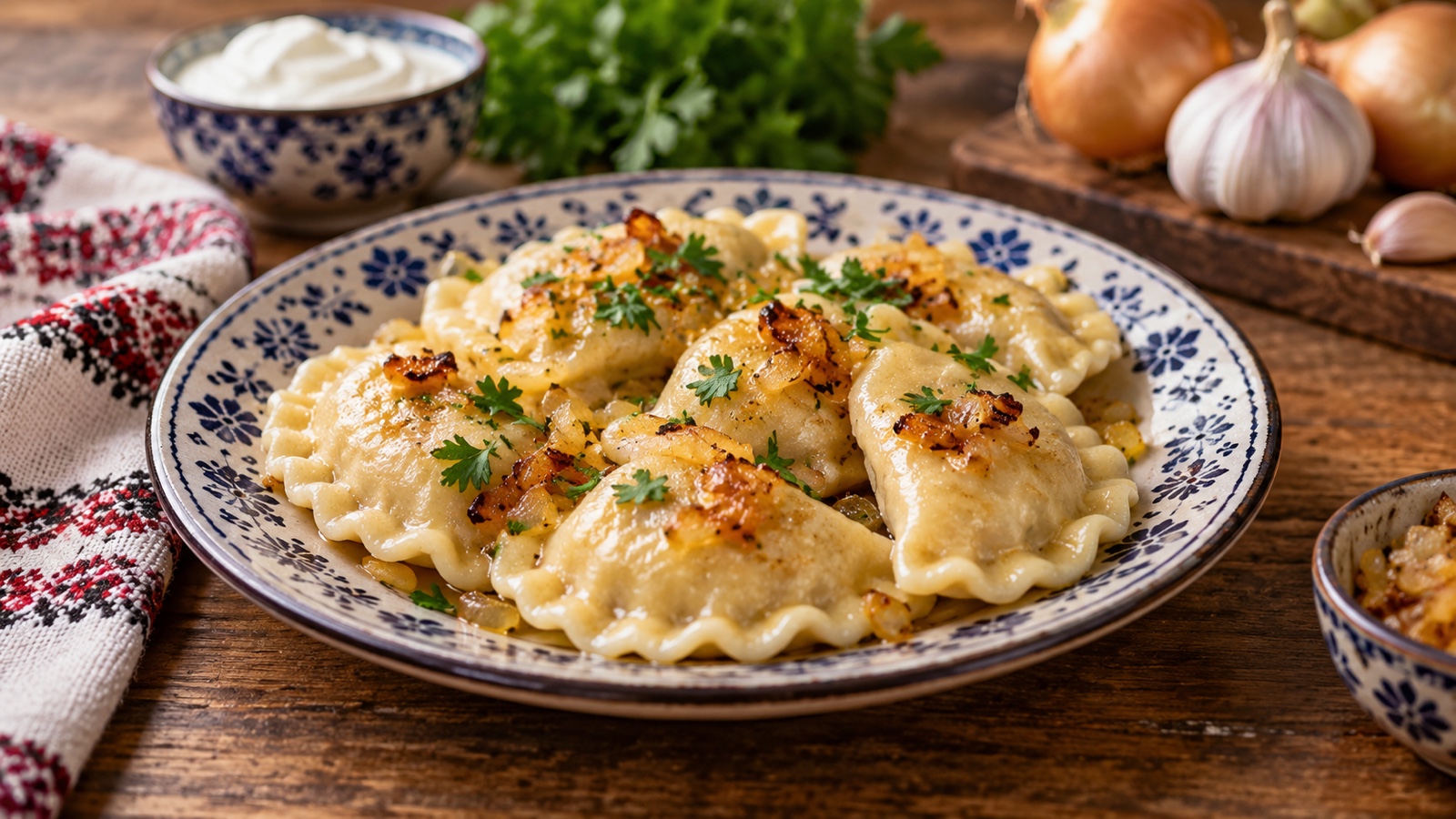
- Pierogi are filled dumplings and one of Poland’s best-known foods.
- Fillings can include potato and cheese, meat, mushrooms, cabbage, fruit, or other ingredients.
- Pierogi ruskie traditionally contain potato, farmer-style cheese, and onion.
- The name “ruskie” refers historically to Ruthenia, not modern Russia.
- Bigos is a long-cooked dish combining cabbage or sauerkraut with meat and other ingredients.
- Żurek is a sour rye soup.
- Kiełbasa is the Polish word for sausage rather than one single sausage recipe.
- Polish doughnuts are called pączki.
- They are especially associated with pre-Lenten celebrations.
- Obwarzanek krakowski is a ring-shaped bread associated with Kraków.
- Wieliczka Salt Mine operated for centuries near Kraków.
- Miners carved underground chambers, chapels, statues, and decorations from salt.
- The mine is a UNESCO World Heritage Site.
- Malbork Castle is one of the world’s largest brick castles.
- It was built by the Teutonic Order.
- The castle complex is UNESCO-listed.
- Gdańsk and the Baltic coast have long been associated with amber trading.
- Baltic amber formed from ancient tree resin millions of years ago.
- Some pieces contain preserved insects or plant material.
- Poland’s national football team has a passionate following.
- Robert Lewandowski became one of Poland’s greatest football players.
- Volleyball is also extremely popular in Poland.
- The white stork is a familiar summer bird across Polish farmland.
- Poland has one of Europe’s larger white-stork breeding populations.
- After 145 facts, Poland still feels like a country that has been erased, invaded, rebuilt, reinvented, and somehow still found time to perfect dumplings.
Quick FAQ
Q: What is Poland famous for?
A: Warsaw, Kraków, pierogi, Chopin, Copernicus, Marie Curie, medieval castles, Baltic amber, the Tatra Mountains, European bison, Solidarity, and a deeply consequential modern history.
Q: What is the capital of Poland?
A: Warsaw is both the capital and largest city.
Q: Does Poland use the euro?
A: No. Poland is an EU member, but its currency remains the Polish złoty.
Q: Was Auschwitz a Polish camp?
A: No. Auschwitz-Birkenau was a German Nazi concentration and extermination camp built and operated in occupied Poland during World War II.
Q: Are there wild bison in Poland?
A: Yes. European bison were restored from captivity and now live in Białowieża Forest and other managed populations.

Ellie is the owner and sole author of Fun Facts, combining her mechanical engineering background with years of research-driven writing to deliver facts you can trust. Every article is thoroughly fact-checked and routinely updated as new science and sources emerge to keep information accurate and current. Her mission is to make learning delightful while upholding high standards of reliability and transparency.