
Breakfast cereal might be the only food aisle where nutrition science, industrial engineering, cartoon mascots, childhood nostalgia, and tiny marshmallows all share shelf space. The basic idea is grain plus milk, but the route from wheat or corn to a perfectly crisp loop is anything but simple.
Breakfast cereal began as health food
- Modern breakfast cereal developed in the United States during the 19th century.
- Early cereals were promoted as health foods.
- Granula was an early baked cereal product.
- It was so hard that it needed soaking before eating.
- Granola evolved from similar baked-grain ideas.
- John Harvey Kellogg experimented with grain-based breakfast foods.
- Will Keith Kellogg worked with him at the Battle Creek Sanitarium.
- Flaked cereal emerged from cooked grains passed through rollers.
- Corn flakes became commercially successful in the early 1900s.
- C.W. Post was another major cereal pioneer.
- Grape-Nuts debuted in the late 19th century.
- It contains neither grapes nor nuts.
- The name was a marketing creation.
- Ready-to-eat cereal reduced breakfast preparation time.
- Industrial packaging made cereal easy to ship.
- Urbanization increased demand for convenient foods.
- Breakfast cereal became part of American middle-class routines.
- Advertising accelerated demand.
- Children later became a major target market.
- A food category that began with stern health reformers eventually produced rainbow marshmallows and talking tigers, which is a spectacular brand journey.
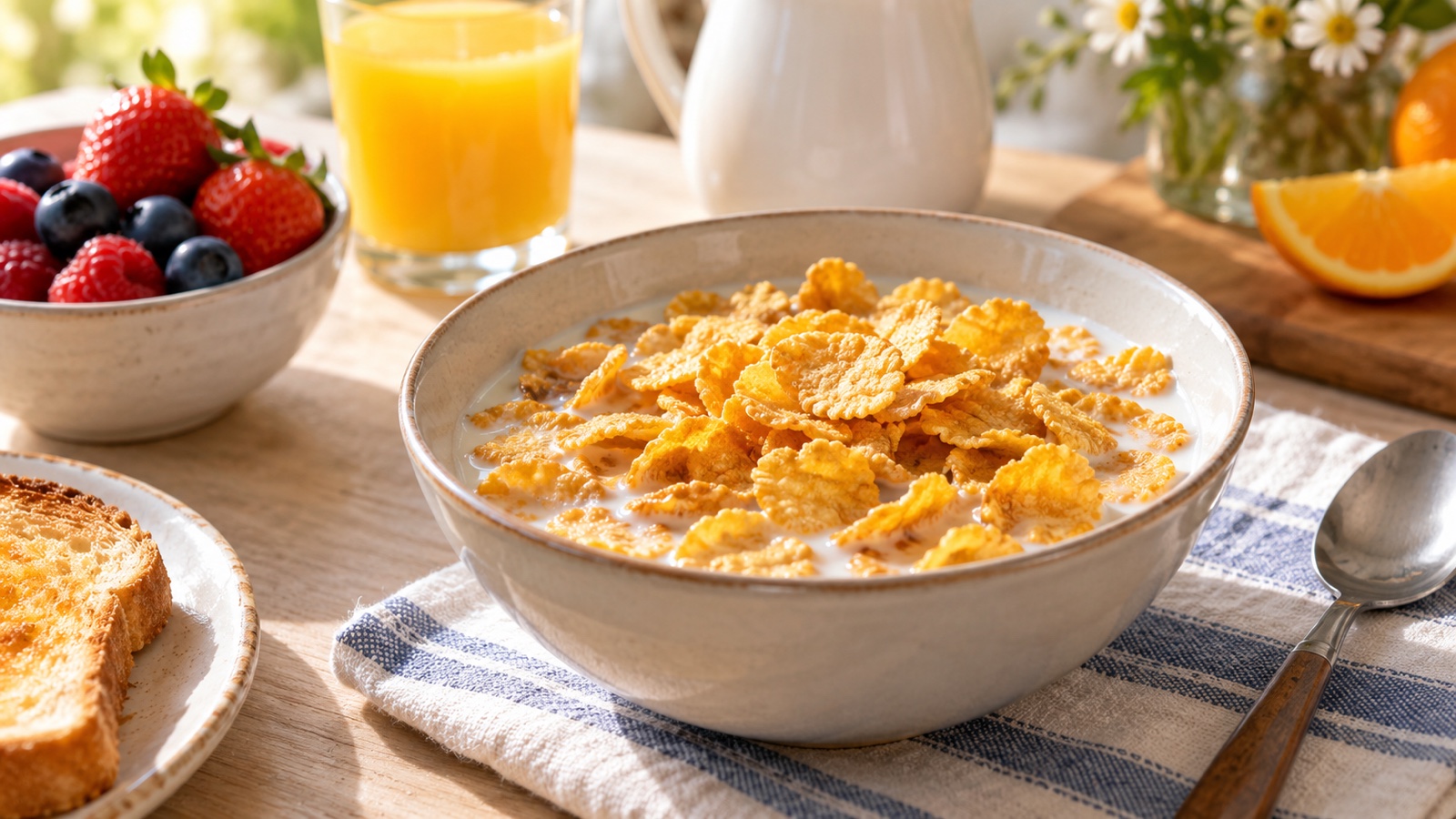
Flakes are made by cooking, rolling and toasting grain
- Flaked cereal can be made from corn, wheat, rice, or other grains.
- Whole kernels or milled grain are cooked first.
- Cooking softens starch.
- Sweeteners and salt may be added.
- The cooked grain is dried to a controlled moisture level.
- Rollers flatten pieces into flakes.
- Flakes are toasted to create crispness.
- Toasting develops browned flavors.
- The Maillard reaction contributes aroma.
- Drying lowers water activity.
- Low water activity keeps cereal crisp and shelf stable.
- Moisture makes flakes soften quickly.
- Cereal packaging therefore uses moisture barriers.
- Inner plastic liners protect against humidity.
- Cardboard boxes provide structure and printing space.
- Some cereals are sprayed with vitamins after processing.
- Heat-sensitive nutrients may be added late.
- Flavor coatings can be applied after toasting.
- Frosted flakes receive a sugar coating.
- A cereal flake is basically cooked grain flattened, dried, toasted, fortified, coated, and packaged to make “pour into bowl” look effortless.
Puffed and shaped cereals rely on pressure and extrusion
- Puffed rice expands when internal moisture flashes into steam.
- Pressure can be used to superheat grain before expansion.
- Puffed wheat uses similar principles.
- Extrusion makes many shaped cereals.
- An extruder forces cooked grain dough through shaped openings.
- Pressure drops rapidly as cereal exits.
- Water flashes into steam.
- The expanding steam puffs the cereal.
- Dies create loops, balls, squares, stars, or other shapes.
- Cutting blades control piece length.
- Drying and toasting set the final texture.
- Extrusion can combine several grains.
- Corn flour is common.
- Oat flour is common in oat cereals.
- Rice flour creates light crisp textures.
- Whole-grain flour can be extruded too.
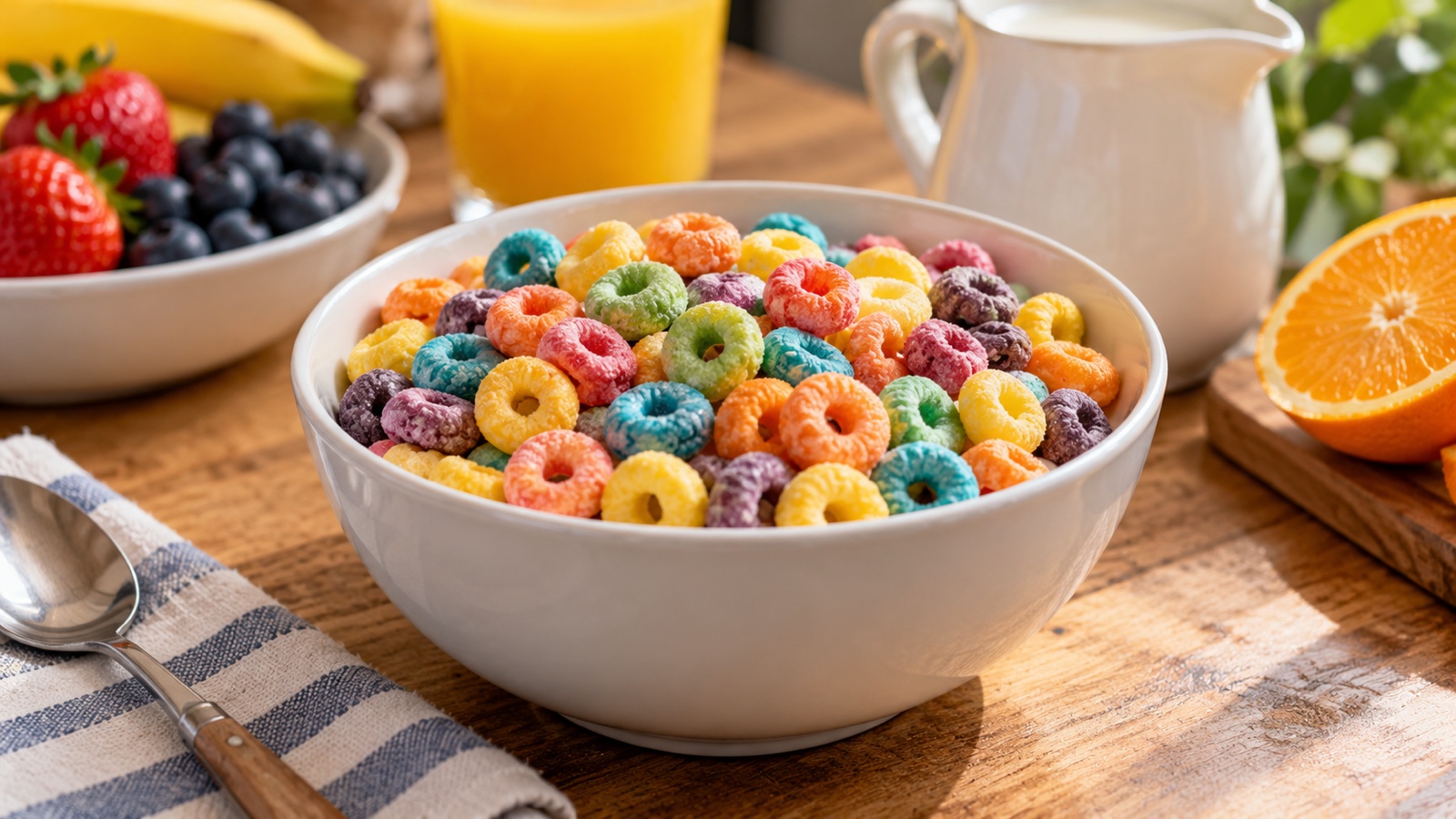
- Food colors can be mixed into cereal dough.
- Flavor coatings can be sprayed after drying.
- Marshmallow pieces are manufactured separately from cereal grains.
- The weird little shapes in a cereal bowl exist because industrial food machinery is basically edible Play-Doh engineering under pressure.
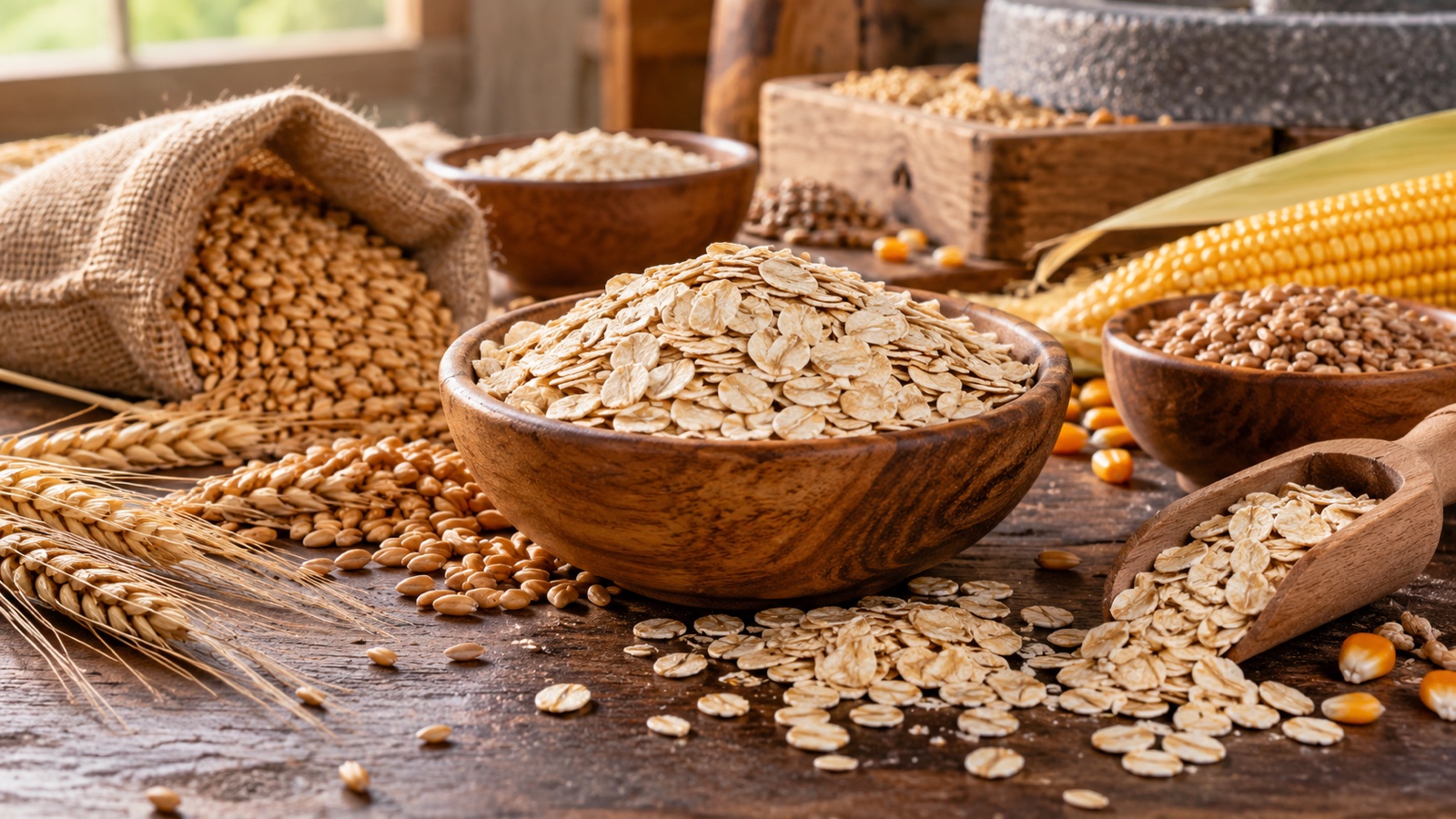
Fortification turned cereal into a vitamin-delivery system
- Many breakfast cereals are fortified with vitamins and minerals.
- Fortification adds nutrients not naturally present at high levels.
- Enrichment restores nutrients lost during grain refining.
- Iron is commonly added.
- B vitamins are commonly added.
- Folic acid appears in many fortified cereals.
- Vitamin D is added to some products.
- Vitamin B12 is useful in fortified cereals for people eating little animal food.
- Fortification levels vary widely.
- Some cereals provide nearly an entire daily value of selected vitamins.
- Others provide very little.
- Nutrition labels show actual amounts.
- Iron in fortified cereal can sometimes be attracted by a strong magnet after grinding the cereal.
- The iron used is food-grade elemental iron in some formulations.
- This demonstration looks alarming but illustrates ordinary fortification chemistry.
- Whole-grain cereals also provide naturally occurring nutrients.
- Fiber varies substantially by cereal type.
- Bran cereals can be especially high in fiber.
- Refined sugary cereals may contain much less.
- The vitamin list printed on a cereal box often reflects deliberate food engineering rather than the natural nutrient profile of a corn flake.
Cereal mascots became advertising icons
- Cereal boxes became prime advertising real estate.
- Bright graphics helped products stand out on shelves.
- Characters became especially important in children's cereals.
- Tony the Tiger represents Frosted Flakes.
- Toucan Sam represents Froot Loops.
- Lucky the Leprechaun represents Lucky Charms.
- Snap, Crackle and Pop represent Rice Krispies.
- The Trix Rabbit repeatedly fails to obtain Trix in advertisements.
- Cap'n Crunch is another long-running cereal character.
- Count Chocula is associated with seasonal monster cereals.
- Saturday-morning television accelerated cereal advertising.
- Children's programming and cereal marketing became closely linked.
- Boxes included games and puzzles.
- Some included mail-away offers.
- Prizes were once placed directly inside boxes.
- Food-safety concerns later changed prize packaging practices.
- Sports stars have appeared on Wheaties boxes for decades.
- Wheaties became associated with athletic achievement.
- Cereal boxes are collectible cultural artifacts.
- Breakfast cereal may be the only food category where the box has occasionally been more famous than what was inside it.
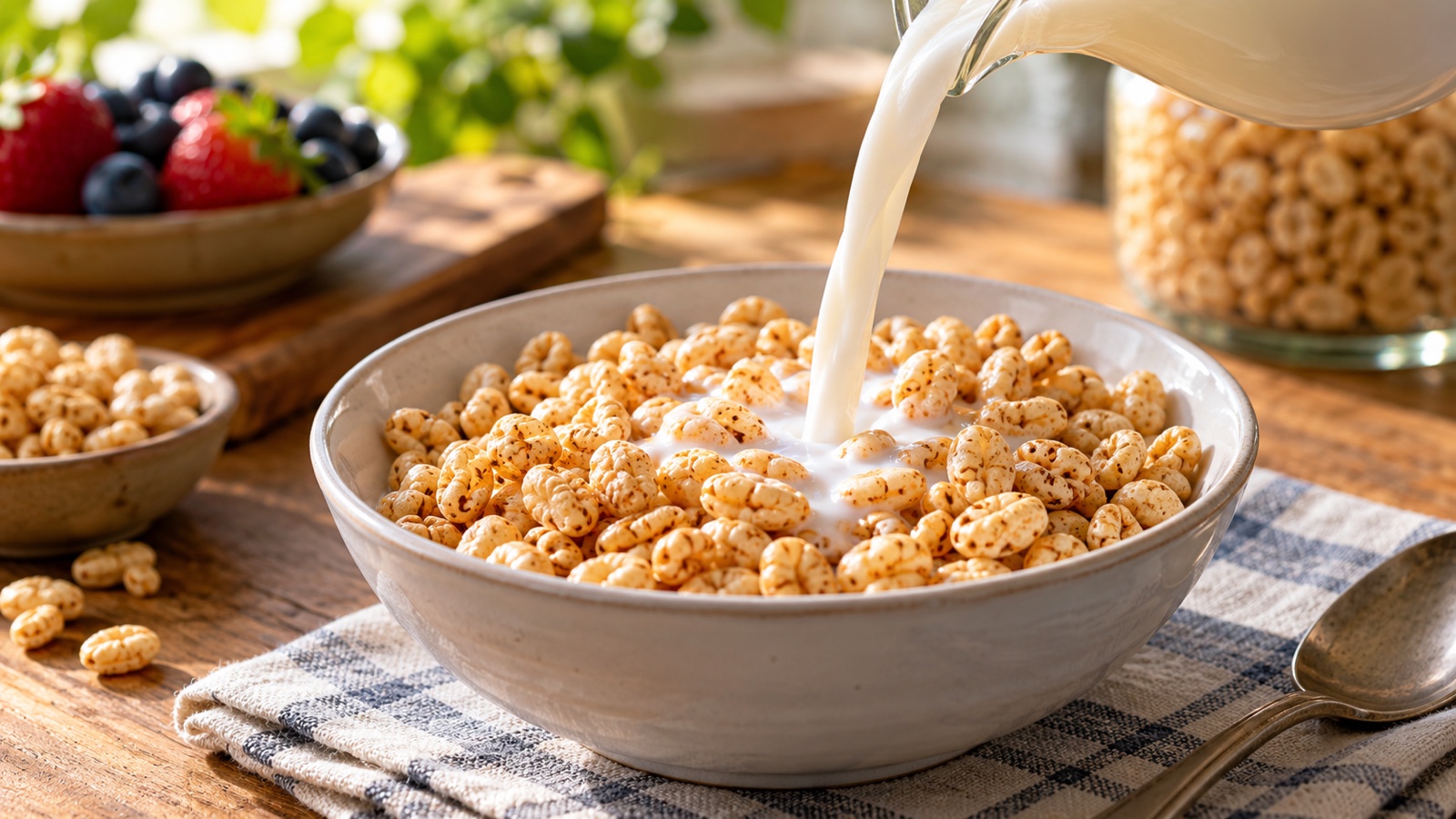
Milk changes cereal texture minute by minute
- Dry cereal is crisp because its structure contains little water.
- Milk immediately begins moving into cereal pores.
- Water plasticizes starch and sugar structures.
- This makes cereal softer.
- Thin flakes become soggy faster than dense pieces.
- Sugar coatings can slow moisture penetration temporarily.
- Chocolate coatings also create partial moisture barriers.
- Warm milk softens cereal faster than cold milk.
- Small pieces have more surface area relative to volume.
- They absorb milk faster.
- People differ strongly in preferred cereal sogginess.
- Some add cereal before milk.
- Others add milk first.
- Adding cereal second can preserve crispness slightly longer.
- Cereal milk picks up sugar, flavor, starch, and color.
- Flavored cereal milk has become a dessert ingredient.
- Milk adds protein and calcium to the meal.
- Plant milks change flavor and nutrition.
- Yogurt keeps cereal crunchier because it moves more slowly into pores.
- The perfect cereal bowl is a race between eating speed and diffusion.
Nutrition, storage and 25 final cereal facts
- Cereal nutrition varies enormously among products.
- Whole-grain cereals provide more intact grain nutrients.
- Fiber improves satiety and digestive health.
- Oat cereals can provide beta-glucan soluble fiber.
- Some bran cereals contain more than 10 grams of fiber per serving.
- Some sweet cereals contain substantial added sugar.
- Serving sizes can look smaller than bowls people actually pour.
- Granola is often calorie dense because of oils, nuts, and sweeteners.
- Muesli is generally less processed than crispy granola.
- Hot oatmeal is cereal even though it is not ready-to-eat.
- Grits are another hot cereal.
- Cream of Wheat is a wheat-based hot cereal.
- Congee is a rice porridge and a grain breakfast tradition.
- Breakfast cereal is not uniquely Western as a broad concept.
- Dry boxed cereal is more specifically linked to industrial Western food culture.
- Cereal should be stored tightly sealed.
- Humidity makes it stale.
- Freezing dry cereal is possible but usually unnecessary.
- Stale cereal can sometimes be recrisped briefly in a low oven.
- Cereal crumbs can become coatings or dessert toppings.
- Rice cereal is used in marshmallow cereal treats.
- Granola bars compress cereal, nuts, and binders into portable form.
- Cereal can be eaten dry as a snack.
- Mixing several cereals creates homemade blends.
- After 145 facts, breakfast cereal feels less like grain in a bowl and more like industrial food science, nutrition policy, cartoon history, pressure engineering, and a lifelong argument about milk order.

Ellie is the owner and sole author of Fun Facts, combining her mechanical engineering background with years of research-driven writing to deliver facts you can trust. Every article is thoroughly fact-checked and routinely updated as new science and sources emerge to keep information accurate and current. Her mission is to make learning delightful while upholding high standards of reliability and transparency.