
West Virginia is basically a mountain range that decided to become a state during the Civil War. Add New River Gorge, coal camps, glass factories, whitewater, fiddles, pepperoni rolls, bridge-jumping festivals, and enough winding roads to make “just over the hill” a suspicious phrase, and the Mountain State earns its personality quickly.
West Virginia basics from the Mountain State
- West Virginia became the 35th U.S. state on June 20, 1863.
- It was created from counties that separated from Virginia during the Civil War.
- Charleston is the state capital.
- Charleston is also West Virginia’s largest city.
- West Virginia has 55 counties.
- The postal abbreviation is WV.
- The official nickname is the Mountain State.
- The state motto is “Montani semper liberi.”
- That Latin phrase means “Mountaineers are always free.”
- West Virginia borders Pennsylvania, Maryland, Virginia, Kentucky, and Ohio.
- The entire state uses Eastern Time.
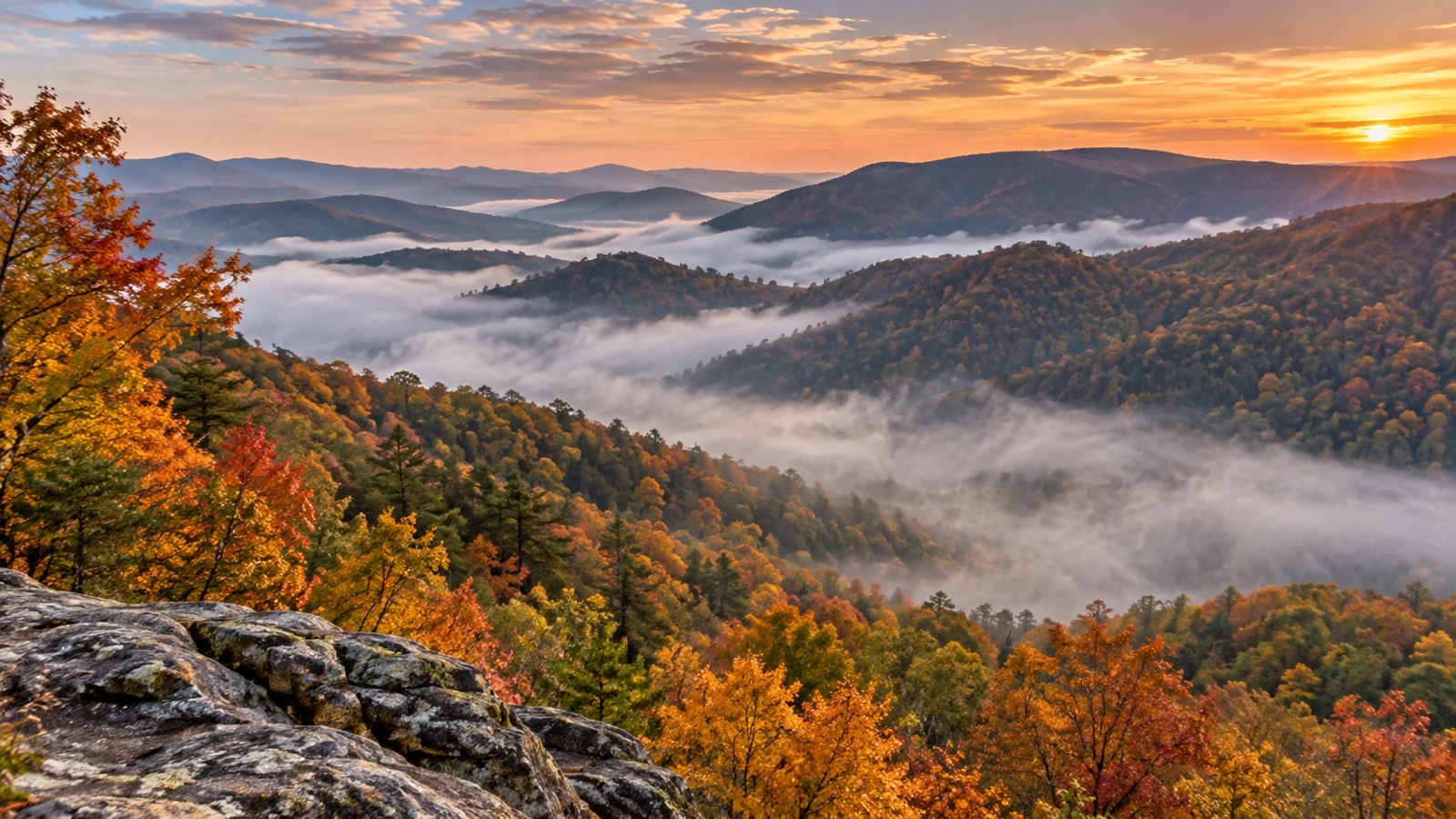
- West Virginia is the only state located entirely within the Appalachian Mountain region.
- Allegheny Mountains cover much of the eastern part of the state.
- Spruce Knob is West Virginia’s highest point.
- It rises 4,863 feet above sea level.
- The state has no natural lake larger than a few acres, but it has numerous reservoirs.
- Rivers and steep valleys dominate the landscape.
- Forest covers most of West Virginia.
- The state’s irregular borders include two long panhandles.
- West Virginia found a way to make both “mountain” and “panhandle” essential geography vocabulary.
New River Gorge is old, deep & spectacular
- New River Gorge National Park and Preserve became America’s 63rd national park in 2020.
- The protected area follows the New River through southern West Virginia.
- Despite its name, the New River is geologically ancient.
- Exact age estimates vary because river history is difficult to date precisely.
- The New River flows generally northward through West Virginia.
- It eventually joins the Gauley River to form the Kanawha River.
- The gorge exposes steep sandstone cliffs.
- Those cliffs make the area a major rock-climbing destination.
- The New River is famous for whitewater rafting.
- Commercial rafting trips range from gentler sections to strong rapids.
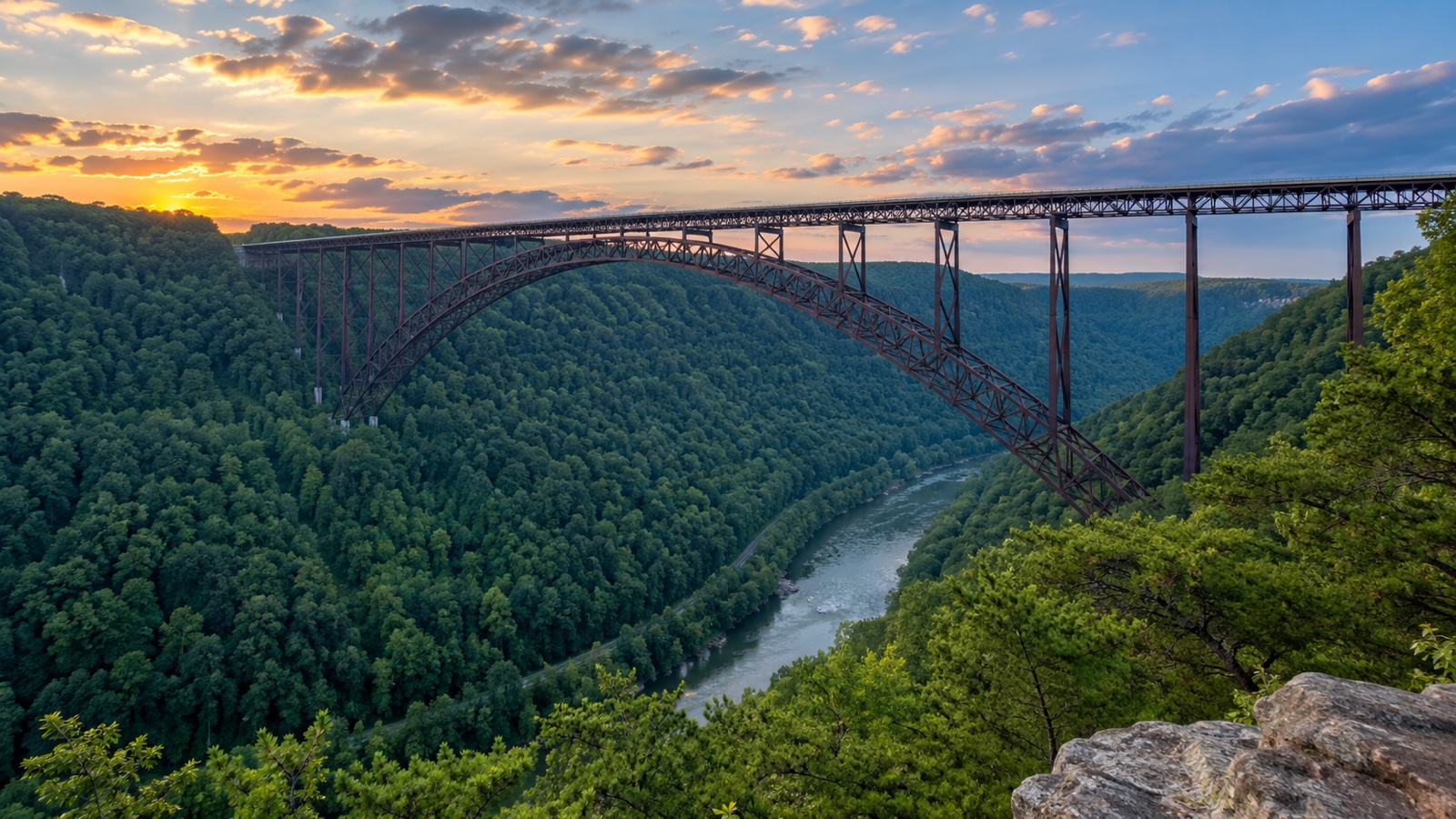
- The New River Gorge Bridge opened in 1977.
- Its steel arch spans more than 1,700 feet across the gorge.
- At the time it opened, it was the world’s longest single-span steel arch bridge.
- The bridge dramatically shortened travel between communities on opposite sides of the gorge.
- Bridge Day is held each October.
- On Bridge Day, pedestrians can walk across the normally vehicle-only bridge.
- Approved BASE jumpers leap from the bridge during the event.
- BASE jumping is generally prohibited in national parks, making this permitted event unusually distinctive.
- Coal-mining ruins and historic rail towns remain throughout the gorge.
- The park combines recreation with the industrial history that shaped the valley.
West Virginia became a state because of the Civil War
- Before 1863, present-day West Virginia was part of Virginia.
- Political and economic tensions had divided western and eastern Virginia for decades.
- Mountainous western counties had fewer large plantations than Virginia’s eastern regions.
- Slavery still existed in western Virginia despite being less extensive than in some eastern counties.
- Virginia voted to secede from the United States in 1861.
- Many delegates from western counties opposed secession.
- Unionist leaders met in Wheeling.
- They organized the Restored Government of Virginia loyal to the United States.
- Delegates later pursued creation of a new state.
- Congress approved West Virginia statehood during the Civil War.
- President Abraham Lincoln signed the statehood bill.
- West Virginia entered the Union on June 20, 1863.
- Its constitution provided for gradual emancipation rather than immediate abolition at statehood.
- The state abolished slavery fully in 1865.
- West Virginia’s creation raised constitutional questions about forming a state from another state.
- The process relied on consent from the Unionist Restored Government of Virginia.
- Wheeling served as West Virginia’s first capital.
- The capital moved between Wheeling and Charleston before settling permanently in Charleston.
- West Virginia is the only state formed by separating from a Confederate state during the Civil War.
- Its birthday is literally a Civil War story written into a map.
Coal built communities and created enormous costs
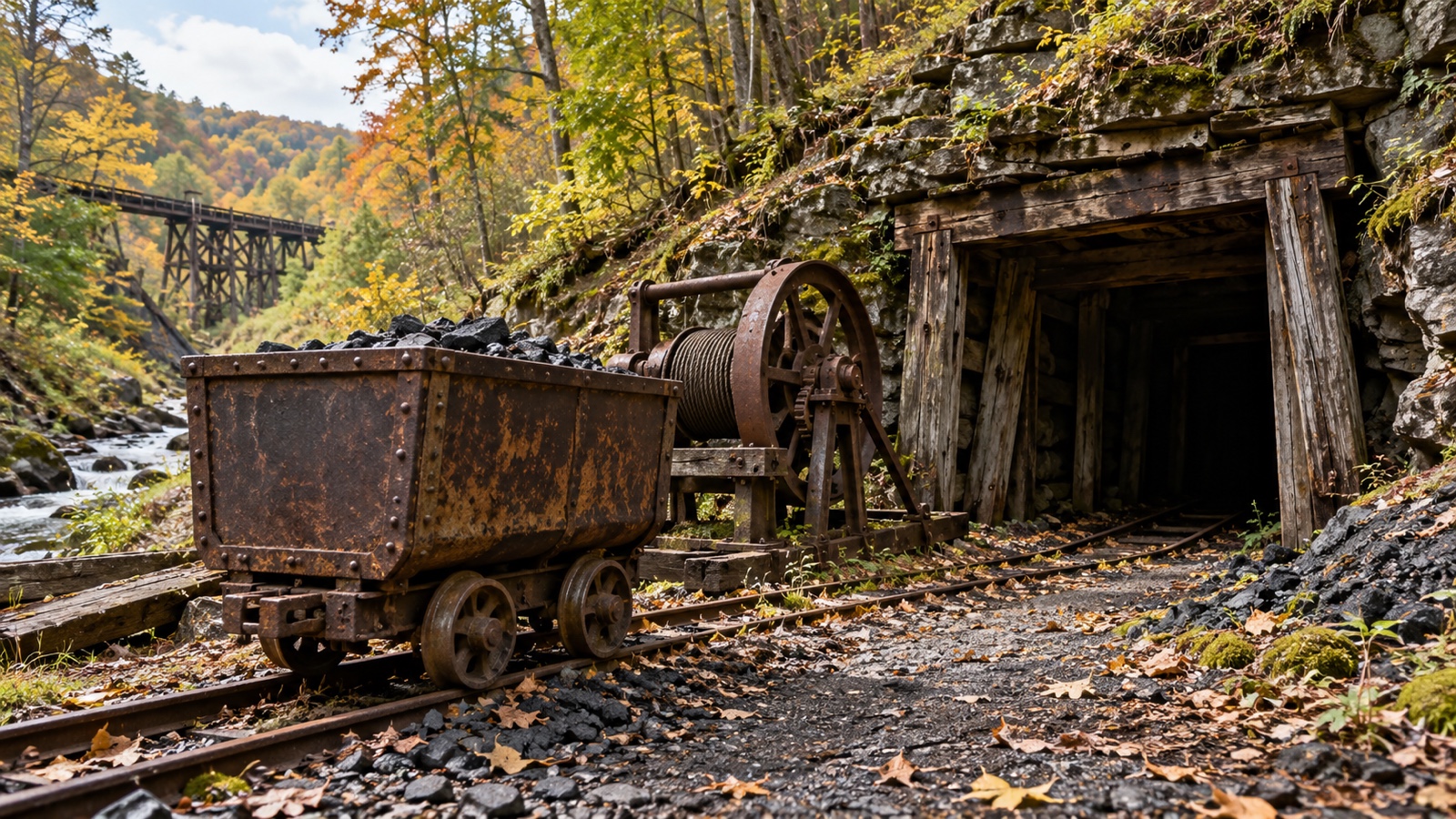
Coal history in West Virginia is not a simple story of jobs or damage. Mining powered American industry, built towns and family livelihoods, created dangerous working conditions, fueled violent labor struggles, damaged landscapes and waterways, and left communities navigating economic transition when employment declined.
- West Virginia contains major Appalachian coal deposits.
- Coal mining expanded rapidly after railroads reached remote valleys.
- Company towns were built near mines.
- Some miners were paid partly in company scrip usable at company stores.
- Mining attracted workers from Appalachia, Europe, and African American communities in the South.
- Underground mining has always carried risks including collapse, explosions, fires, and lung disease.
- Coal workers’ pneumoconiosis is commonly called black lung disease.
- It results from long-term inhalation of coal-mine dust.
- West Virginia became a center of American labor organizing.
- The Paint Creek-Cabin Creek strike began in 1912.
- Mother Jones supported West Virginia miners during major labor conflicts.
- The Battle of Blair Mountain took place in 1921.
- It was one of the largest armed labor uprisings in U.S. history.
- Thousands of union-supporting miners confronted law-enforcement and anti-union forces.
- Federal troops were eventually deployed.
- Mechanization later reduced the number of mining jobs even when production remained substantial.
- Surface mining reshaped some mountain landscapes.
- Mountaintop-removal mining became especially controversial because of impacts on streams, forests, and communities.
- Coal remains culturally important even as the state’s economy diversifies.
- West Virginia’s mining story deserves enough room to hold pride, sacrifice, labor rights, pollution, and economic uncertainty at the same time.
Forests, caves & outdoor West Virginia
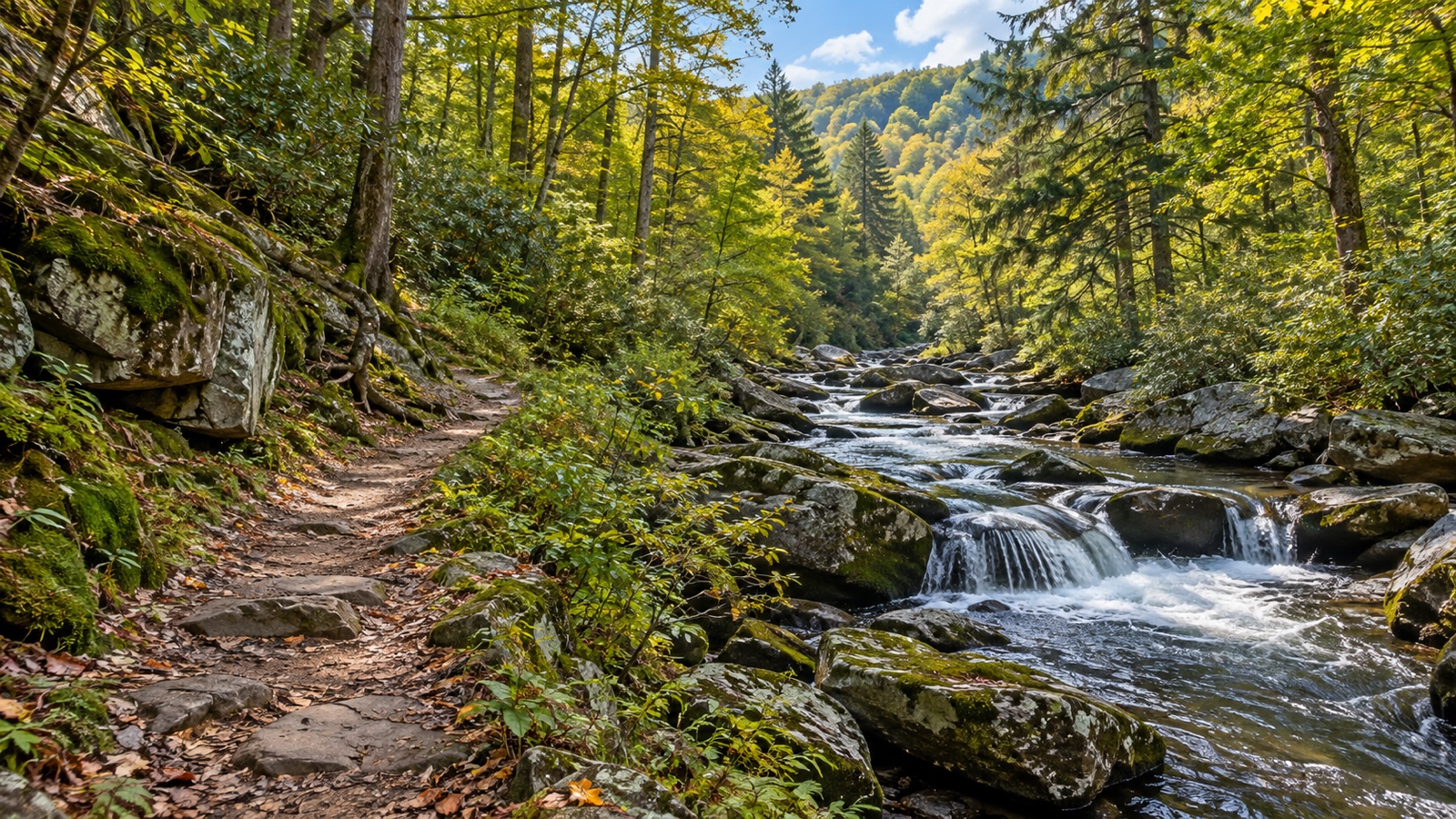
- Monongahela National Forest covers large areas of eastern West Virginia.
- The forest includes mountains, high plateaus, rivers, and wilderness areas.
- Dolly Sods Wilderness is known for wind-swept high-elevation landscapes.
- Its vegetation resembles areas much farther north.
- Blackwater Falls drops through a forested gorge in Tucker County.
- Tannins from fallen vegetation can give the Blackwater River a dark tea-like color.
- Seneca Rocks is a dramatic fin of Tuscarora quartzite.
- It is a major climbing landmark.
- West Virginia contains thousands of documented caves.
- Karst landscapes occur where soluble limestone dissolves underground.
- Organ Cave is one of the state’s longest known cave systems.
- Saltpeter from caves was historically used in gunpowder production.
- White-tailed deer are common across the state.
- Black bears are widespread in forested areas.
- Wild turkeys rebounded strongly after past population declines.
- Elk were reintroduced to southern West Virginia beginning in 2016.
- The state’s rivers support trout, bass, muskellunge, and other sport fish.
- The Gauley River is famous for intense fall whitewater releases.
- Gauley Season draws experienced rafters and kayakers.
- West Virginia turned steep terrain from transportation problem into outdoor-recreation advantage.
Glass, chemicals, music & West Virginia industry
Coal gets most of the economic attention, but West Virginia also became important in glass, chemicals, railroads, timber, steel-related manufacturing, energy, and crafts. The same ingredients that made industry possible, including sand, salt brines, rivers, timber, and fuel, also shaped where towns grew.
- West Virginia developed a major glassmaking industry during the 19th and 20th centuries.
- Natural gas and silica sand supported glass factories.
- Blenko Glass in Milton became famous for colorful hand-blown glass.
- Fenton Art Glass operated for generations in Williamstown.
- Salt production was historically important along the Kanawha River.
- Chemical manufacturing later grew around the Kanawha Valley.
- Charleston became a major center for chemical industry.
- Railroads were critical to moving coal and timber out of mountain valleys.
- The Cass Scenic Railroad preserves part of West Virginia’s logging-railroad history.
- Steam locomotives still pull excursion trains at Cass.
- Appalachian music traditions include fiddle tunes, ballads, banjo music, gospel, and later country and bluegrass styles.
- West Virginia contributed musicians to early commercial country music.
- The Appalachian String Band Music Festival is held at Camp Washington-Carver.
- Mountain dulcimers are associated with Appalachian musical traditions.
- Quilting, woodworking, basketry, and pottery remain important craft traditions.
- Tamarack Marketplace in Beckley showcases West Virginia-made art, food, and crafts.
- West Virginia University is in Morgantown.
- Marshall University is in Huntington.
- John Denver’s song “Take Me Home, Country Roads” became an unofficial anthem for the state.
- The song’s geography is not a precise map lesson, but West Virginia wisely accepted the free soundtrack.
Pepperoni rolls, famous people & 25 final West Virginia facts
- The pepperoni roll is one of West Virginia’s signature foods.
- It traditionally consists of pepperoni baked inside a soft bread roll.
- The food is strongly associated with north-central West Virginia coal communities.
- One popular history credits Giuseppe “Joseph” Argiro of Fairmont with commercializing the roll at Country Club Bakery.
- The compact food was practical for miners because it traveled without refrigeration for a work shift.
- Modern versions may add cheese, peppers, or other fillings.
- Buckwheat pancakes are celebrated at Preston County’s Buckwheat Festival.
- Ramps are wild leeks with a strong onion-garlic flavor.
- Spring ramp dinners are an Appalachian seasonal tradition.
- The Golden Delicious apple was discovered in Clay County, West Virginia.
- It became one of the world’s best-known apple varieties.
- The state fruit is the Golden Delicious apple.
- The state bird is the northern cardinal.
- The state flower is the rhododendron.
- The state animal is the black bear.
- The state tree is the sugar maple.
- Chuck Yeager was born in Myra, West Virginia.
- Yeager became the first pilot confirmed to break the sound barrier in level flight.
- Olympic gymnast Mary Lou Retton was born in Fairmont.
- Author Pearl S. Buck was born in Hillsboro.
- Don Knotts was born in Morgantown.
- Brad Paisley was born in Glen Dale.
- The Green Bank Observatory operates enormous radio telescopes in Pocahontas County.
- The surrounding National Radio Quiet Zone limits some radio interference to support scientific observations.
- After 145 facts, “Almost Heaven” seems less like a lyric and more like West Virginia’s extremely successful tourism shortcut.
Quick FAQ
Q: What is West Virginia famous for?
A: Appalachian mountains, New River Gorge, coal history, whitewater, forests, glassmaking, pepperoni rolls, country music traditions, and its unusual Civil War statehood story.
Q: What is the capital of West Virginia?
A: Charleston is both the capital and largest city.
Q: Why did West Virginia split from Virginia?
A: Many western Virginia leaders opposed Virginia’s secession during the Civil War and organized a Unionist government that pursued creation of a separate state.
Q: Is the New River actually new?
A: No. It is geologically ancient, although precise age estimates vary and claims that it is the world’s second-oldest river are not securely established.
Q: What food was invented in West Virginia?
A: The pepperoni roll is the state’s best-known signature invention, strongly associated with Italian American coal-mining communities around Fairmont.

Ellie is the owner and sole author of Fun Facts, combining her mechanical engineering background with years of research-driven writing to deliver facts you can trust. Every article is thoroughly fact-checked and routinely updated as new science and sources emerge to keep information accurate and current. Her mission is to make learning delightful while upholding high standards of reliability and transparency.