
Watermelon feels like the fruit equivalent of carrying around a drink. It is mostly water, can weigh more than a small dog, grows on sprawling vines, comes in red, yellow, orange, seeded, and seedless versions, and somehow turns a picnic into a seed-spitting competition.
Watermelon is a vine fruit from Africa
- Watermelon belongs to the cucumber family.
- Its scientific name is Citrullus lanatus.
- It is related to cucumbers, squash, pumpkins, and gourds.
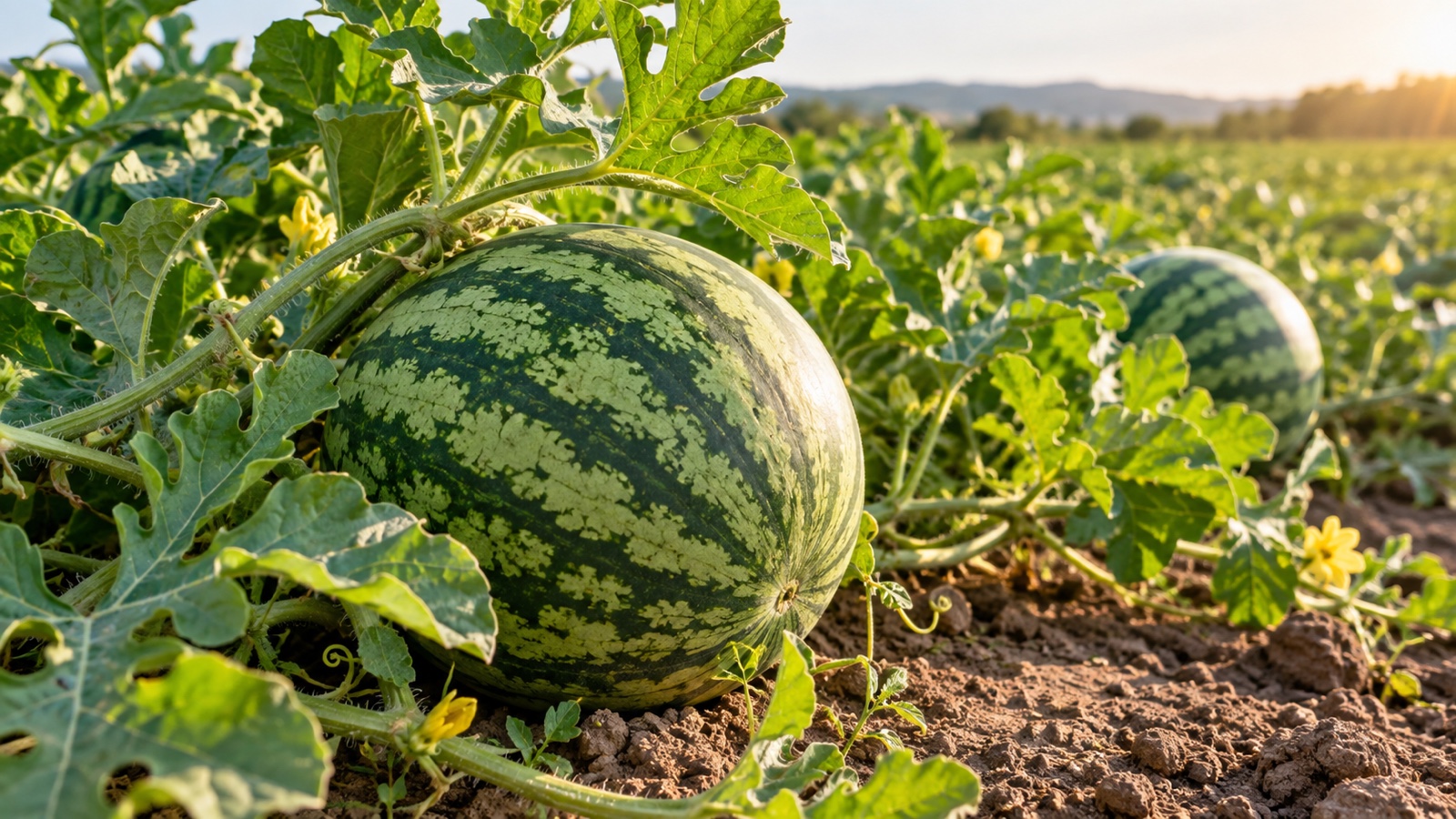
- Watermelon plants grow as sprawling vines.
- The vines produce separate male and female flowers.
- Bees are important pollinators.
- Female flowers develop into fruit after successful pollination.
- Watermelons originated in Africa.
- Wild relatives differ greatly from modern sweet melons.
- Ancient Egyptians cultivated watermelon thousands of years ago.
- Watermelon seeds have been found in ancient Egyptian sites.
- Early cultivated forms may have been valued partly for water storage.
- Selection gradually increased sweetness and red flesh.
- Watermelons spread through the Mediterranean region.
- They later spread through Asia.
- European colonists and enslaved Africans helped spread watermelon in the Americas.
- Warm weather is essential for good growth.
- Watermelon vines are damaged by frost.
- Commercial fields need long sunny growing seasons.
- A modern watermelon is the result of humans turning an African vine fruit into something that basically contains its own beverage.
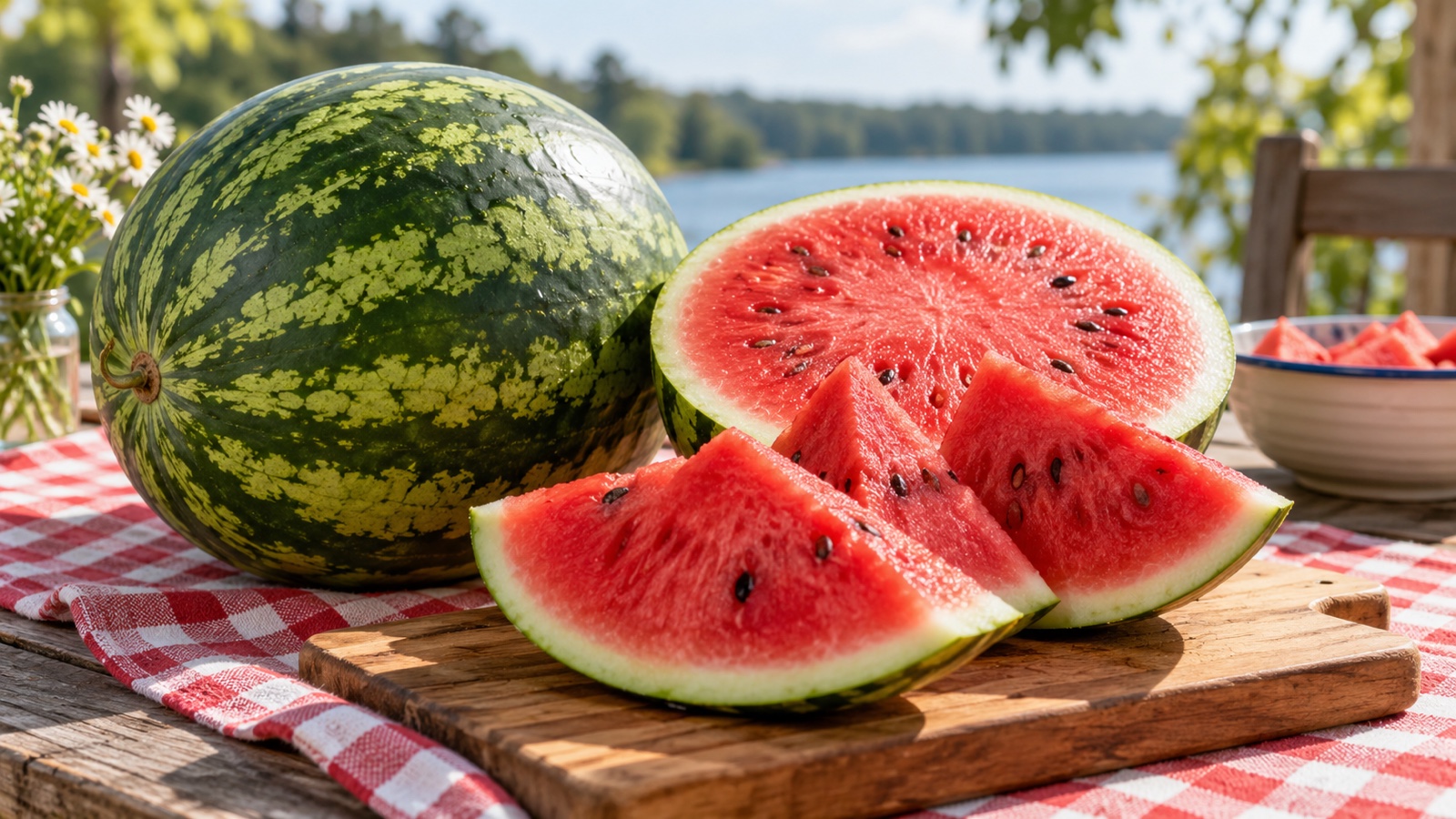
Watermelon is more than 90 percent water
- Watermelon is roughly 91 to 92 percent water by weight.
- This high water content makes it refreshing in hot weather.
- Watermelon is relatively low in calories for its volume.
- A cup of diced watermelon contains fewer than 50 calories.
- Most calories come from natural sugars.
- Watermelon contains vitamin C.
- It also provides vitamin A precursors.
- Red watermelon is rich in lycopene.
- Lycopene is a carotenoid pigment.
- Tomatoes are another major lycopene source.
- Watermelon contains potassium.
- It also supplies small amounts of magnesium.
- Watermelon contains the amino acid citrulline.
- Citrulline is especially concentrated in the rind.
- The body can convert citrulline into arginine.
- Arginine contributes to nitric-oxide production.
- Watermelon contains little fat.
- It contains little protein.
- Its fiber content is modest.
- Watermelon manages to feel like dessert while mostly being flavored water held together by plant cells.
Seedless watermelons are not genetically modified
- Seedless watermelons are produced through chromosome breeding.
- They are usually triploid plants.
- Triploid means the plant has three sets of chromosomes.
- Ordinary seeded watermelons are usually diploid.
- Breeders first create tetraploid parent plants.
- Tetraploids have four chromosome sets.
- Crossing tetraploid and diploid parents can produce triploid seeds.
- Triploid plants have difficulty producing fertile seeds.
- The resulting fruit develops without mature hard seeds.
- Small soft white seed coats can still appear.
- Seedless watermelons still require pollination to set fruit.
- Growers plant seeded pollinizer varieties nearby.
- Bees move pollen among flowers.
- Seedless watermelon seed is expensive to produce.
- Triploid seed can also be harder to germinate.
- Warm soil improves germination.
- Seedless varieties became commercially important in the late 20th century.
- They now dominate many U.S. supermarket displays.
- Seedless does not mean the plant never needed a seed to begin with.
- Seedless watermelon is old-fashioned chromosome manipulation, not genetic engineering in the modern transgenic sense.
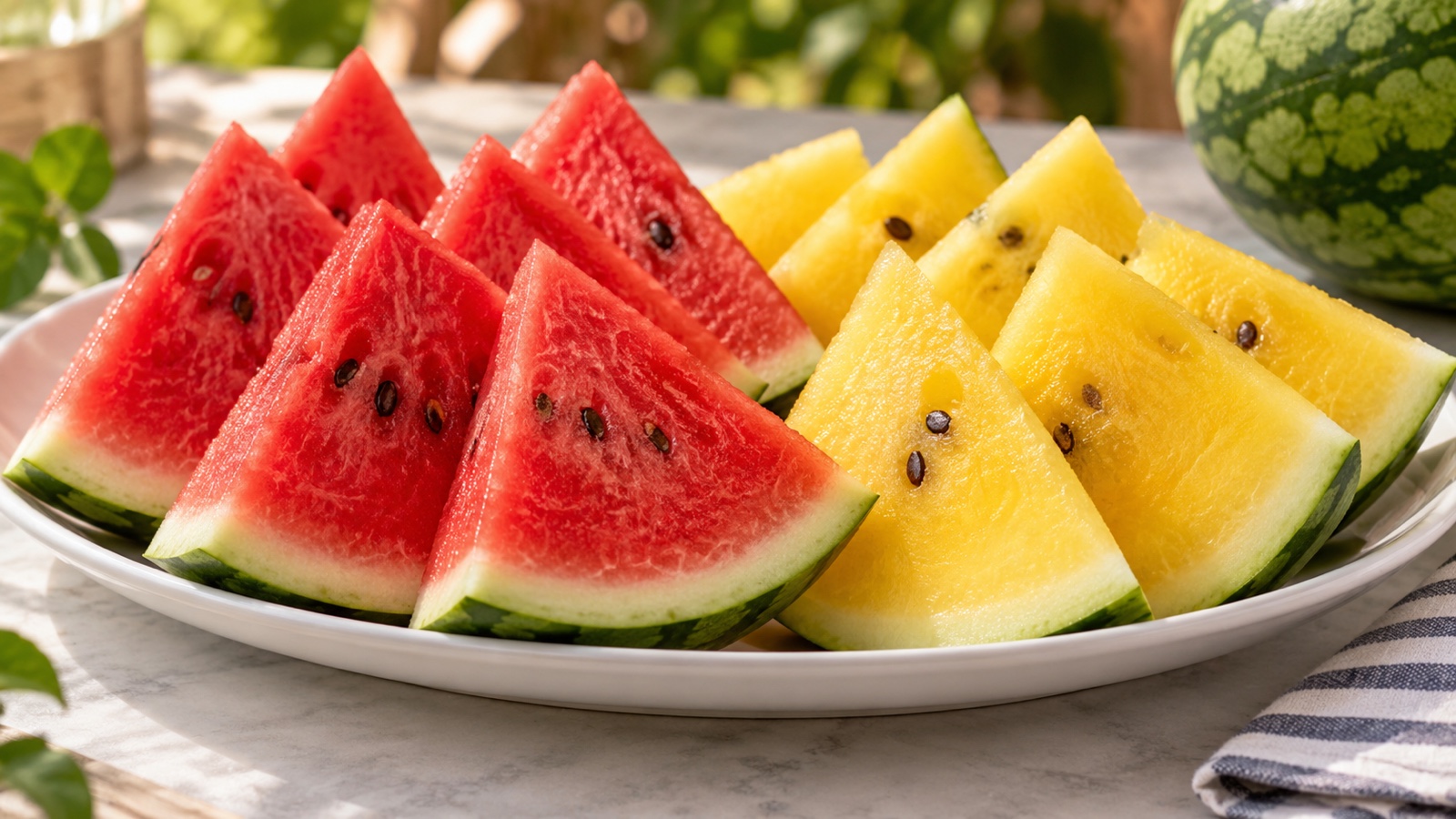
Not all watermelon flesh is red
- Watermelon flesh can be red.
- It can also be pink.
- Yellow-fleshed watermelons exist.
- Orange-fleshed varieties exist too.
- Some pale varieties are nearly white.
- Different pigments create different flesh colors.
- Red watermelon gets much of its color from lycopene.
- Yellow varieties contain more yellow carotenoids.
- Flesh color does not automatically determine sweetness.
- Variety and ripeness matter more.
- Rind patterns also vary.
- Some melons have dark green rinds.
- Others have pale green stripes.
- Some are nearly black-green.
- Icebox watermelons are bred to be smaller.
- Picnic watermelons are larger.
- Personal-size watermelons are easier to refrigerate whole.
- Giant competition watermelons can weigh hundreds of pounds.
- Shape can be round, oval, or elongated.
- Watermelon has enough variety that the standard red-and-green grocery-store version is just one branch of the family.
Picking a ripe watermelon is part science, part detective work
- Watermelons do not become much sweeter after harvest.
- They need to be picked near full ripeness.
- A field spot forms where the melon rests on the ground.
- A creamy yellow field spot often signals maturity.
- A white field spot can indicate earlier harvest.
- The tendril nearest the fruit often dries when the melon matures.
- Rind sheen can become duller.
- A ripe watermelon should feel heavy for its size.
- Weight reflects water content.
- Knocking on melons is a traditional test.
- A deep resonant sound can suggest maturity.
- Thumping is not perfectly reliable.
- Commercial growers use several maturity indicators.
- Sugar content can be measured with a refractometer.
- Soluble-solids readings estimate sweetness.
- Overripe watermelon can become mealy.
- Underripe watermelon tastes watery and bland.
- Once picked, texture continues changing even if sugar does not increase much.
- Warm storage accelerates quality loss.
- The produce aisle thump test survives because nobody has yet installed a tiny ripeness dashboard on every melon.
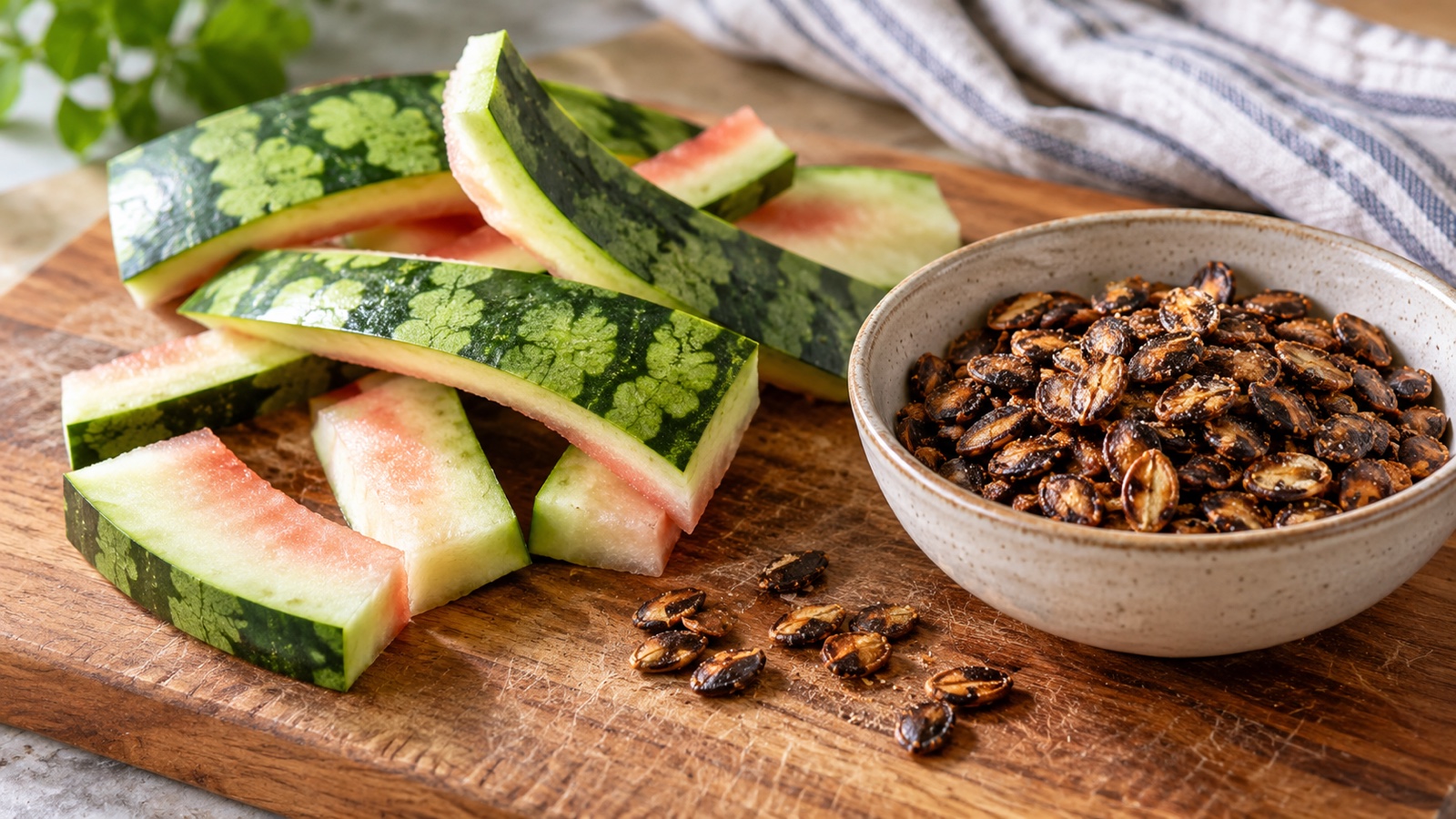
The rind and seeds are edible too
- Watermelon rind is edible.
- The pale inner rind has a mild cucumber-like flavor.
- Pickled watermelon rind is a traditional Southern U.S. food.
- Rind can also be stir-fried.
- It can be candied.
- The outer dark skin is much tougher.
- Watermelon seeds are edible.
- Roasted seeds are eaten as snacks in several cultures.
- Seed kernels contain fat and protein.
- Swallowing watermelon seeds does not cause a melon to grow in your stomach.
- Human digestion does not provide the right germination environment.
- Seeds may pass through digestion intact.
- Seeded watermelon remains popular in some regions.
- Spitting seeds became part of picnic culture.
- Seed-spitting contests are held at festivals.
- Distance depends on seed size, technique, and enthusiasm.
- Watermelon rind reduces food waste when used in cooking.
- Composting rind returns nutrients to soil.
- Livestock can eat watermelon waste in some farming systems.
- The parts most people throw away are still edible enough to have their own recipes and competitions.
Storage, festivals and 25 final watermelon facts
- Whole uncut watermelon can be stored at room temperature for a limited period.
- Cut watermelon should be refrigerated.
- Cut surfaces dry and soften over time.
- Airtight wrapping reduces moisture loss.
- Watermelon can be frozen for smoothies.
- Thawed watermelon loses crisp texture.
- Frozen cubes work well in blended drinks.
- Watermelon juice separates naturally during storage.
- Stirring recombines much of it.
- Watermelon pairs well with salty cheese.
- Feta is a classic pairing.
- Mint adds fresh aroma.
- Lime adds acidity.
- Chile and salt are common watermelon seasonings in Mexico and elsewhere.
- Watermelon can be grilled.
- Grilling concentrates sweetness and adds browning.
- Watermelon festivals occur across the southern United States.
- Some festivals host seed-spitting contests.
- Others host giant-melon competitions.
- China is the world's largest watermelon producer.
- Watermelon is grown on every inhabited continent.
- Square watermelons are produced in molds in Japan.
- Many square melons are grown mainly as decorative luxury items.
- Cube shape does not naturally occur without molding.
- After 145 facts, watermelon feels less like picnic fruit and more like African crop history, chromosome breeding, hydration, pigment chemistry, seed mythology, and a giant edible water tank with stripes.

Ellie is the owner and sole author of Fun Facts, combining her mechanical engineering background with years of research-driven writing to deliver facts you can trust. Every article is thoroughly fact-checked and routinely updated as new science and sources emerge to keep information accurate and current. Her mission is to make learning delightful while upholding high standards of reliability and transparency.