
Kidneys are small enough to fit in your hands, yet they continuously filter blood, balance water and salts, regulate acidity, influence blood pressure, activate vitamin D, and signal bone marrow to make red blood cells. They are much more than the body's urine-making department.
Kidneys are compact organs with a huge workload
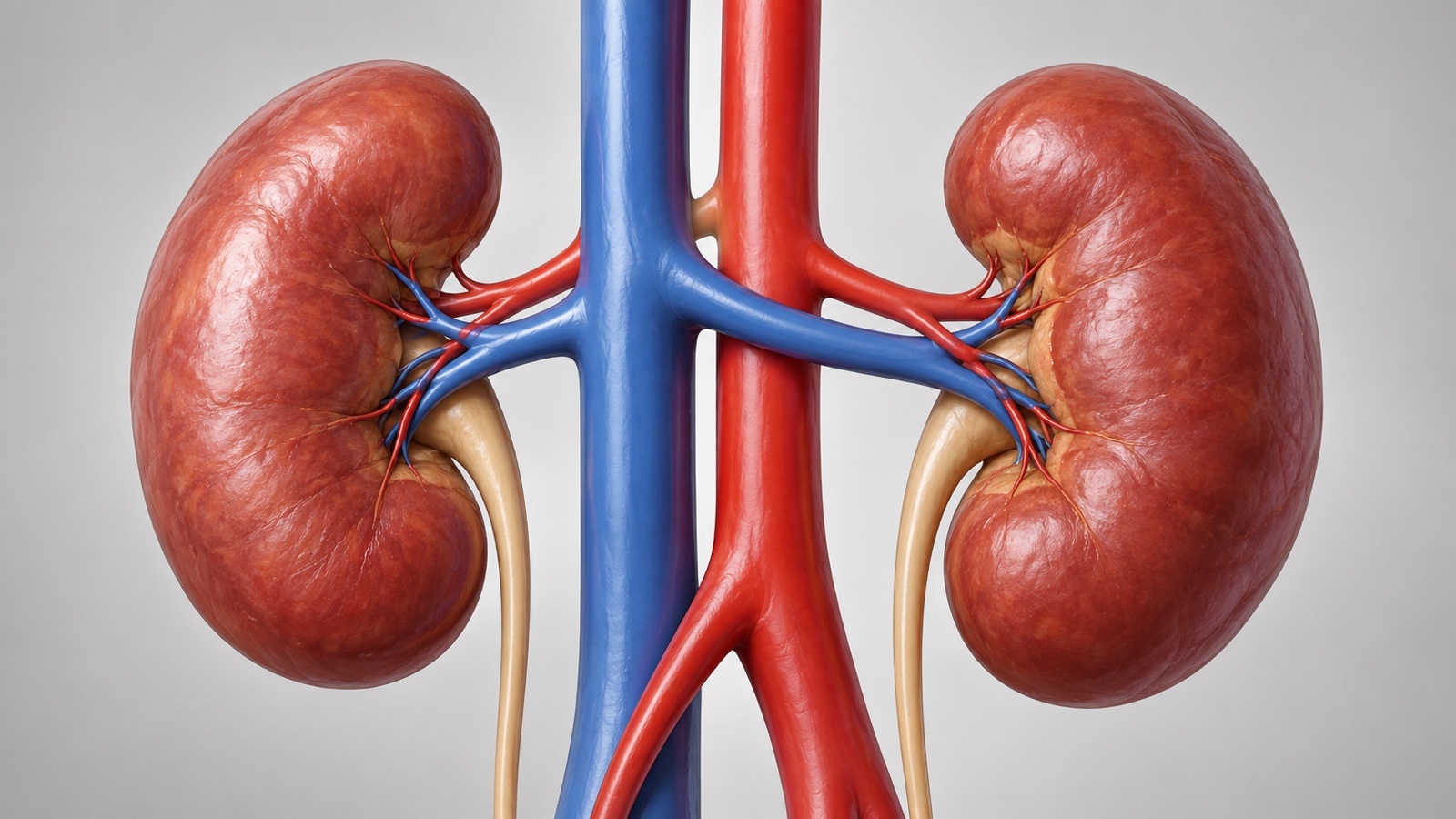
- Most people are born with two kidneys.
- Kidneys sit toward the back of the upper abdomen on either side of the spine.
- They lie behind the main abdominal cavity in a position called retroperitoneal.
- The right kidney usually sits slightly lower than the left because of the liver.
- An adult kidney is roughly the size of a large fist.
- Each kidney typically weighs only a few ounces.
- The kidneys receive a remarkably large share of cardiac output for organs of their size.
- Renal arteries deliver blood directly from the abdominal aorta.
- Renal veins return filtered blood toward the inferior vena cava.
- A tough fibrous capsule covers each kidney.
- Fat surrounding the kidneys adds cushioning and support.
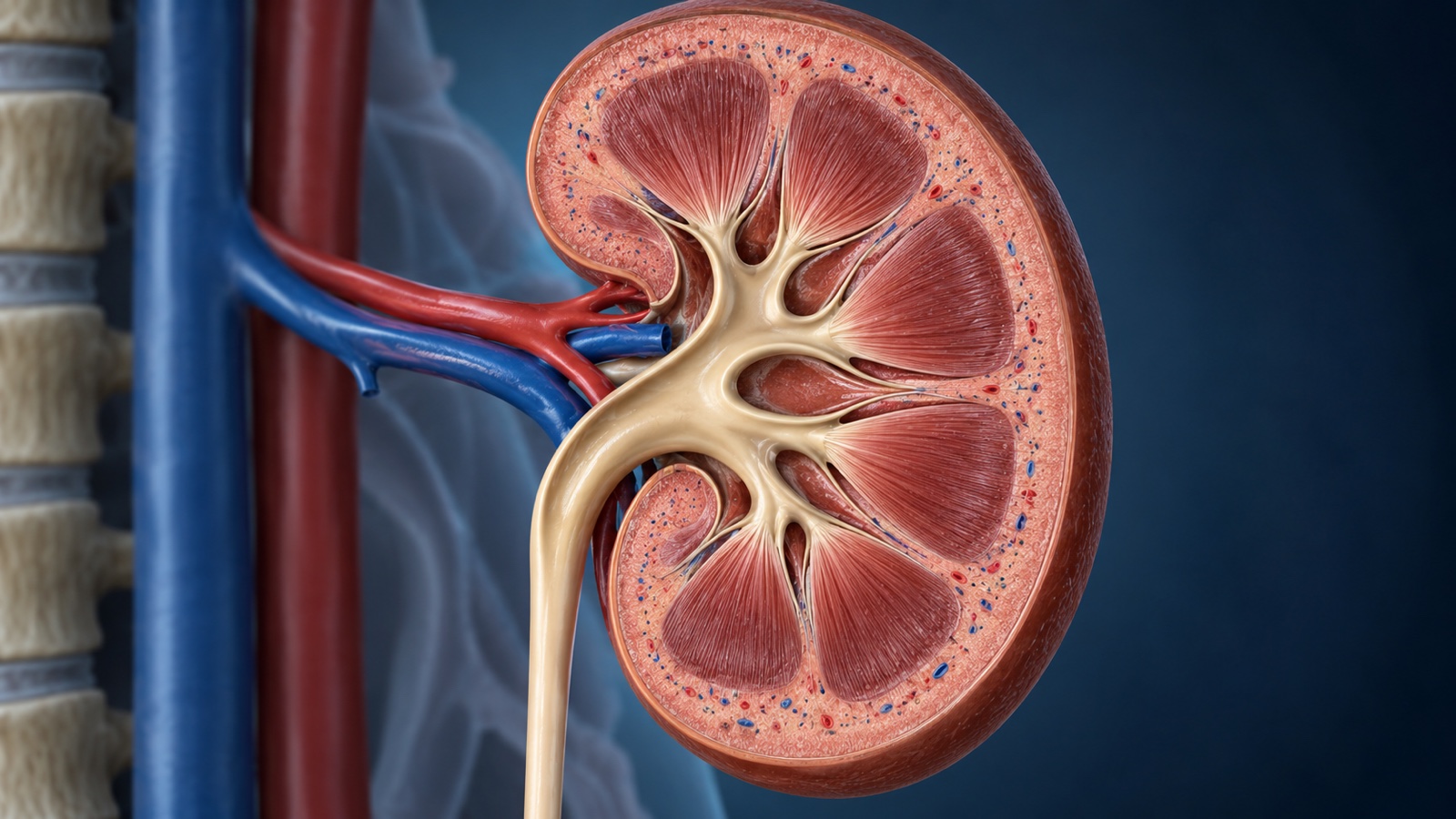
- The outer kidney region is called the cortex.
- The deeper region is called the medulla.
- The medulla contains cone-shaped structures called renal pyramids.
- Urine drains from the pyramids into cup-like calyces.
- Calyces empty into a central collecting region called the renal pelvis.
- The renal pelvis narrows into the ureter.
- Each ureter carries urine toward the bladder.
- Kidneys are asymmetric in position but normally perform the same major jobs.
- Two bean-shaped organs weighing far less than the liver quietly manage fluid chemistry for the entire body every minute of the day.
Nephrons are the microscopic working units
- The nephron is the kidney's basic functional unit.
- Each kidney contains roughly around a million nephrons, although the number varies widely among people.
- People are born with their lifetime supply of nephrons.
- New nephrons are not normally produced after birth.
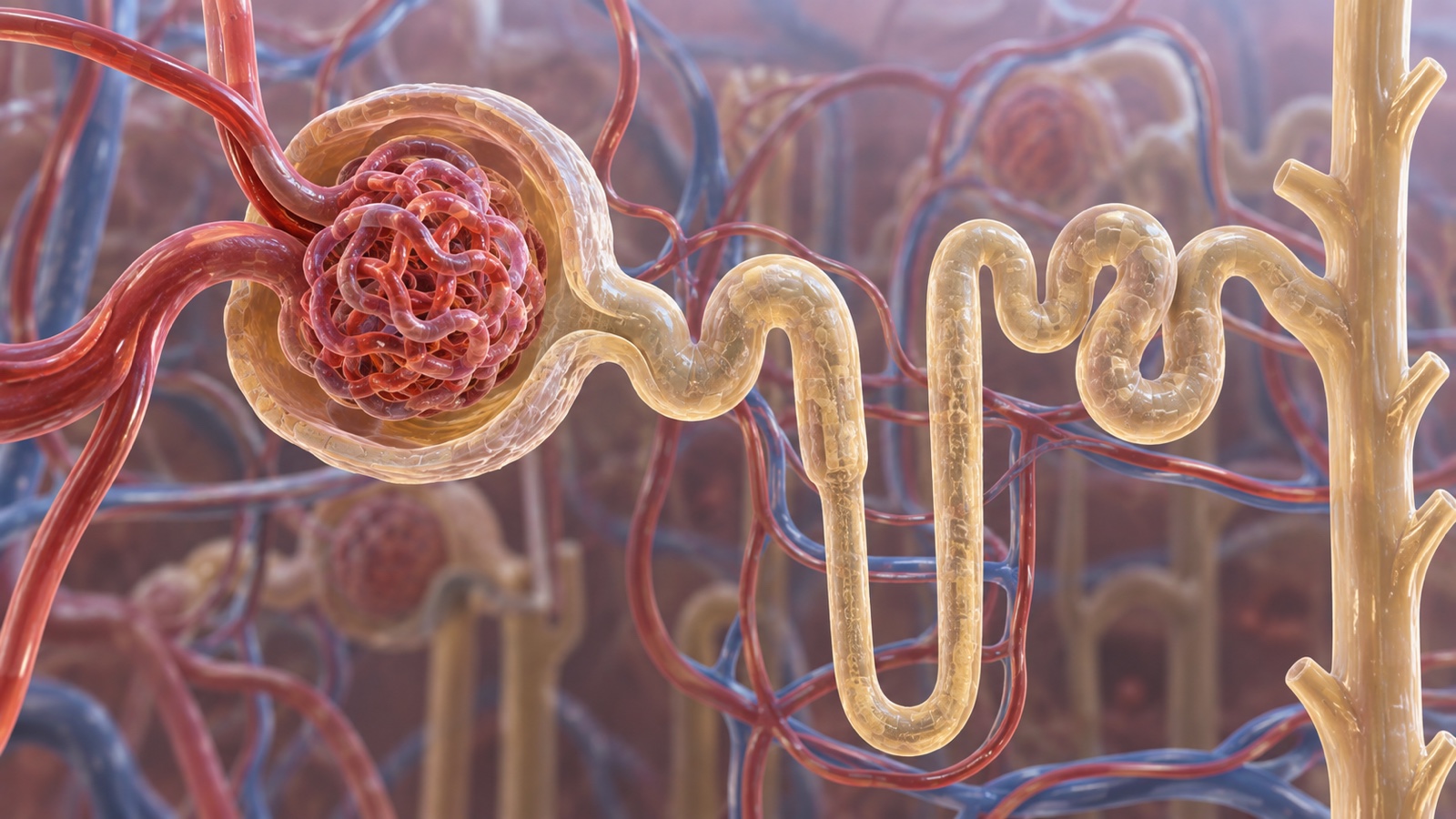
- A nephron begins with a filtering structure called the renal corpuscle.
- The glomerulus is a tuft of tiny capillaries inside the renal corpuscle.
- Bowman's capsule surrounds the glomerulus and collects filtered fluid.
- Blood pressure pushes water and small dissolved molecules across the glomerular filtration barrier.
- Healthy filtration normally keeps most blood cells inside the circulation.
- Large plasma proteins are also mostly retained in the bloodstream.
- Filtered fluid then enters the proximal tubule.
- The proximal tubule reabsorbs much of the filtered water, sodium, glucose, amino acids, and bicarbonate.
- The loop of Henle dips into the kidney medulla.
- This loop helps create the concentration gradient needed to conserve water.
- The distal tubule fine-tunes electrolyte and acid-base handling.
- Collecting ducts receive fluid from many nephrons.
- Hormones can change how much water and sodium collecting ducts reabsorb.
- Only a small fraction of the enormous amount of fluid filtered each day becomes urine.
- Most filtered water and useful solutes are reclaimed before the final urine leaves the kidney.
- A nephron is less a coffee filter and more a recycling plant that filters broadly, takes back valuable material, secretes selected wastes, and adjusts the final output molecule by molecule.
Kidneys filter huge volumes without draining the body dry
- Glomerular filtration rate describes how much fluid the kidneys filter from plasma over time.
- Healthy adult filtration commonly totals well over 100 quarts of fluid per day.
- The body does not produce anything close to that much urine because nearly all filtered water is reabsorbed.
- Typical daily urine volume is usually measured in quarts, not dozens of gallons.
- The kidneys adjust urine concentration according to hydration and hormonal signals.
- When water is scarce, urine can become more concentrated.
- When water intake is high, kidneys can excrete more dilute urine.
- Antidiuretic hormone increases water reabsorption in collecting ducts.
- Antidiuretic hormone is also called vasopressin.
- Vasopressin acts partly by increasing water-channel proteins called aquaporins in collecting-duct cells.
- Alcohol can suppress vasopressin release and contribute to increased urine production.
- Caffeine has a mild diuretic effect, especially in people who are not accustomed to it.
- Normal kidneys excrete urea produced from protein metabolism.
- They also excrete creatinine produced from normal muscle metabolism.
- Creatinine levels in blood are commonly used to estimate kidney filtration.
- Estimated glomerular filtration rate is usually calculated rather than directly measured.
- Serum creatinine alone can be misleading because muscle mass affects its concentration.
- Cystatin C is another blood marker that can help estimate filtration in some situations.
- Urine color changes with concentration, foods, medications, blood, pigments, and other factors.
- The kidneys can filter a volume of fluid many times larger than your total blood volume each day because they keep recycling the same water back into circulation instead of sending it all to the bathroom.
Kidneys constantly balance salt, potassium and acidity
- Kidneys are major regulators of sodium balance.
- Sodium balance strongly influences extracellular fluid volume.
- Kidneys also regulate potassium excretion.
- Potassium must stay within a narrow range for normal nerve and muscle function.
- Dangerously high potassium can disrupt heart rhythm.
- Kidneys regulate hydrogen-ion secretion and bicarbonate recovery.
- These processes help keep blood pH within a narrow healthy range.
- The lungs and kidneys work together to control acid-base balance.
- Lungs can change carbon dioxide levels within minutes.
- Kidneys make slower but powerful adjustments involving bicarbonate and acid excretion.
- Phosphate handling is also influenced by kidney function.
- Kidneys help control calcium balance indirectly through hormones and vitamin D metabolism.
- Aldosterone promotes sodium reabsorption and potassium secretion in parts of the nephron.
- The renin-angiotensin-aldosterone system links kidney sensing with blood-pressure and fluid control.
- Renin is released by specialized kidney cells when certain signals indicate reduced effective circulation.
- Renin begins a hormone cascade that can increase blood pressure and sodium retention.
- Natriuretic peptides from the heart oppose some sodium-retaining signals.
- Kidney regulation changes from minute to minute as diet, sweating, hormones, and circulation change.
- A salty meal does not simply pass straight through to urine because the body adjusts how much sodium and water it keeps over hours and days.
- Every time blood chemistry stays boringly stable after a meal, workout, illness, or hot day, the kidneys are doing chemistry homework you never see.
Kidneys act like endocrine organs too
- Kidneys do more than filter and make urine.
- They release hormones and activate hormone-like molecules.
- Erythropoietin is produced mainly by specialized cells in the kidneys.
- Erythropoietin stimulates bone marrow to make more red blood cells.
- Chronic kidney disease can cause anemia partly because erythropoietin production falls.
- Kidneys convert vitamin D into an active hormonal form.
- Active vitamin D helps regulate calcium and phosphate balance.
- Severe chronic kidney disease can therefore affect bone health.
- Renin released by the kidneys helps regulate blood pressure.
- Kidney blood flow is carefully autoregulated across a range of blood pressures.
- Specialized structures called juxtaglomerular apparatuses help sense and coordinate filtration-related signals.
- Macula densa cells monitor sodium chloride delivery within the nephron.
- Kidneys can alter afferent and efferent arteriolar resistance to help stabilize filtration.
- Too little blood flow can injure kidney tissue.
- Persistently high pressure can also damage delicate kidney vessels over time.
- Diabetes is a major cause of chronic kidney disease because prolonged high glucose can damage glomerular structures.
- Hypertension is both a cause and consequence of kidney disease.
- Kidney and cardiovascular health are therefore tightly linked.
- Loss of kidney endocrine function explains why kidney disease can affect blood counts, bones, blood pressure, and heart risk far beyond the urinary tract.
- The kidneys are one of those organs whose job description quietly expanded from “filter” to “filter, chemist, pressure regulator, hormone producer, and bone-marrow supervisor.”
Kidney stones form from crystals in urine
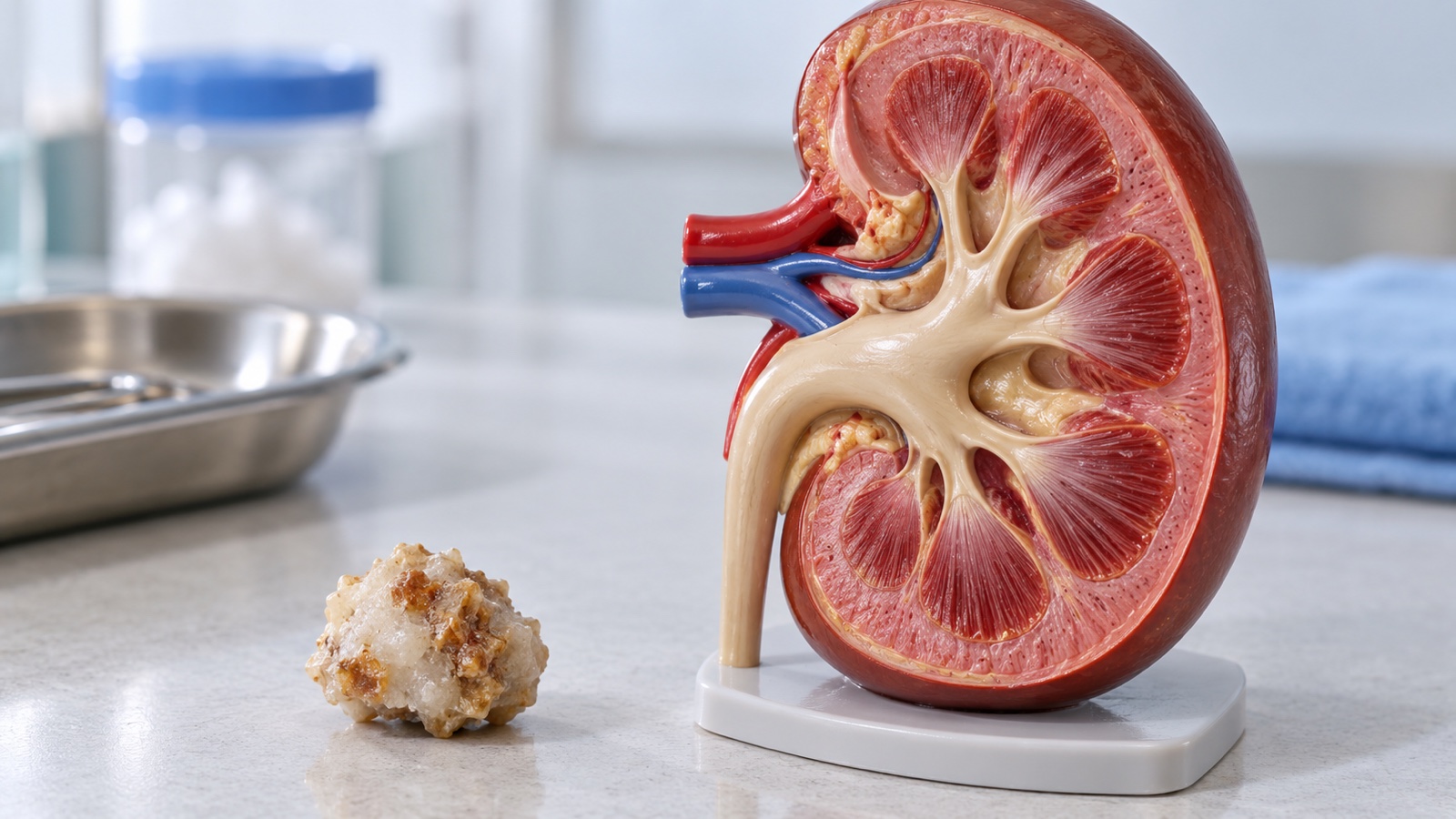
- Kidney stones are solid mineral and salt deposits that form in the urinary tract.
- Calcium oxalate stones are among the most common types.
- Other stones can contain calcium phosphate, uric acid, struvite, or cystine.
- Low urine volume can increase stone risk because dissolved substances become more concentrated.
- Drinking enough fluid is a major prevention strategy for many people prone to stones.
- Dietary advice depends on the exact stone type and individual risk factors.
- People with calcium oxalate stones are not generally told to eliminate all dietary calcium.
- Normal dietary calcium can bind oxalate in the gut and sometimes reduce oxalate absorption.
- High sodium intake can increase urinary calcium in susceptible people.
- Uric acid stones are more likely in persistently acidic urine.
- Struvite stones can form in association with certain urinary infections.
- Cystine stones occur in people with an inherited disorder called cystinuria.
- Some stones remain in the kidney without causing symptoms.
- Pain often becomes severe when a stone moves into and obstructs a ureter.
- Ureteral stone pain commonly comes in waves as muscular contractions occur.
- Blood can appear in urine during a stone episode.
- Fever with urinary obstruction can signal a dangerous infection requiring urgent care.
- Small stones may pass spontaneously while larger or complicated stones may need procedures.
- Modern treatments can include shock-wave lithotripsy or endoscopic removal depending on the situation.
- A kidney stone can be tiny enough to fit on a pencil eraser and still make an adult reconsider every life choice made before breakfast.
Dialysis can replace some kidney functions, but not all of them
- Severe kidney failure can allow wastes, acids, potassium, and excess fluid to accumulate.
- Dialysis can remove selected wastes and excess fluid when kidney function is inadequate.
- Hemodialysis circulates blood through an external filter called a dialyzer.
- A dialyzer contains a semipermeable membrane that separates blood from dialysis fluid.
- Wastes and electrolytes move across the membrane according to concentration gradients.
- Excess water can be removed by controlled pressure differences.
- Hemodialysis requires reliable access to the bloodstream.
- An arteriovenous fistula is often preferred for long-term hemodialysis access when feasible.
- Peritoneal dialysis uses the lining of the abdomen as the dialysis membrane.
- Dialysis fluid is placed into the abdominal cavity and later drained.
- Dialysis replaces some filtering and fluid-management functions but does not perfectly recreate healthy kidneys.
- People on dialysis may still need medications for anemia, mineral balance, blood pressure, and other issues.
- Kidney transplantation can restore many kidney functions more continuously than dialysis.
- A person can live with one healthy kidney.
- Living kidney donors usually undergo extensive evaluation before donation.
- The remaining kidney often enlarges and increases its workload after donation.
- One healthy kidney can usually provide enough filtration for normal life.
- Not every person with one kidney has identical health risks, so long-term medical follow-up still matters.
- Kidney failure can develop gradually with few early symptoms because substantial functional reserve exists.
- That reserve is impressive, but it also means kidney disease can advance quietly before the body makes the problem obvious.
Urine, hydration and 5 final kidney facts
- Fresh normal urine is mostly water plus urea, electrolytes, creatinine, and many other dissolved substances.
- Healthy urine is not guaranteed to be sterile in the simplistic textbook sense because modern methods can detect low-level urinary microbial communities.
- Clear urine all day is not automatically a sign of perfect health, because hydration needs vary and excessive fluid intake can also dilute urine.
- The kidneys can adapt to major changes in salt and water intake, but they still depend on adequate circulation and healthy nephron tissue.
- After 145 facts, kidneys look less like two filters and more like microscopic recycling plants, hormone organs, pressure sensors, chemistry regulators, water managers, and one of the main reasons the internal environment stays boringly stable.
Quick FAQ
Q: Can you live with one kidney?
A: Yes. One healthy kidney can usually provide enough filtration for normal life, including in carefully screened living kidney donors.
Q: How much fluid do the kidneys filter each day?
A: They filter well over 100 quarts of fluid daily, but almost all of it is reabsorbed, so only a small fraction becomes urine.
Q: Do kidneys only remove waste?
A: No. They also regulate water, electrolytes, acidity, blood pressure, red-cell production, and vitamin D activation.
Q: What causes kidney-stone pain?
A: Severe pain usually occurs when a stone enters and obstructs a ureter, causing pressure and muscular contractions.
Q: Does dialysis completely replace healthy kidneys?
A: No. Dialysis replaces important filtering and fluid-control functions, but it does not reproduce every continuous metabolic and endocrine function of healthy kidneys.

Ellie is the owner and sole author of Fun Facts, combining her mechanical engineering background with years of research-driven writing to deliver facts you can trust. Every article is thoroughly fact-checked and routinely updated as new science and sources emerge to keep information accurate and current. Her mission is to make learning delightful while upholding high standards of reliability and transparency.