
The United Arab Emirates gets reduced to Dubai skyscrapers so often that six other emirates, mountain villages, mangroves, pearl-diving history, falconry, date farms, desert wildlife, dhow ports, and a remarkably young federation get shoved offstage. The towers are impressive; the country is much more interesting once you look behind them.
The UAE is a federation of seven emirates
- The United Arab Emirates is located on the Arabian Peninsula.
- It is commonly abbreviated UAE.
- The country is a federation of seven emirates.
- They are Abu Dhabi, Dubai, Sharjah, Ajman, Umm Al Quwain, Fujairah, and Ras Al Khaimah.
- Abu Dhabi is the federal capital.
- Dubai is the country’s largest city.
- Abu Dhabi is the largest emirate by land area.
- Ajman is the smallest emirate by land area.
- Most emirates face the Persian Gulf, which the UAE and many Arab states commonly call the Arabian Gulf.
- Fujairah lies mainly on the Gulf of Oman coast.
- The UAE borders Saudi Arabia and Oman.
- The national currency is the UAE dirham.
- The dirham is divided into 100 fils.
- Arabic is the official language.
- English is widely used in business, tourism, and daily urban life.
- The UAE has a very large expatriate population.
- Foreign residents substantially outnumber Emirati citizens.
- The flag is red, green, white, and black.
- Those colors are widely recognized as Pan-Arab colors.
- A country made of seven monarchies somehow makes my neighborhood homeowners association feel extremely under-organized.
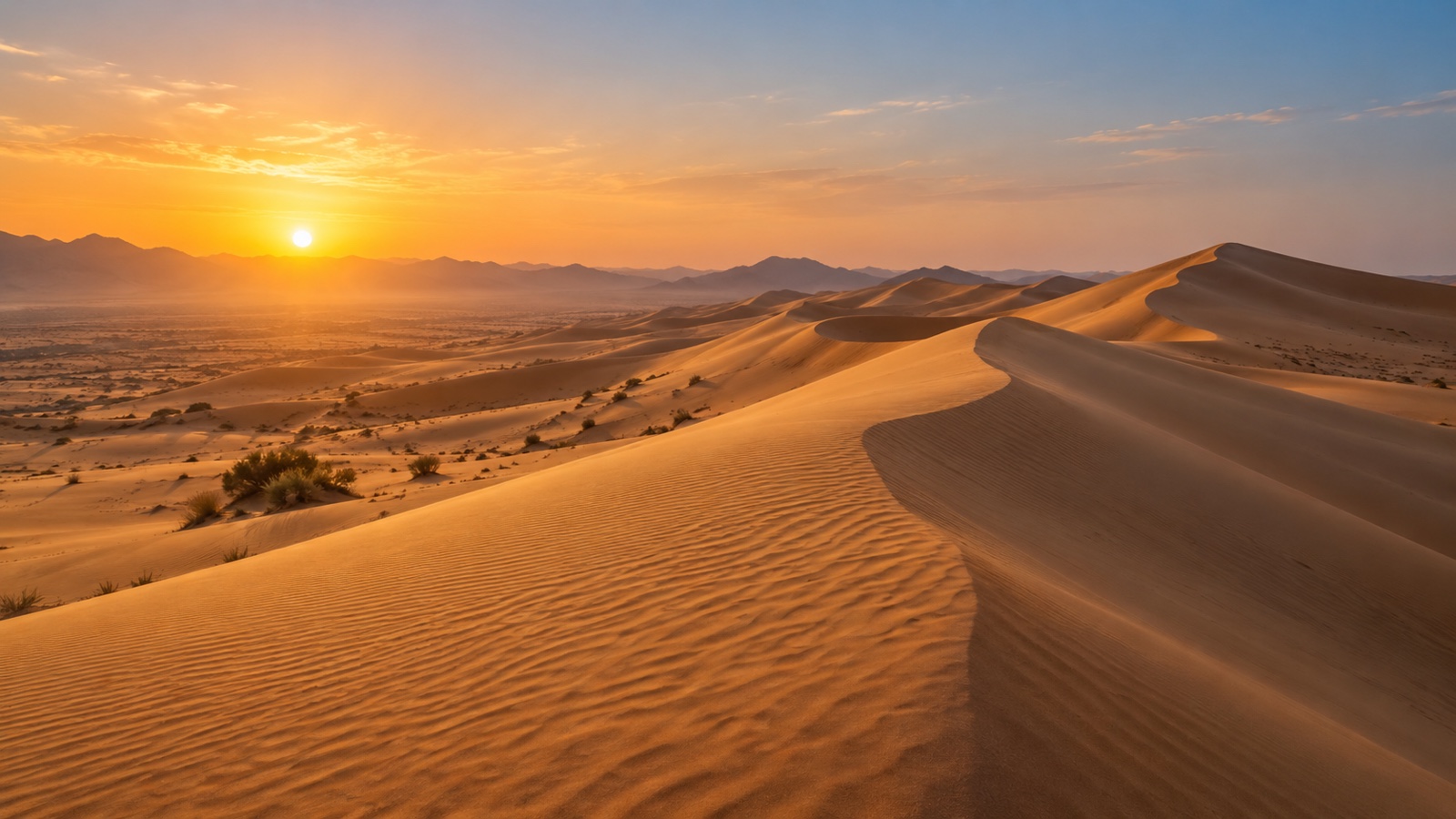
Desert covers much of the country, but not all of it
- Much of the UAE lies within the Arabian Desert.
- Sand dunes dominate large interior areas.
- The Rub’ al Khali, or Empty Quarter, extends into southern Abu Dhabi.
- The Empty Quarter is one of the world’s largest continuous sand deserts.
- Some UAE dunes can rise hundreds of feet.
- The Hajar Mountains cross parts of the eastern UAE and neighboring Oman.
- Jebel Jais is the highest mountain in the UAE.
- Its summit area rises to more than 6,000 feet.
- Ras Al Khaimah contains much of the UAE’s highest mountain terrain.
- Wadis are dry valleys that can carry sudden floodwater after heavy rain.
- Flash floods are a serious hazard in mountain and urban areas.
- Natural freshwater is scarce.
- Desalination supplies a large share of municipal drinking water.
- Desalination removes salt from seawater but requires substantial energy and creates concentrated brine.
- Groundwater is also used, especially for agriculture and landscaping.
- Mangrove forests grow along parts of the coast.
- Abu Dhabi has extensive mangrove habitat.
- Mangroves shelter fish, birds, crabs, and other marine life.
- The UAE climate is hot and arid, with very hot summers and mild winters.
- The correct desert packing list somehow includes sunscreen, a light jacket for air conditioning, and respect for flash floods.
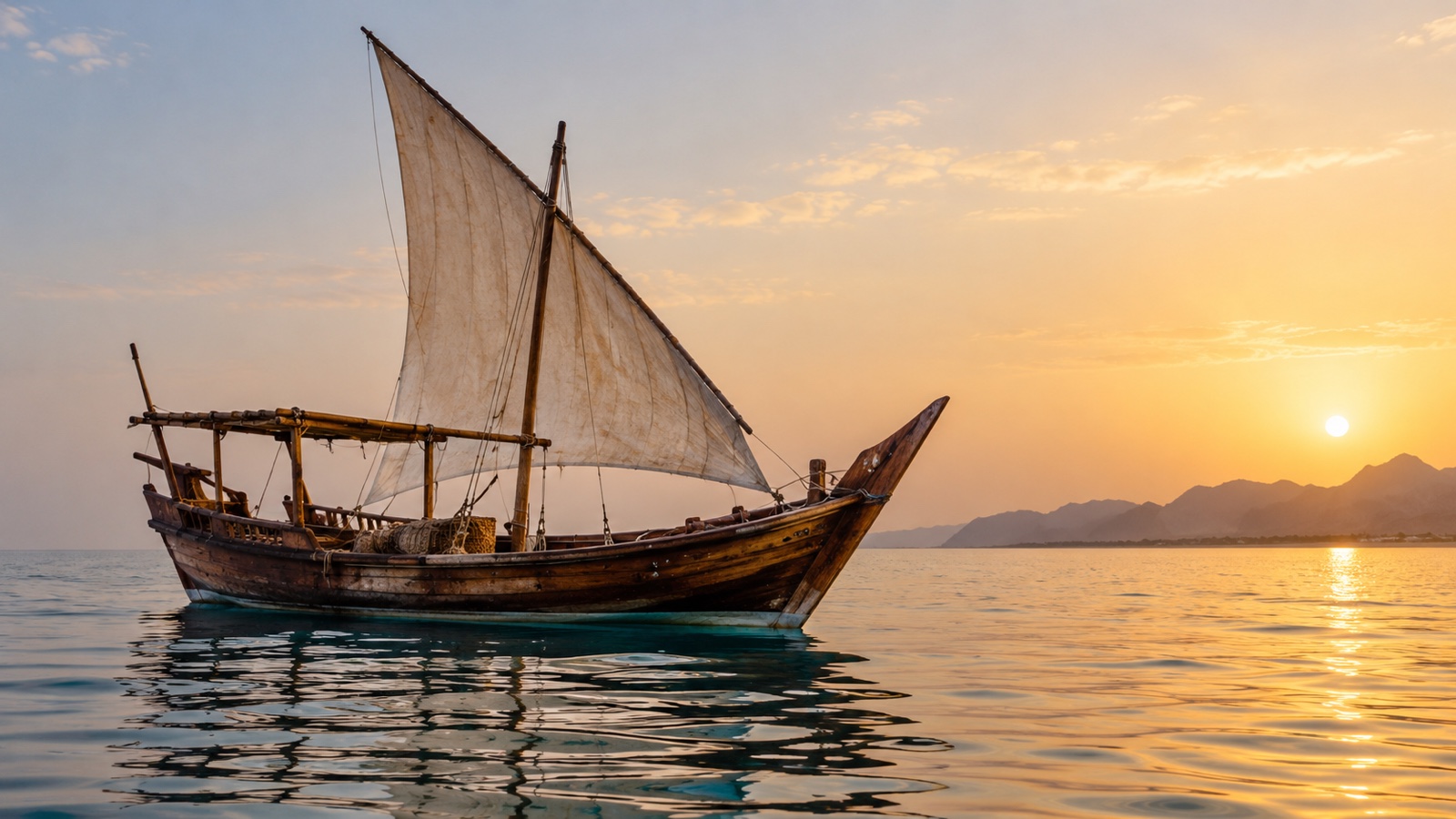
Pearls mattered before petroleum transformed the economy
- Coastal communities in the Gulf region depended heavily on pearling for centuries.
- Natural pearls form when certain mollusks coat an irritant with layers of nacre.
- Pearl divers worked during seasonal expeditions in the Gulf.
- Traditional diving could be extremely dangerous.
- Divers descended repeatedly without modern scuba equipment.
- Boats carried specialized crews including captains, divers, haulers, and merchants.
- Pearls were exported to markets in India, Europe, and elsewhere.
- The Gulf pearl economy collapsed during the early 20th century.
- Cultured pearls from Japan sharply changed the global market.
- The Great Depression also reduced luxury demand.
- Fishing, date cultivation, trade, boatbuilding, and pastoralism supported other livelihoods.
- Oil was discovered commercially in Abu Dhabi during the 20th century.
- Oil exports began before the federation was created.
- Petroleum revenue transformed infrastructure, health care, education, and urban development.
- Abu Dhabi holds most of the federation’s oil reserves.
- Dubai diversified earlier and more aggressively into trade, aviation, tourism, real estate, and services.
- Modern museums preserve pearl-diving tools and oral histories.
- Pearl heritage remains part of Emirati identity even though it no longer drives the economy.
- The speed from wooden pearling dhows to global airlines happened within living family memory.
- That may be the UAE’s most astonishing transformation fact.
The federation is younger than many famous rock bands
The UAE did not exist as one country until 1971, which makes its skyline look even more improbable. Before federation, the coastal sheikhdoms had separate rulers and treaty relationships with Britain, while local identities remained rooted in tribes, oases, ports, mountains, and islands.
- The emirates were historically known collectively by Europeans as the Trucial States.
- The name came from maritime truces made with Britain during the 19th century.
- Britain handled important external-defense and foreign-policy matters under treaty arrangements.
- Local rulers retained authority over internal affairs.
- Britain announced plans to withdraw from the region east of Suez.
- Abu Dhabi and Dubai leaders worked toward a new federation.
- Six emirates formed the United Arab Emirates on December 2, 1971.
- Those six were Abu Dhabi, Dubai, Sharjah, Ajman, Umm Al Quwain, and Fujairah.
- Ras Al Khaimah joined in February 1972.
- December 2 is celebrated as the UAE’s National Day, now also called Eid Al Etihad.
- Sheikh Zayed bin Sultan Al Nahyan became the federation’s first president.
- He had been ruler of Abu Dhabi.
- Sheikh Rashid bin Saeed Al Maktoum, ruler of Dubai, was another central federation figure.
- The UAE constitution divides powers between federal and emirate governments.
- Each emirate retains its own ruling family.
- The Federal Supreme Council consists of the seven emirate rulers.
- The council elects the federal president and vice president from among its members.
- Political institutions therefore combine federal structures with hereditary emirate monarchies.
- Citizen welfare programs expanded rapidly with oil wealth.
- The modern country is younger than the first “Star Wars” movie and has somehow built much taller props.
Falcons, camels and desert traditions still matter
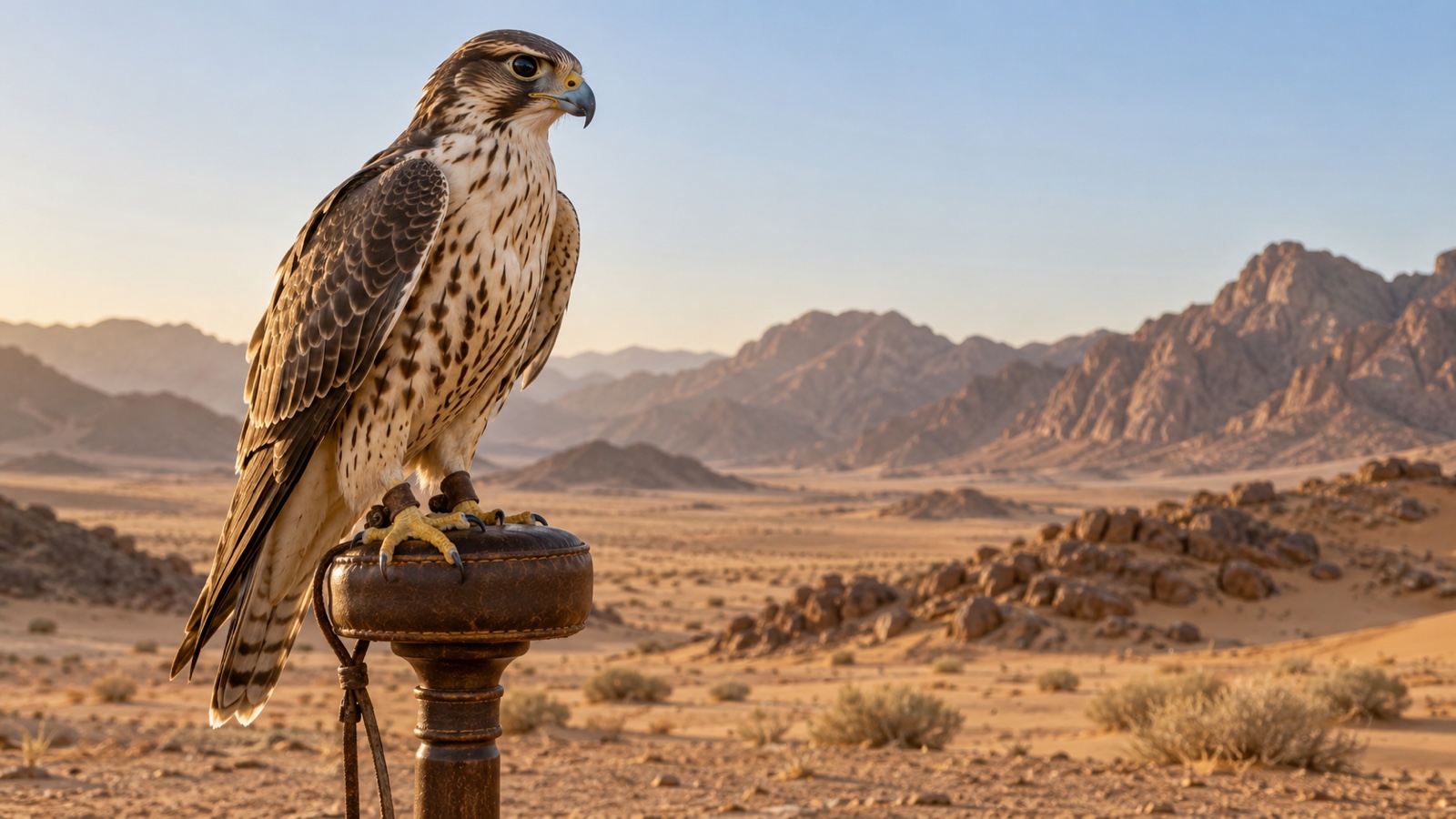
- Falconry has deep roots in Arabian Peninsula culture.
- Bedouin hunters traditionally used trained falcons to help capture wild game.
- Falcons became symbols of skill, endurance, prestige, and desert knowledge.
- Falconry is recognized by UNESCO as intangible cultural heritage through a multinational listing.
- Falcons can even receive specialized passports for international travel under regional regulations.
- Veterinary hospitals in the UAE specialize in falcon medicine.
- The falcon appears on the UAE national emblem.
- Camels were crucial to transport and survival in desert environments.
- Dromedary camels have one hump.
- They can tolerate dehydration and extreme heat far better than humans.
- Camel milk remains part of Emirati food culture.
- Camel racing is a major traditional sport.
- Robot jockeys replaced child jockeys after human-rights concerns and legal reforms.
- Modern racing camels are bred and trained like elite athletes.
- Arabian oryx are native desert antelope.
- The species became extinct in the wild during the 1970s.
- Captive breeding and reintroduction programs restored wild populations in parts of Arabia.
- Oryx conservation programs operate in the UAE.
- Gazelles, foxes, reptiles, and migratory birds also live in UAE habitats.
- A robot riding a racing camel is the exact point where heritage and technology stop pretending they are opposites.
Dubai and Abu Dhabi built very different global identities
Dubai likes the superlative; Abu Dhabi often prefers scale with more governmental polish. One built an airline, malls, artificial islands, and giant tourism icons, while the other used oil wealth to create institutions, museums, infrastructure, energy companies, and a capital with monumental ambitions of its own.
- Burj Khalifa in Dubai rises 2,717 feet.
- It opened in 2010.
- The tower was originally known during construction as Burj Dubai.
- It was renamed Burj Khalifa at opening.
- The Palm Jumeirah is an artificial island shaped roughly like a palm tree.
- Land reclamation created its trunk, fronds, and surrounding crescent.
- Dubai Mall is one of the world’s largest shopping complexes.
- Dubai Metro opened in 2009.
- Much of the system operates automatically without onboard drivers.
- Jebel Ali is a major deepwater port and industrial zone.
- Emirates airline is based in Dubai.
- Etihad Airways is based in Abu Dhabi.
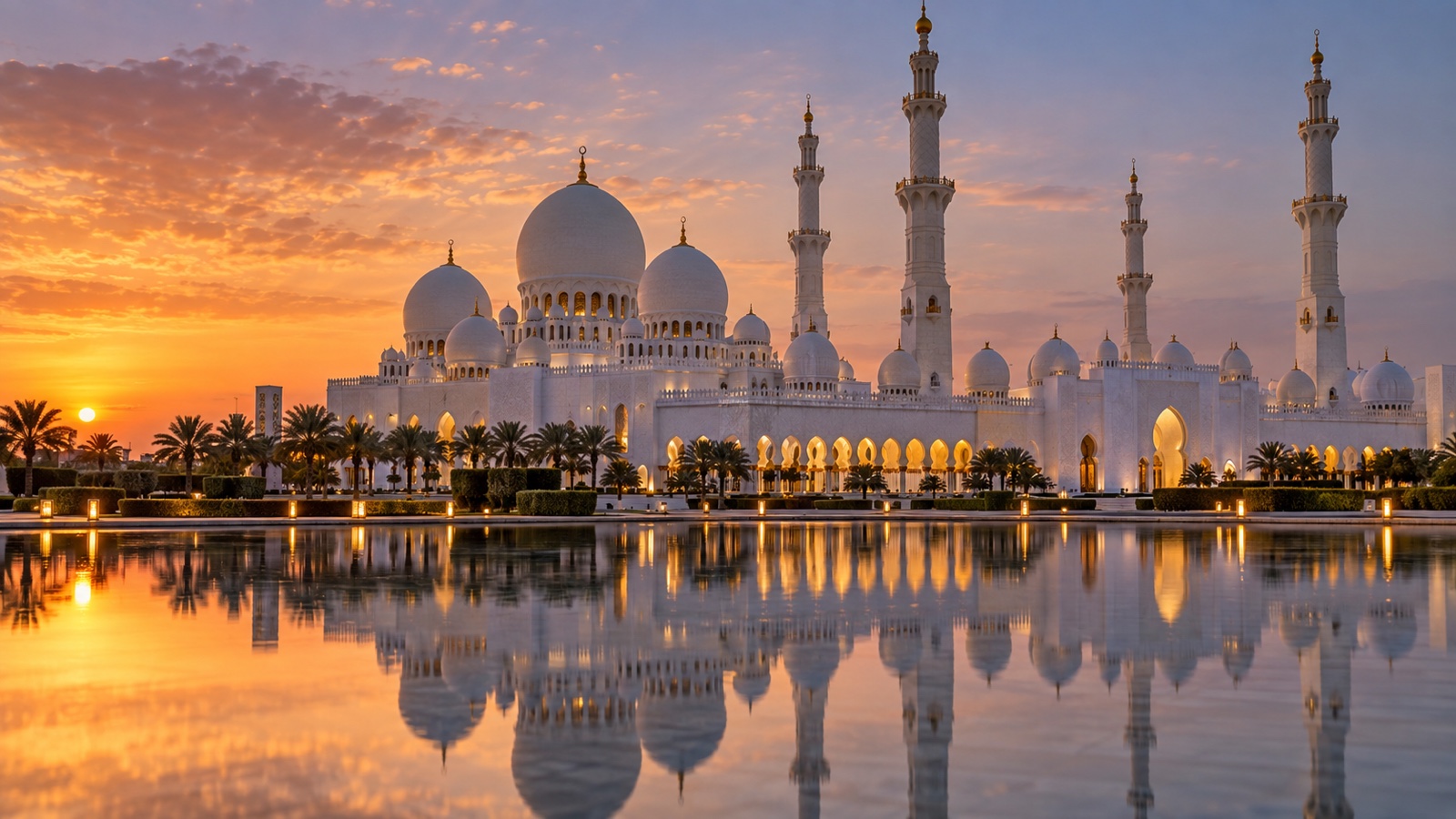
- Abu Dhabi’s Sheikh Zayed Grand Mosque is one of the country’s most recognizable religious buildings.
- Louvre Abu Dhabi opened on Saadiyat Island in 2017.
- The museum operates through an agreement involving France and the UAE.
- Masdar City was developed as an experiment in lower-carbon urban design.
- The UAE has built large solar-energy projects despite its petroleum wealth.
- Dubai hosted Expo 2020 from October 2021 to March 2022 after a pandemic delay.
- The Expo site was later redeveloped as Expo City Dubai.
- The UAE clearly saw “desert trading ports” and decided the logical sequel was “global transportation and architecture laboratory.”
Food, etiquette and 25 final UAE facts
- Emirati cuisine reflects Arabian, Persian Gulf, Indian Ocean, and Bedouin influences.
- Rice, meat, fish, dates, spices, and wheat are important traditional ingredients.
- Machboos is a spiced rice dish commonly served with meat or fish.
- Harees combines wheat and meat cooked into a thick porridge-like dish.
- Luqaimat are small fried dough dumplings commonly served with syrup or date molasses.
- Dates are deeply associated with hospitality.
- Arabic coffee is commonly served in small cups.
- Cardamom frequently flavors Gulf-style coffee.
- Serving coffee can follow detailed etiquette around pouring and accepting refills.
- Islam is the official religion.
- Mosques call worshippers to prayer five times daily.
- Ramadan changes daily rhythms, restaurant hours, work schedules, and social life.
- Non-Muslim residents and visitors can generally eat in designated settings, with rules and social expectations varying by place.
- Modest dress is especially appropriate at mosques and government or traditional settings.
- Sharjah has stricter alcohol laws than several other emirates.
- Legal rules can vary by emirate, so “UAE law” is not always the entire answer to a practical travel question.
- Sharjah is known for museums, heritage districts, books, and arts programs.
- Ras Al Khaimah is known for mountains and outdoor recreation.
- Fujairah is the only emirate whose main territory faces the Gulf of Oman rather than the Persian Gulf.
- Umm Al Quwain retains extensive lagoons and mangrove environments.
- Ajman’s coastline and urban area sit between Sharjah territories.
- Traditional wooden dhows still operate in commerce and tourism.
- Date palms can survive extreme heat with adequate water.
- The Arabian oryx is strongly associated with national wildlife conservation.
- After 145 facts, the UAE feels much less like “Dubai plus some desert” and much more like seven distinct places that agreed to build one unusually ambitious country.
Quick FAQ
Q: How many emirates are in the UAE?
A: Seven: Abu Dhabi, Dubai, Sharjah, Ajman, Umm Al Quwain, Fujairah, and Ras Al Khaimah.
Q: What is the capital of the UAE?
A: Abu Dhabi is the federal capital, while Dubai is the largest city.
Q: Was Dubai rich before oil?
A: Dubai had an important trading, fishing, and pearling economy before oil, but petroleum revenue and later diversification accelerated modern infrastructure and growth.
Q: Is the whole UAE just desert?
A: No. Desert dominates much of the country, but the UAE also has Hajar Mountain terrain, mangroves, coastal wetlands, oases, beaches, islands, and urban green spaces.
Q: When was the UAE founded?
A: Six emirates formed the federation on December 2, 1971, and Ras Al Khaimah joined in February 1972.

Ellie is the owner and sole author of Fun Facts, combining her mechanical engineering background with years of research-driven writing to deliver facts you can trust. Every article is thoroughly fact-checked and routinely updated as new science and sources emerge to keep information accurate and current. Her mission is to make learning delightful while upholding high standards of reliability and transparency.