
Seals can look like sleepy beach potatoes, but that impression lasts only until one drops into the ocean. True seals dive hundreds or thousands of feet, track fish with whiskers, slow their hearts, store oxygen in blood and muscle, sleep at sea, navigate under ice, and return to land just awkwardly enough to make the water version seem impossible.
True seals are one branch of the pinniped family tree
- True seals belong to the family Phocidae.
- They are also called earless seals.
- The term “earless” means they lack visible external ear flaps.
- They still have functional ears and can hear.
- Seals, sea lions, and walruses together belong to the group Pinnipedia.
- The word pinniped means roughly “fin-footed.”
- Sea lions and fur seals belong to a different family called Otariidae.
- Walruses belong to the family Odobenidae.
- More than 30 living pinniped species are recognized across all three families.
- True seals occur in both Northern and Southern Hemisphere oceans.
- Harbor seals live along temperate and subarctic coasts of the Northern Hemisphere.
- Gray seals live in the North Atlantic.
- Ringed seals are strongly associated with Arctic sea ice.
- Weddell seals live around Antarctica.
- Leopard seals are Antarctic predators.
- Southern elephant seals are the largest living pinnipeds.
- Male southern elephant seals can weigh several tons.
- Baikal seals live in freshwater Lake Baikal in Siberia.
- Saimaa ringed seals survive only in Finland's freshwater Lake Saimaa.
- “Seal” is a short word covering animals from little freshwater specialists to males the size of a small truck.
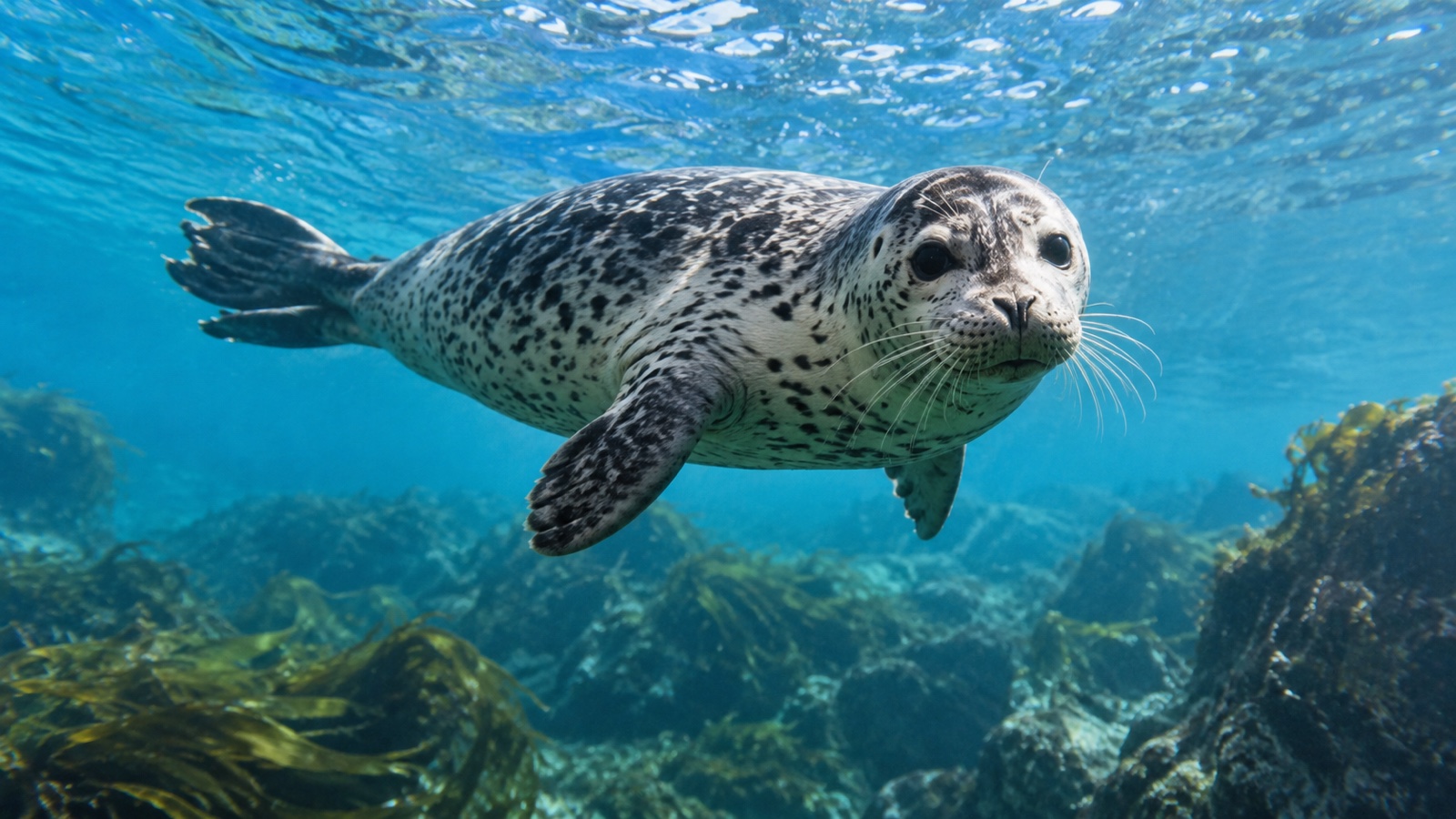
True seals move beautifully in water and awkwardly on land
- True seals have streamlined bodies.
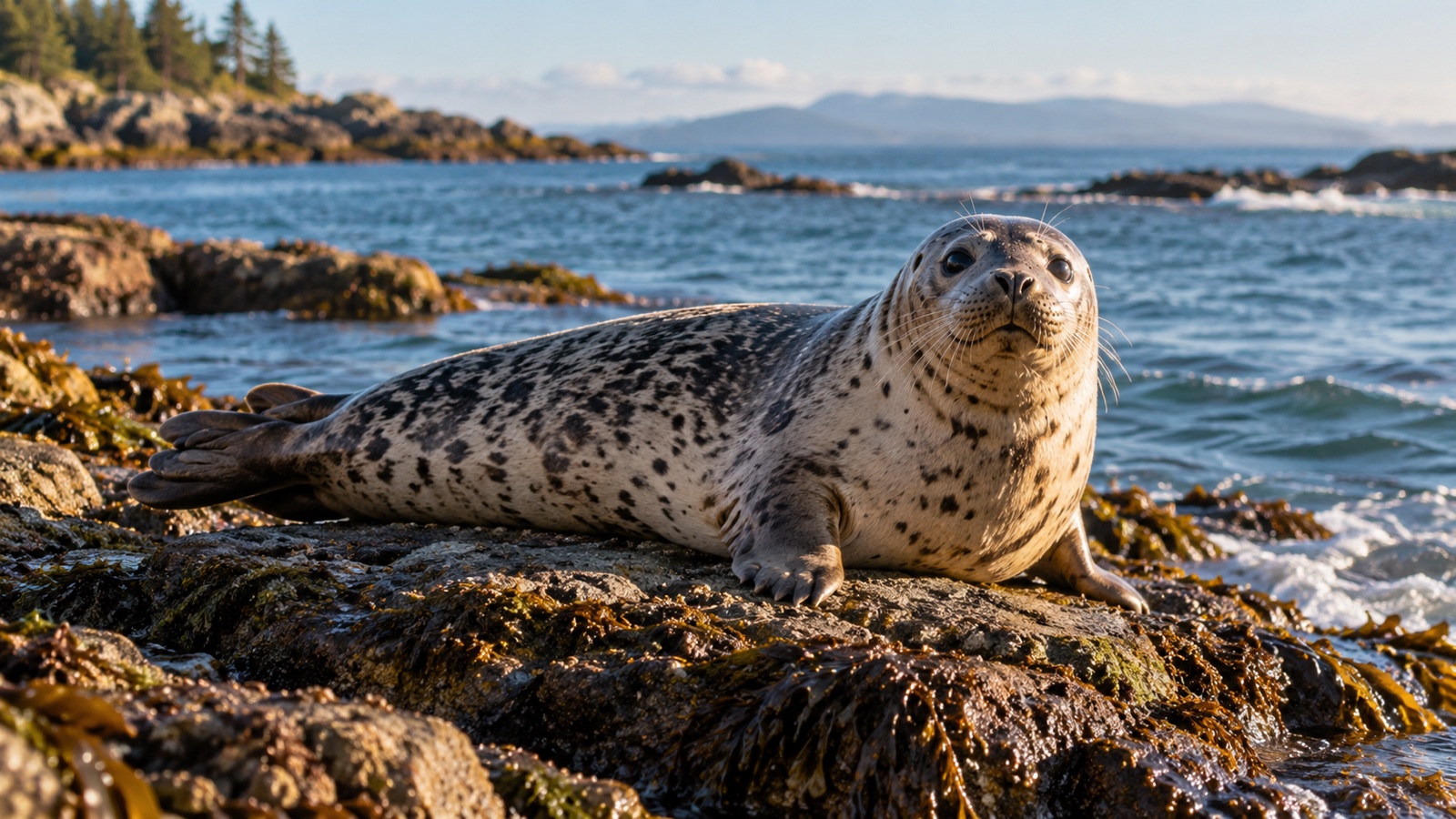
- Their hind flippers point backward.
- They cannot rotate the hind flippers forward beneath the body like sea lions can.
- On land, most true seals move by wriggling, bouncing, or pulling with the front flippers.
- This motion is sometimes called galumphing.
- Sea lions can support themselves on all four flippers and walk more easily.
- In water, true seals use powerful side-to-side movements of the hindquarters and hind flippers.
- The front flippers mainly steer and stabilize.
- A flexible spine adds propulsion.
- Streamlined bodies reduce drag.
- Most seals are far faster and more agile underwater than on land.
- Harbor seals can make sharp turns while pursuing fish.
- Seals often coast between active swimming strokes.
- Gliding saves energy during dives.
- Some species porpoise at the surface while traveling quickly.
- Others swim below the surface and rise only to breathe.
- Seals can swim backward.
- They can roll and twist underwater with fine control.
- Young pups develop swimming skill quickly in many species.
- Watching a true seal on land and then underwater feels like seeing the same person switch from ski boots to ballet shoes.
Whiskers can follow the wake of a passing fish
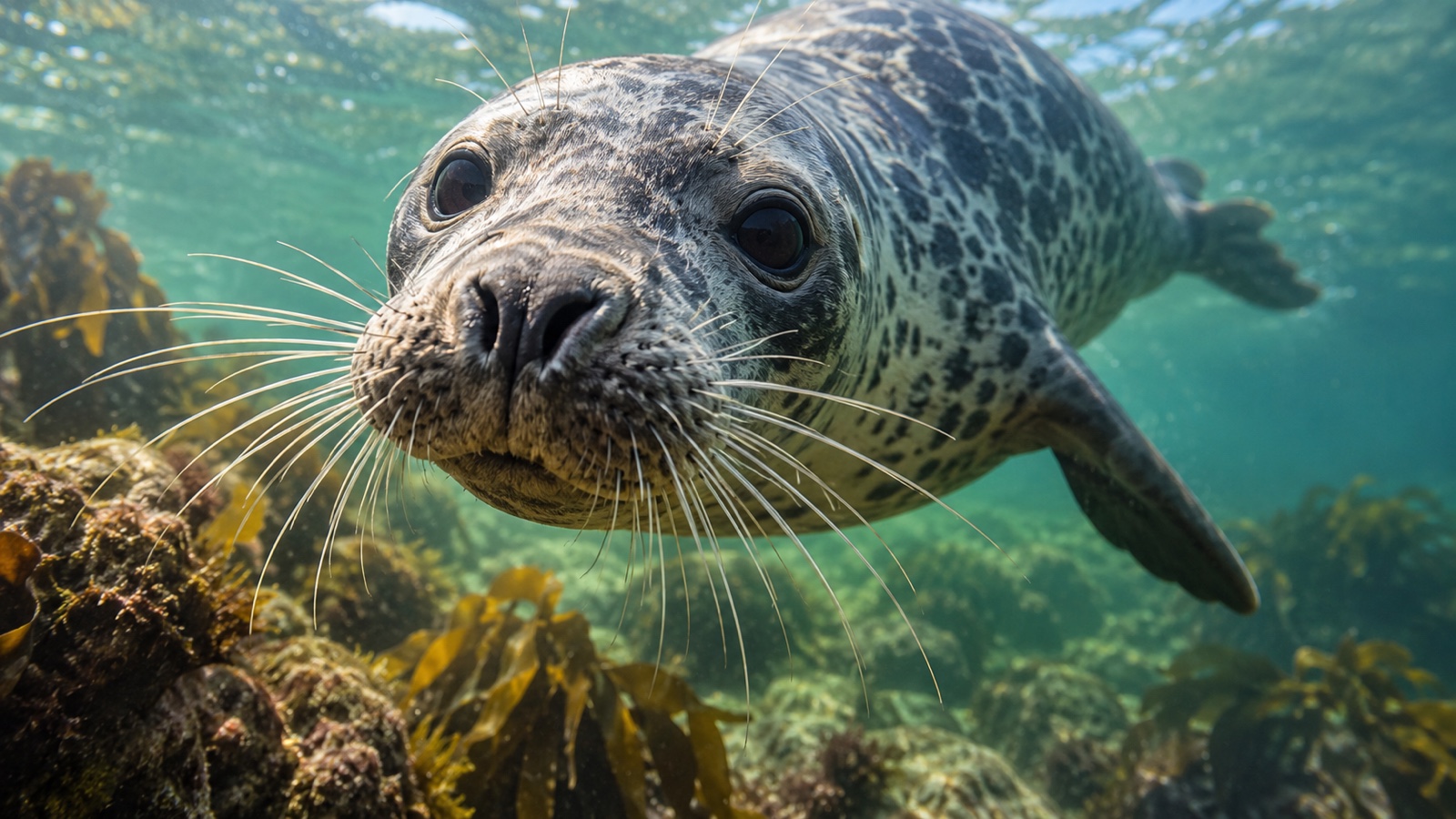
- Seal whiskers are called vibrissae.
- Vibrissae are deeply rooted and packed with sensory nerves.
- They detect tiny movements in surrounding water.
- A swimming fish leaves a trail of vortices behind it.
- Seals can detect those hydrodynamic trails.
- Experiments show some seals can follow a fish-like wake after the object has passed.
- This ability is useful in dark or murky water.
- Many true seals have wavy or beaded whisker shapes.
- The unusual shape can reduce vibrations caused by the seal's own forward motion.
- Lower self-generated noise helps reveal prey-generated signals.
- Whiskers also help inspect nearby objects.
- Seals can hunt when vision is limited.
- Large eyes are still important in many species.
- Seal eyes are adapted to low underwater light.
- Pupils can change size dramatically between bright surface light and dim depths.
- Some species have reflective eye structures that improve low-light sensitivity.
- Smell is more useful at the surface than underwater.
- Mothers and pups can use scent to recognize each other in some species.
- Hearing works both in air and water, with species-specific strengths.
- A seal's mustache is essentially a wake detector sophisticated enough to make my face feel under-equipped.
Diving turns the body into an oxygen-management system
A diving seal cannot breathe underwater, so it stretches every stored oxygen molecule. The heart slows, blood flow shifts toward essential organs, muscles draw on oxygen-rich myoglobin, and the animal tolerates carbon dioxide and low oxygen levels that would feel unbearable to a human.
- Seals are air-breathing mammals.
- They must surface or reach breathing holes to inhale.
- Before diving, seals load oxygen into blood and muscle.
- Their blood volume is large relative to body size.
- Seal blood contains high concentrations of hemoglobin.
- Muscles contain abundant myoglobin.
- Myoglobin stores oxygen inside muscle tissue.
- The diving reflex slows heart rate.
- Blood vessels to less essential tissues can constrict.
- Blood flow is preserved to the brain and heart.
- Seals tolerate high carbon-dioxide concentrations during dives.
- They also tolerate lower blood oxygen levels than humans safely can.
- Many seals exhale before a deep dive.
- Collapsible lungs and chest structures help manage increasing pressure.
- Lung collapse at depth can reduce nitrogen absorption.
- This helps limit decompression problems during routine natural dives.
- Dive depth varies enormously among species.
- Elephant seals regularly dive hundreds to more than a thousand feet.
- Some elephant-seal dives exceed 5,000 feet.
- A seal basically turns every dive into a tightly budgeted oxygen road trip with no gas station until the surface.
Blubber is insulation, fuel and body shaping all at once
- Most seals have a thick layer of fat beneath the skin called blubber.
- Blubber reduces heat loss in cold water.
- Water carries heat away from the body much faster than air.
- Insulation is therefore essential for marine mammals.
- Blubber also stores energy.
- Breeding adults may rely on stored fat while fasting on land or ice.
- Mothers use body reserves to produce extremely rich milk.
- Some seal milk contains far more fat than cow's milk.
- Pups can gain weight rapidly during a short nursing period.
- Blubber contributes to a smooth hydrodynamic body shape.
- Blood vessels can help control heat loss through the flippers.
- Countercurrent heat exchange conserves warmth in extremities.
- Seals can reduce blood flow near the skin in cold conditions.
- They can increase peripheral blood flow when they need to lose heat.
- Overheating can become a problem while hauling out in warm sunlight.
- Seals may enter water to cool.
- Some species flip sand onto their bodies while resting ashore.
- Molting changes insulation temporarily.
- Body condition strongly affects reproduction and survival.
- Blubber is basically a winter coat, pantry, energy bank, and aerodynamic fairing installed under the skin.
Pups can be born on beaches, ice or remote islands
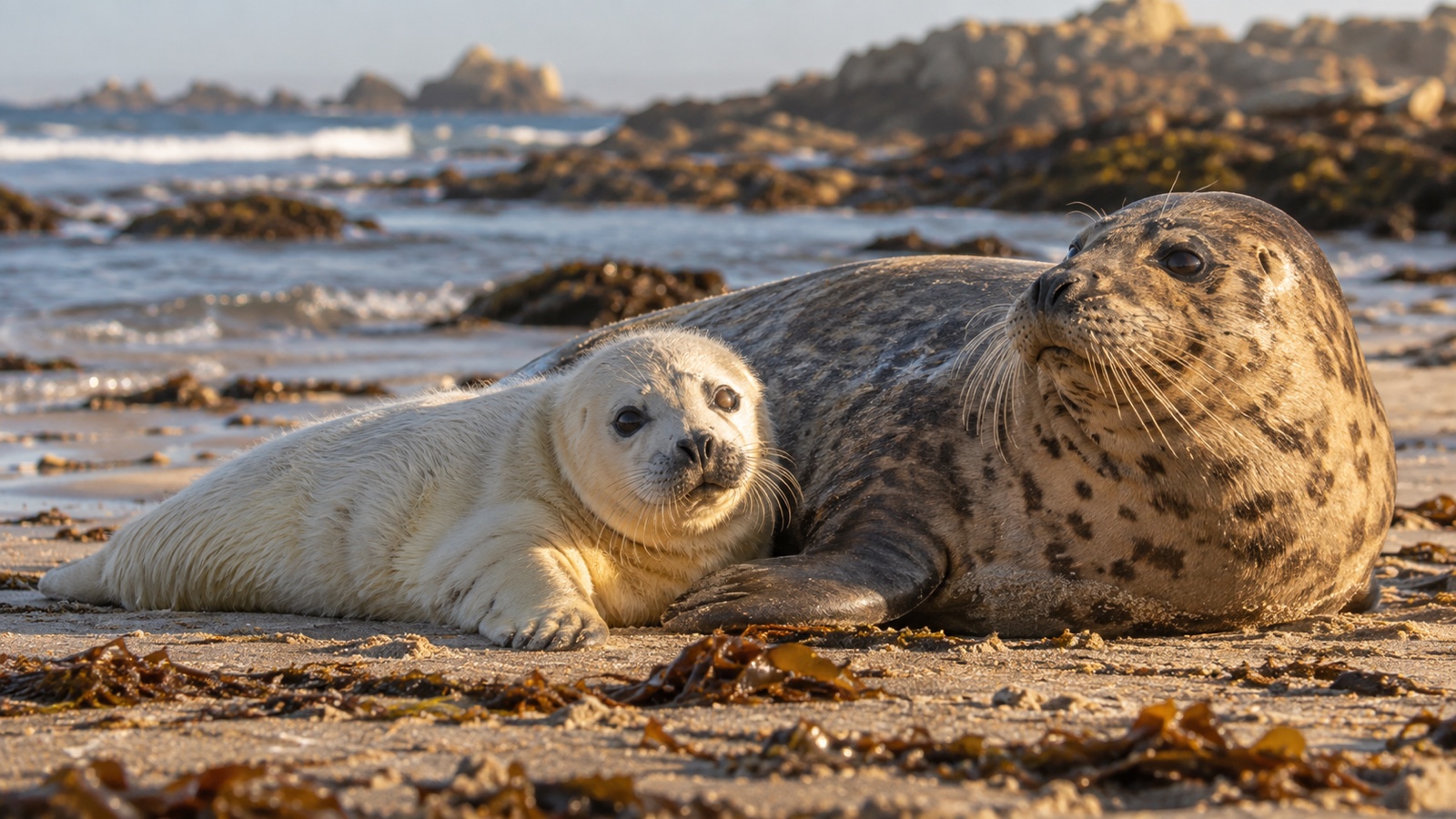
Seal motherhood ranges from weeks of nearly nonstop fasting beside a pup to repeated feeding trips at sea. The schedule depends on species, but seal milk is often so calorie-dense that a pup can transform from small newborn to thick insulated swimmer with astonishing speed.
- A baby seal is called a pup.
- Most true seals give birth to one pup at a time.
- Twin births are uncommon.
- Breeding locations are called rookeries or haul-out sites in common usage depending on species and context.
- Harbor seal pups can swim soon after birth.
- Harp seal pups are born on sea ice.
- Newborn harp seals have a famous white coat called a lanugo.
- The white coat provides insulation and camouflage on ice.
- Harp seal pups shed that white coat as they mature.
- Weddell seal pups are born on Antarctic sea ice.
- Mothers maintain access to breathing holes in the ice.
- Elephant-seal mothers nurse pups on land while fasting.
- Elephant-seal milk is extremely rich in fat.
- Pups gain weight rapidly during nursing.
- Mothers can lose a large portion of their body mass while producing milk.
- Weaning can occur abruptly in some species.
- After weaning, young must learn independent foraging.
- Juvenile mortality can be high during this transition.
- Mother-pup recognition relies on calls and scent in crowded colonies.
- A seal pup can go from “small fuzzy blob” to “independent ocean hunter” on a schedule that makes human childhood look luxuriously slow.
Predators, conservation and 25 final seal facts
- Seals eat fish, squid, crustaceans, and other marine prey depending on species.
- Leopard seals also hunt penguins and other seals.
- Killer whales prey on many seal species.
- Great white sharks prey heavily on seals in some regions.
- Polar bears depend strongly on ringed and bearded seals.
- Arctic seals maintain breathing holes through sea ice.
- Polar bears hunt around those openings.
- Climate-driven sea-ice loss threatens species that breed or rest on ice.
- Entanglement in fishing gear can drown seals.
- Plastic straps, rope, and discarded netting can become embedded around the neck or body.
- Reducing marine debris prevents some injuries.
- Seals can carry diseases transmissible among wildlife and domestic animals.
- People should not approach or touch wild seals.
- A seal resting alone on a beach is not automatically stranded.
- Healthy seals regularly haul out to rest, molt, nurse, and regulate body temperature.
- Dogs should be kept away from resting seals.
- Close dogs can trigger panic, injury, or defensive bites.
- Some seal populations recovered after historic commercial hunting.
- Other species remain endangered or critically endangered.
- Hawaiian monk seals are endangered and live only in the Hawaiian region.
- Mediterranean monk seals are one of the world's rarest pinnipeds but have shown encouraging recovery in some areas.
- Caribbean monk seals were driven to extinction by hunting and human pressure.
- Baikal seals are the only pinniped species restricted entirely to Lake Baikal.
- Seals can sleep while floating, submerged, hauled out, or drifting at sea depending on species and conditions.
- After 145 facts, a seal looks less like a beach potato and more like an oxygen-budgeting, whisker-guided, pressure-tolerant marine athlete that only becomes hilariously awkward when it has to return to land.
Quick FAQ
Q: What is the difference between a seal and a sea lion?
A: True seals lack visible ear flaps and cannot rotate their hind flippers beneath the body. Sea lions have external ear flaps and can walk more effectively on all four flippers.
Q: Can seals breathe underwater?
A: No. They are mammals and must breathe air, but many species can remain submerged for long periods by storing and conserving oxygen.
Q: How do seals find fish in dark water?
A: Vision and hearing help, but highly sensitive whiskers can detect water movements and even track hydrodynamic wakes left by swimming prey.
Q: Should I help a seal lying on a beach?
A: Usually no. Healthy seals routinely haul out to rest. Keep people and dogs well away and contact local marine-mammal responders if the animal appears injured or distressed.
Q: Are there freshwater seals?
A: Yes. Baikal seals live entirely in Russia's Lake Baikal, and Saimaa ringed seals live in Finland's Lake Saimaa.

Ellie is the owner and sole author of Fun Facts, combining her mechanical engineering background with years of research-driven writing to deliver facts you can trust. Every article is thoroughly fact-checked and routinely updated as new science and sources emerge to keep information accurate and current. Her mission is to make learning delightful while upholding high standards of reliability and transparency.