
Bagels are bread with a very specific personality. The dough is stiff, the shape has a hole, the surface gets boiled before baking, and the result is chewy enough to make toast feel lazy.
Bagels are boiled before they are baked
- A bagel is a ring-shaped yeast bread.
- Traditional bagel dough is relatively stiff.
- High-gluten flour is commonly used.
- Strong gluten gives bagels their chew.
- Bagel dough is mixed and kneaded.
- Yeast ferments sugars in the dough.
- Fermentation produces carbon dioxide.
- The dough is shaped into rings.
- Shaped bagels are usually proofed before cooking.
- Many traditional methods refrigerate the shaped dough overnight.
- Cold fermentation develops flavor slowly.
- Bagels are briefly boiled before baking.
- Boiling sets starch on the outside.
- This creates the bagel's distinctive crust.
- Boiling also limits oven expansion.
- Longer boiling generally creates a thicker chewier crust.
- The bagels are then baked at high heat.
- The interior remains dense compared with many breads.
- The hole helps the thick ring cook evenly.
- A bagel is one of the few breads that takes a bath before it gets anywhere near the oven.
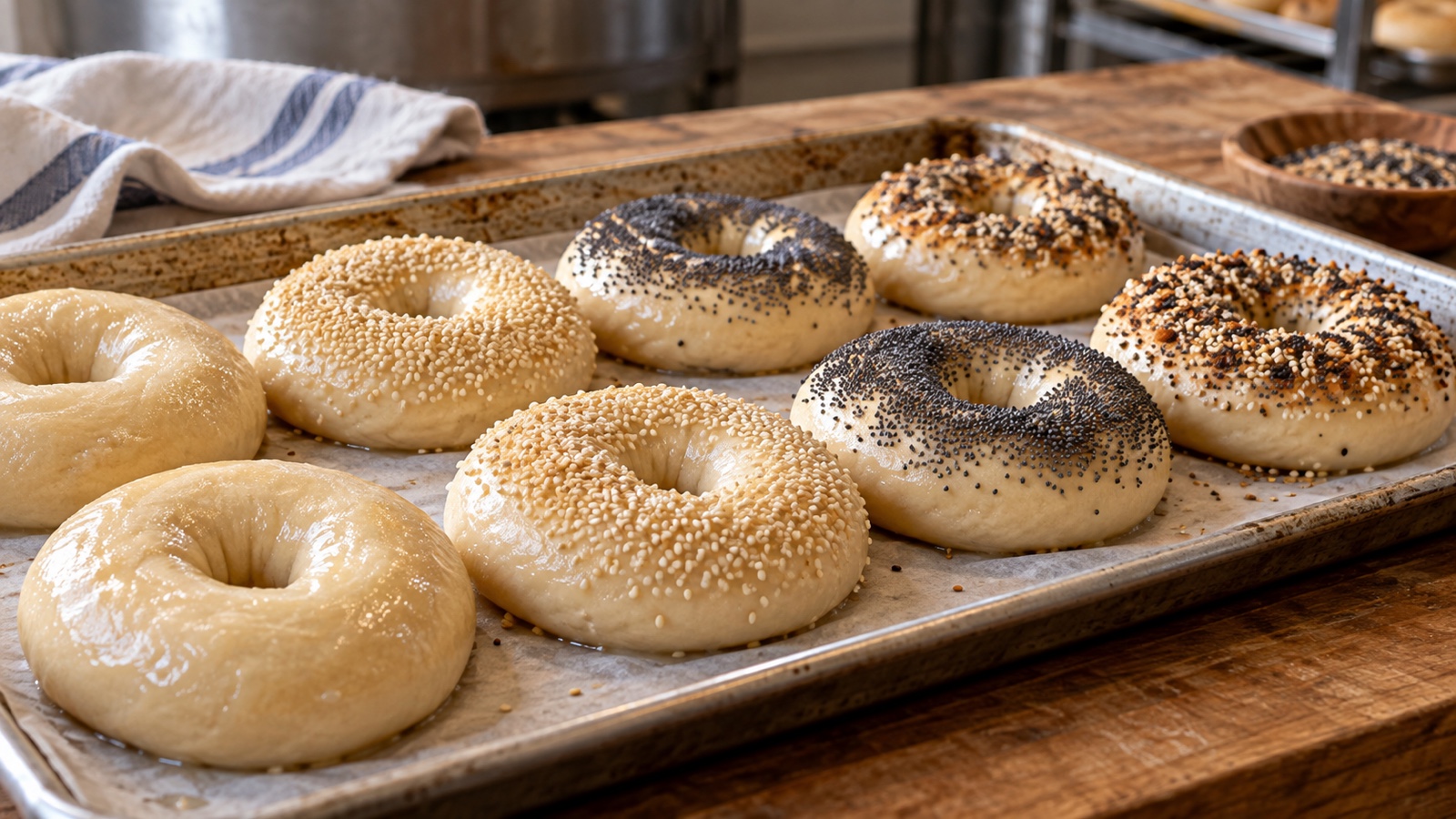
Bagels have deep roots in Jewish food history
- Bagels are strongly associated with Ashkenazi Jewish cuisine.
- Ring-shaped boiled breads existed in Europe centuries ago.
- Written references to bagel-like bread appear in Poland by the 17th century.
- The Polish word bajgiel is related to the modern name.
- Jewish bakers helped preserve and spread the tradition.
- Bagels traveled with Jewish immigrants to North America.
- New York became a major center of bagel culture.
- Montreal developed its own distinct bagel tradition.
- Early bagels were often smaller than today's deli bagels.
- Hand rolling was standard.
- Bagel bakeries once employed specialized rollers.
- Bagel unions played a role in New York bakery history.
- Mechanized bagel production expanded in the 20th century.
- Automation helped bagels reach supermarkets nationwide.
- Frozen bagels also expanded distribution.
- Once bagels became widely available, flavor varieties multiplied.
- Plain, sesame, poppy, onion, garlic, and salt became classics.
- Everything bagels combine several toppings.
- Cinnamon-raisin bagels moved the bread firmly into sweet breakfast territory.
- Bagels went from neighborhood specialty to national staple without giving up the hole.
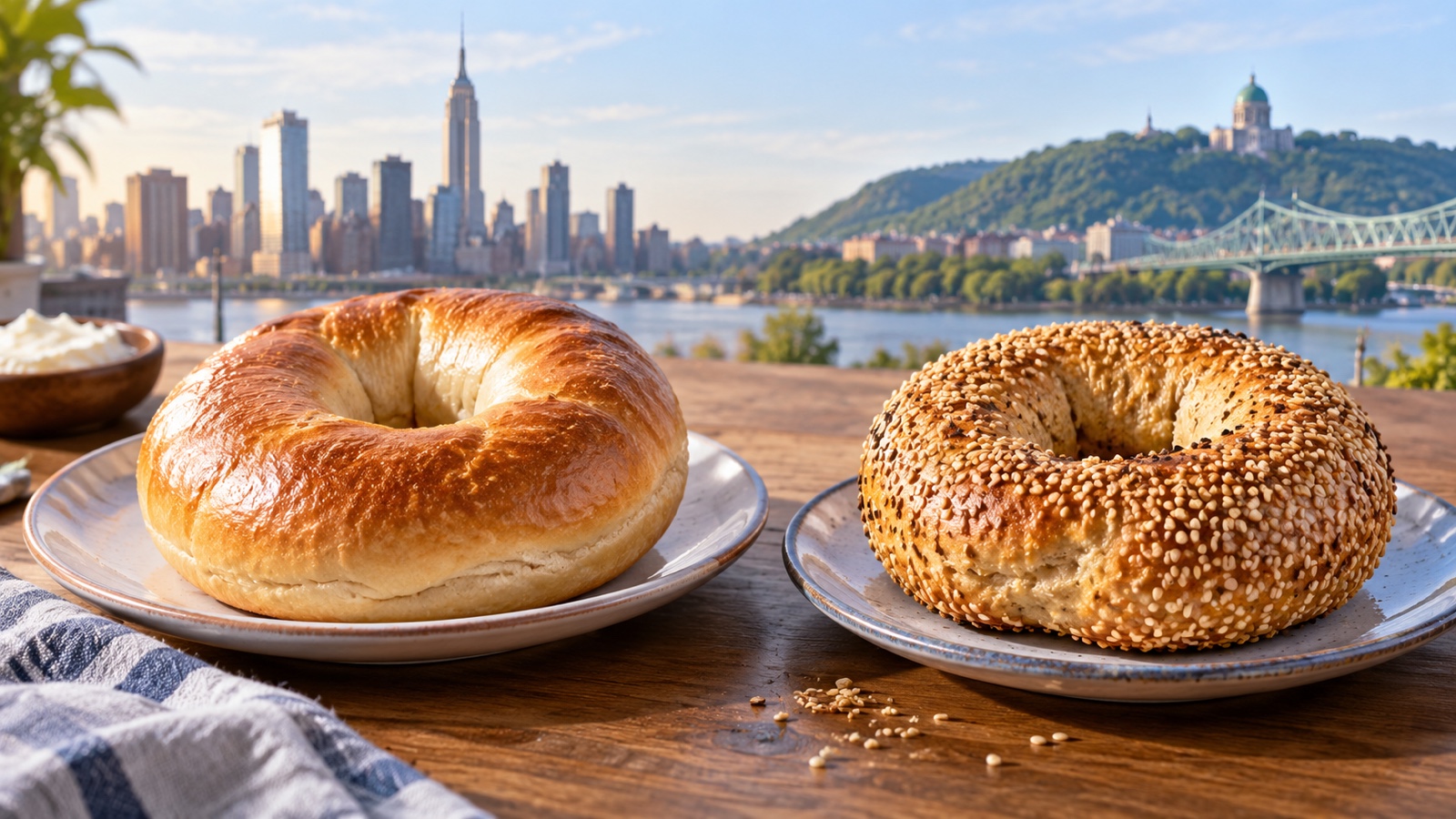
New York and Montreal bagels are noticeably different
- New York bagels are usually larger and thicker than Montreal bagels.
- They tend to have a dense chewy crumb.
- New York bagels are often boiled in plain or malted water.
- Barley malt is a traditional flavoring.
- Montreal bagels are thinner and more irregular.
- They usually have a larger center hole.
- Montreal dough commonly contains egg.
- The boiling water is often sweetened with honey.
- Montreal bagels are traditionally baked in wood-fired ovens.
- This creates charred spots and a crispier exterior.
- Sesame is one of the most common Montreal toppings.
- Poppy seed is another classic choice.
- New York bagels are commonly sliced and toasted.
- Montreal bagels are often eaten fresh and warm.
- Water chemistry may influence dough behavior.
- Technique matters far more than mythical “New York water magic” alone.
- Flour, fermentation, boiling, shaping, and oven heat all matter.
- Regional identity is strong enough that bagel debates can become unexpectedly emotional.
- Both styles are boiled breads, but texture and baking traditions make them very different eating experiences.
- Bagel loyalty is a reminder that bread can become local identity with almost no warning.
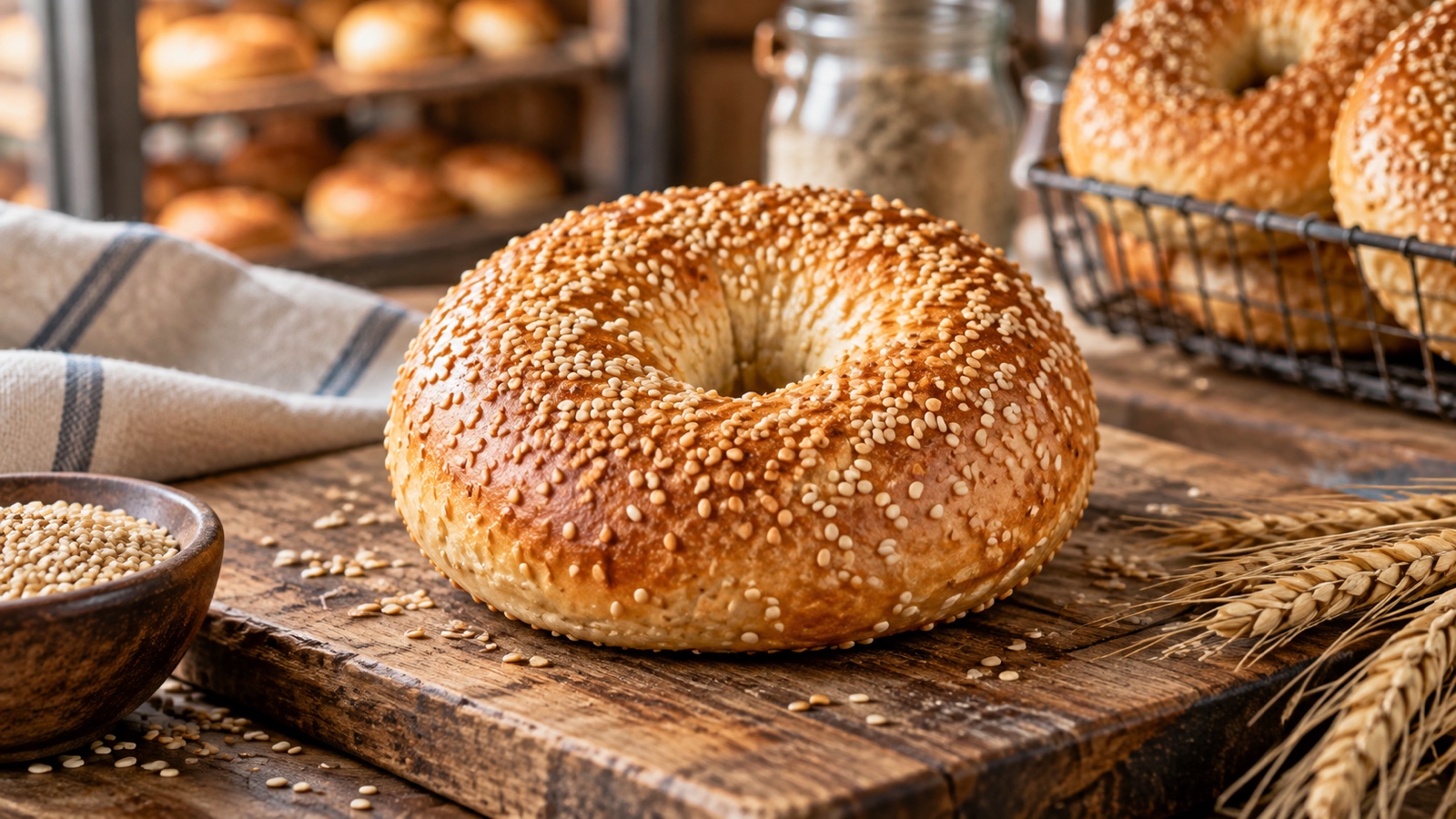
The crust is a starch-and-heat experiment
- Boiling gelatinizes starch on the bagel surface.
- Gelatinized starch helps form a glossy crust.
- Boiling water can contain malt syrup.
- Malt contributes flavor and browning.
- Some recipes use baking soda in the water.
- Alkaline water changes surface chemistry.
- This can deepen browning.
- Egg wash can also add shine.
- Seeds stick best to the wet surface after boiling.
- Sesame seeds toast during baking.
- Poppy seeds add nutty flavor.
- Salt toppings add crunch and strong surface seasoning.
- Everything seasoning commonly includes sesame, poppy, garlic, onion, and salt.
- High oven heat creates rapid browning.
- Steam inside expands the crumb.
- Boiled crust restrains that expansion.
- This helps preserve the dense texture.
- Under-boiled bagels can become breadier.
- Overproofed bagels can wrinkle or deflate.
- A proper bagel crust is the result of deliberately making bread harder to expand.
Cream cheese became the classic partner
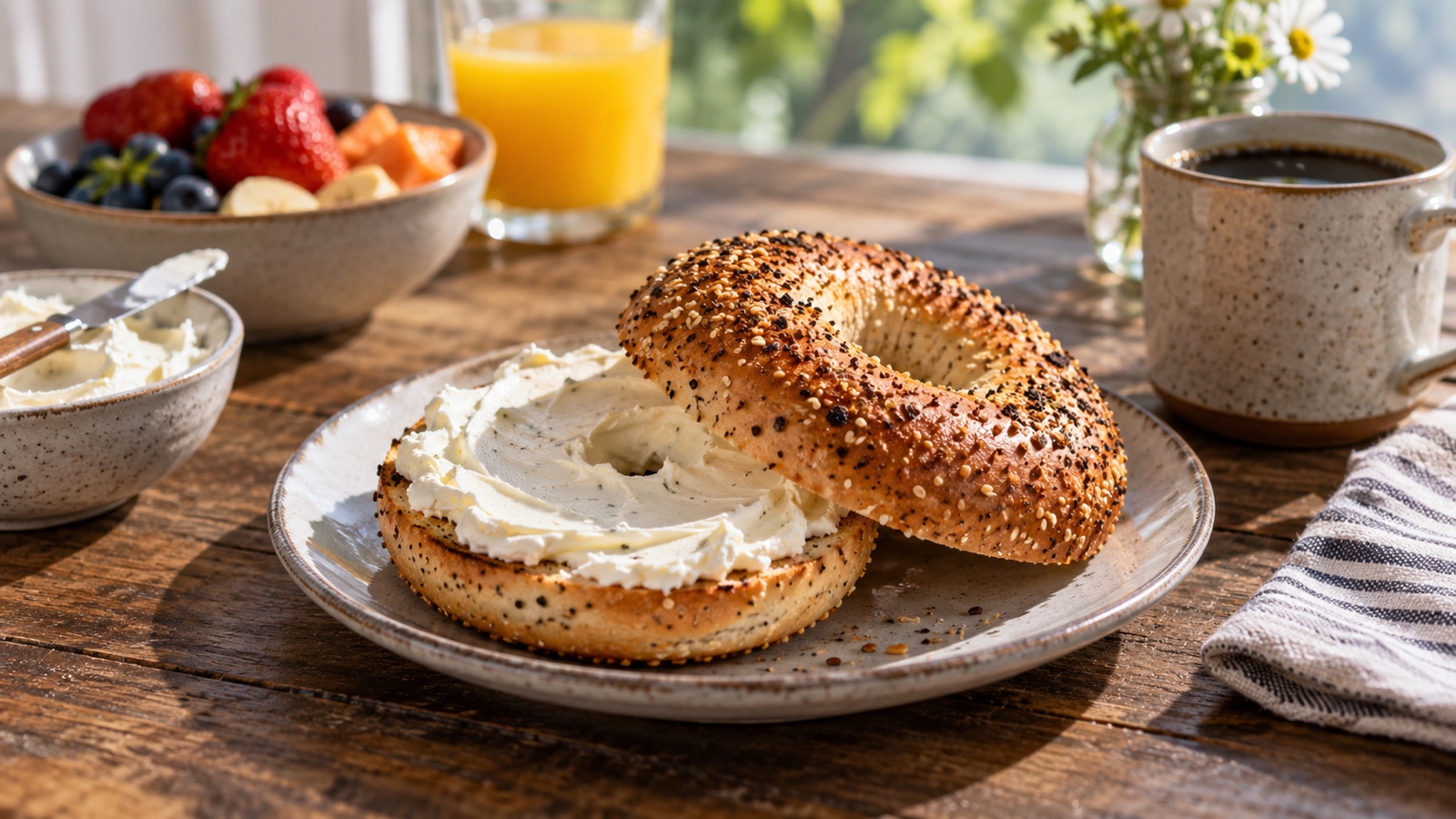
- Cream cheese is commonly called a schmear on a bagel.
- Schmear comes from a Yiddish-derived word meaning spread.
- Plain cream cheese remains the standard.
- Scallion cream cheese is another deli classic.
- Lox is cured salmon.
- Nova salmon is a related smoked or cured style.
- Bagels with lox often include cream cheese.
- Capers add briny flavor.
- Red onion adds sharpness.
- Tomato adds acidity and moisture.
- Cucumber can add crunch.
- Bagel breakfast sandwiches often include eggs.
- Bacon or sausage adds savory richness.
- Avocado works well with toasted bagels.
- Peanut butter works especially well on warm bagels.
- Jam creates a sweet version.
- Pizza bagels use sauce and cheese.
- Bagel chips are thin slices baked until crisp.
- Mini bagels are popular for smaller portions.
- The bagel is dense enough to function as breakfast bread, sandwich roll, snack, pizza base, and cream-cheese delivery system.
Bagels are denser than many breads
- Bagels contain less water than many soft breads.
- Dense dough produces a dense crumb.
- A large bakery bagel can contain several servings of grain.
- Calories vary dramatically with size.
- Whole-grain bagels provide more fiber.
- Seeded bagels add small amounts of healthy fats and minerals.
- Cheese bagels add protein and saturated fat.
- Sweet bagels can contain substantial added sugar.
- Cream cheese increases calories quickly.
- Nut butter adds protein but also energy density.
- Bagels are naturally low in fat when made from basic lean dough.
- Egg bagels contain more fat and richness.
- Gluten-free bagels use alternative flour blends.
- Gluten-free versions need binders to mimic wheat structure.
- Sourdough bagels use wild yeast and bacteria.
- Long fermentation increases organic acids.
- Fermentation changes flavor and dough strength.
- Salt controls yeast activity.
- Too little salt can make dough ferment too quickly.
- A bagel's chew is primarily gluten plus low hydration plus boiling, not one secret ingredient.
Storage, slicing and 25 final bagel facts
- Fresh bagels stale quickly at room temperature.
- Staling involves starch retrogradation.
- Refrigeration can accelerate bread staling.
- Freezing is better for longer storage.
- Pre-slicing before freezing makes reheating easier.
- Frozen halves can go directly into a toaster.
- Steam can revive a stale bagel temporarily.
- A light sprinkle of water before reheating helps restore moisture.
- Microwaving softens a bagel briefly.
- Over-microwaving can make it rubbery.
- Toasting increases crispness and roasted flavor.
- Fresh warm bagels may not need toasting.
- Bagel slicers exist because round bread plus sharp knives has an obvious risk profile.
- Hand slicing should use a stable cutting surface.
- Never cut a bagel while holding it in your palm.
- Bagel shops often boil in large kettles.
- Wood-fired Montreal ovens require constant attention.
- Bagel holes sometimes shrink during proofing and baking.
- Hand-rolled bagels often look less perfectly round.
- Machine-made bagels are more uniform.
- Uniformity helps predictable baking times.
- Bagel dough can be flavored with onion, garlic, cinnamon, or herbs.
- Black-and-white sesame toppings create visual contrast.
- Bagels pair unusually well with salty smoked fish because dense bread balances oily richness.
- After 145 facts, bagels feel less like breakfast rings and more like boiled-bread engineering wrapped in immigration history, regional rivalry, and a lot of cream cheese.

Ellie is the owner and sole author of Fun Facts, combining her mechanical engineering background with years of research-driven writing to deliver facts you can trust. Every article is thoroughly fact-checked and routinely updated as new science and sources emerge to keep information accurate and current. Her mission is to make learning delightful while upholding high standards of reliability and transparency.