
Crows are the birds I never manage to ignore. They remember faces, solve puzzles, make tools, warn relatives about danger, hold noisy social gatherings, and somehow turn a grocery-store parking lot into a laboratory for animal intelligence. Once you notice what they are doing, “just a crow” stops being a useful phrase.
Crows belong to one of the smartest bird families
- Crows belong to the family Corvidae.
- Ravens, jays, magpies, jackdaws, and nutcrackers are also corvids.
- The genus Corvus includes crows, ravens, rooks, and jackdaws.
- The American crow is Corvus brachyrhynchos.
- The carrion crow is Corvus corone.
- The hooded crow is Corvus cornix.
- The fish crow is Corvus ossifragus.
- Several species commonly called crows live across the world.
- Crows occur on every continent except Antarctica.
- Some crow species thrive in cities while others remain strongly tied to wild habitats.
- Crows are songbirds in the order Passeriformes.
- That classification surprises people because their calls sound nothing like a robin's song.
- Songbird refers to evolutionary relationships and vocal anatomy, not whether humans think a bird sounds musical.
- Crows generally have sturdy feet and strong bills.
- Most familiar crow species are black or mostly black.
- Black feathers can show blue, purple, or green iridescence in bright light.
- Some crow species have gray, white, or pied plumage.
- Crows are medium to large birds compared with many other songbirds.
- They are usually smaller and lighter-billed than the largest ravens.
- The crow family somehow combines “ordinary backyard bird” with “one of the most heavily studied animal minds on Earth.”
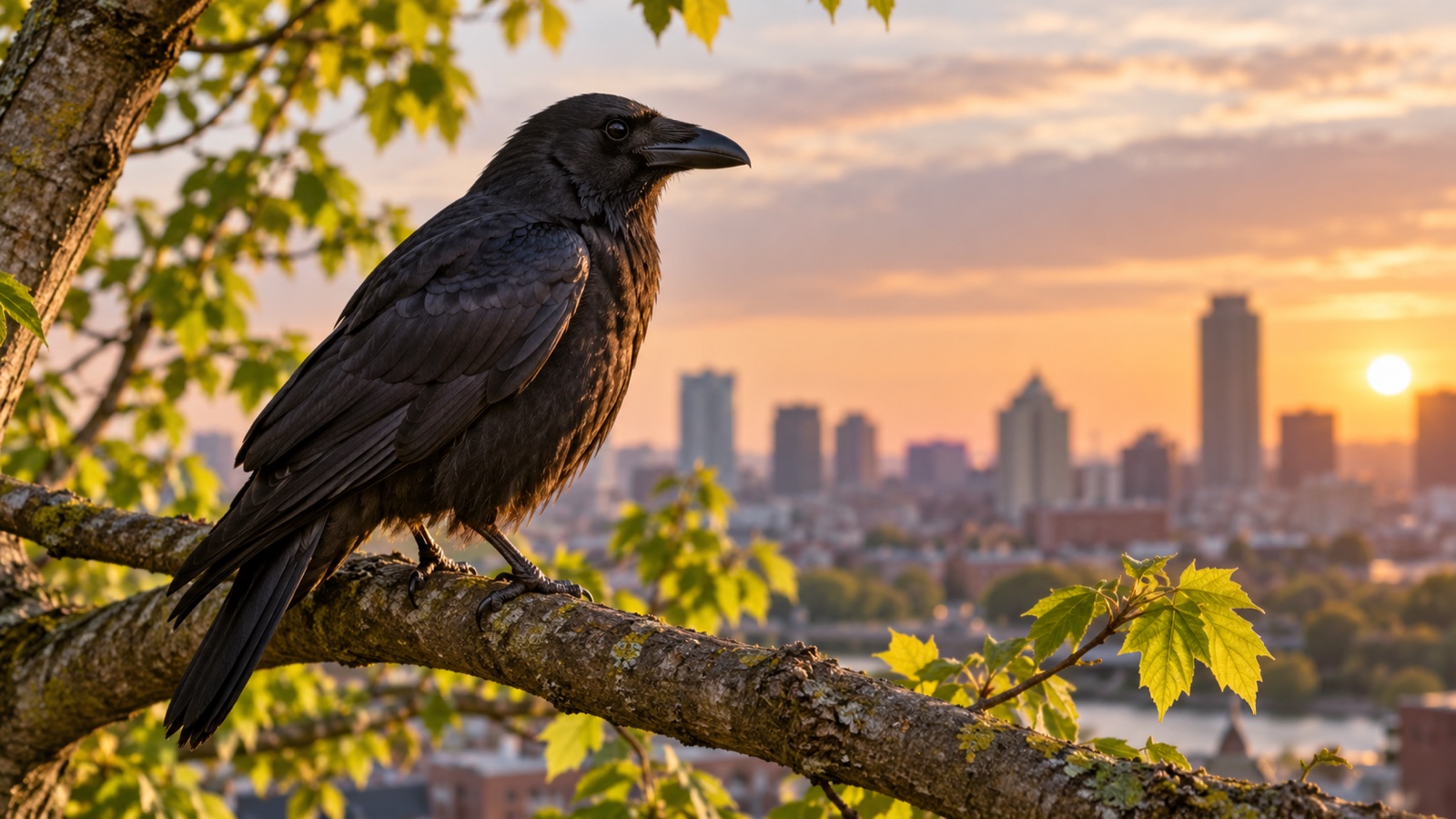
A crow can remember a human face for years
- Crows can distinguish individual human faces.
- They can remember people associated with threatening experiences.
- That memory can persist for years.
- Crows can also learn about dangerous people from other crows.
- Social learning allows information to spread through a local population.
- A crow does not need to be personally trapped or chased to learn that a particular person may be risky.
- Young birds can learn responses by watching older birds.
- Crows use vision, context, movement, and other cues when recognizing humans.
- They can respond differently to familiar and unfamiliar people.
- Recognition is not limited to the clothes someone happens to be wearing.
- Researchers have shown that masks can be used to test crow face memory.
- Birds exposed to a threatening mask later scolded people wearing the same mask.
- Other crows that had not experienced the original event also learned to join the response.
- Crow mobs can therefore function as information networks.
- Crows do not automatically hate every human.
- They can also habituate to people who behave predictably and do not threaten them.
- Some urban crows learn the routines of specific residents.
- Food availability can make those routines especially memorable.
- Wild crows should not be treated like pets simply because they recognize people.
- If a crow dislikes you for something you did three summers ago, the uncomfortable possibility is that the crow may have a better memory for the incident than you do.
Problem solving is one of their specialties
- Corvids are famous for flexible problem solving.
- Crows can learn how unfamiliar objects work.
- They can remember successful solutions and reuse them later.
- Some crow species manufacture tools in the wild.
- New Caledonian crows are the best-known crow tool makers.
- They shape sticks and leaves into tools for extracting hidden prey.
- Some New Caledonian crows make hooked tools from plant material.
- Tool design can vary among locations.
- Young birds improve through practice and social exposure.
- Crows can use one object to gain access to another useful object.
- That ability can require keeping a future step in mind.
- Controlled experiments have tested crows with multi-stage puzzle boxes.
- Successful birds often learn which actions actually produce a reward.
- Crows can ignore useless objects after learning they do not help.
- They can also generalize some learned rules to new problems.
- Wild American crows have been observed dropping hard foods onto roads.
- Vehicle traffic can crack nuts or other tough food items.
- The exact sophistication of traffic use varies by location and individual.
- Innovation spreads more easily when other crows can observe the payoff.
- A crow using a car as a nutcracker is less “nature outsmarted by the city” and more “nature noticed we installed machinery.”
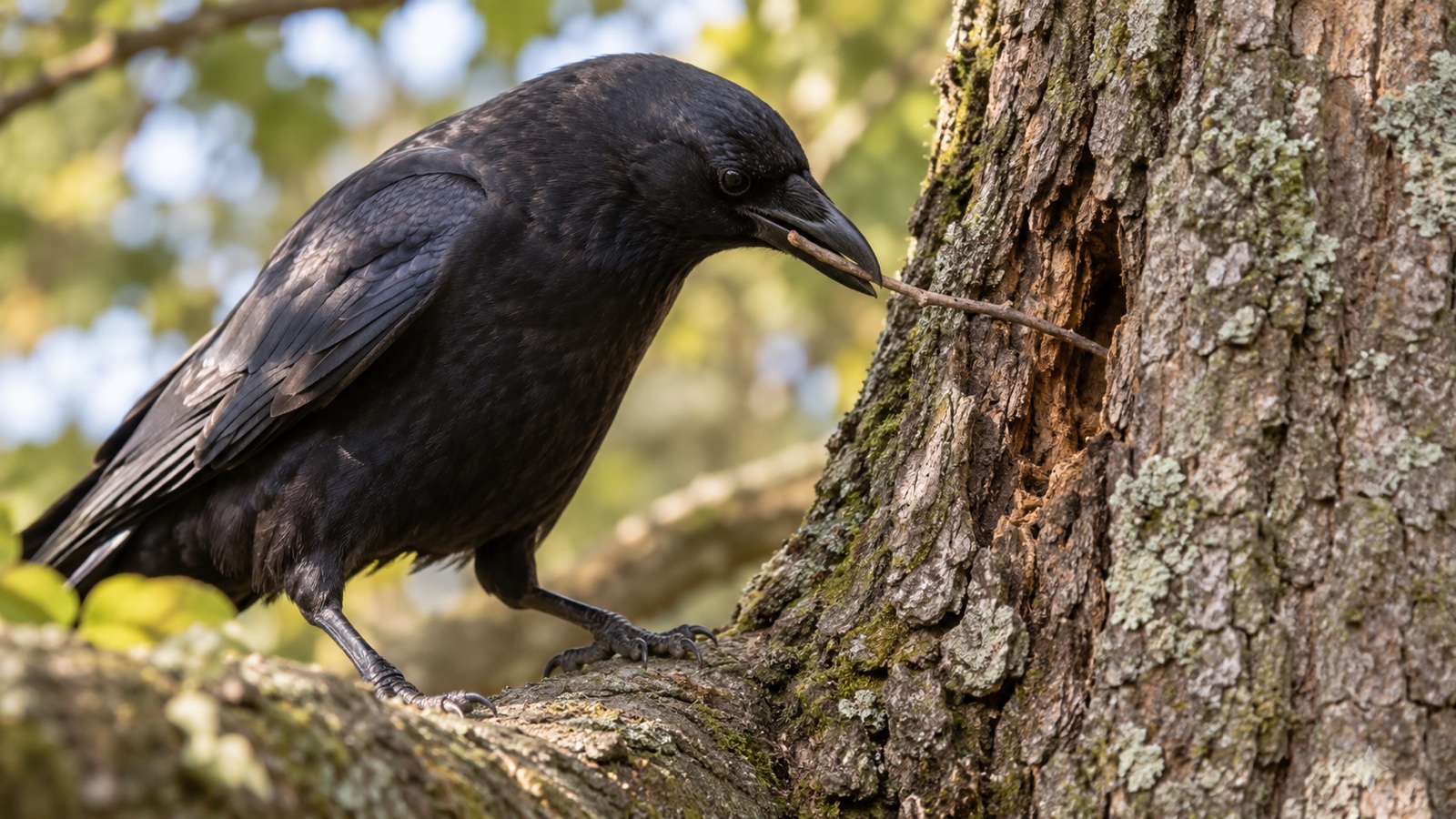
Crow communication is much richer than one “caw”
I used to hear one generic crow noise. Once you start listening, the neighborhood becomes much louder and more specific: contact calls, alarm calls, begging, rattles, soft notes, territorial exchanges, and group scolding all sound different because they are doing different jobs.
- Crows produce many different vocalizations.
- The familiar caw is only one part of their vocal repertoire.
- Calls can signal alarm, location, aggression, food, or social contact.
- Individual crows can sound different from one another.
- Family members learn each other's calls.
- Young crows use begging calls around parents and helpers.
- Adults sometimes make soft rattling or cooing sounds during close social interactions.
- Crows can change call intensity depending on how serious a threat appears.
- Repeated mobbing calls can attract additional crows.
- A large group of calling crows can intimidate some predators.
- Crows mob owls, hawks, eagles, and other perceived threats.
- Mobbing does not always mean the predator attacked a crow immediately beforehand.
- The behavior can teach nearby birds where danger is located.
- Crows also communicate with body posture.
- Wing position, feather posture, bill direction, and movement can carry information.
- Pairs use close-contact behavior such as preening.
- Crows can recognize the voices of familiar group members.
- They may react differently to neighbors and strangers.
- Human descriptions such as “crow language” are useful shorthand but should not imply a human-style grammar has been proven.
- The next time one crow starts yelling and ten others appear, it is worth remembering that you are watching information move through a social network.
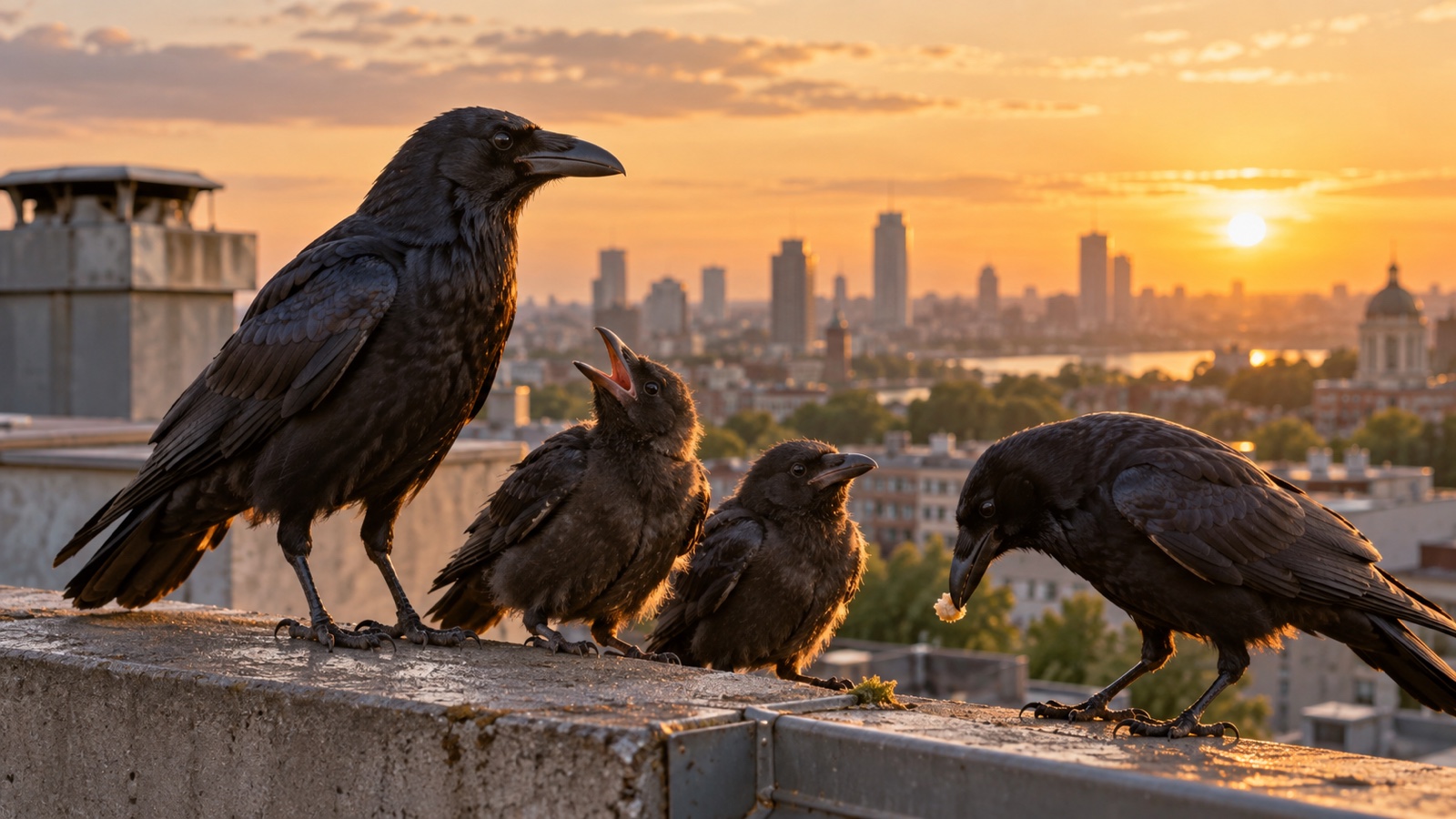
Crow families can stay together for years
- Many crow species form long-term pair bonds.
- American crows often maintain socially stable breeding pairs.
- A pair may remain together across multiple breeding seasons.
- Young crows frequently stay with their parents after their first year.
- Older offspring can help raise younger siblings.
- This system is called cooperative breeding.
- Helpers may feed nestlings.
- They may also defend territory and watch for predators.
- Family groups can contain parents plus offspring from several years.
- Not every young crow stays as a helper.
- Dispersal timing depends on sex, habitat, opportunities, and individual condition.
- Crow nests are usually built high in trees or other elevated sites.
- Both members of a pair can contribute nesting material.
- The nest often includes sticks on the outside and softer material inside.
- Females perform most or all incubation in many crow species.
- Males and helpers can bring food to the incubating female.
- American crow clutches commonly contain several eggs.
- Nestlings hatch helpless and depend completely on adults.
- Young remain dependent after leaving the nest.
- A crow family can look like a loose flock from the ground while actually containing grandparents, parents, siblings, and this year's loudly demanding teenagers.
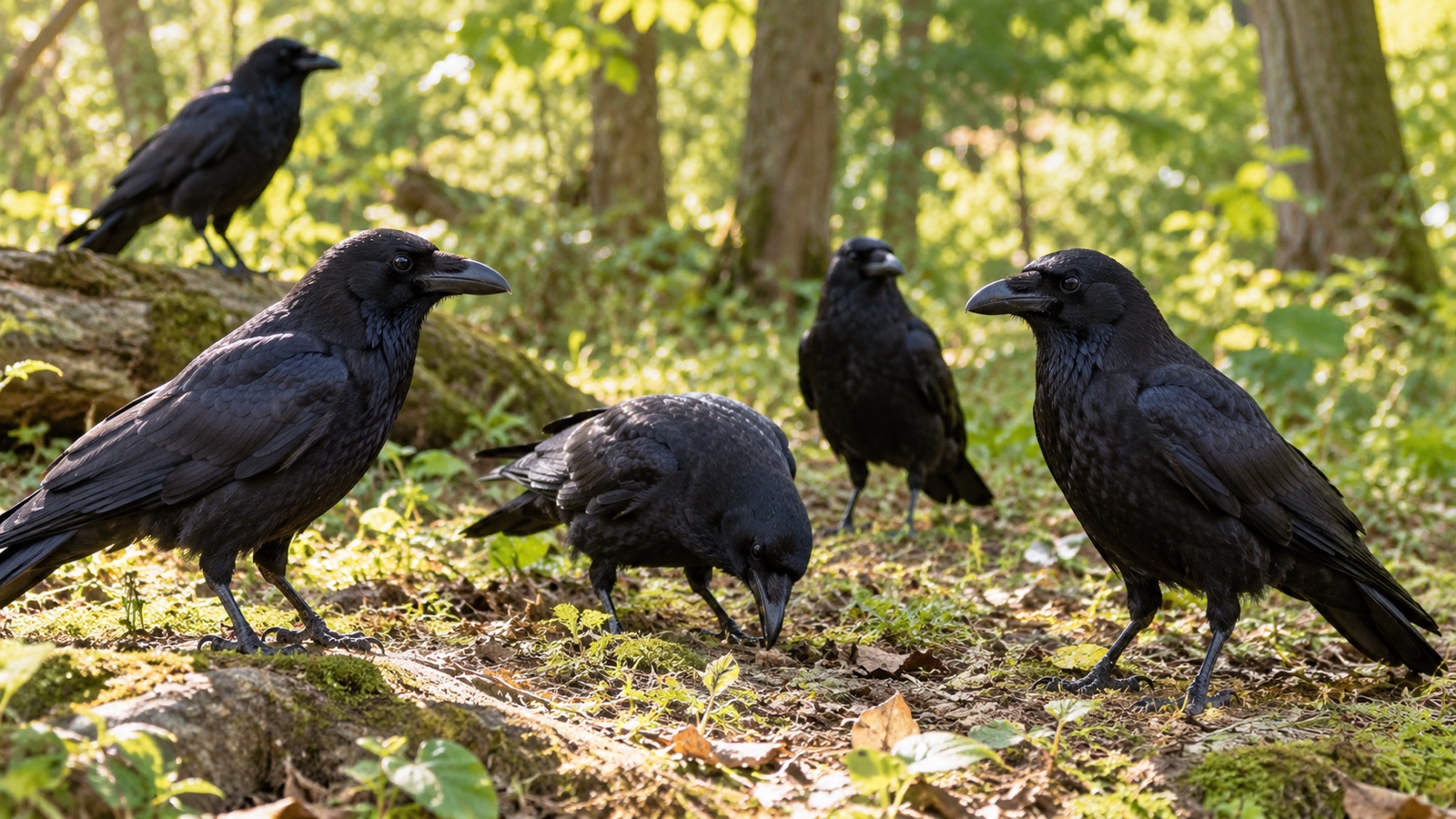
Crow “funerals” are really information-gathering events
When crows gather around a dead crow, calling the event a funeral is tempting. The behavior is real, but the safest interpretation is that the birds are investigating danger and learning where a predator, person, vehicle, or other lethal threat might still be present.
- Crows sometimes gather around dead members of their species.
- The gatherings can involve loud alarm calling.
- More crows may arrive after hearing those calls.
- Scientists often describe these events as mobbing or danger-assessment behavior.
- A dead crow provides valuable information about local risk.
- Crows can associate nearby humans with the death scene.
- They may remember those people afterward.
- They can also avoid the dangerous location temporarily.
- The behavior does not prove crows hold human-style funeral ceremonies.
- It also does not prove they feel nothing about dead companions.
- Animal emotion is difficult to infer confidently from one outward behavior.
- Crows show strong social bonds with mates and family members.
- They react to separation and threat.
- They learn socially from dangerous events.
- Dead-crow experiments have helped researchers study memory and social learning.
- Crows can distinguish a dead crow from some other dead animals.
- They often approach cautiously rather than treating the body as ordinary food.
- Learning from another animal's death can improve survival without requiring direct exposure to the cause.
- This makes the gathering adaptive even without assigning human ritual meaning.
- “Crow funeral” is a memorable phrase, but “neighborhood emergency meeting around evidence of danger” is probably closer to what the science can support.
Cities accidentally create excellent crow habitat
- Crows adapt extremely well to many human-built environments.
- Urban areas provide food, water, nesting trees, buildings, and warm microclimates.
- Garbage, roadkill, insects, fruit, seeds, and human food scraps all become opportunities.
- Crows are omnivores.
- They eat insects, grains, fruit, eggs, small animals, carrion, and many other foods.
- They can switch diet quickly when one food source disappears.
- That flexibility is a major advantage in changing environments.
- Streetlights and buildings can create safer or warmer roosting locations.
- Large communal winter roosts may contain thousands of crows.
- Some roosts form in city centers.
- Urban heat can make winter nights less severe.
- Bright lights may help crows detect predators.
- Human activity can also discourage some natural predators.
- City crows learn traffic patterns and pedestrian routines.
- They can forage differently on weekdays and weekends when human behavior changes.
- Not all urban crow interactions are positive for people.
- Large roosts can create noise and droppings.
- Removing food attractants is usually more effective than trying to frighten intelligent birds repeatedly.
- Crows quickly learn whether a scare device is harmless.
- Rotating deterrents and changing the underlying food or roost conditions is more effective than relying on one plastic owl forever.
- Crows can cache food for later.
- They hide valuable items when competitors are nearby.
- Some corvids move caches after being watched, reducing the chance of theft.
- Crows can live well over a decade in the wild, although many young birds die much earlier.
- After 145 facts, the city crow looks less like background wildlife and more like a long-lived family member, opportunistic engineer, social learner, face-recognition specialist, and extremely observant neighbor.
Quick FAQ
Q: Are crows really smart?
A: Yes. They solve new problems, remember individuals, learn socially, use tools in some species, and adapt behavior quickly when conditions change.
Q: Can crows recognize human faces?
A: Yes. Experiments show that crows can learn and remember individual human faces associated with danger, and other crows can learn those associations socially.
Q: What is the difference between a crow and a raven?
A: Ravens are generally larger, heavier-billed, and longer-winged, with wedge-shaped tails in flight. Exact differences depend on the species being compared.
Q: Do crows have funerals?
A: Crows do gather around dead crows, but research strongly supports danger assessment and social learning as key functions. Calling the behavior a human-style funeral goes beyond what scientists can prove.
Q: Should I feed wild crows?
A: Occasional observation is fine, but routine feeding can create crowding, dependency on predictable human food, neighbor conflicts, and unhealthy diet choices. Leaving crows to forage naturally is the simplest option.

Ellie is the owner and sole author of Fun Facts, combining her mechanical engineering background with years of research-driven writing to deliver facts you can trust. Every article is thoroughly fact-checked and routinely updated as new science and sources emerge to keep information accurate and current. Her mission is to make learning delightful while upholding high standards of reliability and transparency.