
Montana is the kind of state where “Big Sky Country” feels less like marketing and more like somebody looked up and ran out of smaller adjectives. Between Glacier peaks, open prairie, bison, dinosaur beds, copper history, sapphire deposits, and towns separated by serious mileage, there is a lot hiding under that sky.
Montana basics from Big Sky Country
- Montana became the 41st U.S. state on November 8, 1889.
- Helena is the state capital.
- Billings is Montana’s largest city.
- Montana has 56 counties.
- The postal abbreviation is MT.
- The official nickname is the Treasure State.
- Big Sky Country is another widely used Montana nickname.
- The state motto is “Oro y Plata,” meaning “Gold and Silver” in Spanish.
- Montana is the fourth-largest U.S. state by total area.
- Only Alaska, Texas, and California are larger.
- Montana borders Idaho, Wyoming, South Dakota, and North Dakota.
- It also shares an international border with Canada.
- British Columbia, Alberta, and Saskatchewan all touch Montana.
- Most of Montana uses Mountain Time.
- The state stretches more than 500 miles from east to west.
- Population density is low compared with most U.S. states.
- Western Montana is mountainous while eastern Montana opens into Great Plains.
- The Continental Divide crosses the western part of the state.
- Water falling on opposite sides of that divide can ultimately reach different oceans.
- Montana manages to make “drive across the state” sound suspiciously like a full travel day.
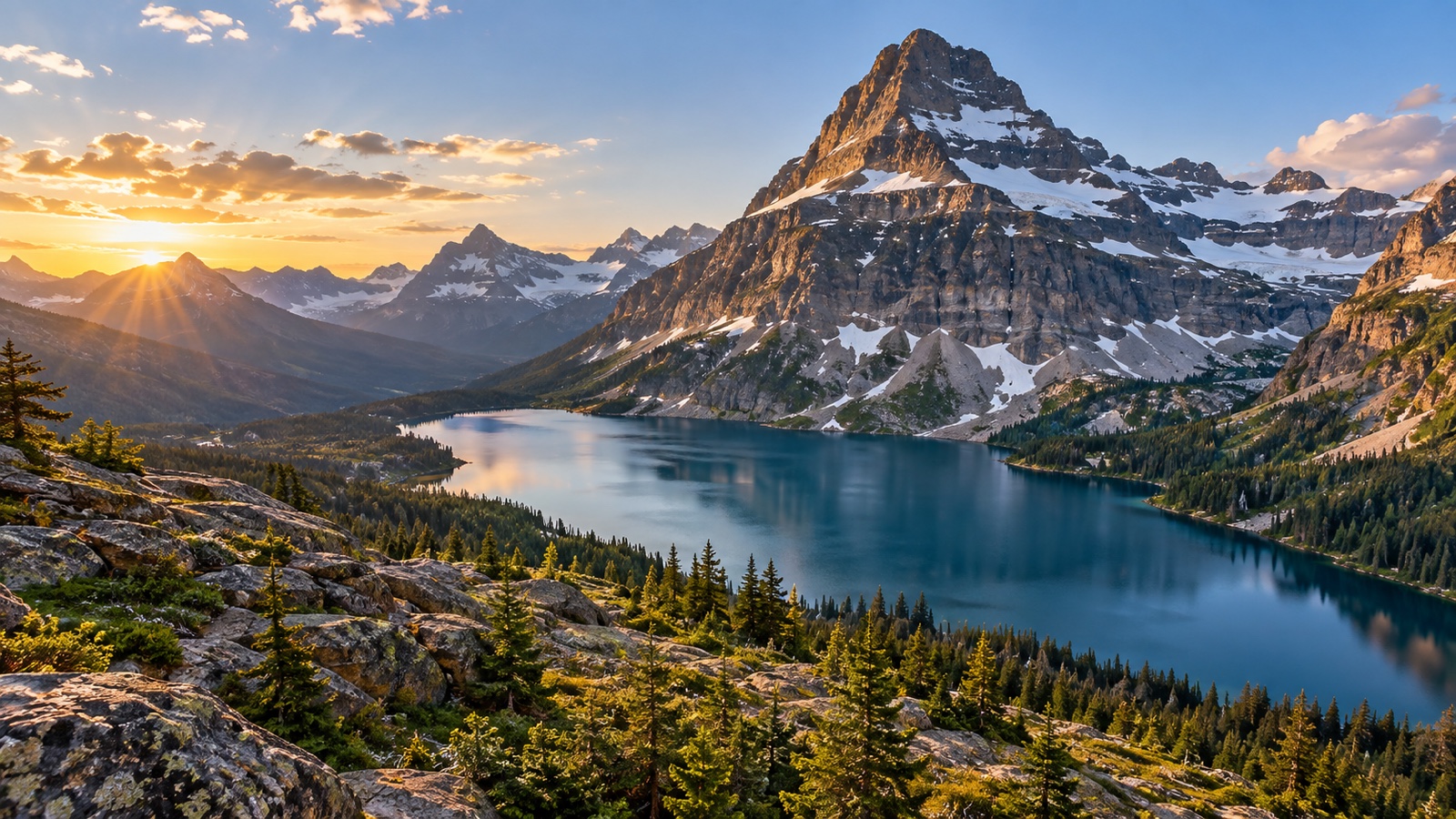
Rockies, plains & headwaters
- The Rocky Mountains dominate much of western Montana.
- The Great Plains cover most of eastern Montana.
- Granite Peak is Montana’s highest point.
- It rises 12,807 feet above sea level.
- Granite Peak lies in the Beartooth Range.
- The Beartooths contain some of the highest terrain in the northern Rockies.
- The Missouri River begins near Three Forks, Montana.
- There, the Jefferson, Madison, and Gallatin rivers meet.
- Meriwether Lewis named those three rivers for national leaders during the Lewis and Clark Expedition.
- The Missouri then travels thousands of miles before joining the Mississippi River.
- The Yellowstone River crosses southern and eastern Montana.
- It is the longest undammed river in the contiguous United States.
- The Clark Fork drains a large area of western Montana toward the Columbia River system.
- Flathead Lake is one of the largest natural freshwater lakes in the western contiguous United States.
- The lake was shaped by glaciers during the Ice Age.
- Flathead Lake lies south of Glacier National Park.
- The Bitterroot Valley runs along the state’s western side.
- Makoshika State Park protects badlands in eastern Montana.
- The park contains important dinosaur fossils.
- Montana can switch from alpine snowfields to dry badlands in one state map, which feels mildly unfair to geography quizzes.
Glacier National Park earns its dramatic name
- Glacier National Park was established in 1910.
- It protects more than one million acres in northwestern Montana.
- The park shares a border with Waterton Lakes National Park in Alberta.
- The two parks together form Waterton-Glacier International Peace Park.
- Created in 1932, it was the world’s first international peace park.
- The area is also recognized as a UNESCO World Heritage Site.
- Going-to-the-Sun Road crosses the heart of Glacier National Park.
- The road climbs over Logan Pass.
- Logan Pass sits along the Continental Divide.
- Snow can keep high portions of the road closed well into summer.
- Glacier’s mountains were carved heavily by ancient glaciers.
- U-shaped valleys are one visible result of glacial erosion.
- The park still contains named glaciers today.
- Those modern glaciers have shrunk substantially since the late 19th century.
- Grizzly bears live in Glacier National Park.
- Mountain goats are another iconic Glacier species.
- Bighorn sheep, elk, moose, wolves, and black bears also inhabit the region.
- The park contains hundreds of miles of hiking trails.
- Lake McDonald is Glacier National Park’s largest lake.
- Its colorful shoreline stones are one of the park’s most photographed details.
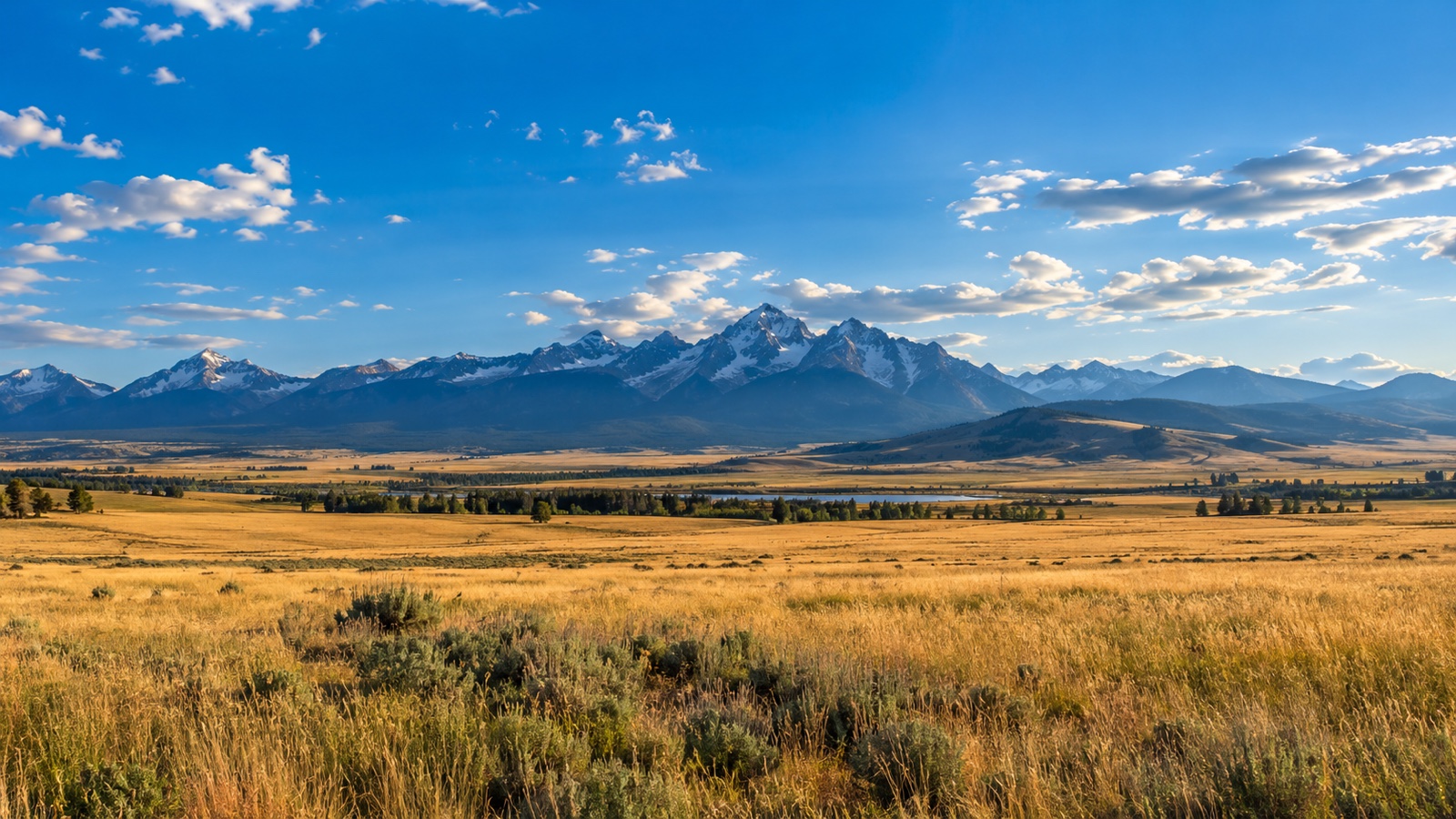
Indigenous nations shaped Montana long before statehood
Montana history does not start with miners or homesteaders. Tribal nations have deep cultural, political, and spiritual relationships with these plains, rivers, bison ranges, and mountains, and those nations remain living governments and communities today.
- The Blackfeet Nation has a reservation along Montana’s northern Rocky Mountain front.
- The Crow Nation’s reservation lies in south-central Montana.
- The Northern Cheyenne Reservation is in southeastern Montana.
- The Confederated Salish and Kootenai Tribes govern the Flathead Reservation.
- Fort Peck is home to Assiniboine and Sioux tribes.
- Fort Belknap is home to the Aaniiih and Nakoda nations.
- Rocky Boy’s Reservation is home to the Chippewa Cree Tribe.
- The Little Shell Tribe of Chippewa Indians is federally recognized and does not have a conventional reservation land base.
- Tribal cultures are distinct and should not be treated as one generic Montana tradition.
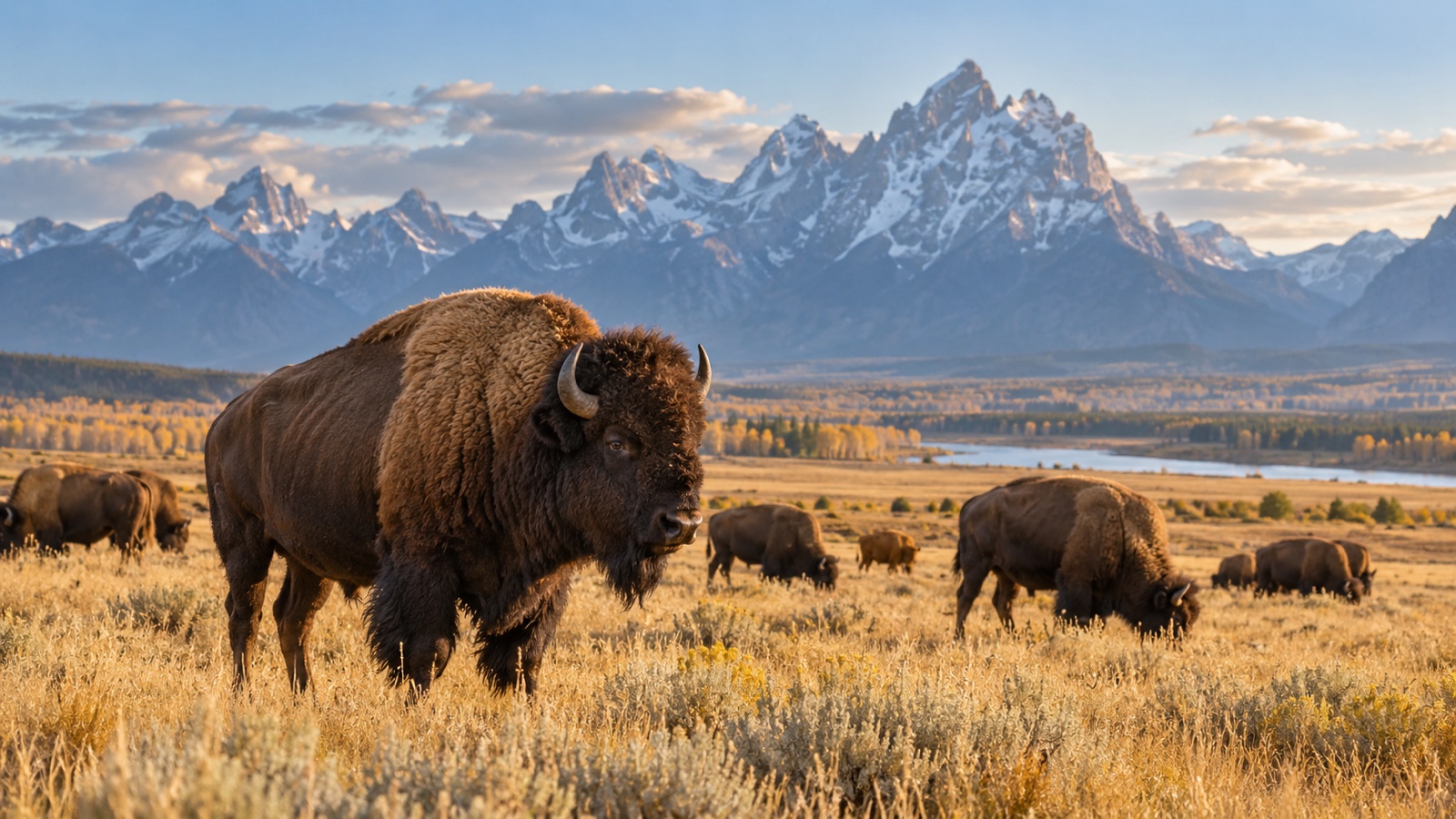
- Bison were central to the food, shelter, tools, trade, and spiritual life of many Plains peoples.
- U.S. expansion and commercial hunting nearly destroyed wild bison populations during the 19th century.
- Tribal nations are now leaders in several bison-restoration efforts.
- The Blackfeet Nation has worked to restore bison to tribal lands.
- The Confederated Salish and Kootenai Tribes also maintain bison herds.
- Native languages spoken or revitalized in Montana include Blackfoot, Crow, Cheyenne, Salish, Kootenai, and others.
- Montana schools observe Indian Education for All as part of statewide educational policy.
- The policy aims to teach students about the distinct histories and contemporary lives of Montana tribes.
- Several major Montana place names come from Indigenous languages or histories.
- Tribal governments are sovereign political entities, not cultural clubs.
- The most accurate Montana map includes tribal nations as present-day governments, not just historical footnotes.
Gold, copper & the Treasure State
- Gold discoveries drew major waves of newcomers to Montana during the 1860s.
- Virginia City became a booming gold-rush town.
- Helena grew around a placer-gold discovery at Last Chance Gulch.
- The name suggests miners thought the gulch was literally their last chance to strike gold.
- Butte became one of the world’s great copper-mining centers.
- Its rich ore deposits earned it the nickname Richest Hill on Earth.
- Copper demand surged with electrification during the late 19th and early 20th centuries.
- Butte’s mining industry attracted immigrants from Ireland, Finland, Italy, China, the Balkans, and many other regions.
- Irish heritage remains especially visible in Butte.
- The Anaconda Company became a dominant force in Montana mining and politics.
- Anaconda, Montana, developed around a huge copper smelter.
- The Berkeley Pit is a former open-pit copper mine in Butte.
- After mining stopped, groundwater filled the pit with acidic, metal-rich water.
- The Butte-Anaconda area became one of America’s largest Superfund cleanup sites.
- Montana is also known for sapphires.
- Yogo sapphires come from a distinctive deposit in central Montana.
- Montana recognizes sapphire and Montana agate as state gemstones.
- Coal, petroleum, and natural gas have also been extracted in eastern Montana.
- Mining wealth built cities but also left major environmental cleanup responsibilities.
- “Treasure State” is therefore both a geology lesson and a reminder that valuable rocks can come with very expensive consequences.
Little Bighorn, Lewis and Clark & famous Montana history
Montana history has some of the most mythologized episodes in the American West, which means the facts matter. Little Bighorn was not simply “Custer’s Last Stand”; it was a major Lakota, Northern Cheyenne, and Arapaho victory during a violent struggle over Indigenous land and U.S. expansion.
- The Lewis and Clark Expedition crossed Montana in 1805 and again in 1806.
- The expedition traveled along the Missouri River on its westbound journey.
- Great Falls presented a difficult series of waterfalls and rapids.
- The expedition had to portage boats and supplies around the falls.
- Sacagawea traveled with the expedition through Montana.
- Pompeys Pillar preserves William Clark’s carved signature from 1806.
- It is one of the few surviving physical inscriptions left by an expedition leader along the route.
- The Battle of the Little Bighorn took place in 1876.
- Lakota, Northern Cheyenne, and Arapaho fighters defeated part of the U.S. 7th Cavalry.
- Lieutenant Colonel George Armstrong Custer died in the battle.
- The battlefield lies in southeastern Montana.
- Little Bighorn Battlefield National Monument now interprets both U.S. military and Indigenous perspectives.
- Montana Territory was created in 1864.
- Virginia City briefly served as the territorial capital.
- Helena became the territorial capital in 1875.
- Jeannette Rankin was born near Missoula.
- In 1916, Rankin became the first woman elected to the U.S. Congress.
- She voted against U.S. entry into both World War I and World War II.
- Montana women gained statewide voting rights in 1914, before the 19th Amendment.
- The state’s political history can be as independent-minded as its geography.
Dinosaurs, wildlife, food & 25 final Montana facts
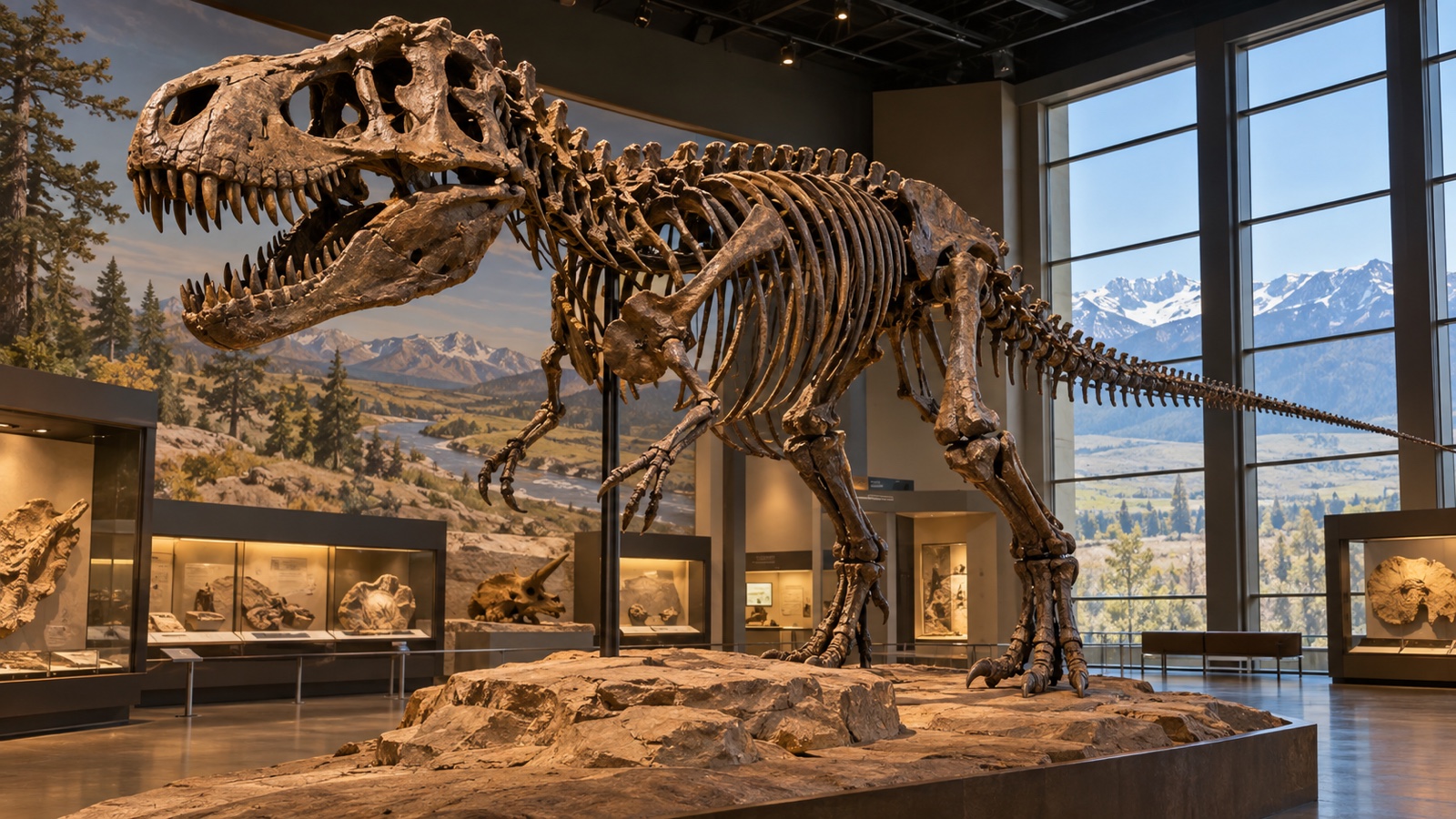
- Montana is one of America’s richest states for dinosaur fossils.
- The Museum of the Rockies in Bozeman holds a major dinosaur collection.
- Paleontologist Jack Horner spent much of his career working in Montana.
- Maiasaura fossils from Montana helped provide evidence of dinosaur nesting behavior.
- The name Maiasaura means “good mother lizard.”
- Tyrannosaurus rex fossils have also been found in Montana.
- Eastern Montana’s Hell Creek Formation is famous for late-Cretaceous fossils.
- Grizzly bears are Montana’s official state animal.
- Elk, mule deer, white-tailed deer, moose, bighorn sheep, and pronghorn all live in the state.
- Gray wolves returned naturally from Canada and were also restored in the Greater Yellowstone ecosystem.
- Yellowstone National Park extends slightly into Montana even though most of it lies in Wyoming.
- Montana has northern entrances used by many Yellowstone visitors.
- Chinook winds can bring sudden winter warming to areas east of the Rockies.
- Those downslope winds can raise temperatures dramatically in a short time.
- Wheat is one of Montana’s major crops.
- Barley, pulse crops, hay, and cattle are also important agricultural products.
- Montana has no general statewide sales tax.
- That makes the state popular with shoppers crossing from some neighboring states.
- Evel Knievel was born in Butte.
- Actor Gary Cooper was born in Helena.
- Painter Charles M. Russell became famous for scenes of Montana and the American West.
- The state flower is the bitterroot.
- The state tree is the ponderosa pine.
- The state bird is the western meadowlark.
- After 145 facts, Montana still feels best summarized by one truth: there is always another mountain, fossil, river bend, or stretch of sky beyond the one you just saw.
Quick FAQ
Q: What is Montana famous for?
A: Glacier National Park, Rocky Mountain scenery, wide-open plains, Indigenous nations, bison and grizzlies, copper and sapphire mining, dinosaur fossils, ranching, and Big Sky Country landscapes.
Q: What is the capital of Montana?
A: Helena is the capital, while Billings is the largest city.
Q: What is Montana’s highest point?
A: Granite Peak in the Beartooth Range reaches 12,807 feet above sea level.
Q: Does Yellowstone National Park extend into Montana?
A: Yes. Most of Yellowstone is in Wyoming, but small portions extend into Montana and Idaho, and major park entrances are located in Montana.
Q: Why is Montana called the Treasure State?
A: The nickname reflects the state’s rich deposits of gold, silver, copper, sapphires, and other mineral resources.

Ellie is the owner and sole author of Fun Facts, combining her mechanical engineering background with years of research-driven writing to deliver facts you can trust. Every article is thoroughly fact-checked and routinely updated as new science and sources emerge to keep information accurate and current. Her mission is to make learning delightful while upholding high standards of reliability and transparency.