
Peanut butter is one of those foods that feels too ordinary to have a complicated story. Then you realize peanuts grow underground, roasting changes hundreds of flavor compounds, grinding turns solid seeds into a spread, U.S. law defines what can be called peanut butter, and an entire sandwich culture grew around one jar.
Peanut butter starts with a legume, not a true nut
- Peanuts are legumes, not botanical nuts.
- The peanut's scientific name is Arachis hypogaea.
- Peanuts are related to beans and peas.
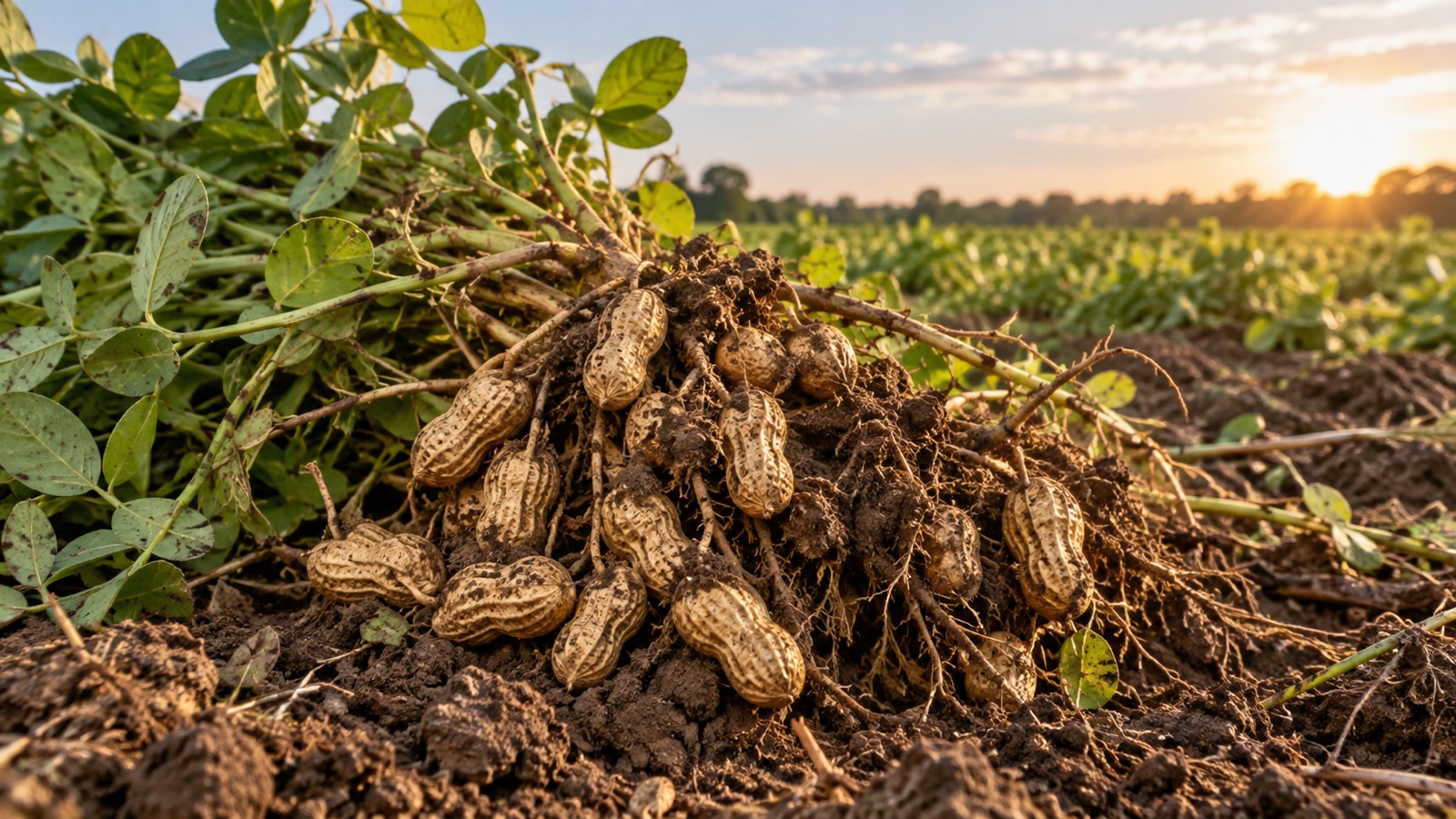
- The plant produces yellow flowers above ground.
- After pollination, a peg grows downward toward the soil.
- The peanut pod develops underground.
- This growth habit is called geocarpy.
- Peanut plants prefer warm growing seasons.
- Major U.S. peanut production occurs in the Southeast.
- Georgia is the leading U.S. peanut-producing state.
- Runner peanuts dominate U.S. peanut-butter production.
- Virginia-type peanuts are larger and often sold as snack peanuts.
- Spanish peanuts are smaller and higher in oil.
- Valencia peanuts often contain several kernels per pod.
- Peanuts originated in South America.
- They spread through trade to Africa, Asia, Europe, and North America.
- Peanuts became commercially important in the United States in the late 1800s.
- They can improve soil fertility through relationships with nitrogen-fixing bacteria.
- Peanut shells are agricultural by-products with several industrial uses.
- Peanut butter begins with a plant that flowers in daylight and buries its fruit like it has something to hide.
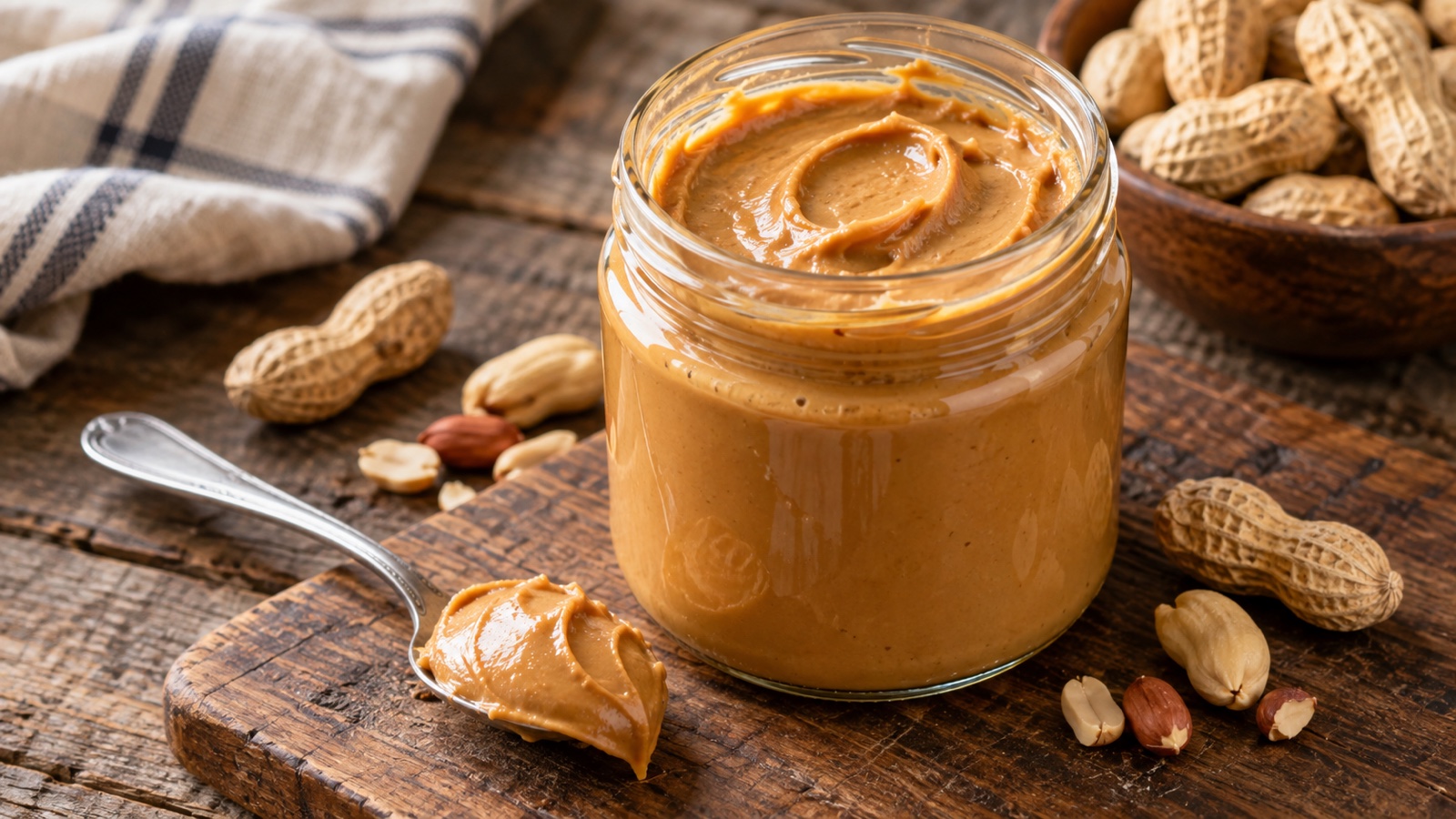
Roasting creates much of the flavor people recognize
- Peanuts are usually roasted before becoming peanut butter.
- Roasting drives off moisture.
- It also creates new aroma compounds.
- The Maillard reaction contributes roasted flavors.
- Maillard reactions occur between amino acids and reducing sugars.
- Roasting temperature changes flavor intensity.
- Too little roasting can taste grassy or raw.
- Too much roasting can taste bitter or burnt.
- Manufacturers cool peanuts after roasting.
- Cooling helps stop further cooking.
- Peanut skins can be removed after roasting.
- This removal process is called blanching.
- Some natural peanut butters include more skin particles than conventional brands.
- Peanut skins contain polyphenols.
- Roasted peanuts are then ground.
- Grinding releases peanut oil.
- The released oil helps create the spreadable texture.
- Fine grinding creates smooth peanut butter.
- Crunchy styles add larger peanut pieces back into the spread.
- Peanut butter is basically roasted seed paste that somehow convinced generations of children it belonged with jelly.
U.S. peanut butter has a legal identity
- The U.S. Food and Drug Administration has a standard of identity for peanut butter.
- Standard peanut butter must contain at least 90 percent peanuts.
- Optional ingredients can include salt and sweeteners.
- Stabilizing oils can also be permitted within limits.
- The modern standard followed years of regulatory debate.
- Manufacturers and regulators argued over acceptable peanut percentages.
- The dispute lasted through the 1960s.
- One issue was replacing peanut content with cheaper oils.
- The final standard preserved peanut butter as mostly peanuts.
- Products below the standard may need a different name.
- Natural peanut butter often contains only peanuts and salt.
- Oil separation is normal in natural styles.
- Stirring reincorporates separated peanut oil.
- Conventional peanut butter often uses stabilizers to reduce separation.
- Hydrogenated or fully hydrogenated oils can improve consistency.
- Modern formulations vary by brand.
- Added sugar also varies widely.
- Labels reveal whether a jar contains only peanuts or several extra ingredients.
- “Peanut spread” may have a different composition from standardized peanut butter.
- Peanut butter became important enough that federal regulators spent years arguing over exactly how peanutty peanut butter had to be.
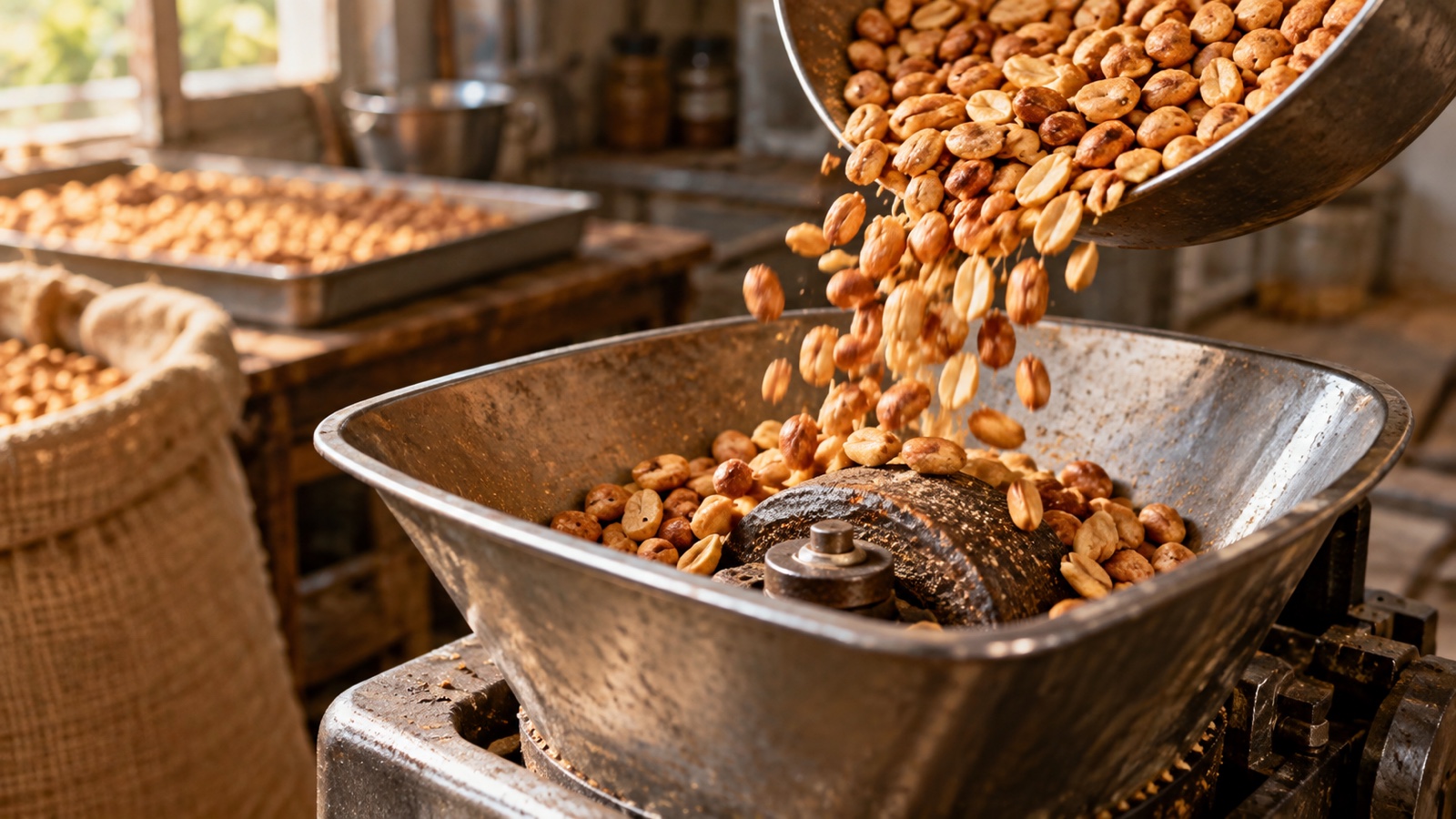
Peanut butter became a mass-market American staple
- Ground peanut preparations existed before modern commercial peanut butter.
- Several inventors patented peanut-paste processes in the late 1800s.
- John Harvey Kellogg patented a peanut-food process in 1895.
- Early peanut butter was promoted partly as a protein-rich food for people who had trouble chewing meat.
- Commercial demand expanded quickly in the early 1900s.
- USDA publications discussed peanut-butter manufacturing by 1912.
- George Washington Carver promoted many uses for peanuts.
- Carver did not invent peanut butter.
- That myth remains unusually persistent.
- Improved roasting and grinding equipment helped mass production.
- Stabilizers made packaged peanut butter easier to store.
- Wide-mouth jars improved access to the spread.
- Major national brands emerged during the 20th century.
- Peanut butter became especially associated with U.S. childhood lunches.
- It also became popular as a cheap protein source.
- World War II food needs helped increase peanut consumption.
- Peanut butter traveled well compared with many fresh protein foods.
- Its shelf stability made it practical for households and institutions.
- Today peanut butter accounts for a majority of U.S. food-use peanuts.
- A food once marketed partly for people with chewing problems somehow became lunchbox royalty.
The PB&J sandwich has its own history
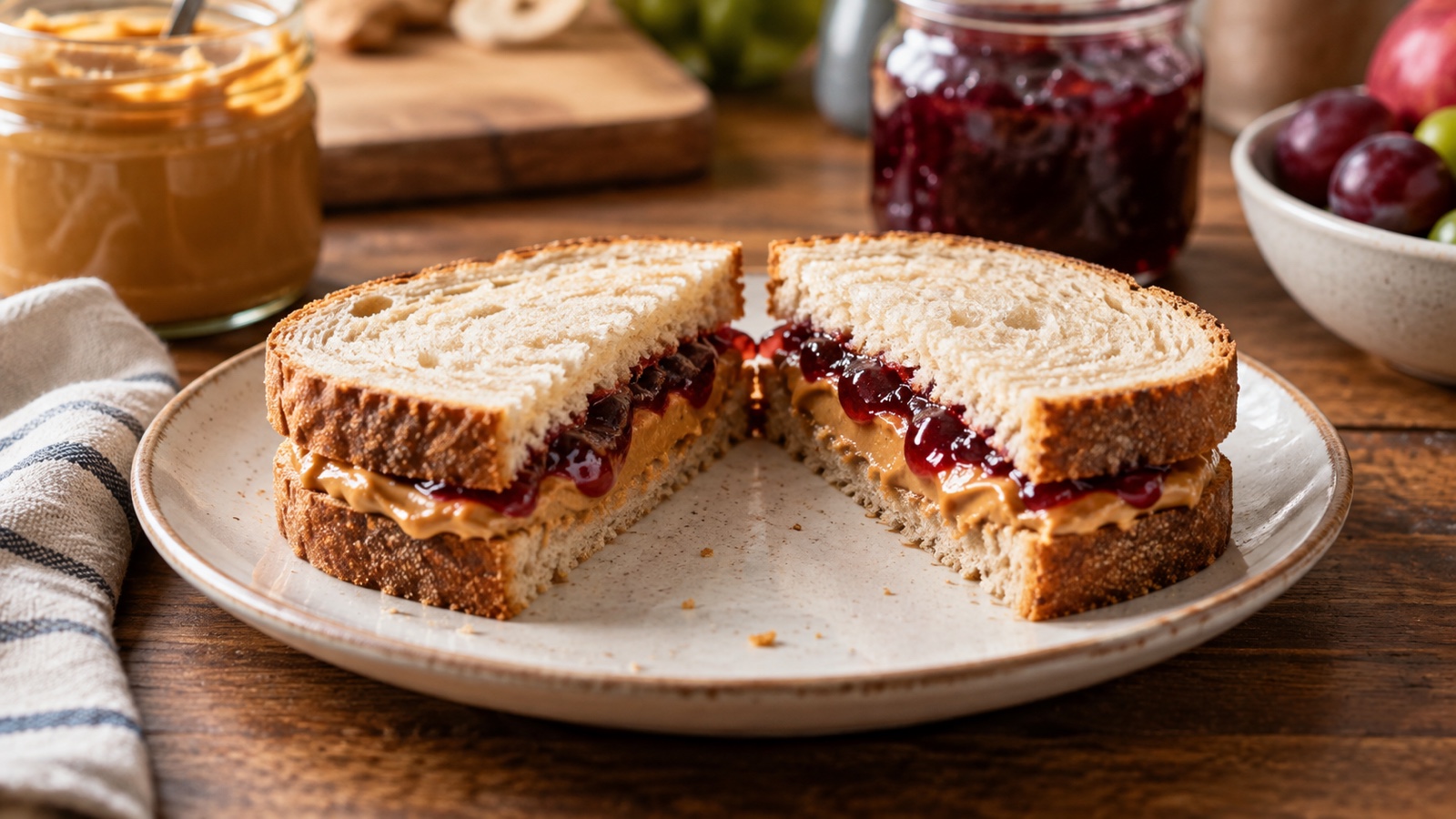
- Peanut butter and jelly sandwiches became common in the early 20th century.
- One early published PB&J recipe appeared in 1901.
- Sliced bread made sandwich preparation easier.
- Commercial sliced bread spread widely after 1928.
- Jelly adds sweetness and acidity.
- Peanut butter contributes fat, protein, and salt.
- The combination balances sticky, creamy, fruity, and soft textures.
- Grape jelly is strongly associated with American PB&J sandwiches.
- Strawberry jam is another common pairing.
- Honey can replace jelly.
- Bananas are a classic peanut-butter pairing.
- Elvis Presley was famously associated with peanut-butter-and-banana sandwiches.
- Some versions are grilled.
- Peanut butter also appears in savory sauces.
- West African cuisines use ground peanuts extensively.
- Southeast Asian dishes pair peanuts with chilies, lime, and aromatics.
- Peanut sauce is not one single recipe.
- Peanut butter can thicken smoothies.
- It can also enrich cookies and frostings.
- PB&J looks simple because three foods happen to solve each other's texture problems unusually well.
Peanut butter is nutrient dense
- Peanut butter is high in calories for its volume.
- Most calories come from fat.
- Much of that fat is unsaturated.
- Peanut butter also provides protein.
- Two tablespoons usually contain around 7 to 8 grams of protein.
- It contains some fiber.
- Peanut butter provides vitamin E.
- It is a source of niacin.
- It also provides magnesium.
- Peanuts contain arginine.
- Peanut butter contains no cholesterol unless animal-derived ingredients are added.
- Unsweetened peanut butter can fit into many dietary patterns.
- Added sugar raises carbohydrate content.
- Added salt raises sodium content.
- Reduced-fat peanut butter is not necessarily much lower in calories.
- Manufacturers may add carbohydrate ingredients when fat is reduced.
- Serving size matters because the spread is energy dense.
- Peanut butter can increase satiety for some people.
- It is not a complete protein in the strict amino-acid-profile sense.
- Eating varied foods across the day easily supplies complementary amino acids.
Allergies, storage and 25 final peanut-butter facts
- Peanut allergy can cause severe anaphylaxis.
- Peanuts are among the major food allergens in the United States.
- Even small exposures can matter for highly allergic people.
- Cross-contact can occur during manufacturing.
- Food labels identify peanut ingredients.
- Peanut butter should be kept away from infants who cannot safely swallow thick sticky foods.
- Early peanut introduction is now recommended for some infants at appropriate developmental stages under pediatric guidance.
- This can reduce peanut-allergy risk in certain high-risk children.
- Whole peanuts are choking hazards for young children.
- Thinned or smooth peanut products are safer introduction forms.
- Natural peanut butter may need refrigeration after opening depending on the label.
- Conventional stabilized peanut butter often stores well in a pantry after opening.
- Heat accelerates rancidity.
- Rancid peanut butter smells stale, paint-like, or bitter.
- Oil separation does not equal spoilage.
- Peanut butter can be frozen.
- Texture may change slightly after thawing.
- Peanut butter is used as bait in some wildlife traps because of its strong aroma.
- Dogs often like peanut butter.
- Dog owners must avoid products containing xylitol.
- Xylitol is highly toxic to dogs.
- Peanut butter sticks to the roof of the mouth because of its low water content and viscous fat-protein matrix.
- Crunchy peanut butter usually contains added peanut pieces.
- Peanut butter powder is made after much of the peanut oil is removed.
- After 145 facts, peanut butter feels less like a basic sandwich spread and more like roasted-legume chemistry, agricultural history, food law, allergy science, and comfort food all packed into one jar.
Quick FAQ
Q: Did George Washington Carver invent peanut butter?
A: No. Ground peanut foods and peanut-butter patents existed before Carver's work.
Q: Are peanuts nuts?
A: Botanically, peanuts are legumes related to beans and peas.
Q: Why does natural peanut butter separate?
A: Peanut oil rises because the product contains fewer stabilizers holding oil and solids together.
Q: How much peanut must peanut butter contain in the U.S.?
A: Standardized peanut butter must contain at least 90 percent peanuts.
Q: Is peanut butter high in protein?
A: Yes. A typical two-tablespoon serving provides roughly 7 to 8 grams.

Ellie is the owner and sole author of Fun Facts, combining her mechanical engineering background with years of research-driven writing to deliver facts you can trust. Every article is thoroughly fact-checked and routinely updated as new science and sources emerge to keep information accurate and current. Her mission is to make learning delightful while upholding high standards of reliability and transparency.