
Hummingbirds are the birds I can watch for an embarrassingly long time without getting bored. They hover like helicopters, fly backward, remember flower locations, cross huge distances on bodies that weigh less than a nickel, and run such intense metabolisms that nighttime sleep sometimes requires a controlled energy-saving shutdown.
Hummingbirds exist naturally only in the Americas
- Hummingbirds belong to the family Trochilidae.
- More than 350 living hummingbird species are recognized.
- All living hummingbirds are native to the Americas.
- Their natural range stretches from Alaska and Canada to Tierra del Fuego.
- Most hummingbird diversity is concentrated in tropical Central and South America.
- Colombia has more hummingbird species than any other country.
- Ecuador is another major center of hummingbird diversity.
- Only a small fraction of hummingbird species regularly breed in the United States.
- The ruby-throated hummingbird is the most widespread breeding species in eastern North America.
- Anna's hummingbirds are common along much of the Pacific Coast.
- Rufous hummingbirds breed farther north than many other species.
- Some rufous hummingbirds reach Alaska during the breeding season.
- The bee hummingbird of Cuba is the world's smallest living bird.
- Male bee hummingbirds can weigh less than 0.1 ounce.
- Large hummingbirds such as the giant hummingbird are several times heavier than bee hummingbirds.
- Hummingbirds are closely related to swifts.
- They are not closely related to nectar-feeding sunbirds of Africa and Asia.
- Similar nectar-feeding body shapes evolved independently in different bird groups.
- Fossils show ancient hummingbird relatives once lived in Europe.
- The modern hummingbird family is now an entirely New World phenomenon, which makes the bird feeder outside an American kitchen window part of a surprisingly exclusive geographic club.
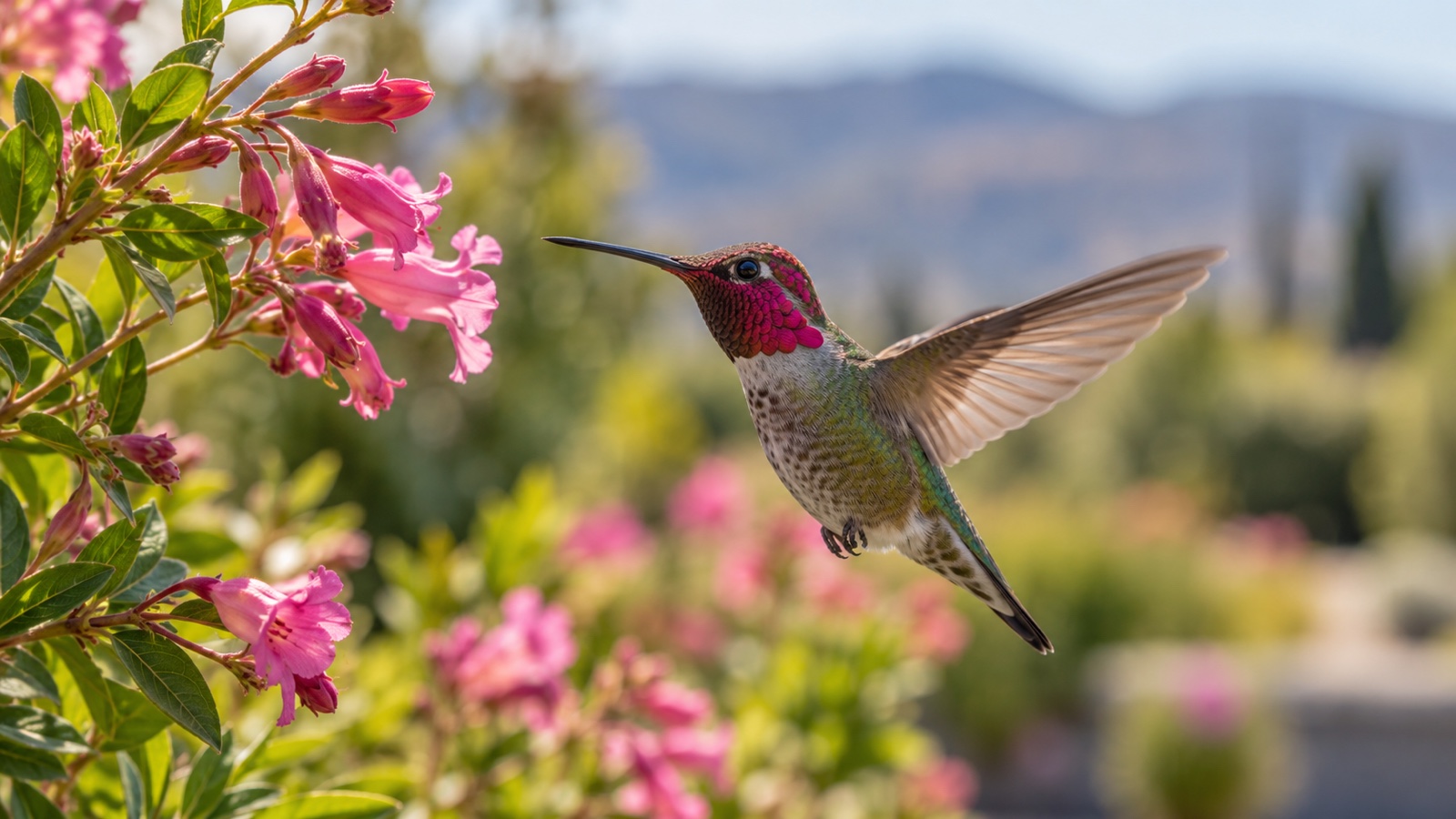
Hovering requires a completely unusual wing stroke
- Hummingbirds are the only birds capable of sustained hovering in still air.
- They generate lift on both the forward and backward portions of the wing stroke.
- The wing traces a figure-eight-like path during hovering.
- The shoulder joint allows unusually broad rotation.
- Most of the wing stays relatively stiff while movement is concentrated at the shoulder.
- Large flight muscles make up a substantial share of a hummingbird's body mass.
- Hovering lets a bird feed from flowers without landing.
- It also allows precise positioning in front of feeders.
- Hummingbirds can fly backward.
- They can also fly sideways.
- They can rise nearly vertically.
- They can stop abruptly in midair.
- Courtship flights can include steep dives and rapid climbs.
- Wingbeat rate varies by species and activity.
- Small hummingbirds can beat their wings dozens of times each second during ordinary flight.
- Some tiny species exceed 70 wingbeats per second in hovering flight.
- Wingbeat frequency can become even higher during certain courtship displays.
- The familiar humming sound is produced largely by the rapidly moving wings.
- Different species produce slightly different flight sounds.
- A bird that can reverse out of a flower without turning around has solved a parking problem most of us still struggle with.
Their hearts and lungs operate at astonishing speed
- Hummingbirds have among the highest mass-specific metabolic rates of vertebrates.
- Hovering is especially energy intensive.
- A hummingbird's heart rate can exceed 1,000 beats per minute during intense activity.
- Resting heart rate is much lower than peak flight rate but still extremely fast by human standards.
- Breathing rate rises sharply during flight.
- Hummingbird blood transports oxygen rapidly to working muscles.
- Their hearts are proportionally large for their body size.
- Flight muscles contain dense networks of tiny blood vessels.
- Mitochondria in those muscles produce energy at very high rates.
- Hummingbirds can use recently consumed sugar very quickly as flight fuel.
- They also store fat for fasting and migration.
- Body mass can increase before long migratory flights.
- Fat provides more stored energy per unit weight than carbohydrates.
- A hummingbird cannot simply stop eating for an ordinary day and expect to function normally.
- Frequent feeding supports its high daytime energy demand.
- Cold weather increases the energy needed to maintain body temperature.
- Rain can make feeding harder while also increasing heat loss.
- Birds may shelter during severe weather to reduce energy expenditure.
- Hummingbirds constantly balance food intake against the enormous cost of flight and staying warm.
- The heart is doing sprint-level work while the bird appears to be casually sipping flowers, which feels like a very misleading visual.
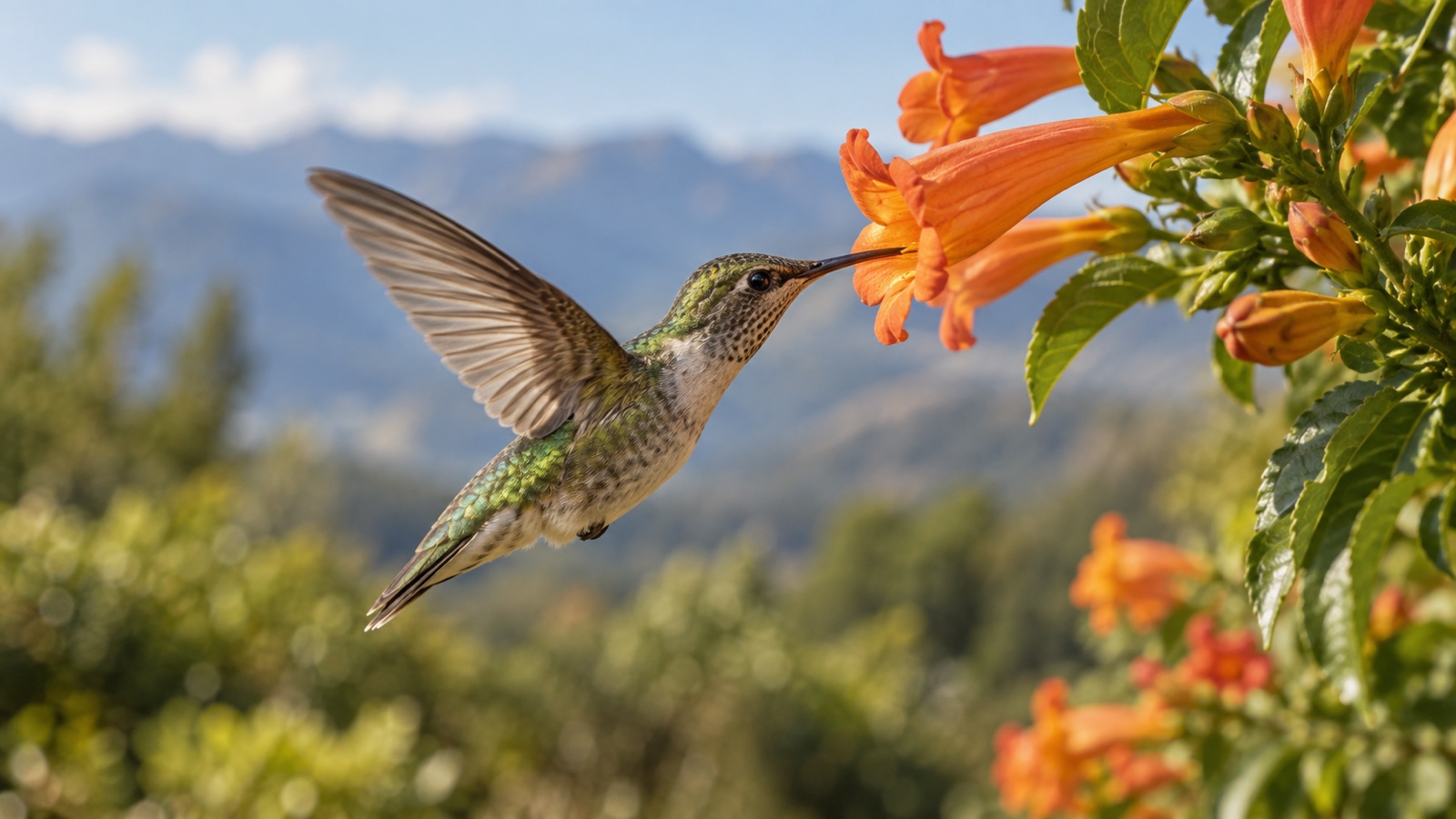
Torpor helps them survive the night
A hummingbird cannot spend all night burning energy at its daytime rate. Many species enter torpor, a temporary state in which body temperature, heart rate, breathing, and metabolism drop dramatically so the bird can make it to sunrise without emptying the fuel tank.
- Torpor is different from ordinary sleep.
- During torpor, hummingbird metabolism falls dramatically.
- Body temperature can drop by dozens of degrees Fahrenheit.
- Heart rate can fall from hundreds of beats per minute to a small fraction of its daytime rate.
- Breathing also slows.
- Torpor reduces overnight energy consumption.
- Cold nights make energy savings especially valuable.
- Small species lose heat faster than large birds because of their high surface-area-to-volume ratio.
- Some hummingbirds use shallow torpor.
- Others enter much deeper torpor under demanding conditions.
- Birds typically begin warming before becoming active in the morning.
- Rewarming requires substantial energy.
- Muscle activity helps raise body temperature.
- Sunlight can assist warming after emergence from torpor.
- A torpid hummingbird may appear unusually still and unresponsive.
- That does not necessarily mean the bird is sick or dead.
- Disturbing a torpid bird unnecessarily can waste precious energy.
- Torpor is common in hummingbirds but not used identically every night by every individual.
- Food reserves, temperature, season, and body condition influence torpor decisions.
- Going from more than a thousand heartbeats per minute to energy-saving torpor in the same 24 hours is the physiological equivalent of driving a race car and then parking it in ultra-low-power mode.
Nectar is fuel, but insects are essential food too
- Hummingbirds drink flower nectar for sugar-rich energy.
- Nectar is mostly water and dissolved sugars.
- Different flowers produce different sugar concentrations.
- Hummingbirds often prefer nectar concentrations within an energy-efficient range.
- The long tongue extends beyond the bill during feeding.
- The tongue tip contains paired grooves that help capture nectar.
- Rapid tongue movements draw nectar into the mouth.
- The tongue can lick nectar many times per second.
- Hummingbird tongues are not simple drinking straws.
- Elastic tongue structures help trap liquid efficiently.
- The tongue retracts deep into the head when not extended.
- Hummingbirds also eat insects and spiders.
- Animal prey provides protein, fat, minerals, and other nutrients nectar lacks.
- Birds pick insects from leaves and bark.
- They also catch tiny flying insects in midair.
- This aerial insect catching is sometimes called hawking.
- Females need especially protein-rich food when producing eggs and feeding chicks.
- Hummingbirds sometimes visit sap wells made by woodpeckers.
- Tree sap can provide sugar when flowers are scarce.
- The bird feeder may look like the whole menu, but it is really the sports drink station next to a much more complicated diet.
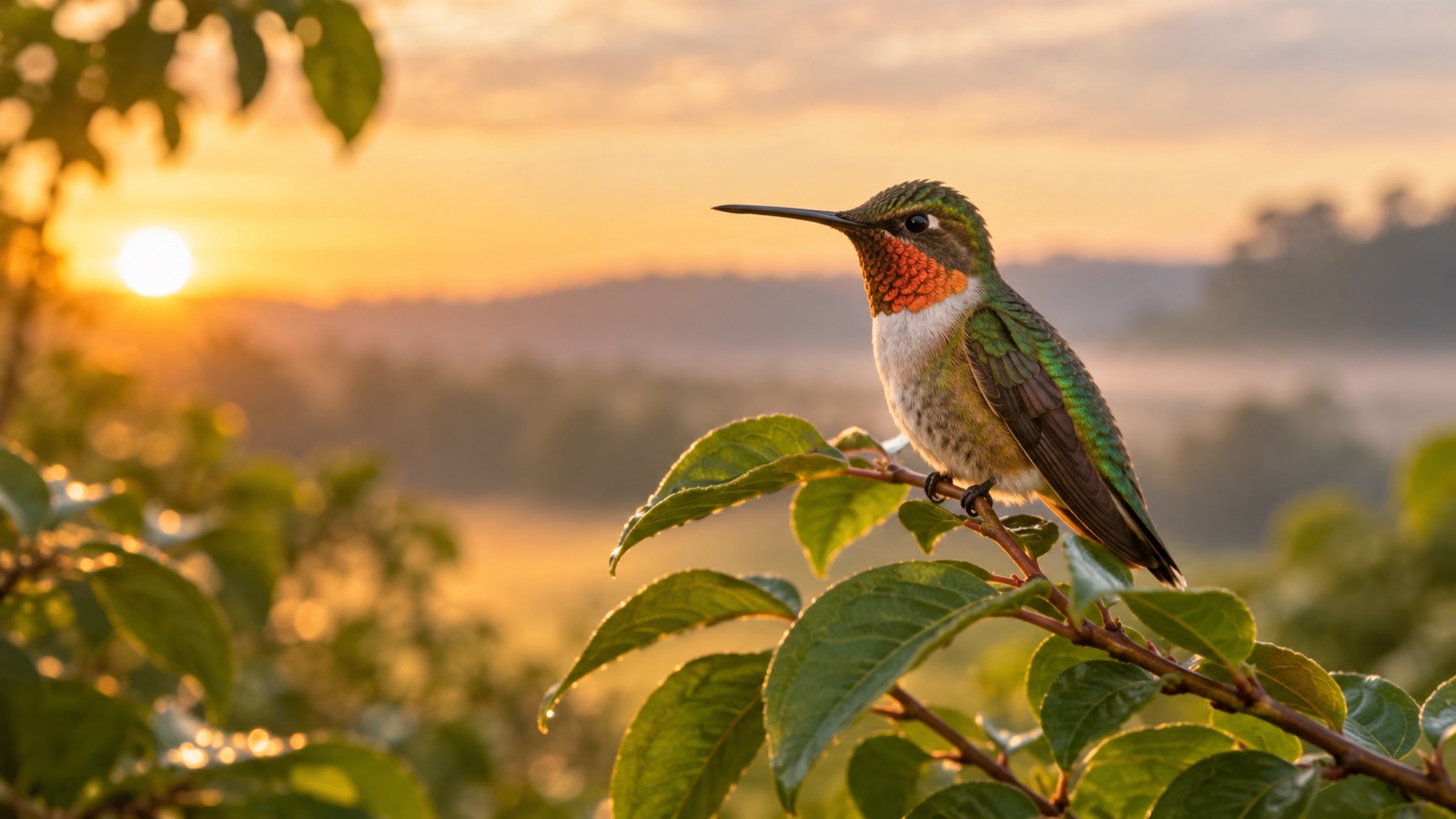
Their colors come from microscopic feather structure
The glowing throat of a hummingbird can look red, orange, violet, black, or almost metallic depending on the angle. That color shift is not a trick of pigment alone. Microscopic feather structures reflect specific wavelengths of light, creating the jewel-like iridescence.
- The brilliant throat patch on many male hummingbirds is called a gorget.
- Gorgets are used in courtship and social displays.
- Iridescent color depends strongly on viewing angle.
- A feather can look dark when light hits it from the wrong direction.
- Microscopic structures in feather barbules create the optical effect.
- Those structures contain organized layers that reflect light.
- Different arrangements produce different visible colors.
- Pigments also contribute to some hummingbird colors.
- Structural color allows extraordinary brightness without fluorescent chemicals.
- Hummingbirds can see ultraviolet wavelengths that humans cannot.
- They have four types of color-sensitive cone cells rather than the three typical of humans.
- Their visual world includes color combinations people cannot directly imagine.
- Color helps birds identify flowers.
- It also helps males display to females.
- Some males orient the body precisely to flash the brightest gorget color toward a female.
- Courtship displays combine color, movement, sound, and position.
- Feather condition affects display quality.
- Hummingbirds molt and replace worn feathers.
- Plumage patterns are important for identifying species.
- A male hummingbird's throat is less like painted fabric and more like a microscopic light-reflecting billboard that only works from the right seat.
Migration can send tiny birds across enormous distances
- Many hummingbird species are resident year-round in tropical habitats.
- Others migrate seasonally.
- Ruby-throated hummingbirds migrate between North America and Central America.
- Some cross the Gulf of Mexico during migration.
- That nonstop overwater flight can span hundreds of miles.
- Birds build fat reserves before attempting long crossings.
- Rufous hummingbirds complete exceptionally long migrations for their body size.
- Some travel between Mexico and Alaska or western Canada.
- Spring and fall routes can differ.
- Flowering seasons influence migration timing and stopover use.
- Hummingbirds remember productive feeding locations.
- Individuals may return to the same yard, feeder area, or breeding territory in later years.
- Male hummingbirds usually do not help build nests or raise chicks.
- Females construct the nest alone in most species.
- Spider silk is commonly used as flexible binding material.
- Plant down and soft fibers form much of the nest cup.
- Lichen can camouflage the outside.
- A hummingbird nest can be smaller than a golf ball.
- Most hummingbird clutches contain two eggs.
- The eggs of the smallest species are among the tiniest bird eggs in the world.
- Chicks hatch blind, mostly naked, and helpless.
- The mother feeds them regurgitated nectar and insects.
- Hummingbirds are important pollinators for many plants.
- Red tubular flowers are common among plants adapted to hummingbird pollination, but hummingbirds visit many other flower colors too.
- After 145 facts, hummingbirds feel less like decorative garden visitors and more like migratory, color-seeing, torpor-using aerial athletes whose entire lives run on astonishingly precise energy math.

Quick FAQ
Q: Can hummingbirds fly backward?
A: Yes. Their unusual shoulder rotation and wing stroke let them fly backward, sideways, vertically, and hover in place.
Q: Do hummingbirds live only on nectar?
A: No. Nectar supplies fast energy, while insects and spiders provide protein, fat, minerals, and other nutrients.
Q: Why do hummingbirds enter torpor?
A: Torpor dramatically lowers metabolism, heart rate, and body temperature, helping tiny birds conserve energy overnight or during cold conditions.
Q: What should go in a hummingbird feeder?
A: Plain white table sugar dissolved in water at roughly one part sugar to four parts water is the standard recipe. Red dye is unnecessary.
Q: How often should hummingbird feeders be cleaned?
A: Frequently. Sugar water spoils quickly in heat, so feeders should be emptied, washed, and refilled more often during warm weather rather than simply topped off.

Ellie is the owner and sole author of Fun Facts, combining her mechanical engineering background with years of research-driven writing to deliver facts you can trust. Every article is thoroughly fact-checked and routinely updated as new science and sources emerge to keep information accurate and current. Her mission is to make learning delightful while upholding high standards of reliability and transparency.