
South Carolina can move from misty Blue Ridge foothills to Charleston church steeples, tidal marshes, sea islands, peach orchards, and beach towns in a few hours. Add Gullah Geechee culture, Revolutionary history, sweetgrass baskets, barbecue arguments, and a palmetto tree that once helped stop cannonballs, and the state gets wonderfully specific.
South Carolina basics from the Palmetto State
- South Carolina became the eighth U.S. state to ratify the Constitution on May 23, 1788.
- Columbia is the state capital.
- Charleston is the state’s largest city by recent population estimates, while city rankings can shift with growth.
- South Carolina has 46 counties.
- The postal abbreviation is SC.
- The official nickname is the Palmetto State.
- The nickname comes from the sabal palmetto.
- The sabal palmetto is also the state tree.
- South Carolina borders North Carolina and Georgia.
- The Atlantic Ocean forms its eastern edge.
- The entire state uses Eastern Time.
- South Carolina is one of the original 13 colonies.
- The state has two official mottos.
- One is “Dum spiro spero,” meaning “While I breathe, I hope.”
- The other is “Animis opibusque parati,” meaning roughly “Prepared in mind and resources.”
- Sassafras Mountain is South Carolina’s highest point.
- It reaches 3,553 feet above sea level.
- The state stretches from Blue Ridge terrain in the northwest to barrier islands on the coast.
- South Carolinians sometimes divide the state culturally into the Upstate, Midlands, and Lowcountry.
- I like a state where “Lowcountry” is both a geographic term and a warning that dinner may involve shrimp and grits.
Mountains, rivers, marshes & barrier islands
- The Blue Ridge Mountains reach into the far northwestern corner of South Carolina.
- Table Rock is one of the state’s best-known mountain landmarks.
- Caesars Head overlooks the Blue Ridge Escarpment.
- The Piedmont covers much of northwestern and central South Carolina.
- The Fall Line marks a transition between the Piedmont and flatter Coastal Plain.
- Several cities developed near the Fall Line because waterfalls and rapids once provided waterpower.
- The Santee River is one of South Carolina’s major waterways.
- The Congaree and Wateree rivers join to form the Santee.
- Congaree National Park protects one of America’s largest remaining tracts of old-growth bottomland hardwood forest.
- Some trees in Congaree reach exceptional heights for their species.
- Boardwalks let visitors cross seasonally flooded forest areas.
- Fireflies in parts of the park can synchronize their flashes during a brief spring period.
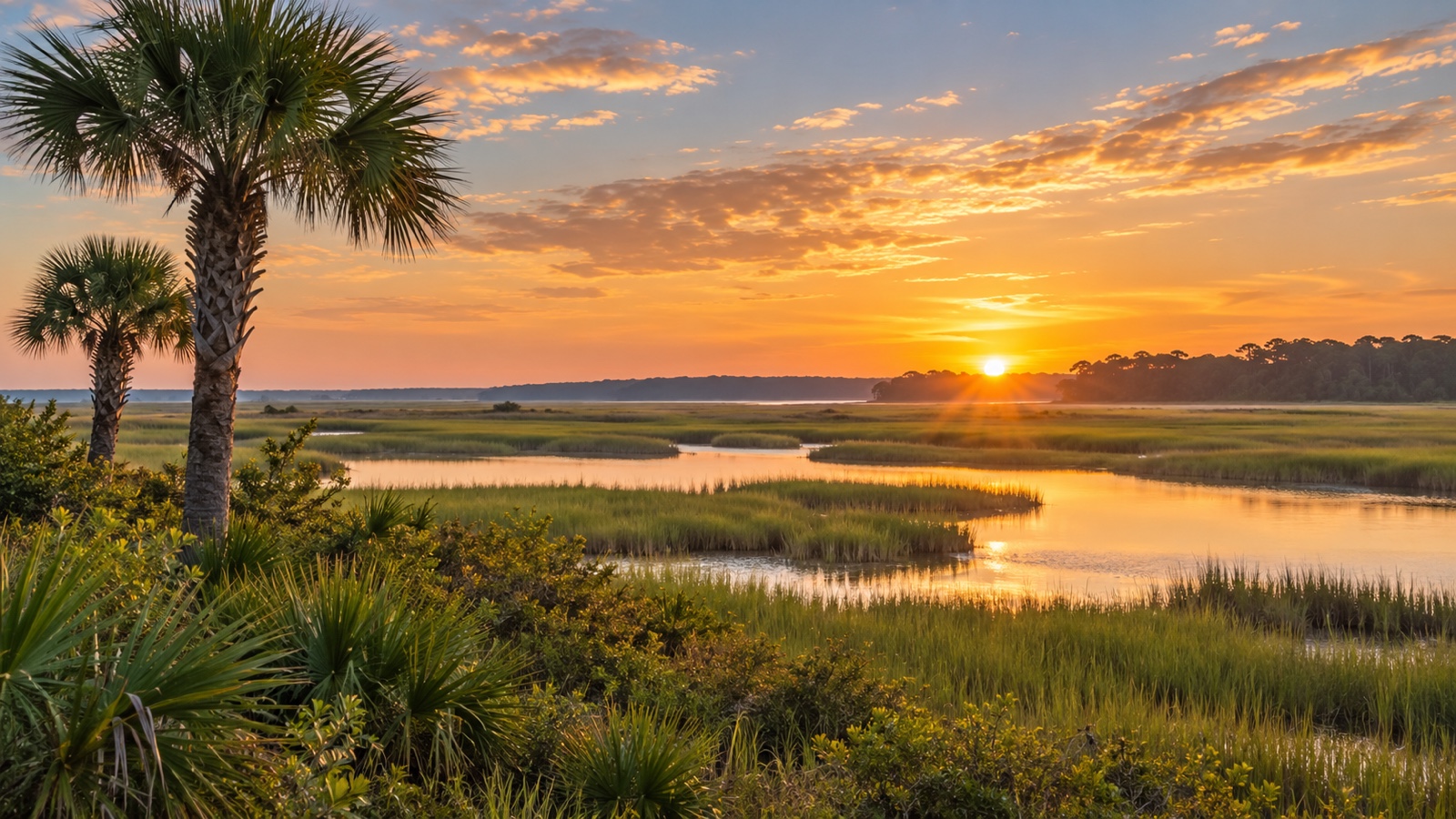
- South Carolina’s coast includes salt marshes, tidal creeks, beaches, and barrier islands.
- Hilton Head Island is a major resort destination.
- Kiawah Island is known for beaches, wildlife, and golf.
- Hunting Island contains one of South Carolina’s most visited state parks.
- Edisto Island retains extensive rural and Gullah Geechee heritage.
- Tides shape daily life across the Lowcountry’s marshes and creeks.
- Live oaks draped with Spanish moss are iconic Lowcountry trees.
- Spanish moss is actually a flowering bromeliad, not a true moss.
Charleston has layers of beautiful and difficult history
- Charleston was founded by English colonists in 1670.
- The settlement was first called Charles Town after King Charles II.
- It later shifted to the shorter spelling Charleston.
- Charleston became one of British North America’s wealthiest port cities.
- That wealth depended heavily on enslaved labor and Atlantic slavery.
- Rice and indigo plantations generated enormous fortunes in colonial South Carolina.
- Enslaved Africans brought crucial agricultural knowledge to the rice economy.
- Charleston was one of the largest points of entry for enslaved Africans brought to British North America and the United States.
- The Old Slave Mart Museum interprets part of the city’s domestic slave-trade history.
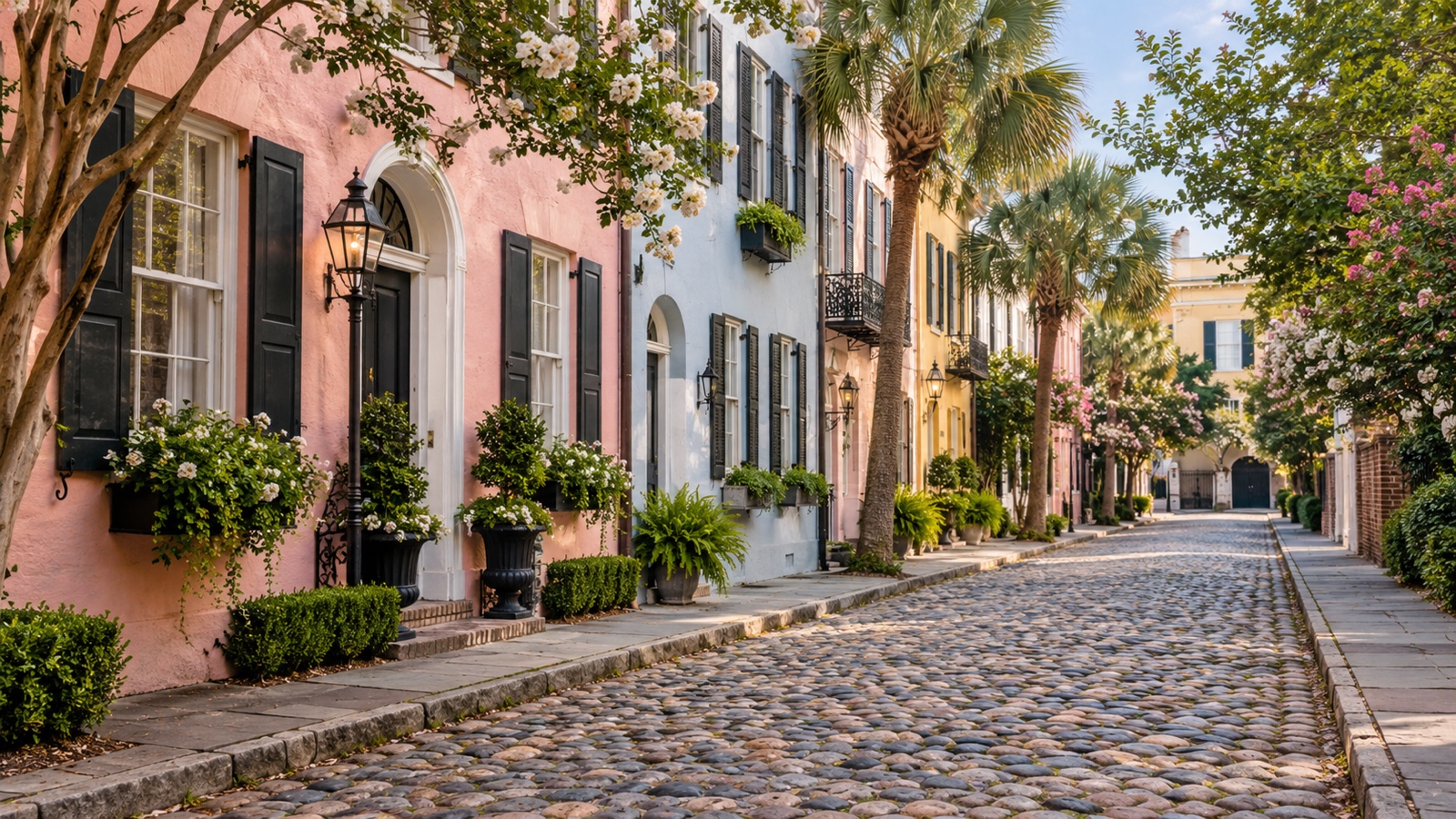
- Charleston’s historic district contains many surviving 18th- and 19th-century buildings.
- “Charleston single houses” are narrow homes designed with long sides facing breezes and porches called piazzas.
- The Battery lines part of Charleston’s waterfront.
- Rainbow Row is a famous group of pastel-colored historic houses.
- The city has numerous church steeples, contributing to its “Holy City” nickname.
- Kahal Kadosh Beth Elohim is one of America’s oldest Jewish congregations.
- Its current synagogue is associated with the early history of Reform Judaism in the United States.
- The College of Charleston was founded in 1770.
- It is one of the oldest colleges in the United States.
- Earthquakes can occur in South Carolina, and an 1886 earthquake caused severe damage in Charleston.
- Charleston is beautiful enough that responsible history has to resist turning the city into one long pastel postcard.
Gullah Geechee culture is a living Lowcountry tradition
Gullah Geechee culture is not a quaint leftover from plantation history. It is a living African American culture shaped by generations of people whose relative geographic isolation on coastal islands and plantations helped preserve distinctive language, food, craft, spiritual, and community traditions.
- Gullah Geechee communities live along coastal areas from North Carolina through Florida.
- South Carolina’s sea islands are especially important to Gullah culture.
- Gullah is an English-based creole language.
- It includes strong influences from West and Central African languages and speech patterns.
- The term Geechee is often associated especially with communities farther south along the coast, though usage overlaps.
- Gullah Geechee foodways influenced Lowcountry cooking.
- Rice is central to many traditional dishes.
- Okra, field peas, greens, seafood, and benne sesame are other important ingredients.
- Sweetgrass basket making is one of the region’s most recognizable crafts.
- The coiled-basket tradition has deep West African connections.
- Basket makers use materials including sweetgrass, bulrush, pine needles, and palmetto strips.
- Mount Pleasant is especially known for sweetgrass basket artisans.
- Roadside basket stands have become a familiar Lowcountry sight.
- The Gullah Geechee Cultural Heritage Corridor was established by Congress.
- It spans coastal areas of four states.
- Penn Center on St. Helena Island preserves important African American and Gullah history.
- It began as one of the first schools in the South for formerly enslaved people.
- Martin Luther King Jr. used Penn Center as a retreat and planning site.
- Gullah traditions continue changing as communities respond to tourism, development, land pressure, and younger generations.
- A living culture deserves verbs in the present tense.
Revolutionary War history gave the palmetto its fame
- South Carolina saw extensive fighting during the American Revolution.
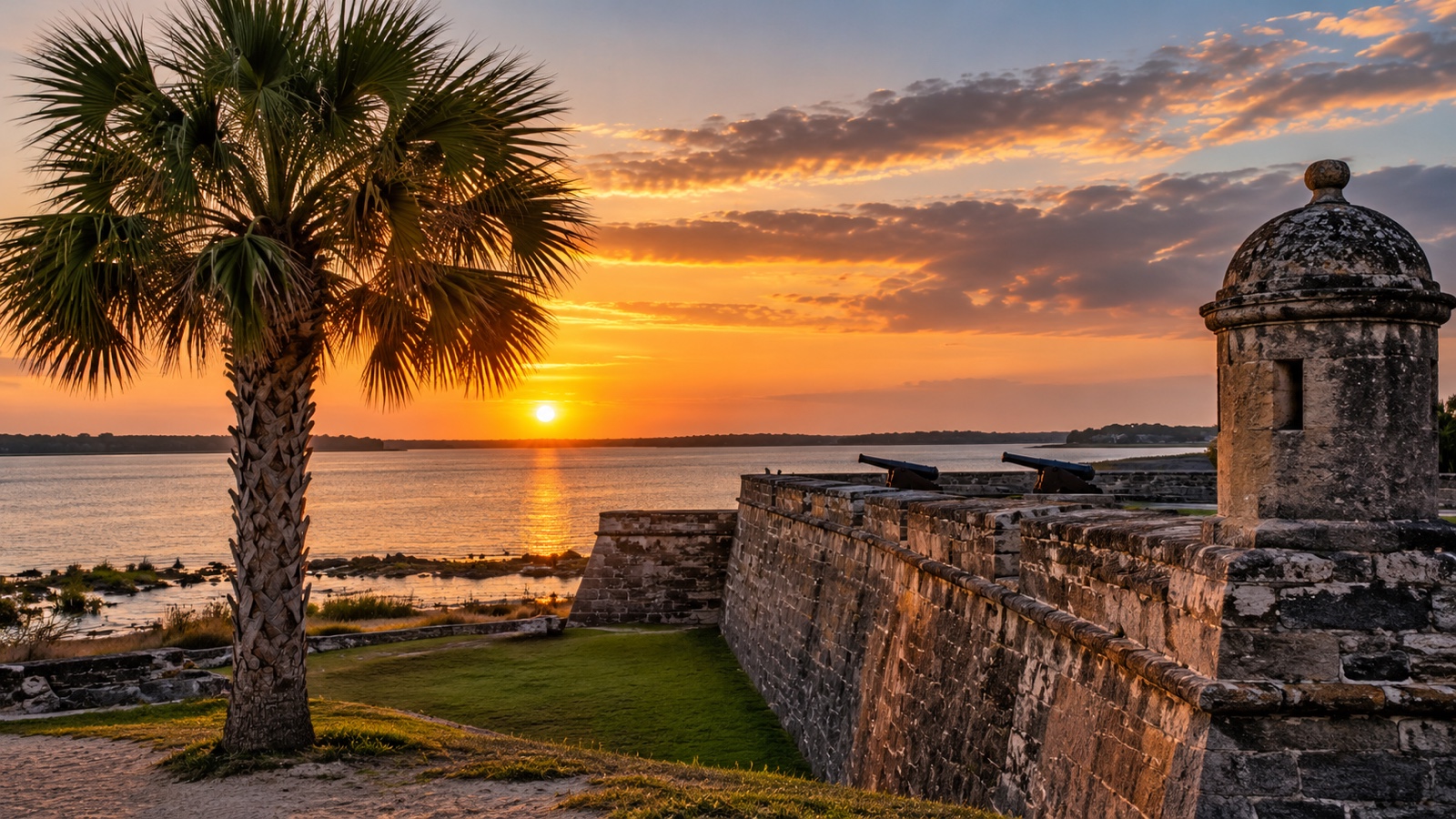
- The Battle of Sullivan’s Island took place near Charleston in 1776.
- American defenders used a fort built partly from palmetto logs and sand.
- British naval gunfire failed to destroy the fort.
- Spongy palmetto logs and loose sand helped absorb or reduce the effect of cannon fire.
- The unfinished fort was commanded by Colonel William Moultrie.
- It later became known as Fort Moultrie.
- The battle helped make the palmetto tree a symbol of South Carolina resistance.
- The state flag features a white palmetto tree.
- It also includes a white crescent symbol whose exact original meaning has been debated.
- The crescent appeared on South Carolina military imagery before the modern flag.
- The British captured Charleston in 1780.
- Partisan fighters continued resistance across the South Carolina backcountry.
- Francis Marion became famous as the Swamp Fox.
- Marion used mobile irregular tactics against British forces and Loyalists.
- Thomas Sumter was another important South Carolina militia leader.
- The state’s Sumter County and Fort Sumter share his name.
- Fort Sumter is famous for a later conflict, the American Civil War.
- Confederate forces fired on Fort Sumter in April 1861, beginning the Civil War’s first major military engagement.
- The same Charleston harbor managed to become central to two different American wars.
Peaches, barbecue & South Carolina food arguments
South Carolina food has a lot of regional confidence for good reason. The state grows more peaches than neighboring Georgia in many years, claims multiple barbecue-sauce traditions, treats boiled peanuts as roadside essentials, and knows shrimp and grits can be breakfast, dinner, or both.
- South Carolina is one of America’s major peach-producing states.
- Peach orchards are especially common in the western and central parts of the state.
- The peach is the official state fruit.
- South Carolina barbecue traditionally centers on pork.
- Different parts of the state favor different sauce styles.
- Mustard-based barbecue sauce is especially associated with central South Carolina.
- Vinegar-pepper sauces are more common in some eastern areas.
- Tomato-based sauces also appear in western and northern parts of the state.
- Hash and rice is a distinctive South Carolina barbecue side or main dish.
- Barbecue hash is a thick meat-based preparation served over rice.
- Boiled peanuts are a classic South Carolina snack.
- Green or raw peanuts are simmered in salted water until soft.
- Boiled peanuts are South Carolina’s official state snack food.
- Shrimp and grits has deep Lowcountry roots.
- The dish evolved from simpler coastal breakfasts into a restaurant staple.
- She-crab soup is a rich Charleston-area soup made with crab.
- Historically, crab roe helped distinguish the dish, though modern versions vary.
- Hoppin’ John combines rice and peas or beans and is strongly associated with Southern New Year traditions.
- Benne wafers are sesame cookies tied to Lowcountry food history.
- South Carolina has enough barbecue sauce borders to make a county map useful at lunch.
Golf, beaches, famous people & 25 final South Carolina facts
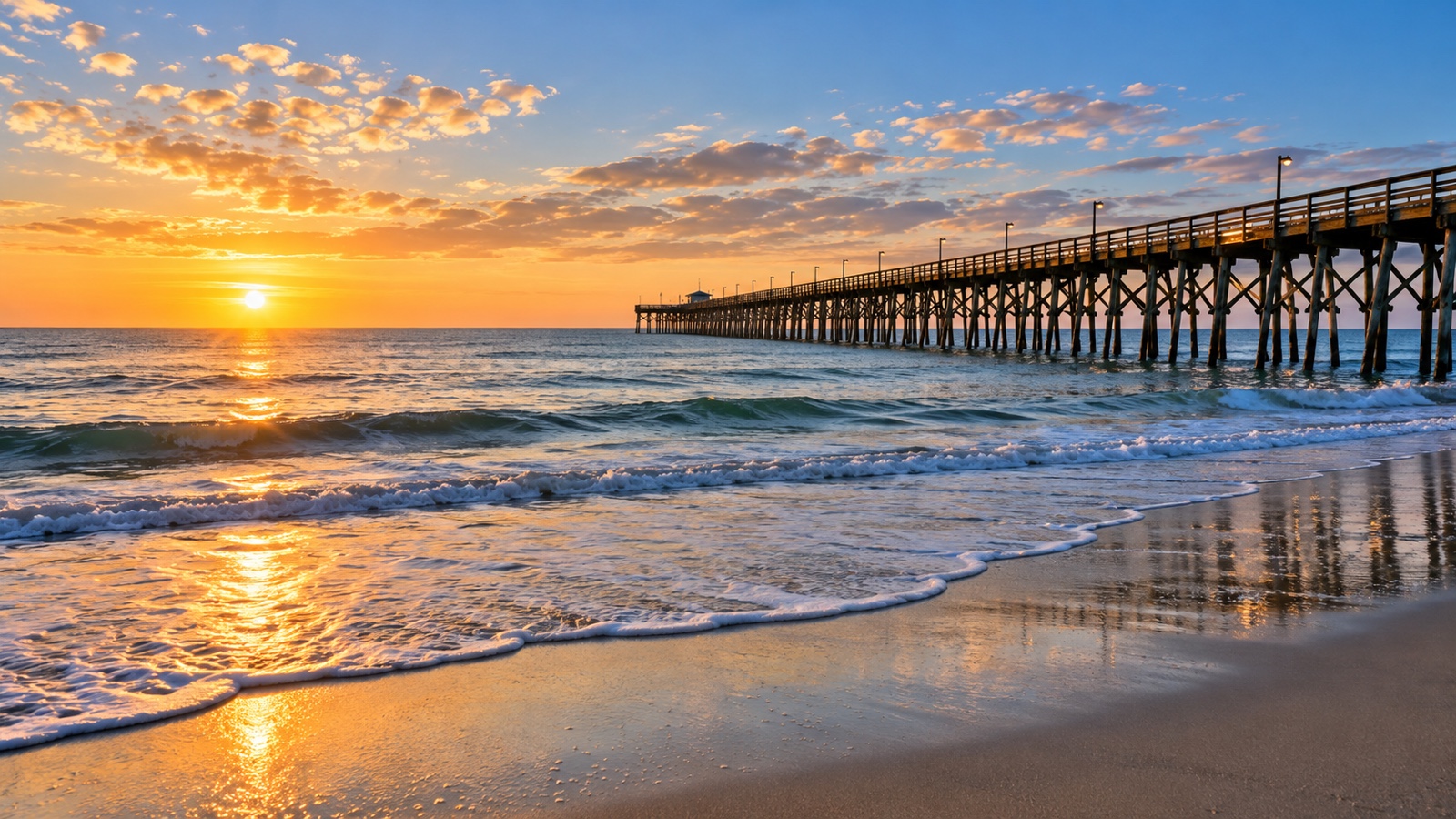
- Myrtle Beach is one of the state’s largest tourism centers.
- The Grand Strand refers to a long stretch of beaches along the northeastern coast.
- Hilton Head Island is internationally known for golf and resorts.
- Harbour Town Golf Links hosts a major professional golf tournament.
- Kiawah Island has hosted major golf championships.
- South Carolina has hundreds of golf courses.
- Clemson University is located in the Upstate.
- The University of South Carolina is in Columbia.
- The schools maintain one of the state’s biggest sports rivalries.
- Fort Jackson near Columbia is a major U.S. Army training installation.
- Parris Island near Beaufort is famous for U.S. Marine Corps recruit training.
- The state bird is the Carolina wren.
- The state flower is yellow jessamine.
- The state animal is the white-tailed deer.
- The state reptile is the loggerhead sea turtle.
- Loggerhead turtles nest on South Carolina beaches.
- Beach lighting can disorient nesting turtles and hatchlings.
- Coastal communities use lighting rules and nest protection to reduce those hazards.
- Dizzy Gillespie, one of jazz’s great trumpeters, was born in Cheraw.
- James Brown was born in South Carolina and grew up largely in Augusta, Georgia.
- Chadwick Boseman was born in Anderson, South Carolina.
- Viola Davis was born in South Carolina and grew up in Rhode Island.
- Astronaut Ronald McNair was born in Lake City.
- He became the second Black American to travel to space.
- After 145 facts, South Carolina still feels like three landscapes, several histories, and at least four barbecue opinions sharing one palmetto flag.
Quick FAQ
Q: What is South Carolina famous for?
A: Charleston, the Lowcountry, Gullah Geechee culture, beaches, golf, Revolutionary and Civil War history, peaches, barbecue, sweetgrass baskets, and palmetto-tree symbolism.
Q: What is the capital of South Carolina?
A: Columbia is the capital.
Q: Why is South Carolina called the Palmetto State?
A: Palmetto logs helped Fort Moultrie’s 1776 defenses withstand British naval cannon fire, turning the tree into a powerful state symbol.
Q: What is Gullah Geechee culture?
A: It is a living African American coastal culture with distinctive language, foodways, crafts, music, community traditions, and deep West and Central African connections.
Q: Does South Carolina grow peaches?
A: Yes. It is a major peach-producing state, and the peach is the official state fruit.

Ellie is the owner and sole author of Fun Facts, combining her mechanical engineering background with years of research-driven writing to deliver facts you can trust. Every article is thoroughly fact-checked and routinely updated as new science and sources emerge to keep information accurate and current. Her mission is to make learning delightful while upholding high standards of reliability and transparency.