
Ducks look simple until you notice how much engineering is hiding under the feathers. They waterproof themselves, sleep with half a brain alert, navigate migrations, filter food with comb-like bills, dive or tip upside down for dinner, and somehow made “quack” famous even though plenty of ducks barely quack at all.
Ducks are a wonderfully messy branch of the waterfowl family
- Ducks belong to the waterfowl family Anatidae.
- Geese and swans belong to the same family.
- “Duck” is a common name covering several evolutionary lineages rather than one perfectly separate scientific branch.
- Wild ducks live on every continent except Antarctica.
- They occupy ponds, marshes, rivers, lakes, estuaries, coasts, tundra, forests, and even deserts with reliable water.
- The mallard's scientific name is Anas platyrhynchos.
- Mallards are among the world's most familiar wild ducks.
- Many domestic duck breeds descend mainly from mallards.
- Muscovy ducks are a separate domesticated species, Cairina moschata.
- Wild Muscovies are native to the Americas.
- Adult male ducks are commonly called drakes.
- Adult females may be called hens.
- Young ducks are called ducklings.
- A group on water may be called a raft, paddling, or flock.
- There is no single official collective noun that ducks themselves appear concerned about.
- Duck size varies enormously among species.
- Some teal weigh less than a pound.
- Large Muscovy drakes can weigh many times more.
- Most ducks have relatively broad bodies and short legs positioned for swimming.
- The basic duck silhouette is so familiar that the biological variety hiding inside it feels like false advertising.
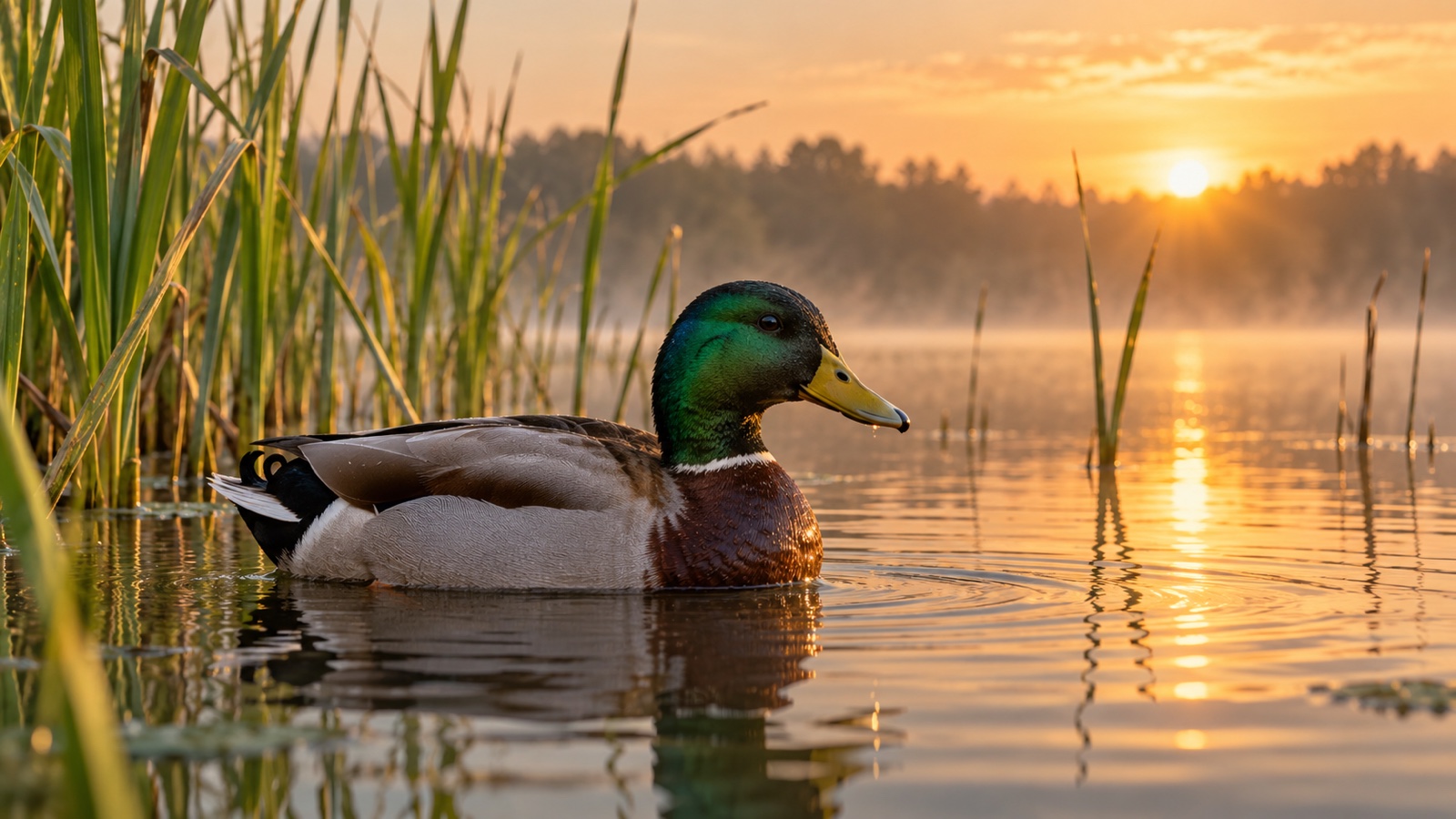
Dabblers tip up while divers disappear completely
- Dabbling ducks usually feed near the water surface or in shallow water.
- Mallards, pintails, shovelers, and many teal are dabblers.
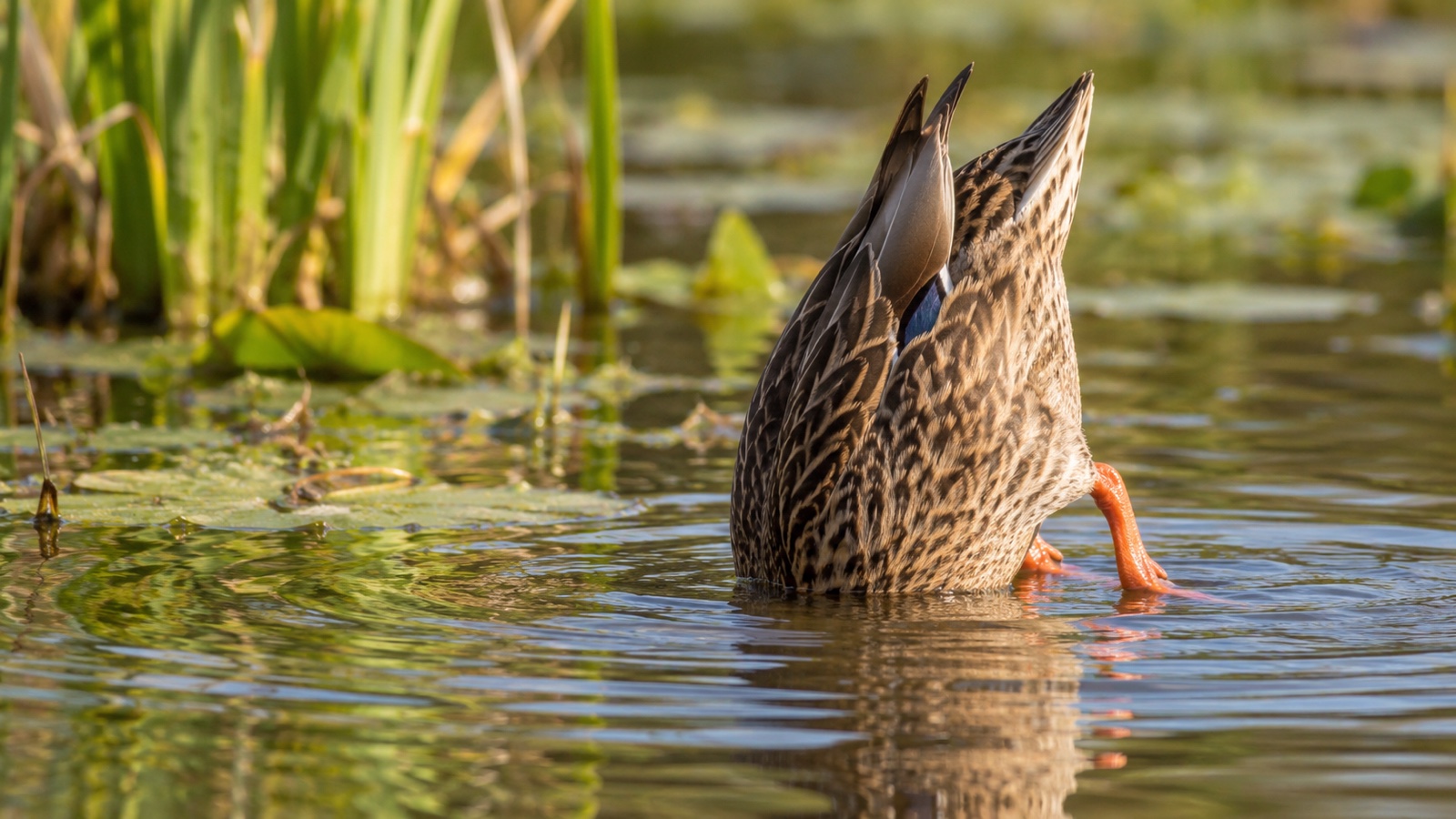
- A dabbling duck often tips forward with its tail pointing upward.
- That posture lets the bird reach submerged plants and invertebrates without fully diving.
- Dabblers can spring almost vertically from the water into flight.
- Diving ducks propel themselves underwater to reach deeper food.
- Canvasbacks, scaup, eiders, and many mergansers are divers.
- Diving ducks usually sit lower in the water than dabblers.
- Their legs tend to be positioned farther toward the rear.
- Rear-set legs improve underwater propulsion but make walking on land more awkward.
- Many diving ducks need a running start across the water before becoming airborne.
- Sea ducks may dive for shellfish, crustaceans, fish, or other marine prey.
- Eiders can dive to the seafloor for mussels and other benthic food.
- Mergansers specialize heavily on fish.
- Their narrow bills have tooth-like serrations for gripping slippery prey.
- Those serrations are not true teeth.
- Some ducks combine several feeding techniques depending on habitat.
- Diet can change with age, season, and migration stage.
- A pond full of ducks may therefore contain surface grazers, underwater hunters, plant eaters, and shellfish specialists.
- The duck sticking its tail straight into the air is not malfunctioning; dinner is simply downstairs.
Bills are filters, tweezers, scoops and fish grippers
- Duck bills are covered by a keratin sheath.
- The shape reflects what a species usually eats.
- Many bills contain comb-like structures called lamellae.
- Lamellae help strain small food particles from water or mud.
- Northern shovelers have especially broad bills lined with many lamellae.
- They sweep those bills through water while filtering tiny organisms.
- Grazing ducks use bill edges to clip or pull vegetation.
- Merganser bills are narrow and serrated for catching fish.
- Sea ducks may have stout bills for handling shellfish.
- Duck bills contain sensitive touch receptors.
- Those receptors help birds locate food they cannot see clearly.
- Some ducks forage successfully in muddy or dark water.
- The bill tip can be particularly sensitive.
- Young ducklings begin pecking and probing shortly after hatching.
- Ducks do not chew food like humans.
- Food is swallowed and processed through the digestive tract.
- A muscular gizzard grinds hard food.
- Ducks may swallow grit that helps the gizzard crush seeds and plant material.
- Different bill designs let closely related species share habitat without eating exactly the same things.
- A duck bill looks like one simple orange accessory until you realize it can be a colander, forceps, rake, and fish clamp depending on the owner.
Waterproofing comes from feather structure plus careful maintenance
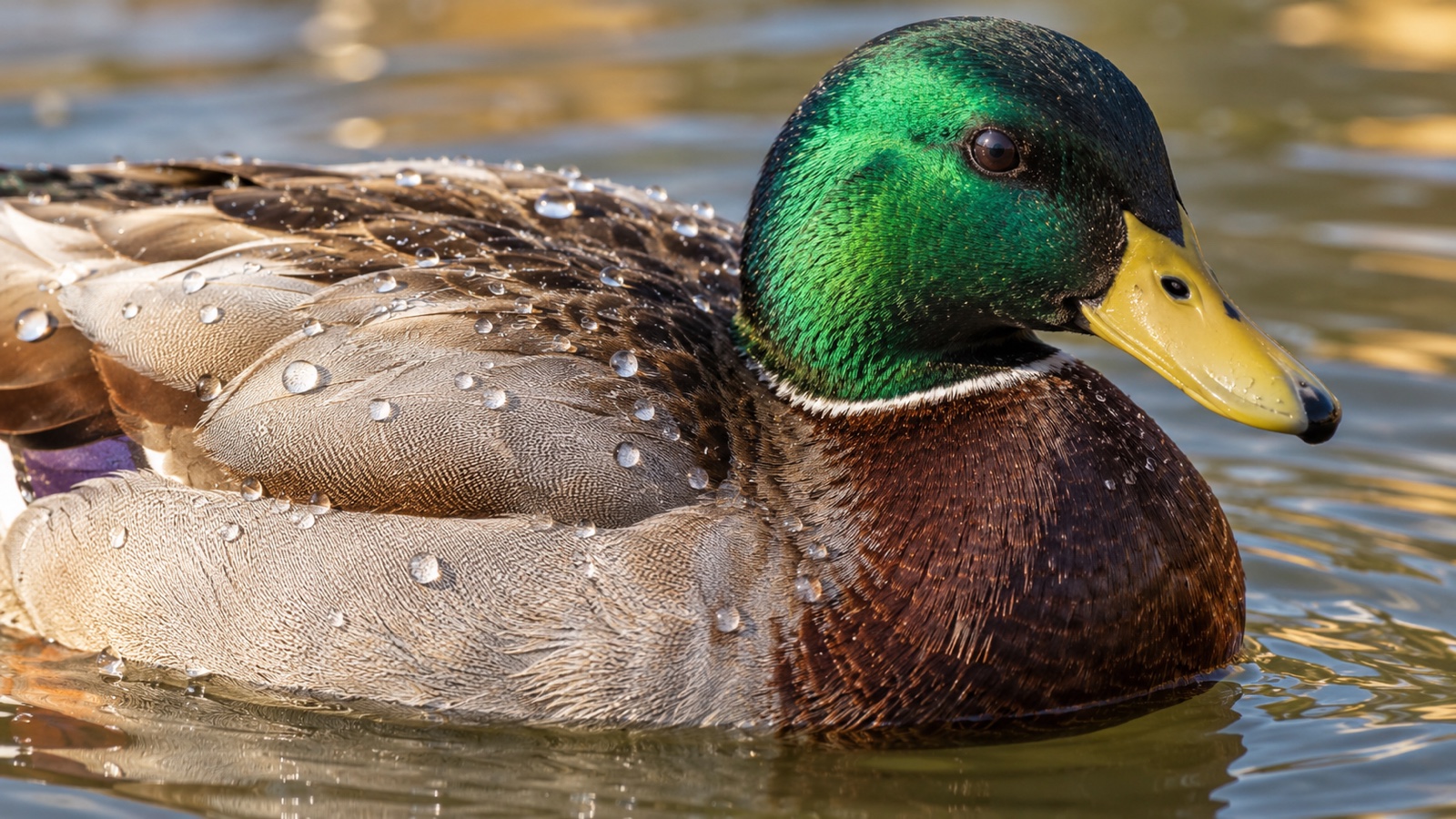
The saying “water off a duck's back” has real anatomy behind it, but oil alone does not make feathers waterproof. Interlocking feather structures, trapped air, preening, and secretions from the uropygial gland all help maintain the water-resistant outer coat.
- Ducks have dense contour feathers over much of the body.
- Each feather contains tiny branches that interlock with neighboring structures.
- A well-maintained feather layer sheds water efficiently.
- Soft down feathers underneath trap insulating air.
- Trapped air helps keep cold water away from the skin.
- Ducks spend significant time preening.
- Preening realigns feather barbs after swimming or activity.
- The uropygial gland sits near the base of the tail.
- Ducks collect oily secretion from that gland with the bill.
- They spread the secretion over feathers while preening.
- Oil helps feather condition and water resistance but works together with physical feather structure.
- A duck with damaged or contaminated feathers can lose insulation.
- Oil spills can destroy the microscopic arrangement that keeps water out.
- An oiled duck may become chilled even when surrounding water is not unusually cold.
- Birds trying to clean petroleum can ingest toxic material.
- Wildlife rehabilitation after spills requires specialized care.
- Molting temporarily replaces worn feathers.
- Many ducks become flightless for several weeks while all major flight feathers regrow.
- Safe wetlands and dense cover become especially important during that period.
- A waterproof duck is less like a waxed raincoat and more like thousands of tiny zippers the bird has to keep combed into place.
Webbed feet can stay cold without freezing the whole bird
- Most ducks have webbing between the front three toes.
- Webbed feet act like paddles during swimming.
- The toes spread during the power stroke.
- They partially close during recovery to reduce drag.
- Duck legs and feet contain relatively little insulating tissue.
- That sounds dangerous in icy water but reduces the amount of warm tissue exposed.
- Arteries carrying warm blood run near veins returning cold blood from the feet.
- Heat transfers from outgoing arterial blood to returning venous blood.
- This countercurrent system conserves body heat.
- The feet can remain much colder than the body core.
- Cold feet also reduce heat loss to ice or water.
- Ducks can stand on one leg and tuck the other into body feathers.
- This further reduces exposed surface area.
- Some species sit directly on their feet while resting.
- Blood flow can be adjusted as conditions change.
- Warm weather creates the opposite challenge.
- Increasing blood flow through bare feet can help release heat.
- Different duck species have different foot sizes and swimming styles.
- Diving ducks often have especially strong legs and broad feet.
- Duck feet are simultaneously paddles and radiators with a heat exchanger hidden in the plumbing.
Migration can span continents, oceans and magnetic maps
Migrating ducks are not simply following whichever flock member looks confident. Different species combine inherited directional programs with learned geography, landmarks, the Sun, stars, wind, weather, and sensitivity to Earth's magnetic field.
- Many duck species migrate seasonally.
- Others remain resident where food and open water persist year-round.
- Migration distance varies enormously.
- Some Arctic-breeding ducks travel thousands of miles to wintering grounds.
- Long-tailed ducks move between high-latitude nesting areas and marine winter habitat.
- Northern pintails occur across much of the Northern Hemisphere.
- Individual pintails can cross oceans or continental flyways.
- Ducks often migrate at night.
- Night travel can provide cooler air and calmer atmospheric conditions.
- Stars can provide directional information to some migratory birds.
- The setting Sun helps recalibrate directional systems.
- Earth's magnetic field also contributes to orientation.
- Experienced adults learn safe stopover sites.
- Wetlands along migration routes function like refueling stations.
- Birds build fat reserves before long flights.
- Fat stores more energy per unit mass than carbohydrates.
- Strong tailwinds can speed migration dramatically.
- Storms can push migrants far from normal routes.
- Protecting one breeding marsh is not enough when the same bird depends on wetlands across several countries.
- A duck may know three continents' worth of seasonal real estate while I still forget where I parked.
Ducklings, quack myths and 25 final duck facts
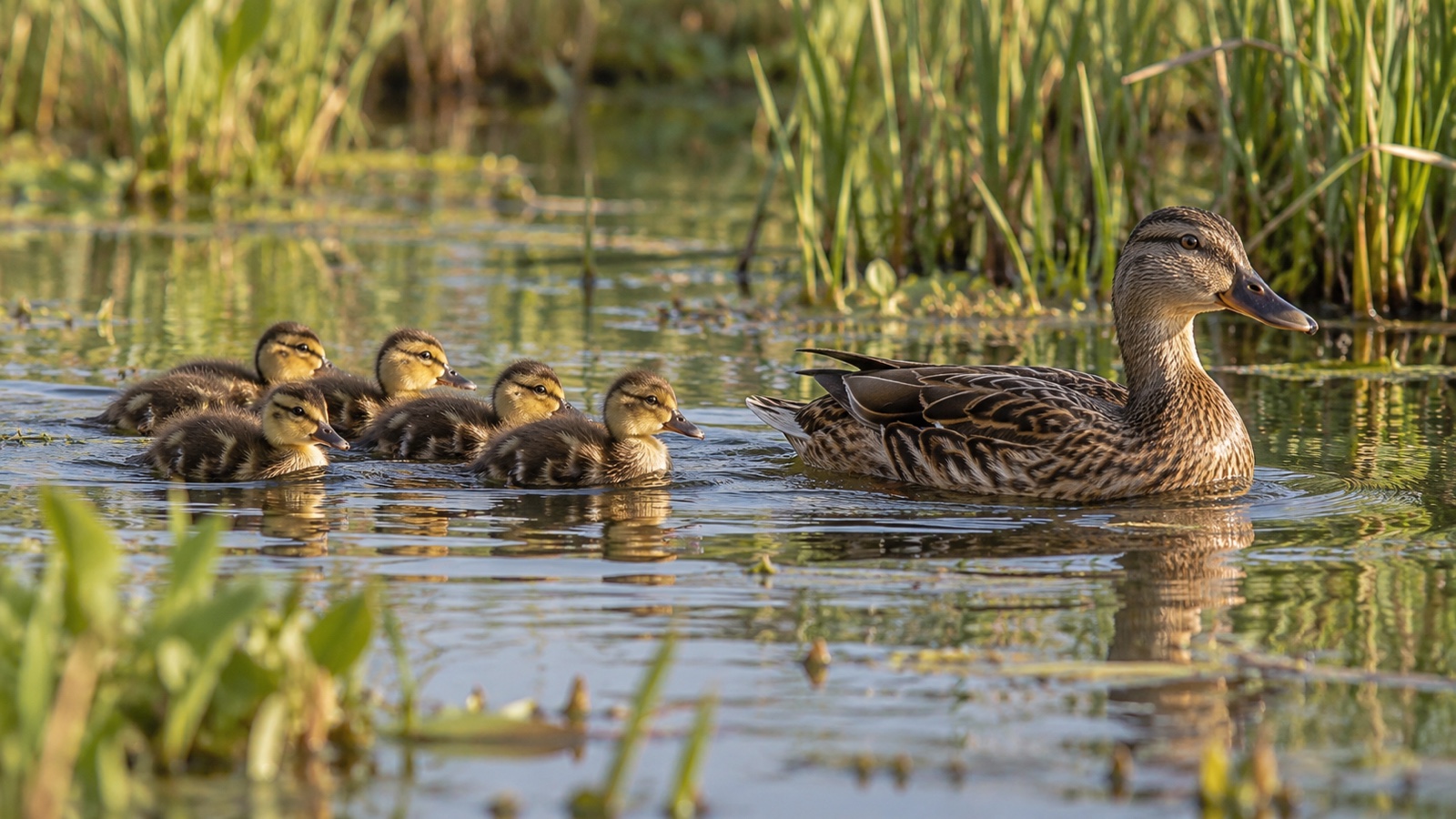
- Most ducklings are precocial.
- They hatch covered in down with eyes open.
- Many can walk and swim within hours.
- The mother leads ducklings to feeding habitat rather than delivering every meal directly into their mouths.
- Ducklings learn what and where to eat through instinct and observation.
- Early attachment to a moving caregiver is commonly called imprinting.
- Imprinting helps young follow the appropriate parent or social group.
- Wood ducks nest in tree cavities.
- Wood-duck ducklings jump from high nest holes soon after hatching.
- Their light bodies and soft ground reduce injury risk.
- Some ducks lay eggs in other ducks' nests.
- This behavior is called brood parasitism.
- Redheads and wood ducks are among species known for laying eggs in neighbors' nests.
- Male mallards lose bright breeding plumage during a seasonal molt.
- The duller temporary appearance is called eclipse plumage.
- Ducks do not all quack.
- Species produce whistles, squeaks, grunts, growls, croaks, and other calls.
- The familiar loud mallard quack is primarily a female call.
- Duck quacks absolutely can produce echoes.
- The claim that a duck's quack does not echo is a myth.
- Some ducks can sleep with one brain hemisphere more alert than the other.
- Birds on the exposed edge of a resting group may keep the outward-facing eye open more often.
- Bread is not instantly poisonous to ducks, but it is nutritionally poor and routine feeding can crowd birds and pollute water.
- The best default for healthy wild ducks is to let them forage naturally rather than feeding them.
- After 145 facts, ducks look less like generic pond scenery and more like filtering, diving, migrating, half-awake, waterproofed waterfowl with enough specialized designs to fill an entire wetland.
Quick FAQ
Q: Do duck quacks echo?
A: Yes. Duck calls obey the same acoustic physics as other sounds and can echo.
Q: Are duck feathers waterproof because of oil?
A: Oil helps, but waterproofing depends heavily on feather structure, trapped air, and careful preening too.
Q: Can all ducks fly?
A: Most wild species can, but several wild steamer ducks are flightless, and some heavy domestic breeds fly poorly or not at all.
Q: Should I feed bread to ducks?
A: Occasional bread is not generally acutely toxic, but it is poor nutrition and feeding can cause crowding and water-quality problems. Leaving wild ducks to forage naturally is best.
Q: Why do male mallards look dull in late summer?
A: Drakes enter eclipse plumage while molting, temporarily losing much of the bright breeding appearance.

Ellie is the owner and sole author of Fun Facts, combining her mechanical engineering background with years of research-driven writing to deliver facts you can trust. Every article is thoroughly fact-checked and routinely updated as new science and sources emerge to keep information accurate and current. Her mission is to make learning delightful while upholding high standards of reliability and transparency.