
Delaware is tiny enough that people sometimes treat it like a highway between bigger places, which is wildly unfair to a state with colonial forts, Atlantic beaches, giant horseshoe-crab gatherings, no general sales tax, three counties, one very low high point, and the bragging rights to “First State.”
Delaware basics from the First State
- Delaware became the first state to ratify the U.S. Constitution.
- It ratified the Constitution on December 7, 1787.
- That is why Delaware calls itself the First State.
- Dover is the state capital.
- Wilmington is Delaware’s largest city.
- Delaware is the second-smallest U.S. state by land area.
- Only Rhode Island is smaller.
- Delaware has just three counties.
- They are New Castle, Kent, and Sussex counties.
- New Castle County is the northernmost and most urbanized.
- Kent County contains Dover.
- Sussex County contains most of Delaware’s Atlantic beach towns.
- The postal abbreviation is DE.
- Delaware’s official nickname is the First State.
- It is also called the Diamond State.
- Thomas Jefferson is traditionally credited with the Diamond State nickname.
- The state motto is “Liberty and Independence.”
- Delaware lies in the Eastern Time Zone.
- The state has no general state or local retail sales tax.
- A state can apparently be first, tiny, and excellent for buying a laptop all at once.
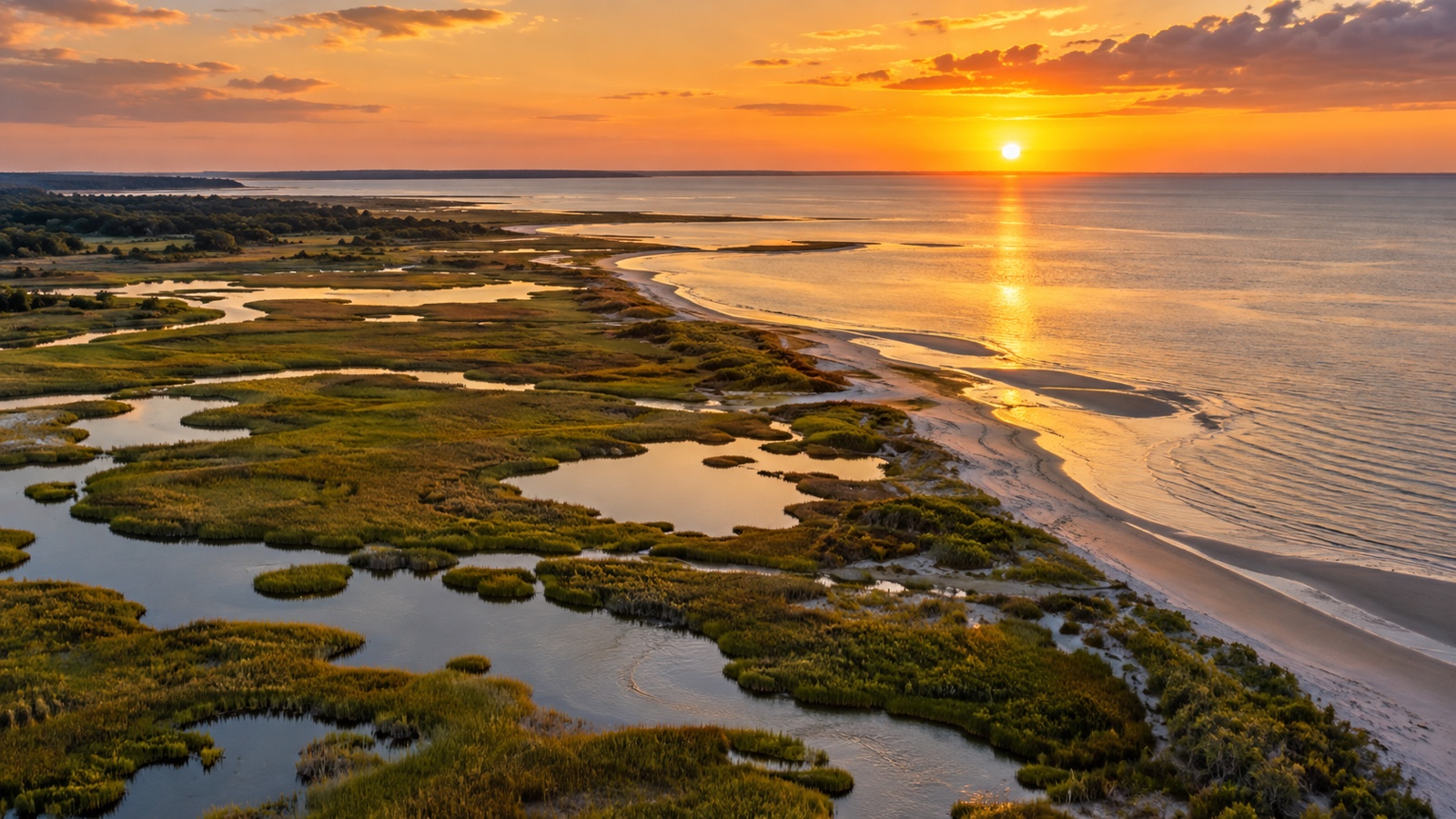
A peninsula, a bay & one extremely modest high point
- Most of Delaware lies on the Delmarva Peninsula.
- The name Delmarva blends Delaware, Maryland, and Virginia.
- Delaware Bay separates much of the state from New Jersey.
- The Delaware River reaches the bay north of Wilmington.
- The Atlantic Ocean borders southeastern Delaware.
- Maryland surrounds Delaware on the west and south.
- Pennsylvania borders the short northern edge.
- New Jersey lies across the Delaware River and Bay.
- Delaware’s highest natural point is near Ebright Road north of Wilmington.
- The high point is commonly called Ebright Azimuth.
- It reaches only about 448 feet above sea level.
- Only Florida has a lower state high point.
- Southern Delaware is especially flat and low-lying.
- Coastal storms can cause flooding along beaches and bays.
- Cape Henlopen sits where Delaware Bay meets the Atlantic Ocean.
- Cape Henlopen State Park protects beaches, dunes, forests, and historic military sites.
- The Chesapeake and Delaware Canal cuts across the northern Delmarva Peninsula.
- The canal connects the Delaware River with Chesapeake Bay waterways.
- It shortens the shipping route between Baltimore and ports farther north.
- Delaware’s tallest mountain is basically a gentle neighborhood rise, and I find that charming.
Colonial Delaware changed hands repeatedly
- Indigenous peoples lived in the Delaware region for thousands of years before European settlement.
- The Lenape are among the Indigenous peoples deeply connected with the region.
- Dutch colonists attempted an early settlement near present-day Lewes in 1631.
- That settlement was called Zwaanendael.
- It was destroyed after conflict with local Indigenous people.
- Swedish colonists established New Sweden in the Delaware Valley in 1638.
- Fort Christina was built near present-day Wilmington.
- The site is named for Queen Christina of Sweden.
- Finnish settlers were also part of New Sweden.
- Scandinavian settlers brought log-building traditions to the region.
- The Dutch conquered New Sweden in 1655.
- English forces took control of the region in 1664.
- Delaware later became connected politically with Pennsylvania under William Penn.
- The “Lower Counties” eventually developed their own assembly.
- Delaware declared independence from both Britain and Pennsylvania in 1776.
- Caesar Rodney was a Delaware delegate to the Continental Congress.
- He made a famous overnight ride to Philadelphia in July 1776.
- Rodney arrived in time to support Delaware’s vote for independence.
- His ride became one of Delaware’s signature Revolutionary War stories.
- Tiny Delaware had a surprisingly complicated European custody history.
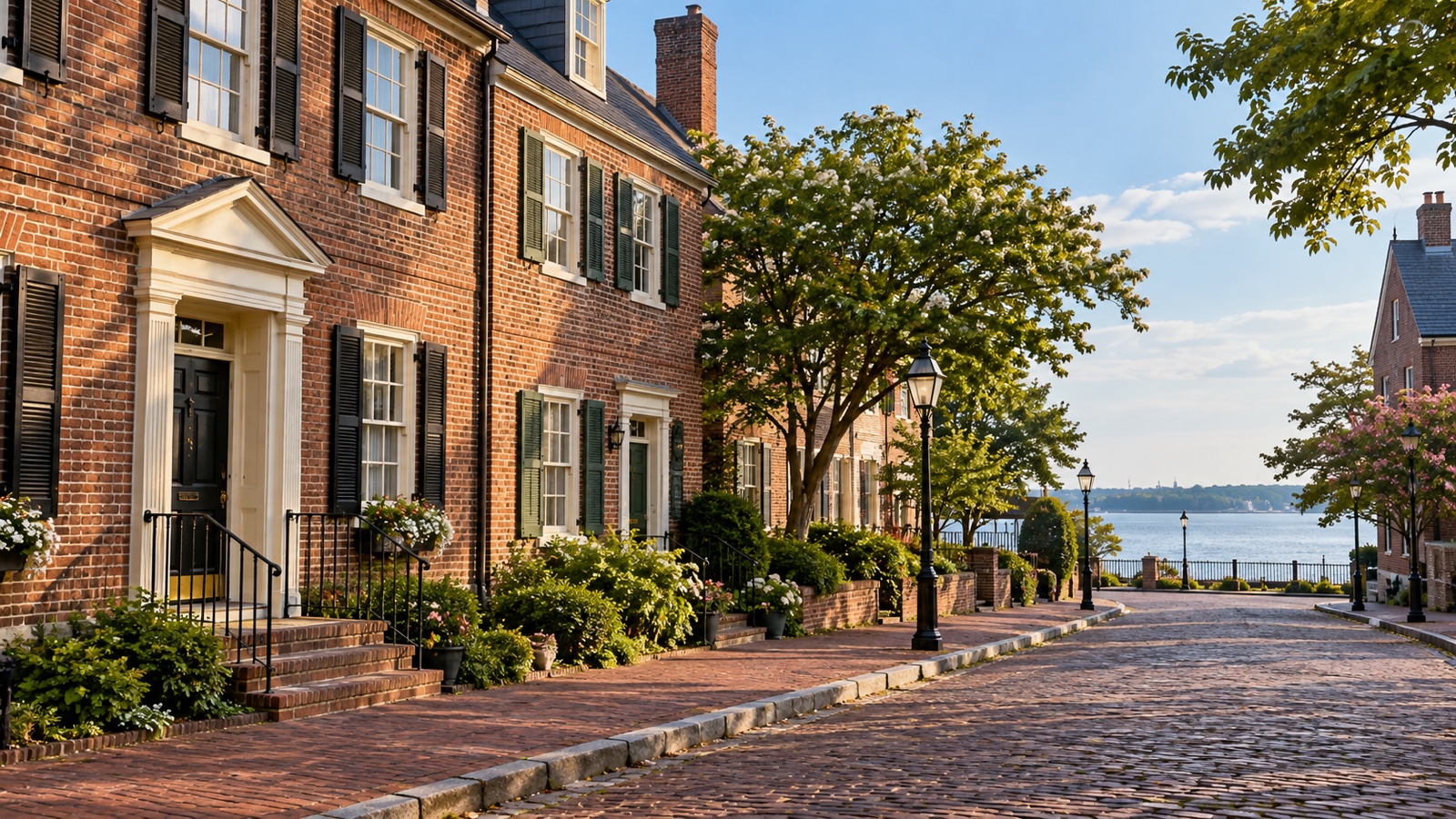
Beaches, boardwalks & Delaware’s coast
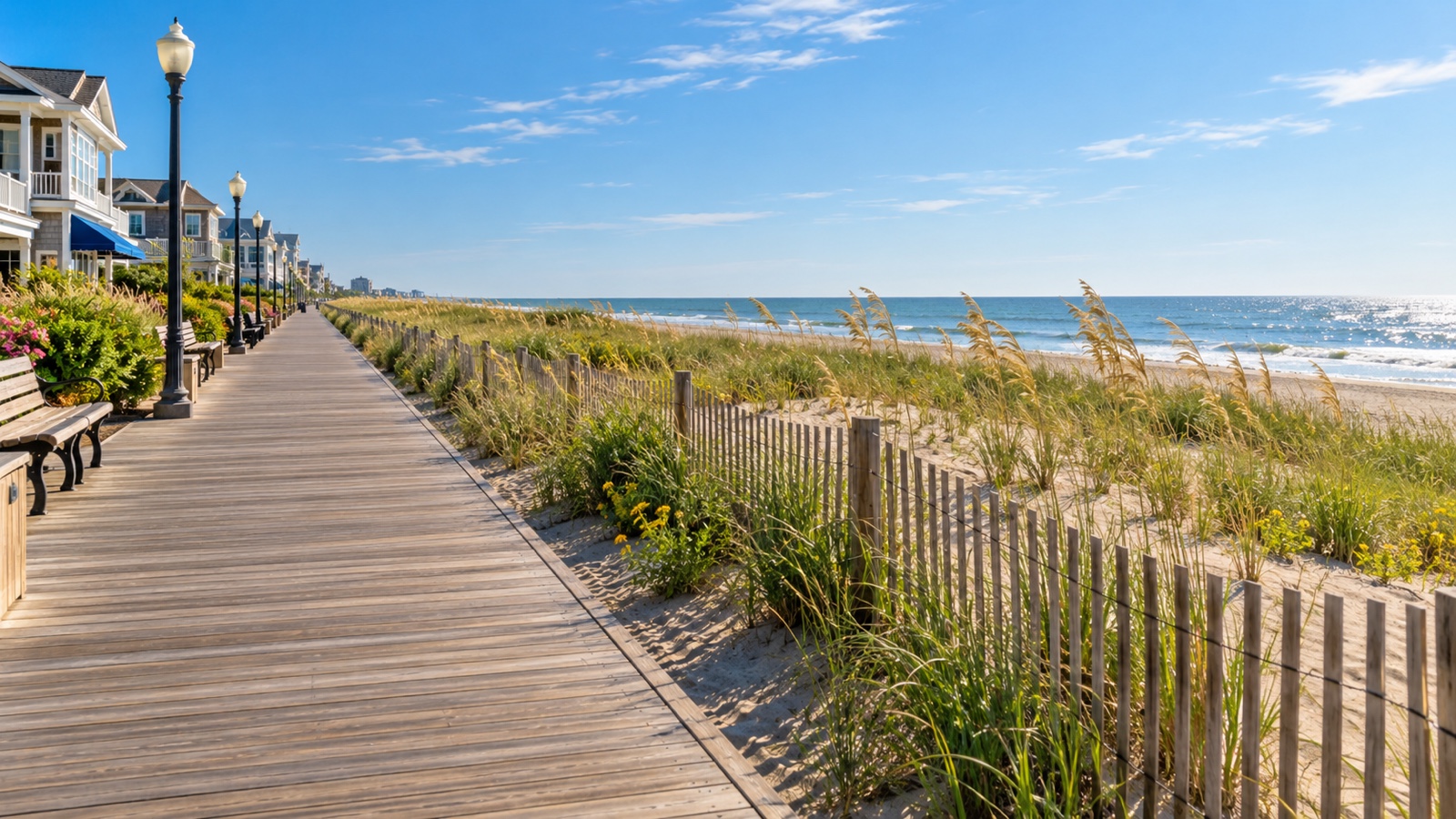
Delaware’s beaches are the part that surprises people who picture the state as three highway exits and a corporation mailbox. Rehoboth, Bethany, Dewey, Lewes, and Fenwick Island give the state a full-on summer identity once you head east.
- Rehoboth Beach is one of Delaware’s best-known resort towns.
- Its boardwalk runs along the Atlantic beachfront.
- Rehoboth was founded in the 19th century as a Methodist camp-meeting community.
- The town later developed into a major vacation destination.
- Dewey Beach sits on a narrow strip between the Atlantic and Rehoboth Bay.
- Bethany Beach markets itself with a quieter family-resort identity.
- Fenwick Island lies near Delaware’s border with Maryland.
- Lewes sits near the mouth of Delaware Bay.
- Lewes calls itself the First Town in the First State.
- The Cape May-Lewes Ferry connects Delaware with southern New Jersey.
- The ferry crosses the mouth of Delaware Bay.
- Cape Henlopen has miles of beach and biking trails.
- World War II observation towers still stand along parts of the Delaware coast.
- The towers helped coastal defenses watch for enemy ships.
- Fort Miles was built at Cape Henlopen during World War II.
- Delaware Seashore State Park protects barrier beaches south of Rehoboth.
- Indian River Inlet connects Indian River Bay with the Atlantic.
- A major bridge carries coastal highway traffic across the inlet.
- Summer traffic can dramatically change travel times in Sussex County.
- The state may be small, but beach-weekend traffic has absolutely figured out how to make it feel larger.
Horseshoe crabs make Delaware Bay globally important
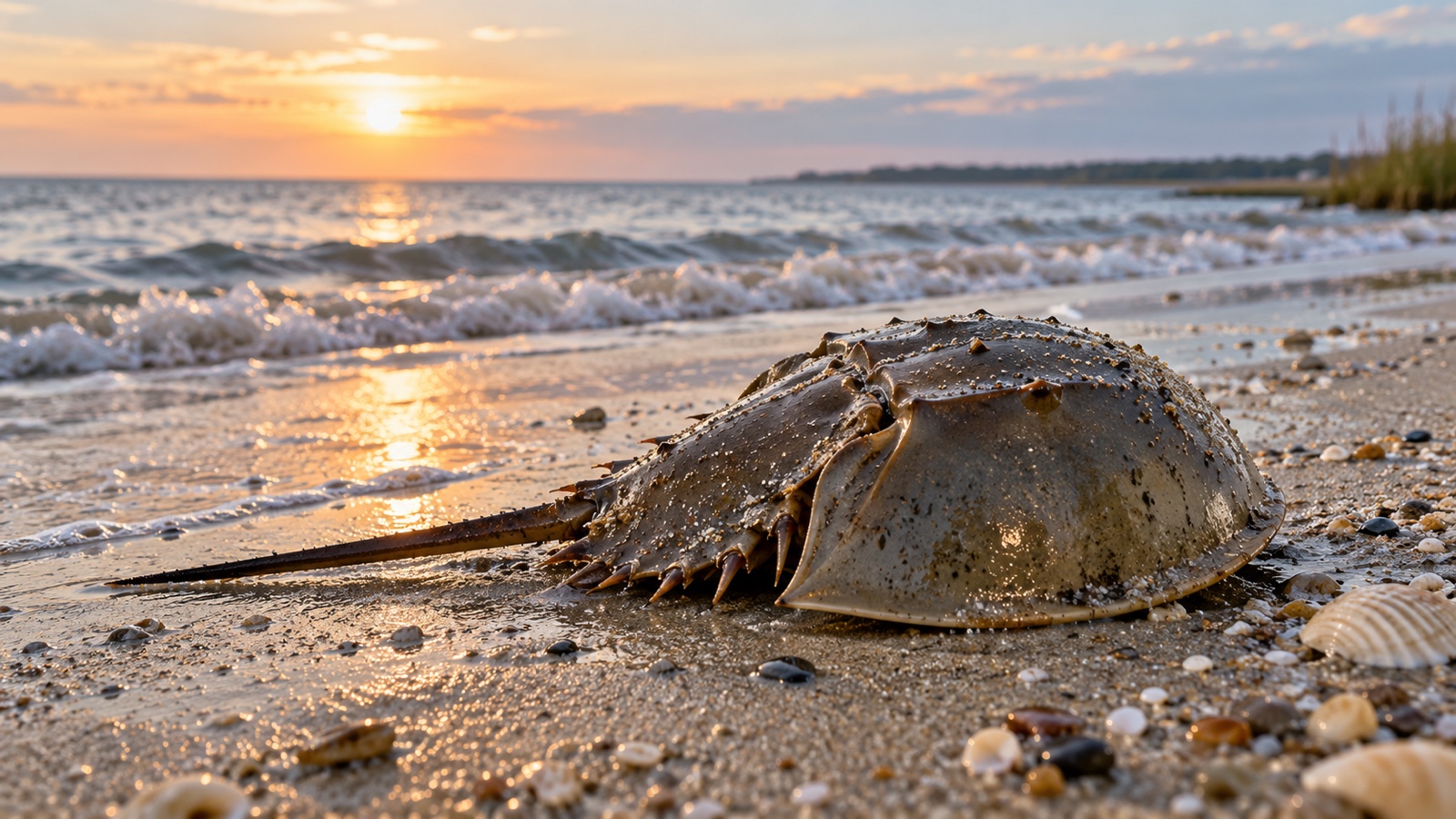
- Delaware Bay hosts one of the world’s largest concentrations of spawning horseshoe crabs.
- Horseshoe crabs gather on bay beaches in spring.
- Spawning activity often peaks around high tides and full or new moons.
- Females bury clusters of eggs in beach sand.
- Migrating shorebirds feed heavily on exposed horseshoe-crab eggs.
- Red knots are especially famous for using Delaware Bay as a migration stopover.
- Red knots can travel from South America toward Arctic breeding grounds.
- The rich food supply helps birds rapidly gain weight before continuing north.
- Horseshoe crabs are not true crabs.
- They are more closely related to spiders and scorpions than to blue crabs.
- Their lineage extends back hundreds of millions of years.
- Horseshoe-crab blood is blue because it uses copper-containing hemocyanin to transport oxygen.
- Compounds derived from horseshoe-crab blood have been used to test medical products for bacterial contamination.
- Conservation efforts try to balance ecological needs with biomedical and fishing uses.
- Delaware’s state marine animal is the horseshoe crab.
- Prime Hook National Wildlife Refuge protects coastal marshes in Sussex County.
- Bombay Hook National Wildlife Refuge protects major wetland habitat near Delaware Bay.
- Both refuges are important for migratory birds.
- Delaware lies along the Atlantic Flyway.
- A prehistoric-looking animal quietly turns Delaware beaches into an international bird refueling station every spring.
DuPont, corporations & why so many companies choose Delaware
Delaware has an odd superpower: a huge number of companies are legally incorporated there even when their headquarters are somewhere else. That comes from a long-developed corporate-law system, specialized courts, predictable case law, and business rules, not because every company keeps an office next to a beach.
- E. I. du Pont founded a gunpowder business along the Brandywine Creek in 1802.
- The company grew into the global chemical enterprise known as DuPont.
- Brandywine waterpower helped operate the early powder mills.
- Hagley Museum preserves the original industrial site.
- Winterthur Museum occupies the former estate of Henry Francis du Pont.
- Winterthur is known for American decorative arts and extensive gardens.
- Nemours Estate is another du Pont family property open to visitors.
- The du Pont family had enormous influence on Delaware industry, philanthropy, politics, and culture.
- Delaware’s Court of Chancery specializes heavily in corporate and equity law.
- The court traditionally decides cases without juries.
- Delaware has developed a large body of corporate legal precedent.
- Businesses value predictable rules when choosing a state of incorporation.
- Delaware law allows companies incorporated there to operate primarily elsewhere.
- The state earns significant revenue from incorporation fees and franchise taxes.
- Many major public companies are incorporated in Delaware.
- That does not mean their headquarters or employees are physically located in the state.
- Wilmington developed a large financial-services sector.
- Banking laws helped attract credit-card businesses during the late 20th century.
- The University of Delaware is based in Newark.
- The university traces its roots to a school founded in the 18th century.
Food, racing, state symbols & 25 final Delaware facts
- Scrapple is a traditional Mid-Atlantic breakfast meat especially associated with Delaware and nearby states.
- It combines pork scraps with grain and seasonings into a loaf.
- Slices are usually pan-fried until crisp on the outside.
- Apple scrapple festivals celebrate the food in Bridgeville.
- Chicken farming is a major Delaware industry.
- The Delmarva Peninsula is one of America’s important poultry-producing regions.
- The Delaware Blue Hen is the state bird.
- The University of Delaware athletic teams are called the Fightin’ Blue Hens.
- The blue-hen tradition is connected with Revolutionary War folklore.
- Dover Motor Speedway hosts major stock-car racing events.
- The track is nicknamed the Monster Mile.
- Its concrete oval is one mile long.
- Dogfish Head Craft Brewery was founded in Delaware in the 1990s.
- The brewery became influential in America’s craft-beer movement.
- The state flower is the peach blossom.
- Delaware once had a major peach-growing industry.
- The state tree is the American holly.
- The state insect is the ladybug.
- The state fish is the weakfish.
- The Delaware Memorial Bridge spans the Delaware River between Delaware and New Jersey.
- It consists of twin suspension bridges.
- The first span opened in 1951.
- Dover’s Legislative Hall is the current state capitol building.
- Delaware’s old State House still stands on Dover’s historic Green.
- After 145 facts, Delaware’s biggest trick is convincing everyone it is merely small when it has spent centuries being strategically important.
Quick FAQ
Q: Why is Delaware called the First State?
A: Delaware was the first state to ratify the U.S. Constitution, doing so on December 7, 1787.
Q: Does Delaware really have no sales tax?
A: Delaware does not impose a general state or local retail sales tax, though other taxes and fees still exist.
Q: How many counties does Delaware have?
A: Just three: New Castle, Kent, and Sussex.
Q: Why are so many companies incorporated in Delaware?
A: Delaware offers a mature corporate-law system, a specialized Court of Chancery, extensive legal precedent, and business-friendly incorporation procedures.
Q: What is Delaware famous for besides corporations?
A: Its beaches, First State history, horseshoe crabs, DuPont heritage, poultry farms, tax-free shopping, scrapple, and compact coastal geography.

Ellie is the owner and sole author of Fun Facts, combining her mechanical engineering background with years of research-driven writing to deliver facts you can trust. Every article is thoroughly fact-checked and routinely updated as new science and sources emerge to keep information accurate and current. Her mission is to make learning delightful while upholding high standards of reliability and transparency.