
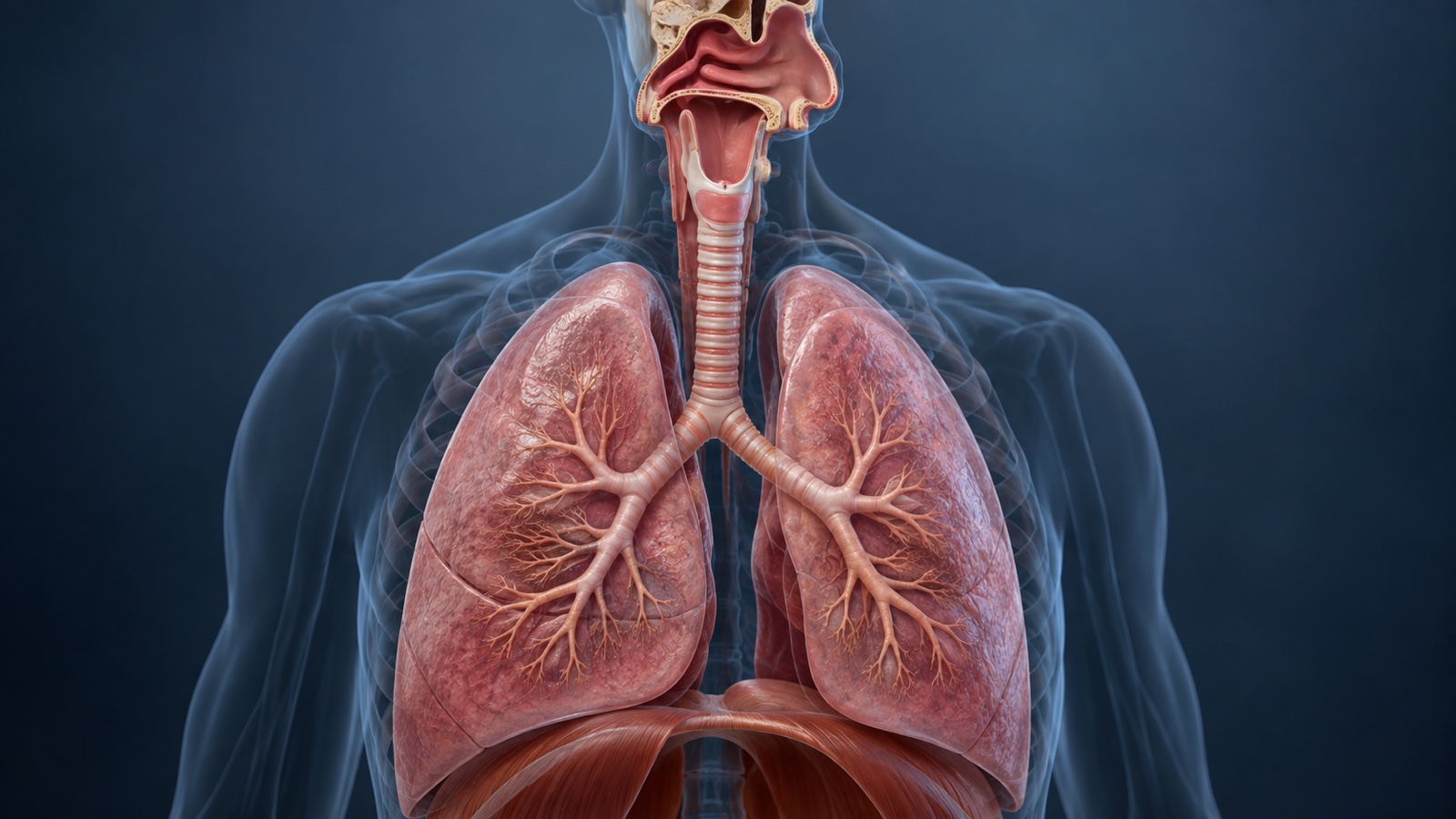
The respiratory system starts before air ever reaches the lungs. Your nose filters and warms it, the throat routes it, the larynx protects the airway and makes sound, branching tubes distribute it, muscles move it, and microscopic air sacs trade gases with blood.
Breathing starts with the nose, mouth and throat
- The respiratory system includes the nose, nasal cavity, sinuses, pharynx, larynx, trachea, bronchi, lungs, and breathing muscles.
- Air usually enters through the nose or mouth.
- The nasal cavity warms incoming air.
- It also humidifies dry air.
- Nasal hairs trap some larger particles.
- Mucus captures dust, pollen, and microbes.
- The nasal passages contain a rich blood supply that helps warm inhaled air.
- Turbinates are curved structures that increase surface area inside the nose.
- Turbinates also create airflow patterns that improve conditioning of inhaled air.
- Paranasal sinuses are air-filled spaces in bones around the nasal cavity.
- Sinuses produce mucus that drains into the nasal passages.
- They also affect voice resonance.
- The pharynx is shared by the respiratory and digestive systems.
- The pharynx is commonly called the throat.
- Air passes from the pharynx toward the larynx.
- The larynx is commonly called the voice box.
- The epiglottis helps protect the airway during swallowing.
- Swallowing temporarily redirects food away from the airway.
- Breathing and swallowing therefore require careful coordination.
- The respiratory system's first few inches already perform filtering, humidifying, heating, routing, and voice-related jobs before the lungs get involved.
The larynx protects the airway and produces voice
- The larynx sits between the pharynx and trachea.
- It contains several pieces of cartilage.
- The thyroid cartilage forms the prominent structure commonly called the Adam's apple.
- Everyone has thyroid cartilage, although its size and visibility vary.
- Vocal folds stretch across the larynx.
- Air moving past the vocal folds can make them vibrate.
- Vocal-fold vibration creates the basic sound source for speech and singing.
- Tongue, lips, palate, jaw, and throat shape that sound into recognizable speech.
- Pitch changes partly with vocal-fold length, tension, and mass.
- Louder sound generally requires greater airflow and pressure.
- The larynx closes tightly during some protective reflexes.
- Coughing begins partly with closure of the vocal folds while pressure builds below them.
- The sudden reopening creates a high-speed burst of air.
- This burst helps clear mucus or foreign material.
- Hoarseness often results from swelling, irritation, or altered vibration of the vocal folds.
- Whispering uses a different vocal-fold configuration than ordinary voiced speech.
- The larynx rises during swallowing.
- This movement helps protect the airway.
- Aspirating food or liquid means material entered the airway instead of staying in the digestive path.
- The same structure that helps stop lunch from entering your lungs also lets you sing, cough, whisper, and yell across a parking lot.
The airway branches like an upside-down tree
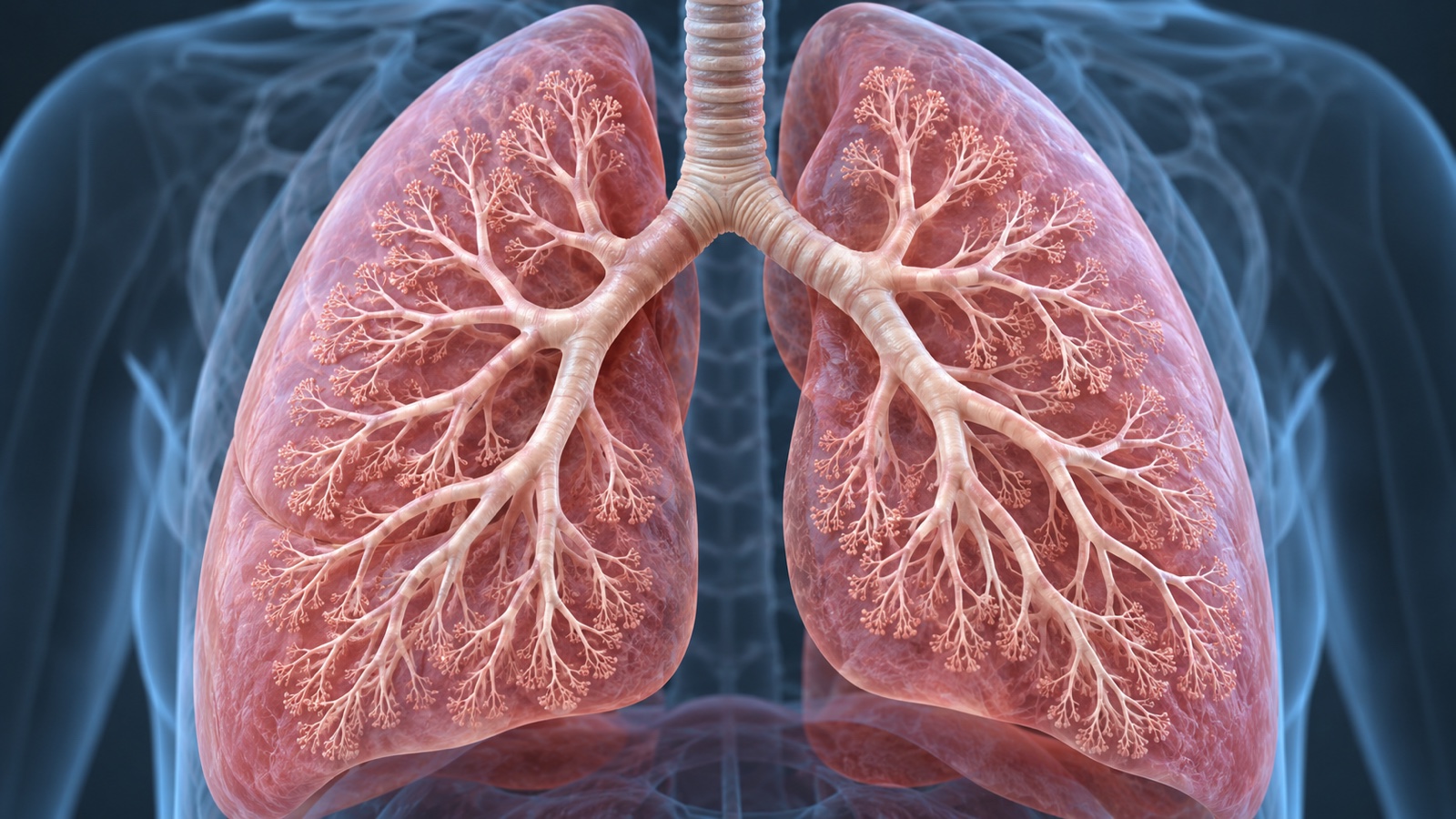
- The trachea carries air from the larynx toward the chest.
- C-shaped cartilage rings help keep the trachea open.
- The open part of each cartilage ring faces the esophagus.
- The trachea divides into right and left main bronchi.
- The right main bronchus is generally wider and more vertical than the left.
- Inhaled objects therefore enter the right bronchial tree more often in many adults.
- The main bronchi divide repeatedly inside the lungs.
- Smaller branches are called bronchioles.
- Bronchioles contain little or no cartilage compared with larger bronchi.
- Smooth muscle in bronchiole walls can change airway diameter.
- Bronchodilation increases airway caliber.
- Bronchoconstriction narrows the airways.
- Asthma involves variable airway narrowing, inflammation, and increased airway responsiveness.
- Inhaled bronchodilator medicines can relax airway smooth muscle.
- The conducting airways mainly move air rather than exchange gases.
- Gas exchange begins much deeper in the respiratory zone.
- Repeated branching creates a huge total cross-sectional area.
- Airflow slows as it moves into the smallest airways.
- Slow flow helps gases diffuse efficiently near the alveoli.
- One stream of air entering the trachea becomes divided through an enormous branching network before reaching microscopic gas-exchange surfaces.
Breathing happens because muscles change pressure
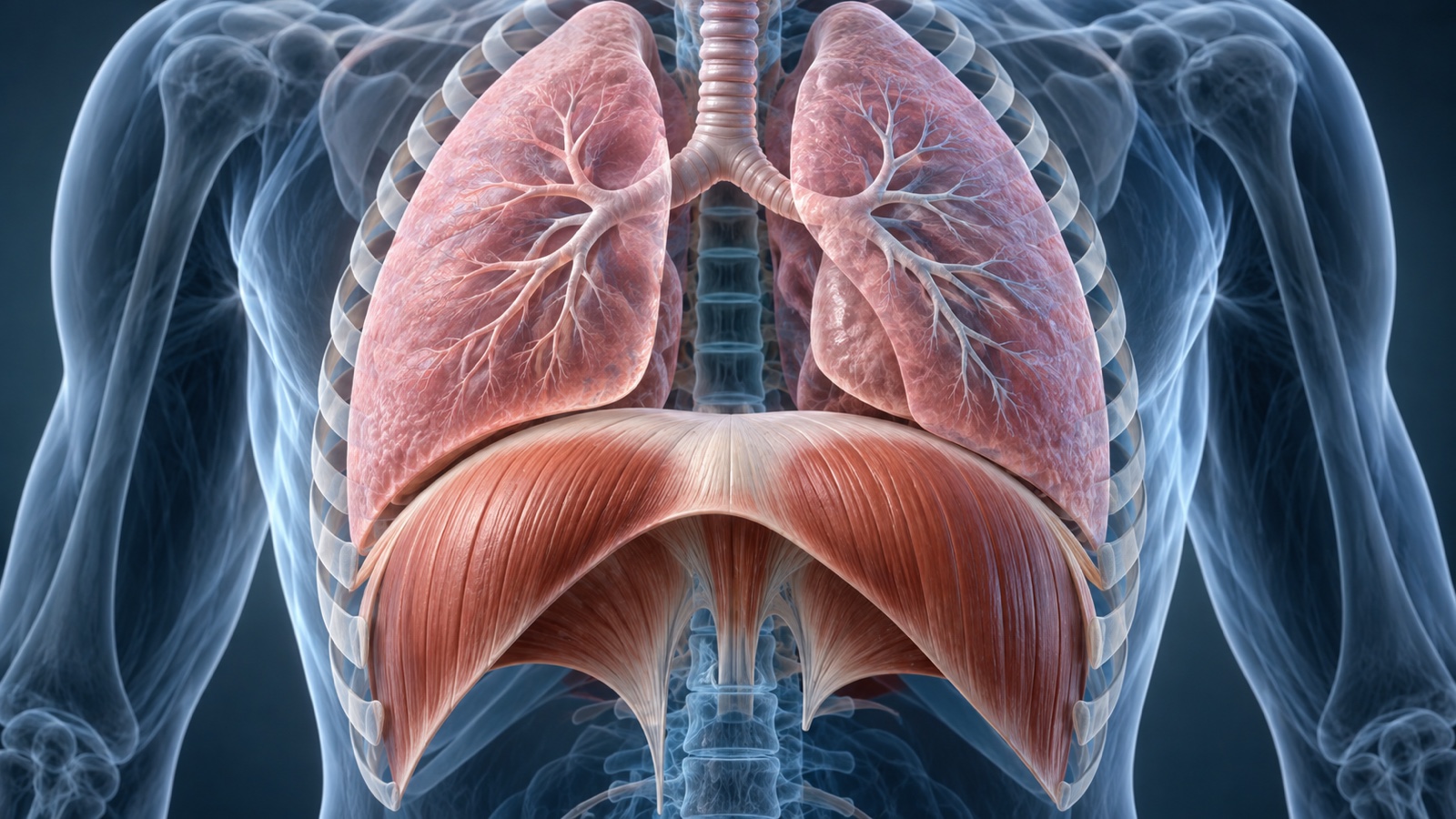
- The diaphragm is the main muscle of quiet inhalation.
- The diaphragm forms a dome beneath the lungs.
- When it contracts, it moves downward.
- This increases the volume of the chest cavity.
- Increasing chest volume lowers pressure around the lungs.
- Air then flows inward from higher atmospheric pressure.
- External intercostal muscles between the ribs also assist inhalation.
- They help expand the rib cage.
- Quiet exhalation is usually mostly passive.
- Elastic recoil of the lungs and chest wall helps push air out.
- Forced exhalation recruits abdominal and internal intercostal muscles.
- Exercise increases both breathing depth and rate.
- Breathing effort rises when airway resistance increases.
- Pursed-lip breathing can help some people maintain airway pressure during exhalation.
- Accessory breathing muscles in the neck and upper chest can become active during respiratory distress.
- Seeing those accessory muscles working can be a sign that breathing is unusually difficult.
- Hiccups are sudden involuntary diaphragm contractions.
- The hic sound occurs when the glottis closes abruptly after the contraction.
- The respiratory system depends on pressure gradients rather than lungs actively sucking air like mechanical pumps.
- Your lungs move because surrounding muscles reshape the chest and let ordinary atmospheric pressure do part of the work.
Alveoli trade oxygen and carbon dioxide with blood
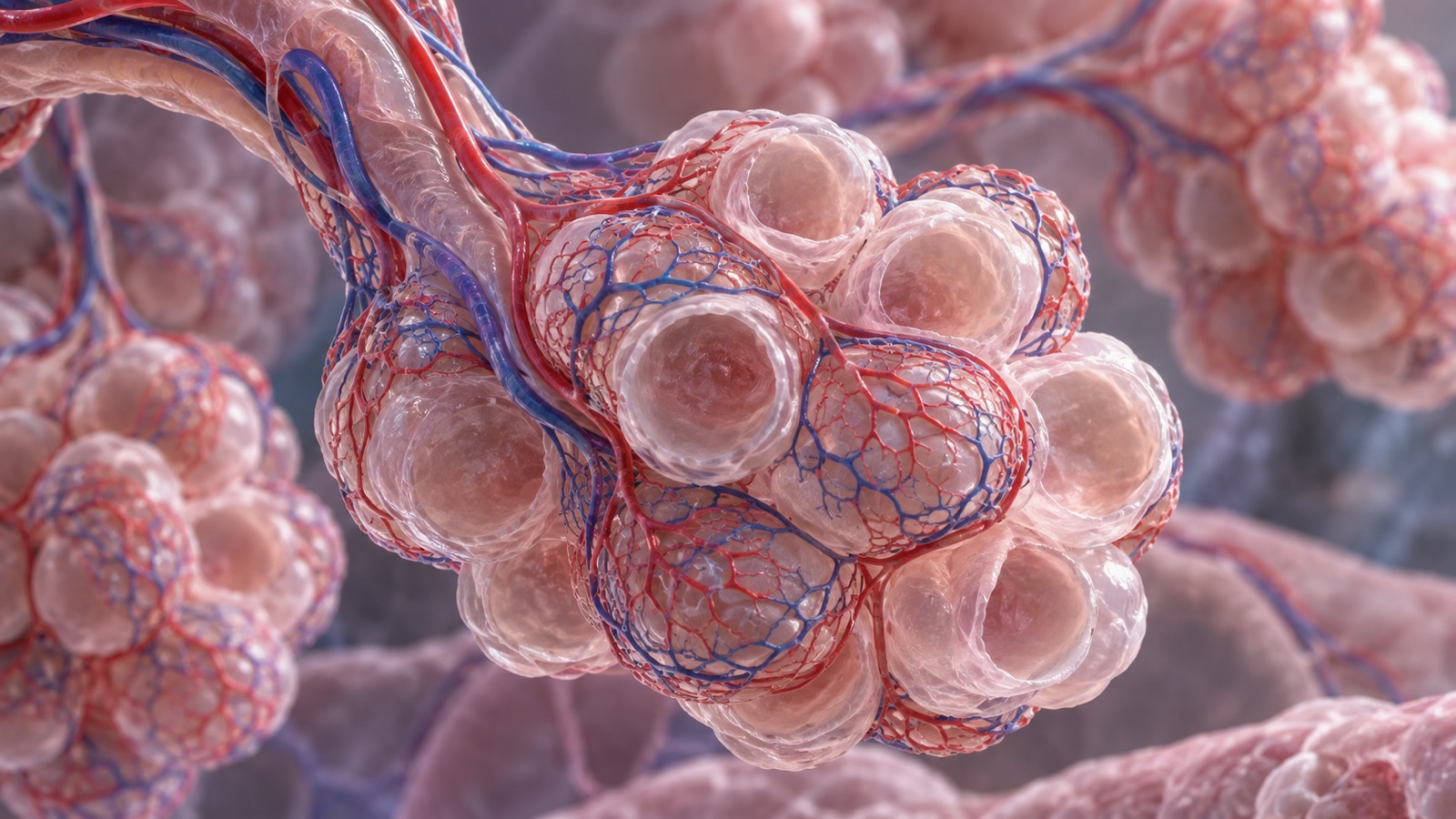
- Alveoli are microscopic air sacs at the ends of the respiratory tree.
- Healthy adult lungs contain hundreds of millions of alveoli.
- Alveolar walls are extremely thin.
- Capillaries closely surround the alveoli.
- Oxygen diffuses from alveolar air into pulmonary capillary blood.
- Carbon dioxide diffuses from blood into alveolar air.
- Diffusion occurs because gases move down partial-pressure gradients.
- Red blood cell hemoglobin binds most oxygen carried in blood.
- Most carbon dioxide is transported in blood as bicarbonate.
- Efficient gas exchange requires both ventilation and blood flow.
- Ventilation means moving air in and out of alveoli.
- Perfusion means blood flow through pulmonary capillaries.
- Ventilation-perfusion mismatch can reduce blood oxygen levels.
- Surfactant lowers surface tension inside alveoli.
- Type II alveolar cells produce surfactant.
- Insufficient surfactant makes alveoli harder to keep open.
- Premature infants can develop respiratory distress when surfactant production is immature.
- Alveolar macrophages patrol the deepest air spaces.
- They engulf particles and microbes that reach the gas-exchange surface.
- Every breath depends on gases crossing membranes only a few cells thick between the outside world and the bloodstream.
The brainstem adjusts breathing automatically
- Breathing continues automatically during sleep.
- Respiratory rhythm is generated largely by neural networks in the brainstem.
- The medulla contains important respiratory control circuits.
- The pons also modifies breathing patterns.
- Chemoreceptors monitor carbon dioxide, acidity, and oxygen.
- Carbon dioxide is a major driver of normal breathing adjustments.
- Rising carbon dioxide increases acidity in body fluids.
- Central chemoreceptors respond strongly to these changes.
- Peripheral chemoreceptors in the carotid and aortic bodies detect changes in oxygen and other blood chemistry.
- Very low oxygen strongly stimulates breathing.
- You can voluntarily hold your breath for a limited time.
- Automatic chemical drives eventually become increasingly difficult to override.
- Speech temporarily reshapes the normal breathing rhythm.
- Singing uses carefully controlled exhalation.
- Laughing produces repeated bursts of exhalation.
- Crying, sighing, yawning, and coughing also modify the respiratory pattern.
- Exercise signals from muscles and the nervous system increase ventilation quickly.
- Breathing changes can begin before blood chemistry has changed dramatically.
- Anxiety can cause rapid breathing even when oxygen needs have not increased much.
- Breathing feels simple only because the brainstem handles most of the chemistry, timing, and muscle coordination without asking for conscious help.
Mucus, cilia and reflexes keep airways cleaner
- The respiratory tract is constantly exposed to dust, microbes, smoke, and allergens.
- Mucus traps many inhaled particles before they reach alveoli.
- Microscopic cilia line much of the conducting airway.
- Cilia beat in coordinated waves toward the throat.
- This clearance system is sometimes called the mucociliary escalator.
- Most mucus moved upward is swallowed without being noticed.
- Coughing provides a faster backup clearance mechanism.
- Sneezing clears irritants primarily from the nasal passages.
- Smoking damages cilia and changes mucus production.
- This makes airway clearance less effective.
- Air pollution can irritate respiratory tissue even in nonsmokers.
- Very small airborne particles can penetrate deep into the lungs.
- Macrophages help remove particles that reach alveoli.
- Inflammation is useful during infection but can also obstruct airflow when excessive.
- Respiratory viruses often infect cells lining the nose, throat, or airways.
- Antibodies such as IgA help defend mucosal surfaces.
- Normal respiratory microbes also interact with host defenses.
- The airway must remove threats while preserving a delicate surface thin enough for rapid gas exchange.
- Clean breathing depends less on having sterile lungs and more on continuous filtering, transport, immune surveillance, and repair.
- The respiratory system is essentially an open border to the atmosphere, so it operates a cleanup and security system every second you are alive.
Testing, adaptation and 5 final respiratory facts
- Spirometry measures how much air a person can exhale and how quickly it can be moved.
- Peak-flow meters provide a simpler measurement of maximum expiratory airflow and are often used in asthma monitoring.
- At high altitude, lower oxygen pressure stimulates faster breathing and longer-term physiological adaptation.
- Regular endurance training improves the efficiency of oxygen delivery and use, although it does not usually make healthy adult lungs enormously larger.
- After 145 facts, the respiratory system looks less like two lungs and more like an integrated airway, muscle, gas-exchange, voice, immune-defense, and brain-controlled pressure system running from your nose to microscopic alveoli.
Quick FAQ
Q: What organs are part of the respiratory system?
A: Major parts include the nose, sinuses, pharynx, larynx, trachea, bronchi, lungs, and breathing muscles such as the diaphragm.
Q: What is the difference between breathing and respiration?
A: Breathing moves air in and out. Respiration is broader and includes gas exchange and the cellular use of oxygen for metabolism.
Q: Why does the nose matter if you can breathe through your mouth?
A: The nose filters, warms, and humidifies air more effectively before it reaches the lower respiratory tract.
Q: What actually makes air enter the lungs?
A: The diaphragm and chest muscles expand the thoracic cavity, lowering pressure so atmospheric air flows inward.
Q: Where does oxygen enter the blood?
A: Oxygen crosses from alveoli into pulmonary capillaries across the thin alveolar-capillary membrane.

Ellie is the owner and sole author of Fun Facts, combining her mechanical engineering background with years of research-driven writing to deliver facts you can trust. Every article is thoroughly fact-checked and routinely updated as new science and sources emerge to keep information accurate and current. Her mission is to make learning delightful while upholding high standards of reliability and transparency.