
Romania has spent decades being introduced through a fictional vampire, which is a rough deal for a country with Carpathian peaks, Europe's largest reed-bed wilderness, painted monasteries, medieval towns, brown bears, sculptor Constantin Brâncuși, gymnast Nadia Comăneci, and a language descended from Latin in the middle of Eastern Europe.
Romania sits where Central, Eastern and Southeastern Europe meet
- Romania is located in southeastern Europe.
- Bucharest is the national capital and largest city.
- Romania borders Ukraine, Moldova, Bulgaria, Serbia, and Hungary.
- The Black Sea forms its southeastern coastline.
- Romania joined the European Union in 2007.
- The national currency is the Romanian leu.
- The plural of leu is lei.
- Romania does not currently use the euro as its national currency.
- Romanian is the official language.
- Romanian is a Romance language descended largely from spoken Latin.
- That makes it linguistically related to Italian, French, Spanish, Portuguese, and other Romance languages.
- Romanian also contains substantial Slavic and Balkan linguistic influences.
- Hungarian is widely spoken in parts of Transylvania.
- Romani is spoken by some Roma communities.
- The national flag has vertical blue, yellow, and red stripes.
- Romania is divided into 41 counties plus the municipality of Bucharest.
- The country uses Eastern European Time.
- It observes European summer-time clock changes.
- Moldoveanu Peak is Romania's highest point.
- Romania's basic map already includes sea coast, giant river, mountain arc, plains, caves, forests, and enough medieval towns to keep a camera battery nervous.
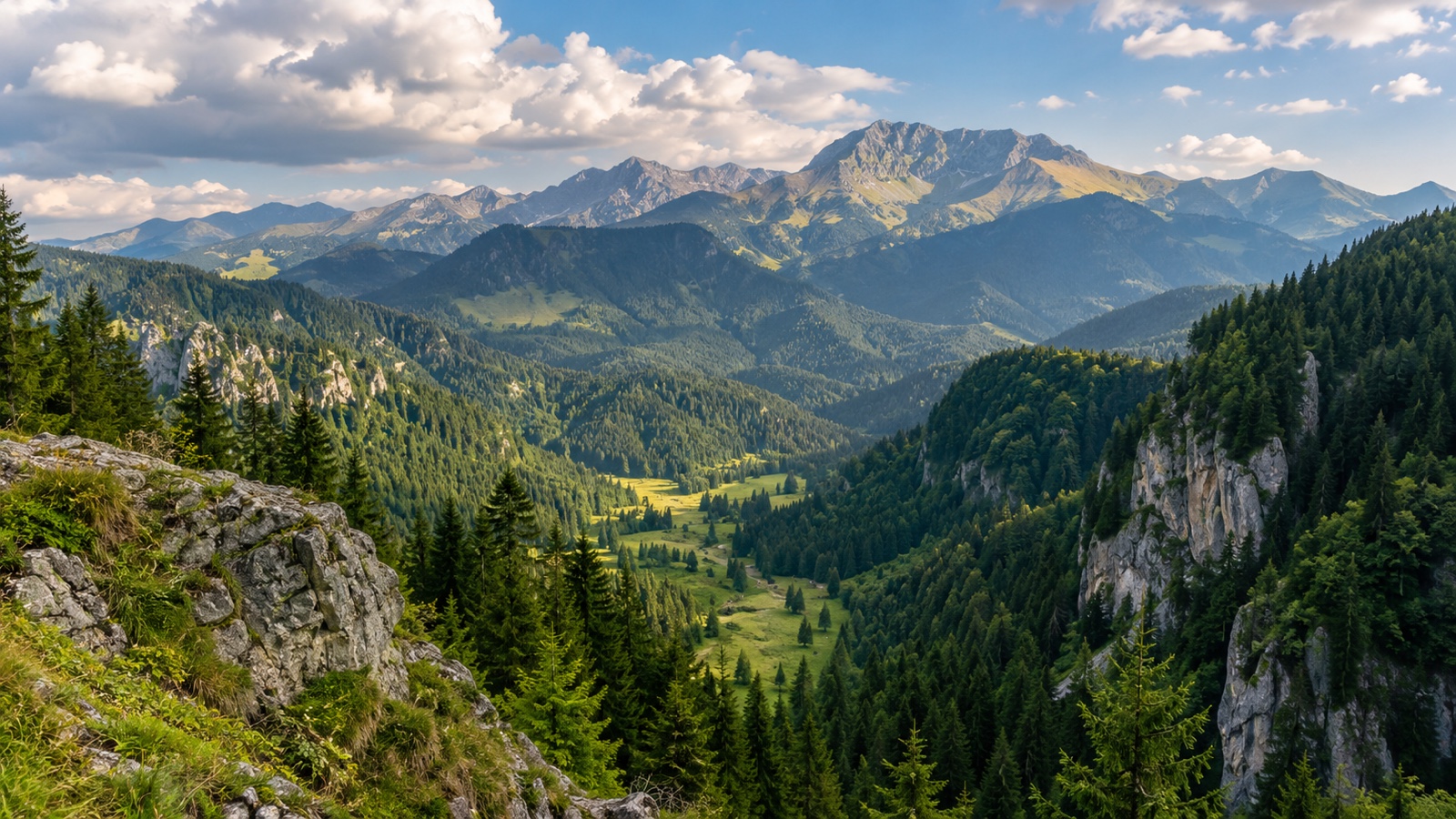
The Carpathians curve through the heart of the country
- The Carpathian Mountains form a broad arc through central Romania.
- Romania contains a large share of the entire Carpathian range.
- Moldoveanu Peak rises 8,346 feet in the Făgăraș Mountains.
- The Făgăraș are part of the Southern Carpathians.
- The Southern Carpathians are sometimes called the Transylvanian Alps.
- Transfăgărășan Highway crosses dramatic high mountain terrain.
- The road was built during Nicolae Ceaușescu's communist rule.
- Heavy snow closes its highest sections for much of the year.
- Transalpina is another spectacular high-elevation road.
- Romania contains extensive limestone caves and karst landscapes.
- Scărișoara Cave contains a large underground body of perennial ice.
- The Apuseni Mountains are famous for caves, gorges, villages, and karst terrain.
- Forests cover large parts of the Carpathians.
- Romania supports one of Europe's largest populations of brown bears outside Russia.
- Gray wolves also survive in substantial numbers.
- Eurasian lynx inhabit remote forests.
- European bison have been reintroduced to several Romanian landscapes.
- Chamois live in rocky mountain habitats.
- Human-bear conflict has become a serious management issue in some mountain communities.
- Romania's mountains are gorgeous enough that it is easy to forget the “cute bear by the road” is still a several-hundred-pound wild animal.
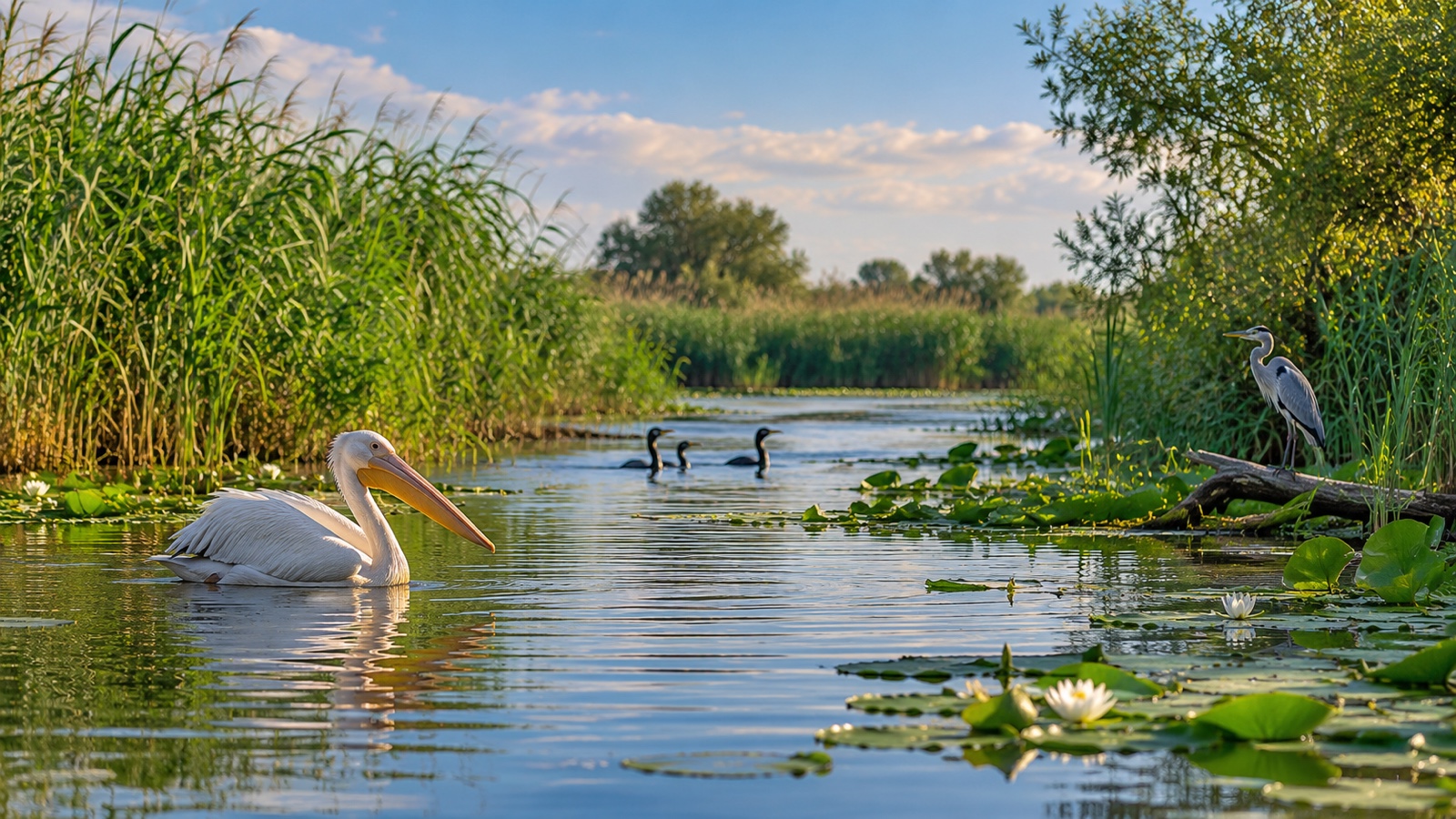
The Danube Delta is one of Europe's great wetlands
- The Danube River forms much of Romania's southern boundary with Bulgaria.
- It is Europe's second-longest river.
- The Danube flows into the Black Sea through a vast delta.
- Most of the Danube Delta lies in Romania.
- A smaller portion lies in Ukraine.
- The delta is a UNESCO World Heritage Site and biosphere reserve.
- It contains enormous reed beds.
- Channels, lakes, marshes, floating vegetation, sand dunes, and forests create a complex wetland mosaic.
- The delta supports hundreds of bird species.
- Great white pelicans breed there in large colonies.
- Dalmatian pelicans also occur in the region.
- Millions of migratory birds use the delta seasonally.
- Fishing has supported delta communities for generations.
- Traditional villages can be reached primarily by boat.
- Letea Forest grows on sandy ridges within the delta.
- Wild or free-ranging horses live around the Letea area.
- The Danube carries sediment from a huge portion of Europe into the delta.
- River engineering and upstream dams have changed natural sediment flows.
- Wetland conservation must balance fisheries, navigation, tourism, farming, local livelihoods, and biodiversity.
- The Danube spends nearly 1,800 miles crossing Europe and then finishes by becoming a maze, which feels appropriately theatrical.
Dacians and Romans both shaped Romanian identity
Romania's name points straight toward Rome, but the national origin story is more layered than “Romans arrived and everyone became Romanian.” Ancient Dacian societies, Roman conquest, later migrations, medieval principalities, Slavic influence, Christianity, and centuries of regional politics all contributed.
- Dacian peoples lived in parts of present-day Romania before Roman conquest.
- King Decebalus became one of the best-known Dacian rulers.
- Roman emperor Trajan fought major wars against Dacia.
- Rome conquered much of Dacia in 106 CE.
- Roman authorities established the province of Dacia.
- Latin became influential in the province.
- Roman rule north of the Danube lasted less than two centuries.
- Emperor Aurelian withdrew Roman administration south of the Danube during the third century.
- The later development of Romanian language and identity is debated in detail by historians and linguists.
- Romanian nevertheless remains clearly a Romance language.
- The medieval principalities of Wallachia and Moldavia became major Romanian-speaking political centers.
- Transylvania followed a different political history within the Kingdom of Hungary and later Habsburg realms.
- Wallachia and Moldavia united under Alexandru Ioan Cuza in 1859.
- That union formed the core of modern Romania.
- Romania declared independence from the Ottoman Empire in 1877.
- International recognition followed after the Russo-Turkish War.
- Romania became a kingdom in 1881.
- Transylvania joined Romania after World War I.
- December 1 commemorates the 1918 union and is Romania's National Day.
- Romania's origin story spans enough empires and principalities that one national museum really has its work cut out for it.
Dracula tourism mixes a real ruler with a fictional vampire
- Vlad III was a 15th-century ruler of Wallachia.
- He is commonly known as Vlad the Impaler.
- His Romanian name Vlad Țepeș refers to impalement.
- Vlad used extreme violence against enemies and political rivals.
- He fought Ottoman forces during periods of his rule.
- His father belonged to the Order of the Dragon.
- The name Dracula is connected historically with the family name Drăculea.
- Bram Stoker published the novel “Dracula” in 1897.
- Stoker's Count Dracula is fictional.
- The exact extent to which Vlad III directly inspired Stoker's character remains debated.
- Stoker never visited Romania.
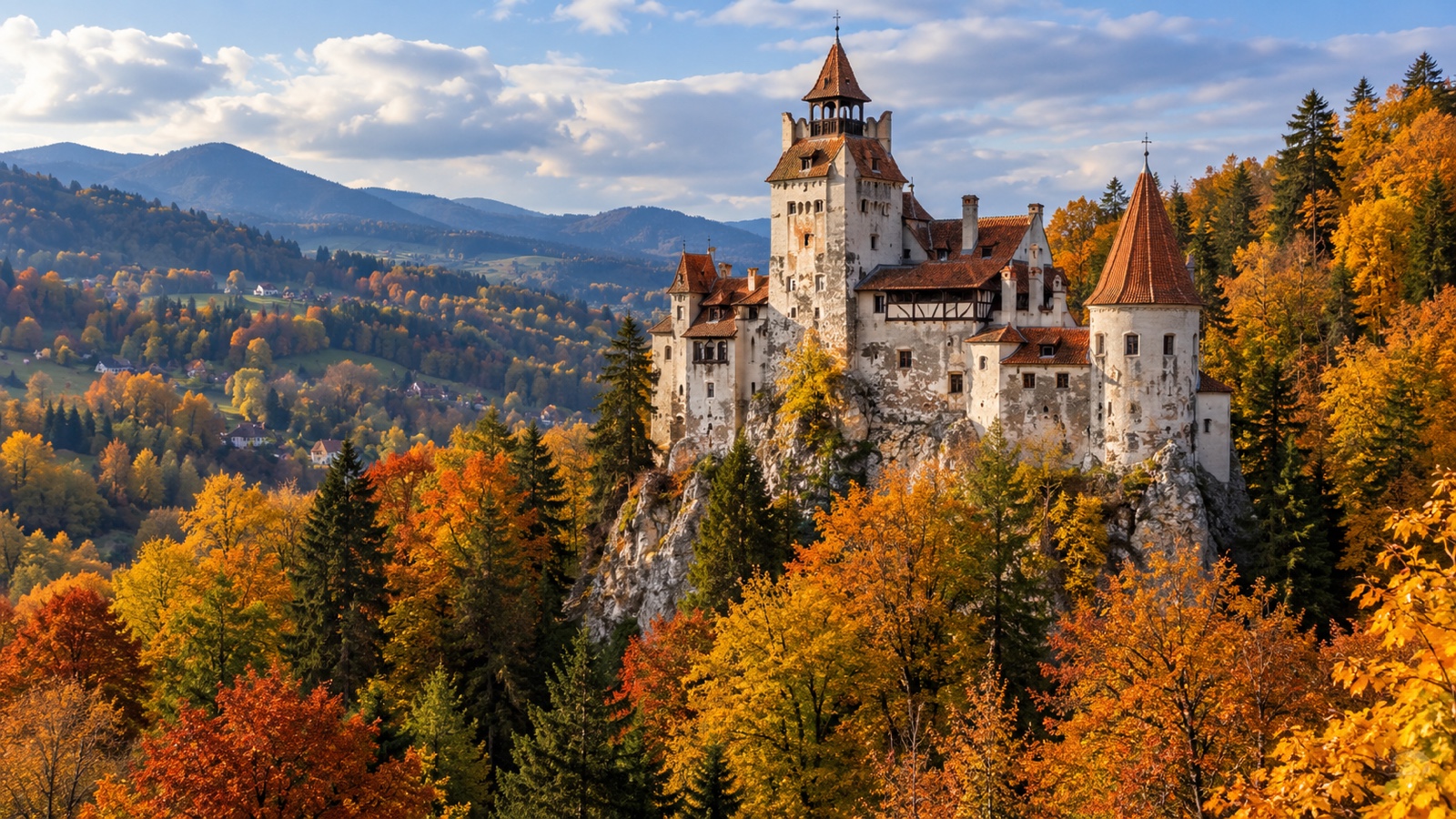
- Bran Castle is heavily marketed today as “Dracula's Castle.”
- Historical evidence connecting Vlad III closely with Bran Castle is limited.
- Vlad's strongest historical associations are with Wallachia rather than the fictional Transylvanian vampire story.
- Poenari Castle has a more direct connection with Vlad III.
- Its ruins stand high above the Argeș River valley.
- Transylvania itself is a real historical region in central Romania.
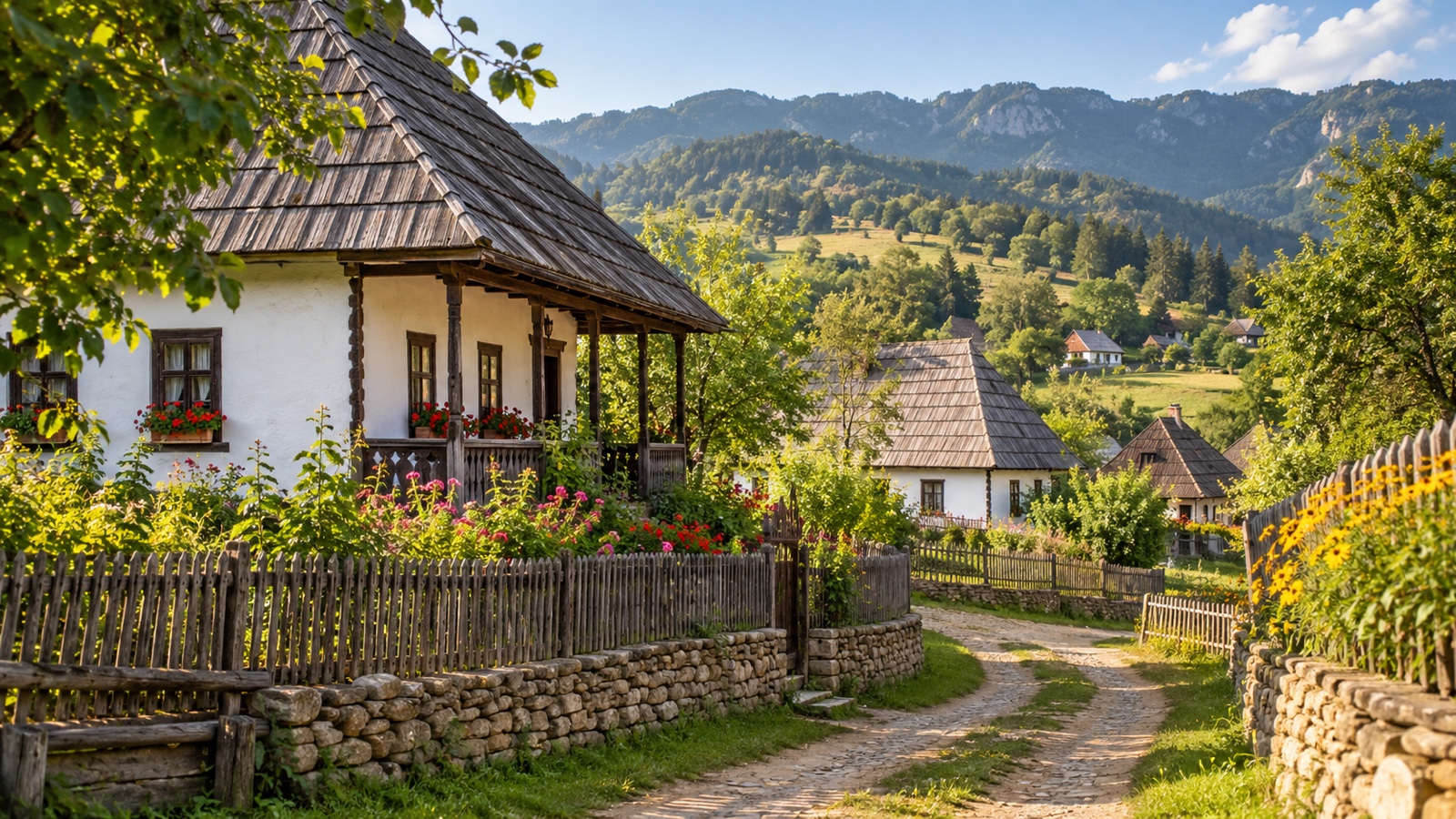
- It is famous for fortified churches, Saxon towns, mountains, and villages.
- Sighișoara preserves a remarkably intact medieval center.
- Romania has the rare tourism problem of needing to explain that its real medieval history is actually more interesting than the vampire merchandising.
Communist rule ended violently in 1989
Romania's communist period ended very differently from the largely peaceful transitions in several neighboring countries. Nicolae Ceaușescu built a severe dictatorship, imposed harsh austerity, expanded surveillance, demolished neighborhoods for monumental projects, and was overthrown during a bloody revolution in December 1989.
- Romania fought on the Axis side for much of World War II.
- Marshal Ion Antonescu led an authoritarian regime allied with Nazi Germany.
- Romanian authorities participated in the persecution and murder of Jews and Roma during the Holocaust.
- King Michael led a coup in August 1944 that switched Romania to the Allied side.
- Soviet influence dominated the country after the war.
- Communists forced King Michael to abdicate in 1947.
- Romania became a communist republic.
- Nicolae Ceaușescu became Communist Party leader in 1965.
- His regime developed an extensive cult of personality.
- The Securitate secret police monitored and repressed opposition.
- Ceaușescu pursued rapid repayment of foreign debt during the 1980s.
- Austerity contributed to shortages of food, heat, electricity, and consumer goods.
- The Palace of Parliament was built as part of a vast redevelopment project in Bucharest.
- Historic neighborhoods were demolished to make way for the project.
- The Palace of Parliament is one of the world's largest administrative buildings.
- Protests began in Timișoara in December 1989.
- Unrest spread rapidly across the country.
- Ceaușescu and his wife Elena were captured, tried by a military tribunal, and executed on December 25, 1989.
- Romania transitioned to multiparty politics after the revolution.
- The giant parliament building remains one of Bucharest's most visible reminders that dictators really do love oversized architecture.
Gymnastics, sculpture, food and 25 final Romania facts
- Nadia Comăneci was born in Onești, Romania.
- At the 1976 Olympics, she became the first gymnast awarded a perfect 10 in Olympic competition.
- The scoreboard initially displayed 1.00 because it had not been designed to show 10.00.
- Romanian gymnastics became internationally dominant for periods of the late 20th century.
- Constantin Brâncuși was born in Romania and became a pioneer of modern sculpture.
- His “Endless Column” stands in Târgu Jiu as part of a major memorial ensemble.
- George Enescu was one of Romania's greatest composers and musicians.
- The George Enescu Festival is a major classical-music event in Bucharest.
- Henri Coandă was a Romanian inventor and aeronautical engineer.
- The Coandă effect in fluid dynamics is named for him.
- George Emil Palade, born in Iași, won a Nobel Prize for discoveries in cell biology.
- Ilie Năstase became one of Romania's greatest tennis players.
- Simona Halep became a world No. 1 tennis player and Grand Slam champion.
- Gheorghe Hagi is widely considered one of Romania's greatest football players.
- Sarmale are cabbage or vine leaves stuffed with seasoned filling.
- Mămăligă is a cornmeal dish similar to polenta.
- Mici are small grilled skinless sausages.
- Ciorbă refers to a broad family of sour soups.
- Papanași are fried or boiled cheese-based dumplings often served as dessert.
- Țuică is a traditional fruit spirit commonly made from plums.
- The Merry Cemetery in Săpânța is famous for colorful carved grave markers with poems about the deceased.
- Painted monasteries in Bukovina have exterior frescoes covering church walls.
- The fortified churches of Transylvania reflect Saxon community history.
- Romania has one of Europe's largest populations of Roma people, a diverse minority with centuries of history and persistent discrimination.
- After 145 facts, Romania still feels like a country where bears, Roman ruins, perfect-10 gymnastics, painted monasteries, and vampire gift shops somehow share the same road trip.
Quick FAQ
Q: What is Romania famous for?
A: Transylvania, the Carpathian Mountains, the Danube Delta, medieval towns, castles, brown bears, Nadia Comăneci, Brâncuși, traditional villages, and a complicated modern history.
Q: What is the capital of Romania?
A: Bucharest is both the capital and largest city.
Q: Was Dracula a real person?
A: Count Dracula is fictional. Vlad III was a real Wallachian ruler whose name and reputation became loosely associated with the Dracula story, but the connection is often exaggerated.
Q: Is Bran Castle really Dracula's castle?
A: It is marketed that way, but historical evidence connecting Vlad the Impaler closely with Bran Castle is limited.
Q: Is Romanian a Slavic language?
A: No. Romanian is a Romance language descended primarily from Latin, though it has significant Slavic and Balkan influences.

Ellie is the owner and sole author of Fun Facts, combining her mechanical engineering background with years of research-driven writing to deliver facts you can trust. Every article is thoroughly fact-checked and routinely updated as new science and sources emerge to keep information accurate and current. Her mission is to make learning delightful while upholding high standards of reliability and transparency.