
Qatar is a tiny peninsula with a huge international footprint. Natural gas wealth, Doha skyscrapers, pearl-diving history, falcons, mangroves, whale sharks, desert forts, global airlines, museums, migrant communities, and the first men’s World Cup held in the Middle East all fit inside a country smaller than Connecticut.
Qatar is a small peninsula with one land border
- Qatar is located on the northeastern coast of the Arabian Peninsula.
- The country occupies a peninsula projecting into the Persian Gulf.
- Qatar and many neighboring Arab states commonly call the body of water the Arabian Gulf.
- Saudi Arabia is Qatar’s only land-border neighbor.
- Doha is the capital and largest city.
- Most of Qatar’s population lives in or near the Doha metropolitan area.
- Qatar is smaller than Connecticut by land area.
- The national currency is the Qatari riyal.
- Arabic is the official language.
- English is widely used in business, education, tourism, and everyday communication.
- Qatar has a very large expatriate population.
- Foreign residents substantially outnumber Qatari citizens.
- The national flag is maroon and white.
- A serrated line with nine white points separates the colors.
- Qatar’s flag is noticeably darker than Bahrain’s similarly patterned red-and-white flag.
- The country uses Arabia Standard Time.
- It is three hours ahead of Coordinated Universal Time.
- Qatar does not use Daylight Saving Time.
- The country is divided into eight municipalities.
- Qatar is small enough that “cross-country road trip” and “afternoon drive” can overlap considerably.
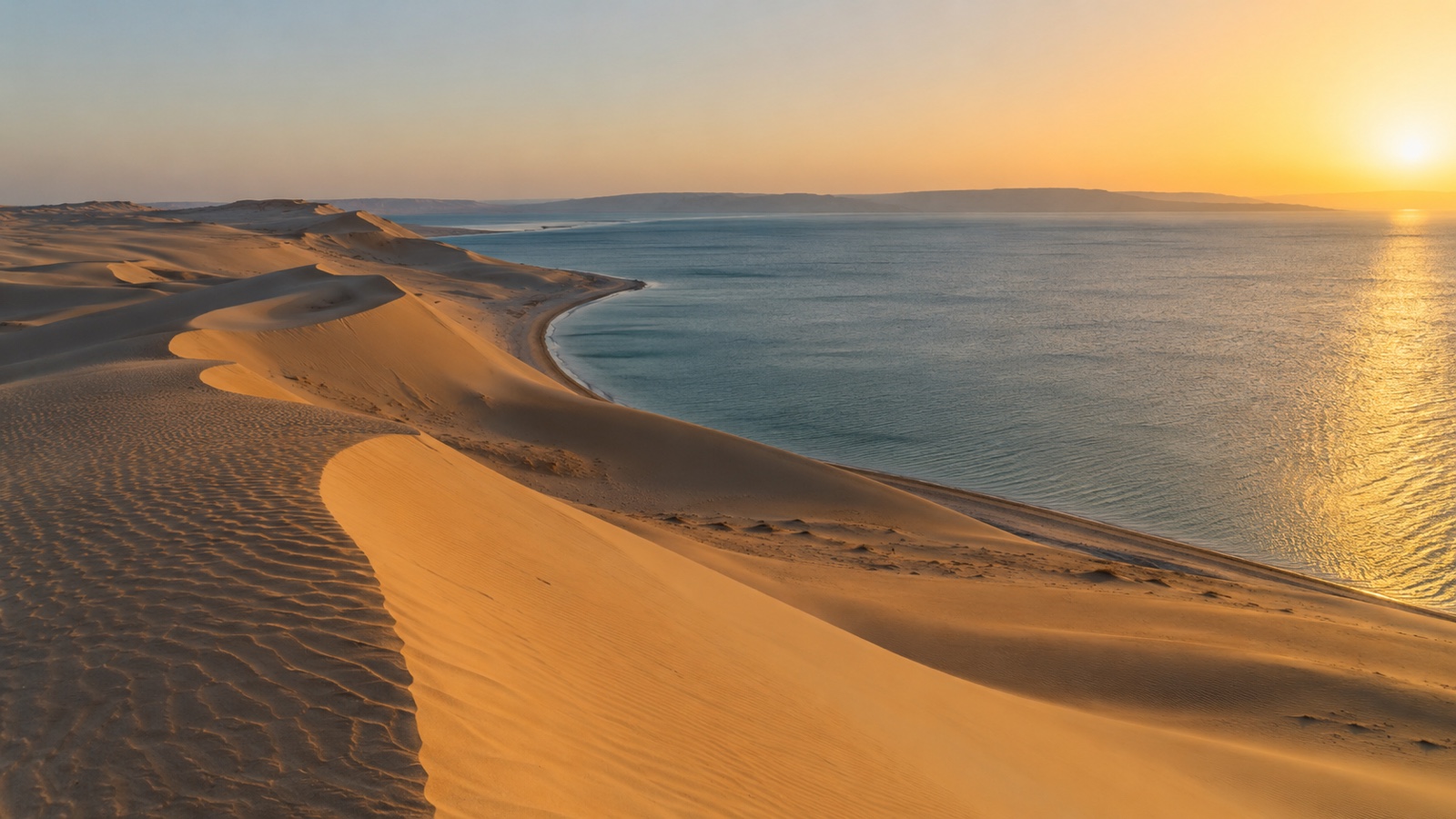
Desert, salt flats and mangroves share the peninsula
- Qatar’s terrain is generally low, flat, and arid.
- There are no major mountain ranges.
- Qurayn Abu al Bawl is commonly identified as Qatar’s highest natural point.
- It rises only a few hundred feet above sea level.
- Rocky desert is more common than towering dune seas across much of the country.
- Sand dunes become more prominent in the south.
- Khor Al Adaid is commonly called the Inland Sea.
- It is a tidal embayment connected with the Persian Gulf.
- Large dunes surround parts of Khor Al Adaid.
- The area is accessible mainly by suitable four-wheel-drive vehicles.
- Sabkhas are flat salt-encrusted surfaces found in coastal and desert areas.
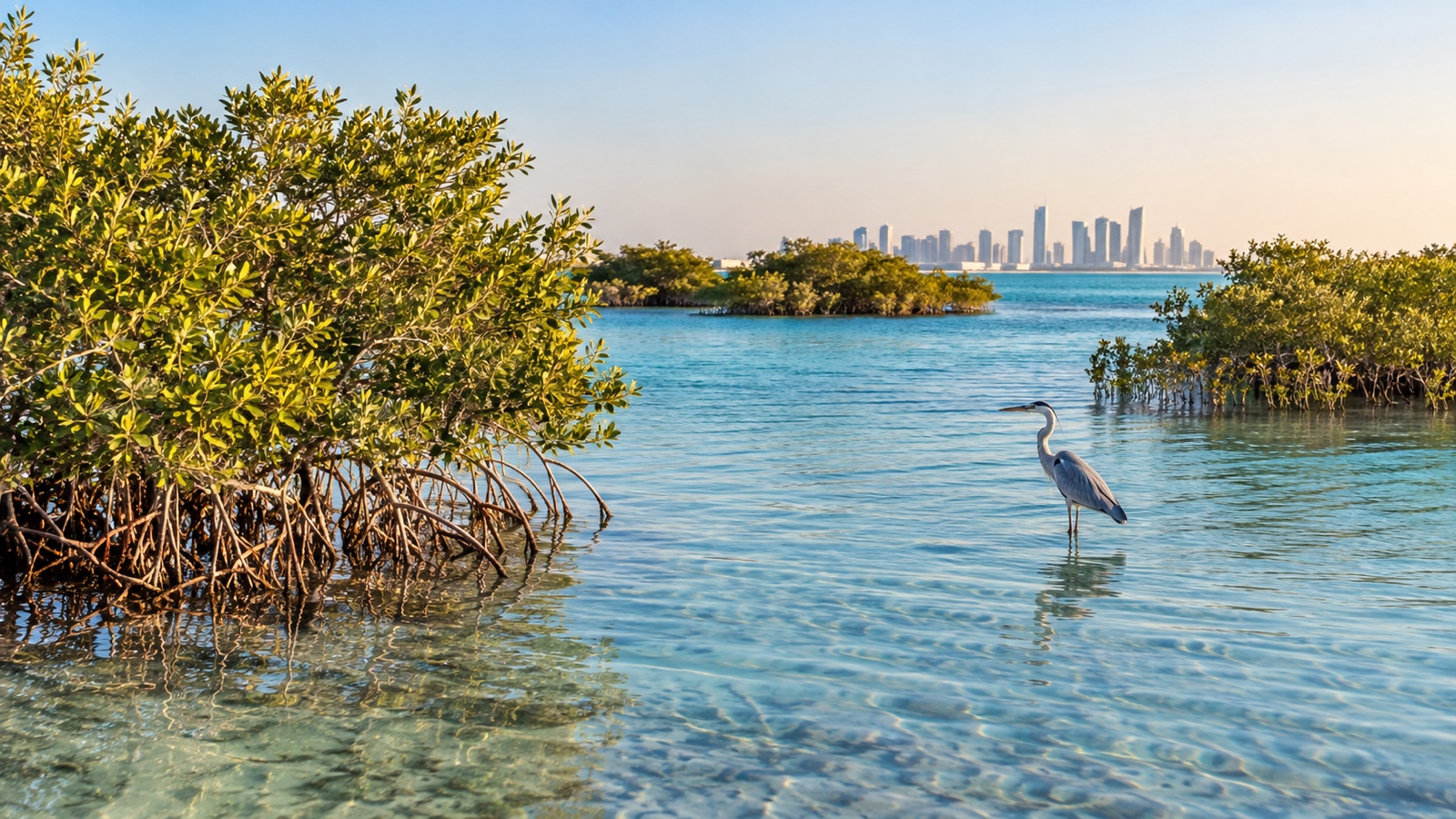
- Mangroves grow in sheltered coastal zones despite the arid climate.
- Al Thakira is one of Qatar’s best-known mangrove areas.
- Mangroves provide nursery habitat for fish and shelter for birds.
- Qatar has no permanent natural rivers.
- Drinking water depends heavily on seawater desalination.
- Groundwater is limited and vulnerable to salinity.
- Summers are extremely hot and humid, especially near the coast.
- Winters are mild and much more comfortable outdoors.
- A desert country with tidal mangrove kayaking is exactly the kind of geography fact that deserves more attention than another skyline photo.
Pearling once powered the economy
- Natural pearl diving was once one of Qatar’s most important industries.
- Pearling linked Qatar with wider Gulf and Indian Ocean trade networks.
- Divers worked seasonally from wooden boats called dhows.
- Traditional divers descended repeatedly without modern scuba equipment.
- They used simple tools including nose clips and weighted ropes.
- Crew members hauled divers back to the surface.
- Natural Gulf pearls were luxury exports.
- Pearling was dangerous and physically exhausting.
- Debt systems could bind divers and families to merchants.
- The industry declined sharply during the early 20th century.
- Japanese cultured pearls changed global pearl prices.
- The Great Depression also reduced demand for luxury goods.
- Oil discovery then transformed Qatar’s economic direction.
- Commercial oil was discovered at Dukhan in 1939.
- World War II delayed large-scale development.
- Oil exports began after the war.
- Petroleum revenue financed infrastructure and public services.
- Pearling history remains visible in museums, festivals, boat design, and national imagery.
- Modern Doha grew from a coastal trading and pearling settlement.
- The jump from breath-hold pearl diving to one of the world’s highest-income economies happened within a handful of generations.
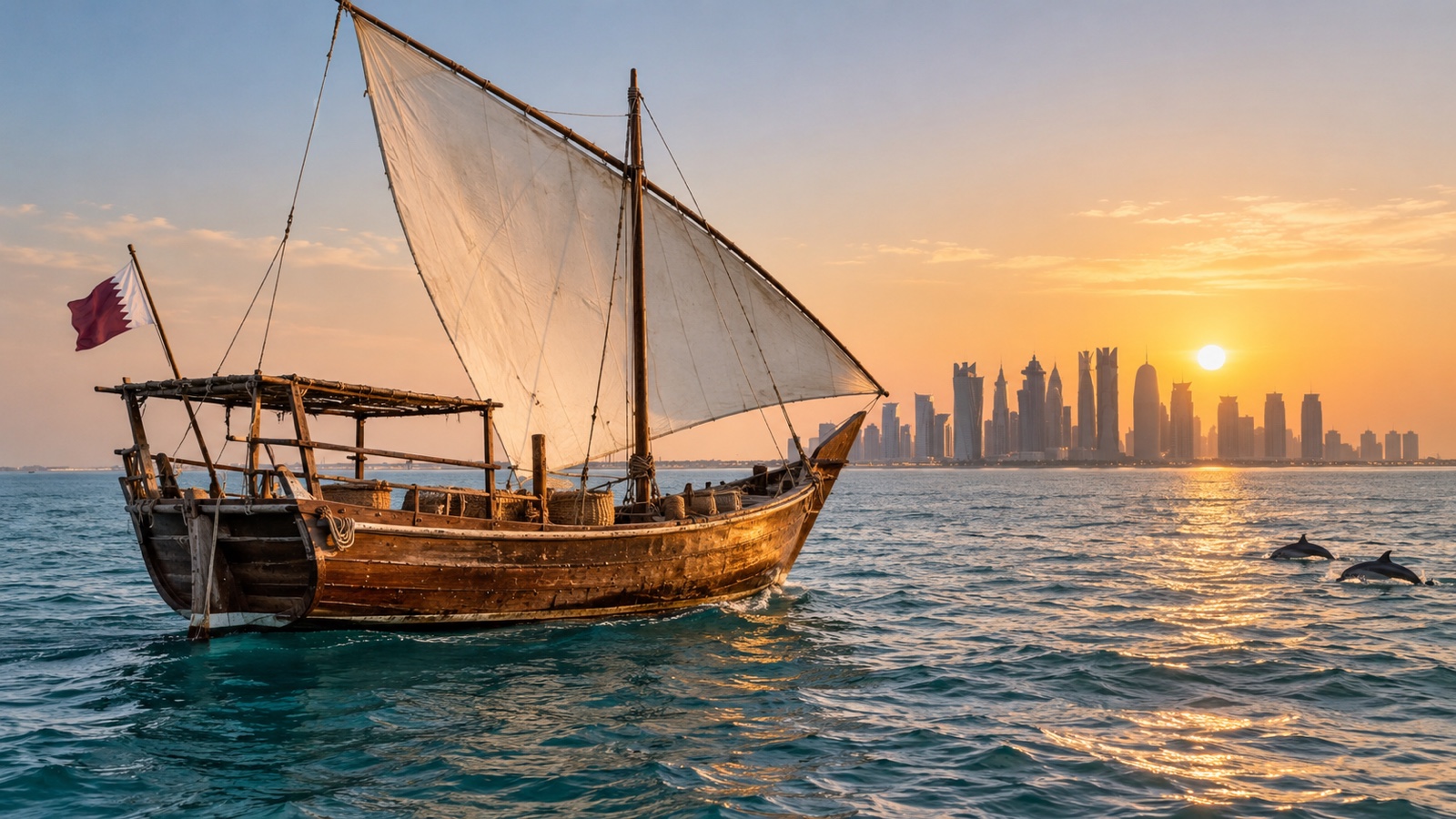
Natural gas made Qatar an energy heavyweight
Oil started the transformation, but natural gas made Qatar unusually influential for its size. Beneath waters shared geologically with Iran lies one of the planet’s largest gas accumulations, and Qatar built an enormous industry around cooling gas until it becomes liquid enough to ship by tanker.
- The North Field is Qatar’s giant offshore natural-gas field.
- It is part of the same geological gas accumulation as Iran’s South Pars field.
- The combined reservoir is the world’s largest known natural-gas field.
- Qatar became a major exporter of liquefied natural gas.
- LNG stands for liquefied natural gas.
- Natural gas is chilled to extremely low temperatures so it condenses into liquid.
- Liquefaction greatly reduces the volume needed for transport.
- Specialized tankers carry LNG to overseas markets.
- Ras Laffan Industrial City is a major center for Qatar’s gas industry.
- QatarEnergy is the state-owned energy company.
- Energy exports provide a major share of national revenue.
- Qatar has invested energy wealth in assets and businesses around the world.
- The Qatar Investment Authority is the country’s sovereign wealth fund.
- Sovereign wealth funds invest national financial reserves for long-term goals.
- Qatar has also invested heavily in aviation, education, museums, sports, and infrastructure.
- Solar power is expanding as part of energy diversification.
- The Al Kharsaah solar project is one major utility-scale installation.
- Qatar still has one of the world’s highest per-capita carbon-emission profiles.
- Extreme cooling demand, desalination, industry, and hydrocarbon production all contribute.
- Being tiny on a map does not prevent a country from becoming a very large line item in global energy markets.
Falcons, camels, whale sharks and dugongs share Qatar
- Falconry has deep roots in Qatari and wider Gulf culture.
- Falcons were traditionally trained to help hunt desert game.
- Modern falconry is also a sport, heritage practice, and status tradition.
- Souq Waqif has a dedicated falcon market area.
- Specialized veterinary facilities treat valuable falcons.
- Camels were essential for desert travel before modern roads and vehicles.
- Camel racing remains popular.
- Robot jockeys are used in modern camel racing.
- Qatar has invested in camel breeding and veterinary science.
- Arabian oryx are native to desert environments in the region.
- Conservation breeding helped restore oryx after regional wild extinction.
- Qatar’s coastal waters host large seasonal aggregations of whale sharks.
- Whale sharks are the world’s largest fish.
- They are filter feeders rather than dangerous whale-sized predators.
- Warm waters near offshore platforms can support dense plankton and fish spawning that attract them.
- Qatar’s waters also support dugongs.
- Dugongs are marine mammals related to manatees.
- They feed mainly on seagrass.
- Qatar lies within one of the world’s most important regions for dugong populations.
- A country associated with sand dunes also quietly hosts giant filter-feeding sharks offshore, which feels wonderfully unfair to stereotypes.
Doha turned museums, aviation and education into national projects
Doha’s growth can feel almost time-lapse fast. A low-rise Gulf city expanded into a skyline of towers, museums, stadiums, universities, transit lines, artificial islands, and global airline connections while older places such as Souq Waqif were restored as deliberate anchors to local identity.
- The Doha Corniche curves around the city’s central waterfront.
- West Bay contains many of Doha’s modern towers.
- Souq Waqif is a restored traditional market district.
- Its shops sell spices, textiles, perfumes, handicrafts, food, and household goods.
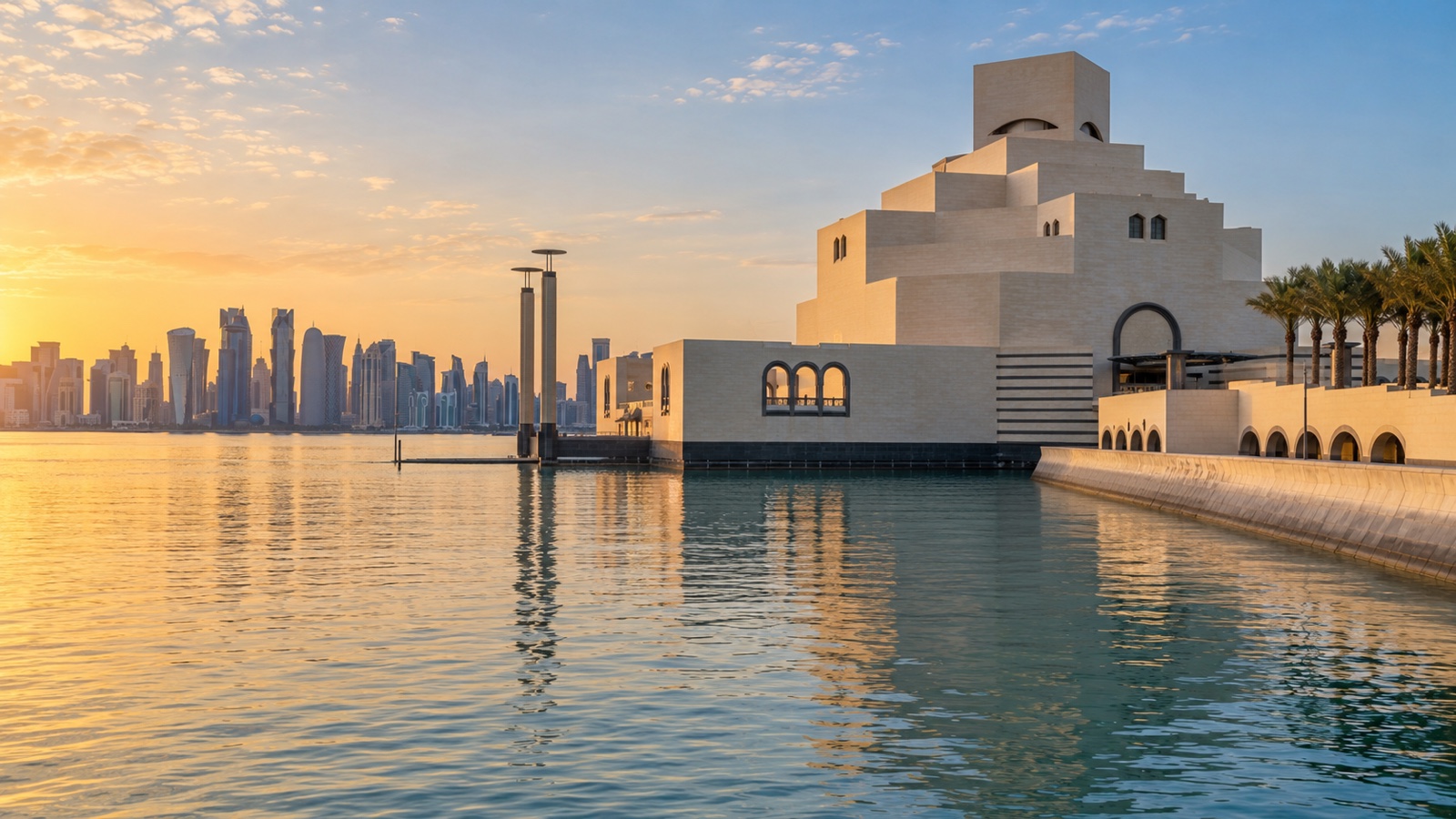
- The Museum of Islamic Art opened in Doha in 2008.
- I. M. Pei designed the museum building.
- The National Museum of Qatar opened in its current building in 2019.
- Architect Jean Nouvel designed it with forms inspired by desert-rose mineral formations.
- Katara Cultural Village contains theaters, galleries, restaurants, mosques, and performance spaces.
- Education City hosts branches or programs linked with several international universities.
- Qatar Foundation developed Education City.
- Al Jazeera television was launched in Doha in 1996.
- The network became one of the Arab world’s most influential media organizations.
- Qatar Airways is based in Doha.
- Hamad International Airport is a major global connecting hub.
- Doha Metro opened its first lines in 2019.
- The system was expanded in preparation for major international events.
- The Pearl-Qatar is an artificial island development.
- Lusail is a planned city north of central Doha.
- Qatar clearly decided that national development should include architecture people can identify from an airplane window.
World Cup, food and 25 final Qatar facts
- Qatar hosted the 2022 FIFA World Cup.
- It was the first men’s FIFA World Cup held in the Middle East.
- It was also the first held in November and December instead of the usual northern-hemisphere summer window.
- The schedule shifted because Qatar’s summer heat would have created severe conditions.
- Air-cooling technology was installed in several stadiums.
- Lusail Stadium hosted the final.
- Argentina defeated France on penalties after a 3–3 draw.
- The tournament drove enormous investment in transport, stadiums, hotels, and public spaces.
- Preparations also brought international scrutiny of migrant-worker labor conditions.
- Qatar introduced labor reforms before the tournament, while rights groups continued reporting enforcement gaps and worker concerns.
- Migrant labor has been central to Qatar’s construction and service economy.
- Machboos is a spiced rice dish popular in Qatar.
- Harees combines wheat and meat cooked until soft and thick.
- Thareed combines bread with stew.
- Luqaimat are fried sweet dumplings.
- Karak tea is a strong sweet milk tea flavored with spices.
- Dates and Arabic coffee are important hospitality foods.
- Seafood has deep roots in coastal Qatari cuisine.
- Islam is the official religion.
- Ramadan significantly changes daily schedules and social life.
- Qatar became independent from Britain on September 3, 1971.
- The Al Thani family has ruled Qatar since the 19th century.
- Al Zubarah preserves an 18th- and 19th-century Gulf trading and pearling town.
- Al Zubarah Archaeological Site is a UNESCO World Heritage Site.
- After 145 facts, Qatar feels much bigger than its land area because its energy, aviation, sports, media, and diplomacy all operate on a global scale.
Quick FAQ
Q: What is Qatar famous for?
A: Natural gas, Doha, Qatar Airways, pearl-diving heritage, falconry, the 2022 World Cup, museums, whale sharks, desert landscapes, and a huge expatriate population.
Q: What is the capital of Qatar?
A: Doha is both the capital and largest city.
Q: Is Qatar an island?
A: No. Qatar is a peninsula attached to Saudi Arabia by its only land border.
Q: Does Qatar have oil or natural gas?
A: Both, but its enormous offshore natural-gas reserves and liquefied-natural-gas exports are especially important to the modern economy.
Q: When did Qatar become independent?
A: Qatar became independent from Britain on September 3, 1971.

Ellie is the owner and sole author of Fun Facts, combining her mechanical engineering background with years of research-driven writing to deliver facts you can trust. Every article is thoroughly fact-checked and routinely updated as new science and sources emerge to keep information accurate and current. Her mission is to make learning delightful while upholding high standards of reliability and transparency.