
South Dakota has one landmark so famous it can swallow the rest of the state’s identity. That is unfortunate, because beyond Mount Rushmore are Lakota homelands, painted badlands, bison herds, huge prairie skies, fossil beds, a motorcycle rally, a palace covered in corn, and some seriously complicated history.
South Dakota basics beyond the presidents in granite
- South Dakota became a state on November 2, 1889.
- North Dakota entered the Union on the same day.
- The exact signing order is unknown because President Benjamin Harrison shuffled the statehood papers.
- South Dakota is conventionally listed as the 40th state alphabetically.
- Pierre is the state capital.
- Sioux Falls is South Dakota’s largest city.
- South Dakota has 66 counties.
- The postal abbreviation is SD.
- The official nickname is the Mount Rushmore State.
- The state motto is “Under God the People Rule.”
- South Dakota borders North Dakota, Minnesota, Iowa, Nebraska, Wyoming, and Montana.
- The Missouri River divides much of the state geographically.
- Eastern South Dakota is generally wetter and more agricultural than the west.
- Most eastern counties use Central Time.
- Much of western South Dakota uses Mountain Time.
- Black Elk Peak is the state’s highest point.
- It rises 7,244 feet above sea level.
- Black Elk Peak is the highest point in the United States east of the Rocky Mountains.
- The state name comes from the Dakota people, part of the broader Oceti Sakowin.
- South Dakota’s most famous mountain carving is only one chapter in a much older landscape.
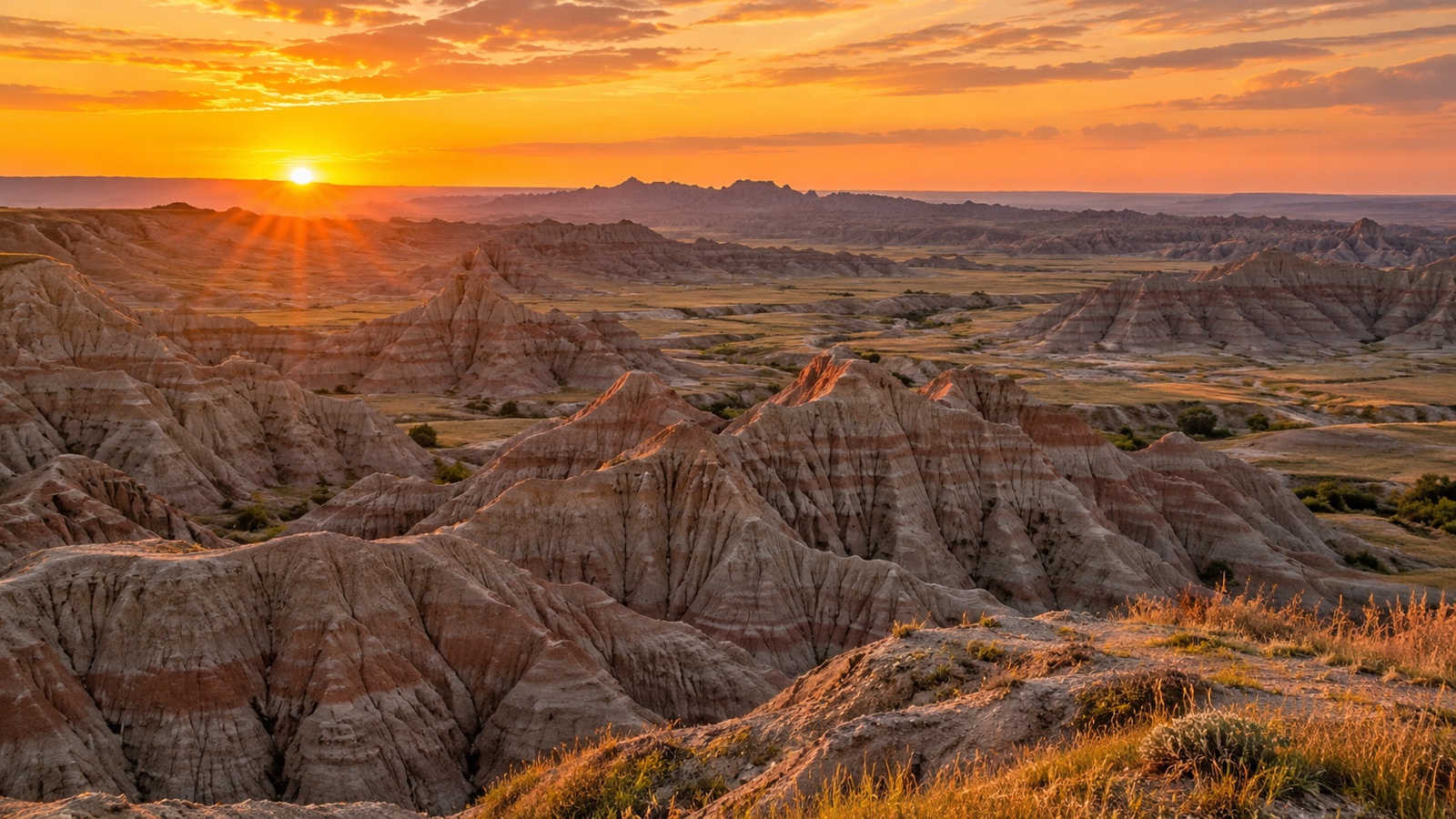
The Black Hills are sacred, scenic & politically complicated
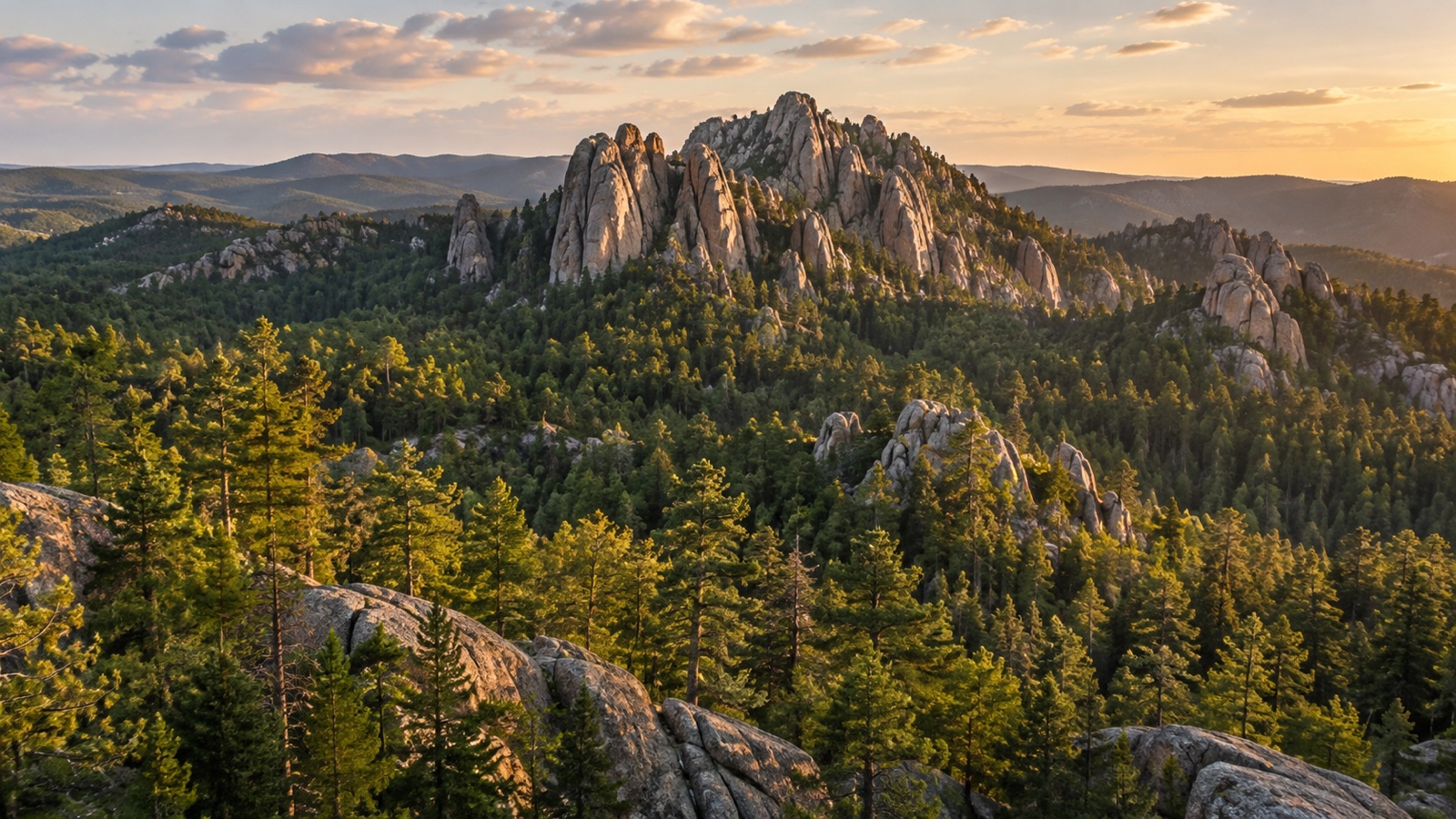
- The Black Hills rise abruptly from the Great Plains of western South Dakota and northeastern Wyoming.
- Ponderosa pine forests give the hills their dark appearance from a distance.
- The Lakota call the Black Hills He Sapa.
- The Black Hills are sacred to the Lakota and other Indigenous peoples.
- The 1868 Fort Laramie Treaty recognized the Black Hills as part of the Great Sioux Reservation.
- Gold discoveries brought illegal settler incursions into the Black Hills during the 1870s.
- The U.S. government later seized the Black Hills despite treaty guarantees.
- In 1980, the U.S. Supreme Court upheld compensation for the unlawful taking.
- Sioux nations have rejected the money because many seek return of the land rather than a cash settlement.
- Custer State Park protects large areas of the Black Hills.
- The park supports a managed bison herd.
- Needles Highway winds through granite spires and narrow tunnels.
- Spearfish Canyon cuts through limestone cliffs in the northern Black Hills.
- Deadwood became a famous gold-rush town.
- Wild Bill Hickok was killed while playing poker in Deadwood in 1876.
- Calamity Jane also became associated with the town.
- Lead, South Dakota, developed around the Homestake gold mine.
- The Homestake became one of North America’s deepest and most productive gold mines.
- Today, the former mine hosts the Sanford Underground Research Facility.
- The Black Hills can move from sacred landscape to gold-rush history to particle physics in one afternoon.
Mount Rushmore has both engineering and controversy
- Mount Rushmore National Memorial features the carved faces of four U.S. presidents.
- They are George Washington, Thomas Jefferson, Theodore Roosevelt, and Abraham Lincoln.
- Sculptor Gutzon Borglum led the project.
- Work began in 1927.
- Construction continued until 1941.
- Borglum died before the project was completed.
- His son Lincoln Borglum helped oversee the final work.
- Each presidential head is roughly 60 feet tall.
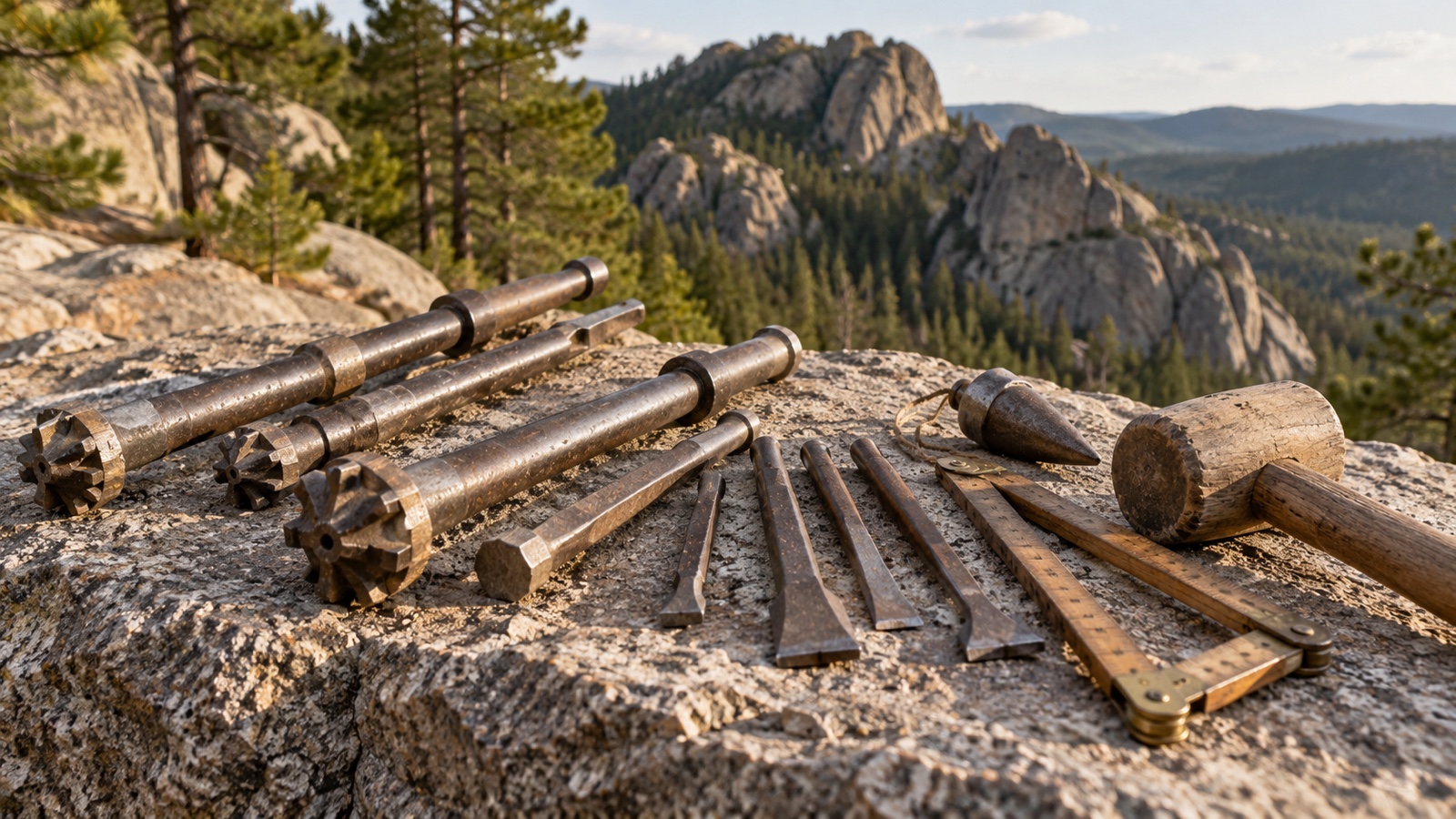
- Workers used dynamite to remove most of the rock.
- Drilling and careful finishing shaped the faces afterward.
- No workers died during the carving project itself.
- The original concept called for much more of each president’s body to be carved.
- Funding and technical limitations reduced the project to heads.
- A chamber called the Hall of Records was started behind the monument.
- The chamber was never completed as originally envisioned.
- A repository of documents was later placed in a smaller vault behind the sculpture.
- The mountain is known to Lakota people as Tȟuŋkášila Šákpe, or Six Grandfathers.
- Carving U.S. presidents into treaty-seized sacred land remains deeply controversial.
- Understanding Mount Rushmore responsibly requires both the engineering achievement and the Indigenous land history.
- The monument is more interesting when the difficult parts stay in the story.
Badlands National Park looks almost extraterrestrial
Badlands National Park is the kind of landscape that makes “prairie state” sound misleading. Layered cliffs, spires, gullies, fossil beds, and grasslands sit together in colors that change completely with sunrise, storm clouds, and late-afternoon light.
- Badlands National Park protects eroded formations in southwestern South Dakota.
- The formations expose layers of sedimentary rock deposited over millions of years.
- Erosion continues reshaping the cliffs today.
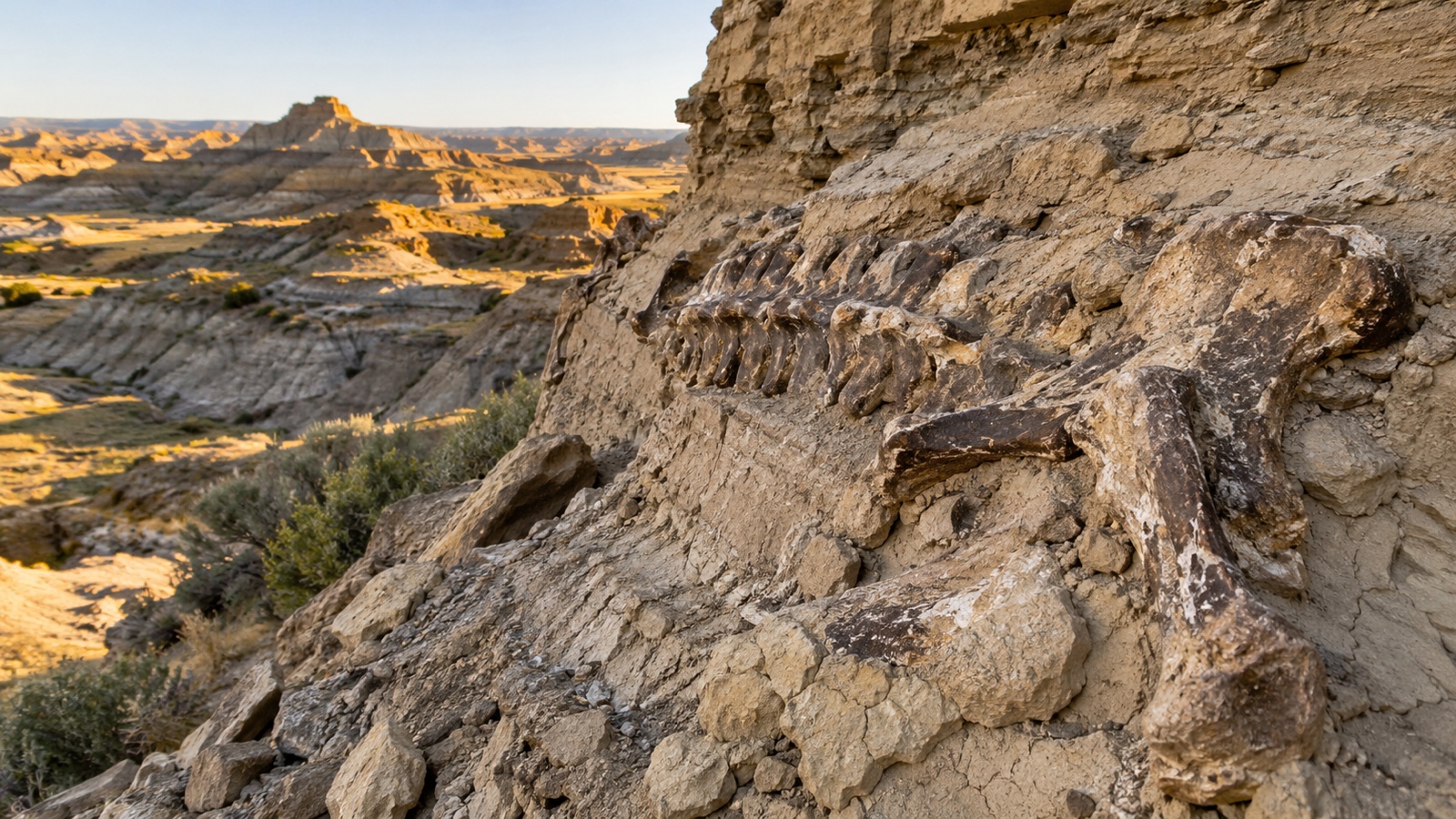
- The badlands contain some of the world’s richest Oligocene mammal fossil beds.
- Fossils include ancient horses, rhinoceros relatives, saber-toothed mammals, and oreodonts.
- Oreodonts were abundant hoofed mammals that are now extinct.
- The park also preserves mixed-grass prairie.
- Bison were reintroduced to the park during the 20th century.
- Bighorn sheep live in rugged sections of the park.
- Prairie dogs build large colonies in grassland areas.
- Black-footed ferrets were reintroduced after nearly disappearing in the wild.
- The ferrets depend heavily on prairie dogs for food and burrows.
- Badlands temperatures can swing from extreme summer heat to bitter winter cold.
- Summer thunderstorms can produce flash flooding in normally dry gullies.
- Fossils found in the park belong to the public and should not be collected by visitors.
- The Lakota have long known the area and used names translated as “bad land.”
- French trappers also used a similar description for difficult terrain.
- The park’s South Unit lies within the Pine Ridge Reservation.
- The National Park Service and Oglala Sioux Tribe have long discussed management of that land.
- The Badlands are proof that erosion can be both destructive and an excellent sculptor.
Lakota, Dakota & Nakota nations remain central to the state
- The Oceti Sakowin is a confederation commonly translated as the Seven Council Fires.
- Its peoples include Dakota, Lakota, and Nakota groups.
- Several federally recognized tribal nations are based in South Dakota.
- The Oglala Sioux Tribe governs the Pine Ridge Reservation.
- The Rosebud Sioux Tribe is Sicangu Lakota.
- The Cheyenne River Sioux Tribe has a large reservation in north-central South Dakota.
- The Standing Rock Sioux Tribe has lands in South Dakota and North Dakota.
- The Crow Creek Sioux Tribe is based along the Missouri River.
- The Lower Brule Sioux Tribe is also based along the Missouri.
- The Sisseton-Wahpeton Oyate has lands in northeastern South Dakota and North Dakota.
- The Yankton Sioux Tribe is based in southeastern South Dakota.
- The Flandreau Santee Sioux Tribe is based near Flandreau.
- Tribal nations maintain sovereign governments and distinct traditions.
- Wounded Knee on the Pine Ridge Reservation is the site of the 1890 massacre of Lakota people by U.S. soldiers.
- Hundreds of Lakota men, women, and children were killed or wounded.
- The site remains a place of mourning and historical significance.
- In 1973, American Indian Movement activists and supporters occupied Wounded Knee for 71 days.
- The occupation drew attention to treaty rights, tribal governance, and federal policy.
- Lakota language revitalization is active in schools, homes, and community programs.
- South Dakota history cannot be told accurately if Indigenous nations disappear after one 19th-century chapter.
Sturgis, corn, agriculture & wonderfully South Dakota things
South Dakota gets gloriously specific outside its national parks. One town fills with motorcycles, another redecorates a building with crop art every year, and Mitchell managed to look at ordinary corn and decide it deserved an enormous palace.
- The Sturgis Motorcycle Rally began in 1938.
- It attracts hundreds of thousands of visitors in many years.
- Motorcycle races helped inspire the original event.
- The rally now includes concerts, rides, vendors, and events across the Black Hills.
- Mitchell is home to the Corn Palace.
- The building’s exterior is decorated with murals made from corn, grains, and grasses.
- Designs change regularly.
- The Corn Palace also functions as an arena and event venue.
- Agriculture is central to South Dakota’s economy.
- Corn, soybeans, wheat, and sunflowers are major crops.
- Cattle and hog production are also important.
- Pheasant hunting attracts visitors every fall.
- The ring-necked pheasant is South Dakota’s state bird.
- Pheasants are not native to North America.
- They were introduced from Asia.
- Sioux Falls is named for waterfalls on the Big Sioux River.
- The falls expose pink quartzite bedrock.
- Sioux quartzite is an extremely hard ancient rock.
- It has been quarried for buildings and road material.
- South Dakota apparently decided one state could support both a Corn Palace and a motorcycle rally without needing to explain the combination.
Crazy Horse, fossils & 25 final South Dakota facts
- The Crazy Horse Memorial is a massive mountain-carving project in the Black Hills.
- Work began in 1948.
- Sculptor Korczak Ziolkowski began the project at the invitation of Lakota elder Henry Standing Bear.
- The carving depicts Lakota leader Crazy Horse.
- The project is privately funded rather than operated as a national monument.
- Only portions of the planned sculpture are complete.
- The finished design would be much larger than the heads at Mount Rushmore.
- The project has supporters and critics within Indigenous communities.
- The Mammoth Site in Hot Springs preserves an ancient sinkhole filled with mammoth remains.
- More than 60 mammoths have been identified there.
- Most are Columbian mammoths, with a smaller number of woolly mammoths.
- The fossils are displayed where they were found.
- Jewel Cave National Monument protects one of the world’s longest known cave systems.
- Wind Cave National Park protects another enormous cave system.
- Wind Cave is famous for delicate boxwork formations.
- Wind Cave became a national park in 1903.
- The state flower is the American pasqueflower.
- The state tree is the Black Hills spruce.
- The state animal is the coyote.
- The state fish is the walleye.
- Laura Ingalls Wilder spent part of her childhood near De Smet.
- Her Little House books drew from experiences in the Dakota Territory.
- Tom Brokaw was born in Webster, South Dakota.
- Hubert Humphrey spent important years in South Dakota before his national political career.
- After 145 facts, South Dakota’s presidents in granite still seem impressive, but they no longer get the whole stage.
Quick FAQ
Q: What is South Dakota famous for?
A: Mount Rushmore, the Black Hills, Badlands National Park, Lakota history, bison, Sturgis, the Corn Palace, fossils, caves, and wide-open prairie.
Q: What is the capital of South Dakota?
A: Pierre is the capital, while Sioux Falls is the largest city.
Q: Was Mount Rushmore carved on Indigenous land?
A: Yes. The Black Hills are sacred to the Lakota and were guaranteed by treaty before the United States seized the land after gold discoveries.
Q: What is South Dakota’s highest point?
A: Black Elk Peak reaches 7,244 feet and is the highest U.S. point east of the Rocky Mountains.
Q: Are there bison in South Dakota?
A: Yes. Major managed herds live in places including Custer State Park, Badlands National Park, tribal lands, and private ranches.

Ellie is the owner and sole author of Fun Facts, combining her mechanical engineering background with years of research-driven writing to deliver facts you can trust. Every article is thoroughly fact-checked and routinely updated as new science and sources emerge to keep information accurate and current. Her mission is to make learning delightful while upholding high standards of reliability and transparency.