
Strawberries are botanical troublemakers. We call them berries even though botanists do not, their “seeds” are technically tiny fruits, and one plant can clone itself across a garden with runners while still producing one of the most recognizable flavors on Earth.
A strawberry is not a true botanical berry
- Strawberries belong to the rose family.
- The genus is Fragaria.
- Botanically, a strawberry is an aggregate accessory fruit.
- The red fleshy part develops mainly from the flower receptacle.
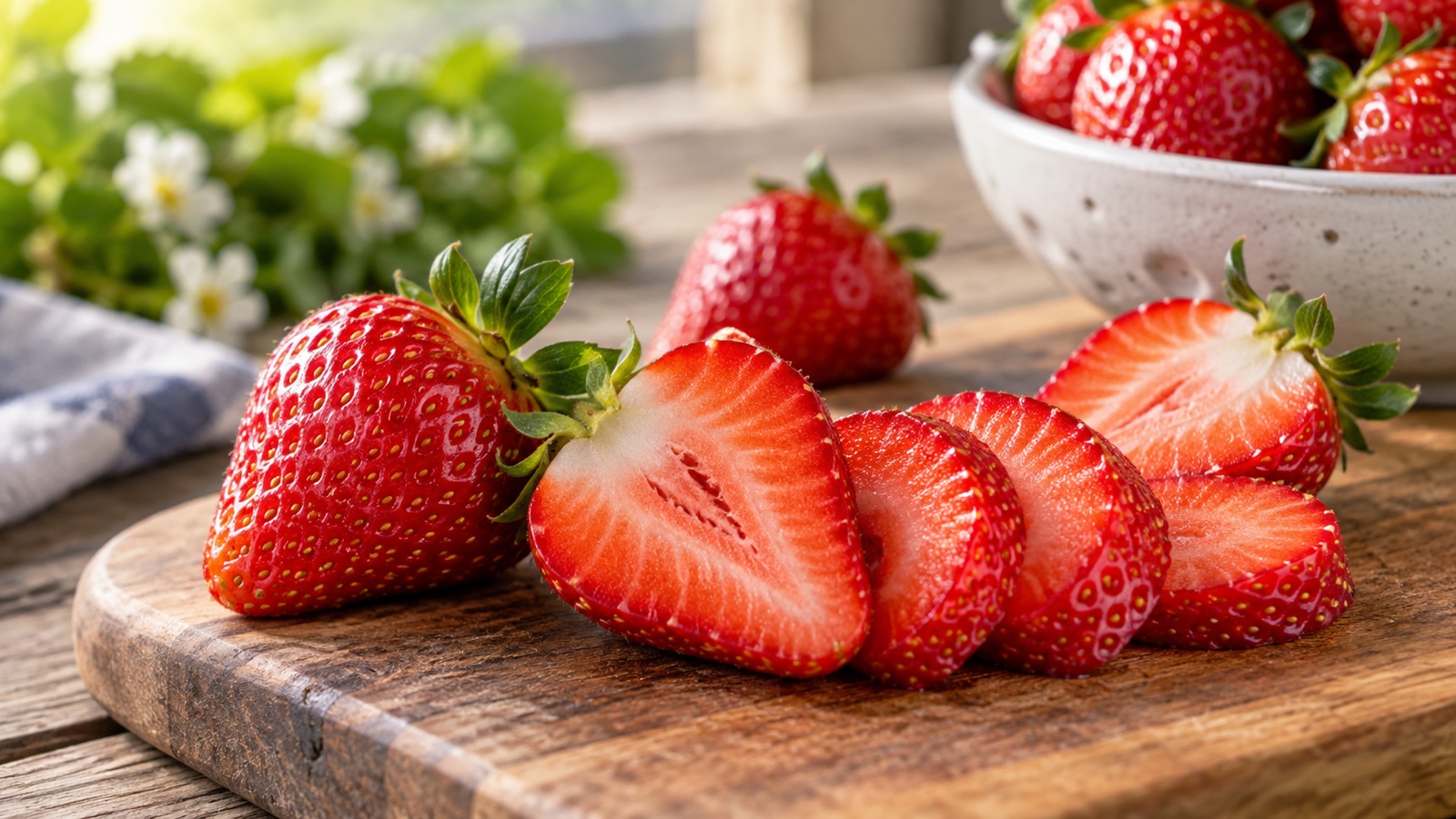
- The tiny dots on the surface are called achenes.
- Each achene is technically a separate dry fruit.
- Each achene contains one seed.
- A typical strawberry has around 200 achenes.
- The exact number varies by fruit size and cultivar.
- Strawberry flowers usually have five white petals.
- The flowers contain many pistils.
- Each fertilized pistil can become an achene.
- Good pollination helps the berry develop evenly.
- Poorly pollinated areas may remain misshapen.
- Bees are important strawberry pollinators.
- Wind can contribute some pollen movement.
- Commercial growers often encourage pollinator activity.
- Strawberry leaves typically have three leaflets.
- Plants are low-growing perennials.
- A strawberry is essentially one swollen flower base carrying hundreds of tiny fruits on the outside, which feels like botany showing off.
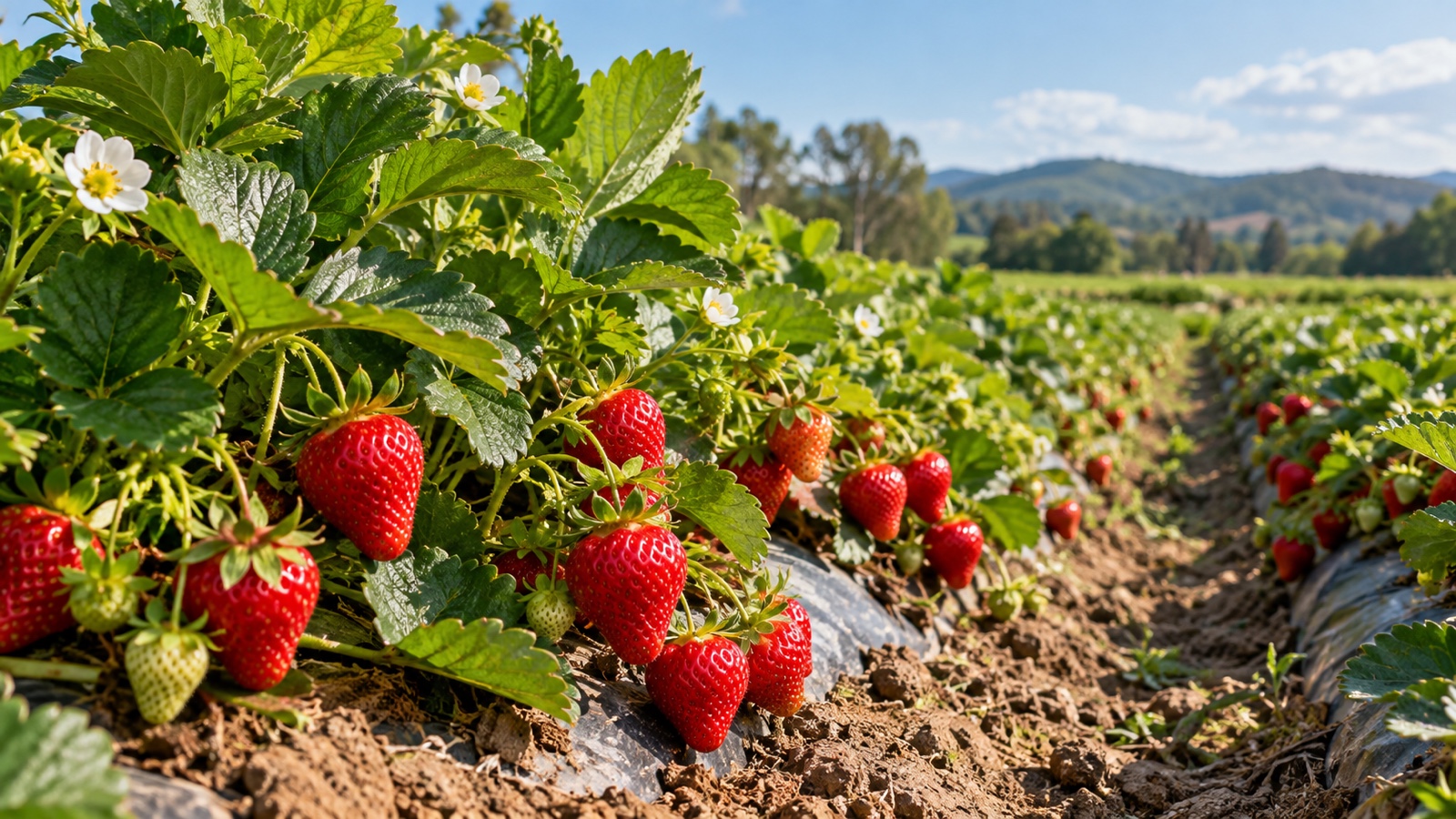
Modern garden strawberries are hybrids
- The common garden strawberry is Fragaria × ananassa.
- It is a hybrid species.
- Its ancestry includes North American and South American strawberries.
- Fragaria virginiana contributed flavor and hardiness.
- Fragaria chiloensis contributed large fruit size.
- Hybridization occurred in Europe in the 18th century.
- The resulting plants became ancestors of modern cultivars.
- Wild strawberries existed long before garden hybrids.
- Woodland strawberries are smaller but intensely flavored.
- Alpine strawberries are another small-fruited type.
- Modern breeding selects for flavor, size, firmness, disease resistance, and shelf life.
- Shipping durability matters in commercial cultivars.
- Firm fruit survives packing better.
- Flavor can vary substantially among cultivars.
- Some varieties are bred for warm climates.
- Others tolerate colder winters.
- Day-neutral strawberries can fruit across a broad season.
- June-bearing varieties produce concentrated crops.
- Everbearing varieties often produce multiple flushes.
- The supermarket strawberry is the result of centuries of plant breeding, not one unchanged wild berry made bigger.
Strawberry plants clone themselves with runners
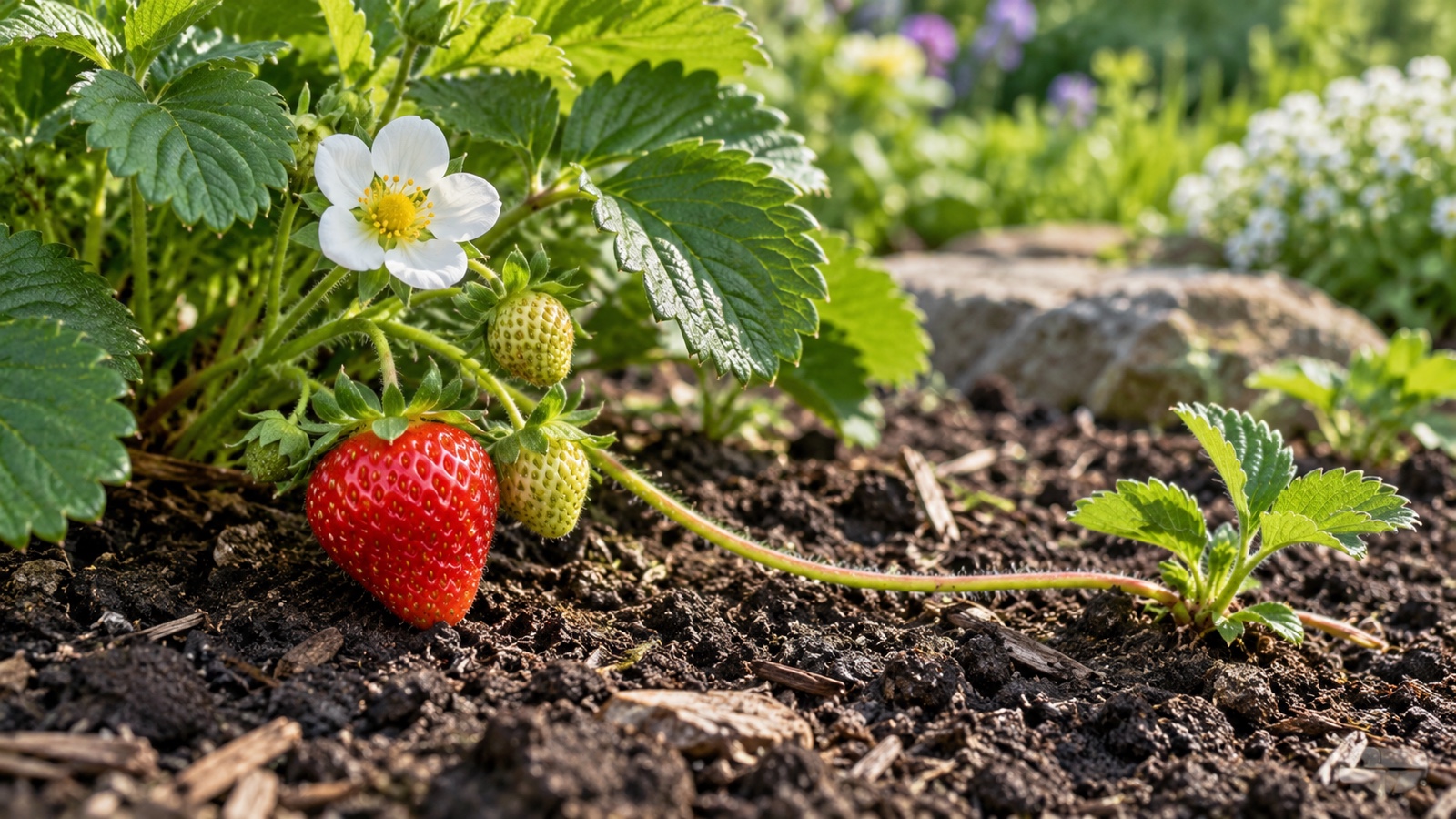
- Strawberry plants produce horizontal stems called runners.
- Runners are also called stolons.
- New plantlets form along the runner.
- Those plantlets can root in soil.
- The new plants are genetic clones of the parent.
- Runners let strawberries spread quickly.
- Gardeners can pin runners into pots for propagation.
- Commercial nurseries propagate large numbers of plants this way.
- Removing runners can direct more energy toward fruit production.
- Whether to remove them depends on the growing goal.
- Strawberry crowns sit at soil level.
- Planting crowns too deeply can cause rot.
- Planting too shallowly can dry roots.
- Strawberries prefer well-drained soil.
- Mulch helps keep fruit off wet ground.
- Straw mulch is historically associated with strawberry production.
- The exact origin of the English name strawberry is uncertain.
- Runners make strawberry beds expand year after year.
- Old plants can decline in productivity.
- Strawberries can reproduce sexually through seeds and asexually through runners, because apparently one strategy was not enough.
Strawberry aroma comes from dozens of compounds
- Strawberry flavor combines sweetness, acidity, and aroma.
- Sugars provide sweetness.
- Citric acid contributes tartness.
- Malic acid contributes additional acidity.
- Volatile aroma compounds create the recognizable smell.
- Esters contribute fruity notes.
- Furanones contribute sweet caramel-like aromas.
- Different cultivars produce different aroma profiles.
- Ripe fruit smells stronger than unripe fruit.
- Cold temperatures reduce aroma release.
- Room-temperature strawberries therefore smell more intense.
- Ripeness increases sugar levels.
- Color deepens as anthocyanin pigments accumulate.
- Strawberries do not become much sweeter after harvest.
- They are considered non-climacteric fruits.
- Picking too early sacrifices flavor.
- Commercial growers balance ripeness against shipping durability.
- Overripe berries soften rapidly.
- Bruising accelerates quality loss.
- Strawberry flavor is less “one strawberry chemical” and more an orchestra where dozens of aroma molecules have to arrive at the same time.
Strawberries are nutrient dense for their calories
- Strawberries are mostly water.
- They are relatively low in calories.
- They are an excellent source of vitamin C.
- One serving can provide a large share of daily vitamin C needs.
- Strawberries contain dietary fiber.
- The achenes contribute some of that fiber.
- They provide folate.
- They contain potassium.
- They provide manganese.
- Anthocyanins create much of the red color.
- Strawberries also contain ellagic acid-related compounds.
- They contain many other polyphenols.
- Fresh berries contain little fat.
- They are naturally low in sodium.
- Sweetened strawberry products can be very different nutritionally.
- Jam contains substantial added sugar.
- Strawberry syrup is far more concentrated in sugar than fresh berries.
- Chocolate-covered strawberries add fat and sugar.
- Freeze-dried strawberries retain many nutrients while losing water.
- The fresh berry gives you strong sweetness and aroma without needing much calorie density, which is one reason it works so well as dessert without actually being cake.
Strawberries spoil quickly because they are delicate and wet
- Fresh strawberries have high water content.
- Their skin is thin.
- They bruise easily.
- Damaged berries spoil faster.
- Gray mold is a common strawberry disease.
- Botrytis cinerea causes gray mold.
- Refrigeration slows fungal growth.
- Washing before storage can add moisture.
- Many people get better shelf life by washing just before eating.
- Any visibly moldy berries should be removed promptly.
- Mold can spread among packed fruit.
- Keeping berries dry helps storage.
- Ventilated containers reduce condensation.
- Strawberries freeze well for smoothies and cooking.
- Frozen berries become softer after thawing.
- Ice crystals damage cell walls.
- Whole frozen strawberries are less firm than fresh ones.
- Sliced frozen berries thaw faster.
- Freeze-drying preserves a crisp porous texture.
- The same tenderness that makes a ripe strawberry pleasant to bite is exactly what makes it terrible at surviving a rough trip home from the grocery store.
Jam, festivals and 25 final strawberry facts
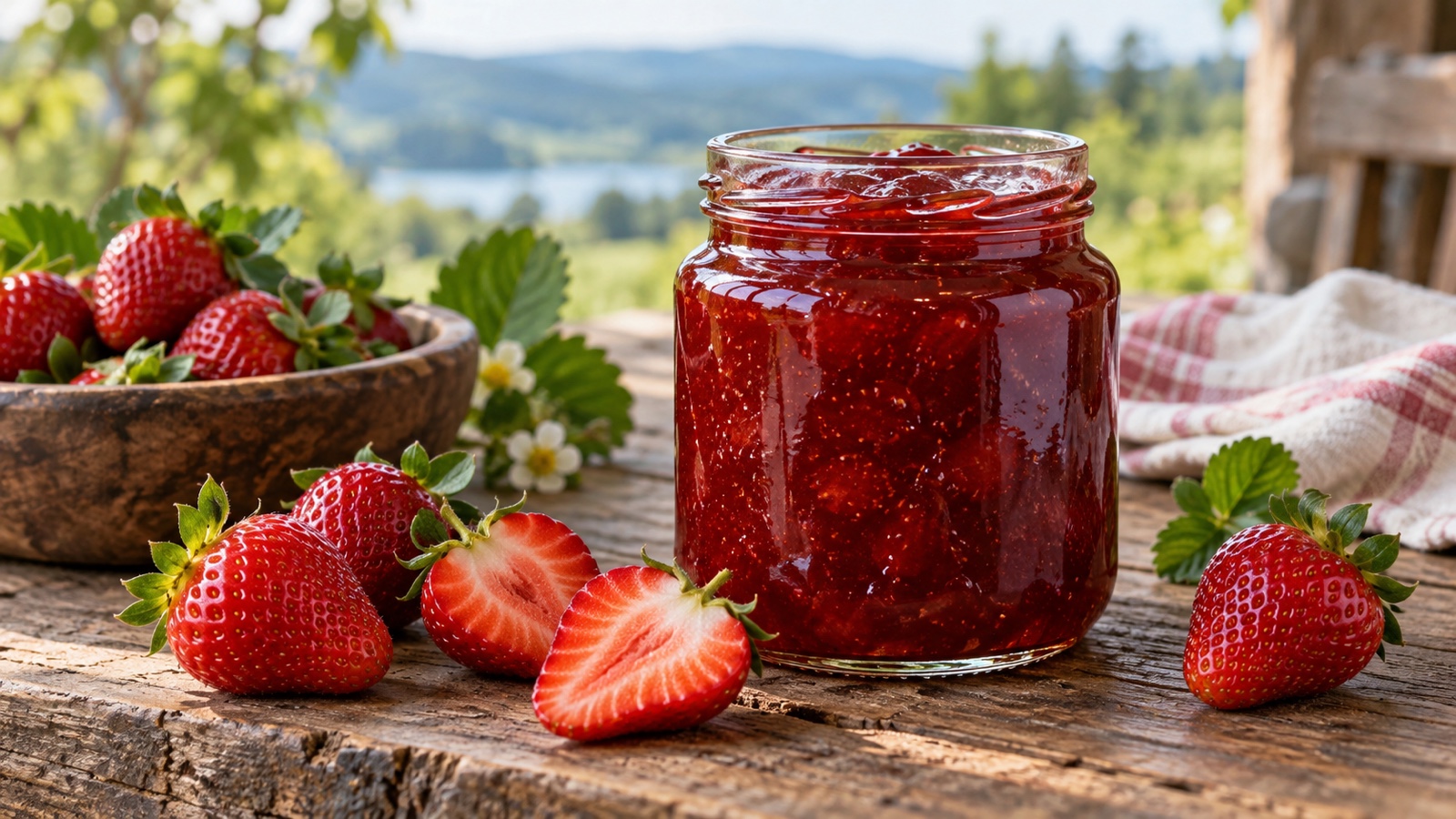
- Strawberry jam relies on fruit, sugar, acid, and pectin.
- Strawberries are naturally lower in pectin than some fruits.
- Commercial pectin is often added.
- Acid helps pectin form a gel.
- Sugar also supports gel formation and preservation.
- Strawberry shortcake is a classic American dessert.
- It combines berries, biscuits or cake, and whipped cream.
- Strawberries and cream are famously associated with Wimbledon.
- Strawberry milk is popular in several countries.
- Strawberry ice cream is a classic flavor.
- Artificial strawberry flavor does not perfectly match fresh fruit aroma.
- Fresh strawberry scent involves many volatile chemicals.
- California and Florida are major U.S. strawberry-producing states.
- California supplies strawberries across much of the year.
- Florida production is especially important during winter.
- Strawberries are harvested by hand in many commercial systems.
- Pickers must handle ripe berries carefully.
- Strawberry festivals are held across the United States.
- Many communities celebrate local harvest season with strawberry desserts.
- White strawberries exist.
- Pineberries are pale strawberries with red achenes.
- Some strawberries can be extremely small but intensely aromatic.
- Size alone does not determine flavor.
- Homegrown berries often taste stronger because they can ripen fully before harvest.
- After 145 facts, strawberries feel less like simple red berries and more like hybrid botany, pollination, plant cloning, aroma chemistry, delicate agriculture, and dessert history packed into one very fragile fruit.

Ellie is the owner and sole author of Fun Facts, combining her mechanical engineering background with years of research-driven writing to deliver facts you can trust. Every article is thoroughly fact-checked and routinely updated as new science and sources emerge to keep information accurate and current. Her mission is to make learning delightful while upholding high standards of reliability and transparency.