
The Amazon is far more than a dense patch of Brazilian jungle. Its forest and river system stretch across multiple countries, recycle water into the atmosphere, support millions of people, and connect the Andes with the Atlantic. The rainforest also has surprisingly nutrient-poor soils and rivers that can rise several stories each year. These 145 Amazon facts explore ecology, wildlife, people, water, climate, plants, rivers, threats, and conservation.
Amazon basics
- The Amazon is Earth’s largest tropical rainforest region.
- It surrounds the enormous Amazon River drainage basin in South America.
- The wider Amazon biome spans millions of square kilometers.
- Most of the rainforest lies in Brazil.
- Large portions also extend into Peru and Colombia.
- The wider Amazon region reaches Bolivia, Ecuador, Venezuela, Guyana, Suriname, and French Guiana.
- The Amazon Basin is larger than the contiguous United States.
- NASA describes the Amazon as Earth’s largest rainforest.
- The Amazon River is the world’s largest river by water discharge.
- Its drainage basin is also the world’s largest.
- The rainforest is not one uniform type of forest.
- It includes upland forest, seasonally flooded forest, swamps, river islands, savannas, and other ecosystems.
- More than 30 million people live in the broader Amazon region.
- Hundreds of Indigenous peoples have homelands there.
- The Amazon is simultaneously a forest, river network, climate system, cultural landscape, and home.
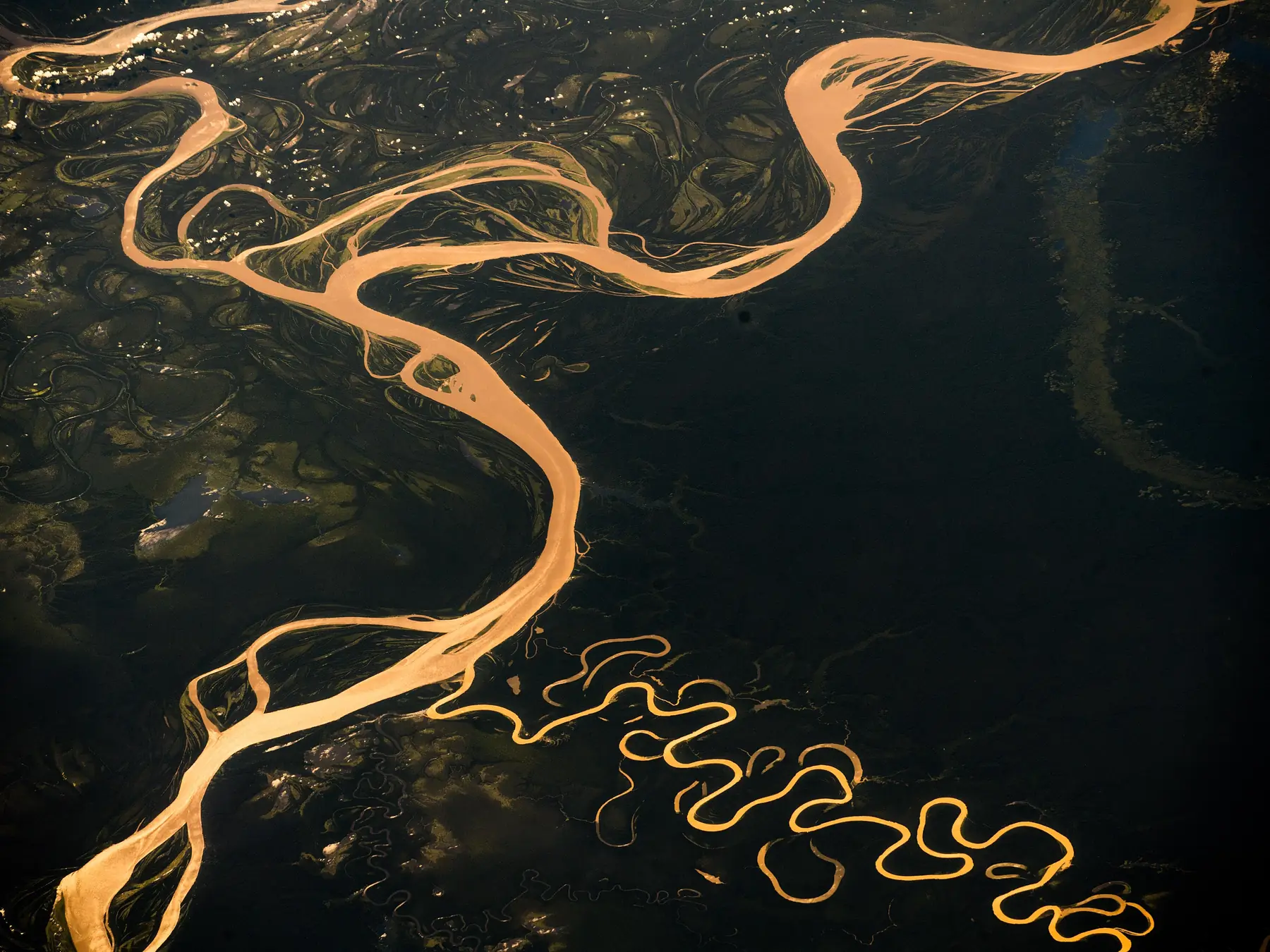
The Amazon River is enormous
- The Amazon River carries more water to the ocean than any other river.
- Its flow represents a major share of all river water entering the world’s oceans.
- The river empties into the Atlantic Ocean.
- Its mouth is extraordinarily wide and complex.
- Marajó Island lies within the giant estuary region.
- The Amazon receives water from thousands of tributaries.
- Some tributaries are among the world’s largest rivers in their own right.
- The Madeira is a major southern tributary.
- The Rio Negro is a major northern tributary.
- The Japurá, Purus, Juruá, Tapajós, and Xingu are other important tributaries.
- The main river crosses Peru, Colombia, and Brazil under changing regional names.
- Determining the Amazon’s exact length depends partly on which headwater is selected as the source.
- That is why the Amazon-versus-Nile “longest river” debate is not as simple as one tape measurement.
- The Amazon’s dominance by discharge is much less controversial than its exact length ranking.
- The river system links high Andes headwaters with the Atlantic Ocean thousands of kilometers away.
Rivers come in different colors
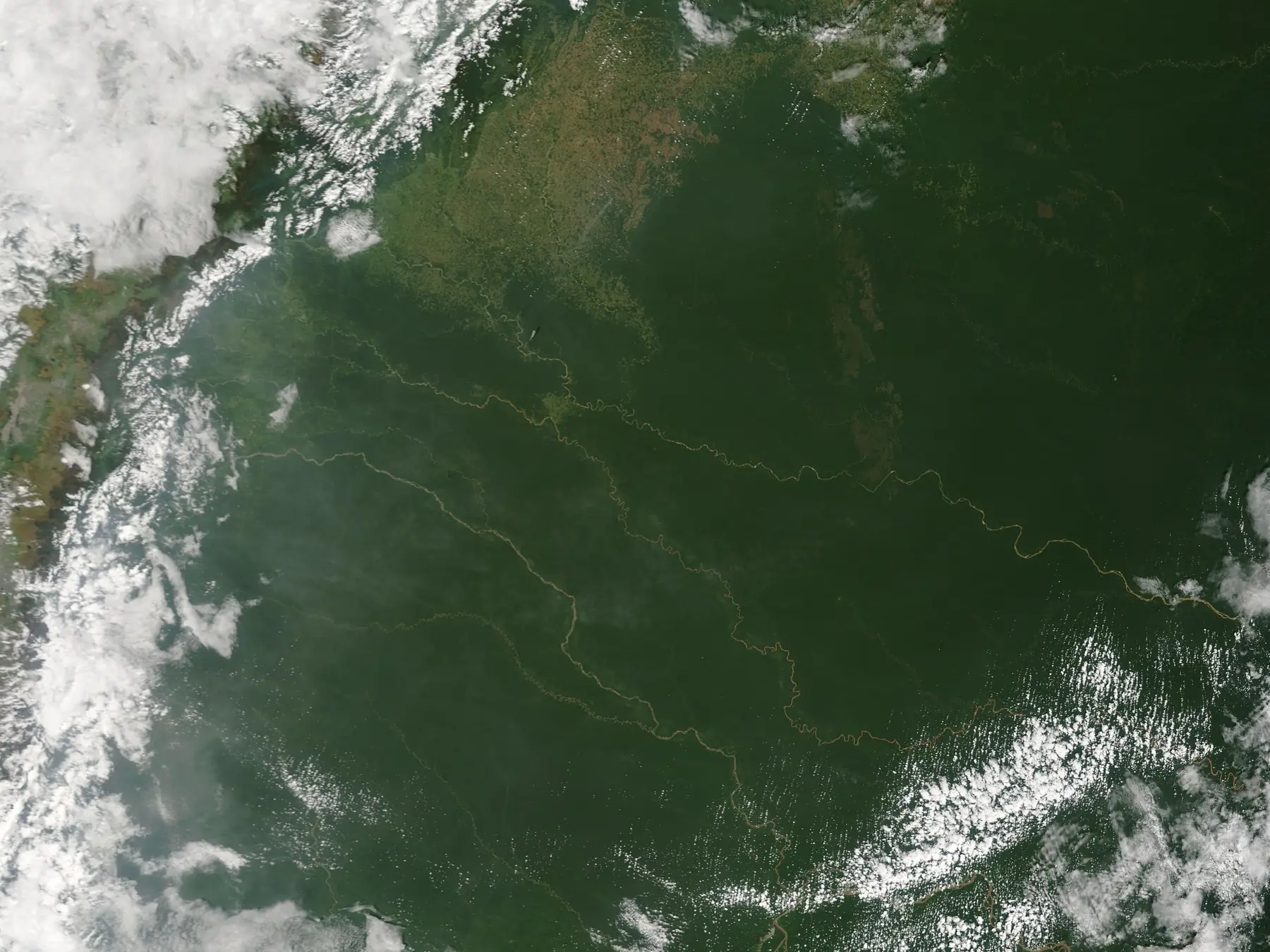
- Amazon rivers are often grouped into whitewater, blackwater, and clearwater types.
- Whitewater rivers carry large amounts of pale mineral sediment from the Andes.
- The Amazon-Solimões main stem is a classic whitewater river.
- Blackwater rivers are dark from dissolved organic compounds.
- The Rio Negro is the most famous blackwater river.
- Its water can resemble strong tea.
- Blackwater is not black because it is polluted.
- Clearwater rivers carry relatively little suspended sediment.
- The Tapajós is a well-known clearwater river.
- Water chemistry affects fish, plants, floodplain soils, and aquatic food webs.
- Near Manaus, dark Rio Negro water meets the pale Solimões.
- The two waters can flow side by side for kilometers before fully mixing.
- This attraction is known as the Meeting of Waters.
- Differences in temperature, speed, density, and sediment help maintain the visible boundary.
- Looking at a satellite image of the Amazon can reveal whole ecological systems simply through river color.
The forest makes its own rain
- Amazon trees pull water from soil through their roots.
- Water travels upward through plant tissues.
- Leaves release water vapor through transpiration.
- Evaporation from wet surfaces adds more atmospheric moisture.
- Together these processes are called evapotranspiration.
- The forest transfers enormous amounts of water into the air.
- That vapor helps form clouds and rain.
- Moisture can be recycled through the forest multiple times.
- Atmospheric winds transport Amazon moisture far beyond the basin.
- These moisture flows are sometimes called flying rivers.
- They influence rainfall in agricultural and urban regions of South America.
- Deforestation can reduce evapotranspiration.
- Large-scale forest loss can therefore alter regional rainfall patterns.
- Amazon climate is created partly by ocean moisture and partly by water recycled through vegetation.
- The rainforest is not merely a passive recipient of rain because it actively helps move water back into the atmosphere.
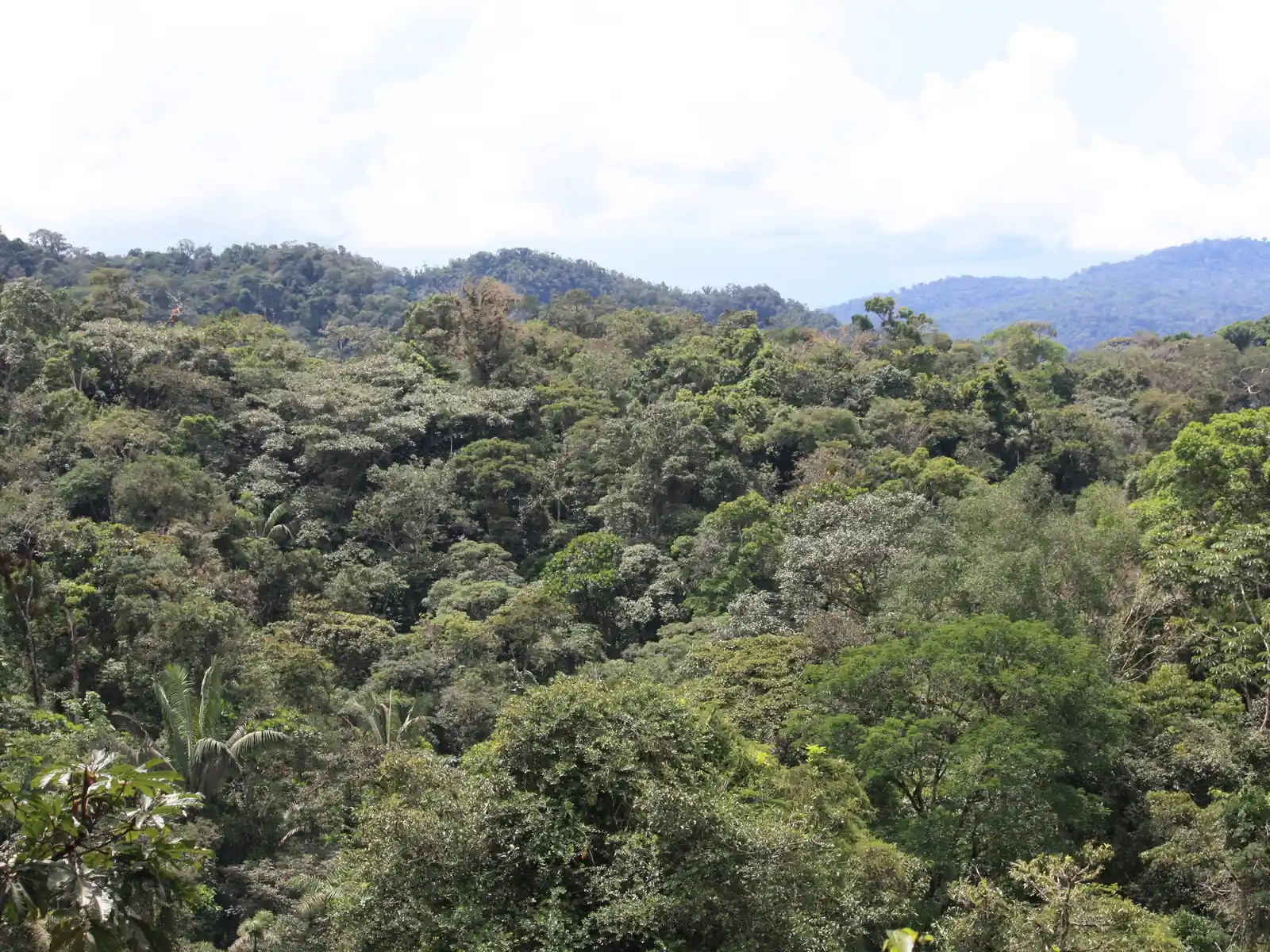
Rainforest layers create many habitats
- Tropical rainforest vegetation forms several vertical layers.
- Very tall emergent trees rise above the main canopy.
- The canopy forms a broad roof of leaves and branches.
- Huge amounts of rainforest life occupy this elevated layer.
- The understory receives much less direct sunlight.
- Young trees, palms, shrubs, and shade-tolerant plants grow there.
- The forest floor can be surprisingly open beneath a closed canopy.
- Little sunlight reaches the ground in many dense forests.
- Fallen organic matter decomposes rapidly in warm wet conditions.
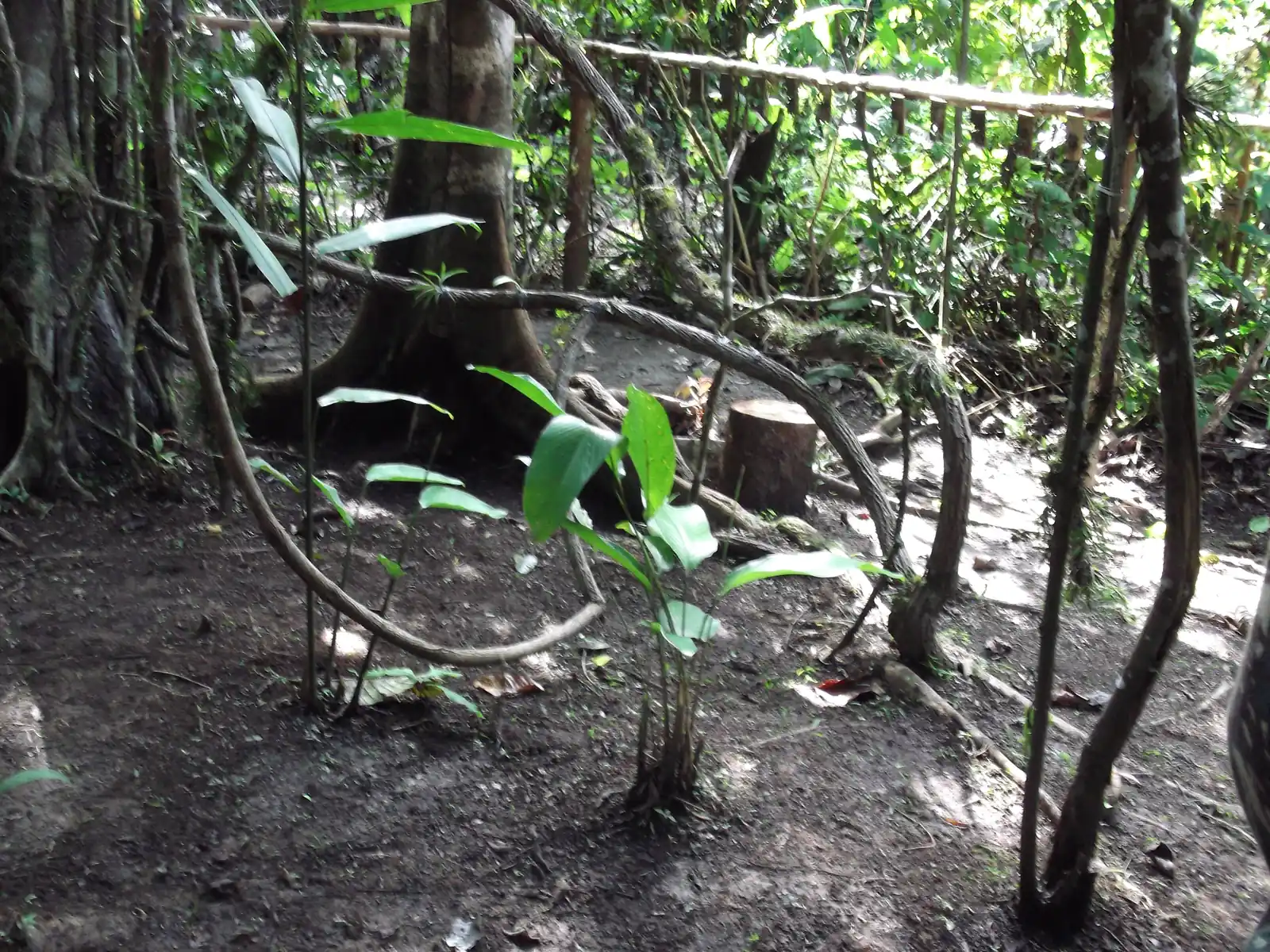
- Lianas are woody vines that climb trees toward sunlight.
- Epiphytes grow on other plants without necessarily parasitizing them.
- Orchids and bromeliads can live high in tree canopies.
- Canopy pools in bromeliads create tiny aquatic habitats.
- Different animals specialize in different forest heights.
- A single vertical slice of Amazon forest can contain ecological neighborhoods stacked tens of meters above one another.
The soils can be surprisingly poor
- Many Amazon soils are old and heavily weathered.
- Tropical rain can leach soluble nutrients downward.
- A large share of ecosystem nutrients is stored in living vegetation rather than rich topsoil.
- Dead leaves decompose quickly.
- Plants rapidly take up released nutrients.
- This creates a fast nutrient cycle near the surface.
- Removing the forest can therefore expose soils that lose fertility quickly.
- Not every Amazon soil is nutrient-poor.
- River floodplains can receive fresh mineral sediments.
- Whitewater floodplains can be especially fertile.
- Some dark human-created soils are known as terra preta.
- Terra preta contains charcoal, organic matter, pottery fragments, and other materials associated with pre-Columbian settlement.
- These soils can remain unusually fertile for centuries.
- Terra preta is evidence that Indigenous peoples actively modified Amazon landscapes long before European colonization.
- The idea of the Amazon as untouched wilderness with no long human history is therefore misleading.
Flooded forests rise and fall with the river
- Seasonal water levels can change dramatically across the Amazon Basin.
- Some forests flood for months each year.
- Várzea forests are flooded by sediment-rich whitewater rivers.
- Igapó forests are flooded by blackwater or clearwater rivers.
- Trees in flooded forests tolerate long periods with submerged roots.
- Fish enter flooded forests during high water.
- Some fish eat fruits and seeds directly from trees.
- Fish can help disperse plant seeds.
- River dolphins move into expanded aquatic habitat.
- Boats can travel between trunks where dry-season forest floor existed months earlier.
- Seasonal flooding redistributes sediment and nutrients.
- It creates breeding and feeding habitat for aquatic animals.
- Water levels around some floodplains can vary by more than ten meters annually.
- Communities adapt houses, transport, fishing, and farming to the flood pulse.
- In the Amazon, the boundary between river and forest moves every year.
Extraordinary wildlife
- The Amazon supports an extraordinary share of Earth’s terrestrial biodiversity.
- Jaguars are the region’s largest native cats.
- Harpy eagles are among the rainforest’s most powerful birds of prey.
- Giant otters live in Amazon rivers and wetlands.
- Amazon river dolphins are often called pink river dolphins.
- They can become pinker as they mature.
- Capybaras live along waterways.
- Sloths spend much of their lives in trees.
- Several monkey species occur nowhere outside the Amazon region.
- Poison frogs use bright colors as warning signals in some species.
- Anacondas inhabit wetlands and slow-moving water.
- Piranhas are diverse fish, not one universally aggressive monster species.
- Electric eels are actually knifefishes rather than true eels.
- Scientists continue describing new Amazon species.
- The number of known species understates the diversity still undocumented by science.
People have shaped the Amazon for millennia
- People have lived in the Amazon for thousands of years.
- Hundreds of Indigenous groups live across the region today.
- Some communities maintain little or no sustained contact with outside society.
- Indigenous languages belong to many different language families.
- Traditional ecological knowledge includes detailed understanding of plants, animals, soils, rivers, and seasons.
- Archaeologists have found large earthworks beneath or beside modern forest.
- These geoglyphs reveal organized pre-Columbian societies.
- Terra preta shows deliberate long-term soil management.
- Many useful plants were encouraged or domesticated by Indigenous peoples.
- Brazil nuts are gathered from wild and managed forest systems.
- Cassava was domesticated in South America and became a major staple.
- Cacao has deep Indigenous American origins.
- European diseases caused catastrophic population loss after contact.
- Colonial exploitation later included slavery, forced labor, rubber extraction, and land seizure.
- Modern conservation increasingly recognizes that protecting forests and protecting Indigenous territorial rights are closely connected goals.
Ten surprising Amazon Rainforest facts
- The Amazon is the largest tropical rainforest on Earth.
- The Amazon River carries more water than any other river.
- Amazon rivers can be whitewater, blackwater, or clearwater ecosystems.
- The Rio Negro looks dark because of dissolved organic compounds rather than ordinary pollution.
- The rainforest helps create its own rain through massive evapotranspiration.
- Many Amazon soils are less fertile than the lush vegetation suggests.
- Ancient human-made terra preta soils can remain unusually fertile.
- Fish in flooded forests can eat fruit directly from trees and help disperse seeds.
- The Amazon has a long human history and is not a landscape untouched by people.
- For more South American nature, explore our jaguar facts, capybara facts, and Science facts.
Quick Amazon Rainforest FAQ
Where is the Amazon Rainforest?
Across northern South America, with the largest share in Brazil and additional territory in Peru, Colombia, Bolivia, Ecuador, Venezuela, Guyana, Suriname, and French Guiana.
Is the Amazon the biggest rainforest?
Yes. It is Earth’s largest tropical rainforest region by area.
Why is the Amazon River brown?
The main whitewater channels carry enormous amounts of fine mineral sediment eroded from the Andes and other uplands.
Does the Amazon create rain?
Yes. Trees and other vegetation release huge quantities of water vapor through evapotranspiration, helping recycle moisture and form regional rainfall.
Are Amazon soils very fertile?
Many upland soils are surprisingly nutrient-poor because nutrients cycle rapidly through living vegetation. Floodplains and human-created terra preta can be much more fertile.

Ellie is the owner and sole author of Fun Facts, combining her mechanical engineering background with years of research-driven writing to deliver facts you can trust. Every article is thoroughly fact-checked and routinely updated as new science and sources emerge to keep information accurate and current. Her mission is to make learning delightful while upholding high standards of reliability and transparency.