
Hanukkah lasts eight nights, but it is not the Jewish equivalent of Christmas. The holiday commemorates events in the second century BCE, including the Maccabean revolt and rededication of the Jerusalem Temple, while the famous miracle of one day’s oil lasting eight appears in later rabbinic tradition. These 145 Hanukkah facts explore the history, menorah, shamash, candles, blessings, dreidels, gelt, latkes, sufganiyot, calendars, songs, gifts, spelling variations, public celebrations, and the difference between ancient events and traditions that developed centuries later.
Hanukkah basics
- Hanukkah is a Jewish holiday lasting eight nights and days.
- The name is also spelled Chanukah and in several other English forms.
- Those spelling differences reflect transliteration from Hebrew.
- Hanukkah means dedication.
- The holiday commemorates the rededication of the Second Temple in Jerusalem.
- It follows events of the Maccabean revolt in the second century BCE.
- Hanukkah begins on the 25th day of the Hebrew month Kislev.
- The Gregorian date changes from year to year.
- The holiday can fall from late November into December.
- Hanukkah is not the Jewish New Year.
- Rosh Hashanah is the Jewish New Year.
- Hanukkah is not one of the Torah’s biblical pilgrimage festivals.
- Its historical events occurred centuries after the Torah period.
- Lighting lamps or candles is the best-known ritual.
- Hanukkah’s visibility in North America grew partly because it occurs near Christmas, but the holidays have completely different religious histories.
The Maccabean revolt
- The Hanukkah story takes place during the Hellenistic period.
- Judea was ruled by the Seleucid Empire.
- Antiochus IV Epiphanes was the Seleucid king.
- Conflict grew around religious practice, political control, and Hellenization.
- Seleucid policies restricted important Jewish religious practices.
- The Jerusalem Temple was desecrated.
- A revolt began around 167 BCE.
- The uprising was led initially by the priest Mattathias and his sons.
- Judas Maccabeus became the most famous military leader.
- Maccabee may derive from a word meaning hammer, though the exact origin is debated.
- The rebels used guerrilla tactics.
- They eventually regained Jerusalem.
- The Temple was purified and rededicated.
- The rededication occurred around 164 BCE.
- The Books of Maccabees are major ancient sources for these events.
The oil miracle appears later
- The earliest historical accounts emphasize military victory and Temple rededication.
- The famous miracle of the oil is not described in the Books of Maccabees.
- It appears in the Babylonian Talmud centuries later.
- According to that tradition, only one sealed container of ritually pure oil was found.
- The oil was enough for one day.
- It burned for eight days.
- That provided time to prepare new pure oil.
- The story became central to later Hanukkah religious meaning.
- It explains the emphasis on light and eight nights.
- Ancient sources offer other explanations for an eight-day celebration.
- Second Maccabees connects the festival with a delayed celebration resembling Sukkot.
- Jewish tradition can preserve multiple layers of meaning simultaneously.
- The historical revolt and later oil miracle are not mutually exclusive within religious tradition.
- They come from sources written in different periods for different purposes.
- Good Hanukkah history distinguishes source chronology without dismissing the religious importance of later tradition.
Menorah or hanukkiah?
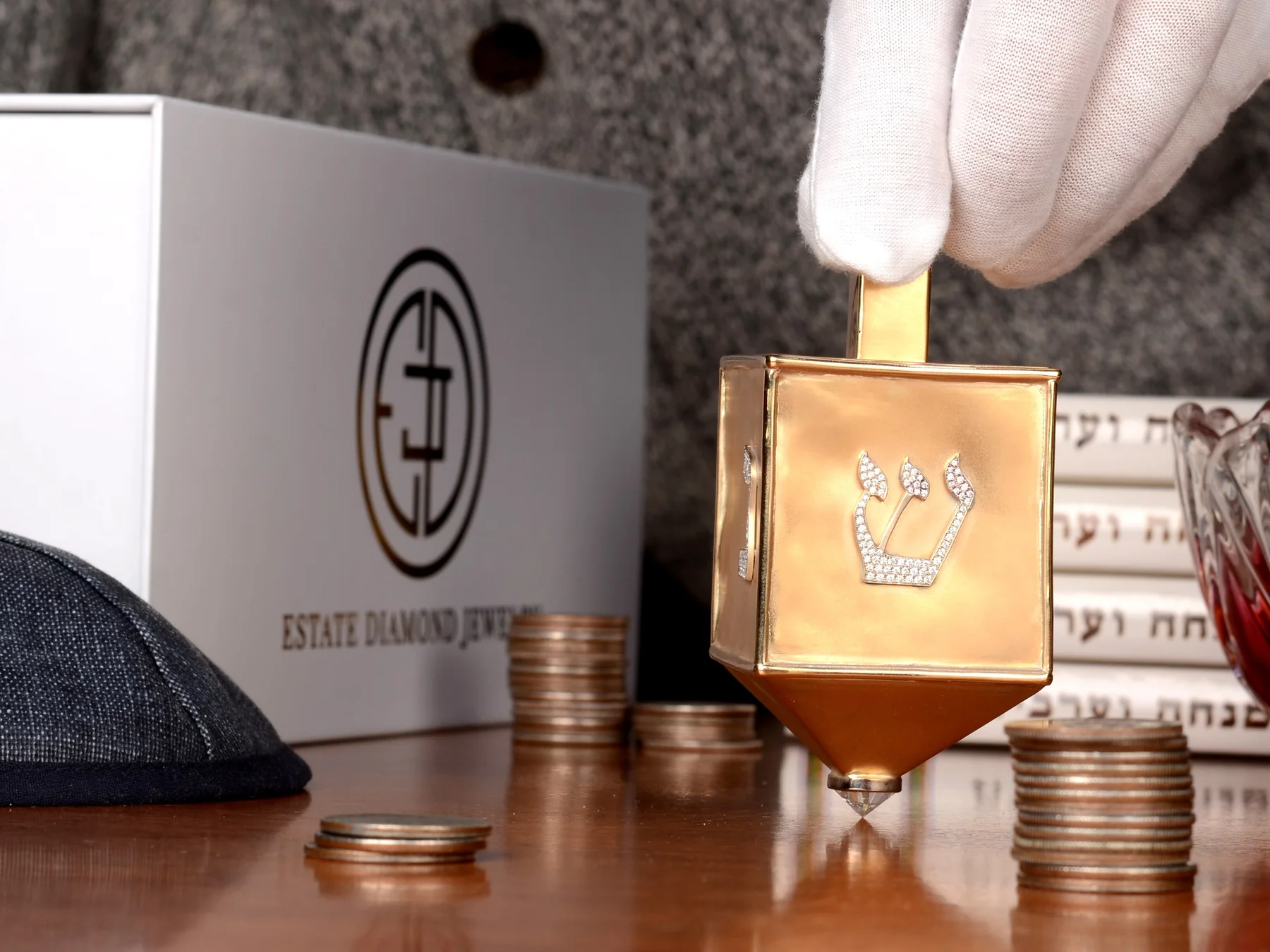
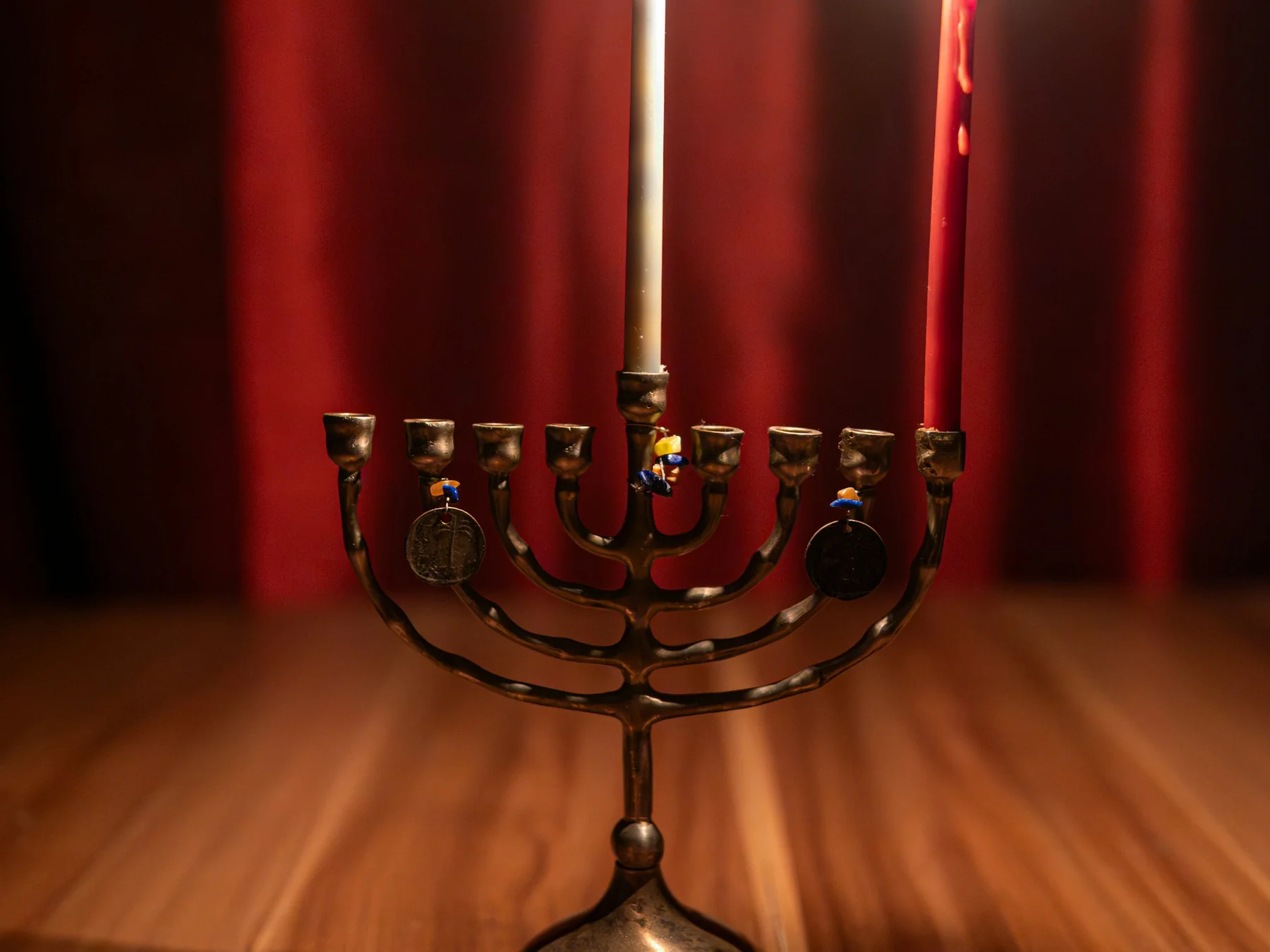
- The Hanukkah lamp has nine branches or light positions.
- Eight correspond to the eight nights.
- The ninth holds the shamash.
- Shamash means attendant or servant.
- The shamash is used to light the other candles or lights.
- A seven-branched menorah was an ancient Temple symbol.
- The Hanukkah lamp is technically distinct from that seven-branched menorah.
- The Hebrew term hanukkiah specifically refers to the Hanukkah lamp.
- In everyday English, people commonly call it a menorah.
- Both usages are widespread.
- The lights should be arranged in a straight line or otherwise clearly distinguishable as separate lights according to traditional rules.
- Oil lamps can be used instead of candles.
- Olive oil has special historical symbolism.
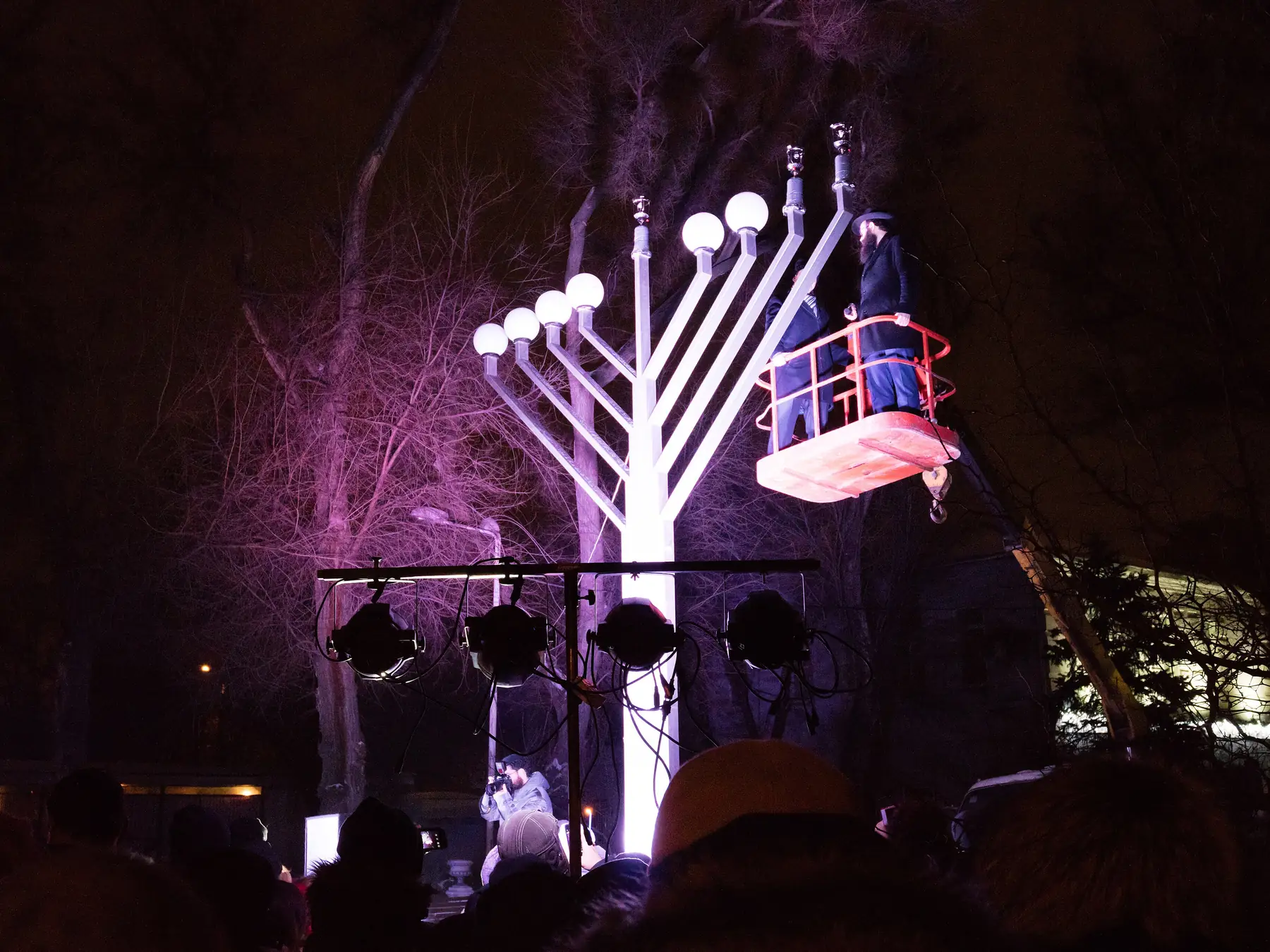
- Electric menorahs are common public decorations.
- For ritual fulfillment in traditional practice, details about flame and lighting follow Jewish law and community custom.
One more light each night
- One Hanukkah light is lit on the first night.
- Two are lit on the second night.
- The number increases until eight are lit on the final night.
- The shamash is additional.
- Candles are traditionally placed from right to left as new lights are added.
- They are commonly lit from left to right, beginning with the newest candle.
- Specific customs can vary.
- Blessings are recited before lighting.
- Three blessings are traditionally recited on the first night.
- Two are recited on subsequent nights.
- The Shehecheyanu blessing is included on the first night.
- The lights are meant to publicize the miracle.
- Many families place the hanukkiah near a window.
- The flames are not traditionally used as ordinary task lighting.
- The increasing light creates a visual rhythm that makes every night slightly brighter than the one before.
Why Hanukkah moves around the calendar
- The Hebrew calendar is lunisolar.
- Months follow lunar cycles.
- Leap months keep festivals aligned with the solar seasons.
- Hanukkah always begins on 25 Kislev.
- But 25 Kislev corresponds to different Gregorian dates.
- The holiday can begin in November or December.
- It occasionally overlaps with Thanksgiving in the United States.
- The rare 2013 overlap inspired the nickname Thanksgivukkah.
- Hanukkah can also overlap Christmas.
- Some years it begins or ends far from December 25.
- Jewish days begin at sunset rather than midnight under traditional reckoning.
- That is why a holiday listed for one Gregorian date begins the evening before.
- Hanukkah therefore starts at sundown.
- The exact candle-lighting time can depend on local sunset and religious practice.
- Calendar variation is a feature of the Hebrew calendar, not an error in scheduling.
Dreidels have a history
- A dreidel is a four-sided spinning top.
- Each side carries a Hebrew letter.
- Outside Israel the letters are commonly nun, gimel, hei, and shin.
- They are interpreted as initials for “a great miracle happened there.”
- In Israel, the final letter is often pe instead of shin.
- That changes the phrase to “a great miracle happened here.”
- Players spin the top in a gambling-style game.
- The letter determines what happens to the shared pot.
- Chocolate coins, nuts, candies, or small objects can serve as game pieces.
- Dreidel-like games have European spinning-top ancestors.
- The game was adapted into Jewish Hanukkah culture.
- A popular story says ancient Jewish children played dreidel to disguise Torah study from persecutors.
- Historians generally treat that explanation as later folklore rather than the most likely origin.
- The letters’ miracle interpretation gave the borrowed game distinct Jewish meaning.
- Traditions often become meaningful through adaptation even when their objects have older cross-cultural roots.
Latkes, sufganiyot, and oil
- Foods fried in oil are associated with Hanukkah.
- The oil recalls the miracle tradition.
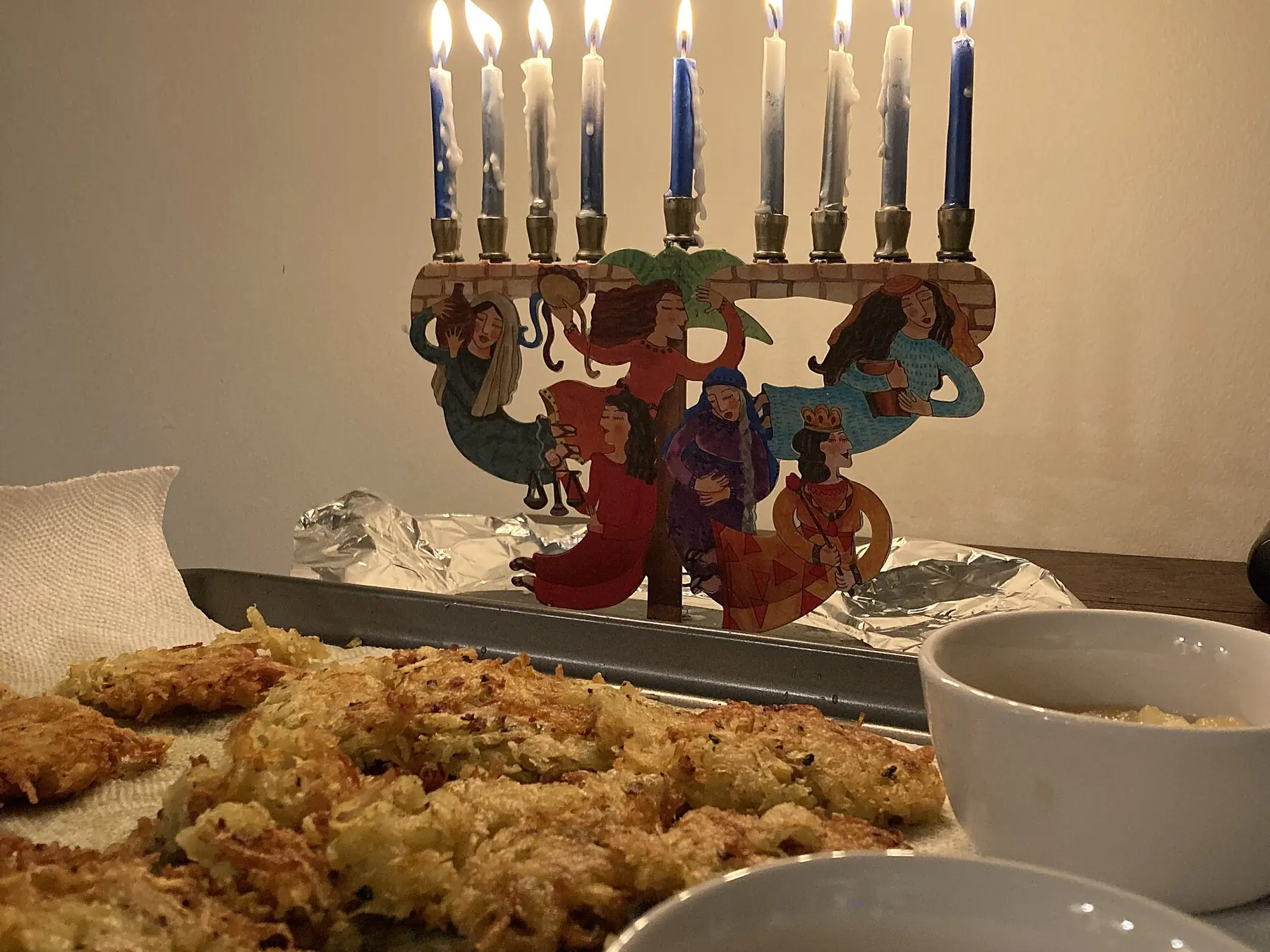
- Latkes are fried pancakes.
- Potato latkes are especially associated with Ashkenazi Jewish cuisine.
- Potatoes arrived in Europe long after the ancient Hanukkah events.
- Earlier latke traditions used cheese or other ingredients.
- Potato latkes became common after potatoes spread through eastern Europe.
- They are often served with applesauce or sour cream.
- Sufganiyot are jelly-filled or cream-filled fried doughnuts.
- They are especially popular in Israel.
- Bakeries create elaborate modern fillings and toppings.
- Sephardi and Mizrahi communities have their own fried Hanukkah foods.
- Cheese and dairy traditions also appear in some communities.
- Those customs connect with stories about Judith in later Jewish tradition.
- There is no one universal Hanukkah menu shared by every Jewish community.
Gifts, gelt, and modern celebrations
- Hanukkah gift-giving has changed over time.
- Traditional Hanukkah gelt means money.
- Adults historically gave coins to children, teachers, or charity in some communities.
- Chocolate coins wrapped in gold or silver foil became a popular modern form.
- Large nightly gift traditions became especially prominent in North America.
- Christmas-season consumer culture influenced some Jewish families’ Hanukkah gift practices.
- Not every family exchanges eight gifts.
- Some give one gift.
- Others focus on gelt, books, charity, games, or family activities.
- Public menorah lightings became increasingly visible during the 20th century.
- Large hanukkiahs now appear in public squares around the world.
- Hanukkah songs range from religious hymns to children’s songs.
- “Maoz Tzur” is a traditional Hebrew hymn associated with the holiday.
- “I Have a Little Dreidel” became a familiar English-language children’s song.
- Modern Hanukkah balances ancient history, rabbinic tradition, local Jewish customs, and newer family practices.
Ten surprising Hanukkah facts
- The famous eight-day oil miracle is recorded in a later rabbinic source rather than the Books of Maccabees.
- A Hanukkah lamp has nine light positions even though the holiday lasts eight nights.
- The ninth light is the shamash used to light the others.
- Hanukkah always begins on 25 Kislev, even though its Gregorian date changes.
- Jewish holidays begin at sunset.
- The Israeli dreidel often uses a different fourth letter from diaspora dreidels.
- The dreidel game likely has European spinning-top ancestors.
- Potato latkes cannot be an ancient Maccabean food because potatoes came from the Americas.
- Hanukkah is religiously important but is not the Jewish equivalent of Christmas.
- For more holiday trivia, explore our Lunar New Year facts and Culture facts.
Quick Hanukkah FAQ
How many nights is Hanukkah?
Eight nights, beginning on 25 Kislev in the Hebrew calendar.
Why are there nine candles on a Hanukkah menorah?
Eight lights represent the eight nights, while the ninth, called the shamash, is used to light the others.
What does Hanukkah celebrate?
The rededication of the Jerusalem Temple after the Maccabean revolt, with later rabbinic tradition emphasizing the miracle of a small amount of oil lasting eight days.
Why does Hanukkah change dates?
It follows the Hebrew lunisolar calendar, so 25 Kislev falls on different Gregorian dates each year.
Is Hanukkah like Jewish Christmas?
No. The holidays have different histories, theology, rituals, and calendars. Their proximity in some years helped make Hanukkah unusually visible in Christmas-dominant societies.

Ellie is the owner and sole author of Fun Facts, combining her mechanical engineering background with years of research-driven writing to deliver facts you can trust. Every article is thoroughly fact-checked and routinely updated as new science and sources emerge to keep information accurate and current. Her mission is to make learning delightful while upholding high standards of reliability and transparency.