
Lunar New Year is not one single identical holiday celebrated everywhere. Across China, Korea, Vietnam, Singapore, Malaysia, diaspora communities, and other places, related new-year traditions follow lunisolar calendars but use different foods, names, rituals, stories, clothing, and symbols. Red envelopes, ancestor remembrance, family reunions, rice cakes, zodiac animals, lanterns, temple visits, and noisy celebrations all carry local meanings. These 145 Lunar New Year facts explore calendars, Chinese New Year, Seollal, Tết, zodiac traditions, food, red envelopes, fireworks, lion dances, lanterns, family customs, and the diversity hidden behind one familiar English phrase.
Lunar New Year basics
- Lunar New Year is an umbrella English term for several new-year celebrations based on traditional lunisolar calendars.
- The best-known celebrations occur in East and Southeast Asia and their global diasporas.
- Chinese New Year is one major Lunar New Year tradition.
- Korea celebrates Seollal.
- Vietnam celebrates Tết Nguyên Đán, usually shortened to Tết.
- Different communities do not celebrate in exactly the same way.
- Dates usually fall between late January and February on the Gregorian calendar.
- The date changes each year.
- A lunisolar calendar tracks lunar months while also keeping seasons aligned with the solar year.
- Leap months are inserted in some years to maintain seasonal alignment.
- Family reunion is central to many traditions.
- Ancestor remembrance is important in several cultures.
- Special foods carry symbolic meanings.
- New clothes, cleaning, gifts, decorations, and visiting relatives are common in many places.
- Using the broad phrase Lunar New Year respectfully means recognizing that it includes multiple related but distinct cultural holidays.
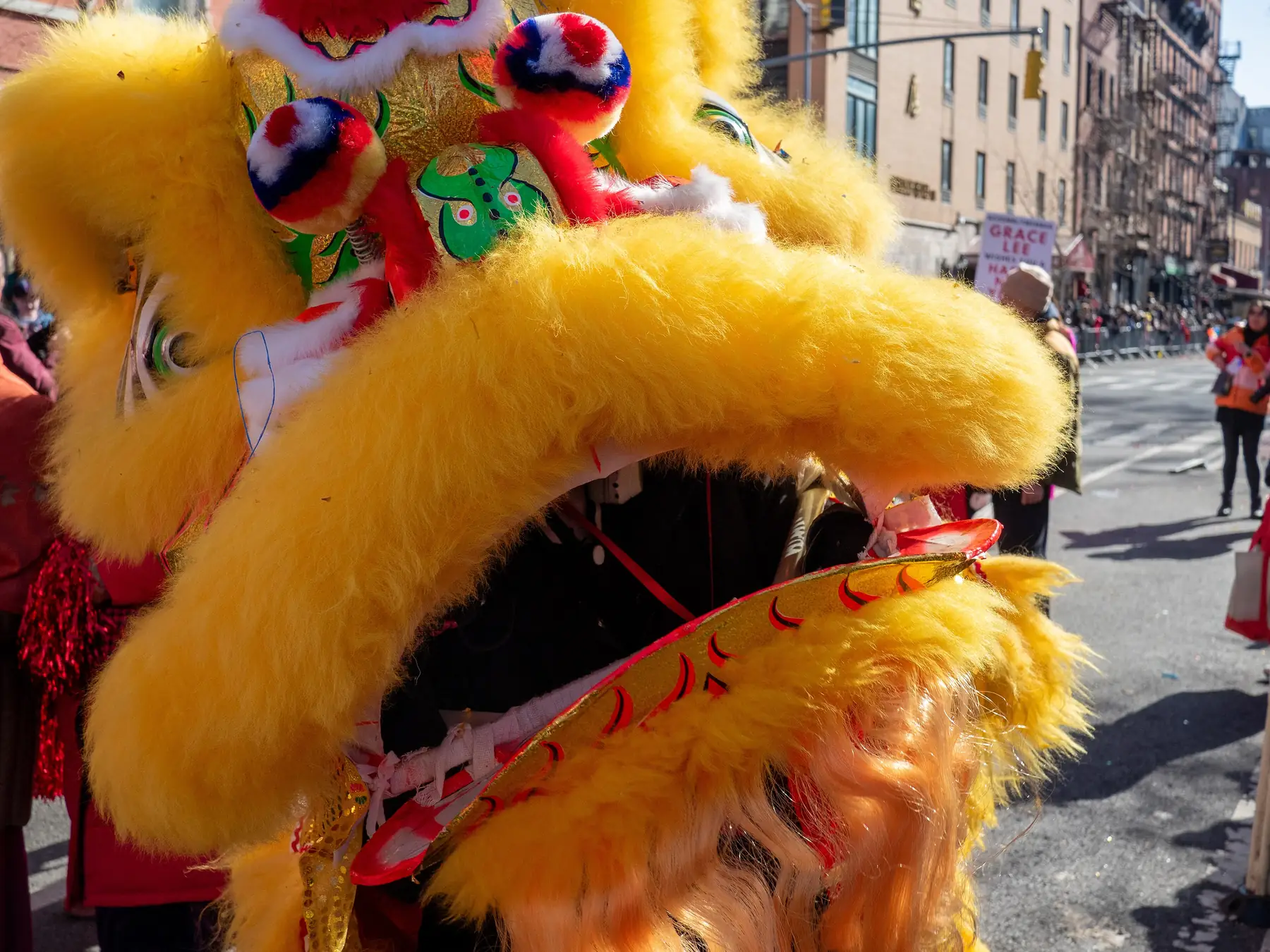
Why the date moves
- A purely lunar year contains about 354 days.
- That is roughly 11 days shorter than a solar year.
- Without correction, lunar months would drift through the seasons.
- Traditional Chinese and related calendars are lunisolar.
- They use lunar months but add leap months when needed.
- Chinese New Year begins on the first day of the first lunar month under the traditional calendar rules.
- That day occurs at a new moon.
- The holiday therefore does not have one fixed Gregorian date.
- Its date can move by several weeks from year to year.
- Seollal and Tết usually occur on the same date as Chinese New Year.
- Occasional calendar or time-zone rules can create subtle differences in some historical contexts.
- Islamic holidays use a different lunar calendar that does not add leap months to stay with the seasons.
- That is why Ramadan moves through the solar year while Lunar New Year stays in northern winter.
- “Lunar” is convenient shorthand but “lunisolar” is more technically precise for these calendars.
- The calendar itself is one of the holiday’s oldest pieces of astronomy.
Chinese New Year and Spring Festival
- Chinese New Year is commonly called Spring Festival in modern China.
- In Mandarin, Spring Festival is Chūnjié.
- The holiday begins a new year in the traditional Chinese calendar.
- Celebrations traditionally extend across multiple days.
- The Lantern Festival falls on the 15th day of the first lunar month.
- That marks the first full moon of the new lunar year.
- Family reunion dinner on New Year’s Eve is especially important.
- Millions of people travel to hometowns around the holiday.
- The annual travel period is known as chunyun.
- It is one of the world’s largest recurring human migrations.
- Homes and businesses display red decorations.
- Red is associated with luck, celebration, and protection.
- Couplets containing auspicious phrases are placed around doorways.
- The character fú, meaning good fortune or blessing, is a common decoration.
- Regional Chinese traditions differ enormously, so there is no one universal Chinese New Year menu or ritual.
The zodiac cycle
- The Chinese zodiac uses a repeating 12-animal cycle.
- The animals are rat, ox, tiger, rabbit, dragon, snake, horse, goat, monkey, rooster, dog, and pig.
- English translations of some animal names vary.
- Goat may also be translated as sheep or ram.
- The zodiac year changes at Lunar New Year rather than January 1.
- Someone born in January may therefore belong to the previous zodiac year.
- Each animal repeats every 12 years.
- Traditional astrology also combines animals with five elements.
- Those elements are wood, fire, earth, metal, and water.
- Yin and yang cycles are also involved.
- The combined stem-and-branch system creates a 60-year cycle.
- Zodiac animals are cultural symbols rather than scientific predictors of personality.
- Vietnamese zodiac traditions differ in some animals.
- Most famously, the Vietnamese zodiac uses the cat where the Chinese zodiac uses the rabbit.
- Related zodiac traditions therefore demonstrate cultural adaptation rather than one unchanged system copied everywhere.
Red envelopes
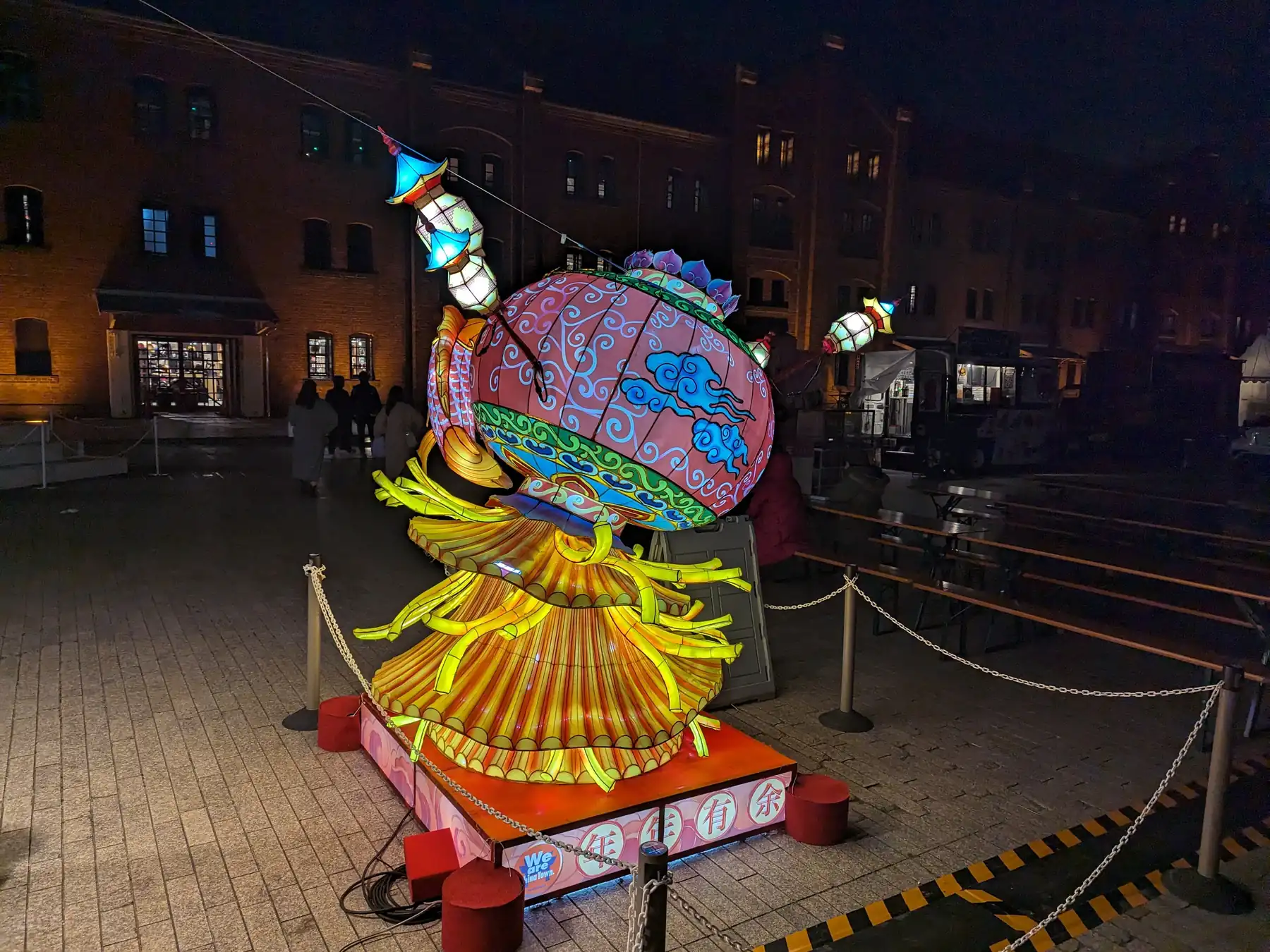
- Red envelopes containing money are a famous Chinese New Year tradition.
- In Mandarin they are called hóngbāo.
- Adults commonly give them to children.
- Older relatives and employees may also receive gifts depending on context.
- The red envelope symbolizes luck and good wishes.
- The amount of money can carry symbolic meaning.
- Even numbers are often favored in Chinese gift traditions.
- The number eight is considered especially auspicious because its pronunciation resembles words associated with prosperity in some Chinese varieties.
- The number four can be avoided because it sounds similar to the word for death in several Chinese languages.
- Customs differ by region and family.
- Digital red envelopes became popular through mobile payment apps.
- People can now send virtual hongbao instantly.
- Technology changed the delivery method without eliminating the symbolic tradition.
- Vietnamese lucky-money envelopes are called lì xì.
- Gift money appears in several Lunar New Year cultures but follows different etiquette.
Food is full of wordplay
- Chinese New Year foods often carry symbolic meanings through shape, name, or pronunciation.
- Fish is associated with abundance because the Chinese word for fish sounds like a word for surplus.
- Families may intentionally leave some fish uneaten to symbolize surplus carrying into the next year.
- Dumplings are popular in northern China.
- Their shape is sometimes compared with historical silver or gold ingots.
- Long noodles symbolize long life.
- They are often served without deliberately cutting them short.
- Niángāo is a sticky rice cake.
- Its name sounds like a phrase suggesting a higher or better year.
- Mandarins and oranges are associated with luck in several communities.
- Whole chickens can symbolize family unity.
- Glutinous rice balls called tāngyuán are associated with reunion and togetherness.
- Food symbolism differs across dialects because puns depend on pronunciation.
- Regional cuisines create completely different holiday tables.
- A dish can be important because it tastes good, carries family memory, and makes an auspicious pun at the same time.
Firecrackers, lions, and dragons
- Firecrackers are traditionally used in Chinese New Year celebrations.
- Loud noise is associated with driving away evil and misfortune.
- A popular legend tells of a monster called Nian frightened by noise and the color red.
- The legend is folklore rather than a historical explanation that can be proven as the holiday’s single origin.
- Firework rules now vary by city and country for safety and air-quality reasons.
- Lion dances are common during New Year celebrations.
- A lion costume is normally operated by two performers in southern styles.
- The front performer controls the head.
- The rear performer forms the hindquarters.
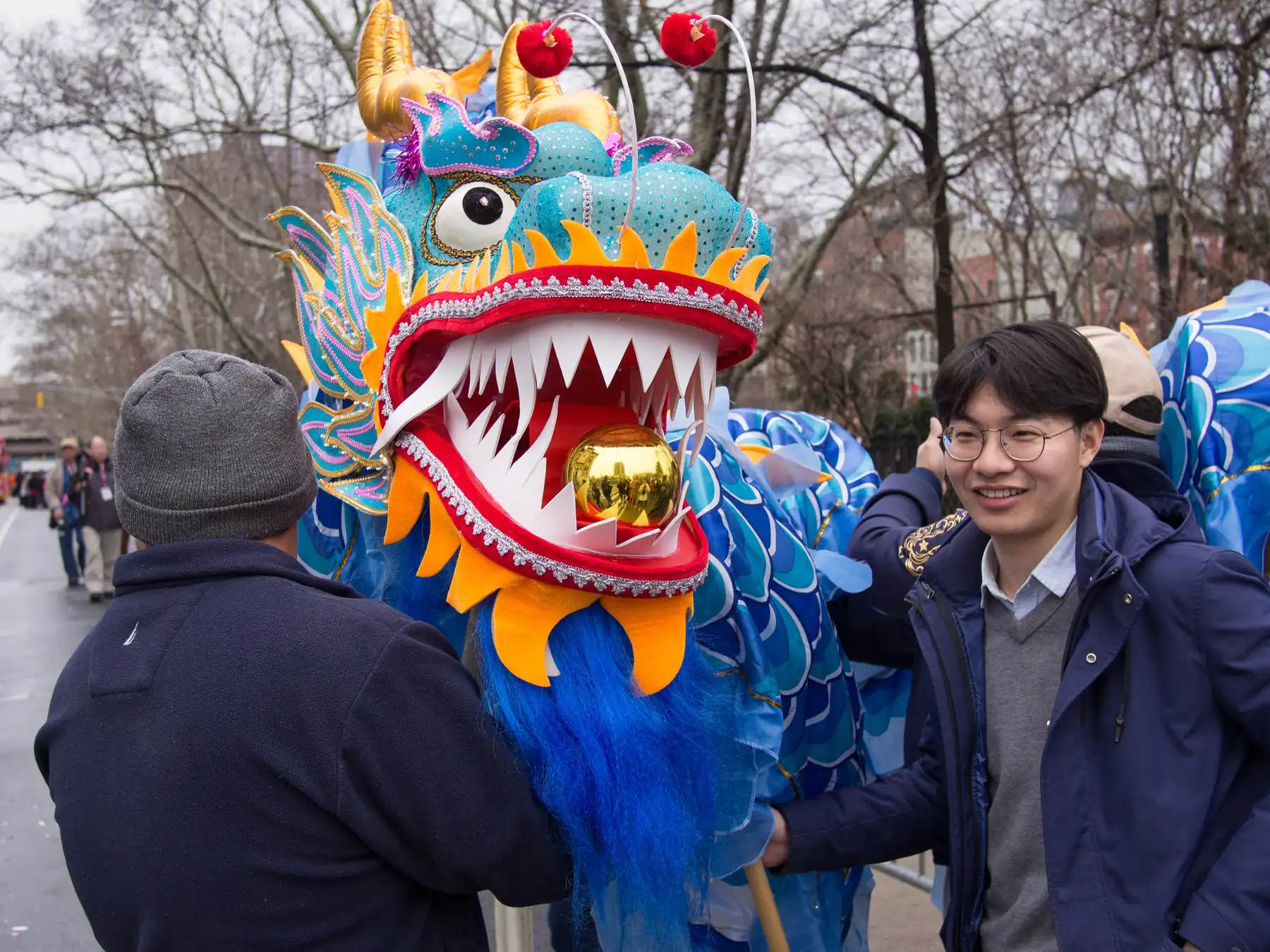
- Dragon dances are different.
- A dragon costume is long and supported by multiple performers on poles.
- Confusing lion dance and dragon dance erases two distinct performance traditions.
- Drums, cymbals, and gongs accompany many dances.
- Businesses may invite lion-dance teams to bring luck.
- These traditions now appear in Lunar New Year parades around the world.
Seollal in Korea
- Seollal is Korean Lunar New Year.
- It is one of Korea’s most important traditional holidays.
- Families travel to gather together.
- Many people honor ancestors through memorial rites.
- Children perform a formal bow called sebae to elders.
- Elders give blessings and may give money.
- Tteokguk is a traditional rice-cake soup eaten at Seollal.
- The white rice cakes can symbolize purity and a fresh beginning.
- Eating tteokguk is traditionally associated with becoming a year older.
- Yutnori is a traditional board game played during the holiday.
- Some people wear hanbok.
- Seollal celebrations occur in both South and North Korean culture, although modern practices differ.
- Korean zodiac traditions share the 12-animal cycle.
- Seollal is not simply Chinese New Year celebrated in Korean.
- It is a Korean holiday with its own food, language, family rituals, games, and historical development.
Tết in Vietnam
- Tết Nguyên Đán is Vietnam’s Lunar New Year.
- Tết is the country’s most important annual holiday period.
- Families clean and decorate homes before the new year.
- Ancestor altars receive special attention.
- Families visit relatives and temples.
- Lucky money is given in red envelopes.
- Bánh chưng is a square sticky-rice cake associated especially with northern Vietnam.
- It is traditionally filled with mung bean and pork.
- Bánh tét is a cylindrical sticky-rice cake common in southern and central traditions.
- Peach blossoms are associated especially with northern Tết.
- Yellow apricot blossoms are strongly associated with southern Vietnam.
- Kumquat trees are popular decorations.
- The identity of the first visitor to a home after midnight can be considered important for luck.
- Vietnam’s zodiac replaces the rabbit with the cat.
- Tết shares calendar roots with neighboring traditions while remaining distinctly Vietnamese.
Ten surprising Lunar New Year facts
- Lunar New Year calendars are more accurately described as lunisolar.
- The holiday can fall on different Gregorian dates every year.
- Chinese New Year, Korean Seollal, and Vietnamese Tết are related but not interchangeable celebrations.
- The Chinese zodiac actually forms part of a larger 60-year calendrical cycle.
- Vietnam uses a cat instead of a rabbit in its zodiac.
- Digital red envelopes transformed a centuries-old gift custom into a mobile-payment ritual.
- Lion dances and dragon dances are different performances.
- Korean Seollal has its own signature rice-cake soup, tteokguk.
- Vietnamese Tết uses different symbolic flowers in northern and southern regions.
- For more Asian culture, explore our Vietnam facts and Culture facts.
Quick Lunar New Year FAQ
Is Lunar New Year the same as Chinese New Year?
Chinese New Year is one Lunar New Year celebration. Korean Seollal, Vietnamese Tết, and other traditions share calendrical roots but have distinct cultural practices.
Why does Lunar New Year change dates?
The traditional calendars are lunisolar, using lunar months while periodically adding leap months to stay aligned with the solar seasons.
How many animals are in the Chinese zodiac?
Twelve, repeating in a cycle that also combines with elements and other calendrical systems.
Why are red envelopes given?
They carry money together with wishes for luck, prosperity, protection, and a good year, with etiquette varying by culture and family.
How long does Chinese New Year last?
Traditional observances span multiple days and culminate with the Lantern Festival on the 15th day of the first lunar month, although modern public holidays and family practices vary.

Ellie is the owner and sole author of Fun Facts, combining her mechanical engineering background with years of research-driven writing to deliver facts you can trust. Every article is thoroughly fact-checked and routinely updated as new science and sources emerge to keep information accurate and current. Her mission is to make learning delightful while upholding high standards of reliability and transparency.