
Disneyland opened in 1955 with wet asphalt, unfinished paint, television cameras, huge crowds, and attractions that were still being adjusted as guests arrived. It was unlike ordinary amusement parks because entire environments were designed to tell stories, from forced-perspective buildings on Main Street to a castle that looks taller than it is. These 145 Disneyland facts explore Walt Disney’s idea, opening day, lands, rides, hidden design tricks, transportation, audio-animatronics, Haunted Mansion, Pirates of the Caribbean, Matterhorn, castle, food, changes, and the park’s influence on themed entertainment.
Disneyland basics
- Disneyland is a theme park in Anaheim, California.
- It opened on July 17, 1955.
- Walt Disney personally led its development.
- Disneyland was the first Disney theme park.
- It is the only Disney castle park Walt saw completed during his lifetime.
- The park originally opened with five major themed lands.
- They were Main Street, U.S.A., Adventureland, Frontierland, Fantasyland, and Tomorrowland.
- Additional lands were added later.
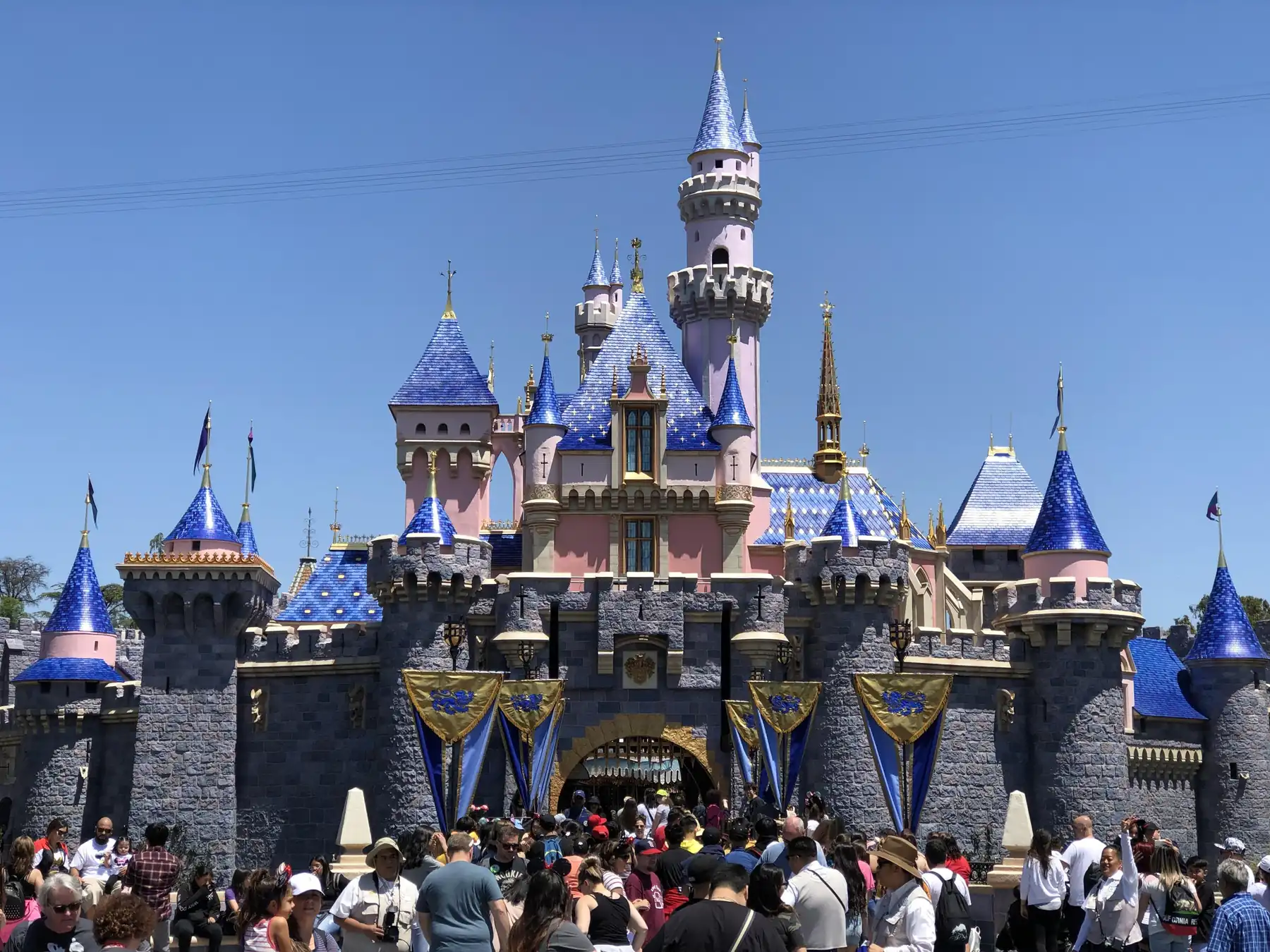
- The central castle is Sleeping Beauty Castle.
- Disneyland is part of Disneyland Resort.
- Disney California Adventure opened nearby in 2001.
- Downtown Disney and Disney-owned hotels form other parts of the resort.
- Disney calls many park designers Imagineers.
- Imagineering combines storytelling, engineering, architecture, art, landscaping, technology, and operations.
- Disneyland’s influence helped turn themed environments into a major global entertainment industry.
Where Walt got the idea
- Walt Disney visited amusement parks and attractions with his daughters.
- He became interested in a place where parents and children could enjoy experiences together.
- Walt disliked some amusement parks that felt dirty or poorly maintained.
- He imagined a cleaner, more controlled environment.
- Early concepts were much smaller than Disneyland.
- One idea involved an attraction near the Disney studio in Burbank.
- Walt called an early concept Mickey Mouse Park.
- The plan grew beyond the available studio property.
- Consultants studied potential locations.
- Anaheim offered accessible land near expanding Southern California highways.
- Orange County was still filled with agricultural land.
- Disney purchased about 160 acres for the project.
- Walt formed WED Enterprises to develop park ideas.
- WED later became Walt Disney Imagineering.
- Disneyland emerged from years of ideas about trains, miniatures, animation, fairs, museums, amusement parks, and storytelling rather than one sudden inspiration.
Television helped pay for Disneyland
- Building Disneyland required far more money than Walt personally had available.
- Disney partnered with the ABC television network.
- ABC invested in the park project.
- In return, Walt produced a weekly television series for the network.
- The program was initially called Disneyland.
- Episodes were organized around themes corresponding to park lands.
- Walt used television to explain the park before it existed.
- Viewers watched behind-the-scenes construction and Disney stories.
- The television series generated excitement for opening day.
- It also turned Walt himself into a familiar television personality.
- Disney understood that media could promote physical experiences and vice versa.
- The relationship anticipated modern entertainment franchises spanning multiple platforms.
- ABC later became part of The Walt Disney Company through a 1990s acquisition.
- The network that helped finance Disneyland eventually became Disney-owned.
- Disneyland’s creation is therefore inseparable from early television business history.
Opening day was chaotic
- Disneyland’s opening-day event on July 17, 1955, was televised live.
- Actors Art Linkletter, Bob Cummings, and Ronald Reagan helped host the broadcast.
- Reagan was years away from becoming U.S. president.
- The event was intended primarily for invited guests and media.
- Counterfeit invitations contributed to unexpectedly large crowds.
- Traffic backed up around Anaheim.
- Temperatures were extremely hot.
- Fresh asphalt softened in the heat.
- Some women’s high heels reportedly sank into it.
- Plumbing problems created difficult choices during final construction.
- Some drinking fountains were not functioning.
- A gas leak temporarily closed parts of the park.
- Restaurants ran short of food and drinks.
- Walt later referred to the troubled preview as Black Sunday.
- The public opening on July 18 went more smoothly and began the park’s ordinary operating history.
Main Street uses visual tricks
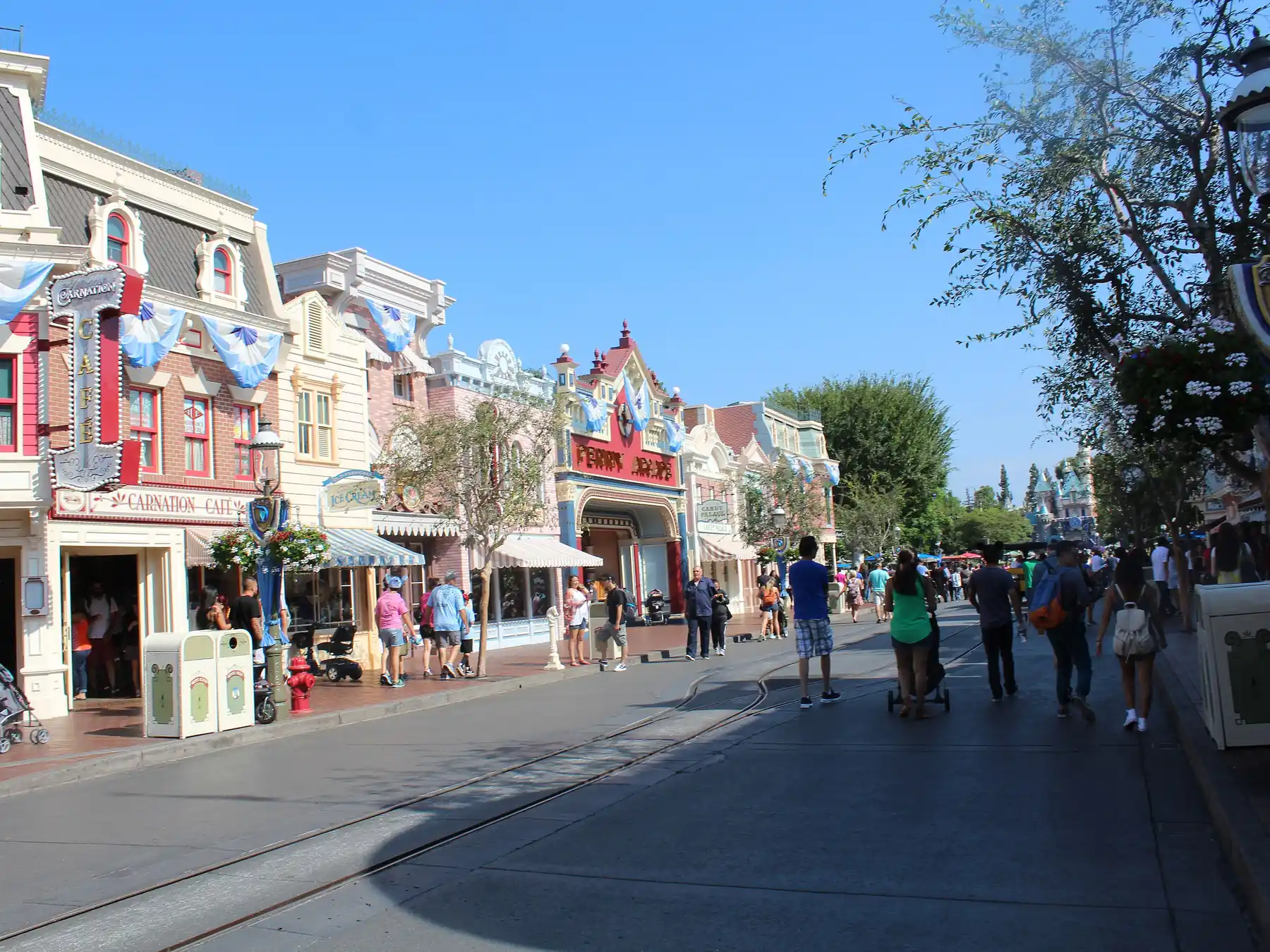
- Main Street, U.S.A. is inspired by idealized turn-of-the-century American towns.
- Walt’s memories of Marceline, Missouri, influenced its emotional tone.
- The buildings are not literal reproductions of Marceline structures.
- Forced perspective makes upper stories appear taller than they are.
- Architectural details become smaller on higher floors.
- The technique creates the illusion of greater height without enormous buildings.
- The street frames Sleeping Beauty Castle in the distance.
- Designers use color, landscaping, signage, music, and storefronts to guide attention.
- Names painted on upper windows honor people important to Disneyland history.
- Those windows function like themed credits.
- Walt Disney has a prominent window above the fire station.
- Walt kept a small private apartment above the fire station.
- A lamp in its window is traditionally kept illuminated in his memory.
- Main Street vehicles include period-inspired transportation.
- The land demonstrates how architecture can tell a story before a guest boards any ride.
Sleeping Beauty Castle is smaller than it looks
- Sleeping Beauty Castle is Disneyland’s central icon.
- It stands about 77 feet tall.
- Forced perspective makes it appear taller.
- The castle opened before Disney’s animated Sleeping Beauty premiered in 1959.
- Its name promoted the upcoming film.
- The design draws loosely from European castle architecture.
- Neuschwanstein Castle in Germany is often cited as one influence.
- The drawbridge can actually move.
- It has been lowered only on rare ceremonial occasions.
- A walkthrough attraction inside tells the Sleeping Beauty story.
- The walkthrough uses dimensional scenes and special effects.
- The castle has changed colors and decorations for anniversaries.
- Its relatively modest height helps preserve the intimate scale of the original park.
- Later Disney castles were built much taller.
- The smallest major Disney castle became one of the company’s most recognizable symbols.
The Matterhorn changed roller coasters
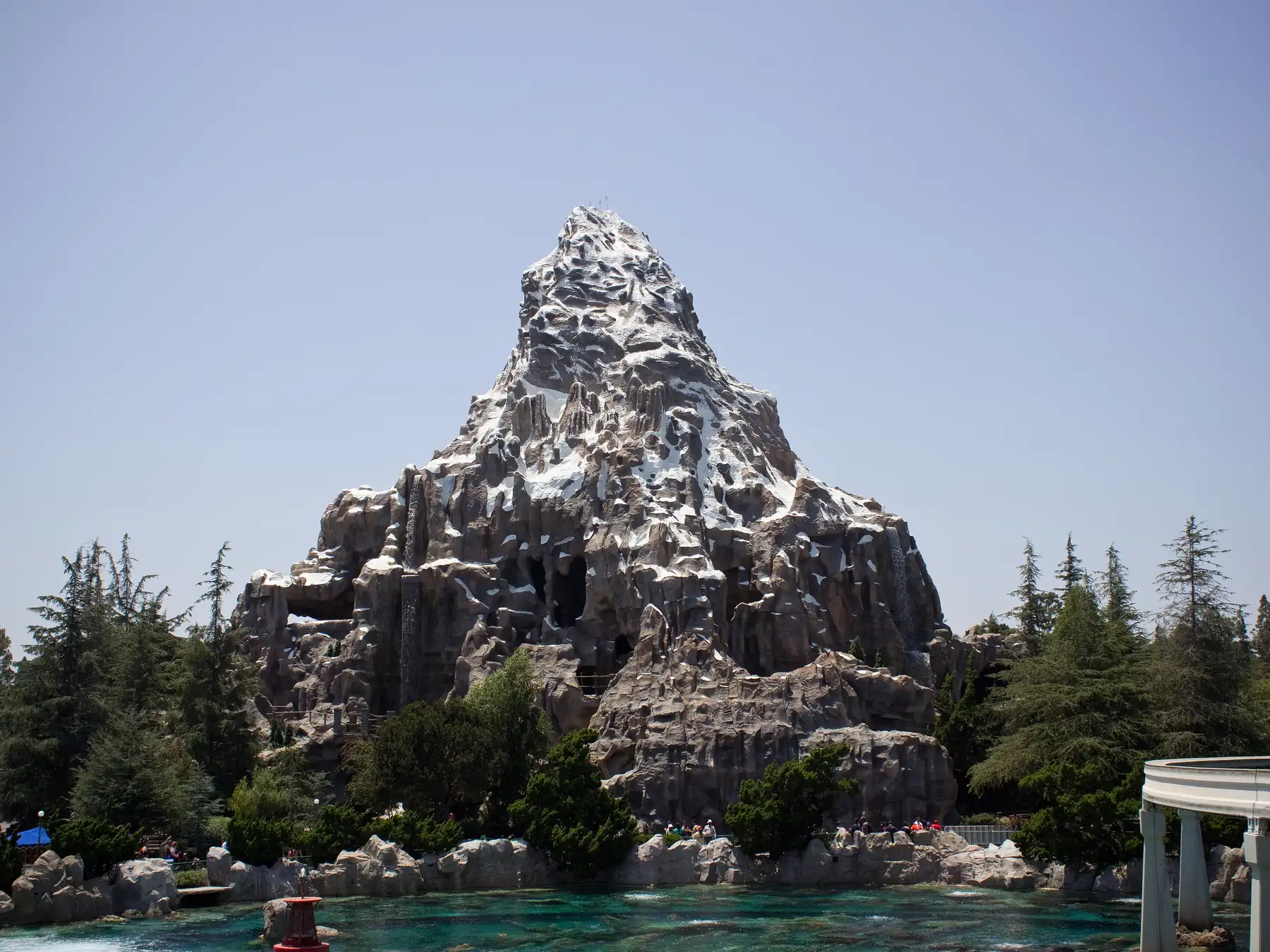
- Matterhorn Bobsleds opened in 1959.
- The attraction is inspired by Switzerland’s Matterhorn mountain.
- Walt became interested in the mountain while working in Europe.
- The Disneyland version is roughly one-hundredth scale compared with the real mountain by commonly cited park lore.
- The ride became the world’s first tubular-steel continuous-track roller coaster.
- Steel track allowed tighter turns than traditional wooden coaster construction.
- Two separate tracks weave through the mountain.
- Early bobsled vehicles were different from today’s versions.
- The mountain’s hollow interior contains structural steel.
- A basketball hoop was installed in a backstage break area inside the mountain.
- The hoop is real but much smaller and less dramatic than exaggerated internet legends suggest.
- The attraction later added Abominable Snowman figures.
- Matterhorn Bobsleds predates Disney World by more than a decade.
- Its steel-track technology influenced roller-coaster engineering far beyond Disney.
- A fake Alpine mountain in Anaheim became a genuine ride-engineering milestone.
Audio-Animatronics arrive
- Disney developed sophisticated electromechanical figures for attractions.
- The company calls them Audio-Animatronics.
- The term combines audio, animation, and electronics.
- Early experiments included a mechanical bird Walt purchased and studied.
- The Enchanted Tiki Room opened in 1963.
- It became the first Disneyland attraction built around a large cast of synchronized Audio-Animatronic performers.
- Birds, flowers, and tiki figures sing and move to programmed audio.
- Disney developed more advanced human figures for the 1964 New York World’s Fair.
- Great Moments with Mr. Lincoln brought an Abraham Lincoln figure to Disneyland.
- World’s Fair technology also contributed to it’s a small world.
- Audio-Animatronics allowed repeatable performances without live actors inside the figures.
- Modern figures use far more sophisticated motors, sensors, and controls.
- Some attractions blend animatronics with projection and digital media.
- The goal remains the same: make an impossible character feel physically present.
- Disneyland became a laboratory for robotic storytelling long before modern consumer robotics.
Pirates and ghosts after Walt
- Pirates of the Caribbean opened at Disneyland in 1967.
- It was the final major attraction whose design Walt Disney personally supervised before his death.
- Walt died in December 1966 before the ride opened.
- The attraction uses boats, elaborate sets, music, lighting, and Audio-Animatronics.
- “Yo Ho (A Pirate’s Life for Me)” became its signature song.
- The attraction later inspired the blockbuster film franchise.
- The Haunted Mansion opened in 1969.
- Its exterior had stood in New Orleans Square for years before the attraction itself opened.
- Imagineers debated whether the mansion should be frightening or funny.
- The final ride combines both.
- The ballroom ghosts use a stage illusion related to Pepper’s Ghost.
- Physical figures are reflected in angled glass to appear transparent.
- The stretching room creates a dramatic vertical illusion.
- Disneyland’s most famous “ghosts” depend heavily on 19th-century theatrical optics rather than computer graphics.
- Old illusion techniques remain convincing when architecture, lighting, timing, and story are carefully controlled.
Ten surprising Disneyland facts
- Disneyland’s first preview day was chaotic enough that Walt called it Black Sunday.
- Ronald Reagan helped host the 1955 opening broadcast years before becoming president.
- Main Street buildings use forced perspective to appear taller.
- Sleeping Beauty Castle is only about 77 feet tall.
- The castle opened before the Sleeping Beauty movie.
- Matterhorn Bobsleds pioneered tubular-steel roller-coaster track.
- There really is a small basketball hoop inside the Matterhorn.
- Walt kept an apartment above the Main Street fire station.
- The Haunted Mansion’s ballroom ghosts use an old stage-reflection illusion.
- For more Disney trivia, explore our Walt Disney facts and Disney facts.
Quick Disneyland FAQ
When did Disneyland open?
The televised invitation-only preview was July 17, 1955, and ordinary public operations began July 18.
Where is Disneyland?
Anaheim, California, in Orange County.
Did Walt Disney live at Disneyland?
He maintained a small private apartment above the Main Street fire station and used it during park visits, but it was not his primary family residence.
How tall is Sleeping Beauty Castle?
About 77 feet, with forced-perspective design making it appear taller.
Was Disneyland Walt Disney’s first park?
Yes. It was the first Disney theme park and the only Disney castle park completed while Walt was alive.

Ellie is the owner and sole author of Fun Facts, combining her mechanical engineering background with years of research-driven writing to deliver facts you can trust. Every article is thoroughly fact-checked and routinely updated as new science and sources emerge to keep information accurate and current. Her mission is to make learning delightful while upholding high standards of reliability and transparency.