
Potatoes are underground stems, not roots, and every little “eye” is a bud capable of growing a new plant. They were domesticated high in the Andes thousands of years ago, transformed European agriculture, helped trigger one of history’s most devastating famines when disease struck, and now appear as fries, chips, gnocchi, mash, dumplings, curries, breads, and thousands of native varieties. These 145 potato facts explore botany, history, farming, starch, storage, cooking, colors, varieties, nutrition, and the science behind the world’s favorite tuber.
Potato basics
- The common potato’s scientific name is Solanum tuberosum.
- Potatoes belong to the nightshade family Solanaceae.
- Tomatoes, peppers, eggplants, and tobacco belong to the same plant family.
- The part people usually eat is a tuber.
- A potato tuber is an enlarged underground stem.
- It is not technically a root.
- The little eyes on a potato are buds.
- Those buds can sprout into new stems.
- Potatoes store large amounts of energy as starch.
- The tuber helps the plant survive and reproduce.
- Potato plants grow leaves and flowers above ground.
- They can also produce small berry-like fruits.
- Those fruits are not the potatoes people eat.
- Potato plants can reproduce both from botanical seed and from tubers.
- The International Potato Center’s potato facts identify the Andes as the crop’s center of origin and domestication.
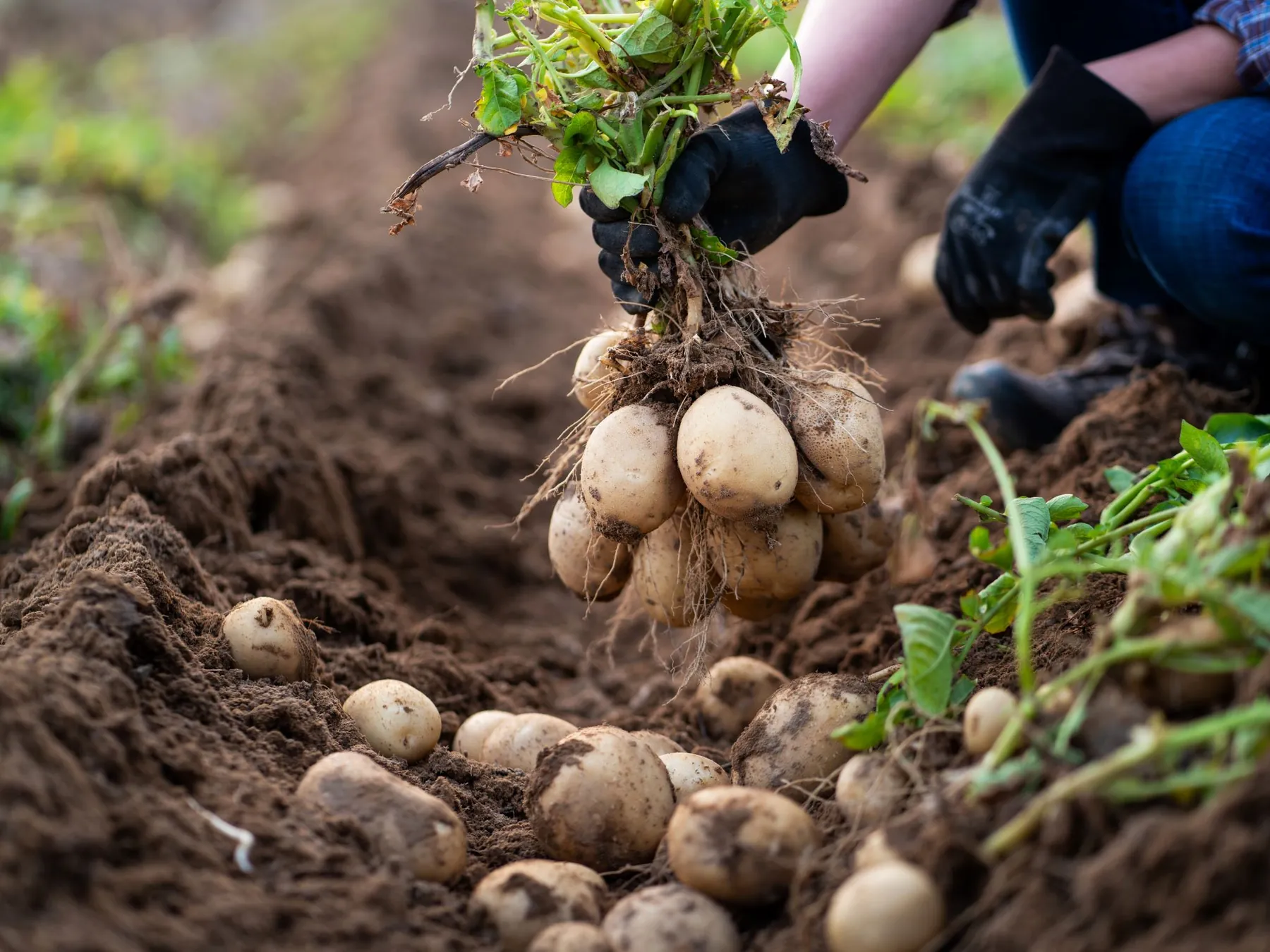
Potatoes began in the Andes
- Potatoes were domesticated in the Andes of South America.
- The Lake Titicaca region is especially important to potato origins.
- Farmers began domesticating wild potatoes thousands of years ago.
- The International Potato Center commonly cites roughly 8,000 years of cultivation history.
- Andean farmers selected plants for taste, yield, color, frost resistance, storage, and other traits.
- High-altitude farming exposed potatoes to cold nights and difficult soils.
- Crop diversity helped families reduce the risk of total harvest failure.
- Different varieties matured at different times.
- Some tolerated frost better than others.
- Others resisted particular pests or diseases.
- Potatoes became deeply integrated into Andean food and culture.
- Pre-Columbian pottery includes potato imagery.
- Traditional preservation methods allowed potatoes to last through difficult seasons.
- Indigenous agricultural knowledge created the diversity later exported around the world.
- The modern global potato crop rests on thousands of years of Andean breeding rather than a recent European invention.
There are thousands of potato varieties
- More than 4,000 native potato varieties are grown in the Andes.
- They can be white, yellow, red, purple, blue, pink, or multicolored.
- Some are round.
- Others are long, knobby, curved, or finger-shaped.
- Flesh can be creamy white, golden, violet, or patterned.
- Different varieties contain different levels of starch and moisture.
- High-starch potatoes are useful for fluffy mash and crisp fries.
- Waxy potatoes hold their shape well in salads and stews.
- All-purpose varieties fall between those extremes.
- Russet Burbank became famous for commercial french fries.
- Yukon Gold has yellow flesh and a naturally buttery-looking color.
- Fingerling describes a shape category rather than one single cultivar.
- Wild potato species preserve genes useful for future breeding.
- The International Potato Center maintains thousands of potato accessions in its genebank.
- Protecting genetic diversity gives breeders more options for adapting potatoes to future diseases and climate conditions.
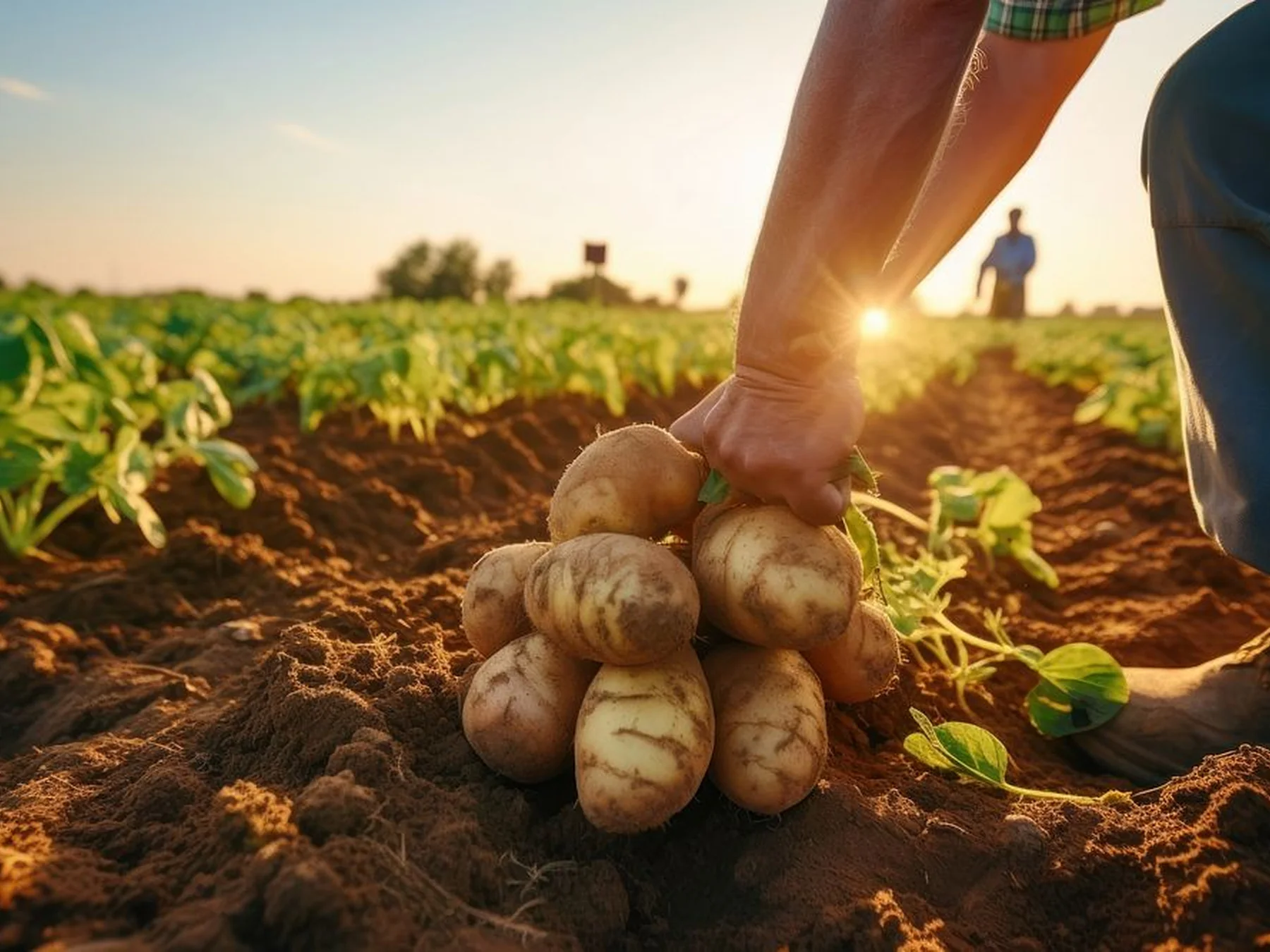
How a potato plant grows
- Farmers commonly plant pieces of tuber called seed potatoes.
- A seed potato is not the same thing as a botanical seed.
- Each planted piece needs at least one viable eye.
- Shoots emerge from those buds.
- The plant produces roots below ground and leafy stems above it.
- Special underground stems called stolons grow outward.
- The tips of stolons swell into new tubers.
- Leaves use photosynthesis to manufacture sugars.
- The plant converts and stores much of that energy as starch in tubers.
- One plant can produce multiple potatoes.
- Tuber number and size depend on variety, water, temperature, soil, nutrition, disease, and growing time.
- Farmers mound soil around plants in a process called hilling.
- Hilling protects developing tubers from light.
- It also gives underground stems more protected soil space.
- When the growing season ends, the above-ground plant dies back while mature tubers remain below.
Potatoes reach Europe
- Spanish contact with South America introduced potatoes to Europe during the 16th century.
- Early European potatoes were sometimes treated as botanical curiosities.
- People did not immediately adopt them as a staple food.
- The unfamiliar plant’s relationship to poisonous nightshades encouraged suspicion.
- Different daylight patterns also affected early Andean varieties in Europe.
- Breeders gradually selected potatoes better suited to European conditions.
- The crop spread through Spain and into other parts of Europe.
- Potatoes could produce substantial food from relatively small plots.
- They also grew well in soils where some grains performed poorly.
- Tubers hidden underground were less vulnerable than grain fields to some forms of wartime destruction.
- European governments and landowners promoted potato cultivation.
- Frederick the Great is famously associated with encouraging potatoes in Prussia.
- Antoine-Augustin Parmentier promoted potatoes in France.
- By the 18th and 19th centuries, potatoes had become important staples in much of Europe.
- A crop domesticated in the Andes became a major force in European population and agricultural history.
The Irish Potato Famine
- Potatoes became especially important to poor rural families in Ireland.
- Many households depended heavily on a small number of potato varieties.
- In the 1840s, late blight devastated potato crops.
- Late blight is caused by the microorganism Phytophthora infestans.
- It is an oomycete rather than a true fungus.
- Cool wet weather can favor rapid blight spread.
- Infected foliage develops lesions and collapses.
- Tubers can rot in fields and storage.
- Crop failure alone does not explain the full human disaster.
- British colonial policy, poverty, land ownership, food exports, relief failures, and inequality worsened the catastrophe.
- Roughly a million people died during the famine era.
- Large numbers emigrated.
- Ireland’s population fell dramatically.
- The disaster transformed Irish migration and politics for generations.
- Plant breeders still treat late-blight resistance as a major potato research priority.
Why potatoes turn green
- Potato tubers turn green when exposed to light.
- The green color comes from chlorophyll.
- Chlorophyll itself is not the main safety problem.
- Greening can occur alongside increased glycoalkaloids.
- Solanine is one well-known potato glycoalkaloid.
- High glycoalkaloid concentrations can taste bitter.
- They can also cause illness if enough is eaten.
- Sprouts and green tissue can contain elevated levels.
- Potatoes are therefore best stored away from light.
- Cool, dark, ventilated storage slows sprouting and greening.
- Home refrigerators can be too cold for ideal raw-potato storage.
- Very cold storage can increase reducing sugars in some potatoes.
- Those sugars cause faster browning during frying.
- Food-safety agencies advise removing green areas and sprouts rather than casually eating heavily greened potatoes.
- Potato storage is chemistry continuing long after harvest.
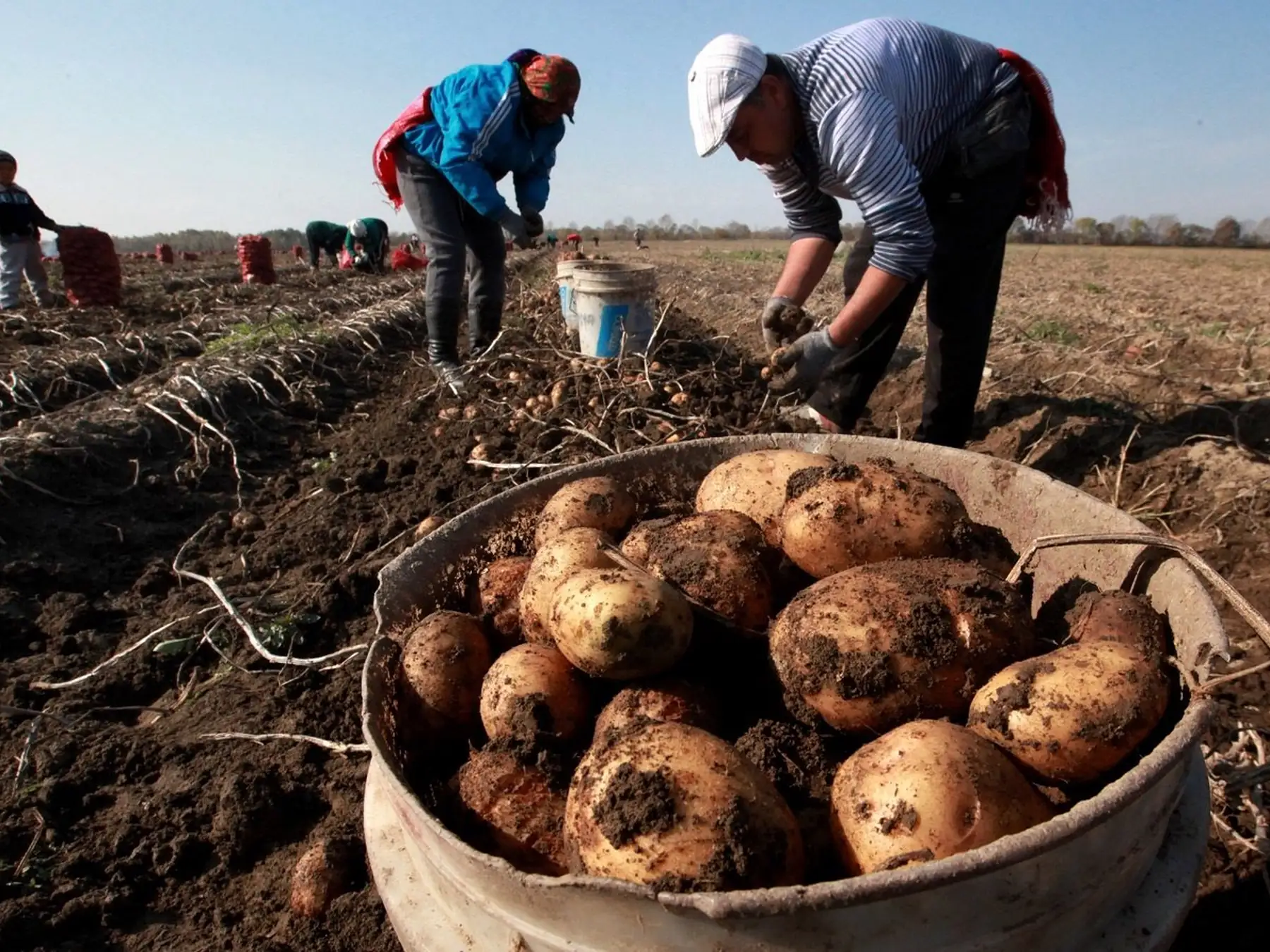
Starch controls potato texture
- Raw potato cells contain many starch granules.
- Heating in the presence of water causes starch gelatinization.
- Granules absorb water and swell.
- Cell walls and membranes also soften during cooking.
- High-starch potatoes tend to become dry and fluffy when baked.
- Waxy potatoes retain a denser cohesive texture.
- Overworking cooked potatoes can release excess starch.
- That can make mashed potatoes gluey.
- Mashing gently preserves a lighter texture.
- Cooling cooked potatoes changes part of the starch structure.
- Some starch retrogrades into forms more resistant to digestion.
- Reheating does not necessarily reverse all of that change.
- Frying dehydrates the exterior while keeping more moisture inside.
- Roasting creates browned surfaces through the Maillard reaction.
- The same tuber can become fluffy, creamy, waxy, crispy, chewy, or gluey depending on variety and cooking technique.
Potatoes around the world
- French fries are one of the world’s most famous potato foods.
- Potato chips are thin slices fried or baked until crisp.
- British fish and chips uses thick fried potatoes.
- Canadian poutine combines fries, cheese curds, and gravy.
- Spanish tortilla de patatas combines potatoes with eggs.
- Patatas bravas pairs fried potatoes with sauce.
- Italian gnocchi often combine cooked potato with flour.
- Indian cuisines use potatoes in curries, samosas, dosas, chaats, and many regional dishes.
- Peruvian cuisine preserves an extraordinary range of native potato preparations.
- Causa layers seasoned mashed yellow potato with fillings.
- Papa a la huancaína serves potatoes with a creamy chile-cheese sauce.
- Central and eastern European cuisines use potatoes in dumplings, pancakes, soups, and breads.
- Scandinavian cuisines use potatoes with fish, meat, dairy, and preserved foods.
- Potato starch itself is used as a thickener and industrial ingredient.
- For a deeper dive into one famous preparation, explore our french-fries facts.
Ten surprising potato facts
- A potato is a swollen underground stem, not a root.
- Every potato eye is a bud capable of producing a shoot.
- Potato plants can grow tomato-like berries, but those are not food.
- More than 4,000 native potato varieties are still grown in the Andes.
- The crop was domesticated thousands of years before Europeans encountered it.
- Potatoes belong to the same plant family as tomatoes and tobacco.
- Green color itself is chlorophyll, but it can signal conditions that also raise toxic glycoalkaloids.
- Late blight is caused by an oomycete rather than a true fungus.
- Over-mixing mashed potatoes can turn them gluey because too much starch is released.
- For more food trivia, explore our pasta facts and Food facts.
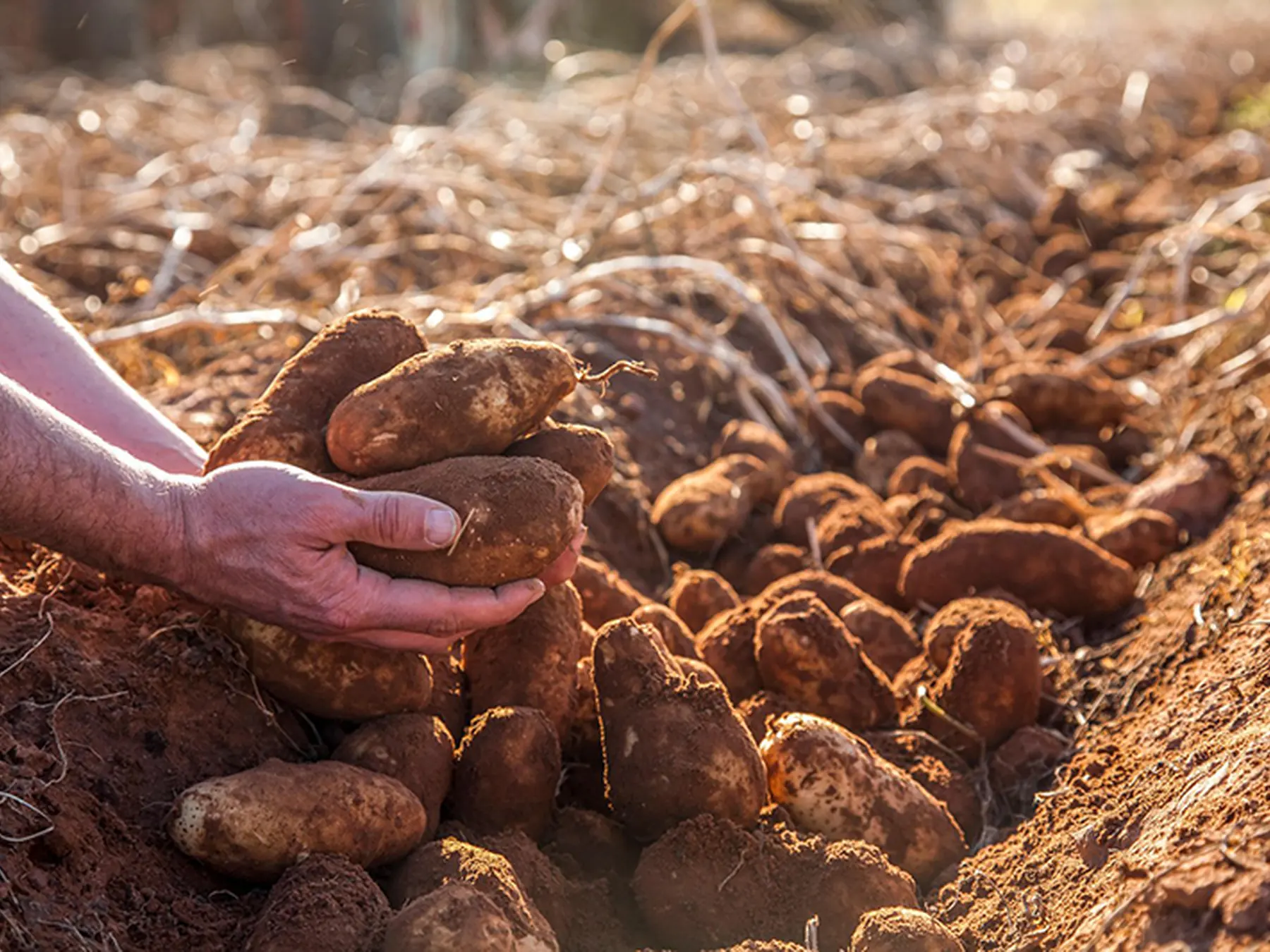
Quick potato FAQ
Are potatoes roots?
No. The edible potato is a tuber, which is a swollen underground stem used by the plant to store energy.
Where did potatoes come from?
The Andes of South America, especially the region around modern Peru and Bolivia, where Indigenous farmers domesticated them thousands of years ago.
Can you eat green potatoes?
Greening can accompany higher glycoalkaloid levels. Remove green tissue and sprouts, and discard potatoes that are heavily green, bitter, or otherwise badly deteriorated.
Why do potato eyes sprout?
The eyes are dormant buds. Under suitable temperature and moisture conditions they grow into shoots that can produce a new potato plant.
How many potato varieties exist?
The International Potato Center documents more than 4,000 native varieties in the Andes, plus many modern cultivars and wild relatives.

Ellie is the owner and sole author of Fun Facts, combining her mechanical engineering background with years of research-driven writing to deliver facts you can trust. Every article is thoroughly fact-checked and routinely updated as new science and sources emerge to keep information accurate and current. Her mission is to make learning delightful while upholding high standards of reliability and transparency.