
Harry Potter began as an idea on a delayed train and became a seven-book phenomenon, eight-film blockbuster series, stage production, theme-park world, and publishing event that made midnight book releases feel like concerts. Behind Hogwarts are handwritten drafts, changing book titles, elaborate film sets, custom props, practical creatures, invented sports, Latin-inspired spell names, and millions of readers learning the same fictional vocabulary. These 145 Harry Potter facts explore the books, characters, Hogwarts, magic, publishing history, films, props, locations, and global fandom.
Harry Potter basics
- Harry Potter is a fantasy book series by J.K. Rowling.
- The main series contains seven novels.
- The first book was published in the United Kingdom in 1997.
- Its British title is Harry Potter and the Philosopher’s Stone.
- Scholastic published the first book in the United States in 1998.
- The U.S. title became Harry Potter and the Sorcerer’s Stone.
- The main book series concluded in 2007.
- Harry begins the story as an orphan living with relatives.
- He discovers that he is a wizard.
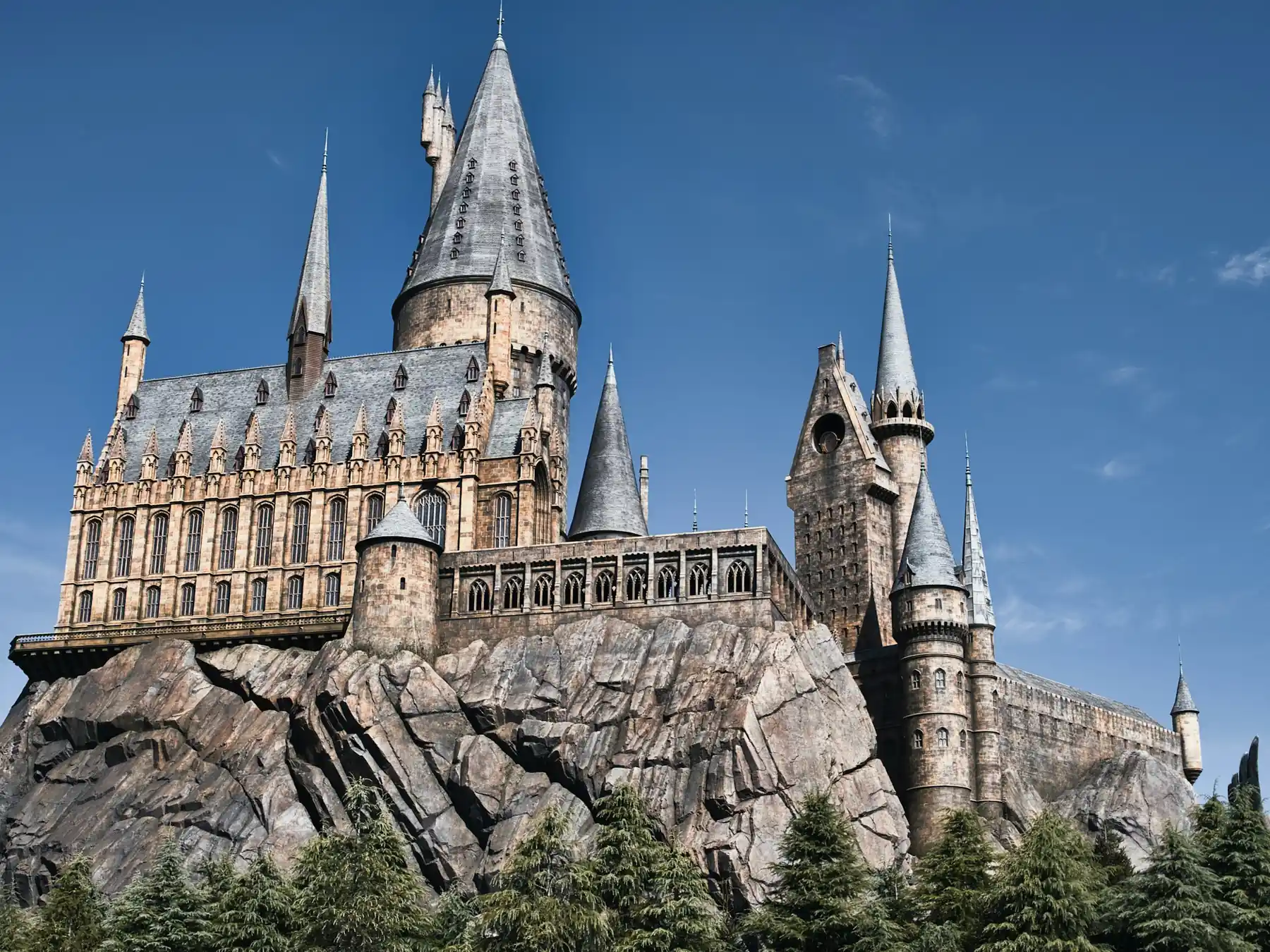
- He attends Hogwarts School of Witchcraft and Wizardry.
- Ron Weasley and Hermione Granger become his closest friends.
- Lord Voldemort is the central antagonist across the series.
- The novels mix fantasy, mystery, school story, adventure, comedy, and coming-of-age themes.
- The seven books were adapted into eight major Warner Bros. films.
- Bloomsbury reports that the books have sold more than 600 million copies worldwide.
The idea began on a train
- Rowling has said the idea for Harry Potter came to her in 1990.
- She was traveling on a delayed train from Manchester to London.
- The image of a boy who did not know he was a wizard appeared in her imagination.
- She did not have a working pen during the journey.
- Instead of writing everything down immediately, she developed ideas mentally.
- Rowling began planning the series afterward.
- She created extensive background material for characters and the wizarding world.
- The seven-book school structure let each novel cover roughly one year of Harry’s education.
- Important clues were planned years before their payoff.
- Rowling wrote parts of the early books in cafés.
- She worked on the first novel while living in Edinburgh.
- The manuscript was rejected by multiple publishers.
- Bloomsbury eventually accepted it.
- The first British print run was small compared with the enormous editions that followed.
- The series took about ten years from first book publication to final book publication.
Seven books break publishing records
- The seven main novels were published between 1997 and 2007 in the United Kingdom.
- The second book is Harry Potter and the Chamber of Secrets.
- The third is Harry Potter and the Prisoner of Azkaban.
- The fourth is Harry Potter and the Goblet of Fire.
- The fifth is Harry Potter and the Order of the Phoenix.
- The sixth is Harry Potter and the Half-Blood Prince.
- The seventh is Harry Potter and the Deathly Hallows.
- Later books became dramatically longer than the first novel.
- Demand turned release days into international events.
- Bookstores held midnight launch parties.
- Fans dressed as characters while waiting for new books.
- Publishers imposed tight security to prevent early leaks.
- Deathly Hallows had an enormous first printing.
- Scholastic reported 8.3 million U.S. copies sold in its first 24 hours.
- Scholastic’s 25th-anniversary history describes Harry Potter as the bestselling book series of all time.
Philosopher’s Stone became Sorcerer’s Stone
- The first book has different titles in Britain and the United States.
- Bloomsbury published Philosopher’s Stone in the UK.
- Scholastic changed the U.S. title to Sorcerer’s Stone.
- The philosopher’s stone is a real concept from the history of alchemy.
- Alchemists imagined it as a substance capable of extraordinary transformations.
- Legends often connected it with turning base metals into gold.
- It was also associated with an elixir of life.
- Nicolas Flamel was a real medieval French scribe.
- Later legends transformed Flamel into a famous alchemist.
- The Harry Potter character draws on those historical legends.
- The U.S. film used the Sorcerer’s Stone title too.
- Some scenes involving the title were filmed with alternate dialogue for different markets.
- British actors therefore sometimes recorded both “philosopher’s” and “sorcerer’s” versions.
- The rest of the seven main book titles stayed essentially the same across the major English editions.
- One publishing decision created one of the series’ most famous transatlantic trivia questions.
Hogwarts has four houses
- Hogwarts students are sorted into four houses.
- They are Gryffindor, Hufflepuff, Ravenclaw, and Slytherin.
- Each house is named after a Hogwarts founder.
- Godric Gryffindor founded Gryffindor.
- Helga Hufflepuff founded Hufflepuff.
- Rowena Ravenclaw founded Ravenclaw.
- Salazar Slytherin founded Slytherin.
- The Sorting Hat assigns new students to houses.
- Gryffindor is associated especially with courage.
- Ravenclaw values intelligence and learning.
- Hufflepuff emphasizes loyalty and hard work.
- Slytherin is associated with ambition and resourcefulness.
- House points contribute to an annual school competition.
- Quidditch teams also compete by house.
- The house system became so popular that readers commonly identify themselves with fictional Hogwarts houses.
Quidditch has seven players per team
- Quidditch is the wizarding world’s famous broomstick sport.
- Each team fields seven players.
- Three Chasers handle the Quaffle.
- One Keeper guards the scoring hoops.
- Two Beaters manage the dangerous Bludgers.
- One Seeker tries to catch the Golden Snitch.
- Three goal hoops stand at each end of the pitch.
- Chasers score by sending the Quaffle through a hoop.
- The Golden Snitch is tiny and extremely fast.
- Catching it traditionally ends a match in the book rules.
- The Snitch is worth 150 points in the novels.
- That does not guarantee victory if the opposing team has a large enough lead.
- The sport deliberately mixes several different game objectives.
- Real-world fans later created a ground-based sport inspired by fictional Quidditch.
- The real sport was eventually renamed quadball by major governing organizations.
Magic has its own internal rules
- Most young witches and wizards use wands to focus magic.
- Wands contain magical cores in the fictional setting.
- Ollivanders is the best-known wand shop in the series.
- The books emphasize that the wand chooses the wizard.
- Spells can require words, wand movement, concentration, or combinations of them.
- Older and more skilled characters can sometimes perform nonverbal magic.
- Apparition allows magical transportation from one place to another.
- Hogwarts has protections that normally prevent ordinary Apparition inside its grounds.
- Portkeys magically transport people who touch them.
- Floo powder allows travel through connected fireplaces.
- Polyjuice Potion temporarily changes a person’s appearance into someone else’s.
- Animagi are witches or wizards who can transform into a particular animal form.
- Patronuses are protective magical manifestations associated with positive memories and emotion.
- Horcruxes are dark magical objects connected with splitting and preserving pieces of a soul.
- The magic system stays compelling partly because powerful abilities usually come with limits, rules, risks, or specialized knowledge.
The films required a huge physical world
- The first Harry Potter film premiered in 2001.
- Chris Columbus directed the first two films.
- Alfonso Cuarón directed Prisoner of Azkaban.
- Mike Newell directed Goblet of Fire.
- David Yates directed the final four main films.
- Daniel Radcliffe played Harry Potter.
- Rupert Grint played Ron Weasley.
- Emma Watson played Hermione Granger.
- Much of the series was filmed at Leavesden in England.
- Large physical sets were built for locations including the Great Hall and Diagon Alley.
- The Great Hall set used real stone-like materials and practical scenic construction rather than existing only as computer imagery.
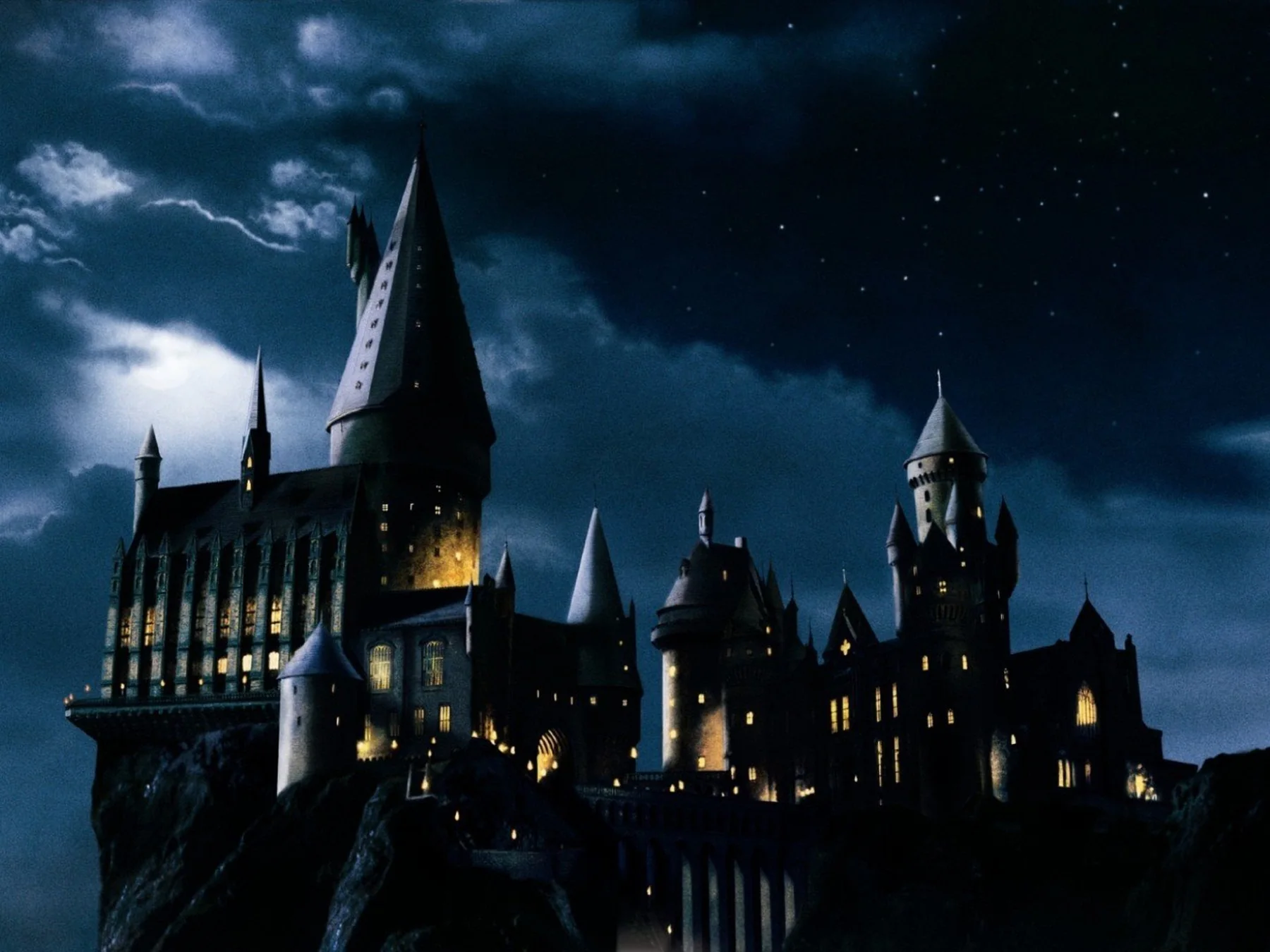
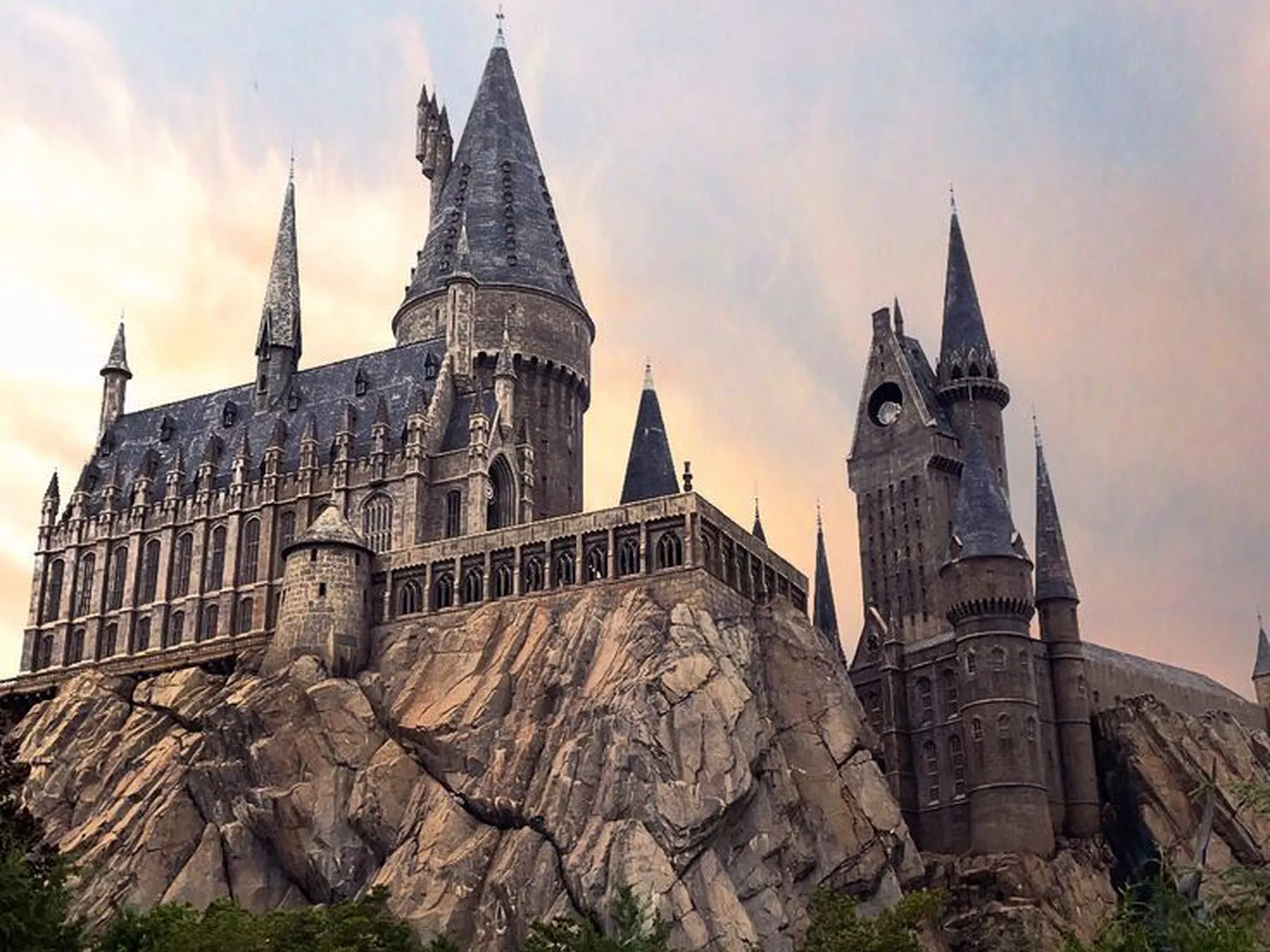
- Hogwarts exteriors combined location photography, miniatures, sets, and digital effects.
- A highly detailed Hogwarts castle model was used for many exterior shots.
- Thousands of props, costumes, books, labels, newspapers, and shop objects were created to make the world feel lived-in.
- The Warner Bros. Studio Tour near London preserves many original production sets, costumes, props, and filmmaking techniques.
Eight films came from seven books
- The first six novels each became one main film.
- The seventh novel was divided into two movies.
- Deathly Hallows – Part 1 premiered in 2010.
- Deathly Hallows – Part 2 premiered in 2011.
- Splitting the final book created an eight-film main series.
- Richard Harris played Albus Dumbledore in the first two films.
- Michael Gambon took over the role after Harris died.
- Alan Rickman played Severus Snape throughout the film series.
- Maggie Smith played Professor McGonagall.
- Robbie Coltrane played Rubeus Hagrid.
- Many adult roles were filled by prominent British and Irish actors.
- Several child actors effectively grew up during the decade-long production.
- The production design changed subtly as the story became darker.
- Costumes became more individualized as the students aged.
- The eight-film structure made Harry Potter one of the defining long-form movie franchises of its era.
Ten surprising Harry Potter facts
- The first Harry Potter idea came during a delayed train trip in 1990.
- The main series took ten years to publish from first book to last.
- The first U.S. edition had a different title from the British original.
- Nicolas Flamel was a real historical person long before becoming a character in the wizarding world.
- Seven Harry Potter novels became eight main movies.
- The final book sold millions of U.S. copies in a single day.
- The Hogwarts house system became a real-world fan identity tool.
- Real people created a competitive sport inspired by Quidditch and later renamed it quadball.
- The Harry Potter films relied heavily on physical sets, models, props, costumes, and practical craft alongside digital effects.
- For more magical franchise trivia, explore our Star Wars facts, Disney facts, and Culture facts.
Quick Harry Potter FAQ
How many Harry Potter books are there?
Seven novels in the main Harry Potter series, published in the UK from 1997 through 2007.
Why is the first book called Sorcerer’s Stone in the U.S.?
Scholastic changed the title from the British Philosopher’s Stone for the U.S. market. The underlying story is the same.
How many Harry Potter movies are there?
Eight films adapt the seven main novels because Harry Potter and the Deathly Hallows was split into two movies.
What are the four Hogwarts houses?
Gryffindor, Hufflepuff, Ravenclaw, and Slytherin.
How many copies have the Harry Potter books sold?
Bloomsbury and Scholastic report more than 600 million copies sold worldwide, making the series one of publishing’s biggest successes.

Ellie is the owner and sole author of Fun Facts, combining her mechanical engineering background with years of research-driven writing to deliver facts you can trust. Every article is thoroughly fact-checked and routinely updated as new science and sources emerge to keep information accurate and current. Her mission is to make learning delightful while upholding high standards of reliability and transparency.