
Rhinoceroses look prehistoric because their family really does reach deep into mammal history. Today only five species survive, split between Africa and Asia, and each has its own lips, skin, social habits, habitat, and conservation story. Their horns are made from keratin rather than bone, their eyesight is less important than smell and hearing, and some can run startlingly fast. These 145 rhino facts explore species, horns, calves, mud, digestion, senses, conservation, poaching, communication, and the biology behind one of Earth’s great megaherbivores.
Rhinoceros basics
- Rhinoceroses are large herbivorous mammals.
- The word rhinoceros comes from Greek roots meaning nose horn.
- Five living rhino species are recognized.
- Two species live naturally in Africa.
- Three live naturally in Asia.
- The African species are the white rhino and black rhino.
- The Asian species are the greater one-horned, Javan, and Sumatran rhinos.
- Rhinos belong to the mammal order Perissodactyla.
- That order also includes horses and tapirs.
- Perissodactyls are odd-toed ungulates.
- Rhinos walk on three functional toes on each foot.
- All living rhinos eat plants.
- They are among the world’s remaining megaherbivores.
- Rhino habitats include grasslands, savannas, shrublands, forests, wetlands, and dry country depending on species.
- WWF’s current rhino overview recognizes the same five surviving species across Africa and Asia.
Five species, five different animals
- The white rhino’s scientific name is Ceratotherium simum.
- The black rhino is Diceros bicornis.
- The greater one-horned rhino is Rhinoceros unicornis.
- The Javan rhino is Rhinoceros sondaicus.
- The Sumatran rhino is Dicerorhinus sumatrensis.
- White rhinos are the largest living rhinos by average body size.
- Greater one-horned rhinos are the largest Asian rhinos.
- Sumatran rhinos are the smallest living rhino species.
- They are also the hairiest.
- White and black rhinos each have two horns.
- Sumatran rhinos also have two horns.
- Greater one-horned rhinos normally have one horn.
- Javan rhinos are one-horned too, although females may have only a small knob or no obvious horn.
- Species differ in lip shape according to feeding style.
- Calling every rhino a giant gray two-horned grass eater ignores most of the family’s diversity.
Rhino horns are not bone
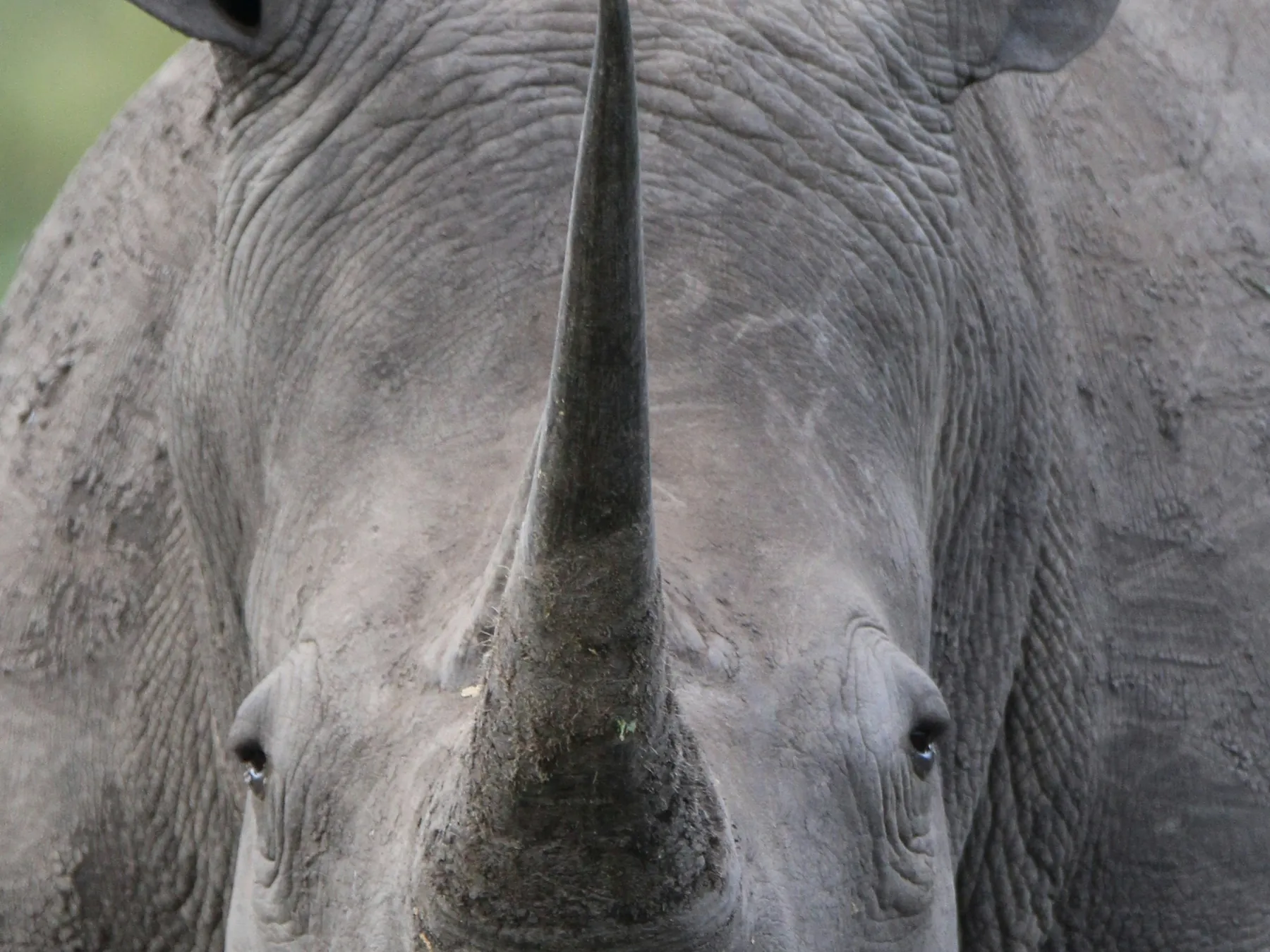
- A rhino horn is made primarily from keratin.
- Keratin is also a major material in human hair and fingernails.
- Rhino horns do not contain a solid bony core like cattle horns.
- Dense keratin fibers grow from specialized skin tissue.
- The horn can continue growing throughout life.
- Wear changes its shape.
- Rhinos rub horns on soil, vegetation, and other surfaces.
- Broken horns can regrow if the growth tissue at the base remains healthy.
- Calves are born without full horns.
- A small horn begins developing after birth.
- Horn size varies enormously among individuals.
- Females can have large horns too.
- Horn shape does not provide a simple reliable age measurement.
- Rhinos use horns in defense, dominance, digging, and manipulating vegetation.
- The horn’s simple material has become tragically valuable because of illegal human demand.
White rhinos are not white
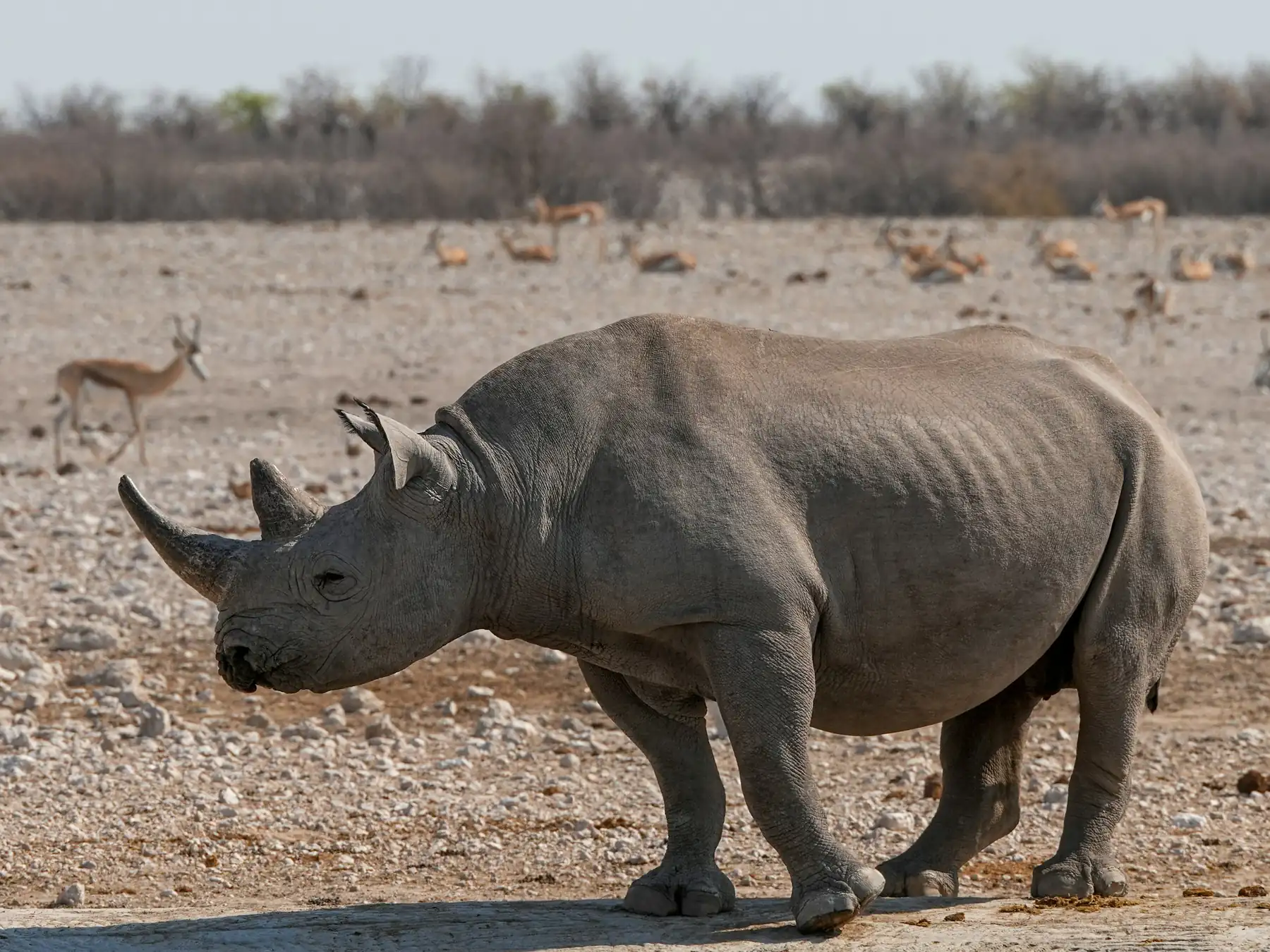
- White rhinos are gray, not truly white.
- Black rhinos are gray too.
- Skin color is not a reliable way to tell the two African species apart.
- The origin of the English name white rhinoceros is uncertain.
- A popular story says white came from a misunderstanding of an Afrikaans or Dutch word meaning wide.
- Linguists and historians have questioned whether evidence actually supports that neat explanation.
- It is safer to say the name’s exact origin is unclear.
- The white rhino has a broad square upper lip.
- That lip is adapted for grazing grasses.
- The black rhino has a pointed prehensile upper lip.
- It uses the hooked lip to grasp leaves and twigs.
- Black rhinos are browsers rather than primarily grazers.
- White rhinos usually carry the head lower while feeding.
- Black rhinos often raise the head toward shrubs.
- Mouth shape is a much better identification clue than the words black and white.
Asian rhinos can look armored
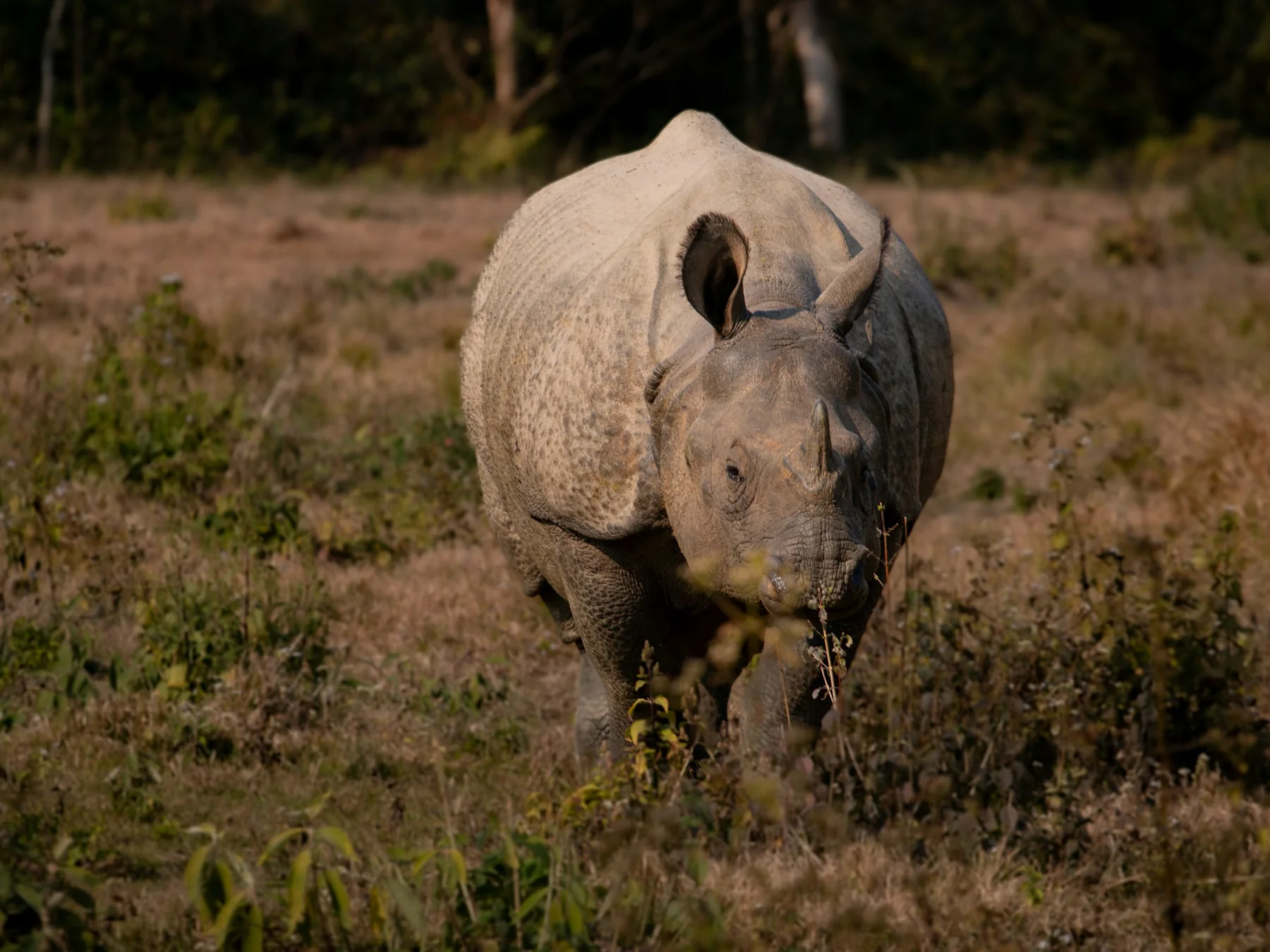
- Greater one-horned rhinos have thick-looking folded skin.
- The folds can create the appearance of armor plates.
- The skin is not actually metal-like armor.
- It remains living flexible tissue.
- Greater one-horned rhinos have one prominent horn.
- They are strongly associated with riverine grasslands and wetlands in India and Nepal.
- They are excellent swimmers.
- Javan rhinos have similar folded skin but are smaller.
- They survive only in Indonesia today.
- The remaining wild Javan population is confined to Ujung Kulon National Park on Java.
- That single-population distribution creates enormous conservation risk.
- Sumatran rhinos look very different from their Asian relatives.
- They have reddish-brown skin and noticeable hair.
- Sumatran rhinos are the only living Asian rhino species with two horns.
- They preserve more visibly hairy features associated with ancient rhino lineages.
Rhino senses
- Rhinos do not rely primarily on sharp long-distance vision.
- Their eyesight is often described as relatively poor compared with smell and hearing.
- They can still detect movement and nearby objects.
- Large mobile ears help capture sound.
- Rhinos rotate their ears toward noises.
- The sense of smell is highly developed.
- Scent helps identify other rhinos and territorial information.
- Rhinos investigate dung piles and urine marks.
- Communal dung sites are called middens.
- Middens function partly as chemical message boards.
- Individuals can learn about sex, reproductive status, and presence of other animals through scent.
- Black rhinos often mark territories with dung and urine.
- Foot scraping can spread scent after defecation.
- Snorts, squeals, grunts, and bellows provide acoustic communication.
- A rhino’s social world contains far more information than human eyes can see.
Mud is useful, not messy
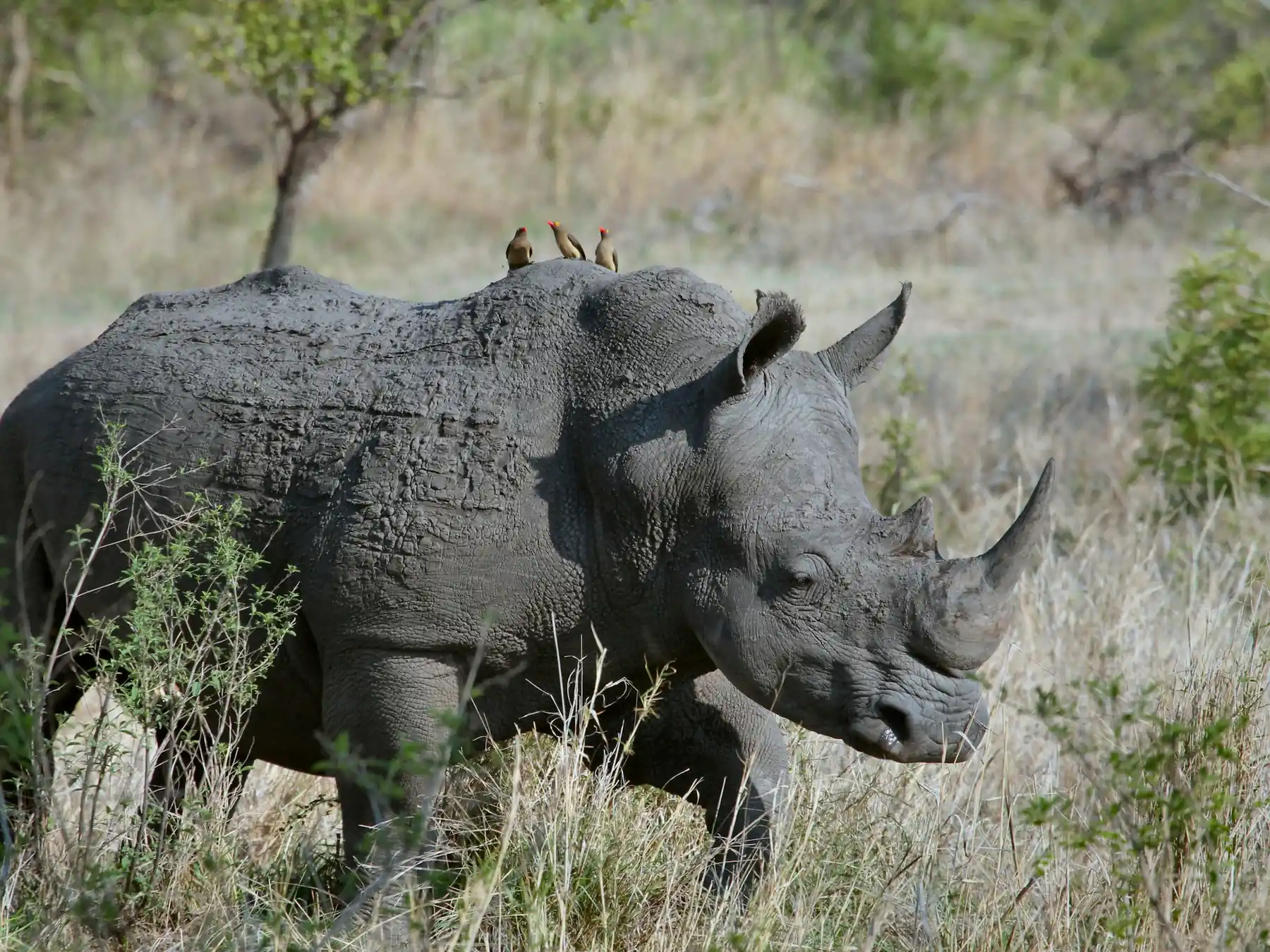
- Rhinos often wallow in mud.
- Mud helps cool the body in hot weather.
- A dried mud layer can protect skin from sun.
- It can also help reduce biting insects.
- Rhinos may rub against trees or rocks after wallowing.
- This can scrape away dried mud and parasites.
- Water holes become important social and ecological sites.
- Rhino wallows can alter small wetland habitats.
- Large animals physically reshape soil and vegetation.
- This is one reason rhinos are described as ecosystem engineers.
- Greater one-horned rhinos use wet grassland and river habitats extensively.
- African rhinos also seek water and mud when available.
- Wallowing behavior changes with temperature and habitat.
- Captive rhinos need opportunities for skin care and thermoregulation too.
- A muddy rhino is often doing exactly what healthy rhino biology requires.
Calves and family life
- Female rhinos usually give birth to one calf at a time.
- Twin births are extremely rare.
- Pregnancy lasts roughly 15 to 18 months depending on species.
- That is one of the longest gestation periods among land mammals.
- A newborn calf can weigh many tens of kilograms.
- Calves stand and walk relatively soon after birth.
- They nurse on their mother’s milk.
- Young rhinos remain with their mothers for years.
- A mother can be highly defensive around her calf.
- Calves learn feeding, movement, and social behavior by staying close.
- Females reproduce slowly because pregnancy and calf-rearing take so long.
- Slow reproduction makes adult losses especially damaging to populations.
- Young females eventually establish their own ranges.
- Adult males can be territorial in several species.
- White rhinos are generally more social than the often-solitary black rhino.
Conservation and the horn trade
- Poaching for horn is one of the greatest threats to rhinos.
- Rhino horn has been used in some traditional medicine markets.
- It has also been purchased as a status symbol.
- There is no scientific evidence that rhino horn cures cancer.
- International commercial trade in rhino horn has been heavily restricted for decades.
- Illegal trafficking nevertheless continues.
- Habitat loss and fragmentation also threaten rhinos.
- Small isolated populations face genetic and reproductive risks.
- Javan and Sumatran rhinos are among the world’s most endangered large mammals.
- Black rhinos remain critically endangered despite major recovery from historic lows.
- Greater one-horned rhinos are a major conservation success compared with their early-20th-century low point.
- Southern white rhinos also recovered dramatically after nearing extinction.
- Conservation tools include armed protection, intelligence work, habitat management, translocation, monitoring, community partnerships, and reproductive science.
- Protecting rhinos can also protect large landscapes used by many other species.
- IUCN’s latest assessments show that recovery is possible, but progress can reverse quickly when poaching, drought, habitat pressure, or political instability intensify.
Ten surprising rhinoceros facts
- Rhino horn is made from keratin rather than bone.
- Both black and white rhinos are gray.
- The popular story that “white rhino” definitely came from a mistranslation of “wide” is not securely proven.
- Only five rhino species survive today.
- Three of those five live in Asia.
- Sumatran rhinos are both the smallest and hairiest living rhinos.
- Greater one-horned rhinos are capable swimmers.
- Rhino dung piles can function as scent-based information centers.
- Rhinos can run surprisingly fast despite their enormous bodies.
- For more giant-animal trivia, explore our elephant facts and Science facts.
Quick rhinoceros FAQ
How many rhino species are there?
Five: white, black, greater one-horned, Javan, and Sumatran rhinoceroses.
What is a rhino horn made of?
Mostly keratin, the same structural protein found in human hair and fingernails.
Are white rhinos white?
No. Both African rhino species are generally gray. Mouth shape is much more useful for telling white and black rhinos apart.
Why are rhinos endangered?
Major threats include poaching for horn, habitat loss, fragmented populations, and in some regions drought and human-wildlife conflict.
Can a rhino horn grow back?
Yes, if it breaks or is carefully removed above the growth tissue. The horn continues growing from its base, although regrowth takes time.

Ellie is the owner and sole author of Fun Facts, combining her mechanical engineering background with years of research-driven writing to deliver facts you can trust. Every article is thoroughly fact-checked and routinely updated as new science and sources emerge to keep information accurate and current. Her mission is to make learning delightful while upholding high standards of reliability and transparency.