
New Year’s Day feels universal, but January 1 became the civil starting line only after centuries of calendar changes. The holiday blends Roman gods, medieval calendar confusion, fresh-start psychology, lucky foods, parades, football, polar plunges, resolutions, and traditions that vary wildly around the world. These 145 facts explore why January 1 matters, how calendars got there, and the customs people use to welcome a brand-new year.
New Year’s Day basics
- New Year’s Day falls on January 1 in the Gregorian calendar.
- It is the first day of the civil year in countries using that calendar.
- January 1 follows New Year’s Eve on December 31.
- Many countries recognize January 1 as a public holiday.
- The day is associated with new beginnings, resolutions, rest, food, and family gatherings.
- Some people attend religious services on New Year’s Day.
- Others watch parades, sporting events, or televised celebrations.
- Many traditions focus on attracting health, wealth, or luck.
- January 1 is not the traditional New Year date in every calendar.
- Some cultures celebrate both January 1 and another traditional New Year.
- The global importance of January 1 reflects the international spread of the Gregorian civil calendar.
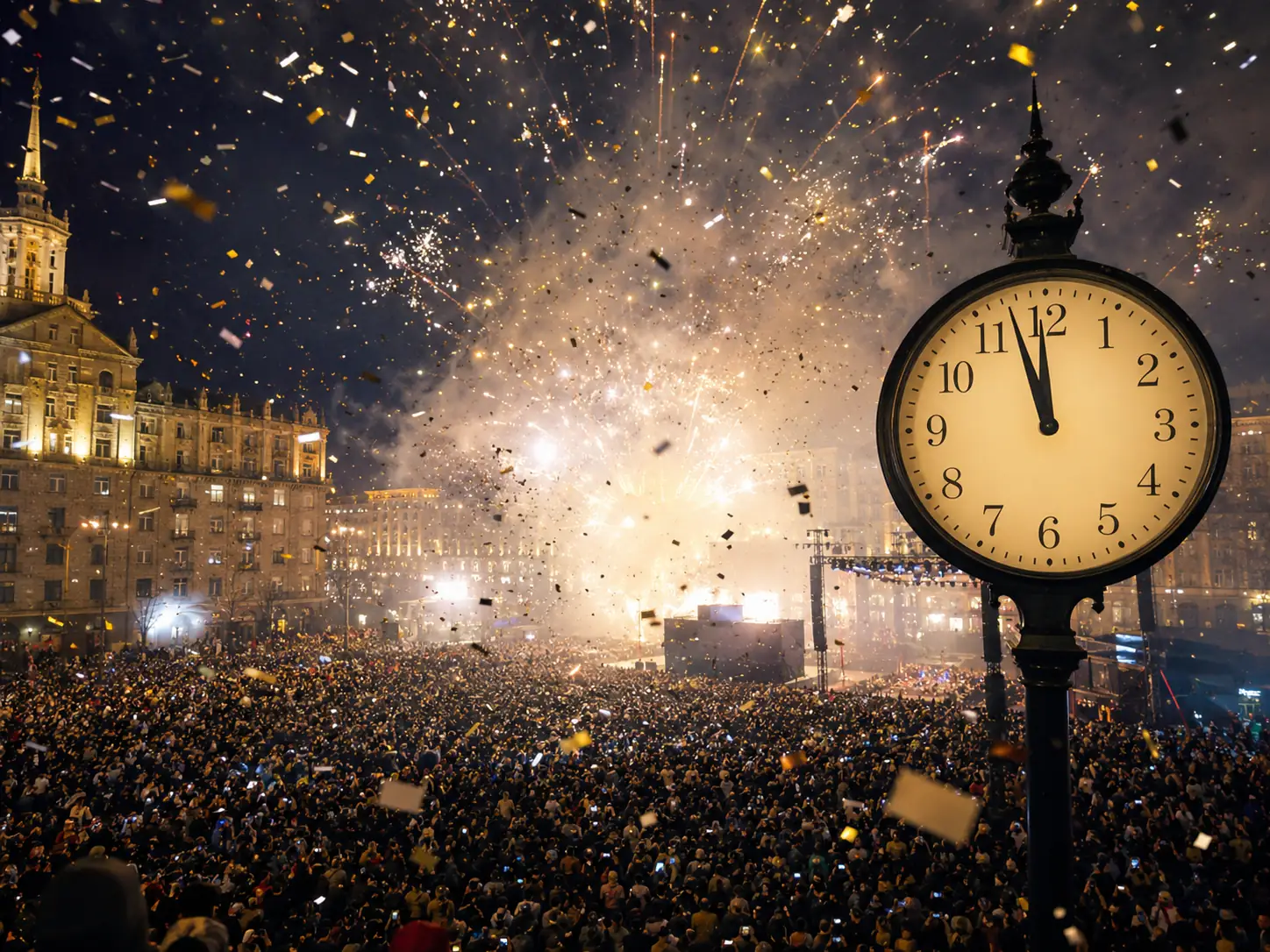
- The day begins at different moments across Earth because of time zones.
- Places near UTC+14 enter January 1 many hours before the Americas.
- The International Date Line separates places using calendar dates one day apart.
- For the countdown itself, see our New Year’s Eve facts.
January was not always first
- Early Roman calendars traditionally placed March near the beginning of the year.
- Traces of that older order remain in month names.
- September comes from a Latin word connected with seven.
- October reflects eight.
- November reflects nine.
- December reflects ten.
- Those names make more sense when March is treated as the early starting month.
- January and February were integrated into the Roman calendar system over time.
- By the late Roman Republic, January 1 was the standard date when consuls began office.
- This gave January 1 major civic importance.
- Julius Caesar reformed the calendar in the first century BCE.
- The Julian calendar took effect in 45 BCE.
- It used a 365-day year with leap days on a regular four-year cycle.
- The Julian system was much more orderly than the badly drifted calendar it replaced.
- January 1 remained the beginning of the Roman civil year under the reform.
January is named for Janus
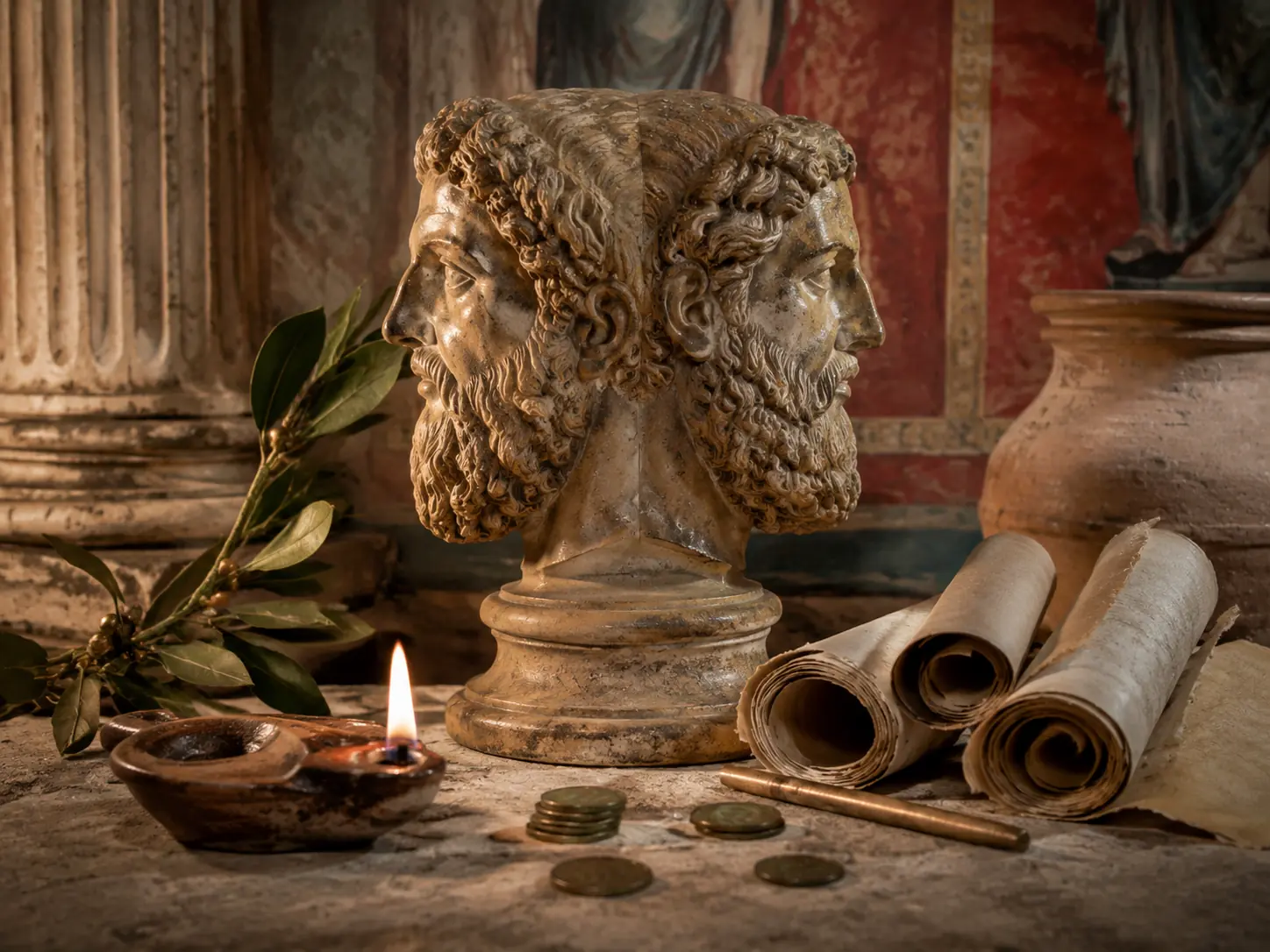
- The name January comes from Janus, an ancient Roman god.
- Janus was associated with doorways, passages, beginnings, endings, and transitions.
- He was often shown with two faces.
- One face could symbolically look backward while the other looked forward.
- This imagery fits modern ideas about reviewing the old year and entering a new one.
- Romans made offerings and exchanged good wishes around the beginning of January.
- Gifts could include dates, figs, honey, or coins.
- Sweet foods symbolized hopes for a pleasant year.
- Roman New Year customs changed across centuries and social classes.
- Modern January 1 celebrations are not simply unchanged Roman rituals.
- Still, the month name preserves a direct linguistic connection with Roman religion.
- Doors and gateways are useful metaphors for calendar transitions.
- The word janitor ultimately comes from the same Latin root connected with doors and entrances.
- Janus had no direct Greek equivalent with exactly the same role.
- A Roman deity still gives the first month of today’s dominant global calendar its name.
Medieval Europe used different New Year dates
- January 1 did not remain the universal start of the year throughout medieval Europe.
- Different regions began legal or religious years on different dates.
- Some used Christmas Day.
- Others used March 25, the Feast of the Annunciation.
- Some dating systems connected New Year with Easter.
- Easter changes date annually, making that system especially complicated for historians.
- Documents can therefore appear to belong to a different year depending on the historical dating convention.
- England officially began the legal year on March 25 for centuries.
- Britain switched its legal New Year to January 1 in the 18th century.
- Calendar reforms did not spread across Europe simultaneously.
- Religious divisions influenced adoption of the Gregorian calendar.
- Catholic countries often adopted it before Protestant countries.
- Orthodox regions sometimes retained the Julian calendar much longer for civil or religious purposes.
- Modern historians must convert dates carefully when comparing sources from different countries.
- A “New Year” date is therefore a social agreement rather than an astronomical necessity.

The Gregorian calendar fixes a slow drift
- The Julian calendar slightly overestimates the length of the tropical year.
- Its error is only minutes per year.
- Over many centuries, those minutes accumulated into days.
- The calendar date of the spring equinox drifted gradually.
- Pope Gregory XIII introduced a calendar reform in 1582.
- The Gregorian calendar removed accumulated calendar drift.
- It also changed leap-year rules.
- Years divisible by four are normally leap years.
- Century years are normally not leap years unless divisible by 400.
- That is why 2000 was a leap year.
- 1900 was not a leap year under Gregorian rules.
- The revised average year better approximates Earth’s seasonal cycle.
- Gregorian adoption occurred at different dates in different countries.
- Today it is the dominant international civil calendar.
- Its success made January 1 a globally recognizable New Year’s Day.
Lucky New Year foods
- Many New Year foods symbolize wealth, abundance, or long life.
- In parts of the southern United States, black-eyed peas are traditional New Year food.
- Greens such as collards can symbolize paper money.
- Cornbread can symbolize gold.
- Hoppin’ John combines black-eyed peas with rice and seasonings.
- Pork is considered lucky in several European and American traditions.
- Pigs root forward, which became a symbolic image of progress.
- Lentils are eaten for luck in parts of Italy.
- Their coin-like shape is associated with prosperity.
- Long noodles symbolize longevity in several Asian traditions.
- Round fruits can symbolize coins or completeness.
- In Greece, vasilopita cake may contain a hidden coin.
- The person who finds the coin is traditionally considered lucky.
- Food symbolism varies tremendously by family and region.
- Lucky meals make abstract hopes for the future something people can literally share at a table.
Resolutions and the fresh-start effect
- New Year’s resolutions are promises or goals associated with the coming year.
- The tradition has parallels in ancient religious and civic practices.
- Ancient Babylonians made promises during New Year festivals.
- Romans also made vows connected with transitions and deities.
- Modern resolutions often focus on health, money, relationships, learning, organization, or habits.
- January 1 acts as a strong psychological boundary between past and future.
- Researchers call motivation around meaningful calendar boundaries the fresh-start effect.
- A new month, birthday, semester, or Monday can produce a similar psychological reset.
- Specific measurable goals are generally easier to track than vague intentions.
- Breaking a goal into smaller actions reduces the size of each decision.
- Changing the environment can support habits more reliably than relying on motivation alone.
- Missing one day does not mathematically destroy a year-long goal.
- Resolutions can be restarted at any time.
- New Year’s Day simply provides a culturally shared prompt.
- The tradition survives because people naturally like symbolic opportunities to begin again.
Parades and football
- New Year’s Day became closely associated with parades in several countries.
- Pasadena, California, hosts the Tournament of Roses Parade.
- The first Tournament of Roses celebration took place in 1890.
- Early organizers wanted to showcase Southern California’s winter flowers.
- Modern floats are famously covered with flowers, seeds, bark, leaves, and other natural materials.
- The Rose Bowl football tradition developed alongside the parade.
- An early football game was held in Pasadena in 1902.
- Football returned permanently to the celebration in 1916.
- The Rose Bowl stadium opened in 1922.
- College football bowl games became a major American New Year tradition.
- The word bowl spread from the Rose Bowl to many postseason football games.
- Some bowls are played before or after January 1 depending on schedules.
- Television made New Year’s Day a major sports-viewing occasion.
- Parades combine civic organizations, marching bands, performers, and elaborate floats.
- New Year entertainment shifted from local events to global broadcasts during the 20th century.
First Day Hikes and polar plunges
- Some people begin January 1 outdoors instead of sleeping in.
- First Day Hikes are organized at parks across the United States.
- The idea encourages people to start the year with outdoor activity.
- State park systems coordinate many of these walks.
- New Year polar plunges involve intentionally entering very cold water.
- Groups organize plunges at beaches, lakes, and rivers.
- Some raise money for charities.
- Cold-water immersion causes an immediate cold-shock response.
- Sudden gasping and rapid breathing can make uncontrolled plunges dangerous.
- Cold water can impair swimming ability quickly.
- Organized events use safety planning for this reason.
- Winter swimming has separate long-standing traditions in several northern countries.
- Sauna and cold-water combinations are part of some regional cultures.
- The appeal mixes challenge, community, novelty, and symbolic renewal.
- Beginning a year with an icy swim is one of the more literal interpretations of a fresh start.
Ten surprising New Year’s Day facts
- Several month names still reveal that March once sat near the start of the Roman calendar.
- January is named for a two-faced Roman god of transitions.
- Medieval Europeans could disagree about what year it was because their New Year dates differed.
- England once began its legal year on March 25.
- The Gregorian leap-year rule is why 2000 was a leap year but 1900 was not.
- Black-eyed peas, lentils, noodles, pork, greens, and round fruits all carry New Year luck meanings somewhere in the world.
- The Rose Parade began partly to advertise Southern California’s winter flowers.
- The modern American term bowl game ultimately owes much to Pasadena’s Rose Bowl.
- A January 1 resolution works partly because the date creates a psychological boundary.
- New Year’s Day is globally important, but it is only one of many New Year traditions on human calendars.

Quick New Year’s Day FAQ
Why is New Year’s Day January 1?
January 1 became an important Roman civil date, remained the start under Julius Caesar’s calendar reform, and later became dominant internationally through the Gregorian calendar.
Who is January named after?
Janus, the Roman god associated with doors, transitions, beginnings, and endings.
Does everyone celebrate New Year on January 1?
No. Many cultures and religions maintain traditional lunar, lunisolar, or seasonal New Year dates in addition to the Gregorian civil holiday.
Why do people make resolutions?
Calendar boundaries create a strong sense of a fresh beginning, making people more likely to separate past behavior from future goals.
What foods are considered lucky on New Year’s Day?
Examples include black-eyed peas, greens, pork, lentils, long noodles, round fruits, and cakes with hidden coins, depending on the culture.

Ellie is the owner and sole author of Fun Facts, combining her mechanical engineering background with years of research-driven writing to deliver facts you can trust. Every article is thoroughly fact-checked and routinely updated as new science and sources emerge to keep information accurate and current. Her mission is to make learning delightful while upholding high standards of reliability and transparency.