
New Year’s Eve is one night experienced dozens of times as midnight sweeps across time zones. It mixes ancient calendars, Roman gods, church bells, champagne, fireworks, resolutions, a giant Times Square ball, Scottish first-footing, Spanish grapes, Japanese temple bells, and traditions from almost every culture on Earth. These 145 facts explore why December 31 became the world’s most famous countdown and why not everyone celebrates New Year on the same date.
New Year’s Eve basics
- New Year’s Eve is celebrated on December 31 in the Gregorian calendar.
- It is the final calendar day of the year.
- Midnight marks the transition into January 1.
- The holiday is commonly called NYE in informal writing.
- Celebrations include parties, dinners, concerts, religious services, fireworks, and public countdowns.
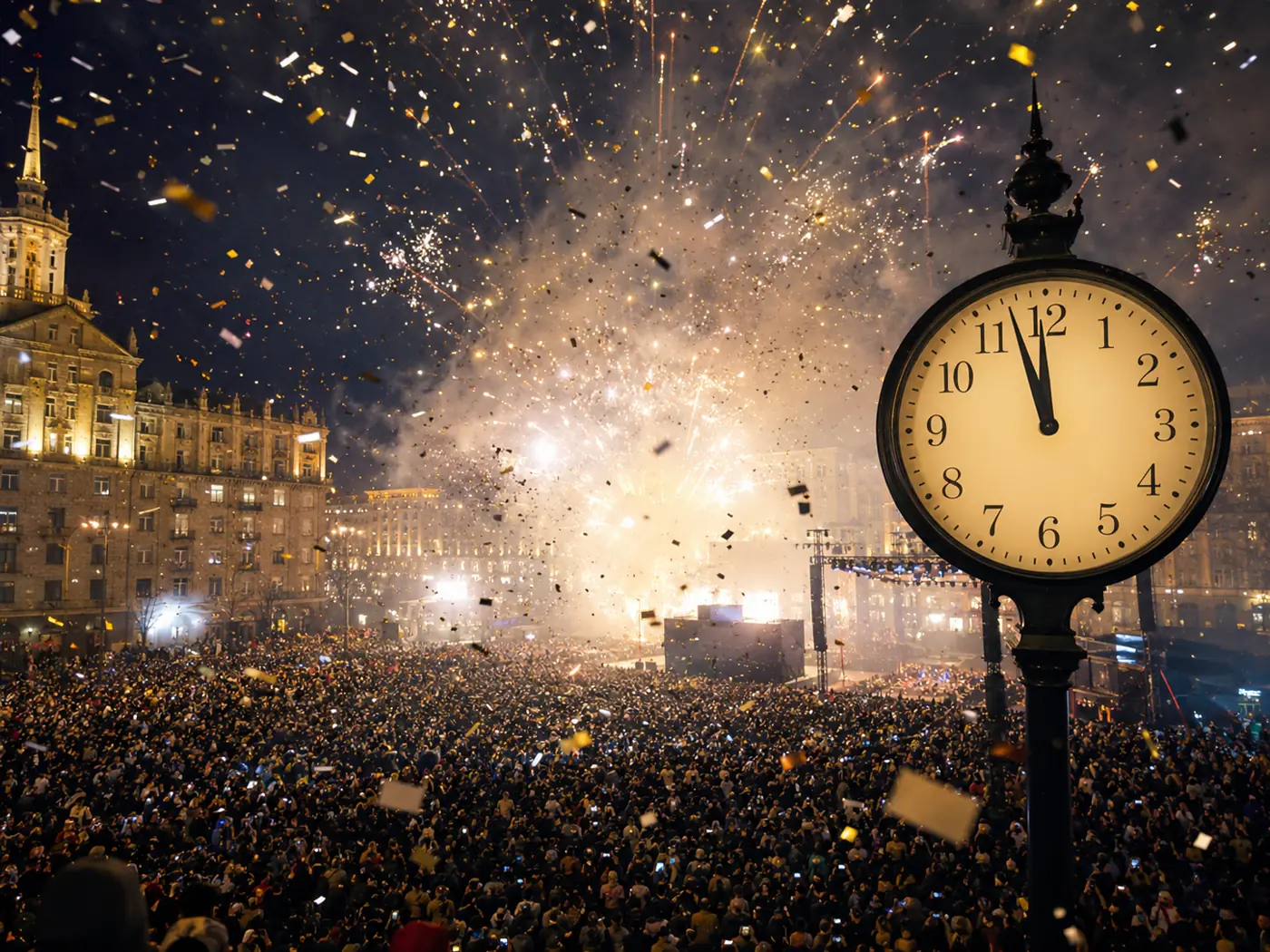
- Many people gather before midnight and count down the final seconds together.
- Kissing at midnight became a familiar romantic custom in several Western cultures.
- Champagne and sparkling wine are strongly associated with midnight toasts.
- Fireworks symbolize celebration in many cities.
- New Year’s resolutions look forward rather than backward.
- People often use the evening to review the year that is ending.
- Television and livestreams connect distant celebrations in real time.
- Time zones mean the calendar changes at different moments around Earth.
- There is no single instant when every location enters the new year together.
- December 31 itself is not the only New Year’s Eve used by every culture or calendar.
Why the year begins in January
- Ancient calendars did not always begin the year in January.
- Early Roman calendars traditionally began in March.
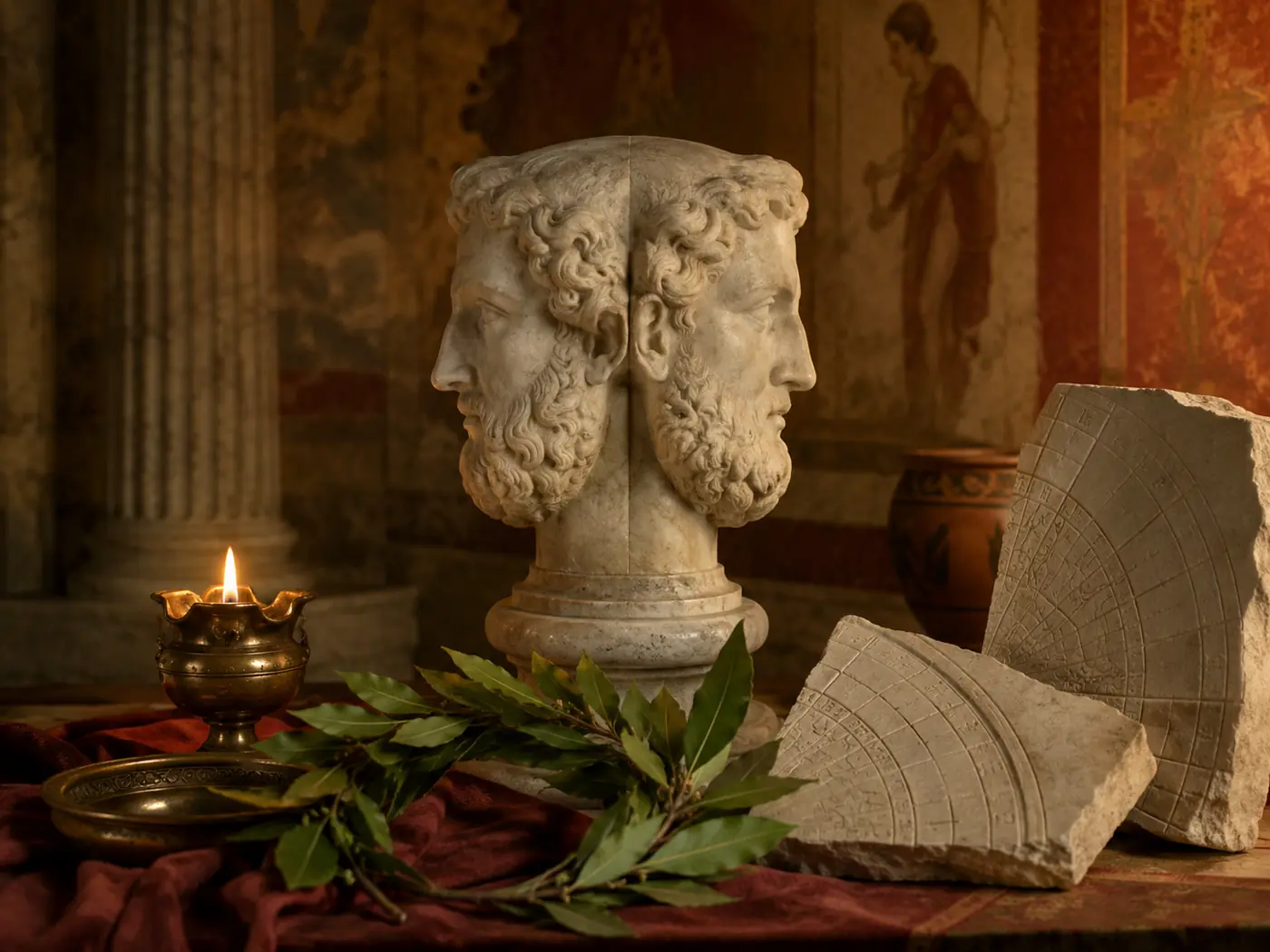
- The month January is named for Janus.
- Janus was the Roman god associated with doorways, transitions, beginnings, and endings.
- He was often depicted with two faces looking in opposite directions.
- This made Janus an especially fitting symbol for a new year.
- Roman political calendars shifted over centuries.
- January 1 became the beginning of the Roman civil year before Julius Caesar’s reform.
- Julius Caesar introduced the Julian calendar in 46 BCE for use beginning in 45 BCE.
- The Julian calendar standardized a year of about 365.25 days.
- Its small error accumulated over many centuries.
- Pope Gregory XIII introduced the Gregorian calendar in 1582.
- The Gregorian reform adjusted leap-year rules to better match the solar year.
- Countries adopted the Gregorian calendar at different times.
- January 1 eventually became the dominant civil New Year in much of the world.
Not everyone celebrates New Year on January 1
- Many cultures maintain traditional calendars alongside the Gregorian civil calendar.
- Lunar New Year dates shift within the Gregorian calendar.
- Chinese New Year follows a lunisolar calendar.
- Rosh Hashanah marks the Jewish New Year.
- Its date falls in the Hebrew month of Tishrei.
- Nowruz marks the Persian New Year around the March equinox.
- Several South and Southeast Asian calendars celebrate New Year in spring.
- Islamic New Year begins with the month of Muharram.
- The Islamic calendar is lunar, so its dates move through the solar seasons.
- Some Eastern Orthodox communities observe traditional New Year customs around January 13 or 14 Gregorian.
- This difference reflects use of the Julian calendar for particular observances.
- Ethiopia uses its own calendar system.
- The Ethiopian New Year falls in September in the Gregorian calendar.
- Different New Year dates reveal that calendars are cultural systems, not laws of nature.
- December 31 is globally prominent because the Gregorian calendar dominates international civil life.
Midnight travels around the world
- Earth’s rotation creates local day and night.
- Time zones organize civil clocks across longitude.
- The International Date Line roughly follows the 180-degree meridian in the Pacific.
- It bends around countries and island groups for political and practical reasons.
- Crossing the Date Line changes the calendar date by one day.
- UTC+14 is the earliest standard civil time-zone offset currently used.
- Parts of Kiribati use UTC+14.
- These islands are among the first inhabited places to enter a Gregorian New Year.
- UTC−12 is the latest nominal time-zone offset.
- That zone contains mostly uninhabited U.S. islands.
- American Samoa uses UTC−11 and celebrates much later than nearby parts of the Pacific.
- A traveler crossing the Pacific can theoretically celebrate the date change more than once.
- Television networks follow celebrations westward from Oceania through Asia, Europe, and the Americas.
- Sydney’s harbor fireworks are among the first enormous city spectacles seen by global audiences.
- New York’s midnight occurs many hours after midnight in Australia.
The Times Square Ball Drop
- New York City’s Times Square hosts one of the world’s most famous New Year celebrations.
- The neighborhood was originally known as Longacre Square.
- It was renamed Times Square in 1904 after The New York Times moved its headquarters there.
- The newspaper celebrated its new building with a New Year’s Eve event.
- Early Times Square celebrations included fireworks.
- City officials later prohibited the fireworks display for safety reasons.
- Organizers introduced a descending illuminated ball instead.
- The first Times Square ball drop occurred on New Year’s Eve 1907.
- That first ball was made from iron and wood.
- It was lit with incandescent bulbs.
- The ball-drop idea drew from maritime time balls used to signal precise time.
- Modern Times Square balls use advanced lighting technology and crystal panels.
- The ball begins its descent shortly before midnight.
- Crowds often arrive hours before the countdown.
- The Times Square tradition has continued with interruptions during wartime blackout years.
Auld Lang Syne
- “Auld Lang Syne” is one of the world’s most famous New Year songs.
- The phrase is Scots.
- It roughly evokes old times or days gone by.
- Scottish poet Robert Burns sent a version of the lyrics to a music publisher in 1788.
- Burns said he had collected the old song from oral tradition.
- He therefore did not invent every part from nothing.
- The familiar melody became paired with the lyrics later.
- The song asks whether old acquaintances should be forgotten.
- Its nostalgic theme makes it perfectly suited to a year ending.
- Singing it at midnight became especially familiar in English-speaking countries.
- Canadian bandleader Guy Lombardo helped popularize the song in North American New Year broadcasts.
- Lombardo’s orchestra performed New Year programs for decades.
- Many people sing the song while linking arms in a circle.
- Scottish tradition may cross arms only during a later verse or at the end rather than immediately.
- The song connects modern parties with Scotland’s older Hogmanay customs.
Hogmanay in Scotland
- Hogmanay is the Scots word for the final day of the year and its celebrations.
- Scottish New Year traditions became especially elaborate.
- Historically, Christmas was suppressed for long periods in post-Reformation Scotland.
- New Year therefore carried unusual social importance.
- First-footing is a famous Hogmanay custom.
- The first person entering a home after midnight is called the first-footer.
- Traditionally, a lucky first-footer brought symbolic gifts.
- Common gifts included coal, food, salt, whisky, or coins.
- Different communities developed different ideas about the luckiest visitor.
- Fire has a major role in some Scottish winter festivals.
- Stonehaven is famous for a New Year fireball ceremony.
- Edinburgh hosts enormous modern Hogmanay celebrations.
- Music, street parties, torchlight events, and fireworks attract visitors.
- Traditional household customs coexist with mass tourism spectacles.
- Hogmanay shows how one nation can build a distinct identity around the same calendar transition.
New Year traditions around the world
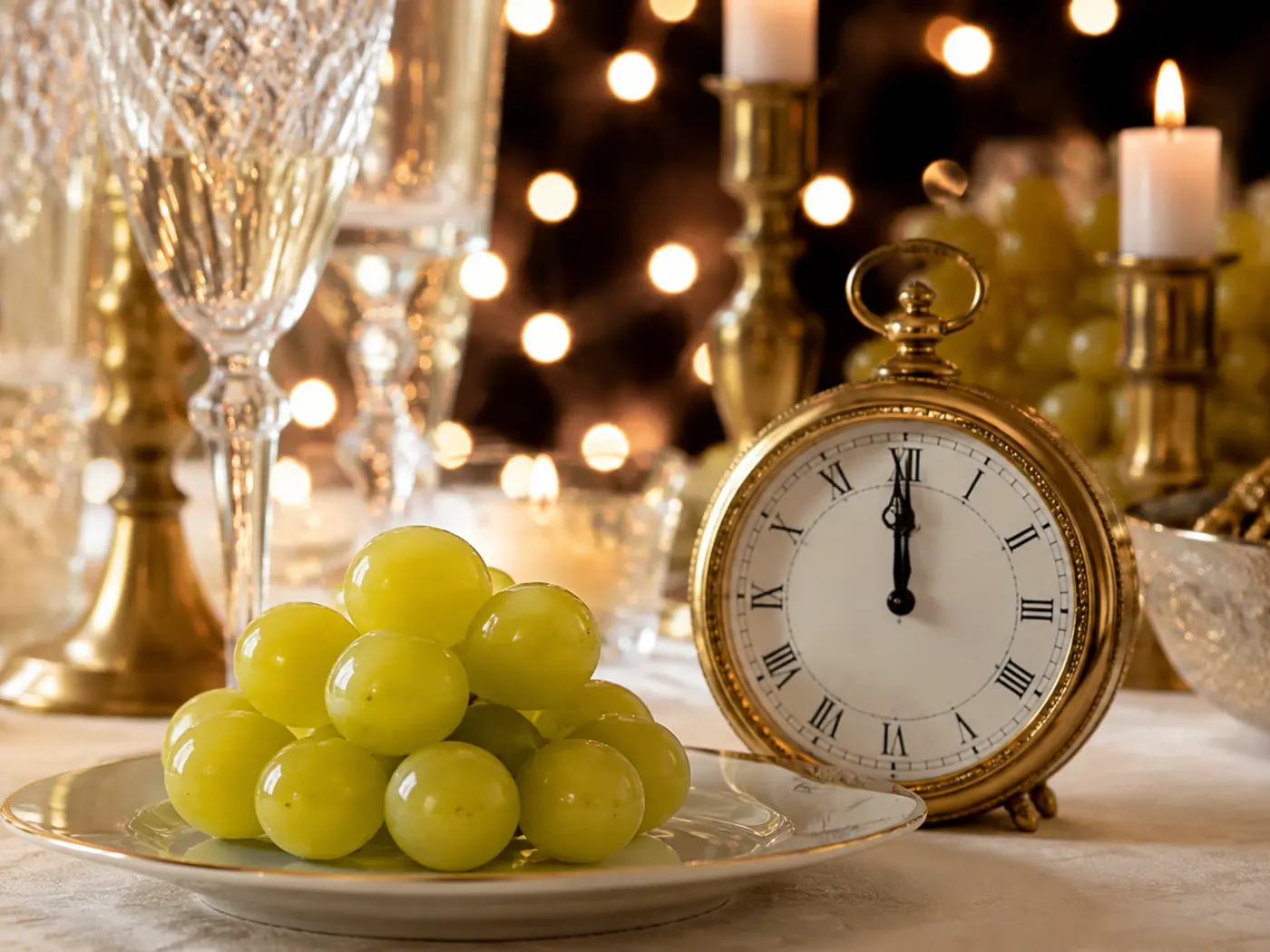
- In Spain, many people eat twelve grapes at midnight.
- One grape is traditionally eaten for each stroke of the clock.
- The twelve grapes symbolize luck for the coming twelve months.
- The custom is called las doce uvas de la suerte.
- In Japan, Buddhist temples ring bells 108 times around New Year.
- The ritual is called Joya no Kane.
- The number connects with Buddhist teachings about worldly desires or defilements.
- In Brazil, many New Year revelers wear white.
- Beach celebrations are especially famous in Rio de Janeiro.
- Some Brazilian traditions incorporate offerings and practices connected with Afro-Brazilian religions.
- In Greece, a New Year cake called vasilopita may contain a hidden coin.
- The person finding the coin is traditionally considered lucky.
- In parts of Latin America, people may walk with empty suitcases to wish for travel.
- Round foods, lentils, pork, noodles, and specific colors symbolize luck in various cultures.
- New Year customs often revolve around prosperity, health, travel, love, food, and leaving bad luck behind.
Resolutions and fresh starts
- New Year resolutions have roots much older than modern self-help culture.
- Ancient Babylonians made promises tied to their new-year religious festival.
- Romans made vows and promises associated with deities and civic life.
- Christian traditions later used New Year as a time for moral reflection.
- Modern resolutions often focus on health, finances, relationships, habits, learning, or travel.
- January 1 creates a psychologically clear temporal landmark.
- Researchers call the motivation around fresh calendar boundaries the fresh-start effect.
- A symbolic new beginning can make people feel more separated from past mistakes.
- Specific goals are usually easier to act on than vague wishes.
- Tracking progress can make a goal more concrete.
- Environmental changes can matter as much as willpower.
- Resolutions do not need to begin on January 1 to be meaningful.
- Any date can serve as a personal fresh start.
- New Year’s Eve simply provides an unusually strong shared cultural marker.
- The countdown dramatizes the idea that one chapter ends and another begins.
Ten surprising New Year’s Eve facts
- January was not always the first month of the Roman year.
- The name January comes from a two-faced Roman god of beginnings and endings.
- The Times Square ball drop was inspired by timekeeping devices used by ships.
- New York’s first Times Square ball was made of iron and wood.
- Some Pacific islands enter the new year nearly a full day before other inhabited places.
- “Auld Lang Syne” grew from older Scottish song tradition rather than being entirely invented by Robert Burns.
- Spain’s midnight tradition turns twelve clock chimes into a speed-eating challenge with grapes.
- Japanese temple bells may ring 108 times around midnight.
- Not every culture’s New Year begins anywhere near January.
- For more holiday trivia, explore our Culture facts and upcoming New Year’s Day guide.

Quick New Year’s Eve FAQ
Why is New Year’s Eve on December 31?
The dominant Gregorian civil calendar ends on December 31 and begins the next year on January 1, a date inherited through Roman calendar history.
When did the Times Square Ball Drop begin?
The first ball drop took place on New Year’s Eve 1907, after fireworks had been used at earlier Times Square celebrations.
Why do people sing Auld Lang Syne?
The Scottish song is about remembering old relationships and times past, making it a natural fit for the emotional transition between years.
Which place celebrates New Year first?
Places using UTC+14, including parts of Kiribati, are among the first inhabited areas to enter January 1 under the Gregorian calendar.
Does everyone celebrate New Year on January 1?
No. Many cultures and religions maintain lunar, lunisolar, or traditional calendars with New Year observances on other dates.

Ellie is the owner and sole author of Fun Facts, combining her mechanical engineering background with years of research-driven writing to deliver facts you can trust. Every article is thoroughly fact-checked and routinely updated as new science and sources emerge to keep information accurate and current. Her mission is to make learning delightful while upholding high standards of reliability and transparency.