
NASA put humans on the Moon, landed rovers on Mars, flew a helicopter on another planet, studies hurricanes from orbit, tests quieter aircraft, searches for planets around other stars, and still traces part of its family tree to a 1915 aeronautics agency. These 145 NASA facts explore the agency’s founding, Mercury, Gemini, Apollo, space shuttles, telescopes, planetary probes, Earth science, astronauts, mission control, engineering, and the technology behind exploring space.
NASA basics
- NASA stands for National Aeronautics and Space Administration.
- NASA is a civilian agency of the United States federal government.
- Its responsibilities include space exploration, science, aeronautics, and technology development.
- NASA was created in 1958.
- President Dwight D. Eisenhower signed the National Aeronautics and Space Act.
- The act became law on July 29, 1958.
- NASA officially began operations on October 1, 1958.
- The agency grew partly from an older organization called NACA.
- NACA stood for National Advisory Committee for Aeronautics.
- NACA had been created in 1915.
- NASA inherited NACA laboratories, employees, aircraft research, and expertise.
- The Soviet launch of Sputnik in 1957 accelerated U.S. concern about space capability.
- NASA was designed as a civilian agency rather than a military service.
- Military organizations also operate U.S. space programs separately from NASA.
- NASA’s official history is documented through its History Office.
NASA is much more than one building
- NASA operates through multiple centers and facilities across the United States.
- NASA Headquarters is in Washington, D.C.
- Kennedy Space Center is in Florida.
- Kennedy is famous for launching crewed missions and major spacecraft.
- Johnson Space Center is in Houston, Texas.
- Johnson is closely associated with astronaut training and human-spaceflight mission control.
- Marshall Space Flight Center is in Huntsville, Alabama.
- Marshall has played major roles in rocket and propulsion development.
- Goddard Space Flight Center is in Maryland.
- Goddard specializes heavily in science missions, satellites, and space instruments.
- Ames Research Center is in California’s Silicon Valley.
- Langley Research Center in Virginia is NASA’s oldest field center lineage.
- Armstrong Flight Research Center in California specializes in experimental aircraft and flight research.
- Stennis Space Center in Mississippi conducts major rocket-engine testing.
- Different centers develop specialized cultures while working together on agency-wide missions.
Mercury sent the first Americans into space
- Project Mercury was NASA’s first human-spaceflight program.
- Its main goal was to place a person in orbit and return safely.
- NASA selected seven original Mercury astronauts in 1959.
- They became known as the Mercury Seven.
- Alan Shepard became the first American in space.
- His Freedom 7 flight launched on May 5, 1961.
- Shepard’s mission was suborbital rather than orbital.
- John Glenn became the first American to orbit Earth.
- Glenn flew aboard Friendship 7 on February 20, 1962.
- He completed three Earth orbits.
- Mercury capsules carried only one astronaut.
- The spacecraft were tiny by later crewed-spacecraft standards.
- Mercury flights tested life support, heat shields, communications, tracking, and human performance.
- NASA had to learn basic operational procedures that later programs took for granted.
- Mercury demonstrated that humans could work and survive during short missions in space.
Gemini practiced for the Moon
- Project Gemini followed Mercury.
- Gemini spacecraft carried two astronauts.
- The program focused on skills needed for future lunar missions.
- Gemini astronauts practiced changing orbit precisely.
- They learned to rendezvous with other spacecraft.
- Rendezvous means bringing two spacecraft together in orbit.
- Docking physically connects spacecraft after rendezvous.
- Gemini missions tested long-duration human spaceflight.
- They also practiced spacewalks.
- Ed White performed the first American spacewalk during Gemini 4 in 1965.
- His official activity was called an extravehicular activity, or EVA.
- Gemini 6A and Gemini 7 performed a historic close rendezvous in orbit.
- Gemini 8 achieved the first docking of two vehicles in space.
- Neil Armstrong commanded Gemini 8.
- Gemini turned abstract Apollo mission requirements into demonstrated operational skills.
Apollo and the Moon landings
- President John F. Kennedy challenged the United States to land humans on the Moon before the 1960s ended.
- The Apollo program was built to accomplish that goal.
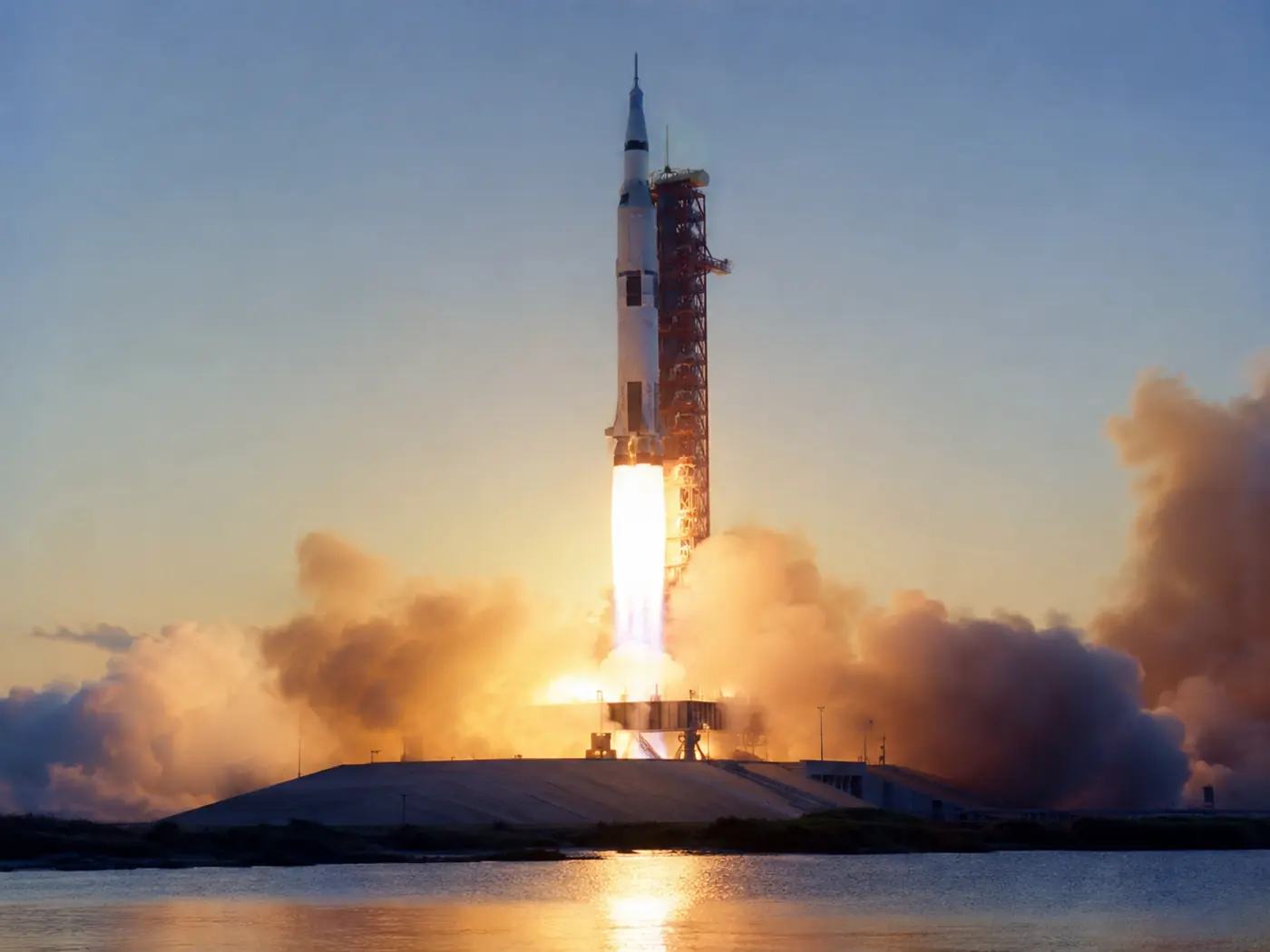
- The Saturn V rocket launched crewed lunar missions.
- Saturn V remains one of the most powerful rockets ever flown successfully.
- Apollo missions used a command module, service module, and lunar module.
- The command module returned astronauts to Earth.
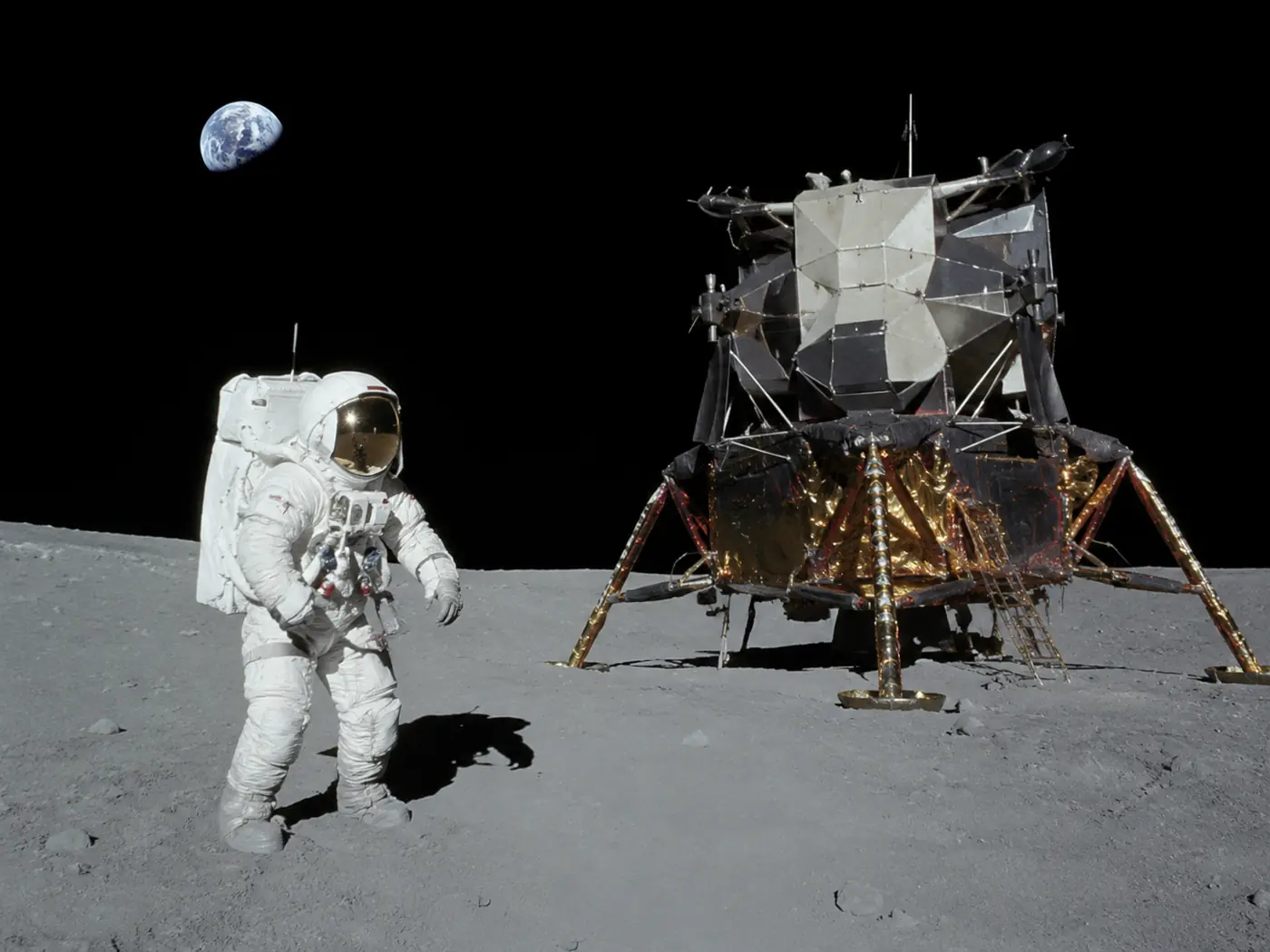
- The lunar module carried two astronauts between lunar orbit and the Moon’s surface.
- Apollo 8 became the first crewed mission to orbit the Moon in 1968.
- Apollo 10 performed a nearly complete rehearsal without landing.
- Apollo 11 landed on the Moon on July 20, 1969.
- Neil Armstrong became the first person to step onto another world.
- Buzz Aldrin joined him on the lunar surface.
- Michael Collins remained in lunar orbit aboard the command module.
- Six Apollo missions successfully landed astronauts on the Moon.
- Twelve people walked on the lunar surface between 1969 and 1972.
Apollo 13 survived a disaster
- Apollo 13 launched in April 1970.
- An oxygen tank exploded while the spacecraft was traveling toward the Moon.
- The explosion crippled the command-service module’s power and oxygen systems.
- The Moon landing was immediately abandoned.
- The lunar module became a temporary lifeboat.
- Its systems supported three astronauts even though it was designed mainly for two during landing operations.
- Engineers on Earth rapidly created procedures using only materials available aboard the spacecraft.
- A famous challenge involved fitting square carbon-dioxide scrubber cartridges into round openings.
- Mission controllers tested an improvised adapter on the ground.
- Astronauts built the adapter using items such as plastic bags, cardboard, and tape.
- The crew looped around the Moon and returned toward Earth.
- Apollo 13 splashed down safely on April 17, 1970.
- The mission became a famous example of engineering under pressure.
- The phrase “Houston, we’ve had a problem” came from the real emergency, though movies altered the wording.
- A mission that failed to land succeeded spectacularly at bringing its crew home.
The Space Shuttle era
- NASA’s Space Shuttle was a partially reusable human-spaceflight system.
- The first shuttle mission, STS-1, launched in 1981.
- The orbiter looked like a winged spacecraft because it returned as a glider.
- It launched vertically attached to an external tank and solid rocket boosters.
- The solid rocket boosters were recovered from the ocean and reused.
- The large orange external tank was not recovered for reuse.
- Shuttles deployed satellites and scientific spacecraft.
- They carried Spacelab laboratory modules.
- Shuttle crews helped build the International Space Station.
- Astronauts used the shuttle to service the Hubble Space Telescope.
- The Challenger orbiter was lost during launch in 1986.
- The Columbia orbiter was lost during reentry in 2003.
- Fourteen astronauts died in those two disasters.
- NASA retired the Space Shuttle fleet in 2011.
- The shuttle program completed 135 missions.
NASA explores the solar system robotically
- Robotic spacecraft can explore environments too distant or dangerous for human crews.
- Mariner 2 became the first successful spacecraft to encounter another planet in 1962.
- It flew past Venus.
- Mariner 4 returned the first close-up images of Mars in 1965.
- Voyager 1 and Voyager 2 launched in 1977.
- Both flew past Jupiter and Saturn.
- Voyager 2 also visited Uranus and Neptune.
- It remains the only spacecraft to have visited Uranus and Neptune up close.
- NASA’s Viking landers successfully operated on Mars beginning in 1976.
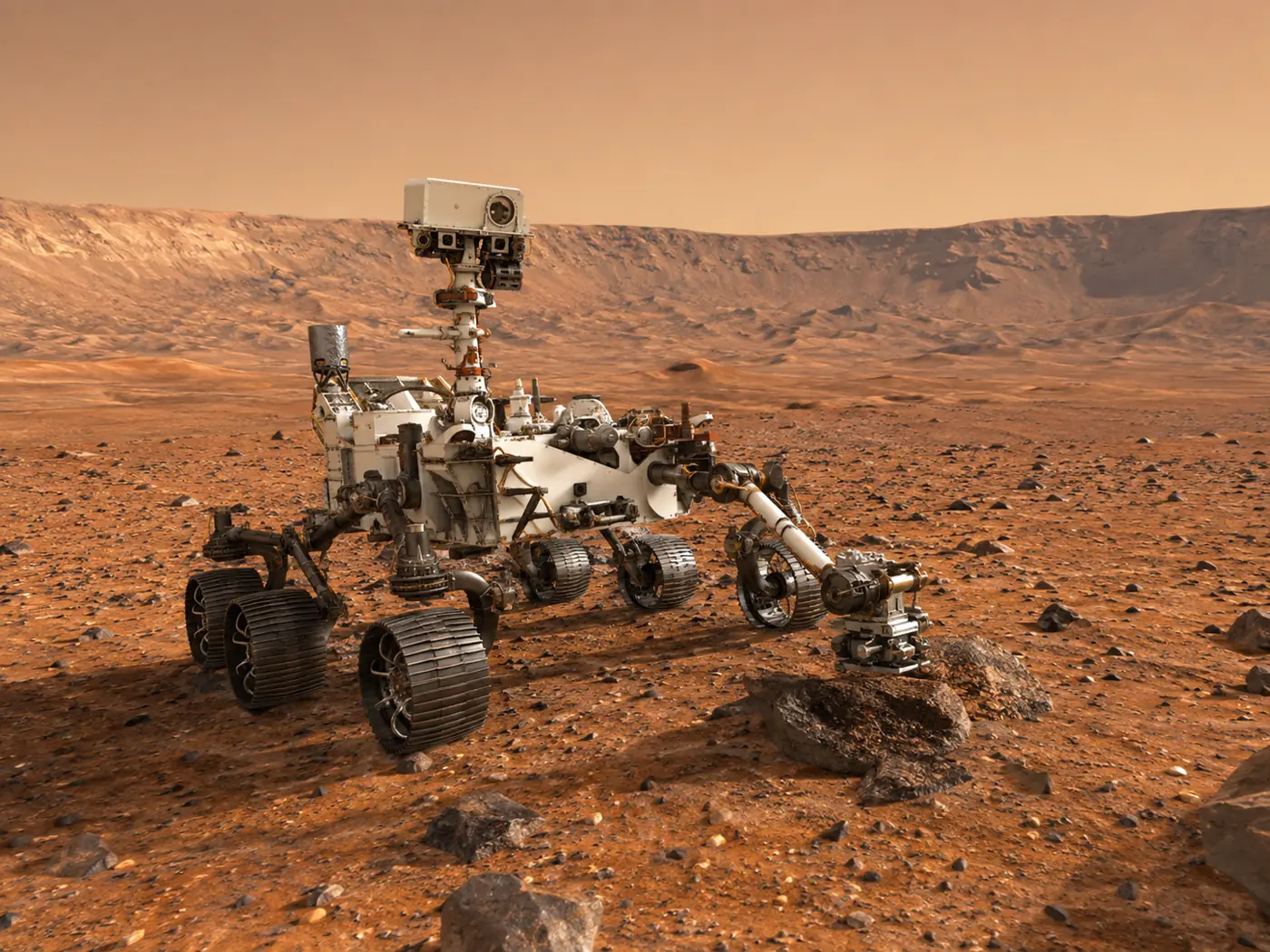
- Sojourner became the first rover to operate on Mars in 1997.
- Spirit, Opportunity, Curiosity, and Perseverance followed in later missions.
- Ingenuity became the first aircraft to make powered controlled flight on another planet.
- New Horizons flew past Pluto in 2015.
- NASA’s OSIRIS-REx returned a sample from asteroid Bennu to Earth in 2023.
- Robotic exploration has transformed many points of light into mapped worlds.
NASA also studies Earth and airplanes
- NASA is one of the world’s major Earth-science organizations.
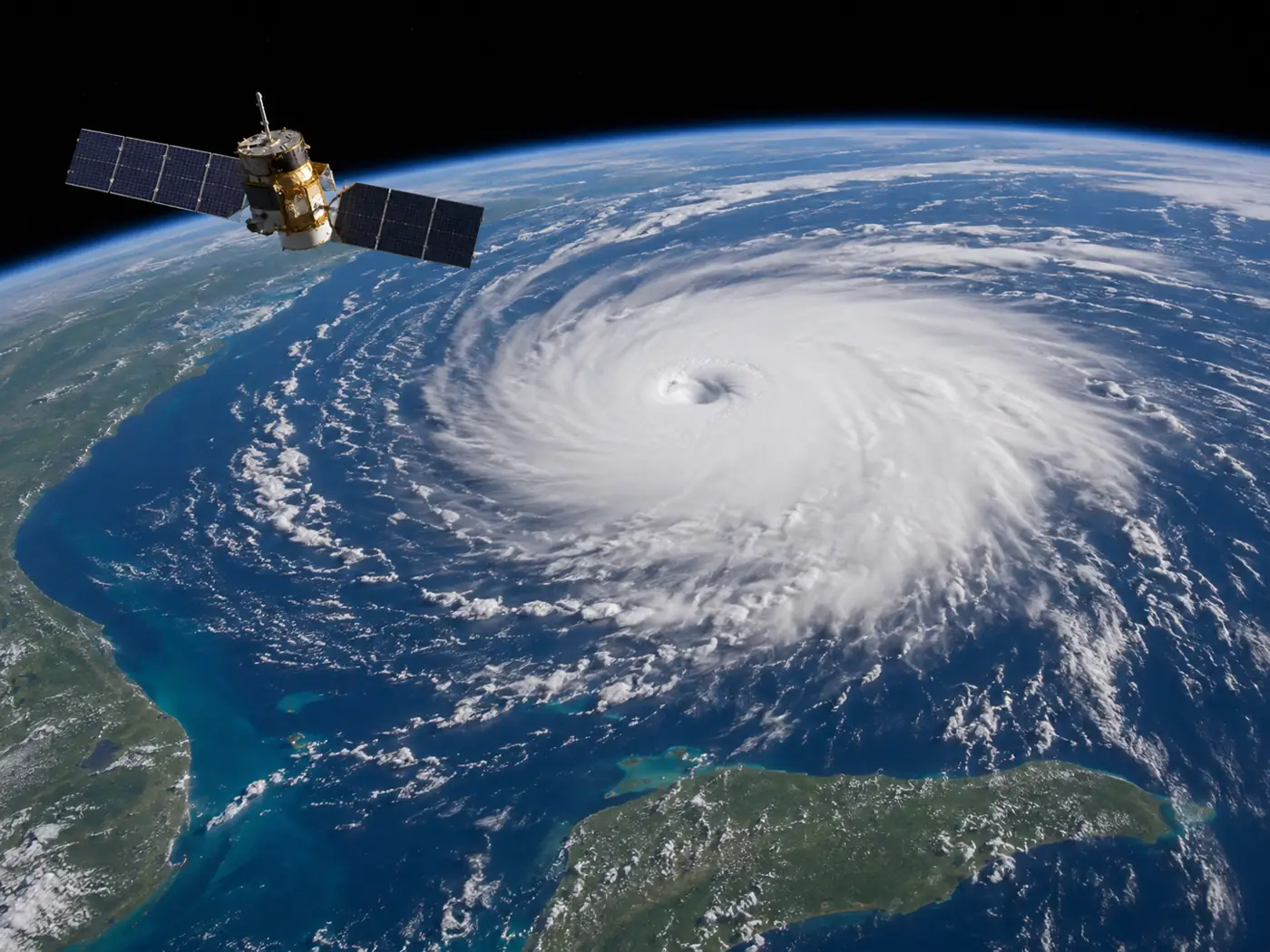
- Its satellites study weather, climate, oceans, ice, forests, fires, land, and atmospheric chemistry.
- Earth-observing instruments measure changes impossible to understand from one ground location alone.
- NASA data help scientists track sea level and ice loss.
- Satellites also monitor hurricanes, drought, vegetation, and air pollution.
- NASA’s “A” stands for aeronautics as well as space.
- Aeronautics researchers test aircraft shapes, materials, engines, noise, and flight-control systems.
- NACA and NASA research contributed to many improvements in aviation.
- Wind tunnels let engineers test aerodynamic ideas under controlled conditions.
- NASA flies experimental aircraft to test concepts in the real atmosphere.
- Research includes quieter supersonic flight and more efficient aircraft.
- NASA also develops technology intended for future missions.
- Space technology often requires extreme reliability, low mass, and resistance to harsh environments.
- NASA publishes enormous amounts of scientific data for researchers and the public.
- The agency’s work connects aviation, solar-system exploration, Earth science, engineering, and astronomy.
Ten surprising NASA facts
- NASA’s family tree reaches back to an aeronautics agency founded in 1915.
- The first American astronaut flight did not actually orbit Earth.
- Gemini quietly practiced many of the hardest skills Apollo later needed.
- Only twelve humans have walked on the Moon.
- Apollo 13’s lunar module became an emergency lifeboat.
- The Space Shuttle landed without powered jet engines, essentially as a high-speed glider.
- One Voyager spacecraft visited all four giant planets while the other visited two.
- The first powered flight on another planet was made by a tiny NASA helicopter.
- NASA studies our own planet at least as seriously as it studies distant worlds.
- NASA’s name has included “aeronautics” since the agency was created.
Quick NASA FAQ
What does NASA stand for?
National Aeronautics and Space Administration.
When was NASA founded?
The National Aeronautics and Space Act was signed in July 1958, and NASA officially began operations on October 1, 1958.
How many people have walked on the Moon?
Twelve astronauts, all during six Apollo landing missions between 1969 and 1972.
Does NASA only work in space?
No. NASA also conducts major aeronautics research and operates extensive Earth-science missions using satellites, aircraft, instruments, and computer models.
What was NASA before NASA?
The new agency absorbed the National Advisory Committee for Aeronautics, or NACA, which had conducted U.S. aviation research since 1915.

Ellie is the owner and sole author of Fun Facts, combining her mechanical engineering background with years of research-driven writing to deliver facts you can trust. Every article is thoroughly fact-checked and routinely updated as new science and sources emerge to keep information accurate and current. Her mission is to make learning delightful while upholding high standards of reliability and transparency.