
Bananas seem ordinary until you discover that the “tree” is actually a giant herb, the fruit is botanically a berry, supermarket bananas are usually clones, and wild bananas can be packed with hard seeds. These 145 banana facts peel into botany, ripening, cultivation, nutrition, history, global trade, famous varieties, kitchen science, and the diseases that make this familiar fruit surprisingly vulnerable.
Banana basics
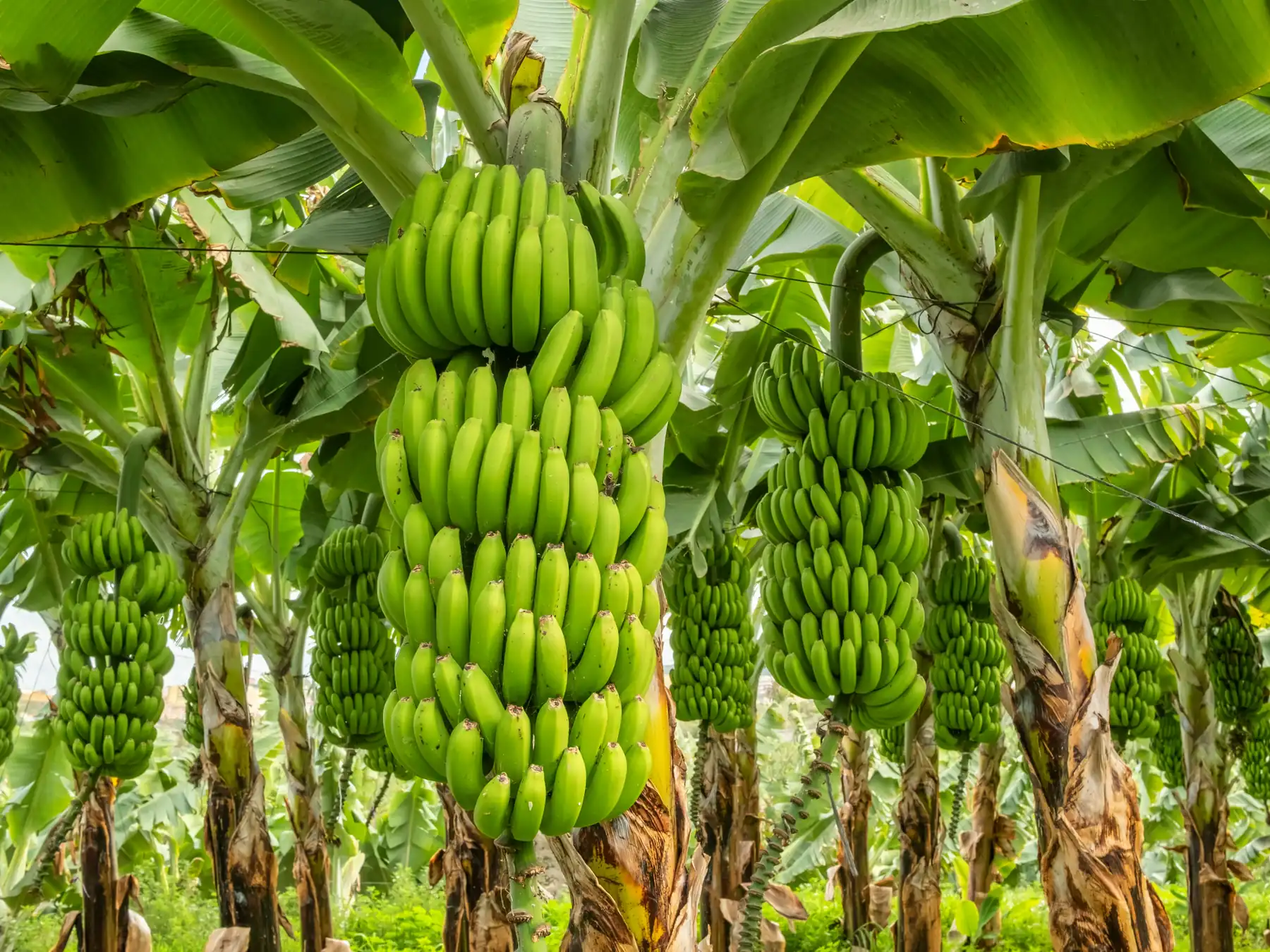
- Bananas are fruits produced by plants in the genus Musa.
- Banana plants are giant herbs rather than true woody trees.
- The tall structure that looks like a trunk is called a pseudostem.
- A pseudostem is formed from tightly wrapped leaf bases.
- Banana plants arise from underground stems commonly called corms or rhizomes.
- New shoots can grow from the underground plant after an old pseudostem fruits.
- Each individual pseudostem normally flowers and fruits only once.
- Growers cut down the spent pseudostem after harvesting its bunch.
- A replacement shoot then becomes the next fruiting stem.
- Banana leaves can grow several meters long in suitable tropical conditions.
- Wind often tears the broad leaves into strips along their veins.
- Torn leaves can still perform photosynthesis.
- Bananas are botanically classified as berries.
- Strawberries are not true botanical berries, making the comparison especially funny.
- Banana plants belong to the same broad order as ginger and bird-of-paradise plants.
Wild bananas look very different
- Wild banana fruits often contain many large hard seeds.
- Those seeds can make wild fruit difficult to eat compared with supermarket bananas.
- Modern edible bananas descend largely from wild Musa acuminata and Musa balbisiana.
- Humans selected plants with unusually fleshy, low-seed fruit over thousands of years.
- Many cultivated bananas produce fruit without normal fertilization.
- This seedless-fruit development is called parthenocarpy.
- Many edible bananas are also sterile or nearly sterile.
- Because they make few useful seeds, farmers commonly propagate them vegetatively.
- Vegetative propagation means growing new plants from shoots or tissue rather than seeds.
- This creates genetically very similar or identical plants.
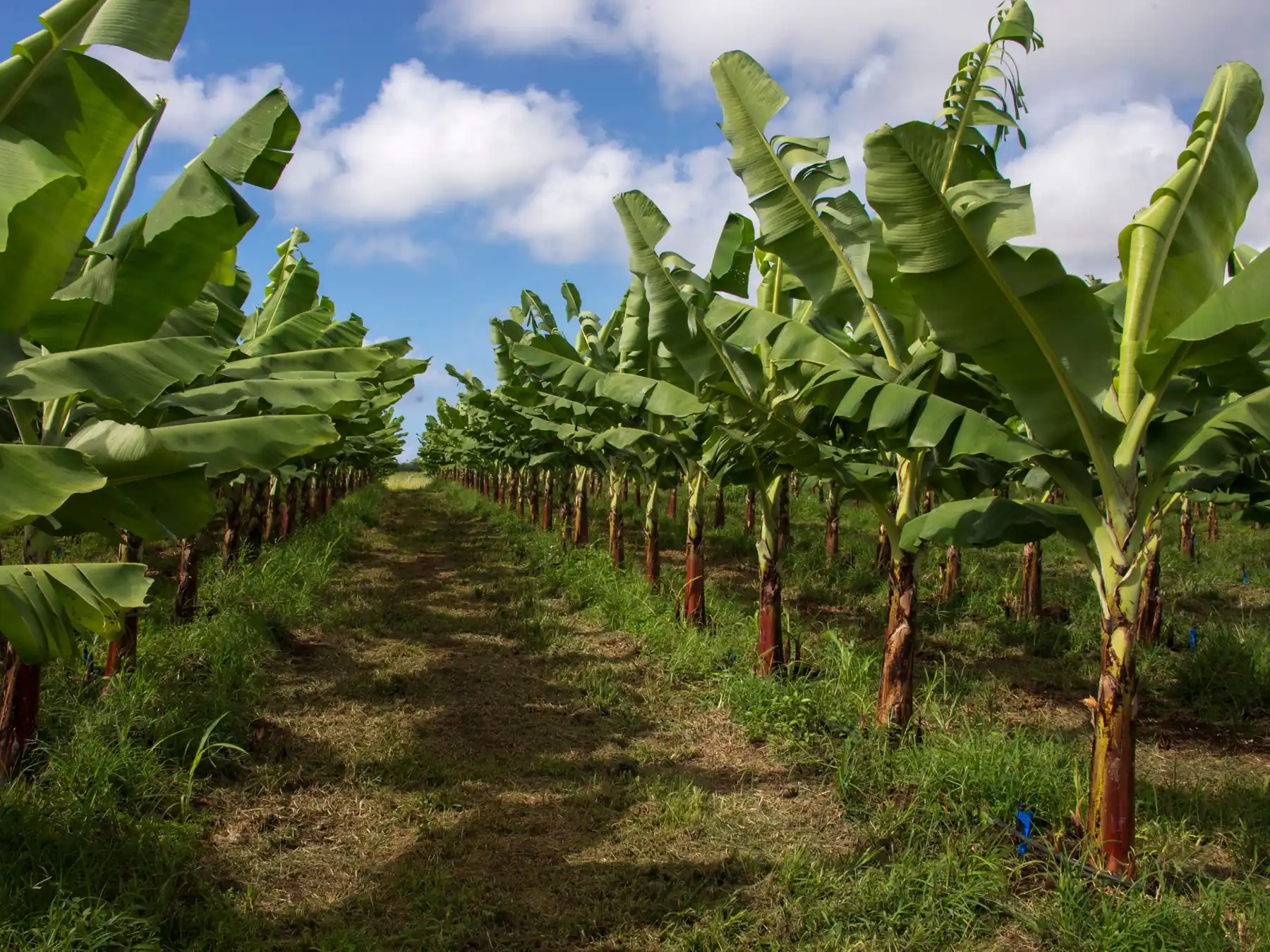
- Commercial banana fields can therefore contain enormous numbers of clones.
- Cloning preserves desirable fruit quality from generation to generation.
- It also reduces genetic diversity within a commercial variety.
- Low diversity can make a crop especially vulnerable when a pathogen can attack that genotype.
- Kew Gardens documents the remarkable diversity of the Musa group in its plant-science collections.
Banana flowers and fruit clusters
- A mature banana plant sends a flowering stalk through the center of its pseudostem.
- The flower cluster eventually emerges from the top of the plant.
- Large purple or reddish bracts protect groups of developing flowers.
- The hanging terminal structure is sometimes called a banana heart.
- Female flowers develop into bananas.
- The fruits form in groups called hands.
- Individual bananas within a hand are sometimes called fingers.
- Multiple hands together form the large bunch harvested from the plant.
- A commercial bunch can weigh many kilograms.
- Bananas initially grow outward and downward from the flower cluster.
- As they develop, many fruits curve upward toward light.
- This response to gravity and light contributes to the familiar banana curve.
- The fruit peel begins green because it contains chlorophyll.
- As ripening proceeds, chlorophyll breaks down and yellow pigments become visible.
- Some banana varieties remain green, red, purple, or otherwise colored even when ripe.
Why bananas ripen so quickly
- Bananas are climacteric fruits, meaning they continue ripening after harvest.
- Ethylene is a plant hormone that helps trigger and coordinate banana ripening.
- Ripe bananas produce ethylene gas themselves.
- Ethylene speeds changes in nearby climacteric fruits too.
- A paper bag traps some naturally produced ethylene around fruit.
- That is why bagging bananas can accelerate ripening.
- During ripening, enzymes convert much of the fruit’s starch into sugars.
- This makes ripe bananas taste sweeter than green bananas.
- Pectin and other cell-wall components change as fruit softens.
- Aroma compounds increase and change during ripening.
- Brown speckles on a yellow peel often appear as ripening advances.
- Very ripe fruit can still be useful for baking even when too soft for slicing.
- Refrigeration slows many ripening reactions.
- A banana peel may darken rapidly in the refrigerator while the flesh remains usable.
- Cold storage can damage tropical banana peel tissue even when the inside is still fine.
Cavendish bananas dominate supermarkets
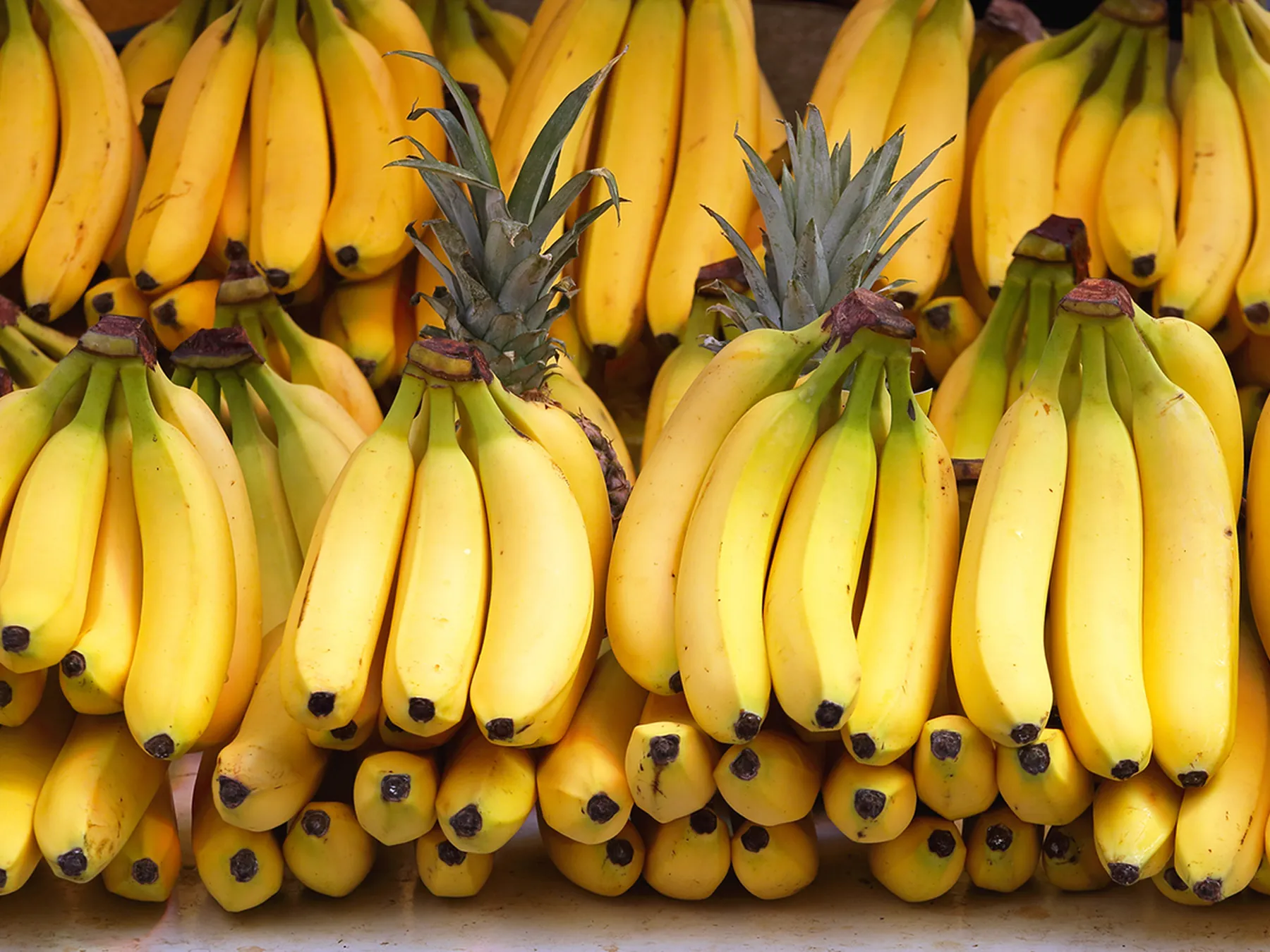
- Cavendish is the dominant banana group in international dessert-banana trade.
- The name refers to a group of closely related cultivars rather than one wild species.
- Cavendish bananas are usually harvested while still green.
- Green harvest helps the fruit survive transport without becoming overly soft.
- Export bananas travel in refrigerated shipping conditions designed to slow ripening.
- At destination markets, ripening rooms expose fruit to controlled ethylene.
- This lets distributors produce more predictable color and ripeness before sale.
- Cavendish fruit is sweet and soft when ripe.
- Its peel is relatively easy to remove.
- Cavendish replaced another famous export banana called Gros Michel in many markets.
- Gros Michel dominated much of the international trade during the early 20th century.
- A devastating fungal disease severely damaged Gros Michel plantations.
- Cavendish varieties were resistant to the strain that devastated Gros Michel.
- That resistance helped Cavendish become the new commercial standard.
- Modern banana history therefore includes one of agriculture’s clearest examples of disease reshaping a global food market.
Panama disease and banana vulnerability
- Panama disease is a destructive banana wilt caused by a soilborne fungus.
- The pathogen is now classified within Fusarium oxysporum species-complex lineages specialized on banana.
- The fungus invades the plant’s water-conducting vascular tissue.
- Infected plants can wilt, yellow, collapse, and die.
- Fungal survival structures can remain in contaminated soil for many years.
- That persistence makes infected fields extremely difficult to clean up.
- Fusarium Tropical Race 4, or TR4, can infect Cavendish bananas.
- TR4 has spread through multiple banana-growing regions.
- There is no simple field treatment that reliably eliminates the fungus from contaminated soil.
- Biosecurity focuses heavily on preventing contaminated soil and plant material from moving.
- Researchers are breeding and engineering bananas with improved disease resistance.
- Commercial monocultures are risky because genetically similar plants can share the same vulnerability.
- Banana diversity includes many local cultivars with traits absent from Cavendish.
- Protecting that genetic diversity gives breeders more options for future crop improvement.
- Plant diseases show why supermarket uniformity can hide complicated agricultural risk.
Plantains and other banana varieties
- “Banana” covers a huge range of cultivated fruits beyond yellow Cavendish.
- Plantains are starchier cooking bananas commonly eaten after frying, boiling, baking, or roasting.
- Plantains can become sweeter as they ripen.
- Green plantains are especially starchy and behave more like potatoes in cooking.
- Ripe plantains can become soft, yellow, black-speckled, and noticeably sweet.
- Red bananas have reddish-purple peels and creamy flesh.
- Lady Finger bananas are smaller and often sweeter than standard Cavendish fruit.
- Blue Java bananas are famous for bluish-looking unripe peels.
- Different cultivars vary in flavor, aroma, texture, size, disease resistance, and cooking use.
- East Africa has major traditions built around cooking bananas.
- Matoke refers to important cooking-banana foods and cultivars in parts of East Africa.
- Bananas are also fermented into beverages in some cultures.
- Banana leaves are used as wrappers, plates, and cooking surfaces.
- Banana flowers are eaten as vegetables in several Asian cuisines.
- Even the inner pseudostem is eaten in some regional dishes.
Banana nutrition
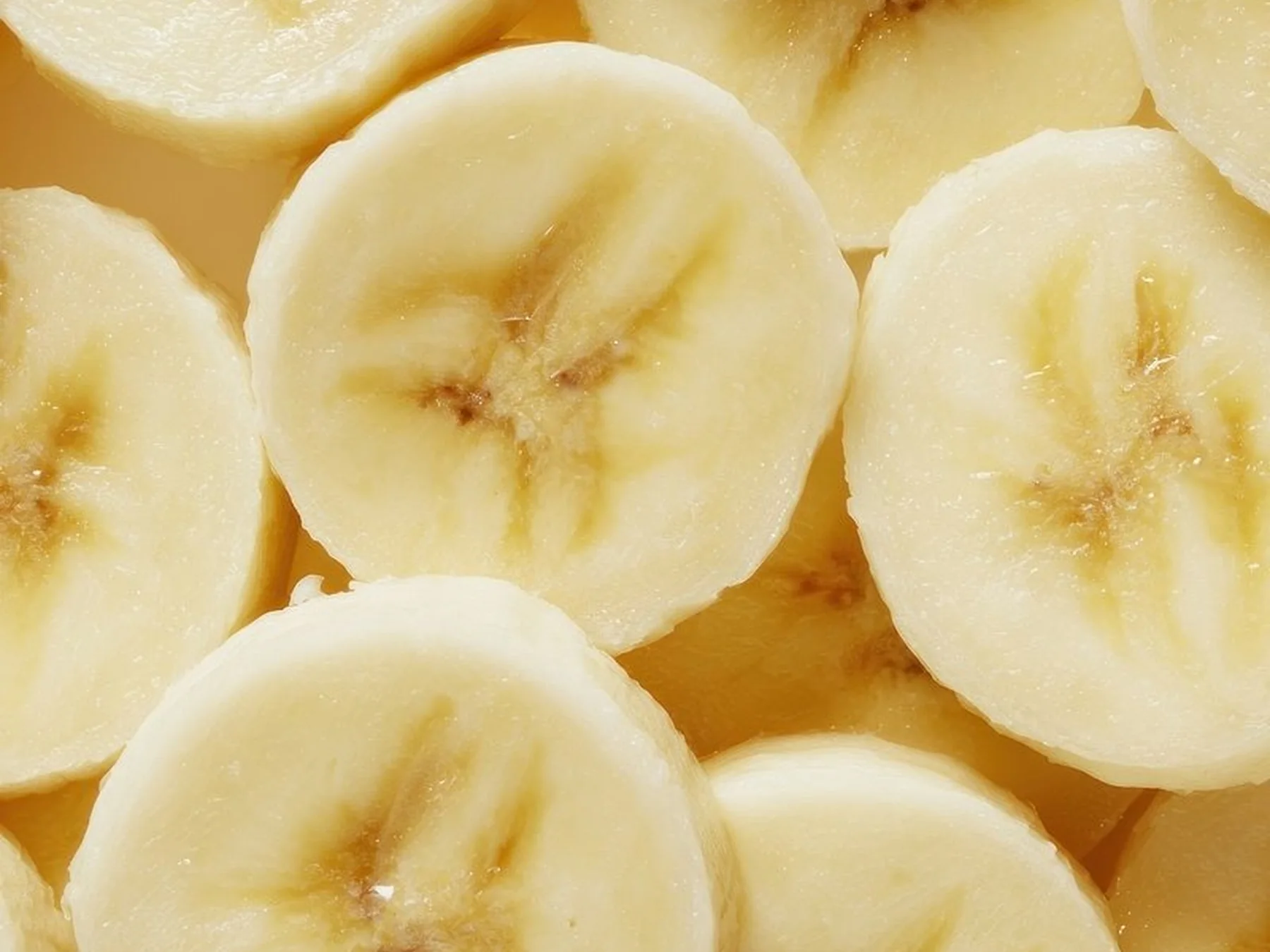
- Bananas provide carbohydrates, mostly as starches and sugars depending on ripeness.
- They are well known as a dietary source of potassium.
- Bananas also provide vitamin B6.
- They contain vitamin C in modest amounts.
- Bananas provide dietary fiber.
- A medium banana contains relatively little fat.
- Exact nutrient values vary with cultivar, size, and ripeness.
- Green bananas contain more resistant starch than very ripe bananas.
- Resistant starch behaves differently from rapidly digestible starch in the human digestive tract.
- As bananas ripen, resistant starch and ordinary starch decline while sugars increase.
- Ripeness can therefore change blood-glucose response even when the fruit is still a banana.
- Potassium is important for nerve signaling, muscle function, and fluid balance.
- Bananas are not uniquely high in potassium compared with every other food.
- Potatoes, beans, leafy greens, and several other foods can also provide substantial potassium.
- USDA FoodData Central provides detailed nutrient data for bananas and thousands of other foods.
Bananas in history and culture
- Banana domestication began in Southeast Asia and the western Pacific thousands of years ago.
- Humans carried banana plants westward across the Indian Ocean world.
- Bananas became important crops in Africa long before modern European colonial trade.
- Portuguese and Spanish expansion later moved bananas to Atlantic islands and the Americas.
- Large banana plantations became deeply tied to colonialism and foreign corporate power.
- The phrase “banana republic” developed from political and economic conditions surrounding export economies in Central America.
- Banana companies influenced railroads, ports, land ownership, labor, and politics in several countries.
- The history of cheap bananas in wealthy markets includes difficult stories of labor exploitation.
- Bananas became widely available in U.S. cities during the late 19th century.
- Refrigerated shipping and railroad networks helped turn tropical fruit into an everyday grocery item.
- Banana splits became a famous American ice-cream dessert during the early 20th century.
- Banana bread became especially popular in American home baking during the 20th century.
- Overripe bananas work well in baking because they are soft, aromatic, and naturally sweet.
- Banana peels became a classic slapstick-comedy prop despite real-world slipping risk being less predictable than cartoons suggest.
- For another fruit-filled rabbit hole, browse our Food facts collection.
Ten surprising banana facts
- A banana plant is an herb, even when it towers over a person.
- Botanically, the banana is a berry.
- Most supermarket bananas cannot reproduce normally through the tiny seed specks inside them.
- Commercial banana fields can contain thousands of genetically near-identical plants.
- The banana variety that once dominated exports was largely replaced because of disease.
- A modern disease strain can now attack the Cavendish bananas that replaced it.
- Banana fruit curves partly because developing fingers turn upward against gravity.
- The giant purple banana flower is edible in several cuisines.
- Green and ripe bananas differ significantly in starch and sugar composition.
- Our familiar yellow supermarket banana represents only a tiny slice of global banana diversity.
Quick banana FAQ
Are bananas berries?
Yes. Under botanical fruit definitions, bananas qualify as berries because they develop from a single ovary and have fleshy fruit walls surrounding seeds or seed remnants.
Are banana plants trees?
No. They are giant herbaceous plants. What looks like a trunk is a pseudostem formed by tightly overlapping leaf bases.
Why are bananas curved?
Developing fruits initially point downward, then turn upward as they grow in response to gravity and light. That change in growth direction creates the familiar curve.
Why do bananas ripen faster in a paper bag?
Bananas release ethylene, a plant hormone that promotes ripening. A paper bag traps more of that gas around the fruit while still allowing some air exchange.
Why are banana diseases such a concern?
Major commercial varieties are propagated as genetically similar clones. When a pathogen can infect that genotype, large areas of crop can share the same vulnerability.

Ellie is the owner and sole author of Fun Facts, combining her mechanical engineering background with years of research-driven writing to deliver facts you can trust. Every article is thoroughly fact-checked and routinely updated as new science and sources emerge to keep information accurate and current. Her mission is to make learning delightful while upholding high standards of reliability and transparency.