
Wombats look like someone crossed a bear cub with a bulldozer and then taught it geometry. These Australian marsupials dig huge burrows, carry joeys in backward-facing pouches, grow teeth continuously, sprint faster than their shape suggests, and produce cube-shaped poop for reasons that are somehow more fascinating than the punchline.
There are three living wombat species
- Wombats are marsupial mammals native to Australia.
- They belong to the family Vombatidae.
- Three living wombat species are recognized.
- The common wombat is also called the bare-nosed wombat.
- Its scientific name is Vombatus ursinus.
- The southern hairy-nosed wombat is Lasiorhinus latifrons.
- The northern hairy-nosed wombat is Lasiorhinus krefftii.
- Common wombats occur in southeastern mainland Australia and Tasmania.
- Southern hairy-nosed wombats live mainly in drier parts of South Australia and neighboring regions.
- Northern hairy-nosed wombats have an extremely restricted modern range.
- Wombats are close relatives of koalas within the marsupial order Diprotodontia.
- They are not rodents despite their large gnawing incisors.
- Adults have compact muscular bodies.
- The legs are short but exceptionally strong.
- Front feet carry large claws for digging.
- Wombat fur ranges from sandy or gray to dark brown and black depending on species and individual.
- Common wombats have a relatively bare nose.
- Hairy-nosed wombats have hair around the muzzle.
- Adults can weigh roughly 45 to more than 80 pounds depending on species and condition.
- The overall shape says beanbag; the skeleton says excavation contractor.
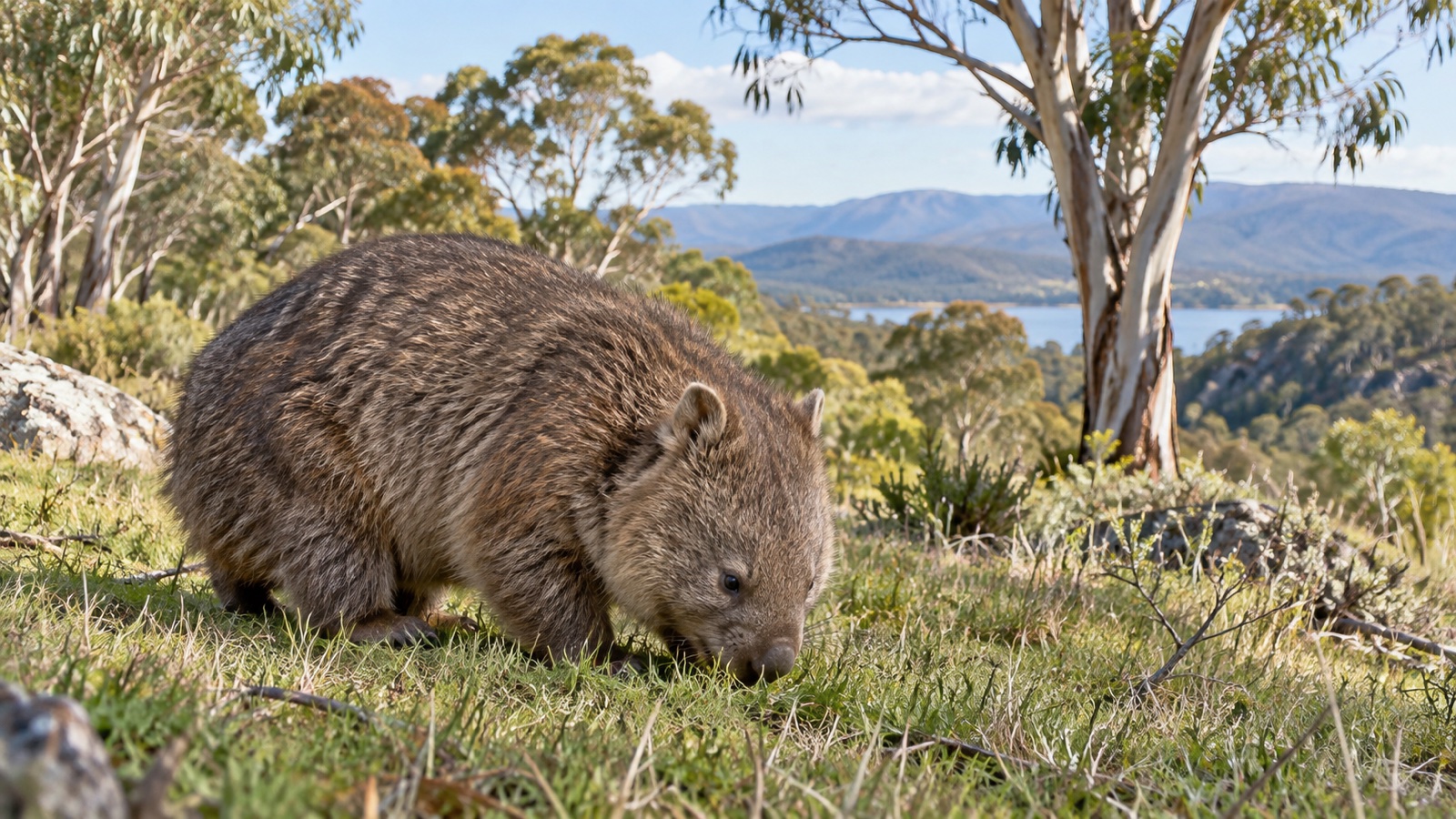
Wombats are built to excavate serious burrows
- Wombats spend much of their resting time underground.
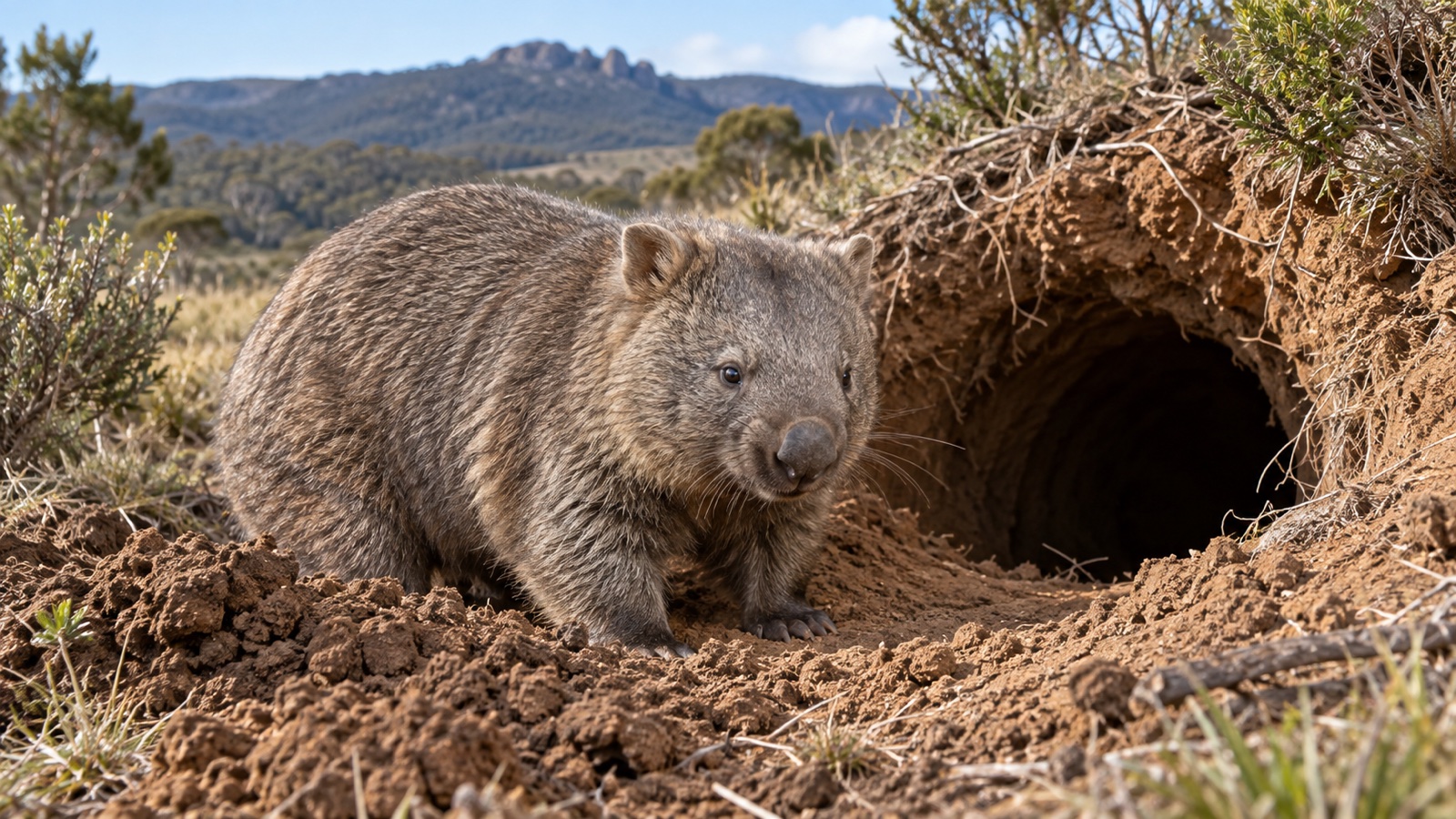
- They dig with the powerful claws of their front feet.
- Strong shoulders provide leverage for excavation.
- Their compact bodies fit efficiently through tunnels.
- Wombat burrows can extend dozens of feet.
- Some burrow systems contain multiple entrances.
- Burrows provide protection from temperature extremes.
- Underground temperatures fluctuate less than surface temperatures.
- That helps wombats survive hot Australian days.
- Burrows also offer shelter from wind, storms, and some predators.
- Common wombats often maintain several burrows within a home range.
- Individuals may switch sleeping sites from night to night.
- Hairy-nosed wombats can live in extensive connected warrens.
- Multiple wombats may use different sections of the same large warren.
- Fresh soil piles often mark active burrow entrances.
- Wombats can move impressive quantities of soil.
- They may dig beneath fences rather than climbing over them.
- Burrows sometimes create hazards for livestock, roads, or infrastructure.
- The same burrows can provide shelter for other wildlife.
- If a wombat decides a fence is in the wrong place, the fence usually discovers that first.
Their pouch opens backward for a very practical reason
- Female wombats have a marsupial pouch.
- The pouch opens toward the rear rather than the head.
- A rear-facing opening helps keep soil away from the developing young while the mother digs.
- Pregnancy lasts only a few weeks.
- The newborn is extremely small and undeveloped.
- It crawls into the pouch after birth.
- The baby attaches to a teat inside the pouch.
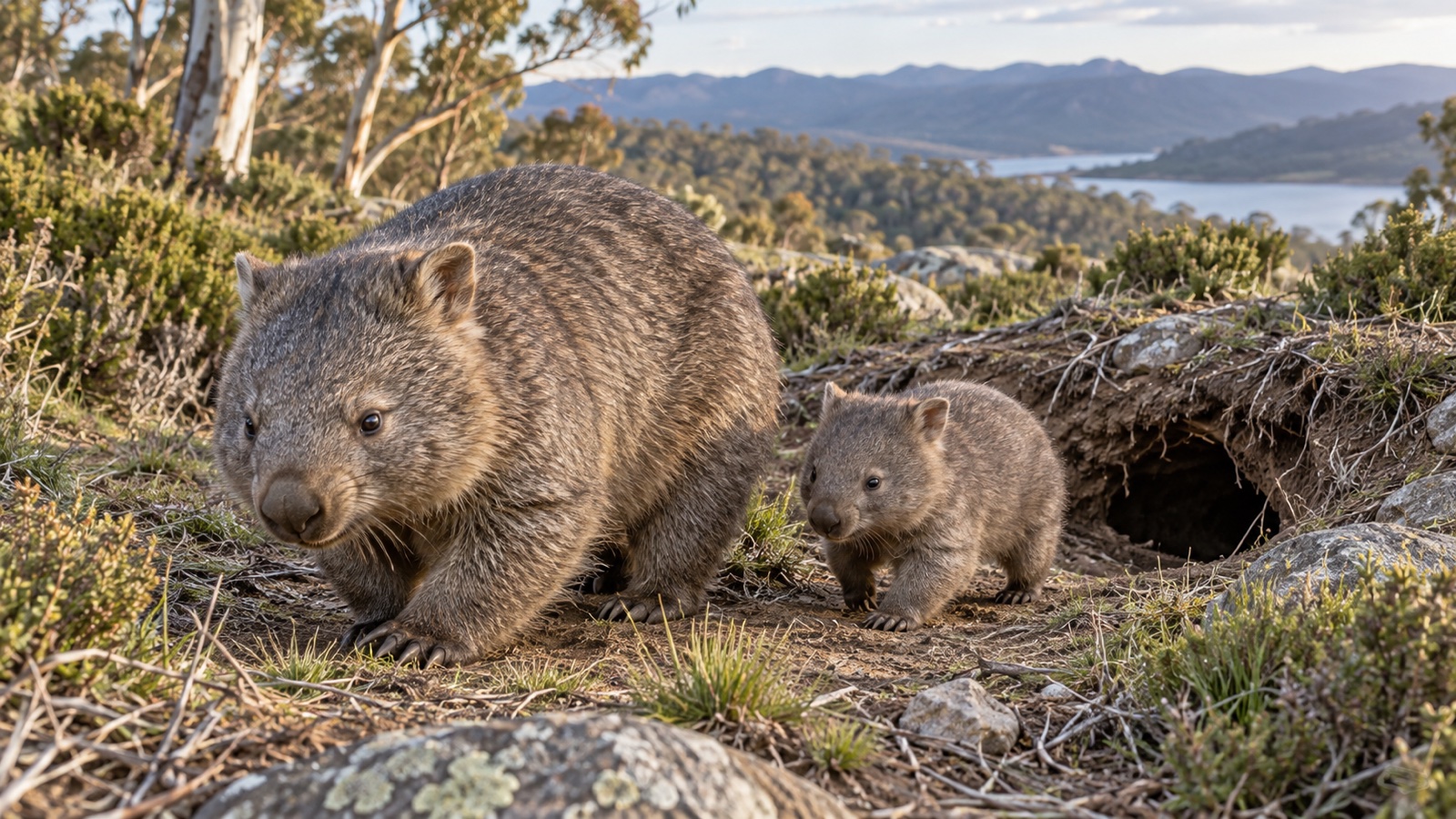
- A young wombat is called a joey.
- The joey remains in the pouch for several months.
- It continues nursing after it begins emerging.
- Older joeys may ride partly inside the pouch with the head or body protruding.
- The mother raises the joey without routine paternal care.
- Wombats usually produce one young at a time.
- A female cannot raise large litters the way many rodents can.
- Young continue learning feeding routes and burrow use after leaving the pouch.
- Juveniles may remain close to their mother for many months.
- They gradually establish independent home ranges.
- Breeding timing can vary with climate and food conditions.
- Long drought can reduce reproductive success.
- A backward-facing pouch sounds odd until your daily routine involves pushing your entire body through loose dirt.
Yes, wombat poop can really be cube shaped
Cube-shaped wombat poop is real, not an internet invention. The shape develops inside the intestine as feces dry and are squeezed by regions of intestinal tissue with different elasticity, creating flatter sides and sharper corners before the pellets leave the body.
- Wombats produce unusually dry fecal pellets.
- Many pellets have distinctly flat faces and rounded cube-like corners.
- The anus itself is not square.
- The cubes are formed before defecation.
- Researchers have studied wombat intestines to understand the shape.
- Different regions of the intestine stretch by different amounts.
- Repeated contractions and water removal help create the final geometry.
- The process occurs during slow passage through the digestive tract.
- Wombats can take several days to fully process fibrous food.
- Dry feces help conserve water.
- Wombats often place droppings in conspicuous locations.
- Logs, rocks, and trail edges can become marking sites.
- Feces and scent help communicate territory or recent presence.
- Cube-like pellets are less likely to roll away from raised surfaces.
- That may make them useful for scent marking, although the exact evolutionary importance of cube shape is still discussed.
- A wombat can produce many individual pellets in one night.
- Fresh droppings can help wildlife researchers confirm wombat activity.
- Scientists can sometimes extract DNA or dietary information from feces.
- Wombat poop has inspired fluid-dynamics and soft-material research because the geometry is so unusual.
- It took Australia approximately one marsupial to turn bathroom humor into a mechanics paper.
Their teeth grow continuously
- Wombats are herbivores.
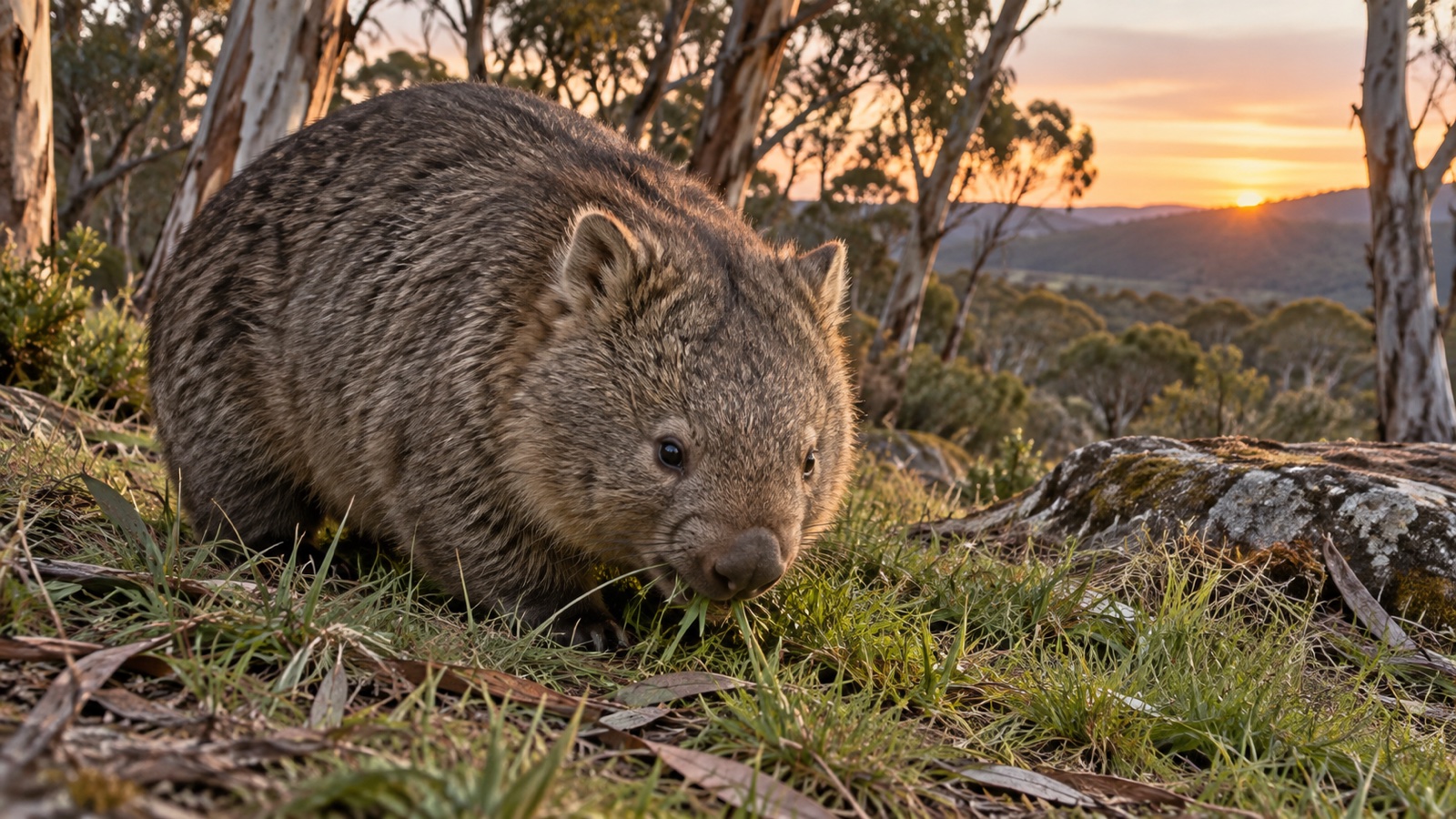
- They eat grasses, sedges, roots, bark, and other tough vegetation.
- Their front incisors are large and chisel shaped.
- Wombat incisors grow continuously.
- The cheek teeth also continue growing.
- Continuous growth offsets heavy wear from abrasive plant food.
- Wombat teeth are adapted for grinding coarse grasses.
- The jaw can move powerfully during chewing.
- Wombats have a slow metabolic rate compared with many similarly sized mammals.
- Slow metabolism reduces energy requirements.
- Food may take an unusually long time to pass through the digestive tract.
- Long digestion helps extract nutrients from low-quality vegetation.
- Water is reabsorbed efficiently before feces leave the body.
- Hairy-nosed wombats are especially adapted to dry environments.
- They can obtain much of their water from food.
- Wombats may travel to preferred grazing areas at night.
- They often crop grass close to the ground.
- Drought can reduce food availability dramatically.
- Overgrown teeth or dental disease can be serious health problems.
- Wombat teeth are less like a permanent set of tools and more like a conveyor belt that keeps replacing the worn edge.
The famous tough rump is real, but some stories go too far
Wombats really do have an unusually sturdy rear end with thick skin, muscle, cartilage, and bone. They can use that rump to block a burrow entrance, but viral claims that wombats routinely crush predator skulls against tunnel roofs are much less well documented than the internet makes them sound.
- A wombat's rump has thick skin and dense underlying tissue.
- The rear pelvis is broad and strong.
- The tail is tiny and offers little for a predator to grab.
- A threatened wombat may retreat headfirst into a burrow.
- The animal can then present its tough rear toward the entrance.
- This makes it difficult for some predators to get a secure bite.
- A wombat can brace its body against tunnel walls.
- Powerful legs help resist being pulled backward.
- Dingoes are important natural predators of wombats.
- Young wombats are more vulnerable than large adults.
- Tasmanian devils may scavenge wombat carcasses and can prey opportunistically.
- Large eagles may threaten very young animals.
- Adult wombats can defend themselves with bites and body force.
- Wombat bites can cause serious injury.
- They should never be treated like oversized cuddly pets.
- Cornered wombats can charge or knock people down.
- Despite short legs, a wombat can sprint around 25 miles per hour for a brief distance.
- That speed is useful for reaching a burrow quickly.
- The body is optimized for short powerful movement rather than long-distance pursuit.
- Nothing about a wombat's silhouette prepares you emotionally for the fact that it can outrun many casual human joggers.
Conservation, mange and 25 final wombat facts
- Common wombats remain widespread in suitable habitat but face local threats.
- Southern hairy-nosed wombats have a more restricted distribution.
- Northern hairy-nosed wombats are critically endangered.
- The northern species once occupied a much larger area of eastern Australia.
- Its population collapsed because of habitat change, competition, drought, and other pressures.
- Intensive conservation has increased northern hairy-nosed wombat numbers from extremely low levels.
- New populations have been established or planned to reduce the risk of one disaster affecting the entire species.
- Sarcoptic mange is a serious disease in wombats.
- It is caused by the mite Sarcoptes scabiei.
- Mites burrow into skin and cause intense irritation.
- Severe mange can lead to thickened skin, hair loss, infection, blindness, weakness, and death.
- Wildlife groups sometimes treat affected wombats with veterinary-approved antiparasitic methods.
- Treatment requires repeated dosing because the mite life cycle continues after one application.
- Road collisions kill many wombats.
- Drivers in wombat habitat are safest when especially alert at dusk, night, and dawn.
- Fences can fragment feeding and burrow areas.
- Wildlife-friendly fence passages can reduce conflict in some landscapes.
- Fire can affect wombats directly and by changing forage.
- Burrows can provide some protection from heat and flames.
- Viral claims that wombats deliberately invite many other species into burrows during fires are exaggerated.
- Other animals may use wombat burrows opportunistically before or after fires.
- Wombat burrowing can create shelter and modify soil structure for other organisms.
- Their digging makes them ecosystem engineers in some habitats.
- Wild wombats should be observed from a respectful distance rather than fed or approached.
- After 145 facts, wombats look less like sleepy cubes with legs and more like powerful digging marsupials that engineer soil, conserve water, sprint when necessary, and somehow manufacture geometry in their intestines.
Quick FAQ
Q: Do wombats really poop cubes?
A: Yes. Variable elasticity in different parts of the intestine, combined with slow drying and contractions, forms feces with flattened sides and cube-like corners.
Q: Why does a wombat pouch face backward?
A: The rear-facing opening helps keep dirt from being pushed into the pouch while the mother digs.
Q: Can wombats run fast?
A: Yes. Despite their stocky shape, wombats can sprint at roughly 25 miles per hour for short distances.
Q: Do wombats crush predators with their backsides?
A: Their tough rump can block and defend a burrow, but dramatic stories about routinely crushing predator skulls are not well supported.
Q: Are wombats endangered?
A: Conservation status depends on species. The northern hairy-nosed wombat is critically endangered, while the common wombat is much more widespread.

Ellie is the owner and sole author of Fun Facts, combining her mechanical engineering background with years of research-driven writing to deliver facts you can trust. Every article is thoroughly fact-checked and routinely updated as new science and sources emerge to keep information accurate and current. Her mission is to make learning delightful while upholding high standards of reliability and transparency.