
Valentine’s Day has saints, medieval poetry, handmade lace cards, sarcastic “vinegar valentines,” candy hearts, roses, chocolate, school exchanges, and centuries of stories that do not always agree. The real history is more interesting than the tidy legends. These 145 Valentine’s Day facts sort documented evidence from romantic folklore while exploring cards, Cupid, flowers, candy, traditions, and celebrations around the world.
Valentine’s Day basics
- Valentine’s Day is celebrated annually on February 14.
- Modern celebrations commonly focus on romantic love, friendship, affection, and appreciation.
- Cards, flowers, candy, and shared meals are familiar Valentine’s Day traditions.
- The holiday’s history combines Christian saint traditions, medieval literature, folk customs, printing, and modern commerce.
- There is no single perfectly documented moment when today’s romantic Valentine’s Day was invented.
- Several early Christian martyrs were named Valentine or Valentinus.
- That makes the identity of one definitive historical “Saint Valentine of romance” difficult to establish.
- The Library of Congress describes the holiday’s origins as murky.
- February 14 became associated with the feast day of Saint Valentine in Christian calendars.
- The strong connection between Valentine’s Day and romantic love developed later.
- Valentine’s Day is not a federal public holiday in the United States.
- Schools, restaurants, florists, candy companies, jewelers, and greeting-card businesses often build seasonal traditions around the date.
- The heart became the holiday’s dominant visual symbol.
- Red and pink are especially common Valentine colors.
- The holiday now includes romantic and non-romantic celebrations depending on culture and personal preference.

Who was Saint Valentine?
- Historical records refer to more than one early Christian martyr named Valentine.
- Traditions associated with Valentine of Rome and Valentine of Terni overlap.
- Later legends describe a Valentine secretly marrying couples against an emperor’s orders.
- Another popular legend says Valentine sent a note signed “from your Valentine.”
- Those famous romantic stories are not securely documented contemporary history.
- They developed in later hagiography and popular tradition.
- Saint Valentine’s association with lovers strengthened long after the supposed third-century martyrdom.
- Historical uncertainty does not prevent saints’ legends from having enormous cultural influence.
- The Roman Martyrology has associated a martyr named Valentine with February 14.
- Relics attributed to Saint Valentine are claimed by churches in several places.
- Such relic traditions do not solve the historical question of which Valentine inspired later romantic customs.
- Modern scholars distinguish between devotional tradition and independently verifiable biography.
- That distinction makes Valentine’s history more nuanced than the familiar secret-wedding story.
- The Library of Congress notes that several early Christian martyrs shared the Valentine name.
- A careful Valentine history should present legends as legends rather than guaranteed facts.
Did Valentine’s Day come from Lupercalia?
- Ancient Romans celebrated a February festival called Lupercalia.
- Lupercalia took place around February 15.
- It included purification and fertility-related rituals very unlike modern Valentine exchanges.
- Popular accounts often claim church leaders directly replaced Lupercalia with Valentine’s Day.
- Modern historians caution that evidence for a neat one-for-one replacement is weak.
- The existence of two February observances does not by itself prove direct descent.
- Valentine’s romantic meaning emerged many centuries after ancient Rome.
- Lupercalia ended long before modern card-giving traditions developed.
- The Library of Congress discusses Lupercalia while still describing Valentine’s origins as uncertain.
- Recent historical treatments explicitly reject the claim that Valentine’s feast was clearly created as a Christianized version of Lupercalia.
- Holidays often accumulate traditions from several sources rather than replacing one predecessor perfectly.
- Similar symbols can arise independently because winter, spring, fertility, and courtship are recurring human themes.
- The safest historical statement is that Lupercalia is part of the broader February cultural background, not a proven direct blueprint.
- This is another example of why holiday origin stories often become tidier online than the evidence supports.
- The Library of Congress summarizes the uncertainty on its February 14 history page.
Chaucer helped make Valentine’s Day romantic
- Geoffrey Chaucer is one of the most important figures in the history of romantic Valentine’s Day.
- His poem Parliament of Fowls was written in the late 14th century.
- The poem links Saint Valentine’s Day with birds choosing their mates.
- That literary link is among the earliest famous associations between Valentine’s Day and courtship.
- Medieval Europeans commonly used birds as symbols in love poetry.
- The belief that birds paired around mid-February helped reinforce the seasonal romance connection.
- Chaucer did not invent romantic love itself, of course.
- His writing helped give a saint’s feast a memorable courtly-love association.
- Later poets continued connecting Valentine’s Day with choosing a sweetheart.
- By the early modern period, exchanging love messages around Valentine’s Day had become increasingly recognizable.
- Handwritten verses were practical before affordable commercial cards existed.
- People sometimes copied verses from books when they did not trust themselves to write romantic poetry.
- Collections of ready-made Valentine verses were later published for exactly that purpose.
- The literary stage of Valentine history came centuries before today’s enormous candy and card industries.
- Smithsonian historians also identify Chaucer’s poem as a major early link between February 14 and romance.

Valentine cards become big business
- Handmade Valentine messages were being exchanged by the late 1600s.
- Commercial Valentine-card production expanded in England during the early 1800s.
- Improved printing and cheaper postage helped make cards easier to send.
- Victorian valentines often used lace paper, flowers, ribbons, embossing, and elaborate cutouts.
- Some cards opened into layered or three-dimensional paper constructions.
- Germany became an important producer of elaborate printed greeting cards for international markets.
- Smithsonian collections preserve ornate German-made valentines used in the United States.
- Some expensive early-20th-century cards cost far more than everyday “penny” valentines.
- The development of mass printing turned a personal handmade tradition into a major commercial category.
- Postal systems let lovers send private messages across long distances.
- Anonymous cards created the enduring idea of the “secret admirer.”
- Valentines were not always romantic, because friends and family exchanged them too.
- Children’s school exchanges eventually became a major American Valentine tradition.
- Greeting cards preserve everyday social history because they record language, fashion, printing, humor, and relationships.
- The Smithsonian holds thousands of greeting cards in its historical collections.
Esther Howland transformed American valentines
- Esther Howland became one of the most important entrepreneurs in American Valentine history.
- She was born in Worcester, Massachusetts, in 1828.
- Howland graduated from Mount Holyoke Female Seminary in 1847.
- That year she received an elaborate English valentine that inspired a business idea.
- She persuaded her father to order lace paper and decorative materials.
- Howland created sample designs for her brother to show customers on a sales trip.
- She expected roughly $200 in orders.
- According to the Library of Congress, her brother returned with about $5,000 in orders.
- Howland organized women in her home to assemble cards through a divided production process.
- Different workers specialized in backgrounds, decorations, pictures, and other steps.
- By 1849 she had fully launched a Valentine business.
- Her cards ranged from inexpensive designs to elaborate silk, satin, ribbon, lace, and gilded creations.
- Howland’s company eventually sold cards across the United States.
- She became known as the “Mother of the American Valentine.”
- The Library of Congress tells her story in Esther Howland and the Business of Love.
Not every valentine was nice
- Victorian and early modern Valentine culture had a surprisingly mean side.
- “Vinegar valentines” were insulting or mocking cards sent instead of loving ones.
- They caricatured people’s jobs, habits, appearance, personalities, or social status.
- Some were deliberately cruel.
- They could be sent anonymously.
- Cheap printing made sarcastic cards accessible to a mass audience.
- Vinegar valentines remind us that the holiday was not always uniformly sentimental.
- Some historic valentines mocked political positions and reform movements.
- Others reinforced offensive racial, ethnic, gender, or class stereotypes of their era.
- Museum collections preserve such cards because unpleasant artifacts can still reveal social history.
- Political groups also adapted Valentine imagery for activism.
- Women’s suffrage campaigns used Valentine cards and heart imagery to promote voting rights.
- Satirical valentines could communicate public criticism in a format associated with private affection.
- Modern humorous anti-Valentine cards continue the tradition in a much more playful form.
- A holiday symbol can carry love, comedy, politics, protest, or insult depending on how people use it.
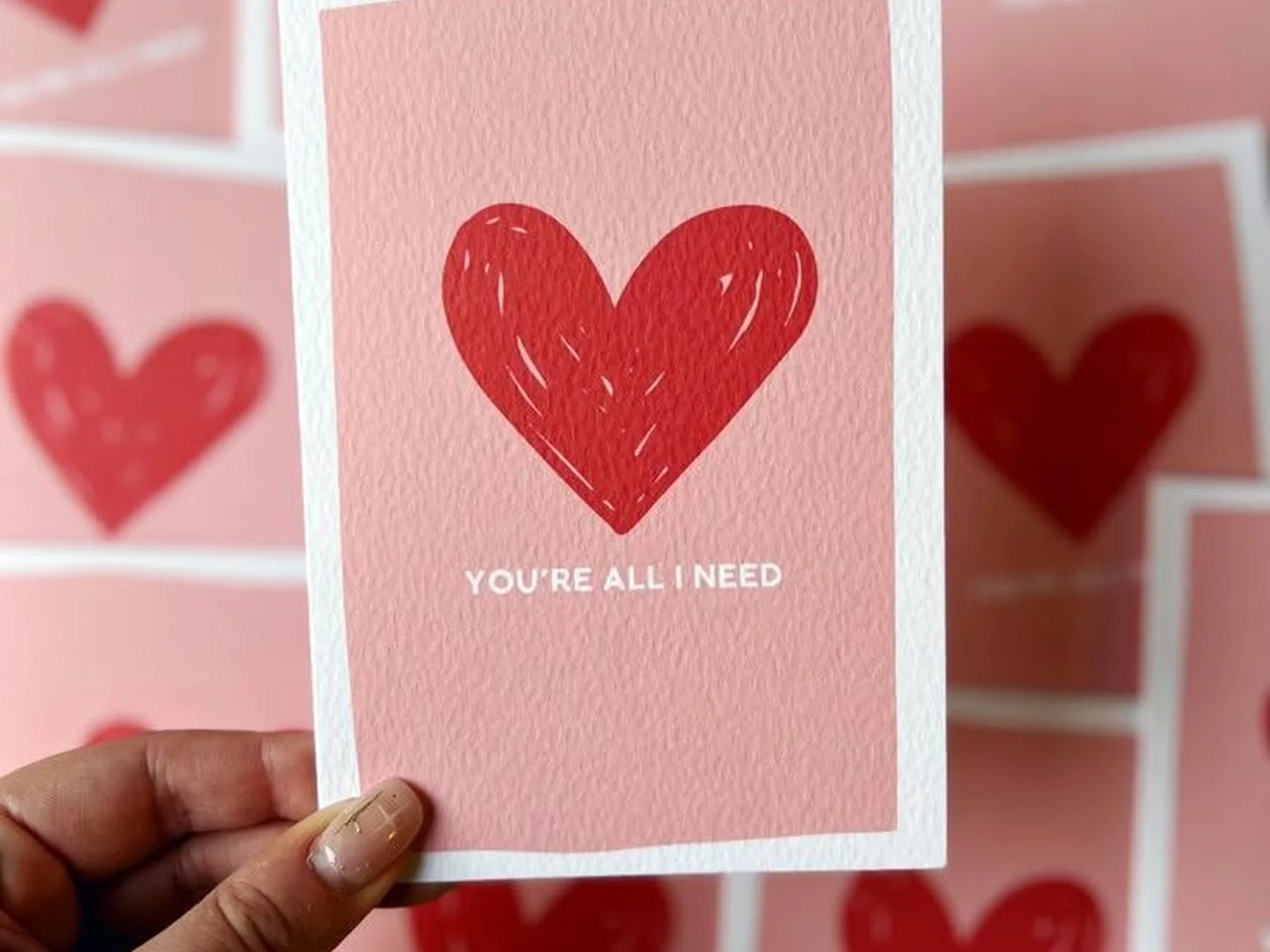
Chocolate, candy hearts, roses, and Cupid
- Chocolate became strongly associated with romantic gift-giving during the 19th century.
- Richard Cadbury is often credited with helping popularize decorated boxes of chocolates for Valentine gift giving in Victorian Britain.
- A decorative chocolate box had value even after the candy was eaten.
- Heart-shaped chocolate boxes became one of the holiday’s most durable commercial symbols.
- Conversation candies evolved from 19th-century lozenges stamped with messages.
- Small printed candy messages changed over time to reflect current slang and technology.
- Roses became Valentine favorites through their long cultural association with love and beauty.
- Red roses are especially associated with romantic love.
- Different rose colors acquired symbolic meanings through later flower-language traditions.
- Cupid comes from Roman mythology.
- He is closely related to the Greek god Eros.
- Ancient Eros imagery did not always look like today’s chubby winged Valentine baby.
- Later art increasingly depicted Cupid as a winged child armed with bow and arrows.
- An arrow-struck heart became an instantly recognizable shorthand for falling in love.
- For more sweet trivia, explore our 145 chocolate facts.
Valentine’s Day around the world
- Valentine’s Day customs spread internationally through religion, migration, media, trade, and advertising.
- Japan developed a distinctive Valentine custom in which women traditionally gave chocolate to men.
- Different categories of Japanese Valentine chocolate came to signal romance, friendship, courtesy, or obligation.
- White Day on March 14 developed in Japan as a day for recipients to return gifts.
- White Day customs spread to South Korea and some other parts of East Asia.
- South Korea also developed additional relationship-themed observances on the 14th of several months.
- Finland’s February 14 observance is strongly associated with friendship as well as romance.
- Estonia likewise emphasizes friendship in its February 14 traditions.
- Some Latin American countries frame the holiday as a celebration of love and friendship.
- Colombia traditionally celebrates a separate Love and Friendship Day in September rather than centering only February 14.
- Mass weddings are organized on Valentine’s Day in some countries and cities.
- Tourism boards promote romantic destinations around February 14.
- Local customs can emphasize partners, friends, classmates, family members, or all of them.
- Commercial Valentine traditions are newer in many countries than their local courtship customs.
- Globalization made February 14 recognizable worldwide without making celebrations identical.
Ten surprising Valentine’s Day facts
- The famous story of Saint Valentine secretly marrying soldiers is much less historically certain than most holiday summaries imply.
- The direct “Lupercalia became Valentine’s Day” explanation is also far less proven than its popularity online suggests.
- A medieval poem about birds choosing mates may have done more to shape romantic Valentine’s Day than any ancient fertility ritual.
- An American entrepreneur helped turn elaborate valentines into a national business decades before modern assembly-line factories.
- Historic valentines could cost as much as a substantial luxury purchase for their time.
- People once mailed intentionally insulting valentines to enemies and annoying acquaintances.
- Candy-heart messages have changed with slang, culture, and technology rather than staying frozen in the Victorian era.
- Japan’s White Day happens exactly one month after Valentine’s Day.
- Valentine’s Day became romantic gradually through literature, cards, commerce, and custom rather than through one clear founding event.
- For more holiday trivia, browse our Easter facts and Culture facts.

Quick Valentine’s Day FAQ
Why is Valentine’s Day on February 14?
February 14 became a Christian feast date associated with martyrs named Valentine. The strong romantic meaning attached to that date developed later, especially during the Middle Ages.
Was Saint Valentine a real person?
Early Christian martyrs named Valentine were real historical figures, but later romantic stories blend several traditions and cannot all be verified as biography.
Did Valentine’s Day come directly from Lupercalia?
The connection is often claimed, but historians do not have strong evidence for a simple direct replacement. Valentine romance traditions appeared much later.
Who was Esther Howland?
She was a 19th-century Massachusetts entrepreneur who popularized elaborate commercially produced valentines in the United States and became known as the “Mother of the American Valentine.”
What were vinegar valentines?
They were sarcastic, insulting, or mocking Valentine cards popular in the 19th and early 20th centuries, proving the holiday was not always sweet.

Ellie is the owner and sole author of Fun Facts, combining her mechanical engineering background with years of research-driven writing to deliver facts you can trust. Every article is thoroughly fact-checked and routinely updated as new science and sources emerge to keep information accurate and current. Her mission is to make learning delightful while upholding high standards of reliability and transparency.