
Turkey is one of those countries where a normal itinerary can include Roman ruins, Ottoman mosques, underground cities, volcanic rock towers, tea glasses, ferry rides between continents, and a breakfast table with enough dishes to qualify as an event. Geography gave it a crossroads; history took full advantage.
Turkey literally sits between continents
- Turkey lies in both southeastern Europe and western Asia.
- Most of its territory is on the Anatolian Peninsula in Asia.
- A smaller portion called East Thrace lies in Europe.
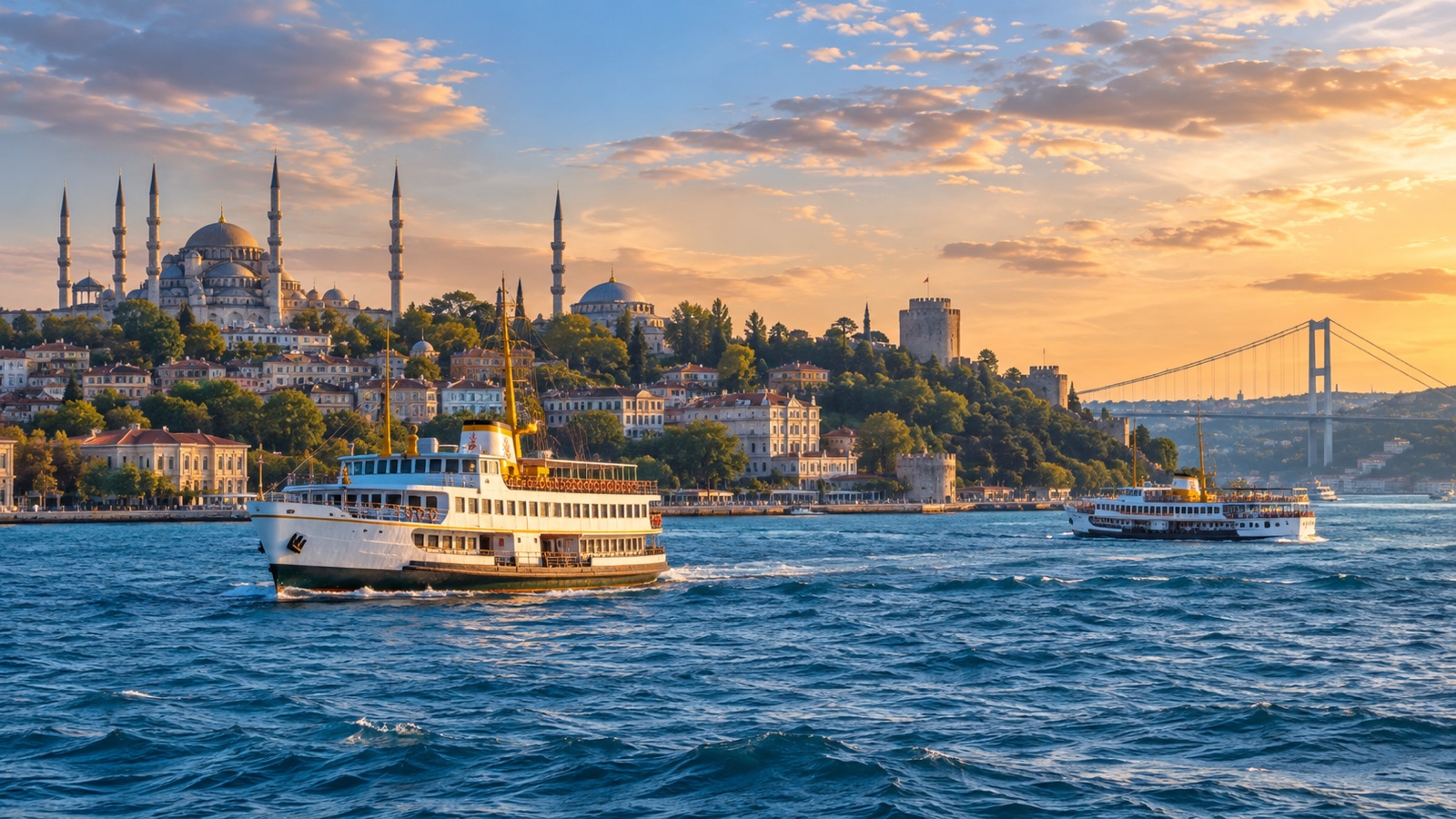
- The Bosporus separates European and Asian parts of Istanbul.
- The Sea of Marmara lies between the Bosporus and Dardanelles straits.
- The Dardanelles connects the Sea of Marmara with the Aegean Sea.
- Together, the Turkish straits form a crucial route between the Black Sea and Mediterranean world.
- Ankara is Turkey’s capital.
- Istanbul is its largest city.
- Turkey borders eight countries.
- They are Greece, Bulgaria, Georgia, Armenia, Azerbaijan through Nakhchivan, Iran, Iraq, and Syria.
- The country has coastlines on the Black, Aegean, and Mediterranean seas.
- The Turkish lira is the national currency.
- Turkish is the official language.
- The country officially requested broader international use of the name “Türkiye” in 2022.
- “Turkey” remains the familiar English-language country name in many contexts.
- The national flag is red with a white crescent and star.
- The crescent-and-star symbol predates the modern republic.
- Turkey uses a single national time zone year-round.
- Few countries can turn “which continent are we in?” into a legitimate question during a city bus ride.
Mountains, seas & earthquakes shape the country
- Turkey is much more mountainous than many first-time visitors expect.
- Mount Ararat is the country’s highest peak.
- It rises 16,854 feet above sea level.
- Ararat is a dormant volcanic mountain in eastern Turkey.
- The Taurus Mountains run across southern Turkey.
- The Pontic Mountains extend along much of the Black Sea coast.
- Central Anatolia includes broad plateaus and dry basins.
- Lake Van is Turkey’s largest lake.
- Lake Van is highly alkaline and saline.
- Its waters do not drain naturally to the sea.
- Turkey lies in a tectonically active region.
- The North Anatolian Fault is one of the country’s major fault systems.
- The East Anatolian Fault is another major active fault.
- Turkey has experienced many destructive earthquakes throughout recorded history.
- The February 2023 earthquakes devastated areas of southern Turkey and northern Syria.
- Earthquake-resistant construction and enforcement are critical national safety issues.
- The Mediterranean coast has hot dry summers and mild wetter winters.
- The Black Sea coast receives much more year-round rainfall.
- Interior winters can be cold and snowy because of elevation and continental climate.
- Turkey can offer Mediterranean beaches and deep winter snow without changing countries, only driving a long way and packing better shoes.
Anatolia has hosted civilizations for thousands of years
- Anatolia has been inhabited by humans since deep prehistory.
- Göbekli Tepe in southeastern Turkey dates to the 10th millennium BCE.
- Its monumental stone structures predate Stonehenge by thousands of years.
- Çatalhöyük was a large Neolithic settlement in central Anatolia.
- It was occupied thousands of years before classical Greece.
- The Hittite Empire was centered in Anatolia during the Bronze Age.
- Hattusa served as the Hittite capital.
- The ruins of Troy are located in northwestern Turkey.
- Ancient Troy had multiple settlement layers built over one another.
- The Trojan War is famous from Greek epic tradition, but archaeology cannot verify every detail of Homer’s story.
- Greek-speaking city-states flourished along the Aegean coast of Anatolia.
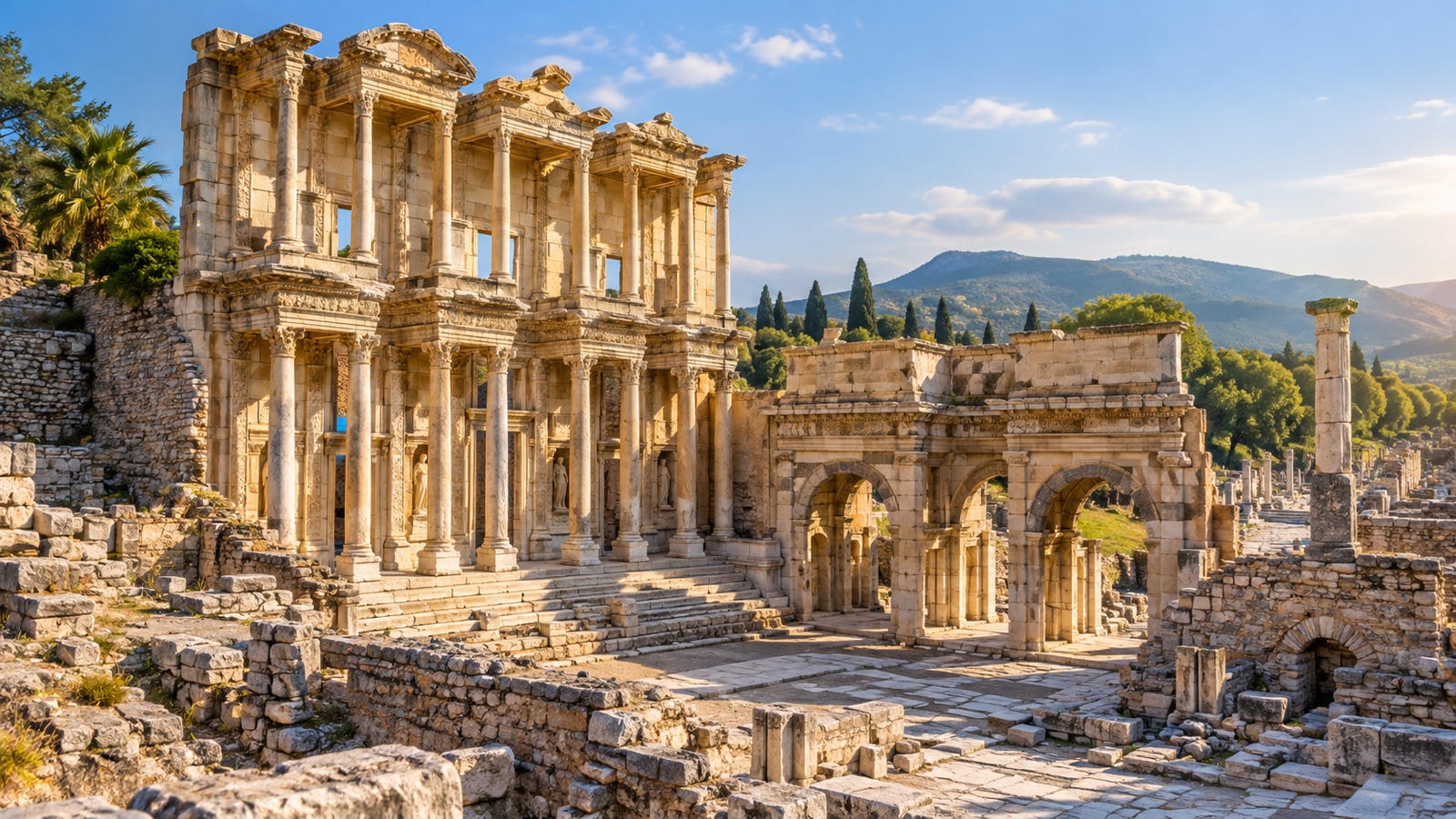
- Ephesus became one of the ancient Mediterranean’s great cities.
- The Temple of Artemis at Ephesus was counted among the Seven Wonders of the Ancient World.
- Alexander the Great conquered much of Anatolia during the fourth century BCE.
- Roman rule later transformed the region.
- Constantinople became the capital of the Eastern Roman Empire in the fourth century CE.
- That empire is commonly called the Byzantine Empire by modern historians.
- Anatolian history includes Armenian, Greek, Kurdish, Arab, Assyrian, Jewish, Georgian, and many other communities.
- Modern national borders arrived very late compared with the age of these civilizations.
- Turkey is the kind of place where “old town” can casually mean two thousand years rather than two hundred.
The Ottoman Empire lasted for more than six centuries
Ottoman history gets simplified into sultans and palaces, but the empire governed an enormous multilingual, multiethnic population across southeastern Europe, western Asia, and North Africa. Its institutions changed over centuries, so one snapshot never explains the whole thing.
- The Ottoman state emerged in northwestern Anatolia around the end of the 13th century.
- It was named for Osman I.
- Ottoman forces captured Constantinople in 1453.
- Sultan Mehmed II led the conquest.
- Constantinople became the empire’s capital.
- Istanbul developed as the city’s dominant modern name, though official naming usage evolved over time.
- The Ottoman Empire expanded across the Balkans, Middle East, and North Africa.
- Suleiman the Magnificent ruled during a major period of imperial power in the 16th century.
- Ottoman architecture blended regional traditions with new imperial styles.
- Mimar Sinan became one of the empire’s greatest architects.
- The Süleymaniye Mosque in Istanbul is among Sinan’s masterpieces.
- Topkapı Palace served as an imperial residence and administrative center for centuries.
- The empire governed religious communities through changing legal and administrative arrangements.
- Christians, Jews, Muslims, and many ethnic groups lived under Ottoman rule.
- The empire entered World War I on the side of the Central Powers.
- Ottoman authorities carried out mass deportations and killings of Armenians beginning in 1915.
- Most genocide scholars recognize those events as the Armenian genocide.
- The Ottoman Empire collapsed after World War I.
- The Republic of Turkey was proclaimed in 1923.
- Six centuries of empire do not fit neatly into one “rise and fall” paragraph, despite every school textbook trying.
Cappadocia turned volcanic rock into towns and churches
- Cappadocia is a historic region in central Turkey.
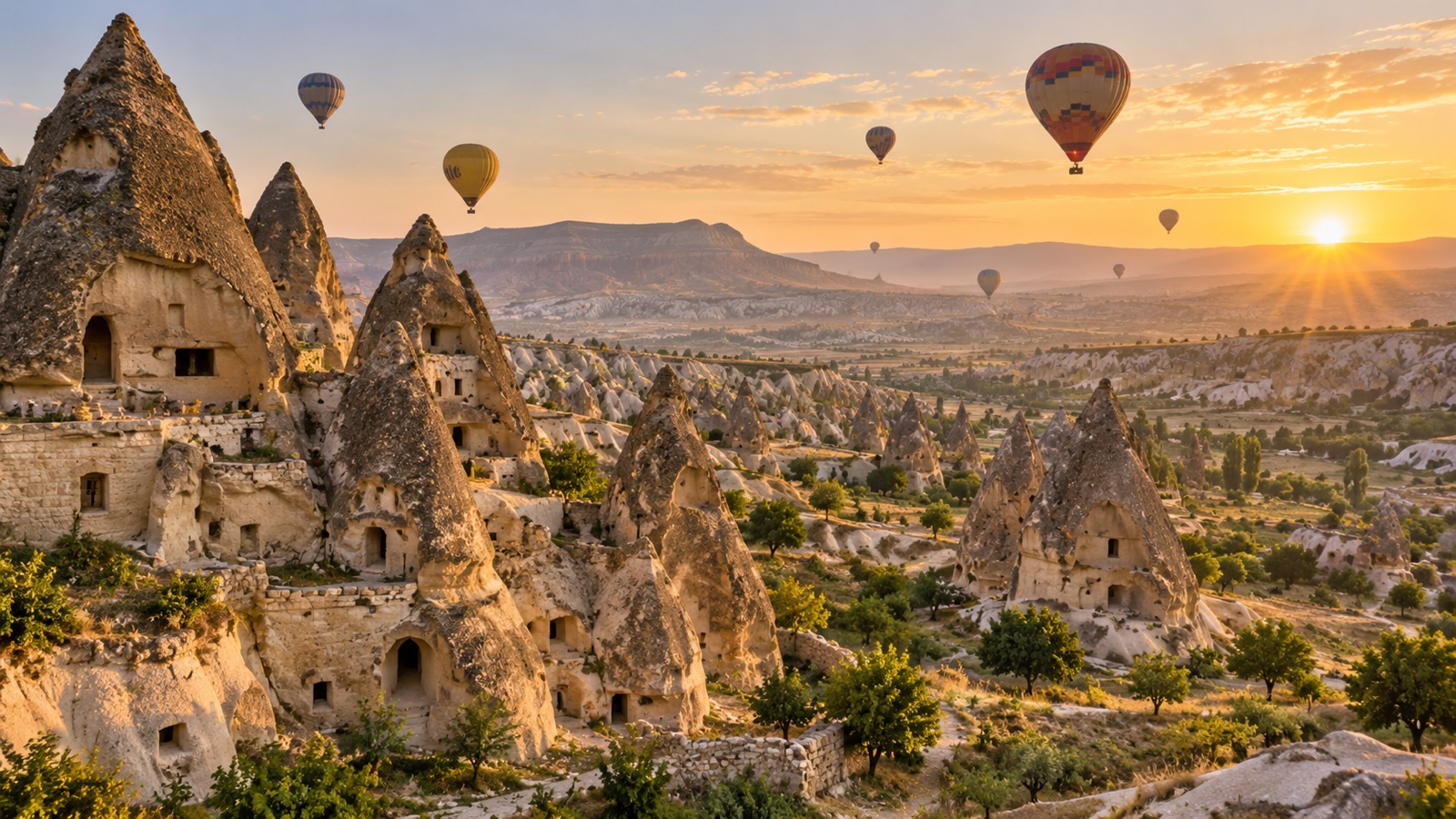
- Its famous landscape formed from layers of volcanic ash and lava.
- Soft volcanic tuff eroded into valleys, cones, and pillars.
- Some formations are nicknamed fairy chimneys.
- People carved houses, storage rooms, churches, and monasteries into the soft rock.
- Early Christian communities created many rock-cut churches.
- Some church interiors preserve medieval frescoes.
- Göreme Open-Air Museum contains a concentration of rock-cut religious sites.
- Underground settlements were also carved beneath parts of Cappadocia.
- Derinkuyu extends through multiple subterranean levels.
- Kaymaklı is another famous underground complex.
- These underground spaces could provide shelter during periods of insecurity.
- They included ventilation shafts, storage areas, rooms, and passageways.
- Modern hot-air ballooning has become strongly associated with Cappadocia tourism.
- Balloons launch mainly when weather and wind conditions permit safe flights.
- Sunrise balloon views are popular because low-angle light emphasizes the rock formations.
- Not every “cave hotel” room is an untouched ancient dwelling.
- Many modern properties combine historic rock spaces with contemporary construction and renovation.
- Cappadocia’s landscape is both natural geology and thousands of years of human modification.
- It is basically what happens when erosion makes architecture suggestions and humans take them seriously.
Turkish food goes far beyond kebabs
Kebab is a whole family of preparations, not one rotating cone with a universal recipe. Turkish cooking changes by region and draws from Ottoman, Anatolian, Mediterranean, Balkan, Caucasian, Middle Eastern, and Central Asian food traditions.
- Turkish breakfast can include bread, cheese, olives, tomatoes, cucumbers, eggs, honey, jam, and tea.
- Simit is a ring-shaped bread coated heavily with sesame seeds.
- Menemen combines eggs with tomatoes, peppers, and seasonings.
- Börek refers to filled pastries made in several shapes and styles.
- Döner kebab cooks seasoned meat on a vertical rotating spit.
- Şiş kebab uses pieces of meat cooked on skewers.
- Adana kebab is a spicy minced-meat kebab associated with southern Turkey.
- Mantı are small filled dumplings.
- They are often served with garlicky yogurt and seasoned butter.
- Dolma describes stuffed vegetables or other filled foods.
- Sarma commonly refers to leaves wrapped around a filling.
- İmam bayıldı is an eggplant dish with onion, tomato, and olive oil.
- Baklava layers thin pastry with nuts and syrup.
- Gaziantep is especially famous for pistachio baklava.
- Turkish delight is called lokum.
- Traditional lokum is a soft gelled confection flavored in many ways.
- Turkish coffee is made from very finely ground coffee simmered without filtering the grounds away.
- Tea is actually the more frequently consumed everyday hot drink for many Turks.
- Small tulip-shaped glasses are closely associated with Turkish tea service.
- A Turkish breakfast can make my normal cereal look like it failed to prepare for the meeting.
Tulips, cats, bazaars & 25 final Turkey facts
- Tulips grew in Ottoman gardens long before they became symbols of the Netherlands.
- European tulip cultivation was influenced by plants and horticultural interest from the Ottoman world.
- An 18th-century Ottoman cultural period is known as the Tulip Era.
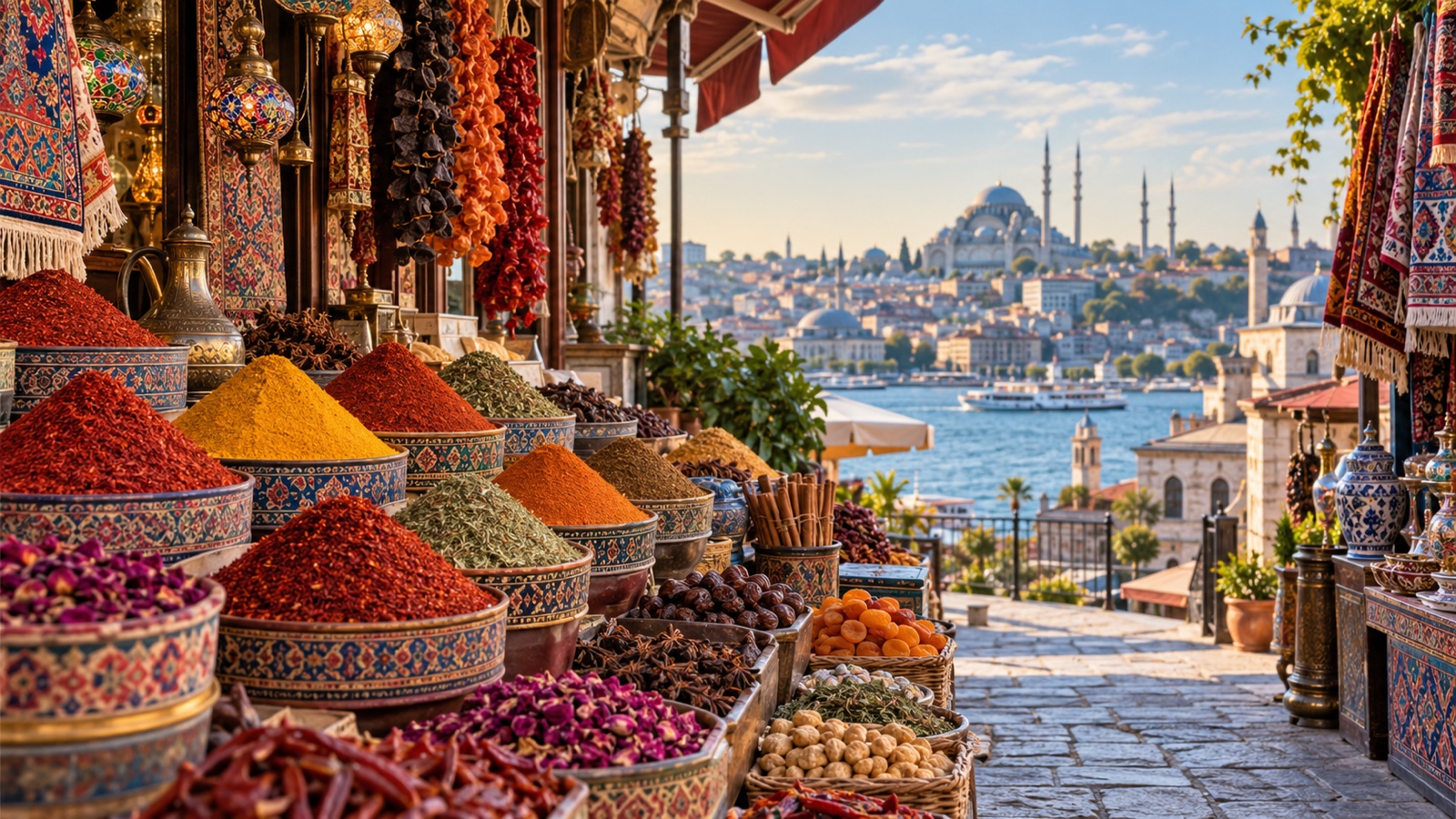
- Istanbul’s Grand Bazaar developed from a commercial center established after the Ottoman conquest.
- Today, it contains thousands of shops and lanes.
- The Spice Bazaar is another famous historic market.
- Istanbul ferries carry commuters and visitors across the Bosporus.
- A ferry ride can move between Europe and Asia without leaving the city.
- Istanbul is famous for large populations of community cats.
- Residents and businesses often feed and care for neighborhood cats collectively.
- Van cats are associated with eastern Turkey and are known for white coats and sometimes mismatched eye colors.
- The Turkish Angora is another cat breed associated with Turkey.
- The ancient site of Hierapolis sits beside the white terraces of Pamukkale.
- Pamukkale’s terraces formed from mineral-rich thermal water depositing travertine.
- The name Pamukkale means “cotton castle.”
- The whirling ceremony of the Mevlevi Sufi order is strongly associated with Konya.
- Rumi, the influential 13th-century poet and mystic, lived and died in Konya.
- Oil wrestling is a traditional Turkish sport.
- Competitors wear leather trousers and cover themselves with olive oil.
- The Kırkpınar oil-wrestling festival has centuries of history.
- Football is the country’s most popular spectator sport.
- Galatasaray, Fenerbahçe, and Beşiktaş are major Istanbul clubs.
- Mustafa Kemal Atatürk founded and became the first president of the modern republic.
- Modern Turkey adopted a Latin-based alphabet in 1928 as part of Atatürk-era reforms.
- After 145 facts, Turkey still feels like a place where every ferry dock, ruin, pastry, and mountain comes with three more historical layers underneath it.
Quick FAQ
Q: Is Turkey in Europe or Asia?
A: Both. Most of the country is in Asia, while East Thrace and part of Istanbul lie in Europe.
Q: What is the capital of Turkey?
A: Ankara is the capital, while Istanbul is the largest city.
Q: Why is Turkey also called Türkiye?
A: Türkiye is the country’s Turkish name, and the government requested broader international use of that form in 2022. Turkey remains common in English.
Q: What is Cappadocia famous for?
A: Volcanic rock formations, carved churches and homes, underground settlements, valleys, and modern hot-air balloon flights.
Q: Did tulips come from Turkey?
A: Tulips are native across parts of Eurasia, but Ottoman cultivation and trade strongly influenced their later popularity in Europe.

Ellie is the owner and sole author of Fun Facts, combining her mechanical engineering background with years of research-driven writing to deliver facts you can trust. Every article is thoroughly fact-checked and routinely updated as new science and sources emerge to keep information accurate and current. Her mission is to make learning delightful while upholding high standards of reliability and transparency.