
Avocados are fruit that somehow behave like butter. They grow on trees, ripen after harvest, contain more fat than most fruits, brown when cut, and can go from rock-hard to “why did I wait one more day?” with impressive speed.
Avocados are berries from an ancient American tree
- Avocados are fruits.
- Botanically, they are large single-seeded berries.
- The avocado tree's scientific name is Persea americana.
- Avocados belong to the laurel family.
- They are related to cinnamon and bay laurel.
- Avocados originated in Mexico and Central America.
- Humans have eaten them for thousands of years.
- Archaeological evidence shows long use in Mesoamerica.
- Indigenous peoples domesticated avocado populations.
- Spanish colonizers encountered avocados in the Americas.
- The English word avocado ultimately comes from Nahuatl.
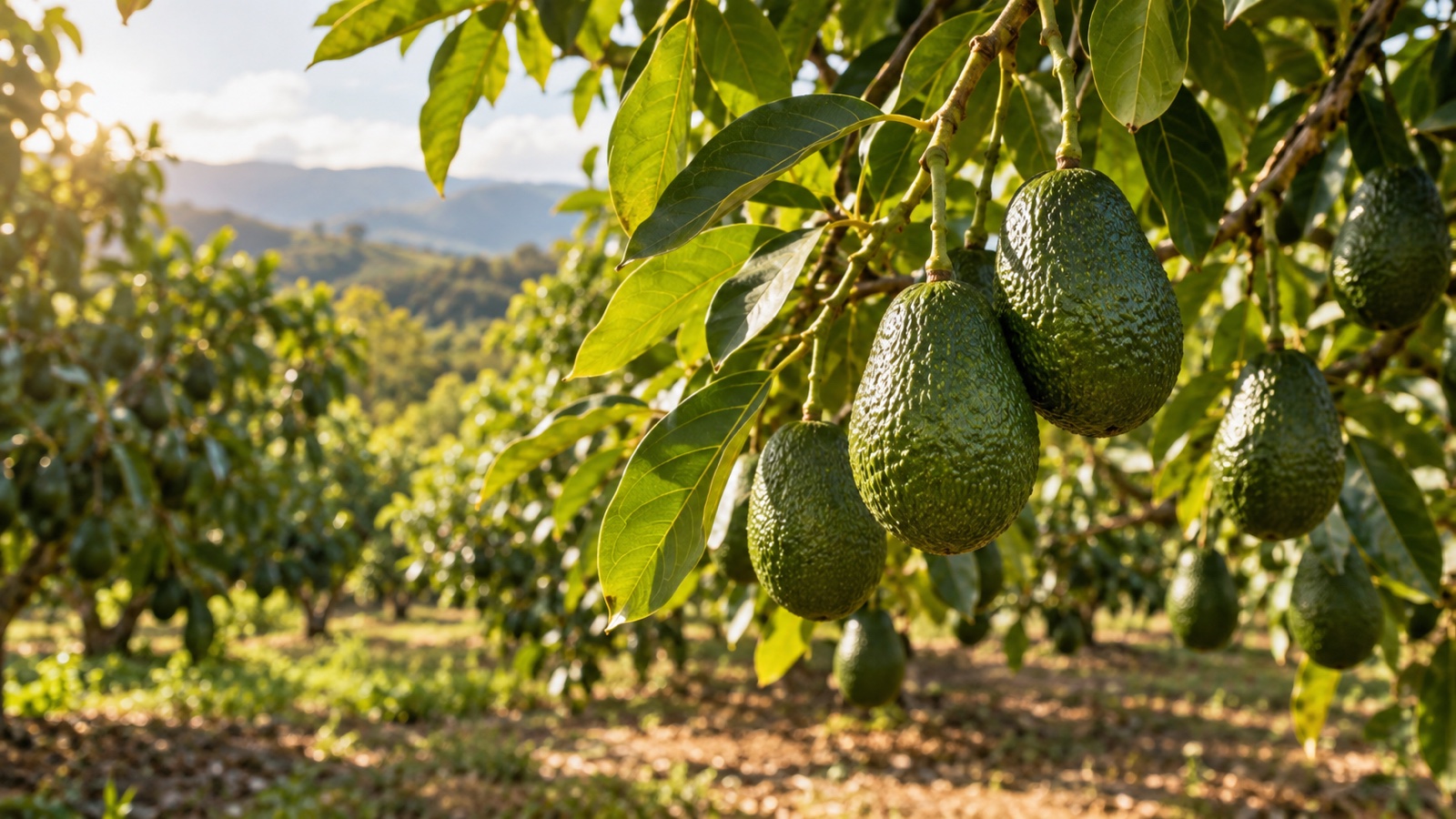
- Avocado trees are evergreen in suitable climates.
- They can grow dozens of feet tall.
- Commercial orchards prune trees for easier harvest.
- Avocado leaves remain on trees year-round but still shed gradually.
- The fruit grows from flowers on branching panicles.
- One tree can produce enormous numbers of flowers.
- Only a small fraction become mature fruit.
- The large seed is commonly called the pit.
- An avocado is technically a berry with a seed that looks like it belongs in a much larger fruit.
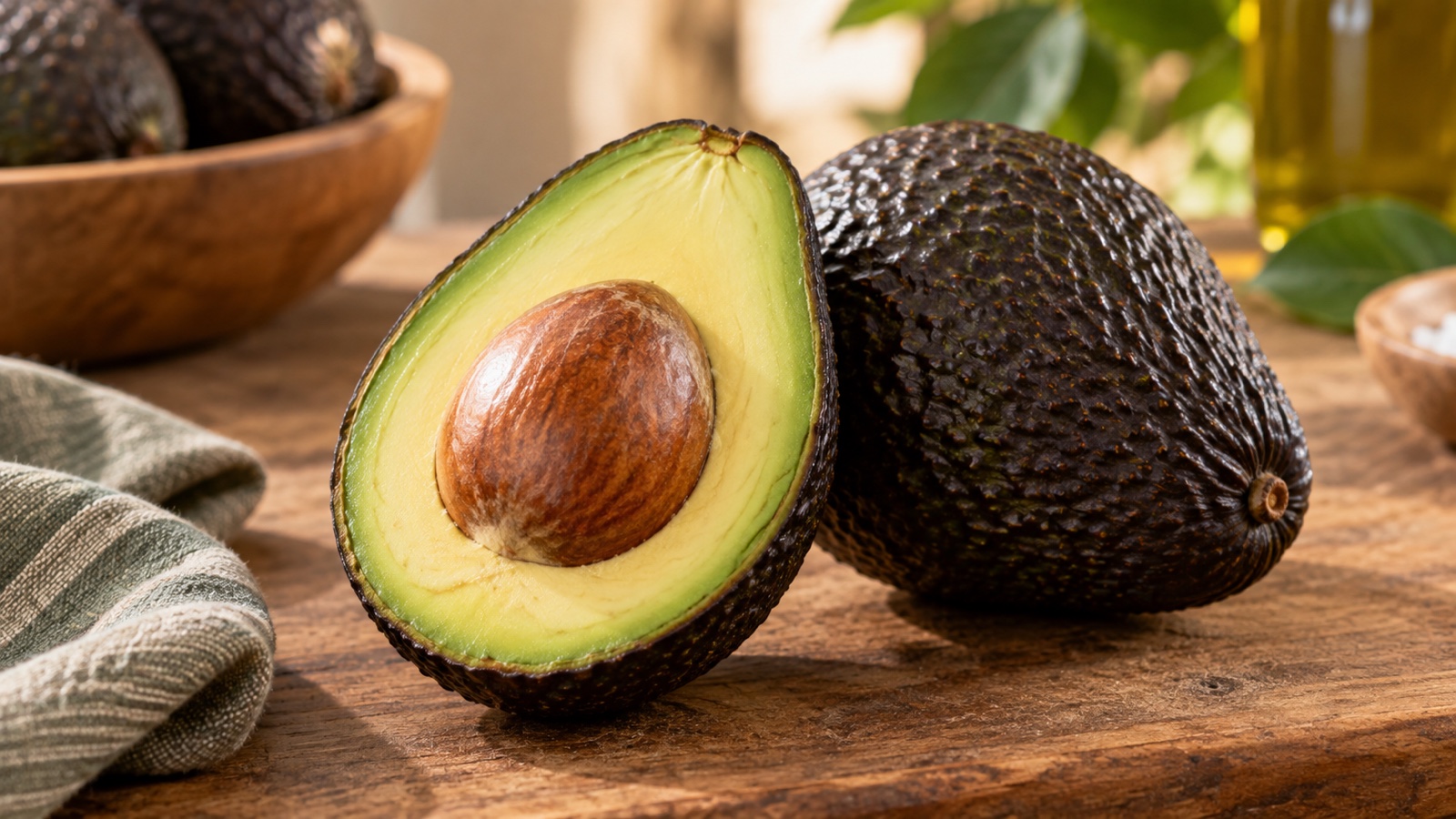
Hass dominates the modern avocado market
- Hass is the world's best-known avocado cultivar.
- It has pebbly skin.
- The skin darkens as the fruit ripens.
- Hass avocados have rich creamy flesh.
- The original Hass tree grew in California.
- Rudolph Hass patented the cultivar in 1935.
- Modern Hass trees are propagated by grafting.
- Seeds do not reproduce a cultivar exactly.
- A seedling from a Hass fruit is genetically different from the parent tree.
- Grafting preserves desired fruit traits.
- Fuerte was a major commercial avocado before Hass.
- Fuerte has smoother green skin.
- Bacon avocados are another green-skinned cultivar.
- Zutano is also green skinned.
- Reed avocados are large and round.
- Pinkerton avocados are elongated.
- Different cultivars vary in oil content.
- They also vary in harvest season.
- Hass became dominant because it ships well and has high eating quality.
- One backyard California seedling ended up reshaping the global avocado business.
Avocados ripen after they are picked
- Avocados are climacteric fruits.
- They continue ripening after harvest.
- Ethylene gas drives much of the ripening process.
- Commercial avocados can remain hard while hanging on the tree.
- Harvest triggers the path toward edible softness.
- Warm room temperature speeds ripening.
- Refrigeration slows it.
- Bananas release ethylene.
- Apples also release ethylene.
- Placing avocados with these fruits can speed ripening.
- A paper bag traps some ethylene around the fruit.
- Plastic bags can trap too much moisture.
- Ripeness is often checked with gentle pressure.
- A ripe avocado yields slightly without feeling mushy.
- Stem-cap color can offer another clue.
- Removing the stem cap is not a perfect test.
- Overripe flesh can become brown or stringy.
- Cold-damaged avocados may ripen unevenly.
- Different cultivars soften differently.
- Avocado timing is basically a three-day window surrounded by two weeks of impatience and one afternoon of regret.
Cut avocado browns because enzymes meet oxygen
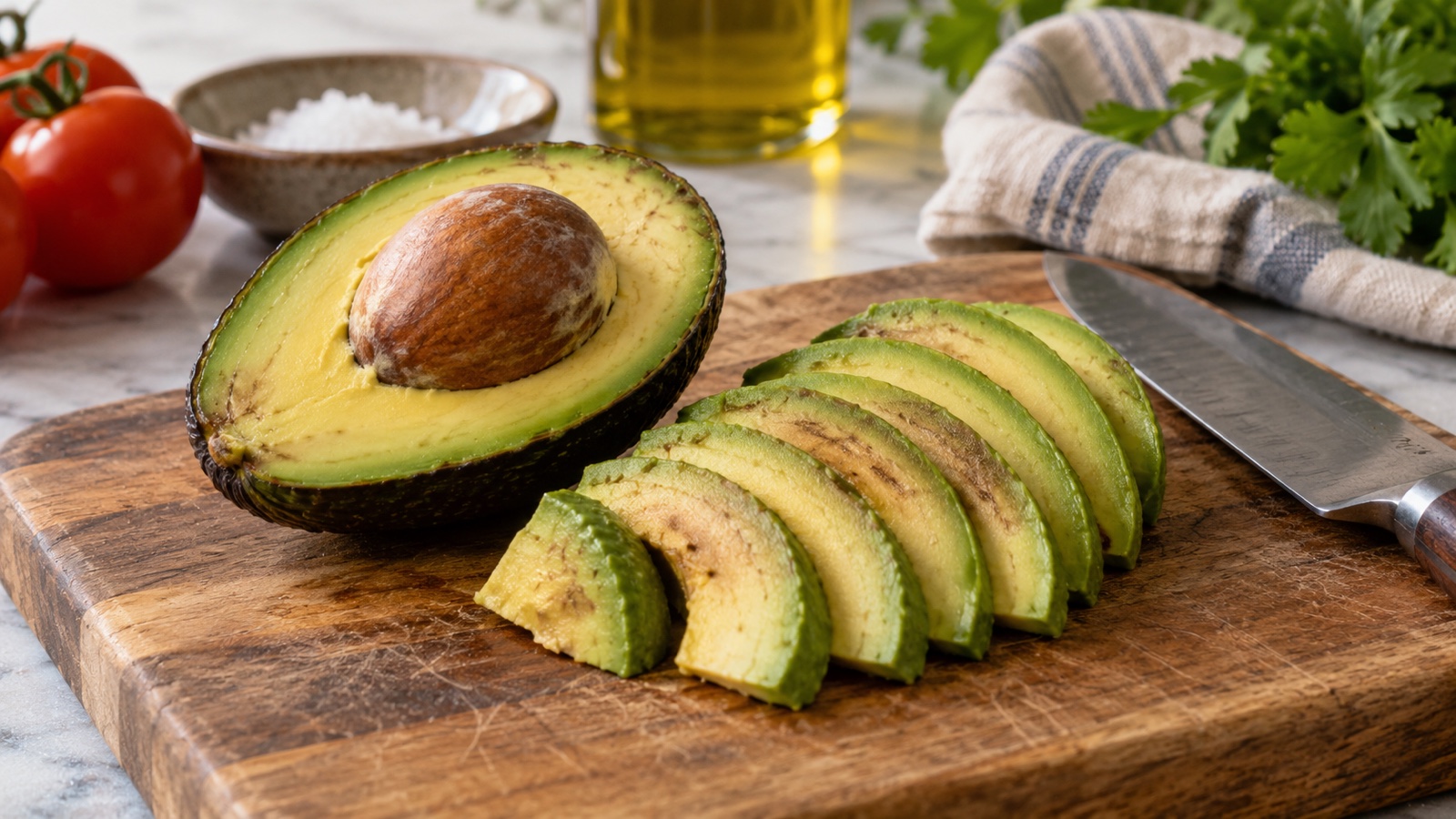
- Cut avocado flesh browns through enzymatic oxidation.
- Polyphenol oxidase is one enzyme involved.
- Cutting breaks cell compartments.
- Oxygen then reaches compounds that were previously separated.
- Brown pigments form at the exposed surface.
- Acid slows browning.
- Lime juice is especially useful in guacamole.
- Lemon juice works too.
- Reducing oxygen exposure also slows browning.
- Plastic wrap pressed directly onto guacamole helps.
- An airtight container reduces air exchange.
- A thin water layer can block air temporarily.
- The avocado pit does not magically protect an entire bowl.
- It only blocks oxygen where it physically covers the surface.
- Cold temperatures slow browning reactions.
- Brown avocado is usually safe if it still smells and tastes normal.
- Extensive browning can signal age and flavor decline.
- Oxidation changes appearance faster than it changes food safety.
- Fresh guacamole should still be refrigerated.
- The pit gets far too much credit for a job actually being done by oxygen barriers and acidity.
Avocados are unusually high in fat for fruit
- Most fruits get most calories from carbohydrate.
- Avocados get most calories from fat.
- Much of that fat is monounsaturated.
- Oleic acid is a major avocado fatty acid.
- Olive oil is also rich in oleic acid.
- Avocados provide dietary fiber.
- They are a good source of potassium.
- They also provide folate.
- Vitamin K is present.
- Vitamin E is present.
- Avocados contain carotenoids including lutein.
- Fat helps absorb fat-soluble compounds from other foods.
- Adding avocado can improve carotenoid absorption from vegetables.
- Avocados are calorie dense compared with many fruits.
- Portion size therefore changes calorie intake quickly.
- They contain relatively little sugar.
- They contain no dietary cholesterol.
- Avocado protein is modest but higher than in many fruits.
- Nutrition changes slightly by cultivar and growing conditions.
- An avocado is what happens when a fruit decides its main macronutrient should be fat and somehow makes that work beautifully.
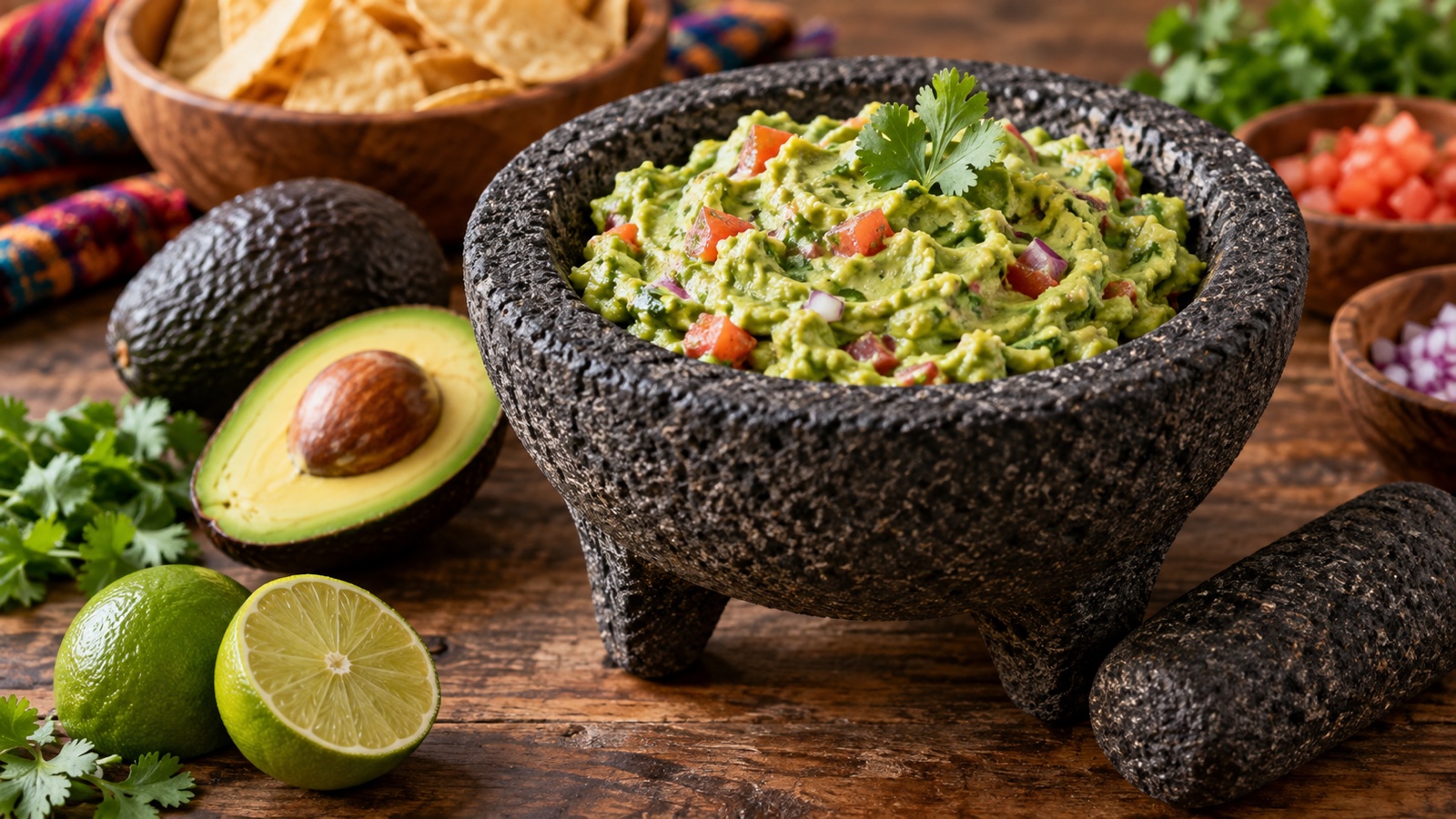
Guacamole has deep roots in Mexican cuisine
- Guacamole originated in Mexico.
- Its name also traces to Nahuatl roots.
- Basic guacamole can be only avocado and salt.
- Lime juice adds acidity.
- Onion adds sharp flavor.
- Cilantro is common in many versions.
- Chiles add heat.
- Tomato appears in some recipes.
- Regional and family recipes vary widely.
- A molcajete can be used to grind ingredients.
- Grinding aromatics releases flavor compounds.
- Chunky guacamole preserves avocado texture.
- Smooth guacamole creates a more uniform sauce.
- Guacamole pairs with corn tortillas.
- It also works with tacos, tostadas, and grilled foods.
- Avocado toast became a major restaurant trend in the 2010s.
- Avocado appears in sushi rolls.
- It can replace some butter in baking.
- Blended avocado creates creamy sauces without dairy.
- The fruit went from ancient Mesoamerican staple to brunch cliché without changing its basic job: be creamy and make everything around it better.
Agriculture, storage and 25 final avocado facts
- Mexico is the world's largest avocado producer.
- Mexico is also a major supplier to the United States.
- California and Florida grow commercial avocados.
- California production is dominated by Hass.
- Florida grows larger green-skinned varieties.
- Avocado trees need frost protection.
- Flowers have unusual two-phase opening behavior.
- Cultivars are classified into A and B flowering types.
- Cross-pollination can improve fruit set in some orchards.
- Bees visit avocado flowers.
- Wind also contributes to pollen movement.
- Avocado farming requires substantial water in many production regions.
- Water footprint varies strongly by climate and irrigation.
- Fruit is harvested by hand or with picking tools.
- Tall trees make harvest challenging.
- Commercial fruit is graded by size and quality.
- Controlled ripening helps retailers deliver ready-to-eat fruit.
- Ripe avocados last longer in the refrigerator.
- Cut avocados should be tightly covered.
- Frozen avocado works best in blended uses.
- Freezing changes fresh texture.
- Avocado pits can sprout in water.
- Seed-grown trees may take years to fruit.
- They may never produce fruit like the original avocado.
- After 145 facts, avocados feel less like trendy toast topping and more like ancient American fruit, ripening chemistry experiment, orchard challenge, and unusually nutritious plant butter.

Ellie is the owner and sole author of Fun Facts, combining her mechanical engineering background with years of research-driven writing to deliver facts you can trust. Every article is thoroughly fact-checked and routinely updated as new science and sources emerge to keep information accurate and current. Her mission is to make learning delightful while upholding high standards of reliability and transparency.