
RMS Titanic was the largest ship in the world when it entered service, yet its first passenger voyage lasted less than five days. The disaster became famous not only because of the enormous loss of life, but because it involved cutting-edge engineering, class divisions, wireless radio, lifeboat rules, an international rescue, and a wreck that remained undiscovered for 73 years. These 145 Titanic facts explore the ship, passengers, iceberg, sinking, Carpathia, inquiries, wreck, myths, movies, and lessons that changed maritime safety.
Titanic basics
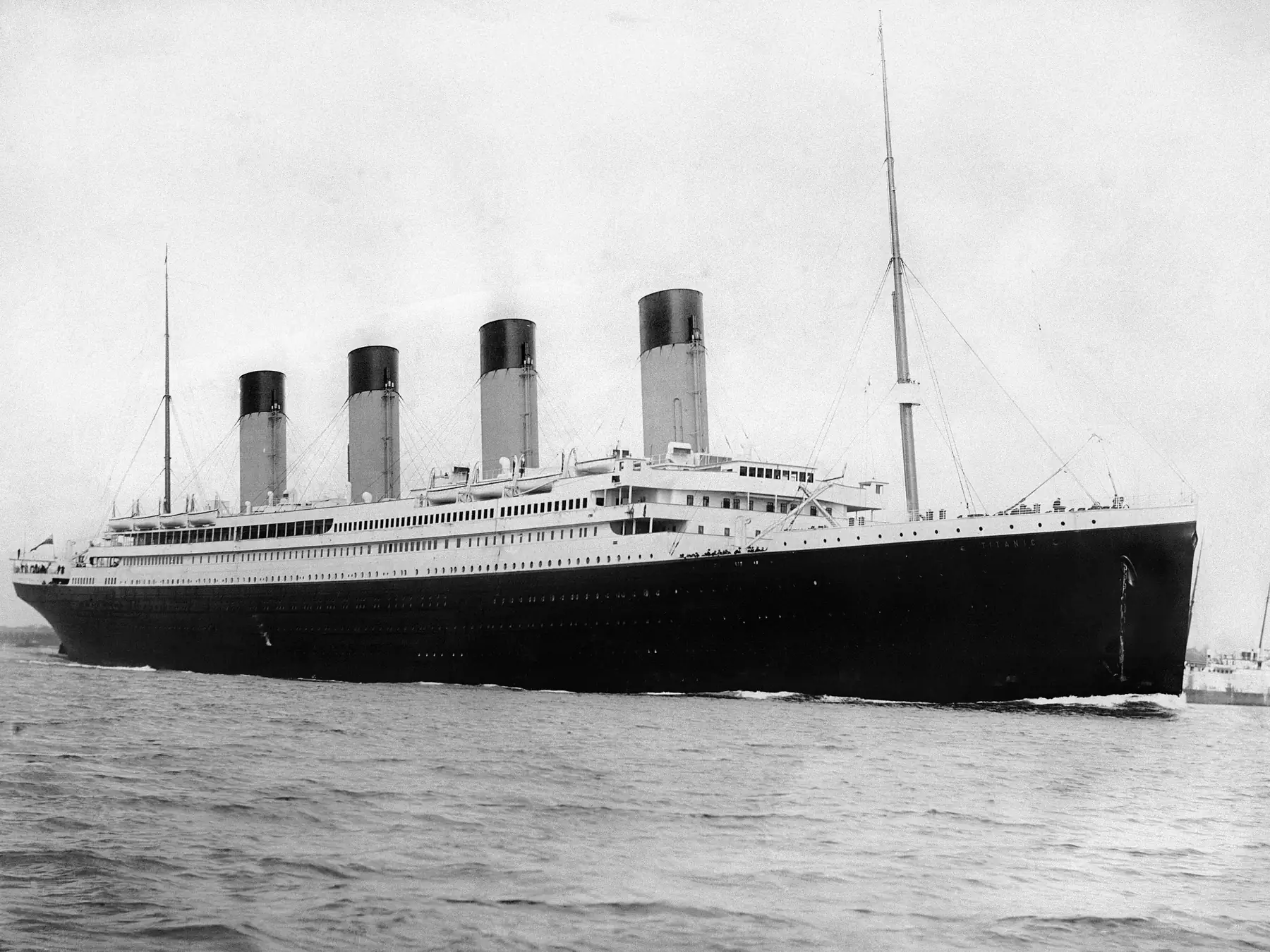
- RMS Titanic was a British passenger liner.
- It was operated by the White Star Line.
- Titanic was built by Harland and Wolff in Belfast.
- The ship was one of three Olympic-class liners.
- Its sister ships were Olympic and Britannic.
- Titanic was launched on May 31, 1911.
- It entered passenger service in April 1912.
- The ship was about 882 feet 9 inches long.
- That is roughly 269 meters.
- Titanic had nine main decks.
- Its gross registered tonnage exceeded 46,000 tons.
- It was the largest ship in the world when completed.
- The prefix RMS stood for Royal Mail Ship.
- Titanic carried mail under contract with the British postal system.
- The ship became famous for luxury, but most people aboard were not first-class millionaires.
Built in Belfast
- Titanic was constructed at the Harland and Wolff shipyard in Belfast.
- Thousands of workers contributed to Olympic-class construction.
- The enormous Arrol Gantry surrounded the building slips.
- Titanic’s hull was assembled from steel plates joined largely with rivets.
- Riveting was physically demanding and dangerous work.
- The ship had 16 major watertight compartments.
- Watertight doors could be closed from the bridge.
- Bulkheads divided the lower hull into compartments.
- The design could survive flooding in several compartments.
- It could not survive the pattern of flooding caused by the iceberg collision.
- Titanic had three large propellers.
- Two reciprocating steam engines drove the outer propellers.
- A low-pressure turbine drove the center propeller.
- Coal-fired boilers generated the steam.
- Hundreds of engineering and fire-room workers kept the machinery operating around the clock.
The “unsinkable” myth
- Titanic is often said to have been advertised as absolutely unsinkable.
- The historical reality is more nuanced.
- Some pre-disaster publicity described Olympic-class ships as practically unsinkable.
- Shipbuilder and trade-publication language emphasized watertight safety features.
- There is little evidence of one official White Star advertising campaign promising Titanic literally could not sink under any circumstances.
- The stronger “unsinkable Titanic” legend grew dramatically after the disaster.
- Passengers and crew still had confidence in the ship’s modern design.
- That confidence was understandable for a new liner built to contemporary standards.
- Watertight compartments genuinely were advanced safety features.
- The problem was that the compartment walls did not extend high enough to prevent water spilling progressively into adjacent sections once the bow sank.
- Five forward compartments began flooding after the collision.
- The design could remain afloat with fewer specific compartments flooded.
- Thomas Andrews, one of the ship’s designers, recognized the seriousness of the damage.
- The disaster exposed the difference between damage tolerance and invulnerability.
- No ship is literally unsinkable.
The maiden voyage
- Titanic left Southampton, England, on April 10, 1912.
- Its destination was New York City.
- The ship stopped at Cherbourg, France.
- It then stopped at Queenstown, Ireland, now called Cobh.
- Passengers and mail joined the ship at both stops.
- Smaller tenders ferried passengers to Titanic at Cherbourg.
- Titanic departed Queenstown on April 11.
- It then headed west across the North Atlantic.
- Captain Edward J. Smith commanded the ship.
- Smith was one of White Star Line’s most experienced captains.
- He had previously commanded Olympic.
- The crossing initially proceeded routinely.
- Passengers ate, walked decks, read, played games, attended services, and socialized.
- Wireless operators transmitted passenger messages as well as navigational information.
- The ordinary routine makes the sudden disaster on the fourth night especially striking.
Three classes aboard
- Titanic carried first-, second-, and third-class passengers.
- First class included wealthy industrialists, socialites, professionals, and travelers.
- John Jacob Astor IV was among the best-known wealthy passengers.
- Benjamin Guggenheim also traveled first class.
- Isidor and Ida Straus were aboard.
- Second class included teachers, clergy, tourists, professionals, and families.
- Third class included many emigrants seeking new lives in North America.
- Third-class accommodations were considered good by the standards of many contemporary immigrant ships.
- Class still shaped access to spaces, routes through the ship, information, and survival opportunities.
- Women survived at substantially higher rates than men.
- First-class passengers survived at higher rates than third-class passengers.
- Survival patterns reflected lifeboat access, location, evacuation practices, social norms, and timing.
- Many families were separated during evacuation.
- The disaster’s human story cannot be reduced to a list of famous rich passengers.
- Hundreds of victims were crew members and working-class emigrants whose stories received less early publicity.
Ice warnings and the collision
- Ships in the North Atlantic sent multiple warnings about ice on April 14.
- Titanic’s wireless operators received several of those messages.
- Some warnings reached the bridge.
- Others were handled amid heavy passenger-message traffic.
- The sea became unusually calm that night.
- Calm water made it harder to see waves breaking around iceberg bases.
- The night was moonless.
- Lookouts Frederick Fleet and Reginald Lee were in the crow’s nest.
- Shortly before midnight, Fleet spotted an iceberg ahead.
- He rang the lookout bell three times.
- He telephoned the bridge with the warning.
- First Officer William Murdoch ordered evasive action.
- Titanic turned but could not clear the iceberg completely.
- The iceberg scraped along the starboard side below the waterline.
- The collision occurred at about 11:40 p.m. ship’s time on April 14, 1912.
The iceberg did not cut one giant gash
- Popular images once showed the iceberg opening one enormous continuous slash in Titanic’s hull.
- Modern evidence does not support a single huge open gash.
- The collision damaged the hull along multiple separated areas.
- Steel plates were distorted and seams opened.
- Riveted joints were affected.
- The total open area letting water in was much smaller than many people imagine.
- Its location across too many compartments was the fatal problem.
- Water entered the forward compartments rapidly.
- The bow settled progressively lower.
- Water eventually spilled over the tops of internal bulkheads.
- The flooding therefore advanced compartment by compartment.
- Pumps could slow some flooding but could not overcome the inflow.
- The ship’s trim changed as thousands of tons of water entered.
- Engineering analysis of the wreck later clarified how distributed damage could sink such a large ship.
- A relatively modest opening in the wrong places can be more dangerous than one dramatic hole.
The lifeboat problem
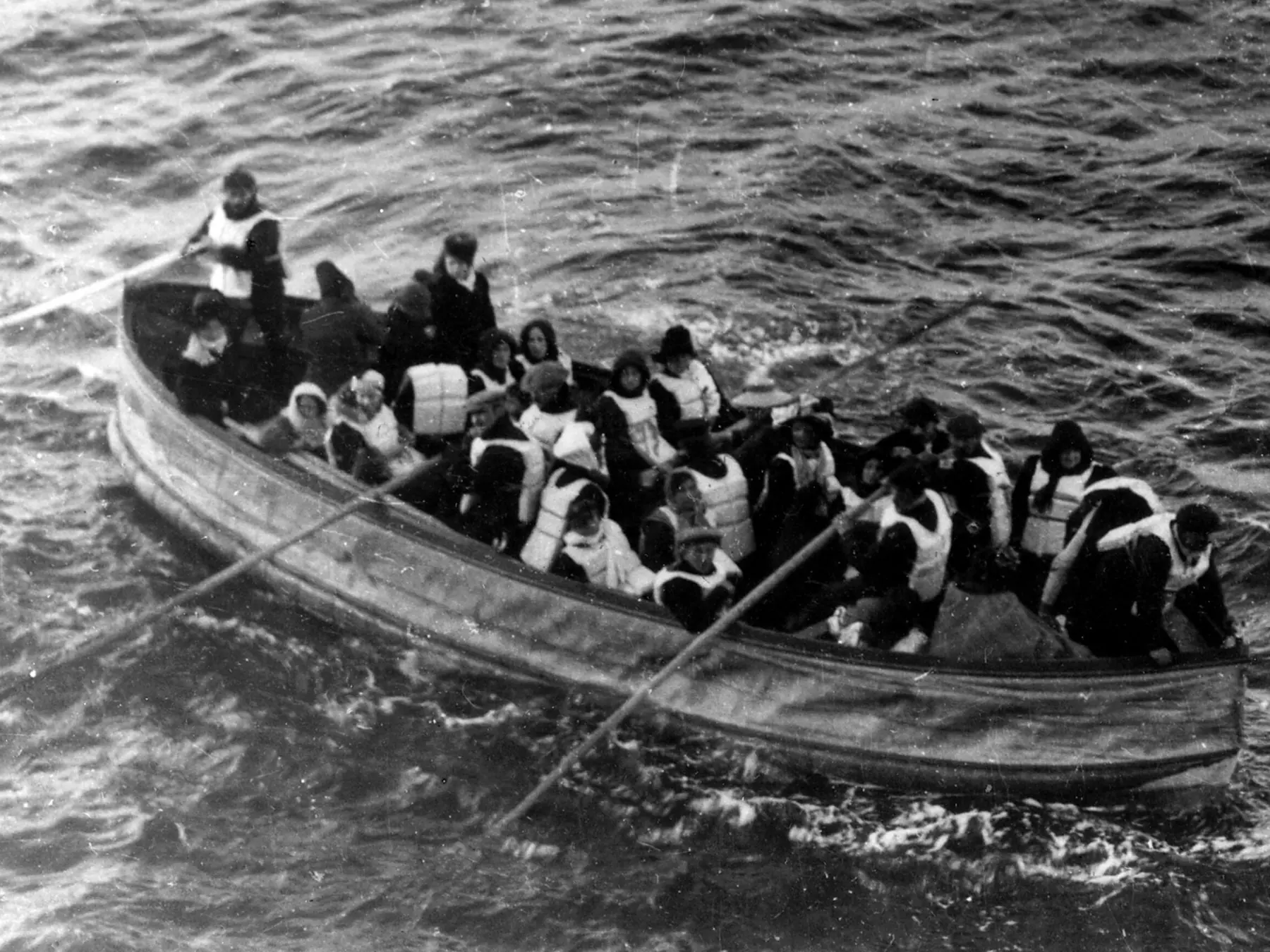
- Titanic carried 20 lifeboats and collapsible boats.
- Together they had space for roughly 1,178 people.
- That was far fewer than the total number aboard.
- The ship nevertheless met the outdated British lifeboat regulations then in force.
- Rules were based partly on ship tonnage rather than requiring seats for every person.
- Some designers had considered carrying more boats.
- Early evacuation was hesitant because many passengers did not initially believe the ship would sink.
- Several lifeboats left before reaching full capacity.
- Officers interpreted “women and children first” differently on different sides of the ship.
- Some men were allowed into boats when no women were immediately waiting.
- Other men were refused even when seats remained.
- Launching boats became harder as the ship developed a steeper angle.
- Two collapsible boats were difficult to launch properly.
- The shortage of capacity guaranteed that even a perfectly efficient evacuation could not save everyone aboard.
- After Titanic, international rules moved toward lifeboat capacity for everyone.
The sinking
- Titanic transmitted distress calls by wireless radio.
- Operators Jack Phillips and Harold Bride used both CQD and the newer SOS signal.
- Titanic was not the first ship ever to use SOS.
- Nearby ships received or missed the distress calls under different circumstances.
- RMS Carpathia responded and headed toward Titanic.
- Its captain, Arthur Rostron, ordered the ship prepared for survivors.
- Titanic’s bow sank increasingly low while the stern rose.
- Electrical lights remained on through much of the sinking.
- The ship broke into two major sections.
- The breakup occurred before the final plunge.
- Titanic disappeared beneath the surface at about 2:20 a.m. on April 15.
- The sinking took roughly two hours and 40 minutes after the collision.
- More than 1,500 people died.
- Roughly 700 survived, with exact totals varying slightly among historical accounting methods.
- Most people who entered the near-freezing water died rapidly from cold exposure and its effects.
Ten surprising Titanic facts
- Titanic met the lifeboat regulations in force even though it lacked seats for everyone.
- The iceberg did not carve one enormous continuous gash in the hull.
- Titanic used both CQD and SOS distress signals.
- It was not the first ship in history to send an SOS.
- The ship sank less than five days after beginning its first passenger voyage.
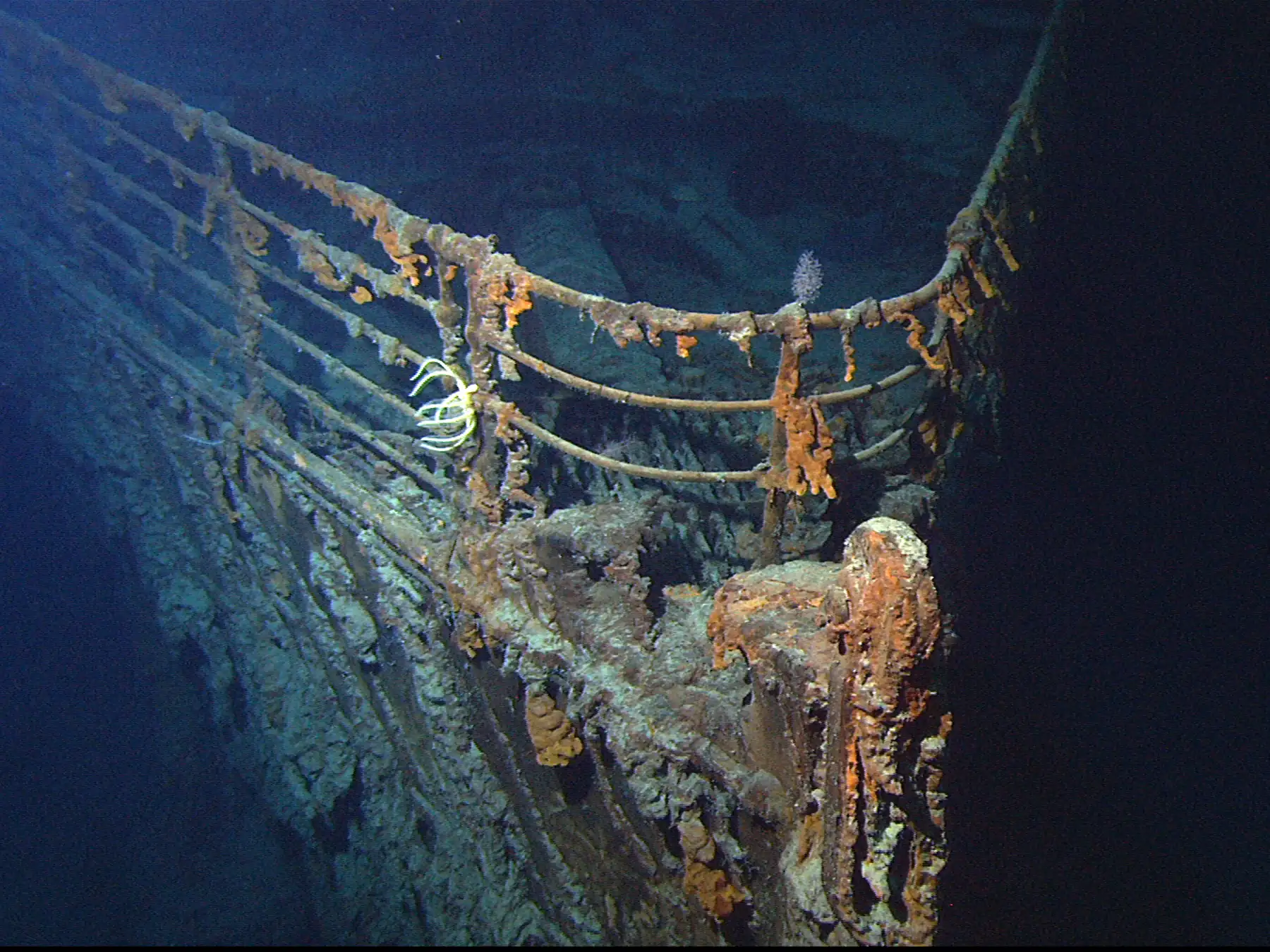
- The wreck lies about 12,500 feet, or roughly 3,800 meters, below the North Atlantic.
- The wreck was not located until 1985.
- Robert Ballard and Jean-Louis Michel led the American-French expedition that found it.
- The discovery used a debris trail to help locate the two major wreck sections.
- For more transportation history, explore our cruise-ship facts and History facts.
Quick Titanic FAQ
When did Titanic sink?
It struck an iceberg late on April 14, 1912, and sank in the early hours of April 15.
How many people died on Titanic?
More than 1,500 people died. Exact historical totals vary slightly depending on how passenger and crew lists are reconciled.
Did Titanic have enough lifeboats?
No. Its boats could carry roughly 1,178 people, fewer than the number aboard, although that capacity complied with the outdated regulations then in force.
Was Titanic really called unsinkable?
Contemporary descriptions sometimes called the Olympic-class design “practically unsinkable,” but the later legend of a universal absolute promise became much stronger after the disaster.
Where is the Titanic wreck?
In the North Atlantic, roughly 370 miles southeast of Newfoundland and about 12,500 feet below the surface.

Ellie is the owner and sole author of Fun Facts, combining her mechanical engineering background with years of research-driven writing to deliver facts you can trust. Every article is thoroughly fact-checked and routinely updated as new science and sources emerge to keep information accurate and current. Her mission is to make learning delightful while upholding high standards of reliability and transparency.