
Sushi is not simply “raw fish.” At its heart, sushi is seasoned rice, and the toppings can be raw, cooked, cured, pickled, grilled, or completely vegetarian. From fermented fish preserved centuries ago to fast-moving Edo food stalls and modern conveyor belts, these 145 sushi facts explain the history, ingredients, etiquette, science, and craftsmanship behind one of Japan’s most famous foods.
Sushi basics
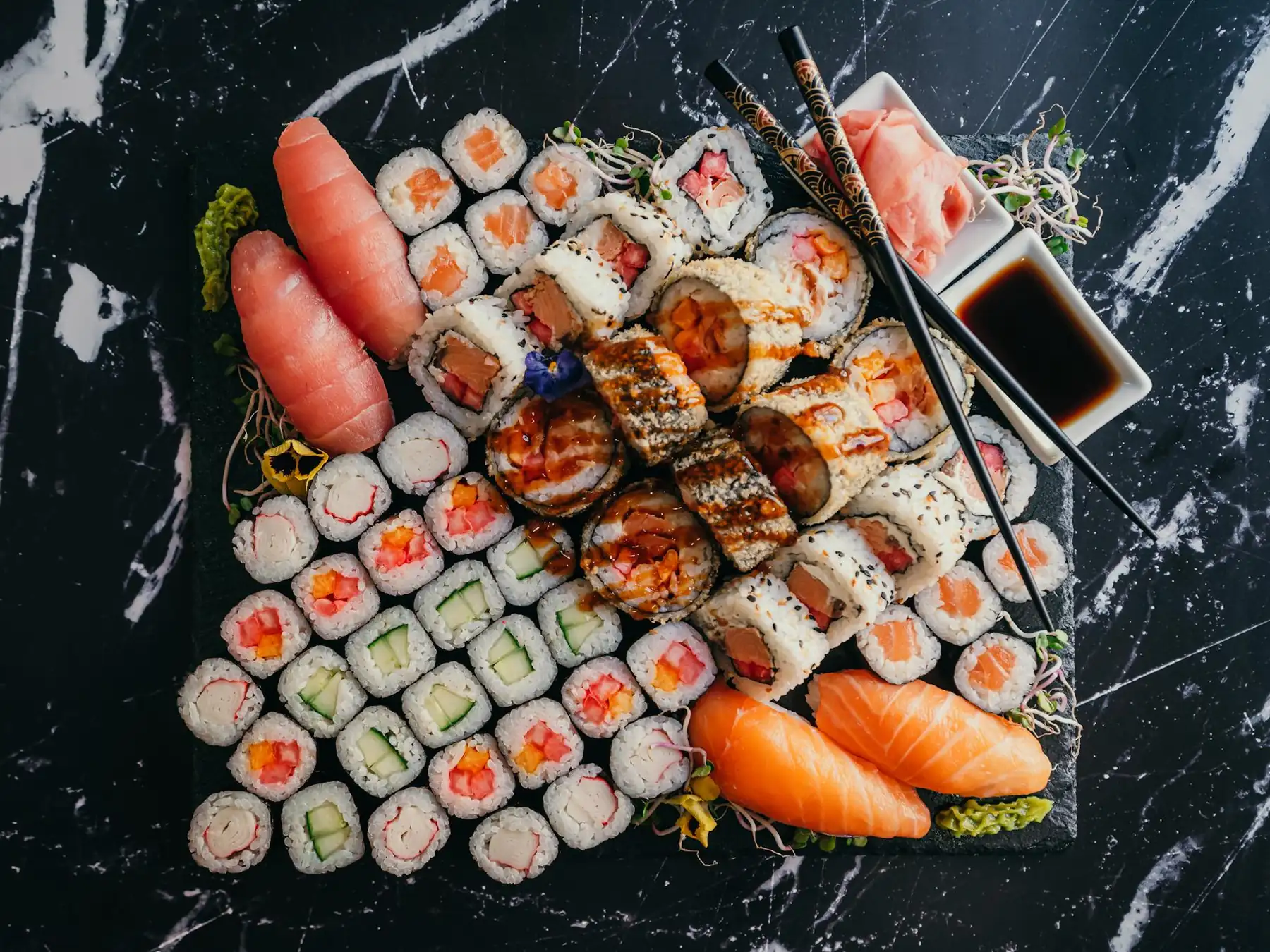
- Sushi is a Japanese food centered on vinegared rice.
- Raw fish is not required for a dish to be sushi.
- Sushi toppings and fillings can be raw, cooked, simmered, grilled, cured, pickled, or vegetarian.
- Sashimi is sliced raw seafood or other ingredients served without sushi rice.
- That means sashimi and sushi are related foods but are not synonyms.
- The seasoned rice used for sushi is commonly called shari or sushi-meshi.
- Japanese short-grain rice is prized for sushi because its cooked grains cling together.
- Sushi rice is typically seasoned with rice vinegar, sugar, and salt, though formulas vary.
- The rice should hold together without becoming a mashed paste.
- Professional sushi chefs pay close attention to rice temperature, texture, moisture, and seasoning.
- The Japanese word neta commonly refers to the topping or featured ingredient placed with sushi rice.
- Nori is the thin dried seaweed sheet used around many rolls and other sushi styles.
- Wasabi, soy sauce, and pickled ginger are common sushi accompaniments.
- Pickled ginger is called gari.
- Sushi can be a casual snack, convenience-store lunch, family meal, or formal chef-led experience.
Sushi began as preservation
- Early forms related to sushi developed as ways to preserve fish through fermentation.
- In old fermented sushi traditions, fish was packed with rice and allowed to ferment.
- The fermented rice helped create acidic conditions that slowed spoilage.
- In some ancient forms, the rice was discarded and only the preserved fish was eaten.
- Narezushi is the name used for long-fermented sushi traditions that preserve this older approach.
- Funazushi from Shiga Prefecture is a famous surviving type of narezushi.
- Funazushi traditionally uses freshwater crucian carp from Lake Biwa.
- Over time, people developed faster styles in which the rice was eaten too.
- Adding vinegar allowed cooks to create the desired sour flavor without waiting for lengthy natural fermentation.
- This shift helped turn sushi from preservation technology into a freshly prepared food.
- Japanese sushi history includes many regional forms rather than one straight line from a single recipe.
- Pressed sushi, fermented sushi, box sushi, rolled sushi, and hand-formed sushi all developed distinct traditions.
- The Japanese Ministry of Agriculture documents surviving regional sushi dishes across the country.
- Some regional sushi traditions use freshwater fish rather than ocean seafood.
- Sushi’s history shows how a preservation method can evolve into an entire cuisine.
How nigiri became an Edo favorite
- Nigiri-zushi became popular during Japan’s Edo period.
- Edo is the former name of modern Tokyo.
- Nigiri consists of a small hand-formed portion of vinegared rice topped with another ingredient.
- Japan’s Ministry of Agriculture describes nigiri as food that became popular at Edo stalls for ordinary city residents.
- It was essentially an early form of convenient fast food.
- Historic Edo sushi was often larger than the neat bite-sized nigiri served today.
- Without modern refrigeration, Edo sushi chefs relied heavily on curing and preparation techniques.
- Fish might be marinated in soy sauce, simmered, steamed, salted, or cured with vinegar.
- Conger eel was commonly cooked rather than served raw.
- Shrimp could be steamed or boiled before being placed on rice.
- Some oily fish were cured with vinegar to improve flavor and keeping quality.
- Edomae sushi originally referred to sushi tied to ingredients and cooking culture around Edo Bay.
- The term Edomae later expanded to describe a broader traditional Tokyo sushi style.
- MAFF’s official regional cuisine guide traces nigiri’s Edo-period development.
- Modern nigiri still preserves the idea of pairing carefully seasoned rice with a deliberately prepared topping.
Different kinds of sushi
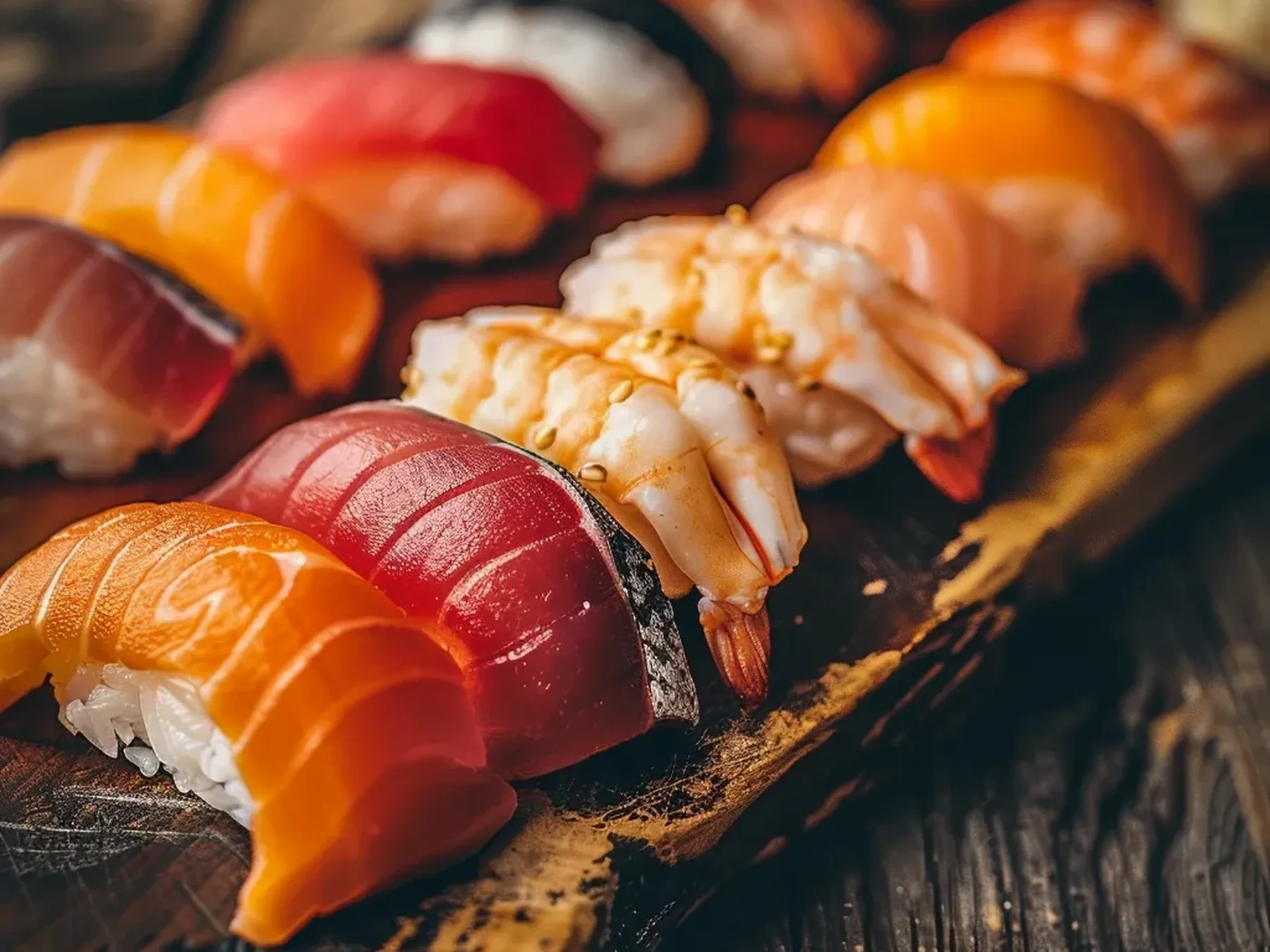
- Nigiri sushi places a topping over a hand-shaped mound of rice.
- Maki sushi is rolled sushi, usually wrapped with nori and sliced into pieces.
- Hosomaki are relatively thin rolls, often built around one main filling.
- Futomaki are thicker rolls that can contain several fillings.
- Uramaki are inside-out rolls with rice on the outside and nori inside.
- The California roll is one of the best-known uramaki styles outside Japan.
- Temaki are hand rolls shaped like cones.
- Gunkan-maki are oval rice bases wrapped with a strip of nori to hold loose toppings.
- Fish roe, sea urchin, and chopped mixtures are commonly served gunkan-style.
- Chirashi sushi serves sushi rice in a bowl or box with toppings arranged over it.
- Inari sushi fills seasoned fried-tofu pouches with sushi rice.
- Oshizushi is pressed sushi formed in a mold.
- Pressed sushi traditions are especially associated with western Japan.
- Temari sushi forms rice and toppings into small decorative balls.
- Sushi’s many shapes prove that a “roll” is only one part of the category.
The rice matters more than you think
- Sushi chefs often consider rice technique as important as fish preparation.
- Rice is rinsed before cooking to remove loose surface starch and debris.
- Exact rinsing and soaking routines vary by rice, season, kitchen, and chef.
- Freshly cooked rice is mixed with seasoned vinegar while still warm.
- The mixing process should distribute seasoning without crushing the grains.
- Traditional wooden tubs called hangiri are often used for mixing and cooling sushi rice.
- Wood can help absorb excess surface moisture during the cooling process.
- Fanning rice while mixing can help cool it and create a glossy surface.
- Sushi rice is usually served around room temperature or slightly warm rather than refrigerator-cold.
- Cold refrigeration makes cooked rice firmer as its starches retrograde.
- Vinegar adds acidity and a characteristic balance of sweet, salty, and sour flavors.
- During the late Edo period, vinegar made from sake lees became popular for Edo-style sushi.
- This reddish-brown vinegar is often called akazu, or red vinegar.
- Japan’s Ministry of Agriculture notes that sake-lees vinegar paired well with Edo sushi and was less expensive than rice vinegar at the time.
- Changing the vinegar blend can noticeably change the flavor and color of otherwise identical sushi rice.
Fish, seafood, and other toppings
- Tuna is one of the most internationally recognized sushi toppings.
- Different cuts of tuna vary greatly in fat content and texture.
- Akami usually refers to leaner red tuna meat.
- Chutoro and otoro refer to progressively fattier prized tuna cuts.
- Salmon is enormously popular in modern sushi but was not a classic Edo nigiri staple in the same way as many local fish.
- Shrimp can be served cooked on nigiri.
- Unagi, freshwater eel, is traditionally cooked before serving.
- Anago, saltwater conger eel, is also normally cooked.
- Tamago sushi uses a Japanese rolled omelet as its topping.
- Ikura are salmon eggs commonly served in gunkan sushi.
- Uni is the edible gonad of sea urchins, prized for its rich, soft texture.
- Scallops, squid, octopus, clams, and many other marine animals can appear on sushi menus.
- Octopus used in sushi is often cooked rather than served raw.
- Vegetarian sushi may use cucumber, pickled radish, avocado, tofu, mushrooms, or other vegetables.
- Seasonality is an important idea in traditional Japanese dining, including sushi.
Wasabi, soy sauce, and ginger
- True wasabi comes from the plant Eutrema japonicum.
- Fresh wasabi rhizome is grated into a pungent green paste.
- Much commercial “wasabi” outside Japan is made primarily from horseradish, mustard, and coloring.
- Fresh wasabi’s pungency fades fairly quickly after grating.
- Wasabi heat feels different from chili heat because different chemical compounds trigger the sensation.
- Soy sauce adds saltiness and umami.
- At some traditional sushi counters, the chef seasons a piece before serving it.
- Drowning delicate sushi in soy sauce can overwhelm the balance the chef intended.
- When dipping nigiri, touching the topping rather than soaking the rice can help prevent the rice from absorbing too much soy sauce.
- Gari is thinly sliced pickled ginger.
- Ginger is often eaten between different pieces as a palate refresher.
- It is usually not intended to be piled onto every piece like another topping.
- Green tea is a classic drink at many sushi restaurants.
- Japanese tea served in sushi shops is sometimes called agari.
- Condiments should support the flavor of good sushi rather than hide it.
Sushi etiquette without the anxiety
- Nigiri can traditionally be eaten with either clean hands or chopsticks.
- There is no universal rule requiring chopsticks for every type of sushi.
- Sashimi is typically eaten with chopsticks.
- Many pieces of nigiri are designed to be eaten in one bite.
- Very large modern pieces may be easier to eat in more than one bite.
- Rubbing disposable wooden chopsticks together can imply that the restaurant provided rough, low-quality chopsticks.
- Passing food directly from one pair of chopsticks to another resembles a Japanese funeral ritual and is avoided.
- Sticking chopsticks vertically into a bowl of rice is also associated with funeral customs.
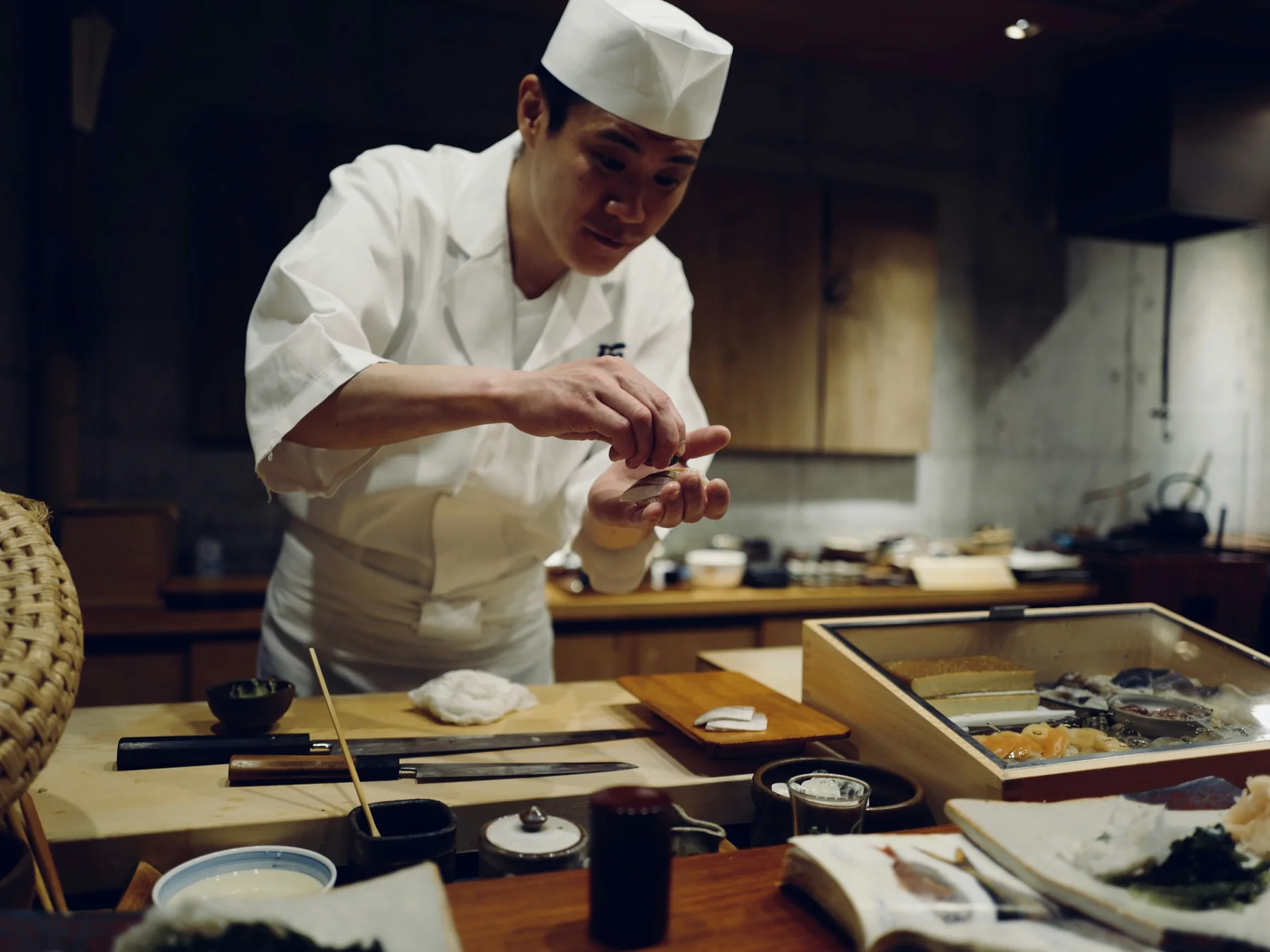
- At an omakase meal, the chef chooses the progression of pieces.
- Omakase literally conveys the idea of entrusting the choice to someone else.
- A chef may adjust rice size, seasoning, temperature, or topping preparation piece by piece.
- Good sushi etiquette is less about memorizing dozens of rules and more about treating the food, staff, and other diners respectfully.
- Conveyor-belt sushi restaurants create a much more casual experience than formal counters.
- At kaiten-zushi restaurants, small plates circulate past diners on a moving belt or automated lane.
- Modern sushi culture comfortably includes both centuries-old craft and highly automated service.
Raw fish safety and sushi nutrition
- Raw seafood can carry parasites and disease-causing microorganisms.
- The FDA says cooking seafood thoroughly is the safest way to reduce foodborne-illness risk.
- Freezing can kill parasites in many fish species intended for raw consumption.
- Freezing does not kill every harmful microorganism.
- That means previously frozen raw fish is not automatically risk-free.
- Pregnant people, young children, older adults, and people with weakened immune systems are at higher risk from foodborne illness.
- FDA guidance recommends that higher-risk groups avoid raw or undercooked fish and shellfish.
- The FDA’s seafood safety guidance specifically mentions sashimi and sushi containing raw seafood.
- Sushi nutrition varies enormously depending on rice quantity, fillings, sauces, frying, and portion size.
- Fish can provide protein, vitamins, minerals, and beneficial omega-3 fats.
- Sushi rice contributes carbohydrates and usually contains added sugar and salt in its seasoning.
- Soy sauce can add a substantial amount of sodium.
- Tempura fillings, creamy sauces, and fried toppings can make some rolls much richer than simple nigiri.
- Vegetable-heavy rolls can provide different nutrients and fiber than seafood-centered pieces.
- There is no single calorie or nutrient profile that accurately describes all sushi.
Ten surprising sushi facts
- The ingredient that makes sushi sushi is the seasoned rice, not raw fish.
- Nigiri began as convenient urban food rather than an exclusively luxurious dining experience.
- Many traditional Edo sushi toppings were cooked or cured because refrigeration did not exist.
- Sushi rice can be seasoned with reddish vinegar made from sake lees rather than clear rice vinegar.
- A cucumber roll is every bit as much sushi as a raw-tuna nigiri because both use seasoned sushi rice.
- Some of Japan’s oldest sushi traditions barely resemble the colorful rolls found on many American menus.
- Conveyor-belt sushi turned a craft associated with counters into a fast, visual, family-friendly meal format.
- The California roll helped popularize inside-out rolls with rice on the exterior in North America.
- Freshly grated real wasabi is both rarer and more delicate than the bright green paste many diners know.
- For another global-food rabbit hole, explore our 145 pizza facts and the rest of the Food facts collection.
Quick sushi FAQ
Is all sushi raw?
No. Sushi is defined by vinegared rice. Its toppings and fillings can be raw, cooked, cured, pickled, fried, or completely vegetarian.
What is the difference between sushi and sashimi?
Sushi contains seasoned rice. Sashimi is sliced raw seafood or another ingredient served without sushi rice.
Where did nigiri sushi come from?
Nigiri became popular in Edo, now Tokyo, during the Edo period, where it was sold as convenient food at stalls.
Can you eat sushi with your hands?
Yes. Nigiri has traditionally been eaten with either hands or chopsticks. Sashimi is normally eaten with chopsticks.
Is raw sushi fish completely safe if it was frozen?
No. Proper freezing can kill many parasites, but the FDA notes that it does not eliminate every harmful germ. Cooking seafood remains the safest option for preventing foodborne illness.

Ellie is the owner and sole author of Fun Facts, combining her mechanical engineering background with years of research-driven writing to deliver facts you can trust. Every article is thoroughly fact-checked and routinely updated as new science and sources emerge to keep information accurate and current. Her mission is to make learning delightful while upholding high standards of reliability and transparency.