
Sri Lanka fits misty tea mountains, tropical beaches, ancient capitals, elephants, leopards, blue whales, cinnamon gardens, Hindu temples, Buddhist stupas, colonial forts, gem mines, and some of the most photogenic train rides anywhere onto an island about the size of West Virginia. Small map, extremely busy itinerary.
Sri Lanka is an island just south of India
- Sri Lanka is an island country in the Indian Ocean.
- It lies just southeast of the Indian subcontinent.
- The Palk Strait separates Sri Lanka from India.
- Sri Jayawardenepura Kotte is the official legislative capital.
- Colombo is the largest city and main commercial center.
- The Sri Lankan rupee is the national currency.
- Sinhala and Tamil are official national languages.
- English is widely used as a link language.
- Sri Lanka's flag features a golden lion holding a sword.
- Four bo leaves appear in the corners of the main panel.
- Orange and green stripes represent major minority communities in common official interpretations.
- The country was officially called Ceylon under British rule and for years after independence.
- It became the Republic of Sri Lanka in 1972.
- Sri Lanka uses a time zone 5 hours and 30 minutes ahead of Coordinated Universal Time.
- The country does not use Daylight Saving Time.
- Sri Lanka is roughly 270 miles long from north to south.
- Its coastline stretches for more than 800 miles.
- The island sits close enough to India that the two countries share deep historical and cultural connections.
- They are nevertheless separate sovereign countries with distinct languages, politics, and identities.
- Sri Lanka is small enough to cross in a day and varied enough to make that a terrible idea if you actually want to stop anywhere.
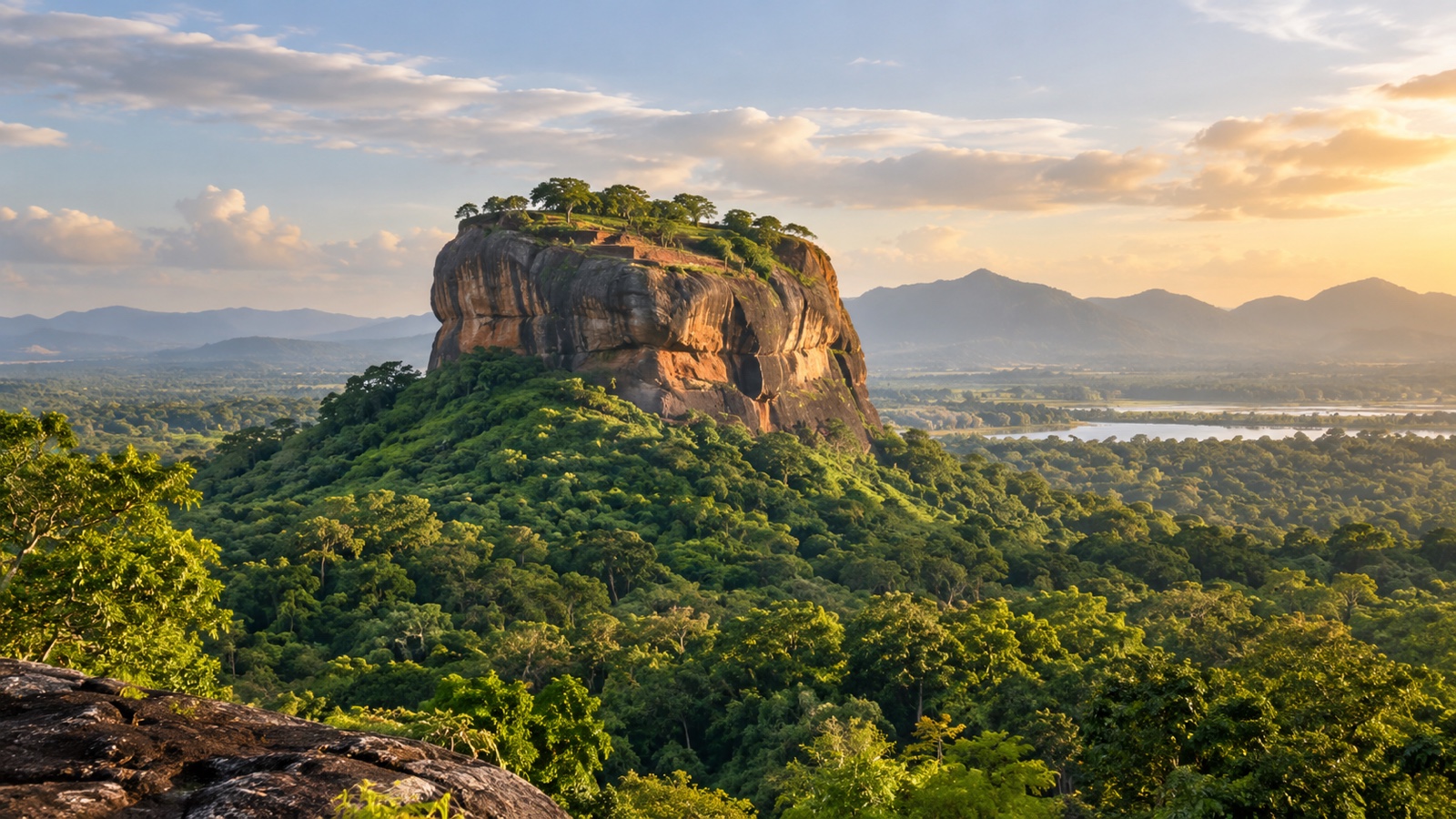
Central highlands create a cool world above the tropics
- Sri Lanka has a tropical climate but major elevation differences.
- The central highlands rise sharply above the surrounding lowlands.
- Pidurutalagala is Sri Lanka's highest mountain.
- It reaches about 8,281 feet above sea level.
- Nuwara Eliya sits high in the central mountains.
- Its climate is much cooler than Colombo's coastal heat.
- British colonists developed Nuwara Eliya as a hill retreat.
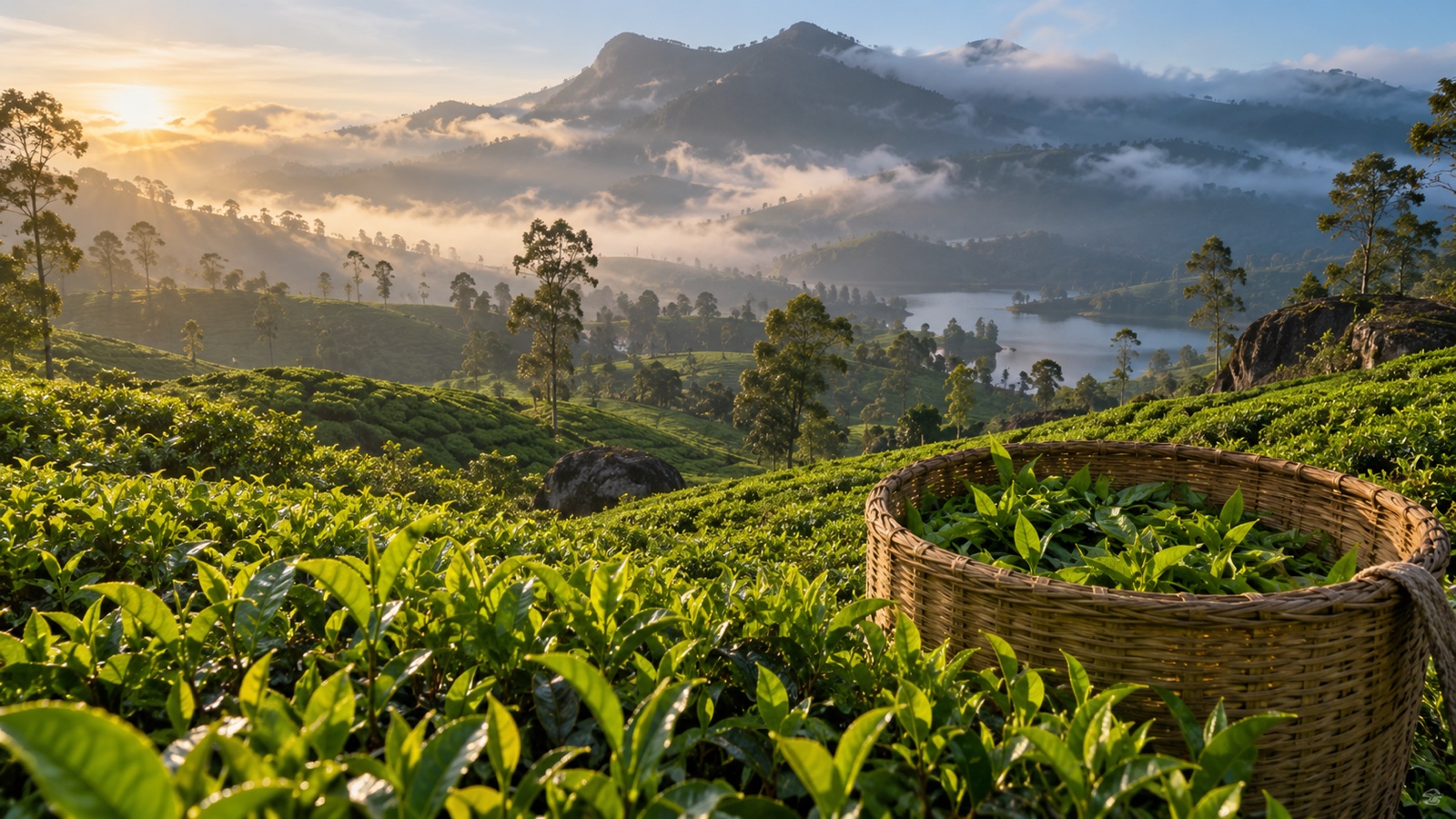
- Tea estates cover many surrounding slopes.
- Horton Plains National Park protects high-elevation grasslands and cloud forest.
- World's End is a dramatic escarpment viewpoint in Horton Plains.
- Adam's Peak is one of Sri Lanka's most sacred mountains.
- The mountain is also called Sri Pada.
- A footprint-shaped depression near the summit is interpreted differently by several religious traditions.
- Buddhists associate it with the Buddha.
- Many Hindus associate it with Shiva.
- Some Muslim and Christian traditions historically linked it with Adam or Saint Thomas.
- Pilgrims climb the mountain mainly during the traditional pilgrimage season.
- Thousands of steps lead toward the summit shrine.
- Monsoon patterns bring rain to different parts of Sri Lanka at different times.
- Sri Lanka's mountains are the reason one island packing list can legitimately include both swimwear and a sweater.
Ancient kingdoms built giant stupas, reservoirs and rock fortresses
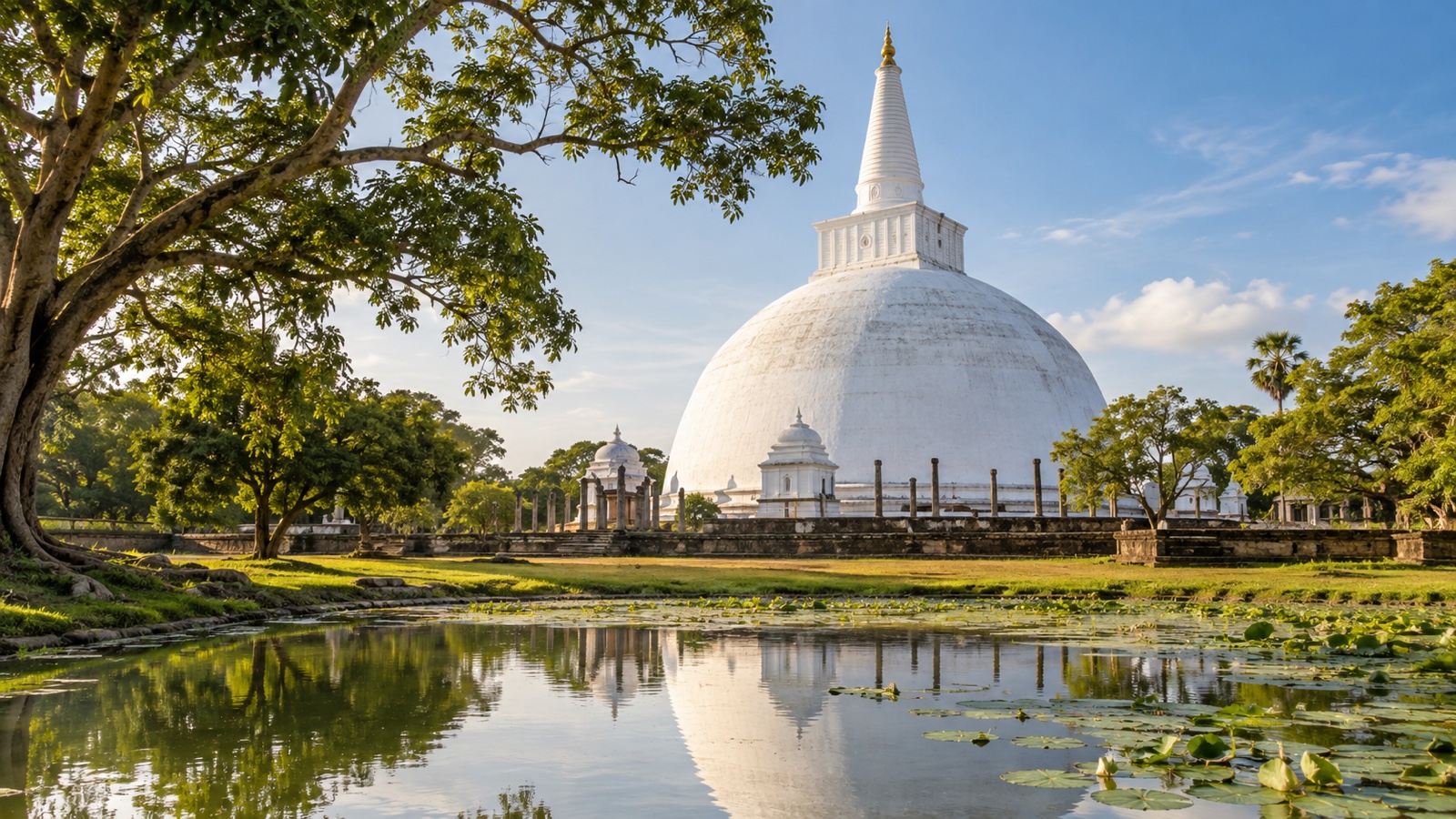
- Anuradhapura became one of Sri Lanka's great ancient capitals.
- It flourished for more than a thousand years.
- The city contains enormous Buddhist stupas.
- Jetavanaramaya was one of the tallest structures in the ancient world.
- The Sri Maha Bodhi is a sacred fig tree in Anuradhapura.
- Tradition holds that it grew from a cutting of the tree associated with the Buddha's enlightenment.
- It is among the world's oldest historically documented planted trees.
- Ancient Sri Lankan kingdoms built sophisticated irrigation reservoirs.
- Large artificial lakes are locally called tanks in English historical usage.
- Canals distributed water across dry agricultural regions.
- Polonnaruwa later became another major royal capital.
- Its ruins include palaces, temples, reservoirs, and giant Buddha statues.
- Sigiriya is a massive rock fortress in central Sri Lanka.
- King Kashyapa built a royal complex there during the fifth century.
- Visitors climb stairways attached to the rock to reach the summit ruins.
- Sigiriya's frescoes depict richly painted female figures.
- The Mirror Wall once had a highly polished surface.
- Ancient visitors scratched poems and comments onto the wall.
- Those inscriptions preserve early examples of Sinhala writing.
- Apparently tourists have been leaving reviews on walls for more than a thousand years.
Buddhist, Hindu, Muslim and Christian traditions overlap across the island
Sri Lanka's religious geography changes by region and community, so “the Buddhist island” is only part of the picture. Theravada Buddhism is the majority tradition, while Hindu, Muslim, Roman Catholic, Protestant, and other communities have centuries of history.
- Theravada Buddhism is followed by most Sinhalese Sri Lankans.
- Buddhist tradition reached the island in the ancient period from the Indian subcontinent.
- The Pali Canon was written down in Sri Lanka according to Theravada tradition.
- Kandy's Temple of the Tooth houses a revered Buddhist relic.
- The annual Esala Perahera in Kandy includes processions, dancers, drummers, and decorated elephants.
- The use of captive elephants in religious tourism is increasingly debated over animal welfare.
- Hinduism is especially important among many Sri Lankan Tamil communities.
- Colorful kovils, or Hindu temples, stand across northern and eastern Sri Lanka and in Colombo.
- Nallur Kandaswamy Kovil near Jaffna is a major Hindu temple.
- Islam reached Sri Lanka through Indian Ocean trade networks.
- Sri Lankan Muslim communities have deep roots in coastal trade.
- Christianity arrived through multiple waves of European contact and missionary activity.
- Roman Catholic communities are especially prominent in some coastal areas.
- Vesak commemorates events associated with the Buddha's life.
- During Vesak, lanterns and illuminated displays fill many streets.
- Thai Pongal is an important Tamil Hindu harvest festival.
- Deepavali is celebrated by Hindu communities.
- Eid festivals are important to Muslim Sri Lankans.
- Christmas is a public holiday.
- Sri Lanka's public calendar can turn religious diversity into a surprisingly effective national snack-delivery system.
Colonial powers came for ports, spices and strategic position
- Arab and other Indian Ocean merchants traded with Sri Lanka long before European colonization.
- Portuguese forces established coastal control during the 16th century.
- The Dutch displaced the Portuguese from most coastal positions during the 17th century.
- Dutch colonial architecture remains visible in Galle and other towns.
- Galle Fort is a UNESCO World Heritage Site.
- The British took Dutch-held territory during the late 18th century.
- The inland Kingdom of Kandy remained independent longer than coastal regions.
- Britain gained control of Kandy in 1815.
- The entire island then came under British colonial rule.
- Coffee plantations expanded during the 19th century.
- A fungal disease devastated much of the coffee industry.
- Tea became the replacement plantation crop.
- British planters brought large numbers of Tamil laborers from India to work on estates.
- Their descendants form an important community often called Indian Tamils or Hill Country Tamils.
- Sri Lanka became independent from Britain in 1948.
- The independent country was initially called Ceylon.
- Post-independence language and citizenship policies created serious ethnic tensions.
- The Sinhala Only Act of 1956 made Sinhala the sole official language at that time.
- Tamil political grievances grew over language, education, land, security, and representation.
- Colonialism ended in 1948, but its labor systems, borders, institutions, and ethnic categories did not vanish with the flag change.
A long civil war ended in 2009
Sri Lanka's civil war is essential modern history, not a paragraph to hide behind beaches. The conflict grew from decades of ethnic and political tension, and both the separatist Tamil Tigers and government forces were accused of grave abuses, especially during the brutal final phase.
- The Liberation Tigers of Tamil Eelam sought an independent Tamil state in northern and eastern Sri Lanka.
- The organization is widely known as the LTTE or Tamil Tigers.
- Full-scale civil war developed during the 1980s.
- The LTTE used conventional warfare, assassinations, suicide bombings, and forced recruitment.
- The group assassinated Sri Lankan president Ranasinghe Premadasa in 1993.
- An LTTE suicide bomber assassinated former Indian prime minister Rajiv Gandhi in 1991.
- Government forces were also accused of disappearances, extrajudicial killings, torture, shelling, and other abuses.
- Muslim communities in the north and east suffered displacement and violence as well.
- The LTTE expelled tens of thousands of Muslims from the Northern Province in 1990.
- Multiple ceasefires and peace efforts failed.
- The Sri Lankan military defeated the LTTE in May 2009.
- Civilians endured catastrophic conditions during the final fighting.
- International organizations have called for accountability over alleged war crimes and human-rights violations.
- Postwar reconciliation remains contested.
- Families continue seeking information about people who disappeared during the conflict.
- Ethnic and language politics remain important in national life.
- A separate natural disaster struck the island during the war in 2004.
- The Indian Ocean tsunami killed more than 30,000 people in Sri Lanka.
- Coastal communities were devastated.
- Sri Lanka's modern history explains why rebuilding can mean homes, institutions, trust, and memory all at once.
Tea, wildlife, cricket and 25 final Sri Lanka facts
- Sri Lanka is one of the world's major tea-producing countries.
- Tea labeled “Ceylon tea” uses the island's former colonial name.
- High-grown teas come from cooler mountain estates.
- Tea flavor varies by elevation, rainfall, soil, and processing.
- Sri Lanka is one of the world's major producers of true cinnamon.
- Ceylon cinnamon comes from Cinnamomum verum.
- It differs botanically from cassia cinnamon commonly sold elsewhere.
- Rice and curry describes a broad family of Sri Lankan meals rather than one recipe.
- Hoppers are bowl-shaped fermented rice-flour pancakes.
- String hoppers are thin steamed rice-noodle nests.
- Kottu roti is made by chopping flatbread with vegetables, egg, meat, or other additions on a hot griddle.
- The rhythmic metal chopping sound is part of the classic kottu experience.
- Coconut appears extensively in Sri Lankan cooking.
- Yala National Park is famous for Sri Lankan leopards.
- Sri Lanka has one of the world's highest leopard densities in some protected areas.
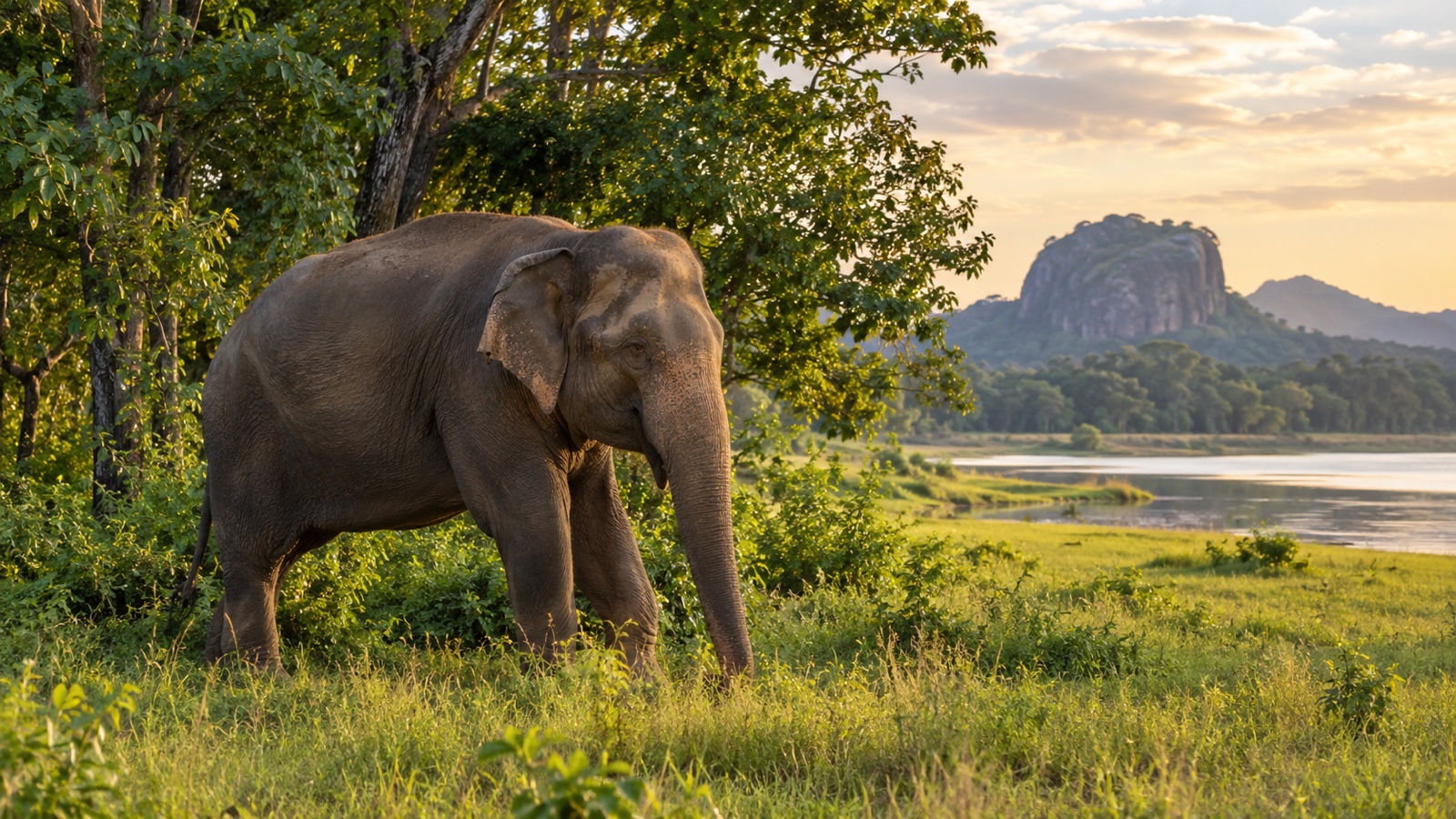
- Asian elephants live across several lowland regions.
- Human-elephant conflict is a major conservation and rural-livelihood issue.
- Blue whales can be seen in waters around Sri Lanka.
- Sinharaja Forest Reserve protects tropical rainforest and many endemic species.
- Sri Lanka is famous for sapphires and other gemstones.
- The blue sapphire known as the Blue Belle of Asia came from Sri Lanka.
- Cricket is the country's most popular spectator sport.
- Sri Lanka won the men's Cricket World Cup in 1996.
- Muttiah Muralitharan became international cricket's leading Test wicket-taker.
- After 145 facts, Sri Lanka still feels like an island that packed several climates, civilizations, cuisines, and wildlife documentaries into one teardrop-shaped piece of the Indian Ocean.
Quick FAQ
Q: What is Sri Lanka famous for?
A: Ceylon tea, ancient cities, Sigiriya, elephants, leopards, beaches, Buddhism, Tamil culture, cinnamon, gemstones, scenic trains, cricket, and tropical biodiversity.
Q: What is the capital of Sri Lanka?
A: Sri Jayawardenepura Kotte is the legislative capital, while Colombo is the largest city and commercial center.
Q: Is Ceylon the same as Sri Lanka?
A: Ceylon was the country's colonial and early post-independence name. The republic adopted the name Sri Lanka in 1972.
Q: What languages are spoken in Sri Lanka?
A: Sinhala and Tamil are official national languages, and English is widely used as a link language.
Q: Are there wild elephants in Sri Lanka?
A: Yes. Sri Lanka supports a major population of wild Asian elephants, although habitat loss and conflict with people create serious conservation challenges.

Ellie is the owner and sole author of Fun Facts, combining her mechanical engineering background with years of research-driven writing to deliver facts you can trust. Every article is thoroughly fact-checked and routinely updated as new science and sources emerge to keep information accurate and current. Her mission is to make learning delightful while upholding high standards of reliability and transparency.