
Nepal is famous for Mount Everest, but that one summit can block the view of a country with tropical lowlands, rhinos, tigers, medieval cities, living goddess traditions, dozens of languages, Buddhist stupas, Hindu temples, suspension bridges, momo dumplings, and communities whose lives are much bigger than the trekking industry around them.
Nepal climbs from tropical plains to the roof of the world
- Nepal is a landlocked country in South Asia.
- Kathmandu is the national capital and largest city.
- Nepal borders India to the south, east, and west.
- China's Tibet Autonomous Region lies to the north.
- Nepal is roughly the size of Arkansas.
- The country stretches only about 125 miles north to south at its widest points.
- Elevation changes enormously over that short distance.
- The southern Terai contains low tropical and subtropical plains.
- The middle hills contain valleys, terraces, forests, and dense settlements.
- The Himalayas dominate northern Nepal.
- Eight of the world's fourteen mountains above 26,247 feet lie wholly or partly in Nepal.
- Mount Everest is the highest point on Earth above sea level.
- Nepal's lowest areas are only a few hundred feet above sea level.
- The Nepali rupee is the national currency.
- Nepali is the official federal language.
- More than 100 languages are spoken in Nepal.
- The country uses Nepal Standard Time.
- Nepal is 5 hours and 45 minutes ahead of Coordinated Universal Time.
- That 45-minute offset is unusual among world time zones.
- Nepal can take you from elephant habitat to permanent snow faster than many American road trips reach the next state.
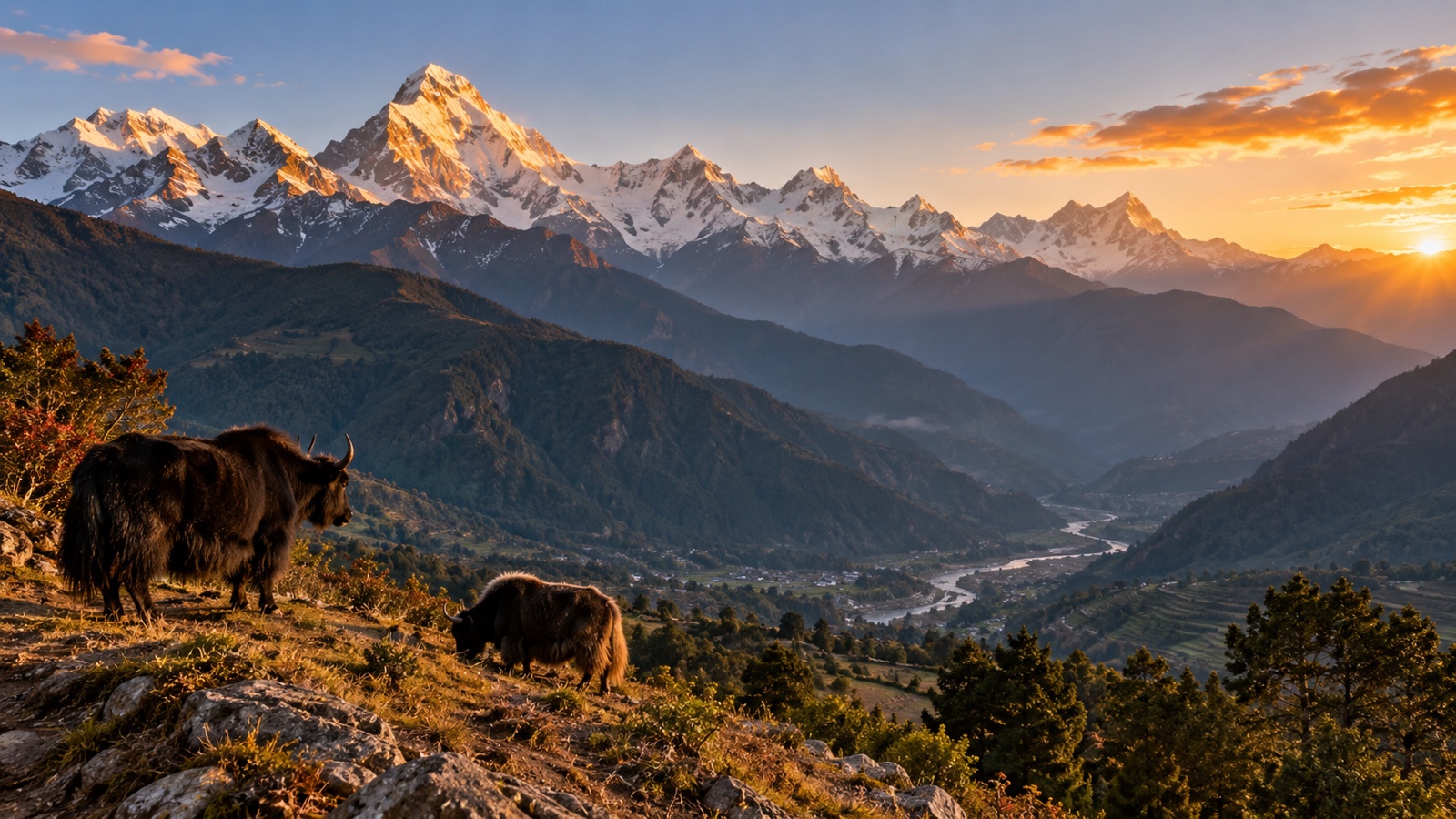
Mount Everest sits on Nepal's border with China
- Mount Everest rises on the Nepal-China border.
- Its internationally agreed modern elevation is about 29,032 feet above sea level.
- Nepal and China jointly announced that elevation in 2020.
- The Nepali name for Everest is Sagarmatha.
- The Tibetan name is Chomolungma, also transliterated Qomolangma.
- The English name honors British surveyor George Everest.
- Everest grows and changes subtly because the Himalayas remain tectonically active.
- India's tectonic plate continues pushing into Eurasia.
- That collision created the Himalayan mountain system.
- Tenzing Norgay and Edmund Hillary made the first confirmed ascent of Everest in 1953.
- Tenzing was a Sherpa mountaineer born in the Himalayan region.
- Hillary was a New Zealand beekeeper and climber.
- Most climbers attempting Everest from Nepal use a route through the Khumbu region.
- Everest Base Camp on the Nepali side sits above 17,000 feet.
- The Khumbu Icefall is one of the route's most dangerous sections.
- The icefall moves constantly as the glacier flows.
- Specialized workers install ladders and ropes through the icefall each climbing season.
- Extreme altitude leaves little oxygen available to the human body.
- Many Everest climbers use supplemental bottled oxygen above very high camps.
- Standing on Earth's highest summit is impressive, but getting hundreds of people, tents, fuel, food, oxygen, ropes, permits, and waste up there is the logistical fact that really breaks my brain.
Sherpa is an ethnic identity, not a synonym for porter
- Sherpa people are an ethnic group indigenous to parts of the high Himalayas.
- Large Sherpa communities live in the Khumbu region near Everest.
- The word Sherpa should not be used simply as a generic term for every mountain porter or guide.
- Many Sherpas work in mountaineering because of local geography, expertise, and economic opportunity.
- Many other Sherpas work in tourism, business, agriculture, education, government, medicine, and professions unrelated to climbing.
- Sherpa language is related to Tibetan languages.
- Tibetan Buddhism strongly influences traditional Sherpa culture.
- Monasteries are important religious and community institutions.
- Tengboche Monastery is one of the Khumbu's best-known monasteries.
- Prayer flags are common throughout Himalayan Buddhist regions.
- The flags traditionally carry prayers or sacred texts rather than personal wishes.
- Mani stones are carved with Buddhist prayers and mantras.
- Trekkers traditionally pass mani walls on the left in accordance with local Buddhist custom.
- High-altitude mountain workers face significant occupational danger.
- Avalanches, falls, ice collapse, altitude illness, and storms have killed many Nepali climbing workers.
- The 2014 Everest icefall avalanche killed 16 Nepali workers.
- The 2015 earthquake triggered an Everest Base Camp avalanche that killed climbers and staff.
- Nepali mountain workers have repeatedly advocated for better insurance, compensation, wages, and safety.
- Modern Himalayan climbing would not function without extensive local expertise.
- The most respectful Everest fact is that the mountain has never been conquered by one heroic outsider operating alone.
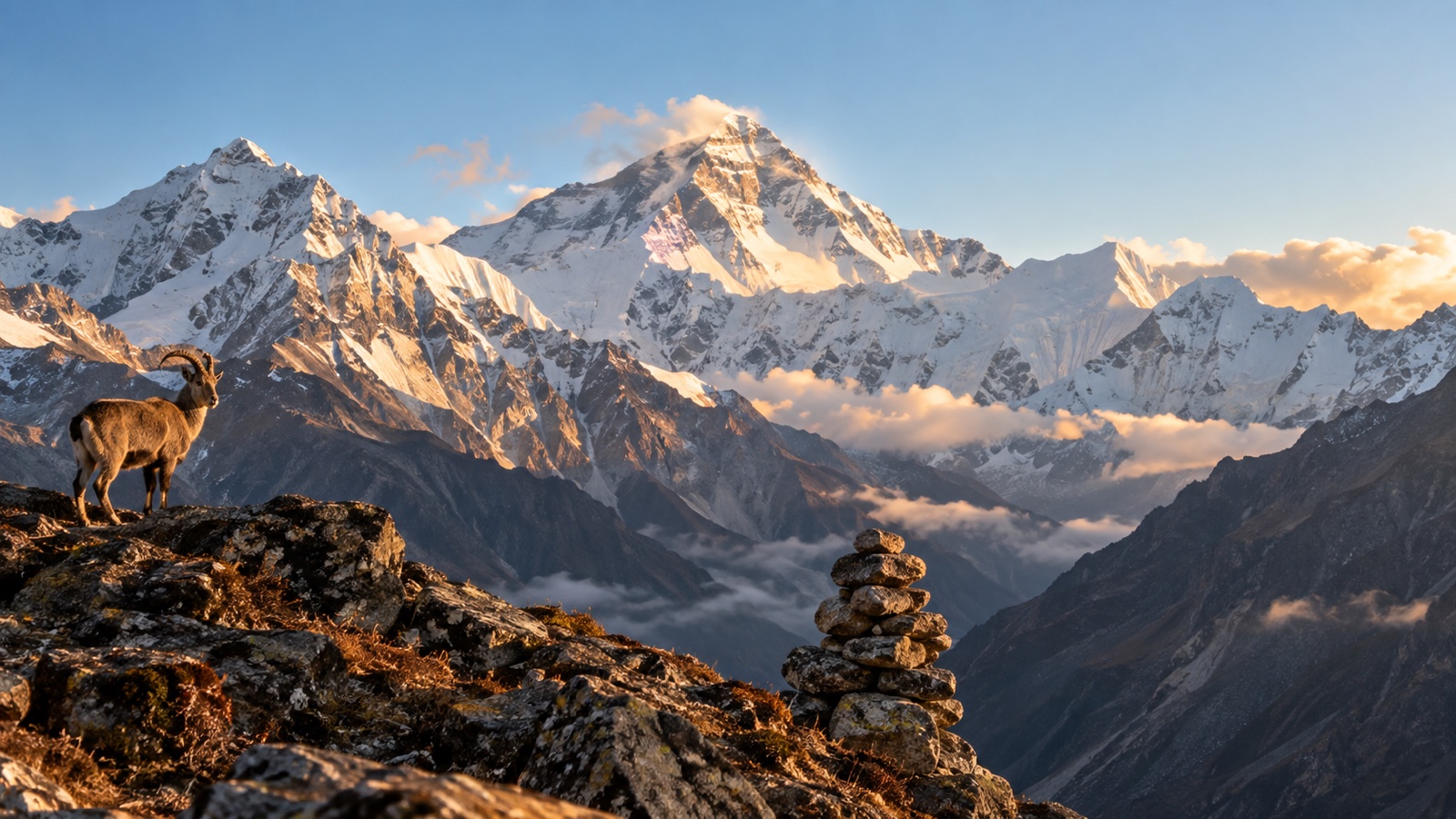
Kathmandu Valley holds centuries of Hindu and Buddhist history
Kathmandu Valley is not one old city but a cluster of historic cities, royal squares, shrines, courtyards, monasteries, markets, and neighborhoods. Hindu and Buddhist traditions overlap so deeply that trying to assign every sacred place to one neat religious box can miss how local practice actually works.
- Kathmandu Valley includes the historic cities of Kathmandu, Patan, and Bhaktapur.
- Each city has a historic Durbar Square associated with former royal palaces.
- Kathmandu Durbar Square contains temples, palace courtyards, and traditional architecture.
- Patan is especially famous for metalwork and Buddhist artistic traditions.
- Bhaktapur preserves extensive brick architecture and pedestrian historic areas.
- The Kathmandu Valley is a UNESCO World Heritage Site with multiple monument zones.
- Swayambhunath stands on a hill overlooking Kathmandu.
- The Buddhist stupa is popularly nicknamed the Monkey Temple because macaques live around it.
- Boudhanath is one of the world's largest spherical Buddhist stupas.
- Tibetan Buddhist communities expanded around Boudhanath especially after the 1950s.
- Pashupatinath is one of the world's most important Hindu temples dedicated to Shiva.
- It stands along the Bagmati River.
- Hindu cremations take place on ghats beside the river.
- Non-Hindus cannot enter the main Pashupatinath temple building but can visit surrounding areas.
- Nepal's Newar people are indigenous to the Kathmandu Valley.
- Newar culture includes distinctive architecture, festivals, cuisine, art, Buddhism, and Hindu traditions.
- Nepal Bhasa, also called Newari, is a major Newar language.
- Traditional valley buildings often use carved wooden windows and red brick.
- Courtyard neighborhoods can hide elaborate shrines behind surprisingly ordinary street entrances.
- Kathmandu is the kind of city where “turn left after the 600-year-old temple” can sound like a normal navigation instruction.
Nepal's flag is the only national flag that is not a quadrilateral
- Nepal's national flag is made from two stacked triangular pennants.
- It is the world's only modern national flag that is not rectangular or square.
- The flag is crimson with a blue border.
- It contains stylized moon and sun symbols.
- The modern flag design was standardized in Nepal's 1962 constitution.
- Its construction is defined through a precise geometric procedure.
- Nepal was never formally colonized by a European power.
- The modern Nepali state expanded during the 18th century under King Prithvi Narayan Shah.
- He unified several kingdoms and principalities under Gorkha rule.
- The Anglo-Nepalese War ended with the Treaty of Sugauli in 1816.
- Nepal lost substantial territory after the war but remained independent.
- Gurkha soldiers became famous through service in British and later Indian military forces.
- “Gurkha” refers to military traditions connected with Nepal, not one single ethnic group.
- The Rana family dominated Nepal's government for more than a century beginning in 1846.
- Rana prime ministers held most political power while kings remained largely ceremonial.
- The Rana system ended in 1951.
- Nepal experienced repeated struggles over monarchy, democracy, and party rule during the late 20th century.
- A Maoist insurgency lasted from 1996 to 2006.
- A peace agreement ended the civil war.
- Nepal abolished its monarchy and became a federal democratic republic in 2008.
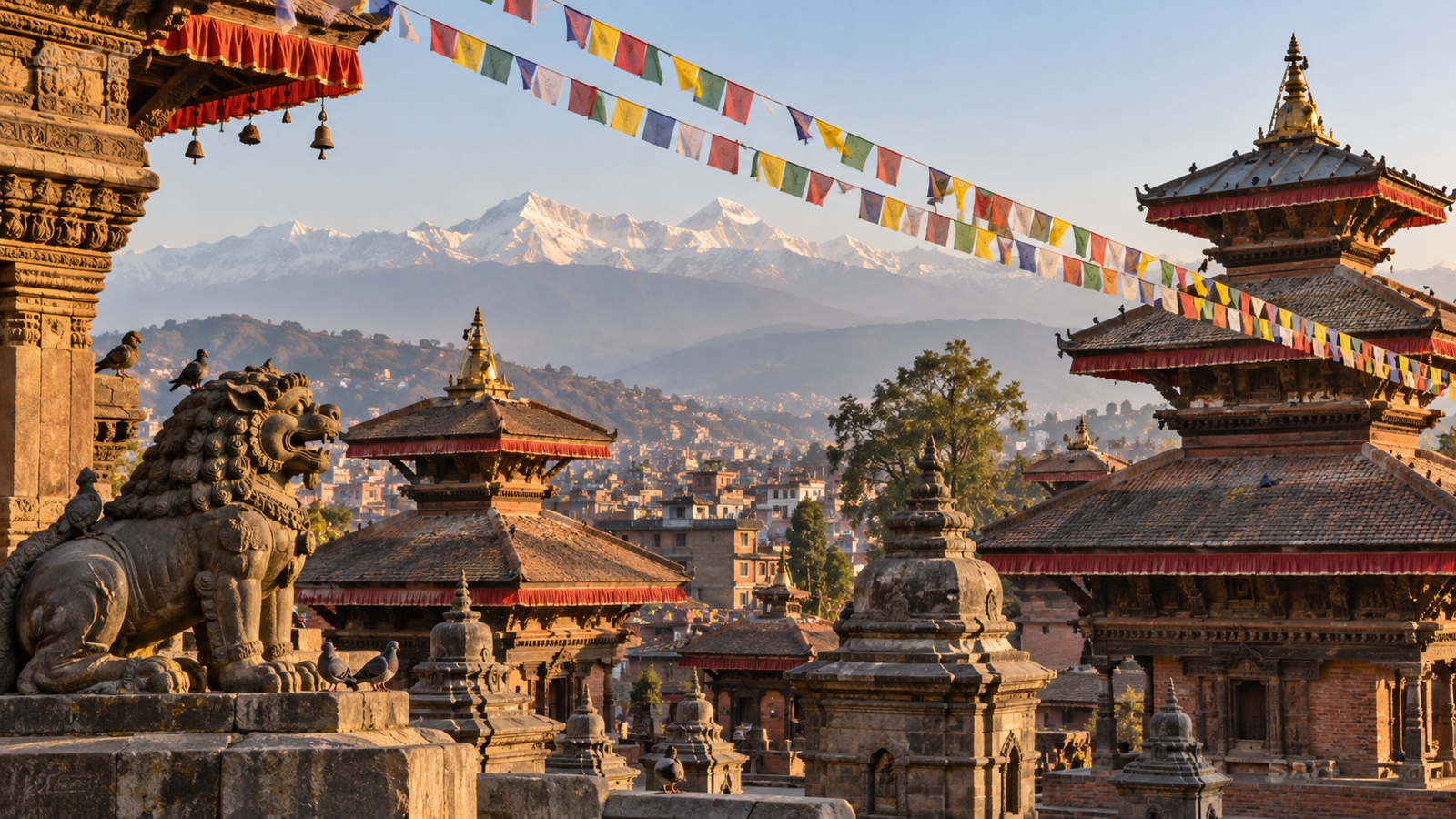
Rhinos, tigers and subtropical jungle live below the snow peaks
The Terai is the Nepal fact that destroys the all-snow stereotype fastest. The country's southern lowlands are hot enough for one-horned rhinos, Bengal tigers, crocodiles, elephants, peacocks, and monsoon forests, all within the same national borders as Everest.
- Chitwan National Park protects lowland forests, grasslands, wetlands, and river systems.
- It was Nepal's first national park.
- Chitwan is a UNESCO World Heritage Site.
- Greater one-horned rhinoceroses live in the park.
- Nepal's rhino population recovered dramatically after severe historical declines.
- Bengal tigers live in several protected areas of southern Nepal.
- Nepal more than doubled its wild tiger population between the 2010 baseline and the early 2020s.
- Asian elephants occur in lowland forests and migration corridors.
- Gharials live in some Nepali rivers.
- Gharials are long-snouted crocodilians specialized for eating fish.
- Mugger crocodiles also occur in Nepal.
- Sloth bears inhabit suitable lowland and foothill forests.
- Red pandas live in temperate mountain forests.
- Snow leopards live at high elevations in the Himalayas.
- Himalayan tahr are shaggy wild ungulates adapted to steep mountains.
- Blue sheep are important prey for snow leopards.
- Nepal supports more than 800 recorded bird species.
- Protected areas cover a substantial share of the country.
- Wildlife corridors connecting parks are important because animals move across administrative boundaries.
- Nepal is basically a vertical wildlife documentary, with crocodiles near the bottom and snow leopards near the top.
Momos, festivals, earthquakes and 25 final Nepal facts
- Dal bhat is one of Nepal's most common everyday meals.
- It combines lentil soup with rice and usually vegetables, pickles, or curry.
- Momos are filled dumplings popular across Nepal.
- Momos can be steamed, fried, or served in soup or spicy sauce.
- Newar cuisine includes elaborate feast traditions and distinctive dishes.
- Sel roti is a ring-shaped rice-flour bread commonly made during festivals.
- Gundruk is fermented leafy greens.
- Yak and chauri dairy products are important in some high-altitude communities.
- Dashain is Nepal's largest Hindu festival.
- Tihar is a multi-day festival associated with lights, family, Lakshmi worship, and honors for animals including crows, dogs, and cattle on different days.
- Buddha Jayanti commemorates the birth of the Buddha.
- Siddhartha Gautama, the historical Buddha, was born at Lumbini in present-day Nepal.
- Lumbini is a UNESCO World Heritage Site and major pilgrimage destination.
- Kumari tradition recognizes a young girl as a living goddess in several Newar communities.
- Kathmandu's Royal Kumari appears during important ceremonies and festivals.
- The practice has supporters, critics, and evolving protections concerning the child's welfare and education.
- A magnitude 7.8 earthquake struck Nepal on April 25, 2015.
- Nearly 9,000 people died in that disaster and related events.
- The earthquake destroyed homes, temples, roads, and heritage sites.
- Reconstruction of historic monuments continued for years afterward.
- Nepal sits in an active earthquake zone because the Indian plate is colliding with Eurasia.
- Pokhara is a major tourism city beneath the Annapurna range.
- The Annapurna Circuit became one of the world's classic long-distance treks.
- Paragliding has made Pokhara famous for aerial views of lake and mountain scenery.
- After 145 facts, Nepal still feels like a country best understood vertically, from tiger grasslands through temple valleys to the highest point on Earth.
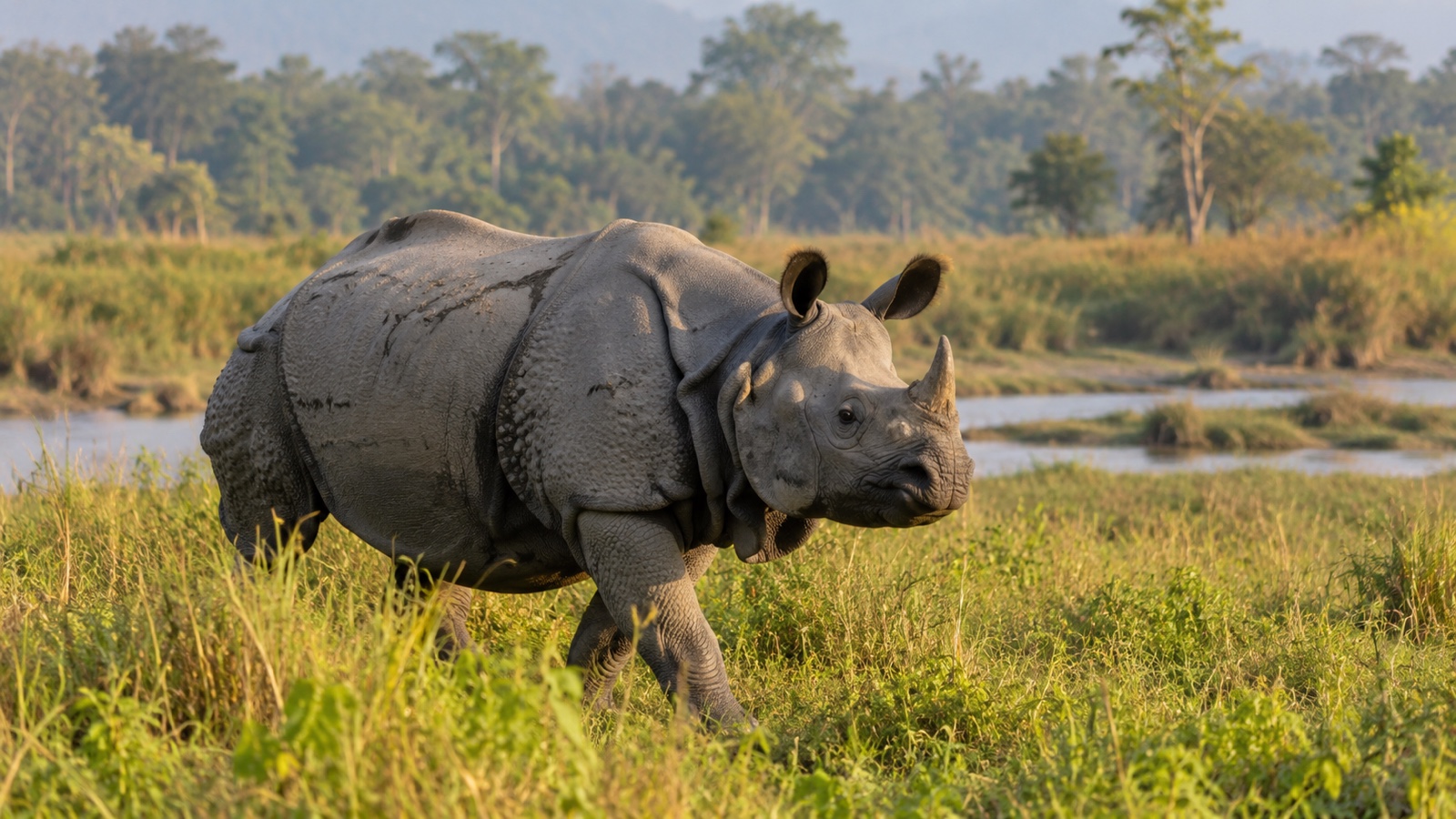
Quick FAQ
Q: What is Nepal famous for?
A: Mount Everest, Himalayan trekking, Kathmandu Valley temples, Sherpa communities, Buddhist and Hindu pilgrimage sites, rhinos, tigers, momos, Gurkhas, and extraordinary elevation change.
Q: What is the capital of Nepal?
A: Kathmandu is both the capital and largest city.
Q: Is Mount Everest entirely in Nepal?
A: No. The summit lies directly on the international border between Nepal and China's Tibet Autonomous Region.
Q: Is Sherpa another word for mountain porter?
A: No. Sherpa is an ethnic identity. Some Sherpas work as guides and high-altitude climbing professionals, while many work in completely different fields.
Q: Why is Nepal's flag unusual?
A: It consists of two stacked triangular pennants and is the only modern national flag that is not a rectangle or square.

Ellie is the owner and sole author of Fun Facts, combining her mechanical engineering background with years of research-driven writing to deliver facts you can trust. Every article is thoroughly fact-checked and routinely updated as new science and sources emerge to keep information accurate and current. Her mission is to make learning delightful while upholding high standards of reliability and transparency.